
Business
WITH HEAD, HEART AND HAND
Ginkgo leaves on asparagus and memories of Sicily’s lemons – the deputy director of the Museum Angewandte Kunst in Frankfurt, Grit Weber, and THE FRANKFURTER author Jutta Failing talked at the restaurant Emma Metzler about Proust, wanderlust and the feeling of having to swim the English Channel.
Text Dr. Jutta Failing Photos Betti Klee GmbH
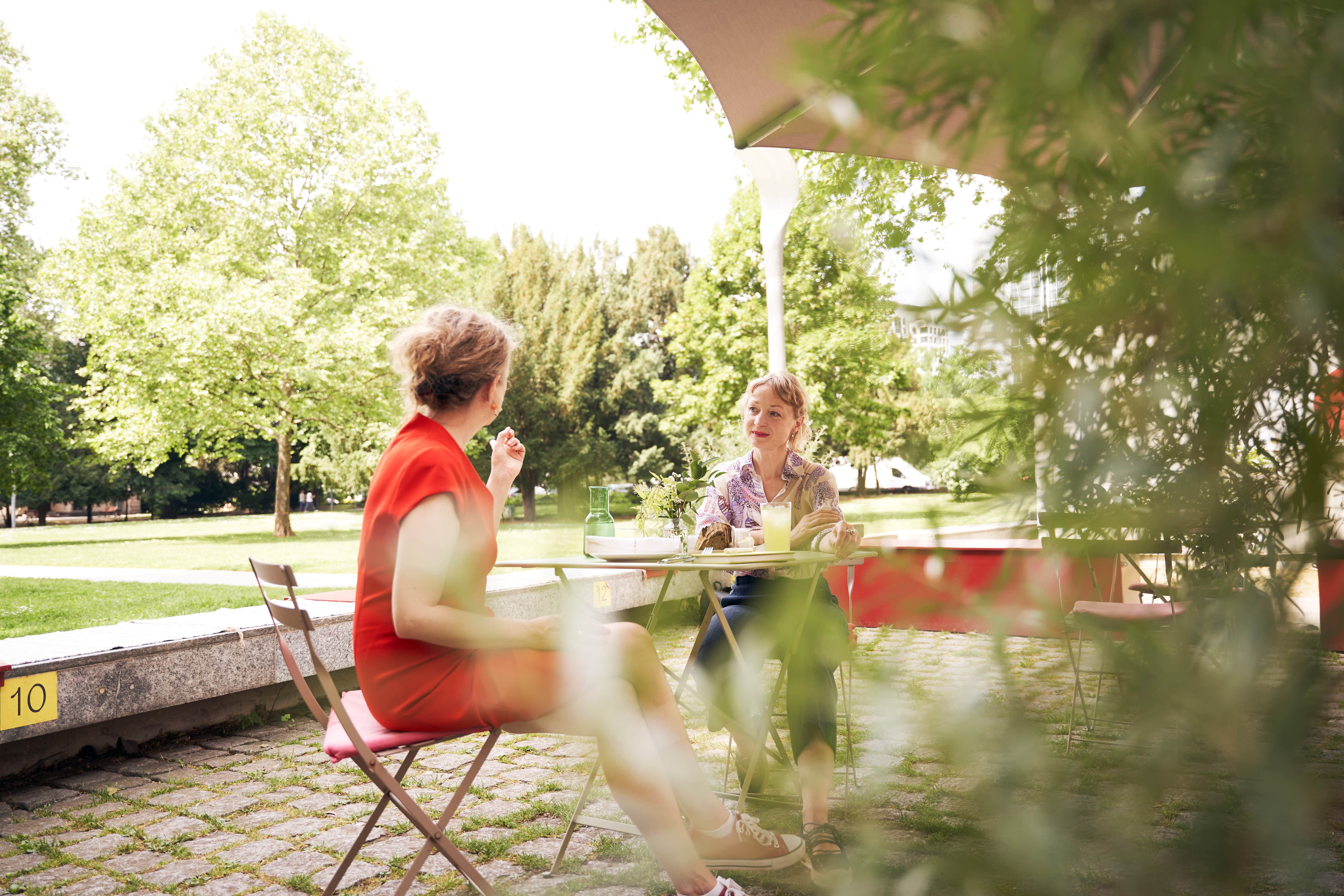
It is her last day at work. The exhibition “Mythos Handwerk – Zwischen Ideal und Alltag” (The Myth of Craft – Between Ideal and Everyday Life) has opened; she is one of its curators. Four weeks of holiday lie ahead of Grit Weber. She wants to spend some time on the North Sea in St. Peter-Ording. Walks on the beach, salty air and at last the leisure to start Marcel Proust’s mammoth work “In Search of Lost Time”, she tells me. I have known Grit for many years, since the time when she was editor-in-chief of the art magazine Art Kaleidoscope. We were on the Queen Mary 2 together, a company outing. On seeing each other again, we recall that fun time on the English Channel, which for me ended in violent seasickness, but only once I was back on land. That can happen.
A CITY VIBRATES
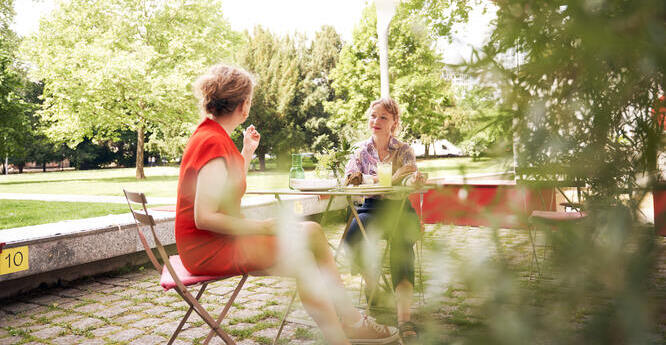
We sit on the cosy terrace by the Metzler Park, sip the cucumber and woodruff house lemonade and talk about football. There is no avoiding the subject. On this hot, early-summer midday, anticipation, victory cries and police sirens ring out across the Main; in the evening the Eintracht team is expected on the Römer balcony. The city is buzzing. Grit watched the final with her partner, who is an artist, in a football pub in Oberrad. It was fun there, she says, laughing. Her genuine laugh is instantly infectious. She likes to laugh and has many clever, well-read things to say; I have always appreciated that. We once had a subscription at the Schauspiel Frankfurt, and you could always rely on her reviews.
CRAFT, GOLDEN FLOOR?
“The whole time I felt as if I were swimming the English Channel. The goal was clear. You also knew you would make it, because you were well accompanied by the team. As with every show, the installation was extremely physical work.” A relatable image Grit uses here to describe the preparations for the current exhibition at the museum. You bear a great responsibility for those involved and for the objects, she says. She is pleased with the finish – the result, which can be seen until mid-September. It is about craft – which the show approaches in an unusual way. Steering clear of pathos and romanticisation. Pairs of opposites are formed, such as luxury and necessity, mastery and tinkering, local and global. The cooperation partners include the vorarlberg museum in Bregenz and the Kunstgewerbemuseum in Dresden, the curator’s home town. Having just come of age, she lived through the political upheaval of the Wende there before chance, a job offer as a dental technician, took her to Wiesbaden. She went back to gain her Abitur while working, went to university and, with seemingly effortless perseverance, made her way into art education and art journalism. As delicate as she appears, she can be iron-willed in the best sense: “If I regret anything, it’s that I didn’t get more help, through a scholarship, for example. I did a lot on my own; a semester abroad wouldn’t have been financially possible.”
WATER & CHAMPAGNE
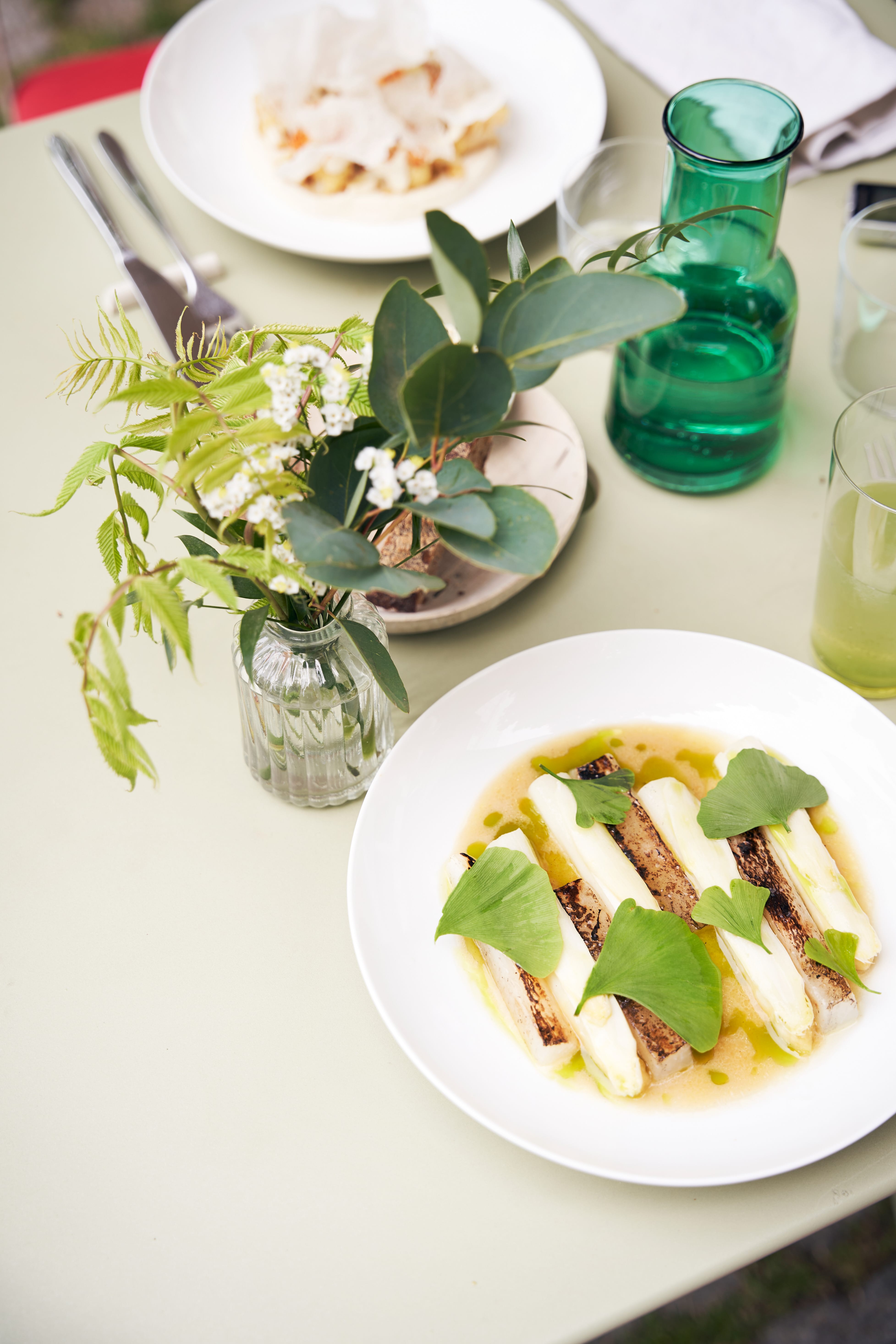
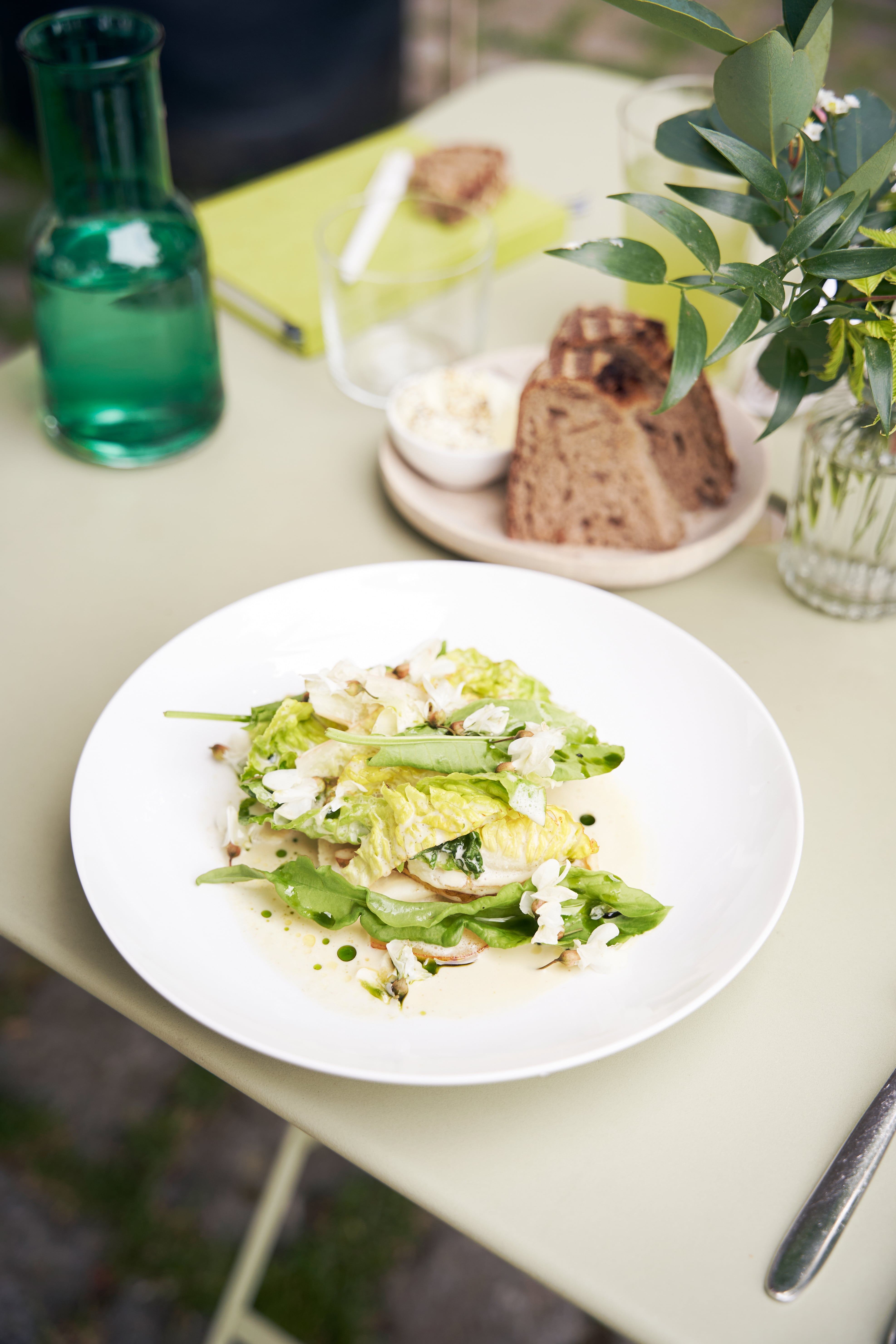
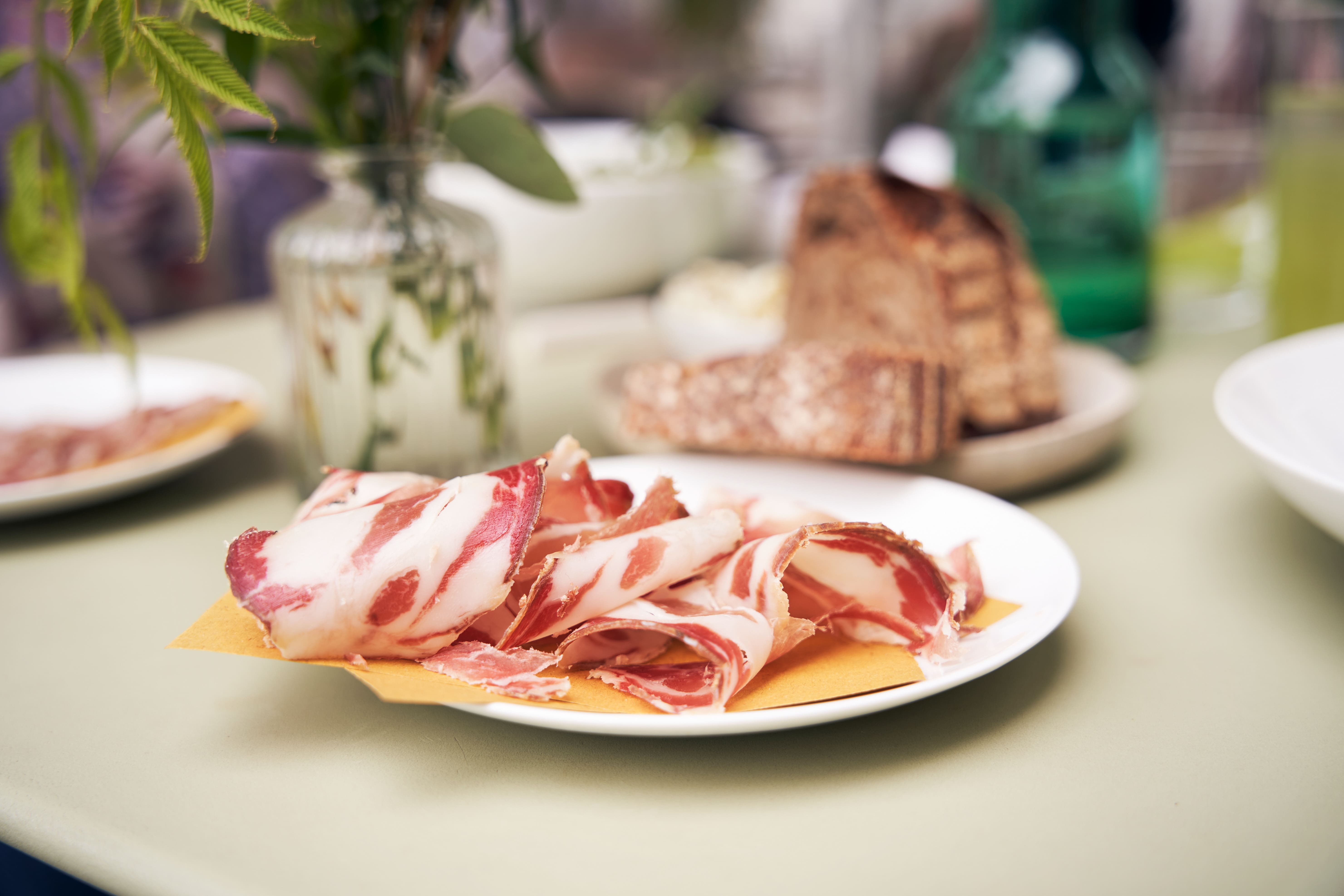
“I went into the woods, just walking along, and seeking nothing, that was my intent …” Goethe comes to mind as Grit talks about hiking. Right at that moment we are served asparagus with a few ginkgo leaves; for Goethe, this was the tree of friendship. A delight from Anton de Bruyn’s kitchen; the young greens taste delicately of sorrel. But unlike the prince of poets, Grit is looking for something when she goes out into nature. Almost every weekend she and her partner go hiking, often on routes 20 kilometres long. “Water and sandwiches in the rucksack. Recently we took the regional train to Langenselbold; from there you can join a hiking trail through the northern Spessart. You simply come back from hiking totally content, it’s so wonderful.” But she liked hiking long before it became chic for city dwellers: “At school we had a hiking group, organised by an elderly lady, a great woman,” she recalls of how it all began. She greatly values experiencing the seasons and simply being out hiking, without having to spend much money. “But we like champagne too!” we both laugh.
PLACES TO READ
I tease her about Offenbach, where she has lived for years. “You can spot Frankfurters immediately when they shop at the market on Wilhelmsplatz,” she teases back. We venture onto the thin ice of comparison; she says: “Frankfurt is a fast, very pragmatic city; I like that. Cronyism is kept within bounds and doesn’t last as long. What’s striking is that there are only a few places for reading in the city centre. You also see few people reading outside. I was in Vienna with my sisters, and we saw such great cafés and places where people read for hours. I think that also makes for a special quality in a city.”
There is a wonderful cookbook by the Japanese sculptor Shinroku Shimokawa. It’s called ‘You can’t eat stones’.
— Grit Weber, Museum Angewandte Kunst
THE PROUST EFFECT
She is a fine observer of the smallest nuances; she questions and moves skilfully between the down-to-earth and the podium, between hiking trail and international museum work. And she is alert when it comes to the extraordinary in the ordinary: “I saw something great at my favourite ice-cream parlour, ‘Eis Christina’. A Bentley pulled up, three men got out, queued for ice cream and drove off again. I found that funny, typically Frankfurt.”
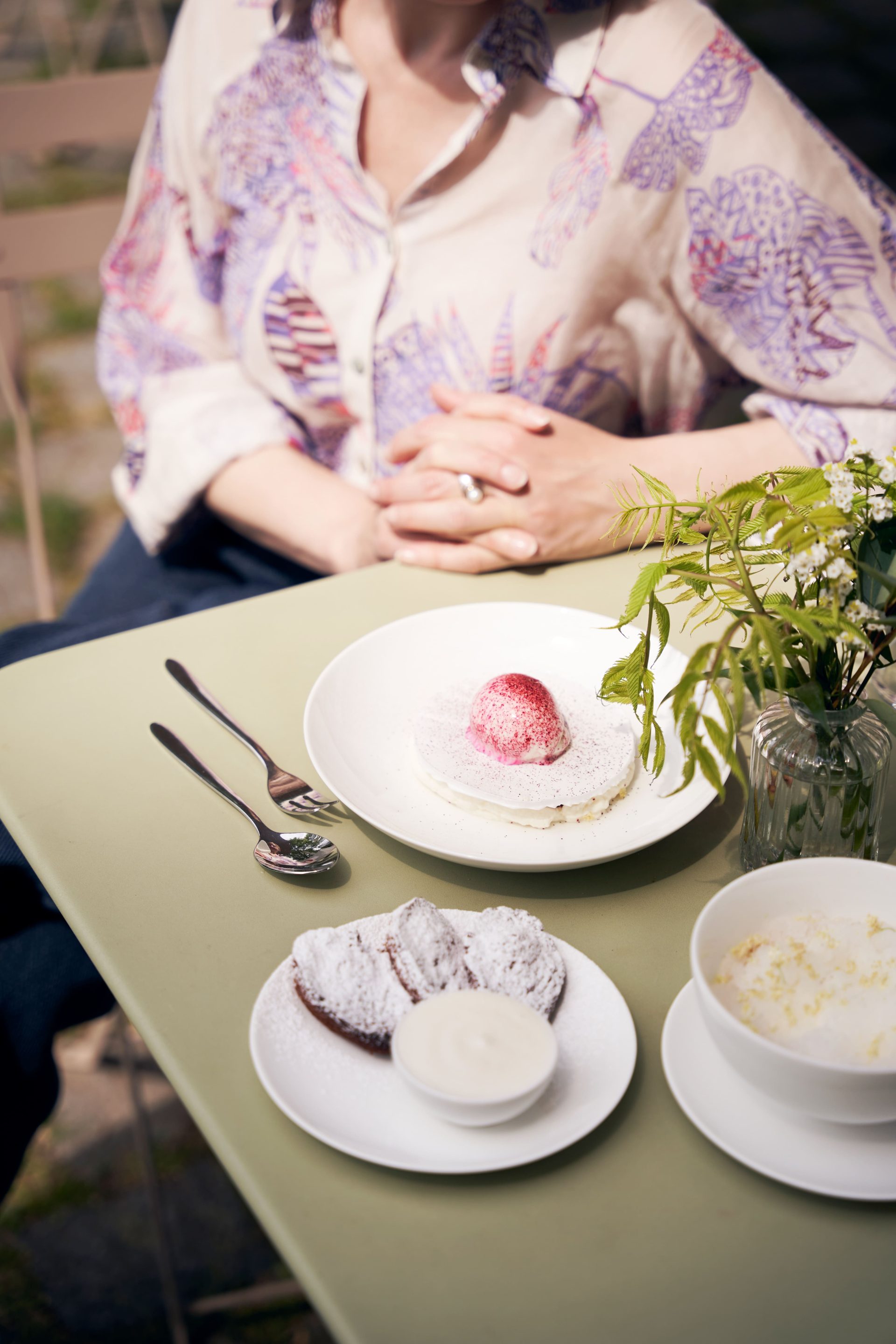
Anton de Bruyn seems to be able to read minds, because now I want to ask Grit Weber about the literary icon Marcel Proust, whose novel of the century she intends to take with her to the seaside. At least the first part. On the dessert plates, white-dusted buckwheat madeleines and an elderflower granita vie for our favour. Instantly, the delicious granita awakens in Grit the memory of a holiday in Sicily. A phenomenon that psychology, incidentally, calls the Proust effect or madeleine effect. With a single scent, the past comes alive again as if it were yesterday. “It was a hot day in Sicily, and in a café they had granita di limone,” she recalls vividly. In Proust’s novel, a small cake called a “petite madeleine” dipped in lime-blossom tea serves the narrator as the key to the past. No sooner is it in his mouth than an extraordinary feeling of happiness arises and the gardens of happy days rise before his mind’s eye. “Proust’s language is beautifully atmospheric,” the avid reader enthuses about the often labyrinthine sentences of the writer, who across numerous volumes paints a panorama of Belle Époque society. Would she have liked to live around 1900, on first-name terms with Proust, I ask breezily, and almost step into a hornets’ nest: “As a woman you had far fewer opportunities than today! If it had to be the 19th century, then as a man and an engineer.”
More stories








GET IN TOUCH