

Home
Furnishing a Period Home in a Modern Way: 7 Interior Tricks for Timeless Elegance
High ceilings, ornate stucco, historic wooden floors and generous windows: period apartments have an unmistakable character. But how can historic architecture be combined with modern interior design without losing its original charm? With her historic villa in Wiesbaden, interior designer Constanze Ladner shows how an extraordinary home emerges from the interplay of different eras.
There are rooms that tell a story before the first piece of furniture moves in. Their architecture reveals something about times gone by, their materials bear traces of earlier residents and their proportions follow a design logic that differs markedly from modern new builds.
Therein lies the fascination of a period building. The challenge is not to make it look as contemporary as possible, but to continue writing its story with one’s own personality.
Interior designer Constanze Ladner shows how naturally this dialogue between past and present can succeed in her half-timbered villa in Wiesbaden, built in 1895. Between historic architectural elements, French-inspired elegance and contemporary design classics, an interior emerges that feels both cultivated and personal.
Seven design principles show how this approach can be applied to your own home.
1. Deliberately Showcase the Historic Architecture
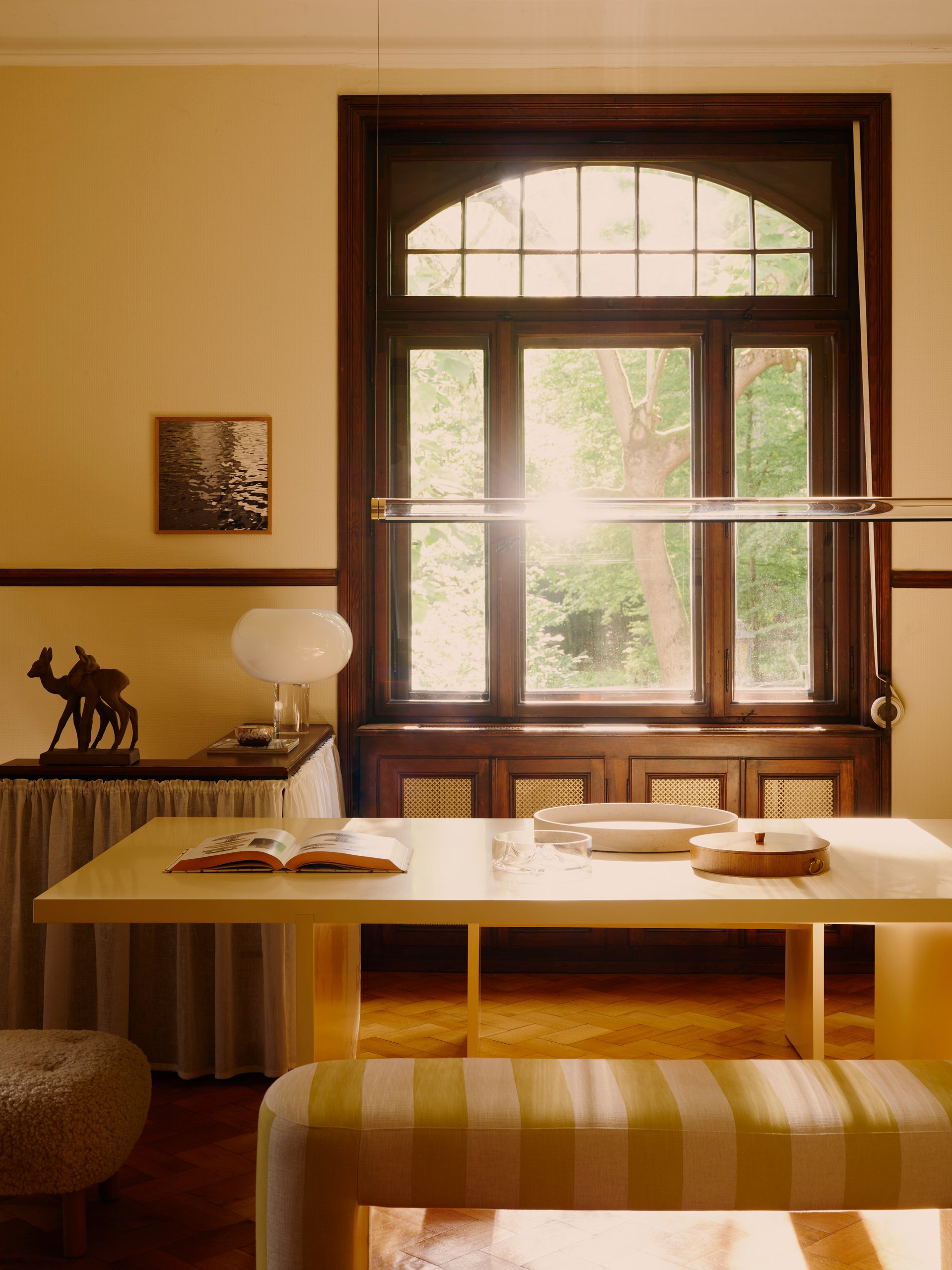
Anyone who wants to furnish a period home in a modern way should first understand what already makes the space special. Stucco ceilings, panelled doors, historic wooden floors or dark wood panelling are not design obstacles, but valuable elements of the room’s identity.
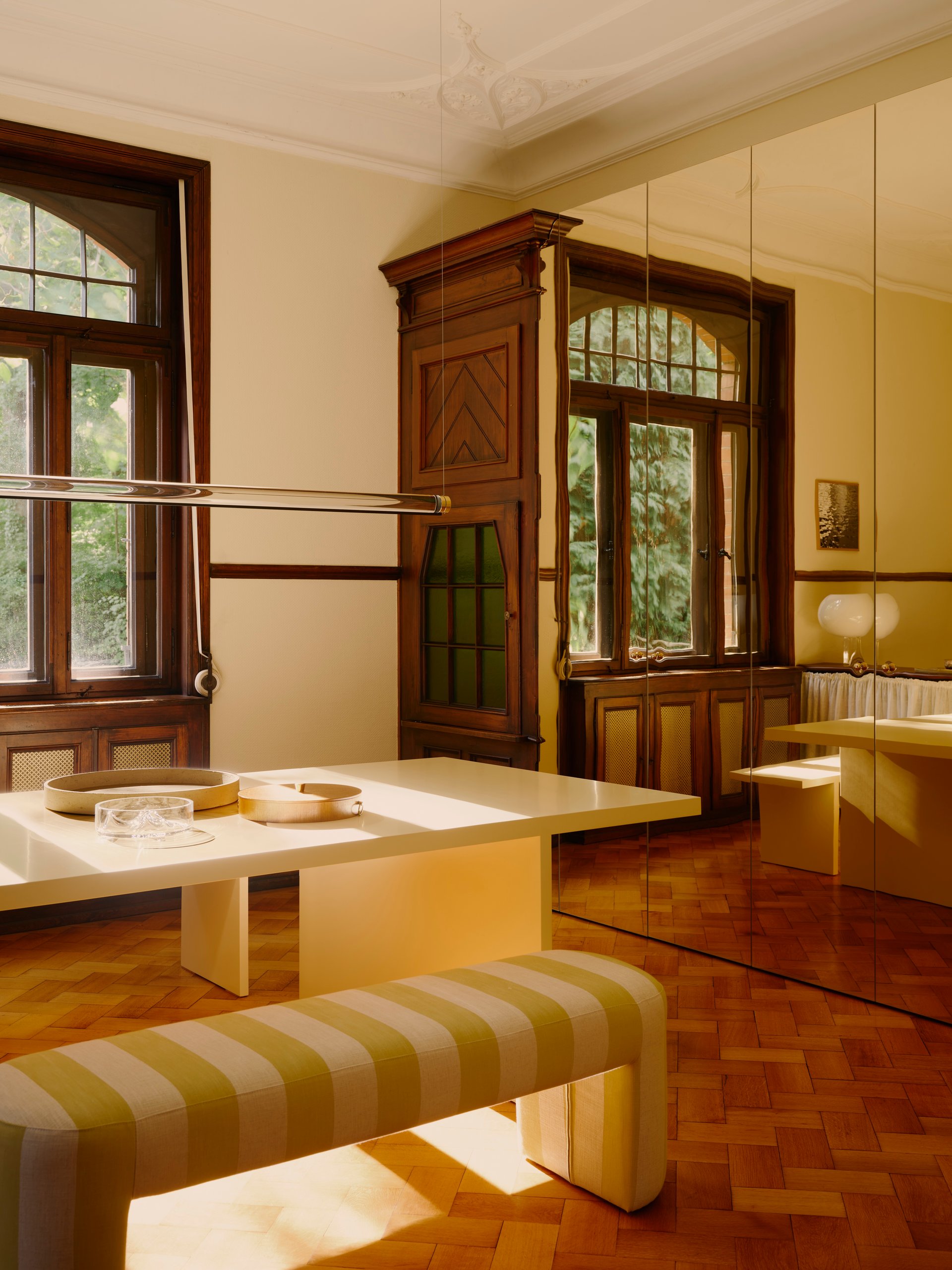
Instead of hiding them behind modern cladding, it is worth enhancing their effect through deliberate contrasts. A minimalist sofa in front of historic wall panelling or a sculptural light beneath an elaborately designed stucco ceiling allows both eras to shine equally.
Constanze Ladner, too, deliberately integrates the historic elements of her Wiesbaden villa into the modern interior concept.
The architecture thus becomes not a mere backdrop, but the starting point for the entire design.
2. Create a Modern Atmosphere With Warm Colours
White was long considered the universal answer to the question of the right wall colour in a period home. Yet historic rooms in particular offer extraordinary opportunities for nuanced colour concepts.
Warm cream and sand tones, subtle butter yellow, olive green or elegant shades of taupe lend spacious rooms a homely depth. They harmonise with natural materials and make historic details appear less austere.
In Ladner’s villa, butter-yellow walls meet dark wooden elements and light upholstered furniture. The combination feels neither nostalgic nor overly modern. Instead, it creates an atmosphere reminiscent of the effortless elegance of French interiors.
Natural light is also decisive. In period homes in particular, colours can change considerably over the course of the day. Large colour samples help to assess their effect under different lighting conditions.
3. Combine Design Classics With Contemporary Furniture
A stylishly furnished period home thrives on the tension between different design signatures. Instead of choosing all the furniture from one collection or era, deliberately placed contrasts create a more individual overall picture.
An example can be found in Constanze Ladner’s home: the softly shaped Redondo sofa by Patricia Urquiola for Moroso meets designs by Philippe Starck and Eero Saarinen.
Organic shapes meet clear lines, contemporary designs meet historic architecture. It is precisely these different design perspectives that give the interior its character.
Those who think long term would rather invest in individual high-quality pieces that will still delight after years than in furnishings entirely geared to current trends.
A home is allowed to grow. It does not have to be finished in a single day.
4. Create Depth With Materials and Textures
The quality of an interior cannot be read from its colour palette alone. Just as decisive is the interplay of different surfaces and materials.
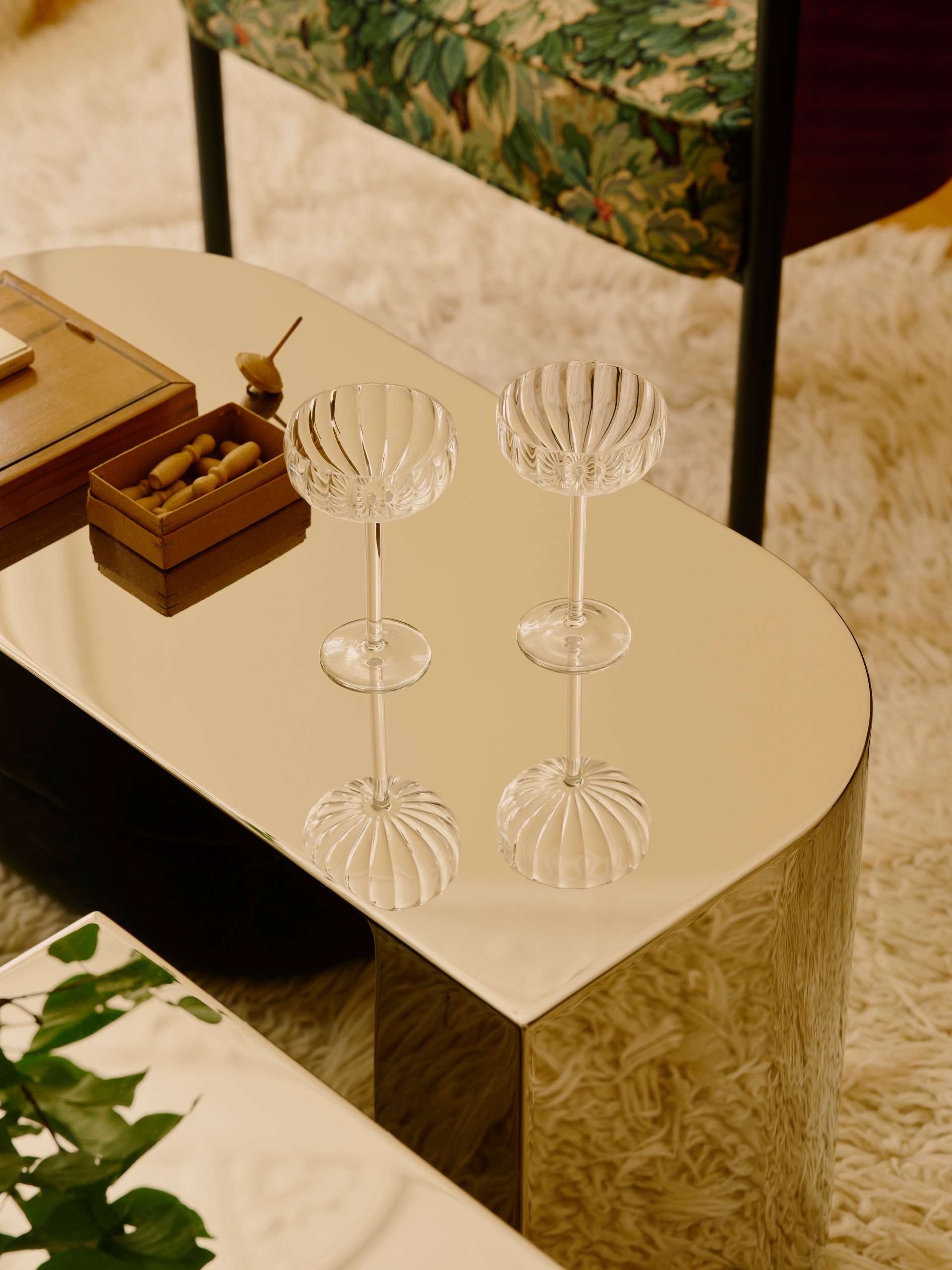
Bouclé, linen, velvet, natural stone and wood create a sensual variety that comes into its own particularly in historic rooms. While smooth surfaces convey clarity, textile textures provide warmth and a pleasant homeliness.
A cream bouclé sofa in front of dark wood, for example, has an entirely different effect than in front of a plain white wall. The contrast between soft texture and historic substance makes the room interesting.
Materials do not have to be flawless. The patina of an old wooden floor or the irregularities of a historic surface can lend a room an authenticity that new materials can hardly reproduce.
5. Make the Most of Generous Proportions
High ceilings and generous room dimensions are among the most beautiful features of many period apartments. At the same time, they demand a special feel for proportion.
Furniture that is too small can look lost in expansive rooms. A generous sofa landscape, a sculptural dining table or a large pendant light, on the other hand, can create a deliberate focal point.
Floor-length curtains also emphasise the vertical architecture and lend a room additional elegance.
When it comes to lighting, an interplay of different light sources is recommended. Pendant lights, table lamps and indirect light create different atmospheric layers and make historic rooms feel homely in the evening, too.
Not every square metre has to be furnished. Spacious period rooms in particular benefit from deliberately empty areas that give architecture and selected design objects room to unfold.
6. See Small Rooms as a Design Statement
Not every room in a historic house has representative dimensions. Small bathrooms, narrow hallways or unusual floor plans are just as much part of the character of many period buildings.
Rather than trying to make such rooms look larger with light colours alone, they can be understood as design experiences in their own right.
In a small bathroom in her villa, Constanze Ladner opts for an expressive cherry red and integrates the existing tiles into the new colour concept.
In a limited space, intense colours, extraordinary mirrors or special lights can have a surprisingly big impact.
A small room does not have to look bigger than it is. Rather, it may convince through its own personality.
7. Put Personality Before Perfection
The most beautiful interiors are rarely those in which every detail is perfectly coordinated. Rather, they tell something about the people who live in them.
Works of art, books, souvenirs from travels, special vintage finds and design objects collected over the years give a home an individual signature.
High-quality furnishing does not have to consist exclusively of exclusive designer pieces either. An individually upgraded standard kitchen can be just as natural a part of a sophisticated interior concept as an iconic piece of furniture.
What matters is less the price of an object than the way it is integrated into a room.
Anyone who wants to furnish their period home in a timeless way should therefore not follow current interior trends alone, but develop a personal idea of how their own home should feel.
For good style is not created by reproducing perfect living worlds, but by the freedom to design one’s own.
Classy Chic: When Past and Present Merge
Constanze Ladner’s Wiesbaden villa shows how harmoniously historic architecture, modern design classics, extraordinary colour concepts and personal furnishing details can merge. Timeless elegance does not arise from a fixed style, but from a feel for proportions, materials and characterful contrasts. A home that preserves its history while making room for new stories.
Discover the current winter issue of THE FRANKFURTER with extraordinary home stories, inspiring interior designers, iconic furniture designs and international architectural concepts. Between historic villas and contemporary living worlds, new perspectives open up for anyone who wants not simply to furnish their home, but to give it an unmistakable personality.
More stories







GET IN TOUCH