

Business
When tyres think
For decades, tyres were regarded as mere wear parts. Today they are developing into intelligent sensors that constantly collect data and communicate with a vehicle’s electronic systems. What used to sound futuristic has long since become reality. Connected tyre systems open up entirely new possibilities for safety, driving dynamics and efficiency – and could change driving for good.
Text Redaktion Photos Pirelli, Pagani
The tyre becomes a data specialist
There are only four points of contact between vehicle and road – the tyres. Each of them transmits acceleration, braking forces and steering movements. At the same time, they constantly respond to temperature, road surface, wet conditions and wear.
It is precisely this information that is increasingly being captured digitally.
Modern sensors today measure far more than air pressure. They analyse, for example:
- Tyre temperature
- Road surface condition
- Grip level
- Load
- Speed
- Wear
- Aquaplaning risk
This data is transmitted to the vehicle in real time and enables assistance systems to make far more precise decisions.
Safety begins on the ground
Many modern safety systems already work with extensive sensor data. ABS, ESP and traction control intervene within milliseconds. The next stage of evolution is to make these systems even more intelligent.
If the vehicle already recognises that the road is getting wet or grip is decreasing, it can adjust braking and stability programmes at an early stage. This also makes it possible to optimise the braking distance. Instead of merely reacting to a critical situation, the vehicle will in future be able to anticipate it in part.
When the car “reads” the road
Things become particularly exciting when several vehicles share their information with one another. If a car drives over an icy bridge or detects aquaplaning, this data could in future be transmitted almost in real time to following vehicles or to a cloud platform. The result: other road users are warned before they reach the hazard. This creates a digital network in which vehicles continuously learn from one another. The road itself thus becomes a source of information.
More comfort through intelligent systems
The benefits are by no means limited to safety. Comfort and the driving experience also benefit considerably from connected sensor systems.
The vehicle can, for example, recognise
- when the optimum tyre pressure has been reached,
- how the suspension should adapt to different road surfaces,
- when tyres should be serviced or replaced,
- or which driving setting currently offers the highest efficiency.
In the premium segment in particular, this is creating entirely new driving experiences.
Less wear, more sustainability
An often underestimated aspect of intelligent tyres is their importance for sustainability. Incorrect tyre pressure not only increases fuel or energy consumption, but also accelerates wear. Through constant monitoring, vehicles can alert the driver at an early stage or, in future, even respond automatically.
This extends the life of the tyres, reduces resource consumption and at the same time improves the efficiency of the entire vehicle. This factor is playing an ever greater role in electric cars in particular, as rolling resistance directly affects range.
Connectivity as the key to autonomous driving
Autonomous driving requires an enormous amount of information. Cameras observe the surroundings, radar measures distances and lidar systems create three-dimensional maps. Yet all these systems primarily answer one question:
What is in front of the vehicle?
Intelligent tyres, by contrast, provide answers to another crucial question:
What does the road actually feel like?
This combination makes automated driving functions considerably more precise. An autonomous vehicle can thus not only detect obstacles, but adapt its driving style to the actual road conditions.
Innovation from the high-performance segment
Many technological developments begin where the highest precision is required: in motorsport and in high-performance sports cars. Innovative sensor technology is first used in vehicles that place extreme demands on driving dynamics and safety. From there, it gradually finds its way into series models.
This development is already familiar from technologies such as carbon brakes, active suspension and modern assistance systems. Intelligent tyre systems follow the same principle. What is being tested in exclusive sports cars today could be standard in family cars or electric vehicles tomorrow.
The car of the future thinks for itself – right down to the tyres
Digitalisation is transforming the automobile profoundly. It has long been about more than large displays or new software functions. The real innovation often takes place where it remains invisible. Intelligent sensors turn tyres into active components of a connected overall system. They supply data, improve safety functions, support assistance systems and help make vehicles more efficient and sustainable. The tyre is thus evolving from a passive component into an intelligent source of information – and is taking on a key role for the next generation of the automobile. While many technologies of the future are still being debated, this development is already rolling along our roads.
More innovations from the world of mobility
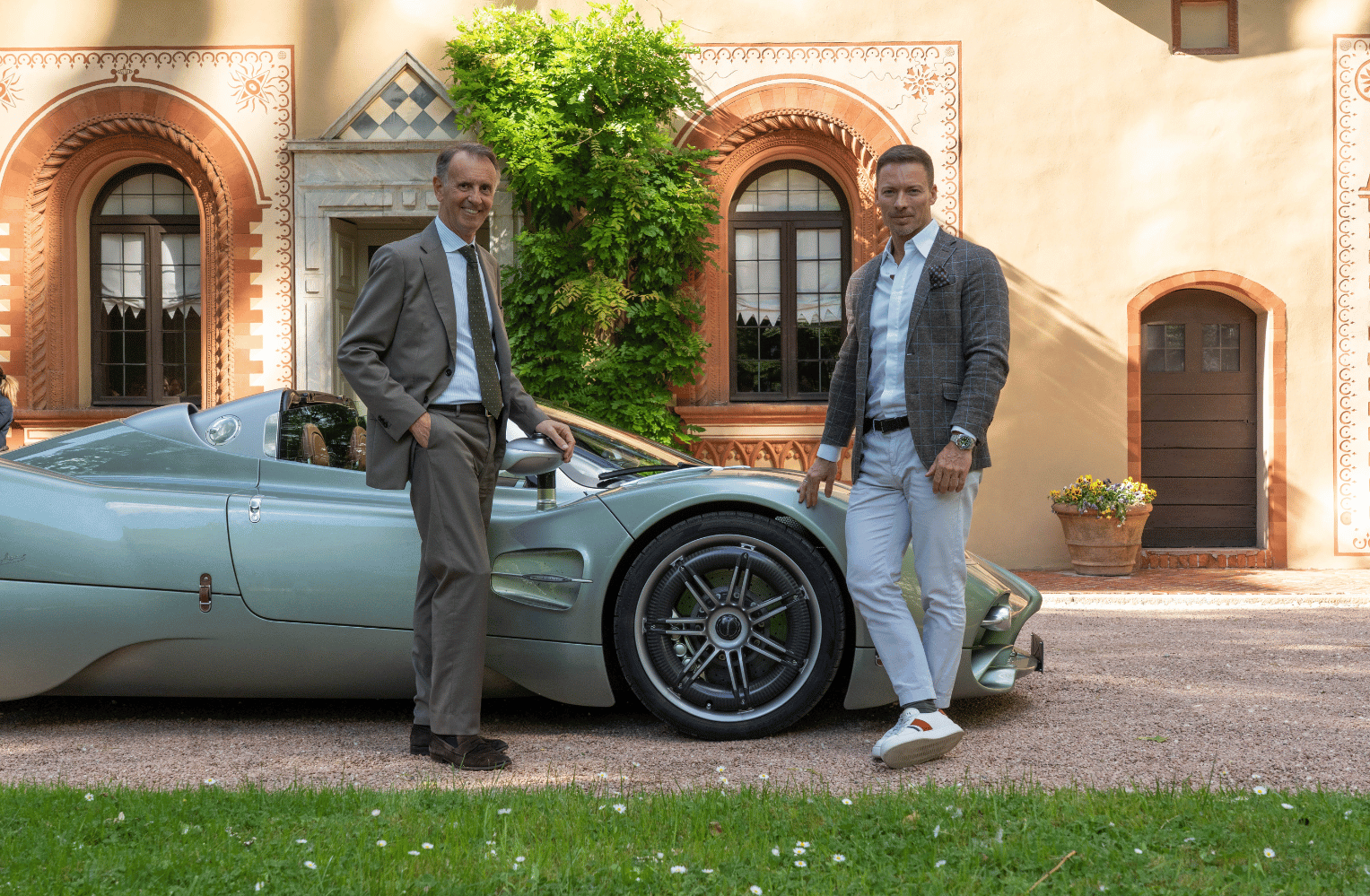
This article shows how intelligent sensor technology and connected tyre technology are changing the mobility of the future and creating new possibilities for safety, performance and driving dynamics. The collaboration between Pagani and Pirelli is a striking example of how innovative technologies are already being used in the high-performance segment today.
And if you would like to explore the connection between technology, design and automotive innovation further: in the current summer issue of THE FRANKFURTER we take a special look at Pagani and Pirelli – complemented by selected stories from business, technology, design and mobility.
Impressions

More stories








GET IN TOUCH