

Business
THE PHOTOGRAPHIC EYE
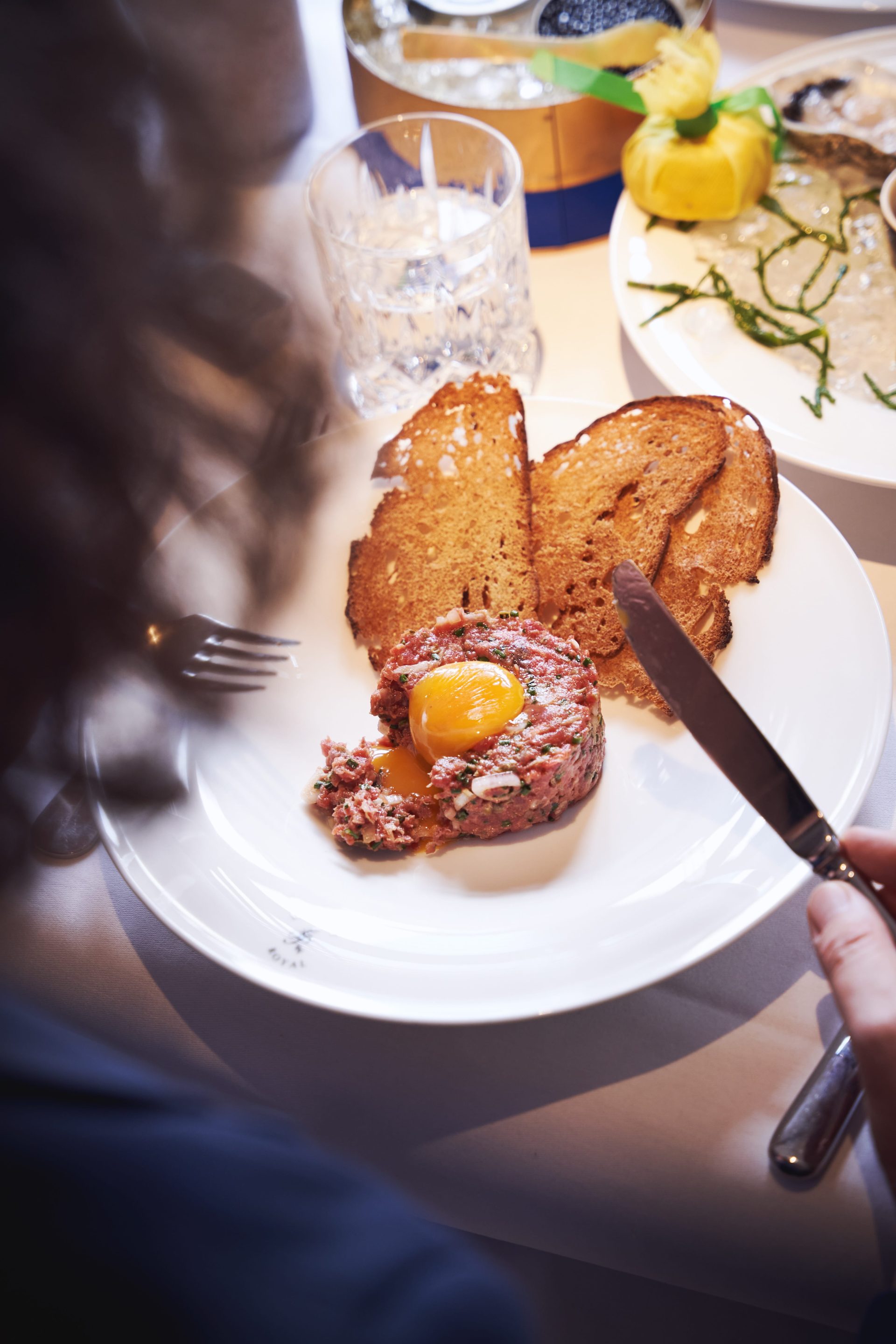
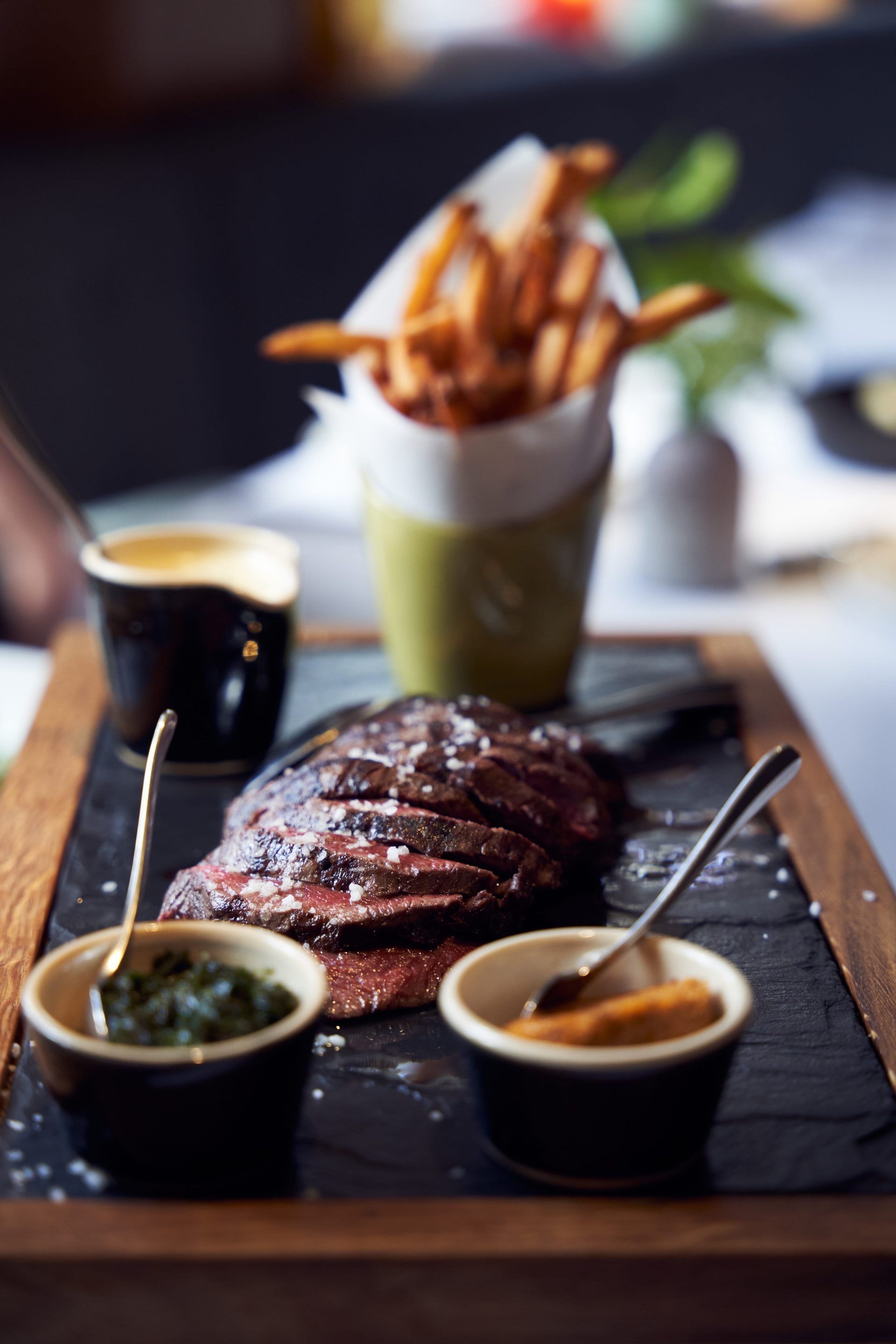
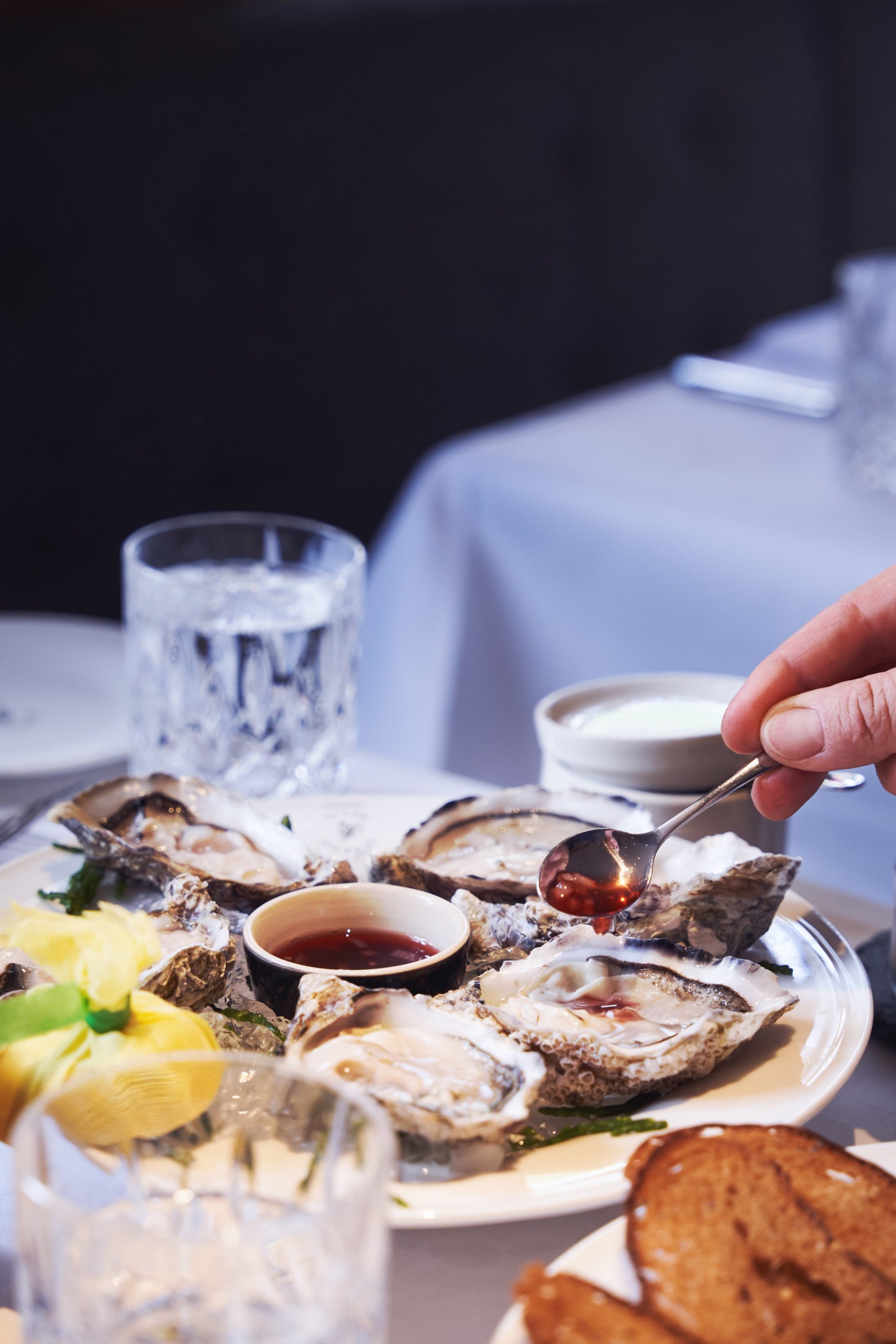
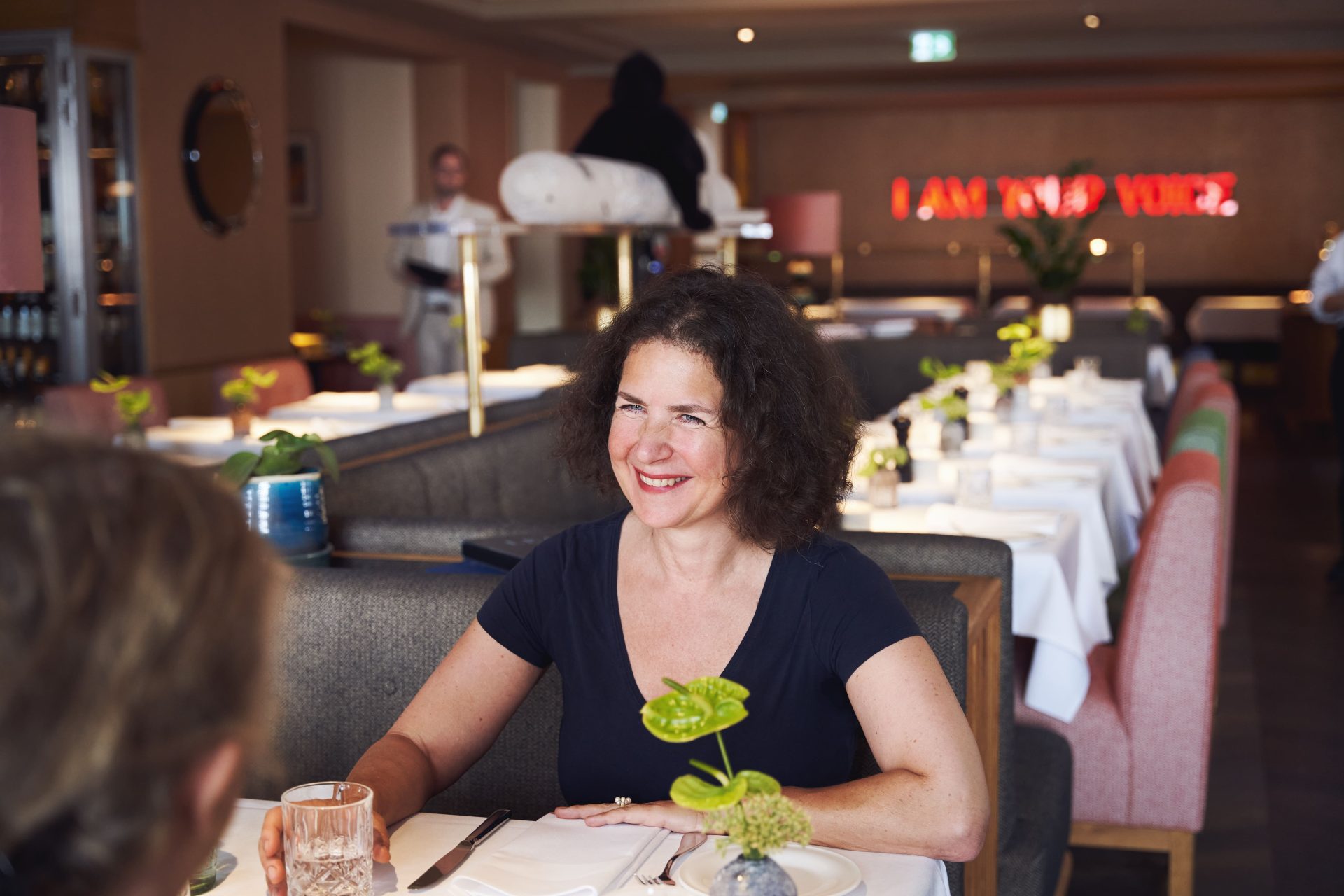
Dr Christina Leber heads one of the largest and most important collections of artistic photography in Germany, which celebrates its 30th anniversary next year. When the DZ Bank in Frankfurt began collecting photography, it was a courageous move, she says. THE FRANKFURTER met the enthusiast at the French steak restaurant Le Petit Royal in the boutique hotel Ameron Frankfurt Neckarvillen to talk about courage and necessary passages.
Text Dr. Jutta Failing Photos Betti Klee GmbH
“I AM YOUR VOICE”, the neon lettering by the feminist conceptual artist Claire Fontaine, is part of the hotel restaurant’s collection of top-class art. You almost feel as if you are stepping into a cosy gallery. Here you dine surrounded by original sketches by Yves Saint Laurent, glass art by Paul Hance and a textile sculpture by the German artist Cosima von Bonin. Not forgetting the gorgeous antique Ikora table lamps or, next door in the French Bento Bar, the light installation by Tobias Rehberger. In short, the perfect setting for lunch with a recognised art connoisseur like Christina Leber. She arrives on the dot. A clear, pleasant voice, knowing eyes and, as always when you see her at work, dressed in the dark colours of the art and banking worlds. Over the next two hours, she will tell us with astonishing openness what made her who she is today.
She arrives on the dot. A clear, pleasant voice, knowing eyes and, as always when you see her at work, dressed in the dark colours of the art and banking worlds. Over the next two hours, she will tell us with astonishing openness what made her who she is today.
10,000 WAYS TO SEE THE WORLD
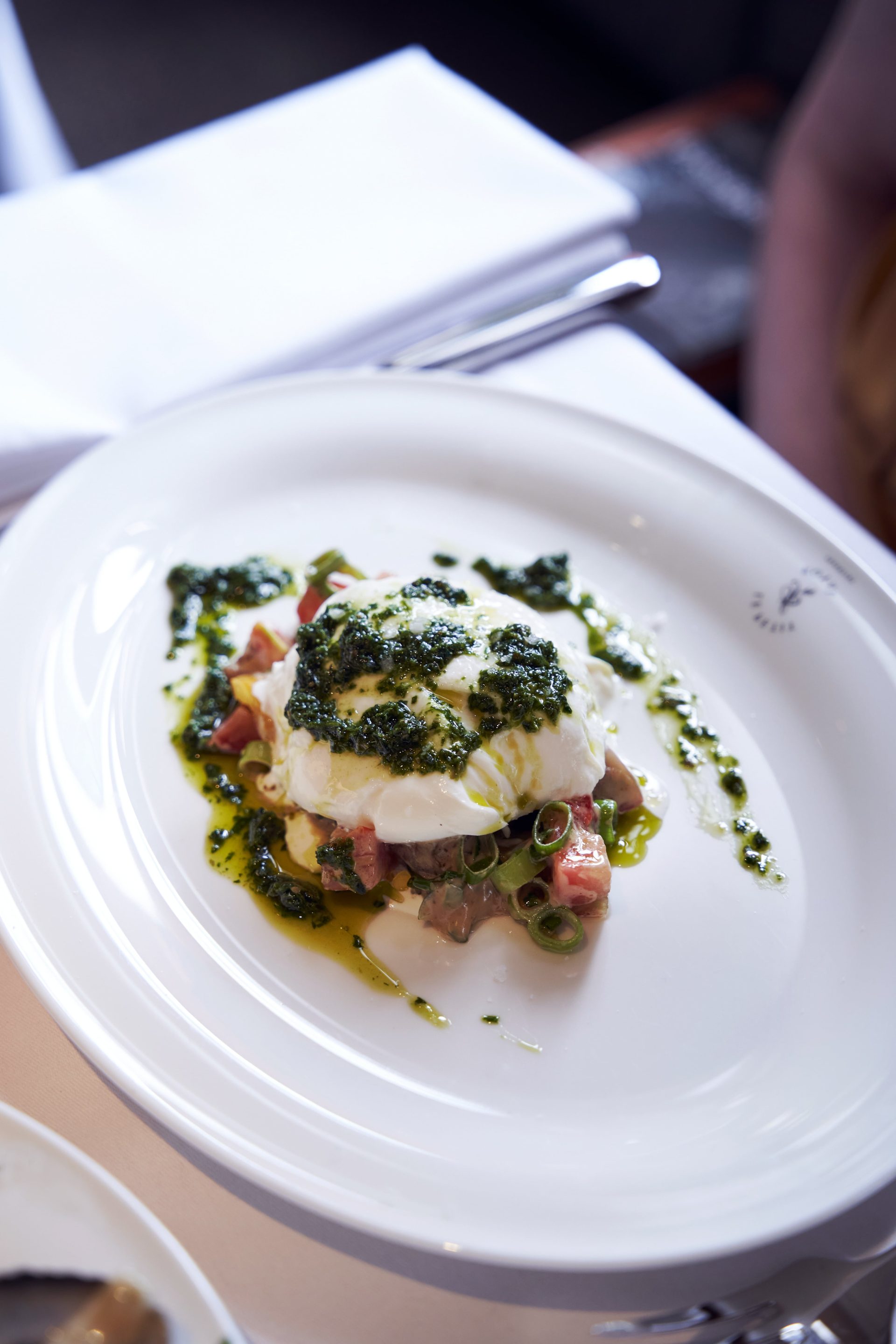
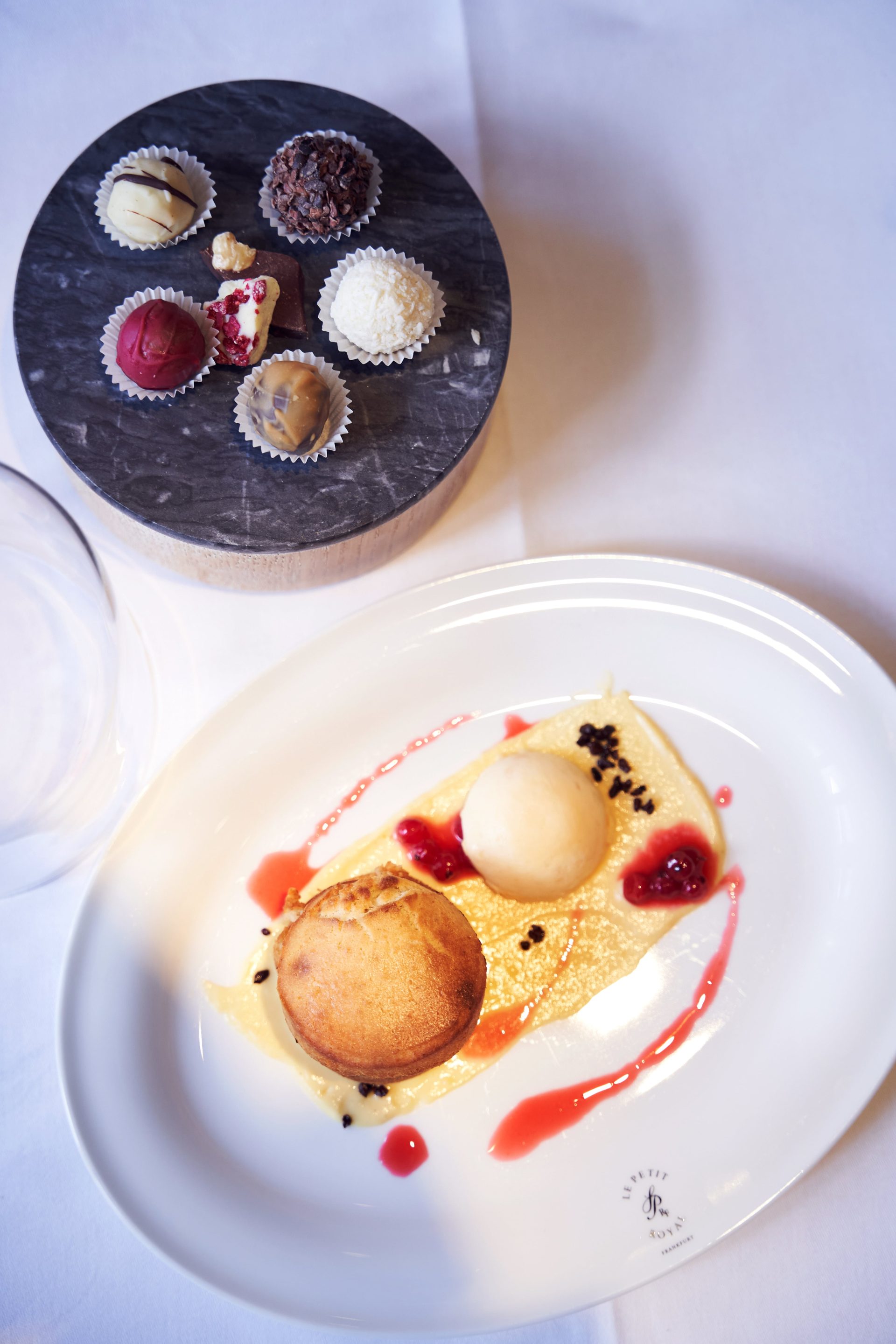
“My son and I love oysters,” she enthuses, looking at the starter. She rarely goes to restaurants, she admits – too often you are “disappointed, because we cook so well at home”. Le Petit Royal doesn’t disappoint us; the menu is fabulous, crowned by meltingly tender Kobe beef fillets and a parsley risotto. Christina Leber raised her son, now twenty, on her own, and the strong bond between the two often comes through. I want to know more about the family she comes from, to dig carefully for the roots of her passion for art.
But first, the fruits of her labour: her many years of work for one of Germany’s most renowned corporate collections. The DZ Bank art collection today comprises around 10,000 works by more than 950 international artists, with a focus on photographic forms of expression from 1933 to the present. In 2021 the collection was placed in the care of a foundation set up specifically for the purpose. “A great stroke of luck,” says Christina Leber, because among other things it makes it possible to apply for public funding for the education programme. The activities are wide-ranging, from exhibitions and free educational programmes for children to training courses for teachers and scholarships. The collection supports the Städel Museum and maintains long-standing collaborations with other cultural institutions. “‘They just want decoration’ – corporate collections still have to battle this prejudice. What impressed me from the start was that the DZ Bank thought very clearly about what it collects, and also that there was always professional leadership that coordinated with the board and senior management as equals. That has done the collection good.”

PASSAGES
The collection’s consistently high quality and its public visibility are largely thanks to Christina Leber. She talks about the current exhibition “Passages”, which addresses processes of transition, and about an employee art project in which, for example, the photographer Loredana Nemes shows bankers wearing their jackets inside out over their heads: the inner lining becomes, as it were, the outer skin, and the personalities become visible. “The DZ Bank decided early and courageously to collect artistic photography, and that has proven to be very forward-looking.
At the time it was the first company to collect photography, and there was only analogue photography. Today, alongside digital and post-digital photography, there are also numerous crossovers. Photography has therefore become a medium that has developed enormously. Nikon and Canon have just announced that they are discontinuing the digital SLR, which means that in future there will only be mirrorless cameras. Because photos are used so much in new media today and the images often have little to do with reality, it is important to us that photography itself is questioned. There are now many artists who no longer take photographs themselves but draw on found photographs for their artworks. That’s why we no longer add pure photographers to the collection.”
SILENCE
The anniversary will not be celebrated with fanfare; there will be three exhibitions at the art foundation and one at the Stiftung Kunstforum of the Berliner Volksbank. But also a collaboration with “Kunst im Tunnel” (KIT) in Düsseldorf. “Today the collection is developing slowly. With the team’s ideas, we try to develop current themes from the collection, like the exhibition ‘Passages’,” explains the director. Development is the key word. Her mother was born in Potsdam; her father, who died last year, came from Frankfurt and made a career as a chemist. They are war children. “Father was very philosophically minded and a fan of Thomas Aquinas; he came from a farming family in Flörsheim. My mother’s father was an engineer at AEG in Berlin. She comes from a very Catholic family, the sixth of eight children. Her mother was born in Potsdam; her father, who died last year, came from Frankfurt and made a career as a chemist. They are war children. “Father was very philosophically minded and a fan of Thomas Aquinas; he came from a farming family in Flörsheim. My mother’s father was an engineer at AEG in Berlin. She comes from a very Catholic family, the sixth of eight children.
The fact that the DZ Bank decided 30 years ago to collect photography has proven to be very forward-looking.
— Dr Christina Leber
Faith was very important in our family.” Her most formative experience: “As a young girl I thought it was my fault that my mother didn’t talk, but that wasn’t true. It was her experiences of the war that kept her from speaking. I was dyslexic, so severely that I only finished school at 22. Today, with my experience as a trained systemic therapist, I think there was a psychological cause behind it, because in a language other than my mother tongue the dyslexia simply vanished. That reminds me of the novel ‘Die Erfindung des Lebens’ by Hanns Josef Ortheil, which describes a similar story. Like the hero of the novel, I set out on my own. I wanted to understand. Today my texts are my means of expression.”
PARTICIPATION
Her language is precise, and not only in writing. In conversation she adds an empathetic openness, appreciative and interested in the person she is talking to. We talk, for instance, about the “giraffe language” of Marshall Rosenberg, the inventor of nonviolent communication. “I practised this ‘language’ with my son, who was nine at the time. As a result, he corrected me very often. He understood it immediately. Children seek experiences; they are curious. When he was six, he asked me to find him a school where ‘inventions’ was taught as a subject. There actually is one in Leipzig. We need schools that teach through experience and nurture talents.” Then she turns to the Covid crisis, which she says was also a passage, and the hope of many that everything would go back to how it was afterwards has been dashed. Now it is about war and global warming. “I hope that in future I’ll be remembered as the one who carried the art collection out into the world and to people, making it approachable. For me, art was a way of taking part in the world, because I couldn’t read. That shaped me.”
More stories








GET IN TOUCH