
Business
THE GARDENER
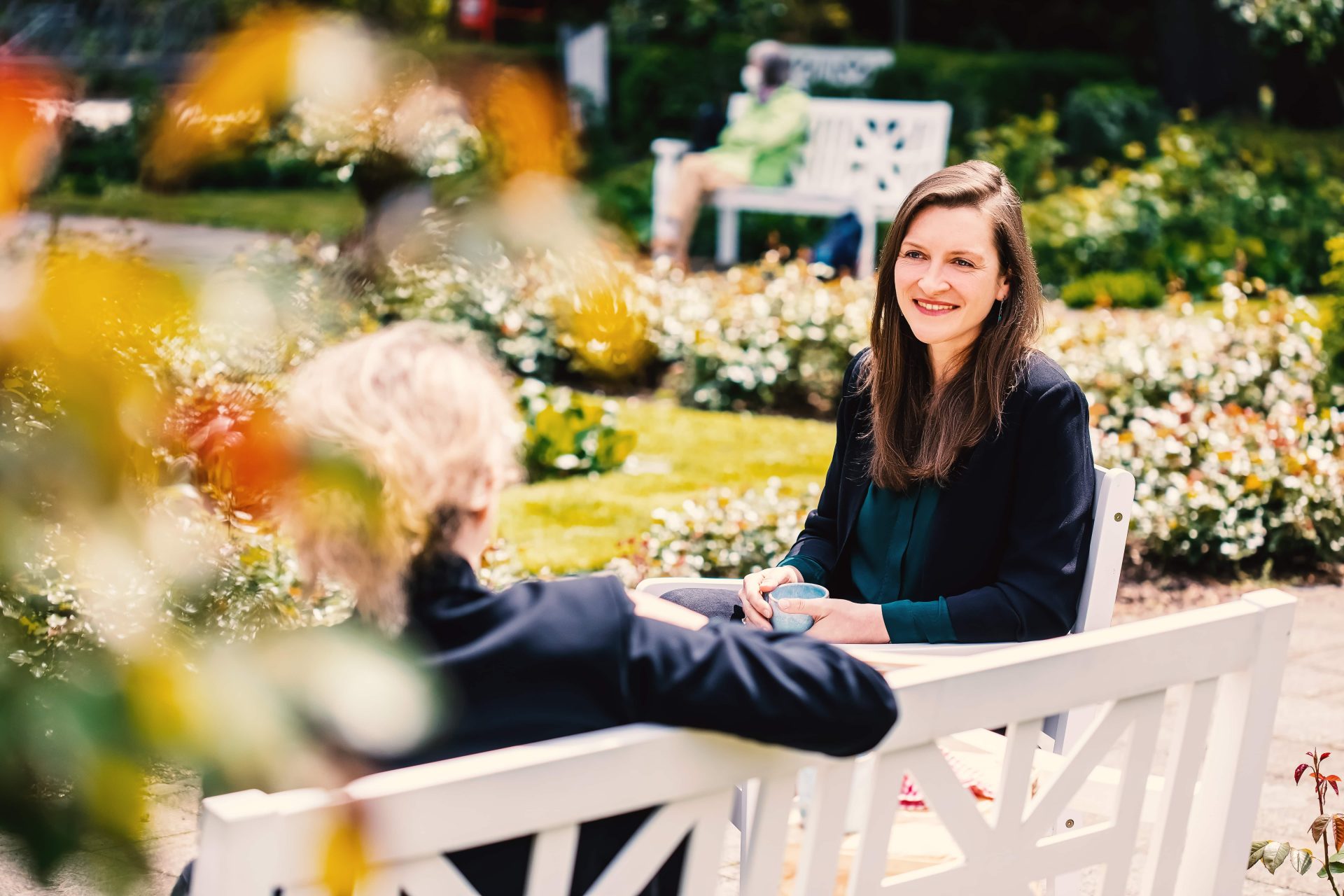
And now butterflies too! For Palmengarten director Katja Heubach, the insects are more than just beautiful creatures. Over a picnic in the Palmenhaus we talked to her about the anniversary summer, wedding dances and the devil.
Text Dr. Jutta Failing Photos Nikita Kulikov
SEA MONKEYS
First of all, we talk about water fleas. Katja Heubach knows them inside out. For her diploma thesis she researched the genetics and occurrence of these tiny creatures in Lake Constance. Aren’t those the prehistoric shrimps that used to come as a gimmick with Yps comics? “Sea Monkeys”? With a smile, the scientist explains what these animals are all about. She has a knack for lively explanation without lecturing at length, and she is not easily ruffled. Can she hear the grass grow, we ask, and how green are her own fingers? “On my balcony I tend my little green oasis of calm,” the city gardener reveals about her private flower bed in the Ostend.
THE GARDEN OF TOMORROW
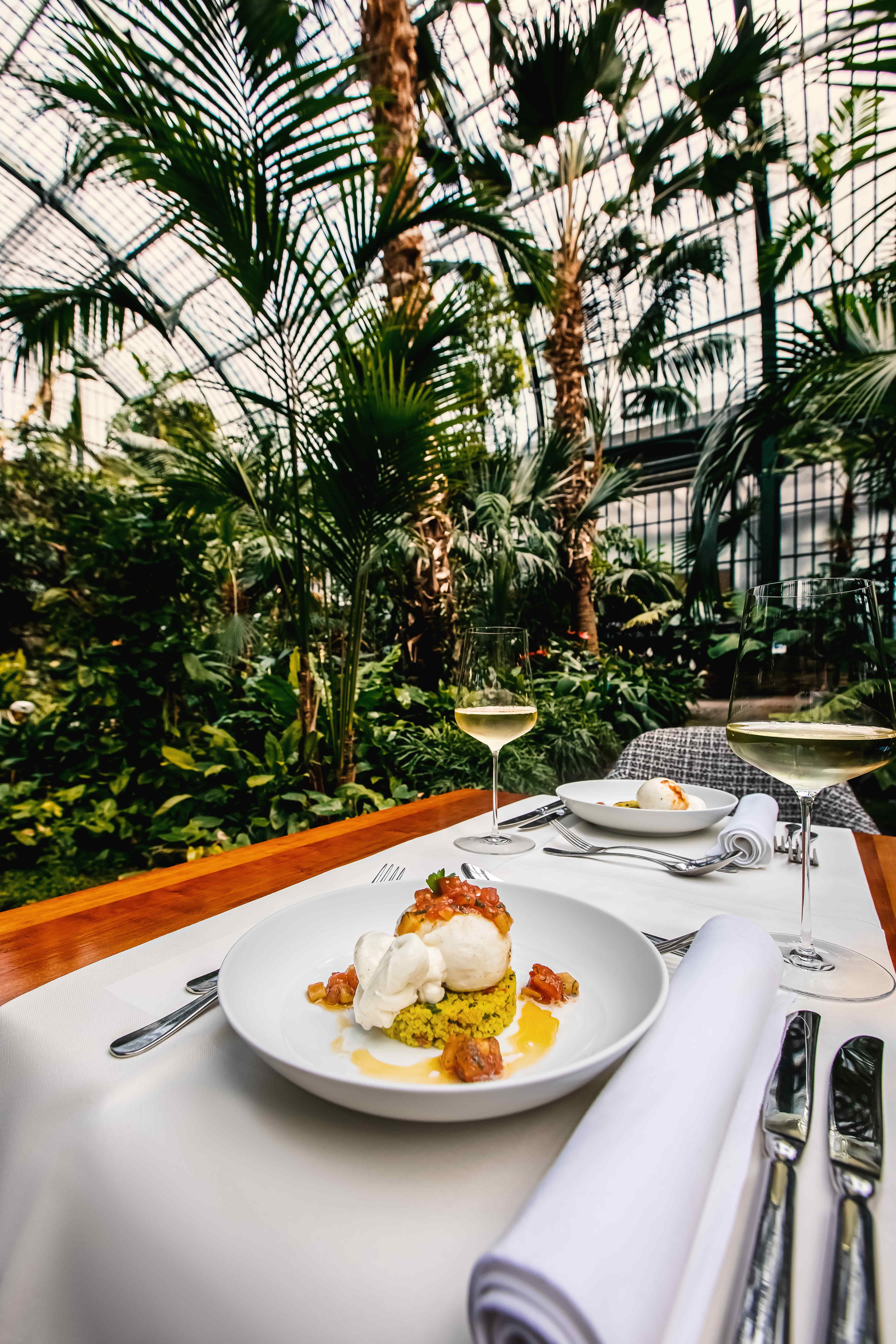
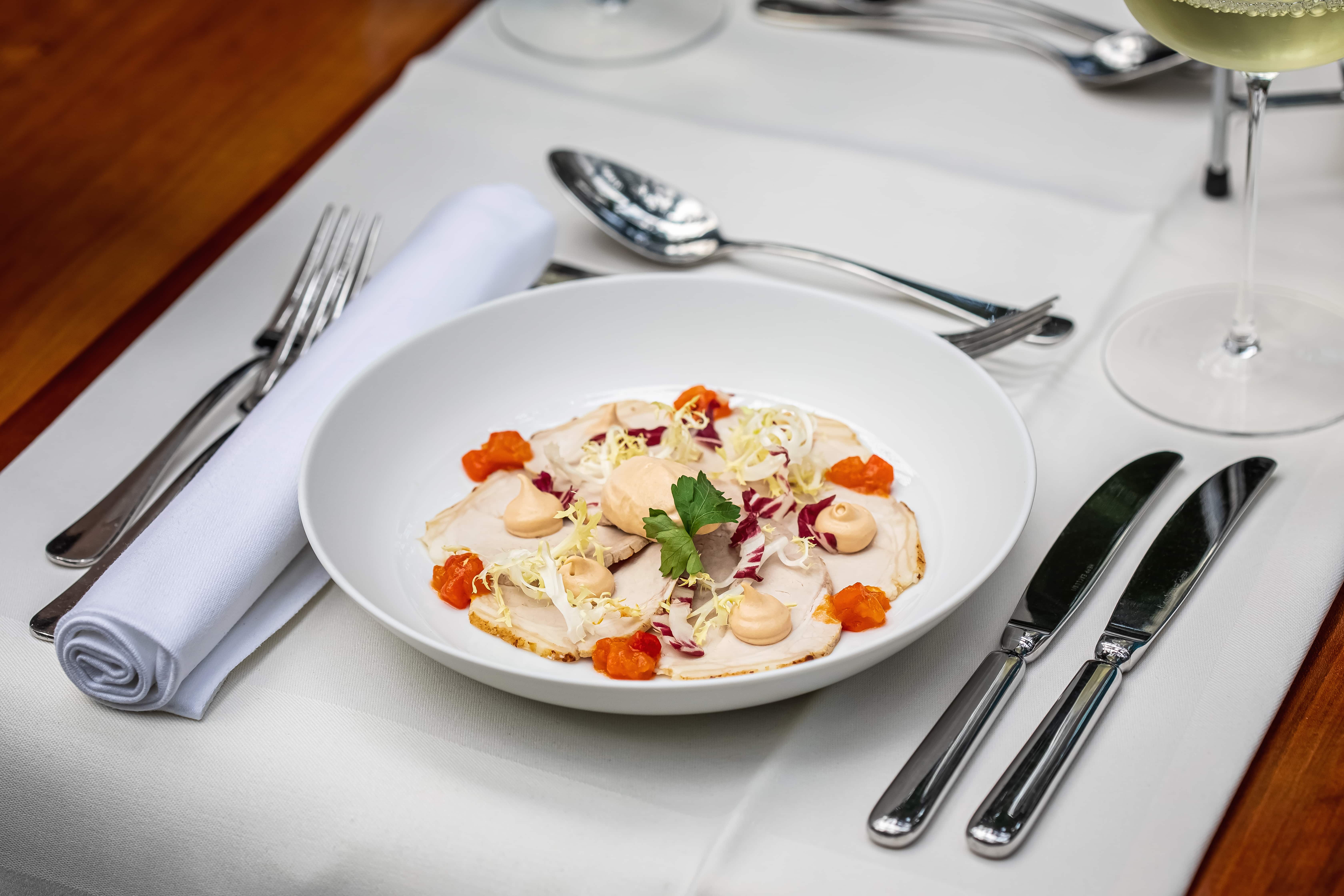
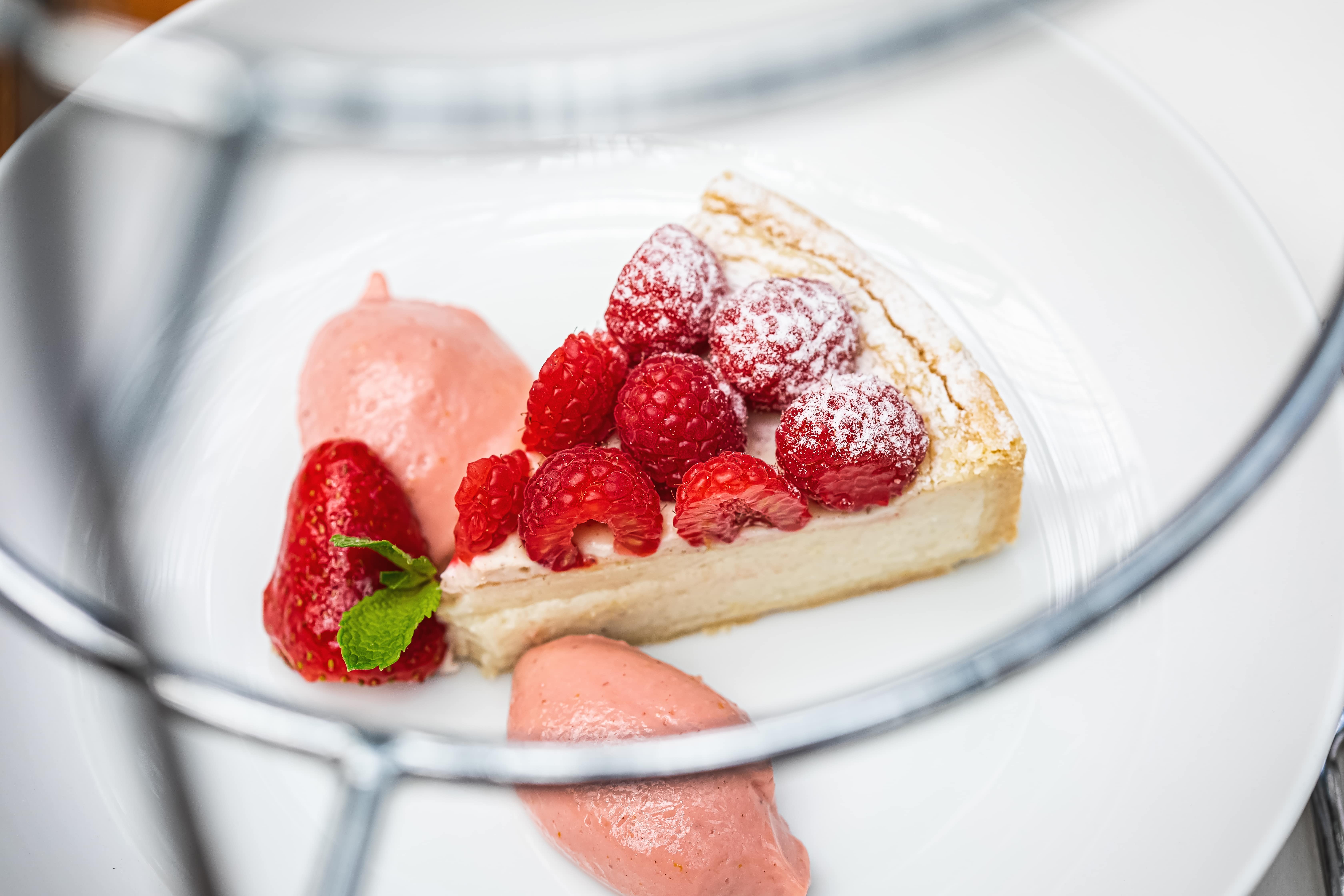
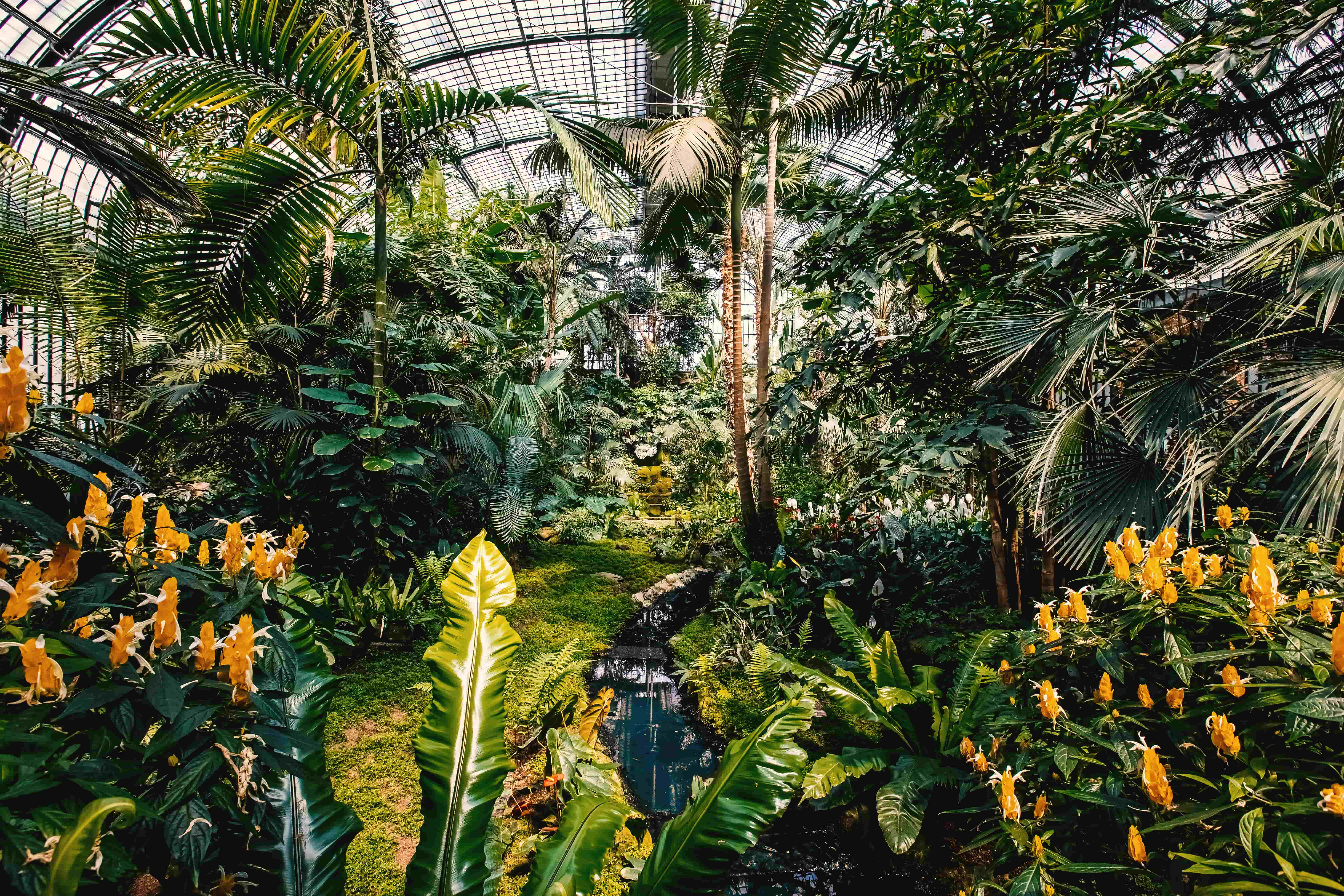
In the Palmenhaus, the heart and showpiece of the garden, the restaurant Lafleur serves us an elegant plated picnic, and everything two-Michelin-starred chef Andreas Krolik has devised for it, including of course his vegan raspberry cake, has the wow factor. That’s our cue. Because the Palmengarten is also about enthusiasm. For 150 years it has been a place to get close to tamed nature in a special way. “Our great strength is the analogue,” says Katja Heubach, but: “At the same time we want to create digital opportunities for participation and experience, so that future generations are amazed too. I find augmented reality exciting. For instance, you could use a smartphone to simulate the beautiful copper beech I can see from my office through its annual cycle and watch how its foliage changes over the year.” The Palmengarten of the day after tomorrow will have to adapt to the effects of climate change, the director rightly recognises: “What do we plant today that will still be standing in 30 to 50 years, especially with regard to trees and shrubs? These are important considerations. The English lawn is a design element of the 19th century – and very thirsty. Our flower meadow, on the other hand, shades itself because it has a longer mowing cycle, so little gets scorched. But of course we still want to be a show garden that looks after its heritage in a modern way. My goal is to equip the garden and its facilities for change on many levels while at the same time ensuring that we make our contribution to climate and species protection.”
BUTTERFLIES CELEBRATE THEIR WEDDING
The devil tore out the baobab tree and stuck it back into the ground branches first, so that its roots now reach into the air. “This legend is widespread in Africa. Anyone who wants to see the tree here will find it in the Tropicarium,” explains Katja Heubach, taking our hint. She spent several years doing research in West Africa, in Benin and Burkina Faso. The water-storing baobab interested her in the context of human–nature relationships in savannah ecosystems. Sometimes she longs for the warmth of tropical Africa, she admits.
Here you can watch butterflies in flagrante.
— Dr Katja Heubach
Surely the show houses could ease that a little, we suggest, and certainly the new flower and butterfly house, which “fluttered” into the garden late, but just in time for the anniversary. Countless tropical butterflies fly freely here, pollinating flowers, sucking nectar, loving and reproducing – already a crowd-puller: “We get the cocoons from a sustainable farm in Costa Rica. Watching these exotic creatures as they change form three times in their lives is impressive. I find the wedding dance of the palm-sized cobalt-blue morpho butterflies wonderful, for example. But in the new show building we don’t stop at the aesthetics of butterflies; we also teach adults and children how important insects are for our ecosystems and therefore, ultimately, for us humans. The subject of pollination ecology, which runs as a central theme through the entire Palmengarten, has its starting point here.”
TAPPING STONES
Where does the interest in biology come from? “Most certainly from my grandfather, who was a vet. I went on walks with him to the Fuchsturm in Jena and to the shell limestone deposits there, where we looked for fossils.” After her Abitur she first studied architecture in Berlin, quickly switched, wanted to stay in Berlin and ended up at Goethe University by chance. Chance? “Chance is when God wants to remain anonymous,” Katja Heubach surprises us. Be that as it may, everything falls into place and bears fruit. Frankfurt’s environment councillor, Rosemarie Heilig, Heubach’s boss today, trusted her with the management of the Palmengarten: “Even though I had little organisational and leadership experience up to that point. The feeling that she has so much faith in me still carries me today.” She has a great deal of creative freedom, says Katja Heubach, and as head of a 169-strong team she relies on the expertise of every single employee. In her first year she may have wanted too much too quickly; “I’ve become calmer.” Calmer, but certainly not idle. She has big plans and wants the Palmengarten to make a stronger showing internationally again.

SHEPHERD’S PURSE
Forest bathing? Which three plants would she take with her on Noah’s Ark? Questions like primroses – the city gardener is happy to open up. She tells us that the Riederwald is her favourite place for woodland walks, an overlooked gem: “It’s so wonderfully natural there; many people only associate the Riederwald with a motorway exit. And I’d take shepherd’s purse with its heart-shaped fruits on the ark – its Latin name, Capsella bursa-pastoris, simply sounds beautiful – plus the forget-me-not, as a message not to forget the Earth, and the coffee shrub as a crop.” This selection says a lot about her, and she would know, because psychological topics and anything to do with mindset interest her greatly. And yes, the grass can hear. During the anniversary summer there will be sound installations outdoors.
DR KATJA HEUBACH
Dr Katja Heubach, 39, graduate biologist specialising in ecology and biodiversity, director of the Palmengarten and Botanical Garden Frankfurt since 2018. Grew up near Weimar. Impressive CV with positions in science and research. At 14, at her own request, she moved to the boarding school Landesschule Pforta, a former monastery in Naumburg/Saale. “I loved the St Clare’s books. And boarding school was exactly like in the novels, midnight feasts included.”
More stories








GET IN TOUCH