
Business
THE GAME CHANGER
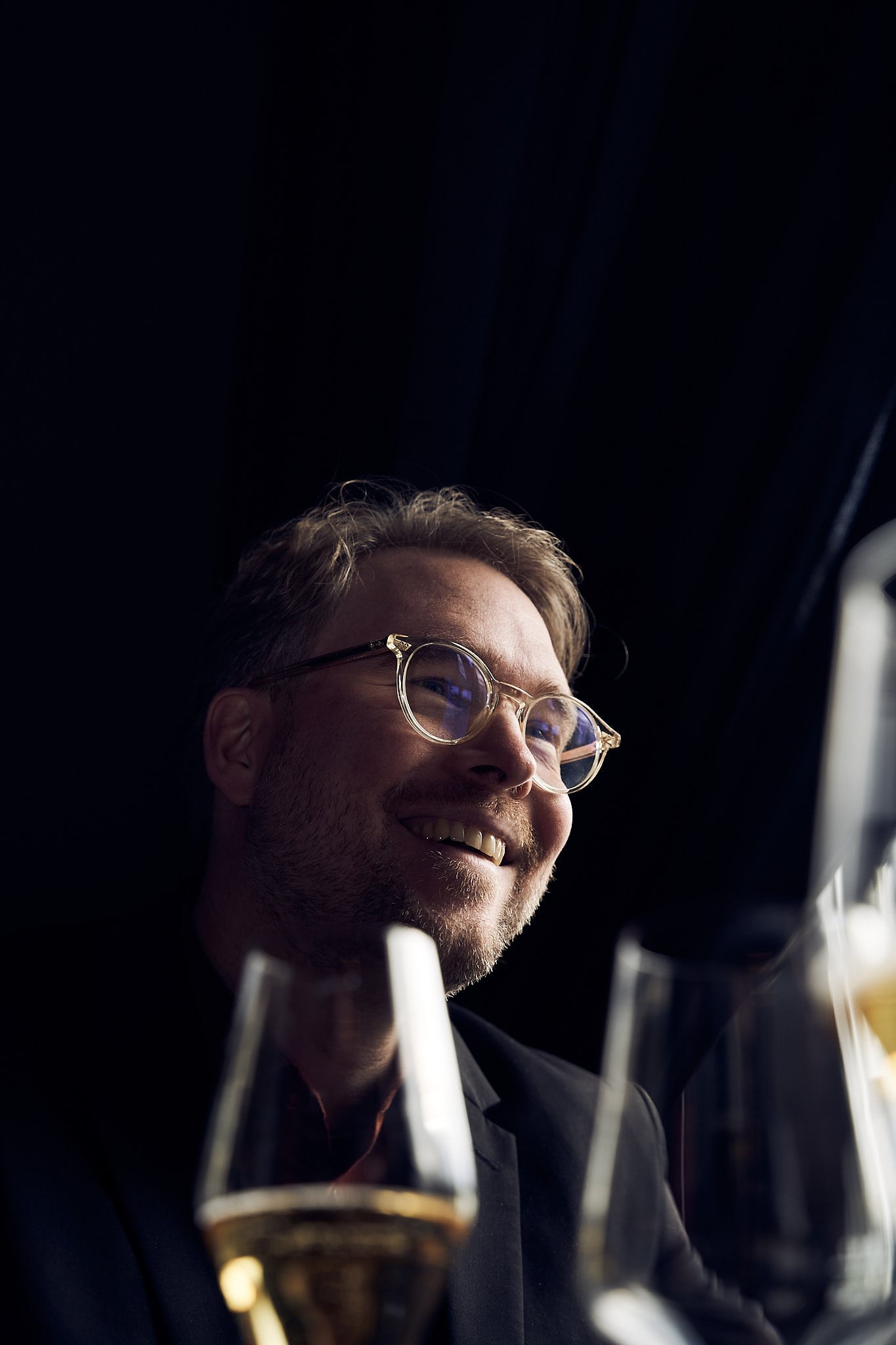
“At the Schirn, we don’t like the term ‘blockbuster’ exhibition,” says director Sebastian Baden, and over a lunch interview at the vegan Michelin-starred restaurant Seven Swans he explains why. Almost a year into this high-profile post, he is driving forward the diversity of the art venue with topical questions.
Text Dr. Jutta Failing Photos Betti Klee
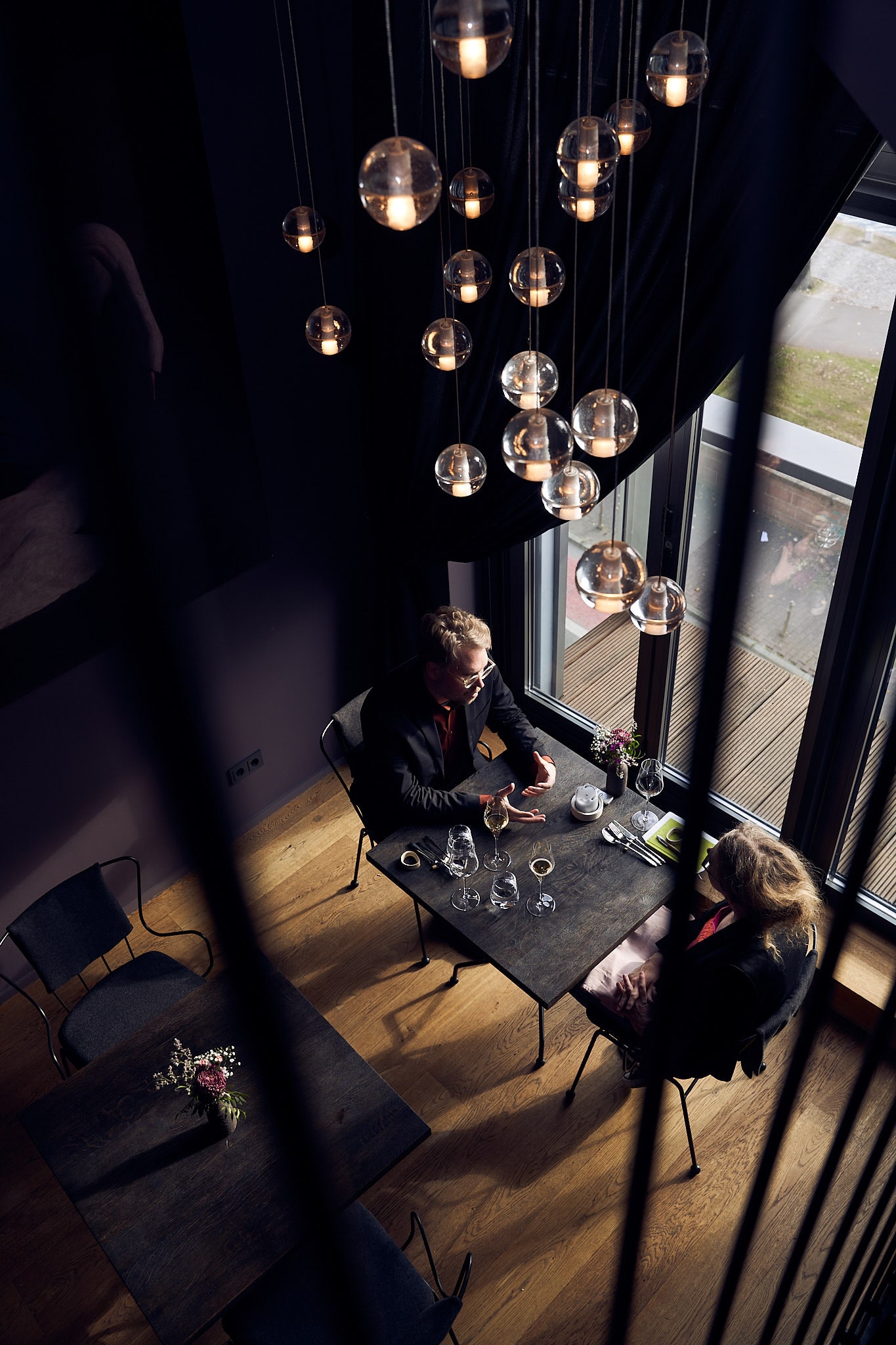
It’s a cold day. The sun is only slowly edging its way over the Mainkai. From the tall window at the Seven Swans, Sebastian Baden looks across the river to Sachsenhausen, where he now lives. “At the very beginning, my wife and I had a flat right next door. So the view of the water is familiar to me,” he recalls of his first weeks in Frankfurt. He speaks precisely, with a pleasant reserve, and in conversation proves an attentive observer, equipped, as he says himself, with the typical humour of the Western Palatinate. He grew up with a twin brother on the border with Saarland; his father was a lawyer, his mother a teacher. “We’re a humorous family; it runs in the family. Directness and humour are what set us apart.” Since July last year, Sebastian Baden has been director of the Schirn Kunsthalle Frankfurt, succeeding Philipp Demandt, who in 2016 had taken over the directorship of this Frankfurt institution as well as of the Städel Museum and the Liebieghaus Skulpturensammlung from Max Hollein.
FAIRYTALE JOURNEY
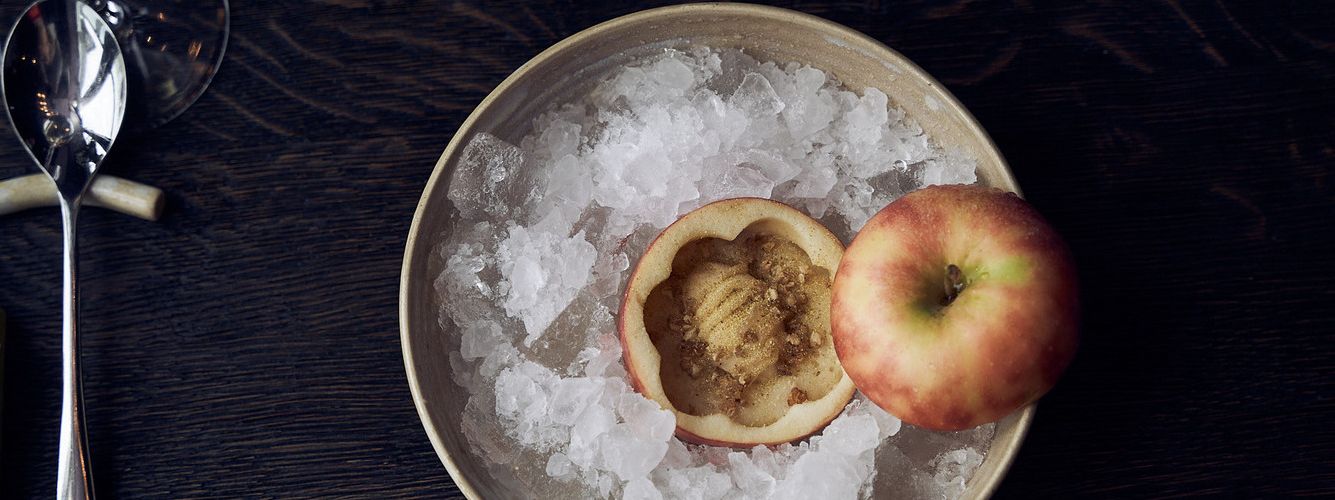
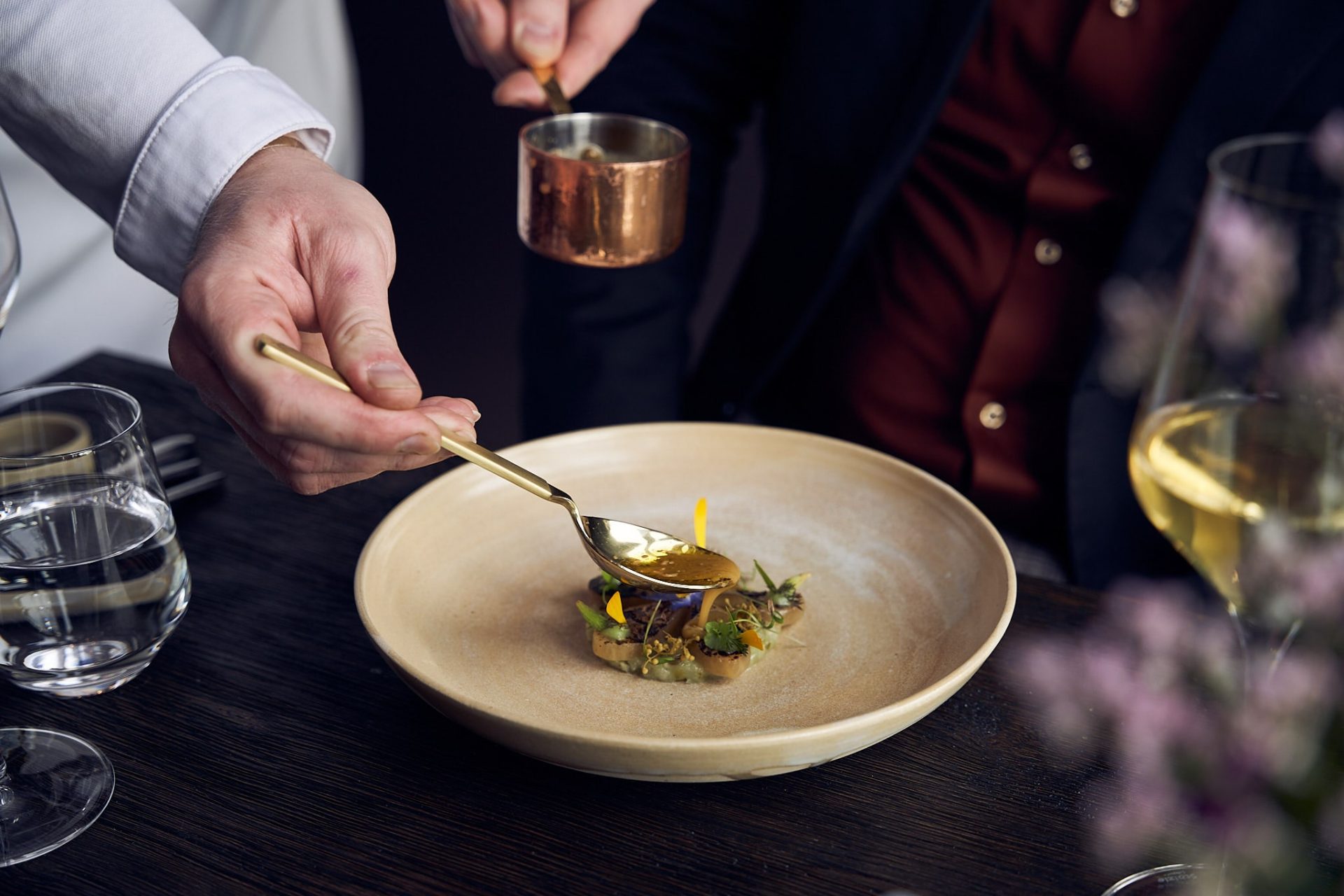
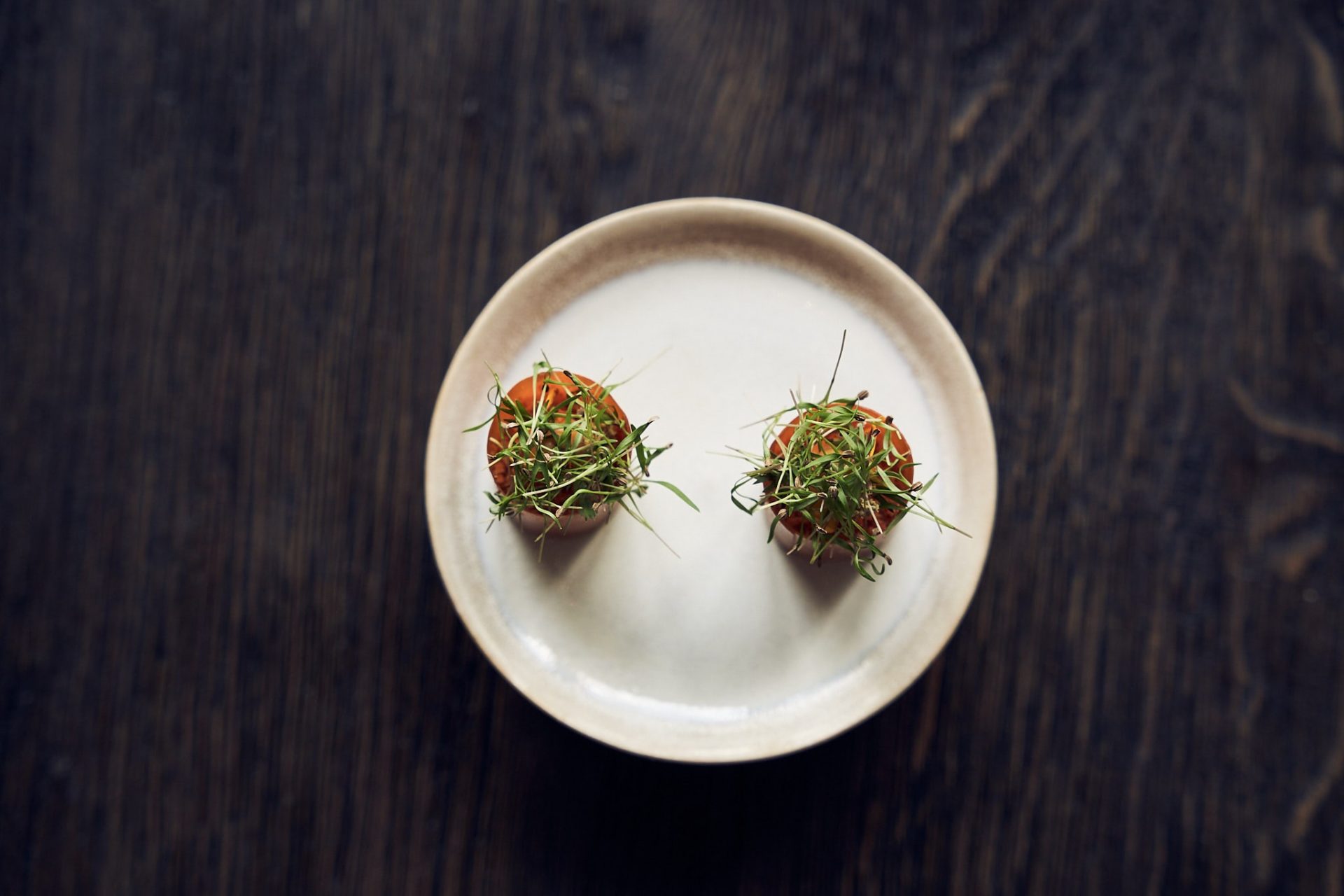
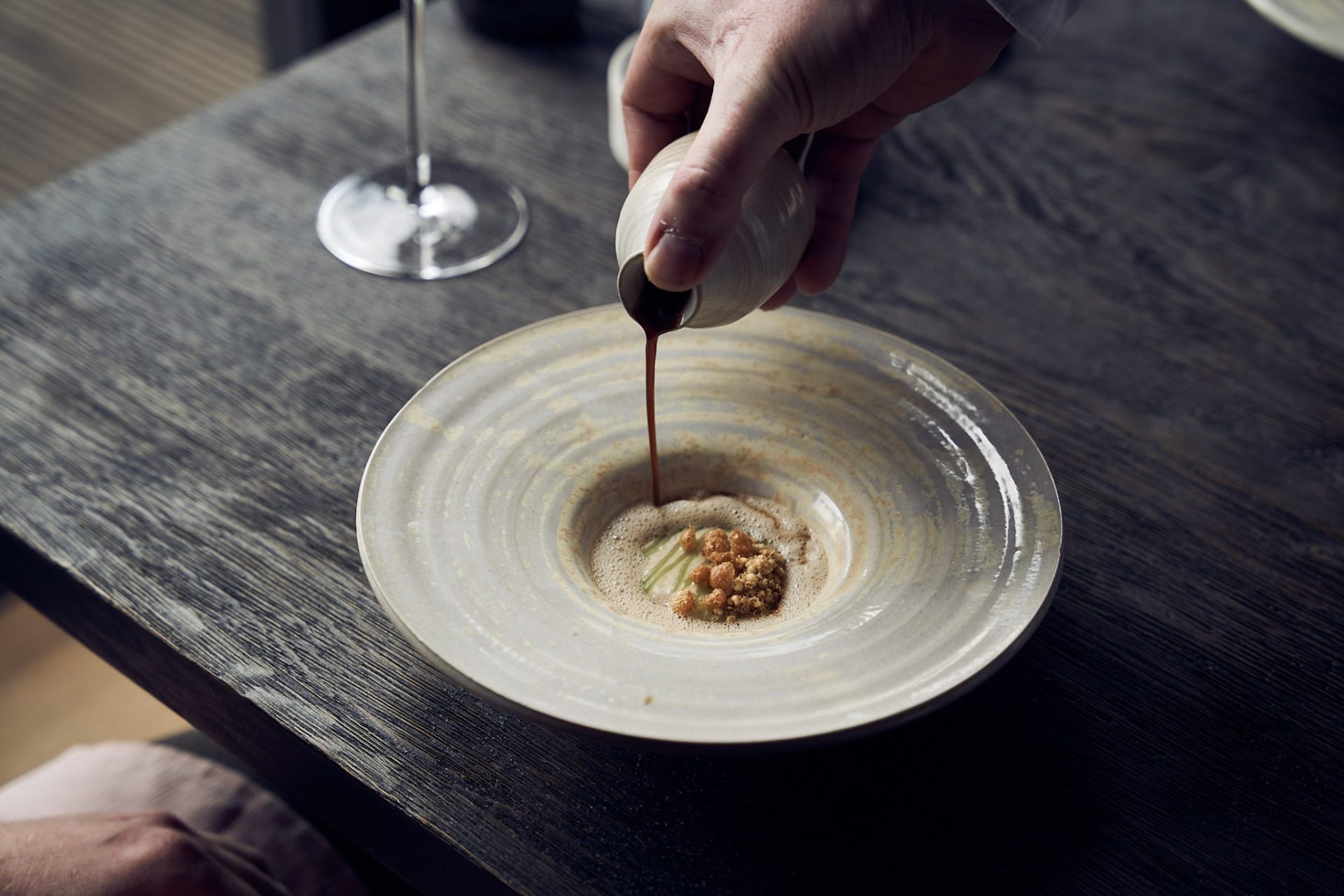
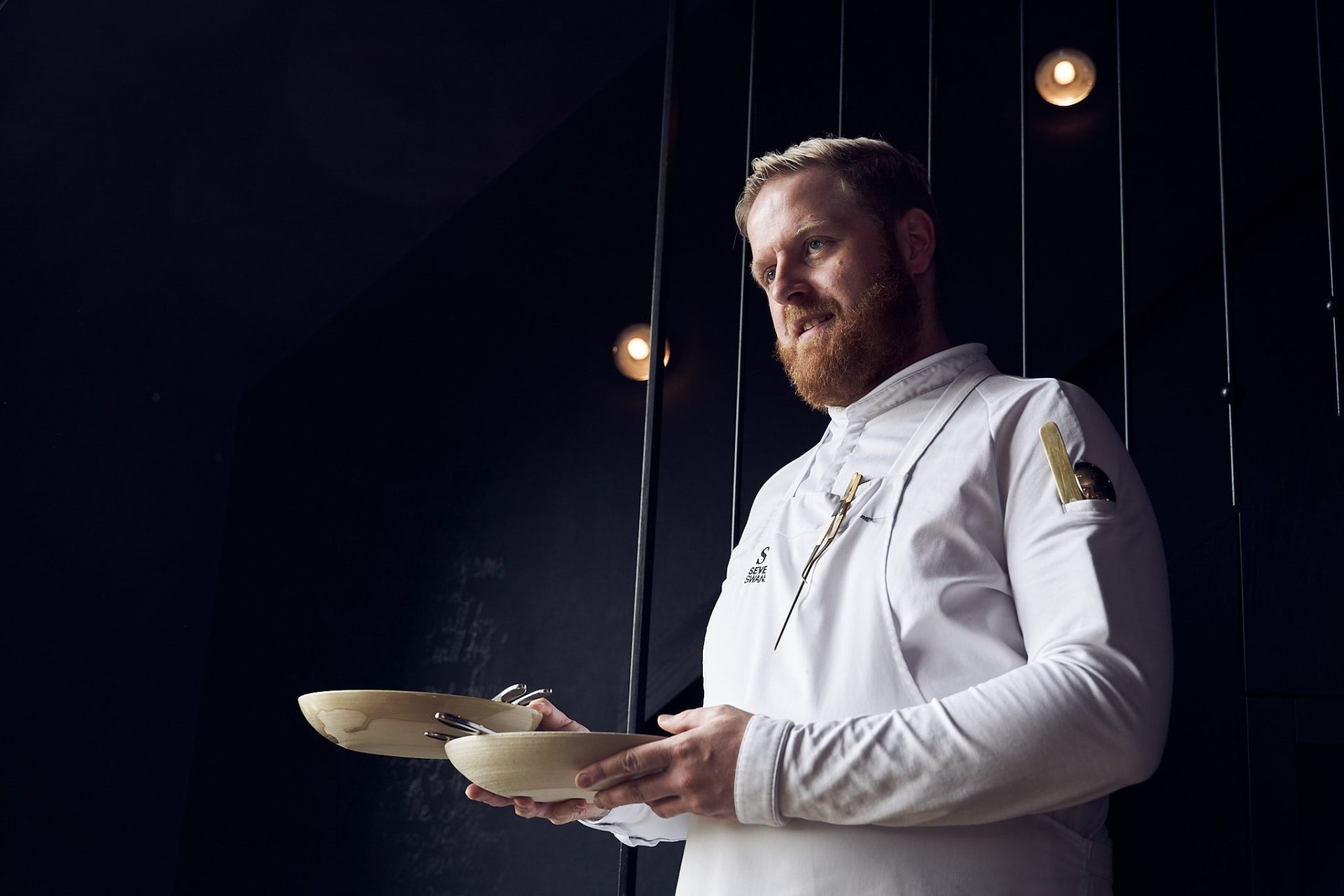
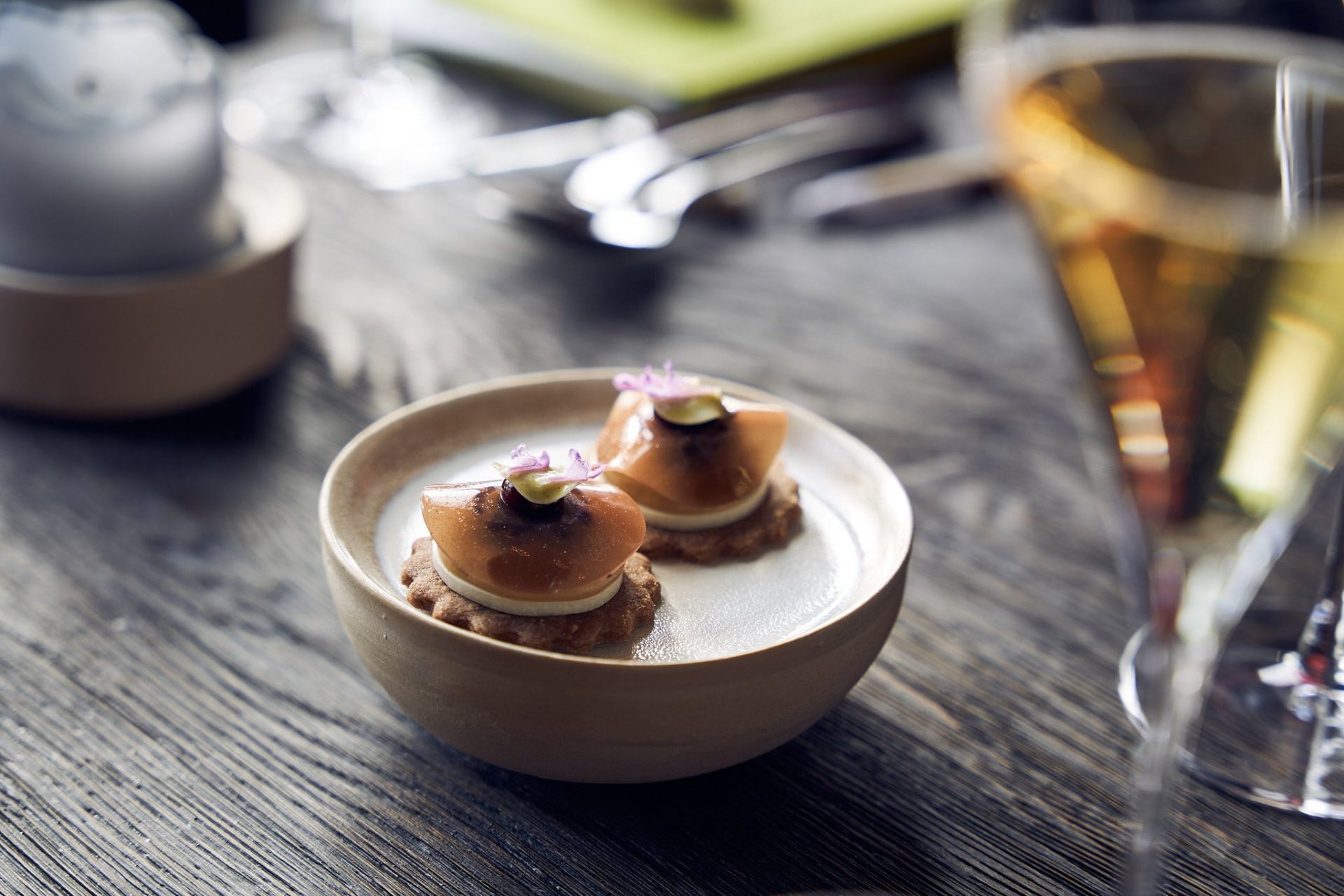
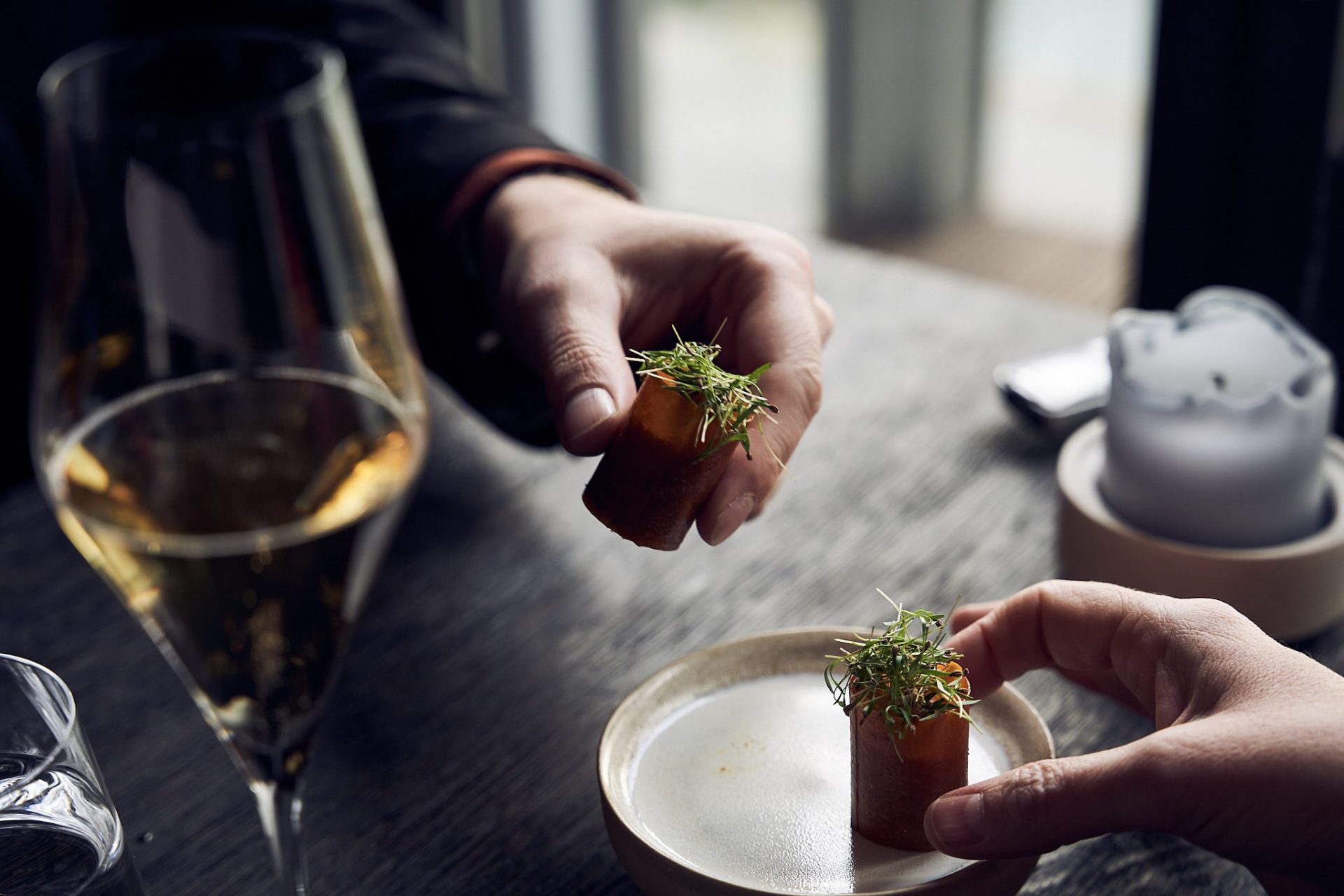
Enter Ricky Saward. Every time the Michelin-starred chef explains a course to us, it is like a court marshal’s elaborate announcement of a sprawling noble family. You never cease to be amazed, because what takes the culinary spotlight here is uncompromisingly rigorous when it comes to genuine sustainability, quality and originality. The familiar things that undergo an almost alchemical transformation through fermentation sound – and taste – extraordinary: unripe strawberries, apple blossom, porcini or “a cream of pine cones from the Taunus, harvested unripe and cooked for three days at 90 degrees Celsius”. At the end of this fairy-tale journey for eye and palate, “swan king” Ricky Saward will serve us an Elstar apple bedded in ice with a “little lid” over the sorbet – a dish the Brothers Grimm could not have dreamt up better.
The more perfect art is, the more boring and decorative it becomes.
— Dr Sebastian Baden, Director, Schirn Kunsthalle Frankfurt
BIG NAME-DROPPING
Art and gourmet cuisine – aren’t there parallels? “Certainly the perfection of craftsmanship,” says Sebastian Baden, before drawing a wider arc: “But the more perfect visual art is, the more boring and decorative it becomes. Tension comes from ruptures, from what is flawed.” Such vibrant tension – at times in history to the point of shattering conventional notions of art – is illustrated by the current exhibition at the Schirn with works by Niki de Saint Phalle. In the early 1960s the artist took up a gun to shoot at “bodies” made of white plaster and bags of paint. “That was the decisive breakthrough in her career,” explains the director, “and in a broad survey of her work we present her well-known ‘Nanas’, but also these early ‘shooting paintings’; documentary footage and videos show how the artist pressed the rifle into the hands of the audience of the time, who then fired it themselves at an opening. That is a moment of self-empowerment and at the same time of empowerment of the audience. It is a crossing of boundaries – also an act of iconoclasm, of destruction. At the same time, the artist shows that something new is emerging. That depth and topicality are pretty cool.”
After the Chagall exhibition in the winter, this is the next blockbuster show: big name, big draw. “We don’t like the term ‘blockbuster’ because it originally comes from the military,” Sebastian Baden immediately objects. (In the Second World War it referred to an aerial mine used to destroy entire blocks of houses – editor’s note.) He prefers “public exhibition”. There are several to look forward to in particular: from June, “Plastic World” asks questions about the artistic use and evaluation of plastics. Before that, visitors encounter a truly monstrous “Hellmouth” installation by the British artist Monster Chetwynd in the publicly accessible Rotunda. And in the autumn, big name-dropping again with Lyonel Feininger.
THERE ARE NO COINCIDENCES
We share a memory. Like thousands of other children, we took part with great enthusiasm in the annual nationwide art competition that the Volksbanken and Raiffeisenbanken have been running in schools since 1969. Sebastian Baden regularly won prizes. As a sixth-former he was awarded a special prize in the competition, which came with a workshop with Professor Hans Daucher in Munich. “I often speak of happy twists of fate rather than coincidences. They have happened often in my life,” recalls the early talent. Professor Daucher, who established the first chair of art education, encouraged him to put together an application portfolio for the art academy. And so a career began. “One of my works even found its way into a corporate collection.” With his twin brother Lukas, the student opened a gallery in Karlsruhe, which soon entered into international collaborations and placed works in the collection of the entrepreneur Reinhold Würth. “A great time – that’s how I got to know the meta-level of the art business.” From then on he worked on several levels, as art educator, artist and art historian. Most recently he made a name for himself as curator of contemporary art, sculpture and new media at the Kunsthalle Mannheim.
THE POLITICAL VIEW
“The Image of Terrorism in the Art System” was the title of his fascinating doctoral thesis in 2014. “The pictorial and conceptual history of terror extends from the church portal to the internet portal,” he writes in it. “Images of terrorism and terror belong to political and also Christian iconography – and thus to art history. The subject of political iconography will definitely make itself felt at the Schirn in the coming years,” he announces in our conversation. The first show he initiated in Frankfurt – works by the young Sudanese artist Amna Elhassan, who addresses the status of women and the crushing of the democracy movement in her homeland – can be seen as programmatic in this respect. He also wants to move closer to the Städelschule: “from the Schirn’s perspective, the young talent is very exciting”. People will be watching closely to see what milestones and landmarks he and his team of curators can set in the coming years. What is called for, and this is what he came for, are appealing thematic and newcomer exhibitions. They may even be really outlandish at times, like the aforementioned (walk-in!) monster mouths in the Rotunda.
MORE SUPPORTERS WANTED
The topics change like the courses, each one a surprise. At home, the family spoke in dialect. His grandfather was a registrar: “My grandpa really was a role model for me, extremely creative, patient and a magical gardener. I also see grandparents as important art educators for the generation after next.” He has long since shown his daughter, who lives in Switzerland, the sights of Frankfurt, including of course the Goetheturm. Speaking of high and higher: as director he has to think big. One of his goals, as he stresses several times, alongside continuing exhibition sponsorships and partnerships with companies and foundations, is to expand the circle of friends (“Schirn Freunde” and, for supporters up to the age of 40, the “Schirn Circle”). “This circle of friends, with its private and corporate members, is the backbone of the institution,” he says, “because it supports the staging of extraordinary exhibitions and important publications and champions much more besides.” Max Hollein was a gifted fundraiser. And Sebastian Baden has to raise donations too; that is now part of his job.
More stories








GET IN TOUCH