
Business
THE CONNOISSEUR
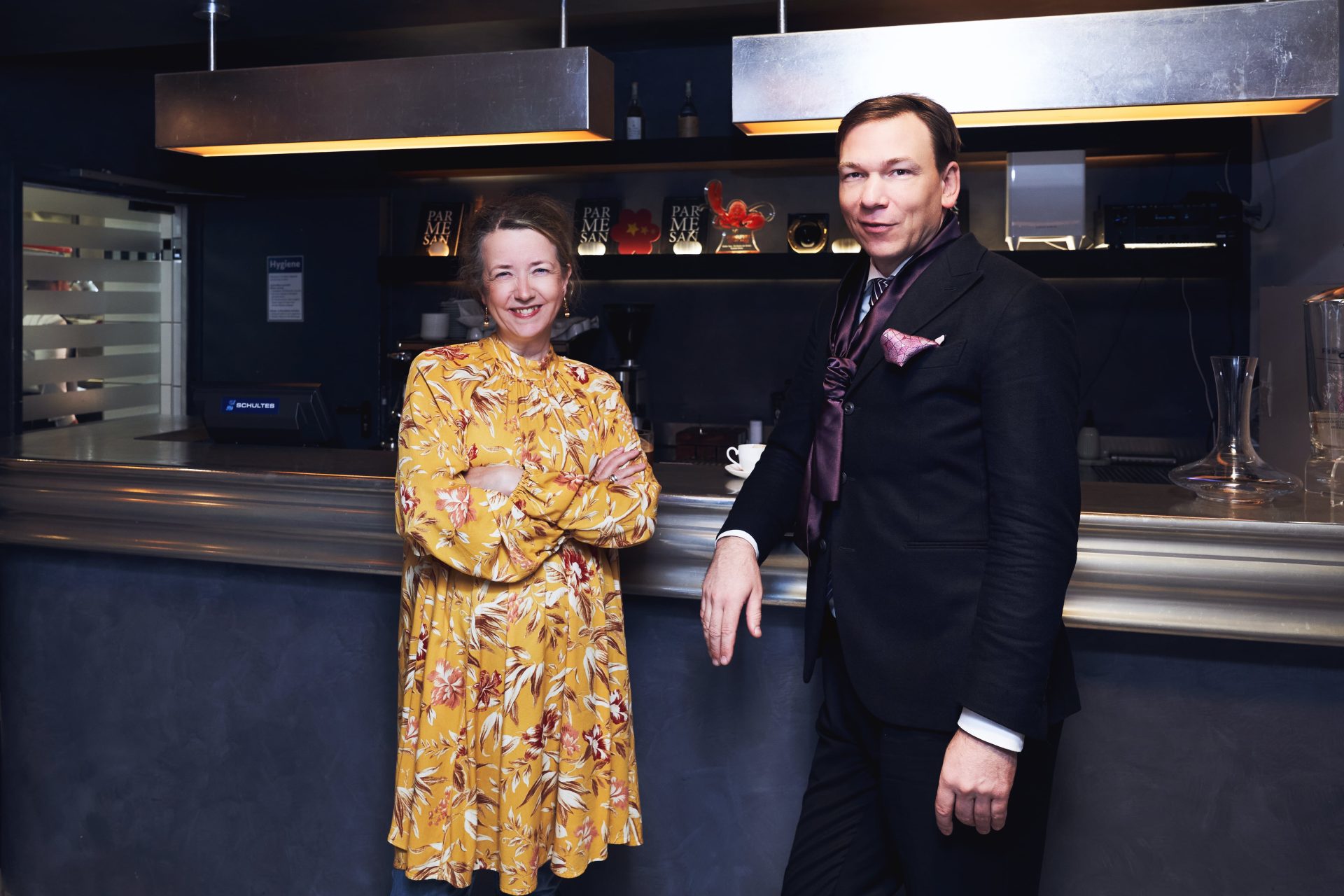
Never did glasses ring more elegantly. THE FRANKFURTER invited Mikael Horstmann, curator at the German Museum of Culinary Art and Table Culture in Frankfurt, for a stylish conversation at table at the Michelin-starred restaurant Carmelo Greco. An exchange about manners, serving and culinary customs that hardly any gourmet dares to display today.
Text Dr. Jutta Failing Photos Betti Klee GmbH
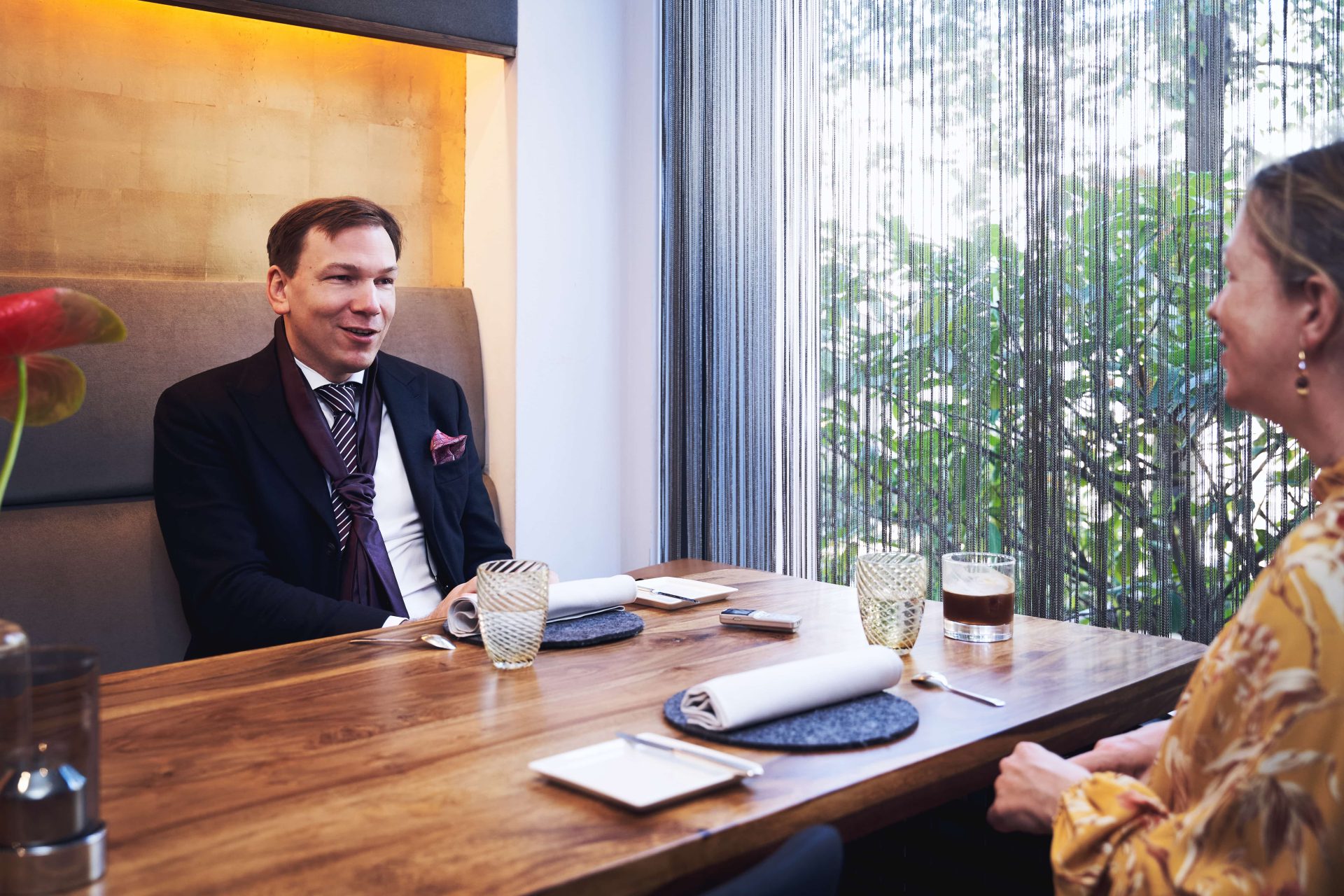
He has only just hurried back to Frankfurt on the night train from Turin, his second home. The elegant old-school suit, the hat and carefully chosen words that bear witness to a well-read mind. Mikael Horstmann reminds me of the actor and musician Ulrich Tukur, who is also a man of good manners. At the Michelin-starred restaurant Carmelo Greco, I want to talk to our guest about the old and new art of stylish indulgence. And I secretly hope that, under his expert eye, I will observe all the rules of etiquette in the premier league of fine dining. Carmelo Greco, the Sicilian-born head chef who gives the Sachsenhausen restaurant its name, regularly wins a Michelin star with his team – and his haute cuisine deserves respect, not least when it comes to handling knife, fork and glasses.
ETIQUETTE WITHOUT THE ELITIST
Mikael Horstmann is no pedant, but someone who can place table manners and tableware across the centuries and is also well aware of how they have changed over time. He wants to “take the elitism out of etiquette”, because: “Etiquette is not about setting yourself apart from others through particular behaviour, but about dealing with one another without conflict. There are three basic rules: don’t make anything dirty, don’t break anything, don’t hurt yourself or others.” For him, this origin of table etiquette goes hand in hand with a nonchalance that even allows you to drink from a soup plate. More on that later. We start with an espresso tonic, that is, tonic water with ice, over which the espresso is carefully (it foams!) poured into the tumbler. Antonio, a gem of a waiter, obliges and politely asks where one drinks something like that. “In Turin,” our guest replies.

Courtesy comes from the court. I am not courteous where people bow and scrape to those above and kick those below. One must show appropriate manners towards all people.
— Mikael Horstmann
KNIGGE IS LIKE A LANGUAGE
After Mikael Horstmann and his girlfriend, a doctor, had visited the Piedmont region and its capital, Turin, again and again over many years, they decided to buy a flat in the city, which is famous for its excellent cuisine. “Turin is our absolute favourite city – after Frankfurt. It has a great quality of life, and not only in culinary terms. A lot is within walking distance and people are relaxed,” he enthuses. We raise our glasses. Rim or bowl? “How to drink sparkling wine is one of my favourite topics. It depends, I say. At the table you hold the glass high up on the stem; at a stand-up reception it’s safer by the bowl. Glasses have become much bigger over the last hundred years, which has changed their tipping point. Like a language, Knigge and etiquette are constantly subject to smaller and larger changes.” We clink our glasses at the bowl, and they ring – just as they should – like a bright bell.
CURTAIN UP
The Frankfurt native’s grandparents were “in service”. They worked in the hotel trade. At the Grandhotel Frankfurter Hof, for example. “At their home I experienced table culture as part of everyday life. Even with simple crockery, their table was always carefully laid. And my grandmother insisted that the ‘good china’ was used every Sunday. At family celebrations I loved being the cupbearer for the guests.” Later, as a schoolboy and as a student of applied theatre studies, he worked in five-star hotels, including the Frankfurter Hof – the circle was complete. “Hospitality is like theatre; there are three levels on which the staging takes place: room, table, plate. It’s the finest participatory theatre.” Table culture is important to him in his own household too, he stresses: “My partner and I always eat with silver cutlery.” So they use old spoons, some of them inherited (“that still hold a proper amount of soup”), and knives (“that are still sharp even after years of use”).
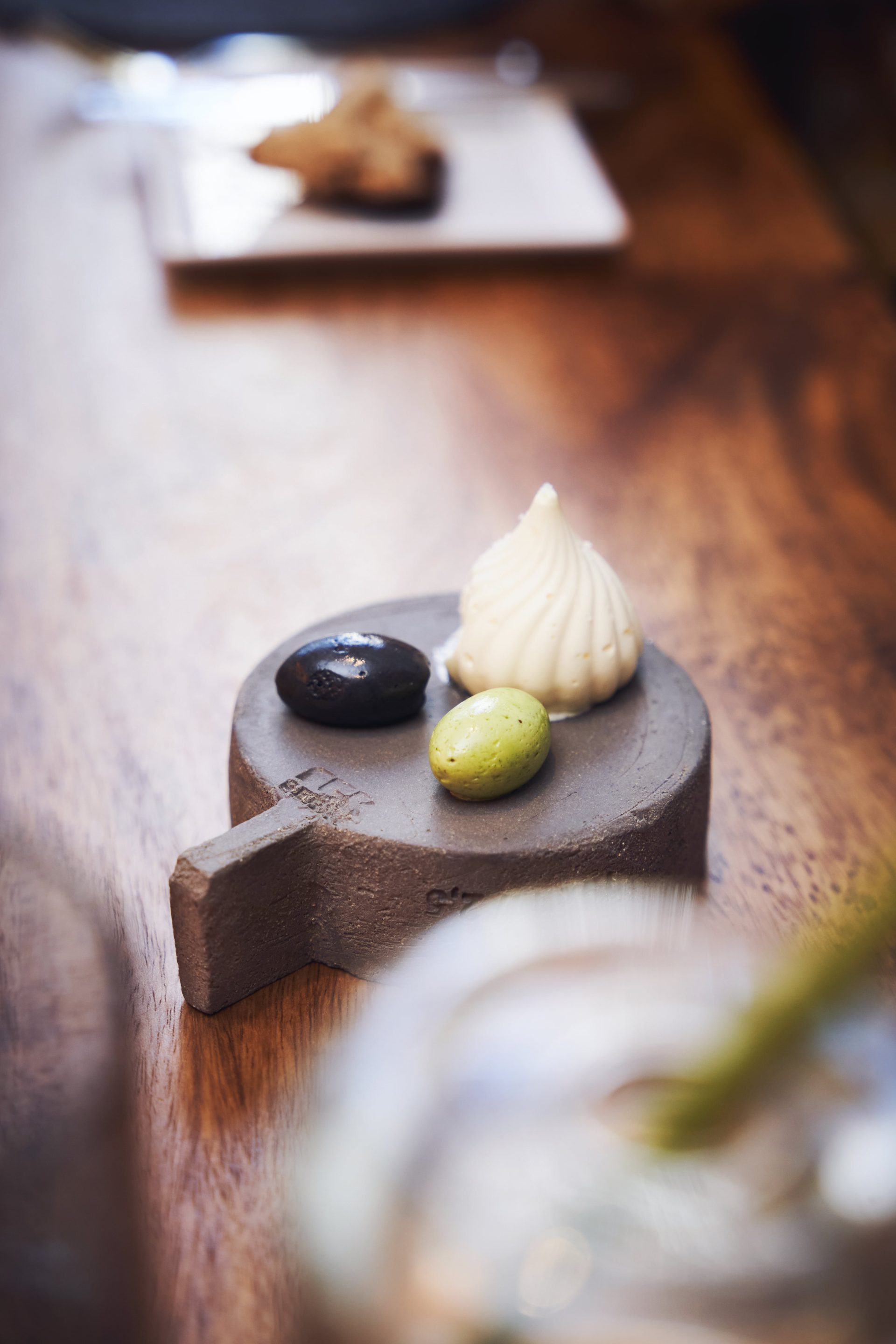
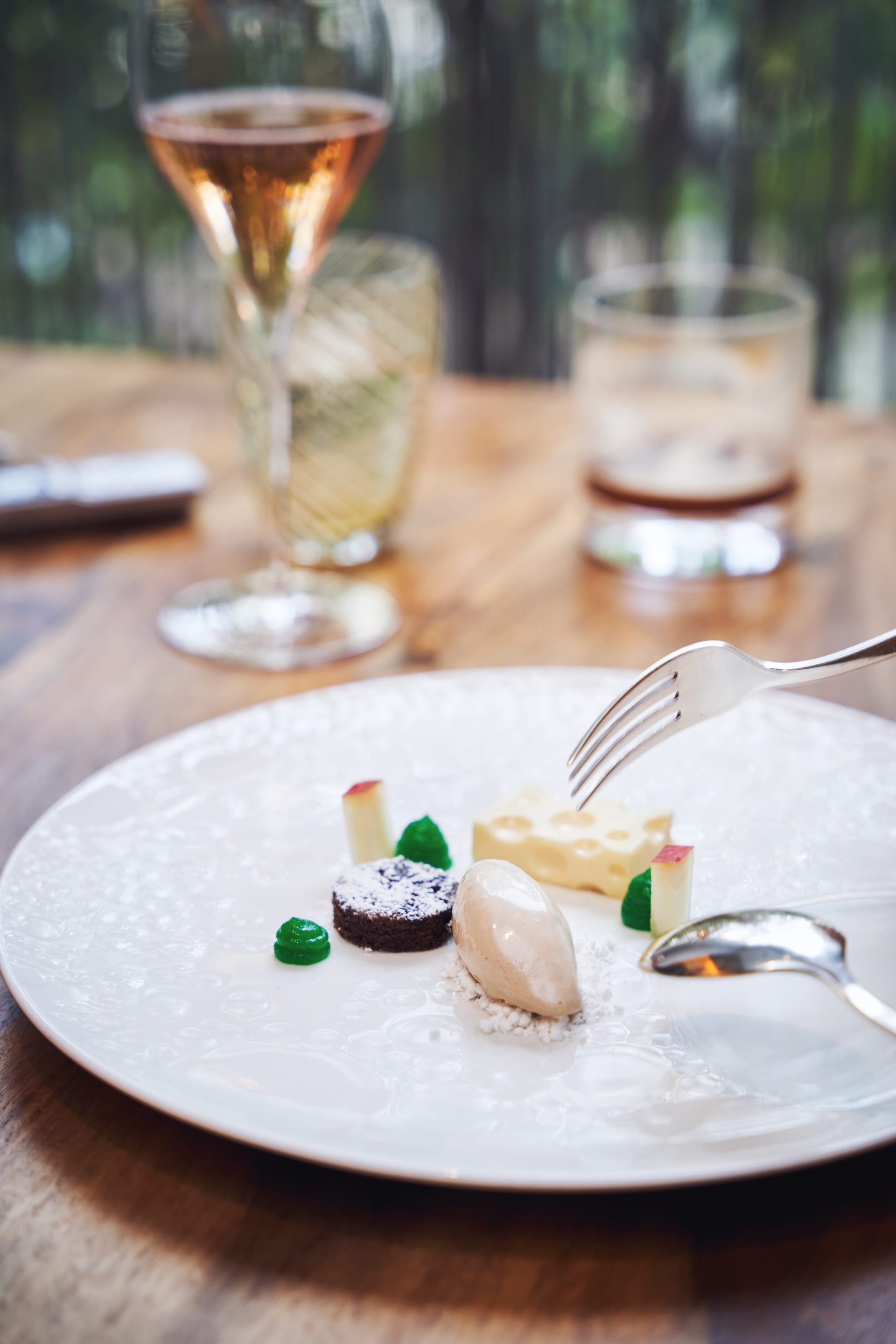
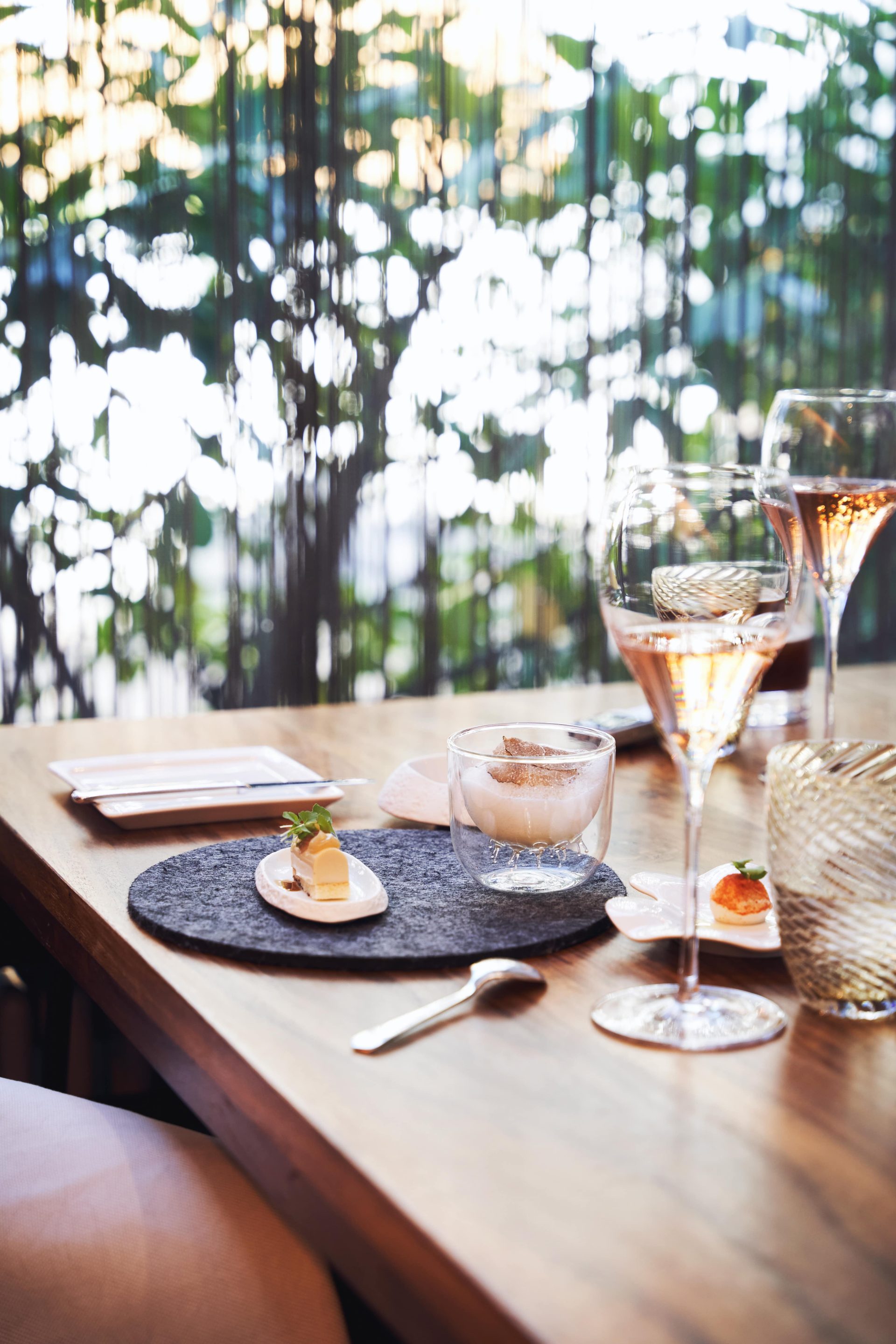
CITY OF TEA & MARZIPAN
For years Horstmann was the honorary director of the German Museum of Culinary Art and Table Culture. As he increasingly lacks the time, he continues his involvement as curator. The niche museum, opened in 2015 with roots going back to 1909, is having a hard time. “The City of Frankfurt shows no interest in the museum, so it doesn’t get any support either. Everything is based on voluntary work,” he explains. Yet thanks to endowments and gifts, the collections are extensive: there are 50,000 historical menus alone. Plus countless valuable cookbooks, historical kitchen utensils, cutlery, glasses and much more that documents the table customs of times past. There are good reasons why such a treasure should be housed in Frankfurt of all places: “Even in the Middle Ages, the cuisine here had few equals. It is the city with the oldest surviving marzipan tradition, a good two centuries before Lübeck. The art of cooking was held in high esteem, thanks to the trade fairs and to cooks who were lured away from Italy and France to cook in Frankfurt households. The first tea house in the German-speaking world, in 1726, was in our Old Town: ‘Tee Schmidt’ in the Schnurgasse.”
INNER VALUES
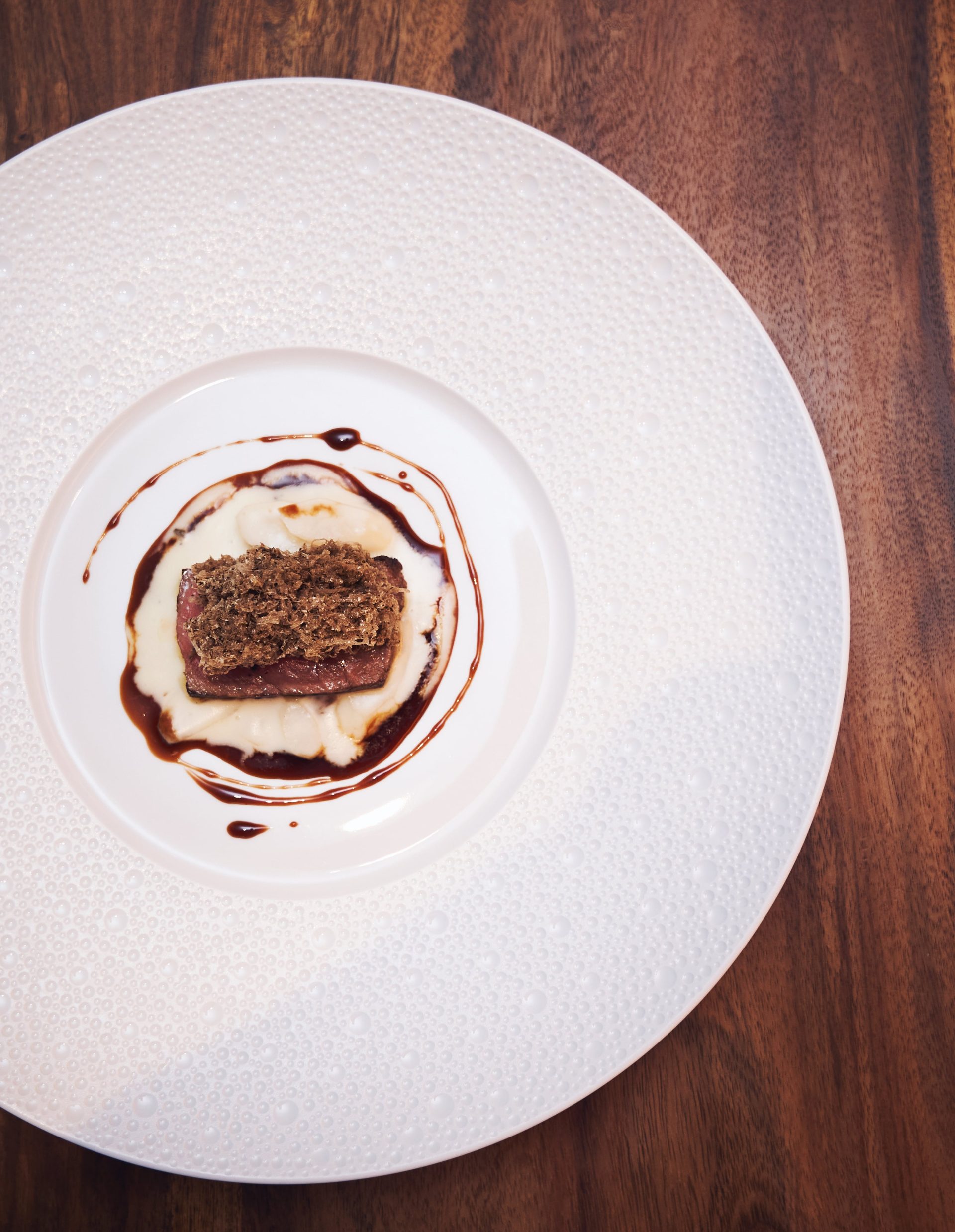
You could listen to him for hours; he is deeply immersed in history and shares it on city tours too: “The animals slaughtered most in Frankfurt were sheep. They provided wool, meat and milk and ‘mowed’ the meadow orchards.” Then, between two of Greco’s fabulous courses, Horstmann comes out with it: he has done his own slaughtering. “Anyone who hasn’t done it at least once shouldn’t eat meat. Slaughter, to gain a sense of the meat’s value.” Then he goes one further: he likes offal. “That’s respect. Why use only the best cuts and not the rest? I spent a while in Vienna and got to know Lungenhaschee there. Chicken hearts are delicious too.”
FAIRE CHABROT
He recommends reading the “Knigge” attentively: “The writings of Freiherr von Knigge are hardly about table rules at all, but about living together without conflict. Hence my provocative statement: as a Knigge trainer, you have to be a democrat. Because the focus is on the interpersonal and the communal.” He describes carving chickens “in the air”, which he has mastered after much practice, carving in general (it used to be part of a gentleman’s education in aristocratic circles) and a good deal more. The expert in culinary culture is a vivid storyteller and – before things get too staid – always throws in an amusing (shock) moment. Like the business of drinking from the plate (under Carmelo Greco’s eyes, purely in theory, of course). “Faire chabrot is a rural French way of finishing a soup by pouring some of the wine drunk with the soup into the plate with what is left. The plate is then raised to the lips and drained. At a meal at our home with my partner’s parents, the moment came. After her mother’s initial ‘shock’, we all drained our plates that way – and everyone thought it was great.”
More stories








GET IN TOUCH