
Art
THE CARRIER
Irene Grau has already received many important awards in her native Spain, including the renowned Premio Generaciones art prize. In her latest project, the artist combines the practice of hiking with the traditions of landscape painting and monochrome painting. She tells gallerist Heike Strelow about the appeal of reconstructing alpine routes that others have travelled.
Text Heike Strelow Photos Irene Grau, David Galabal, Santiago de Compostela
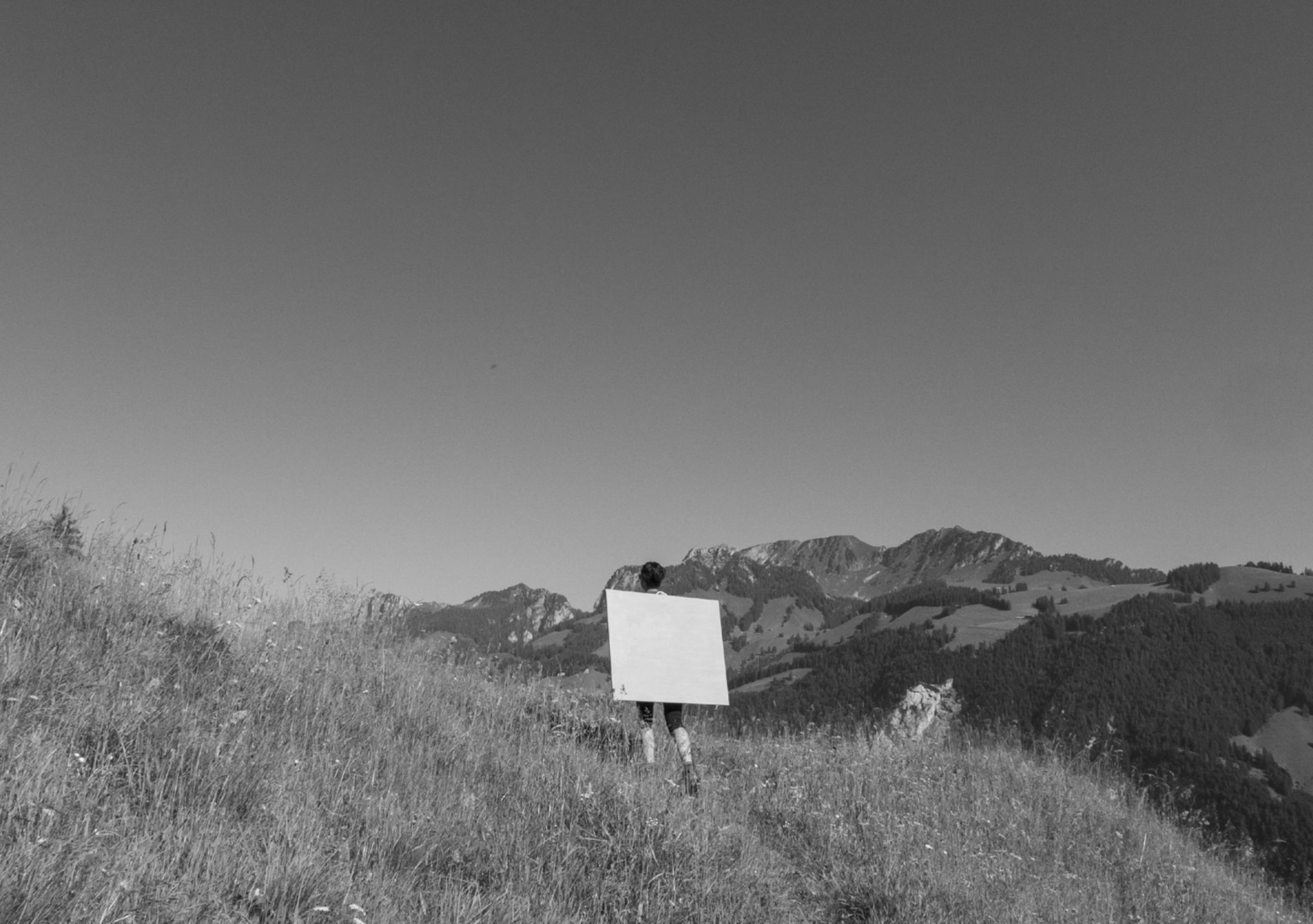
“The Carrier” encompasses a series of actions that Irene Grau carried out in the Swiss Alps in summer 2018. Her aim was to reconstruct and revive the hikes of important Swiss landscape painters such as Ferdinand Hodler or Caspar Wolf, the latter a pioneer of high-mountain painting. Each of her “backpack paintings”, which in size and colour palette always draws on a painting by one of these artists, was painted outdoors shortly before setting off on the hike, so that the painting’s drying process coincides with the course of the hike. Each painting is also accompanied by notes in the form of a small booklet containing the route, the altitudes, the time and the photographic documentation of the hike. In this way, the landscape adheres to the painting on a physical level. The conceptual pleinairist (open-air painter) assumes that the work is “only” what remains of an experience that goes far beyond a landscape travelled or architecture studied.
Irene, for you painting seems to be inseparable from the experience of a place or a landscape. As in your latest exhibition in Frankfurt, titled “The Carrier”, you repeatedly take up the tradition of plein-air painting. What appeals to you about it?
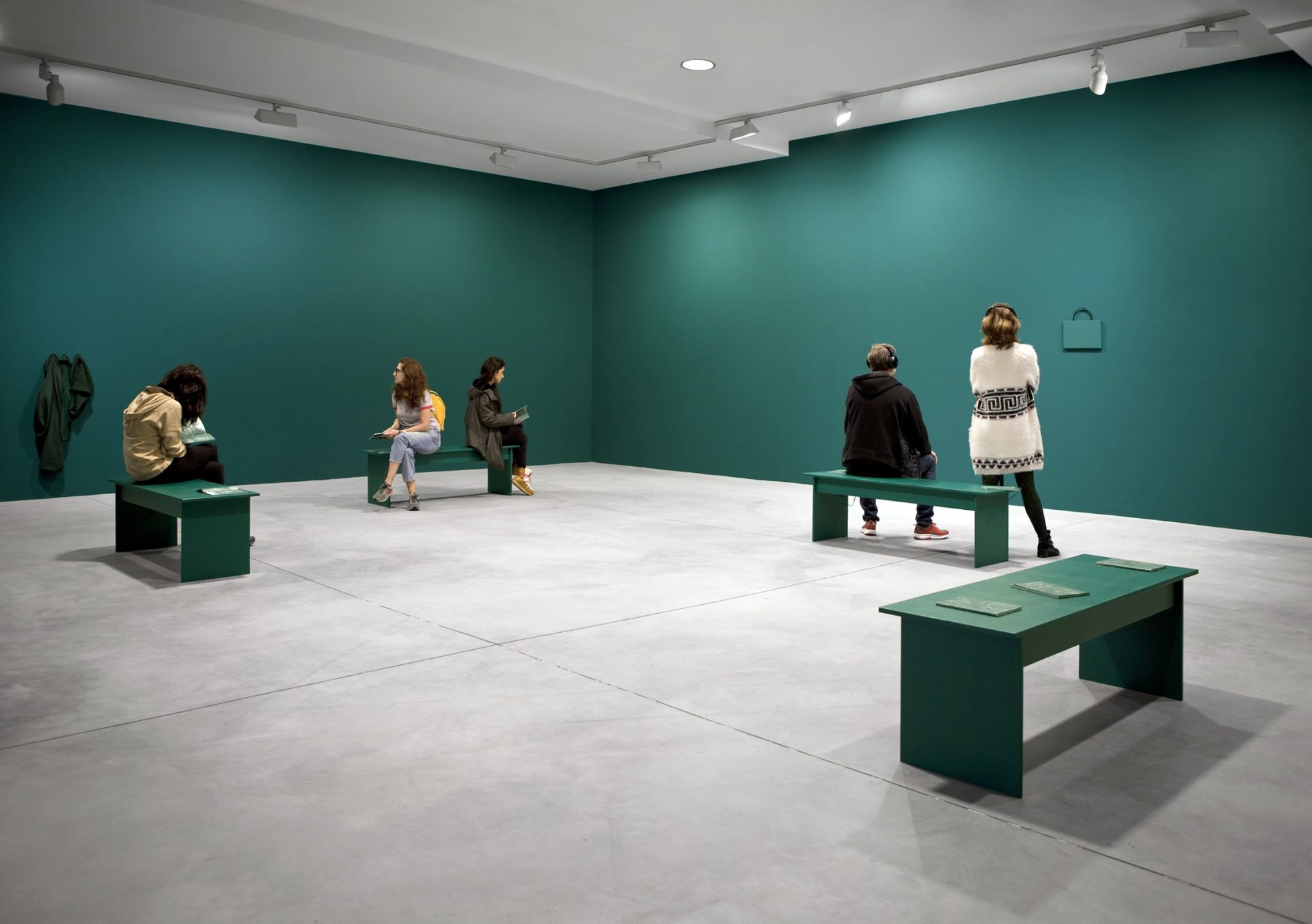
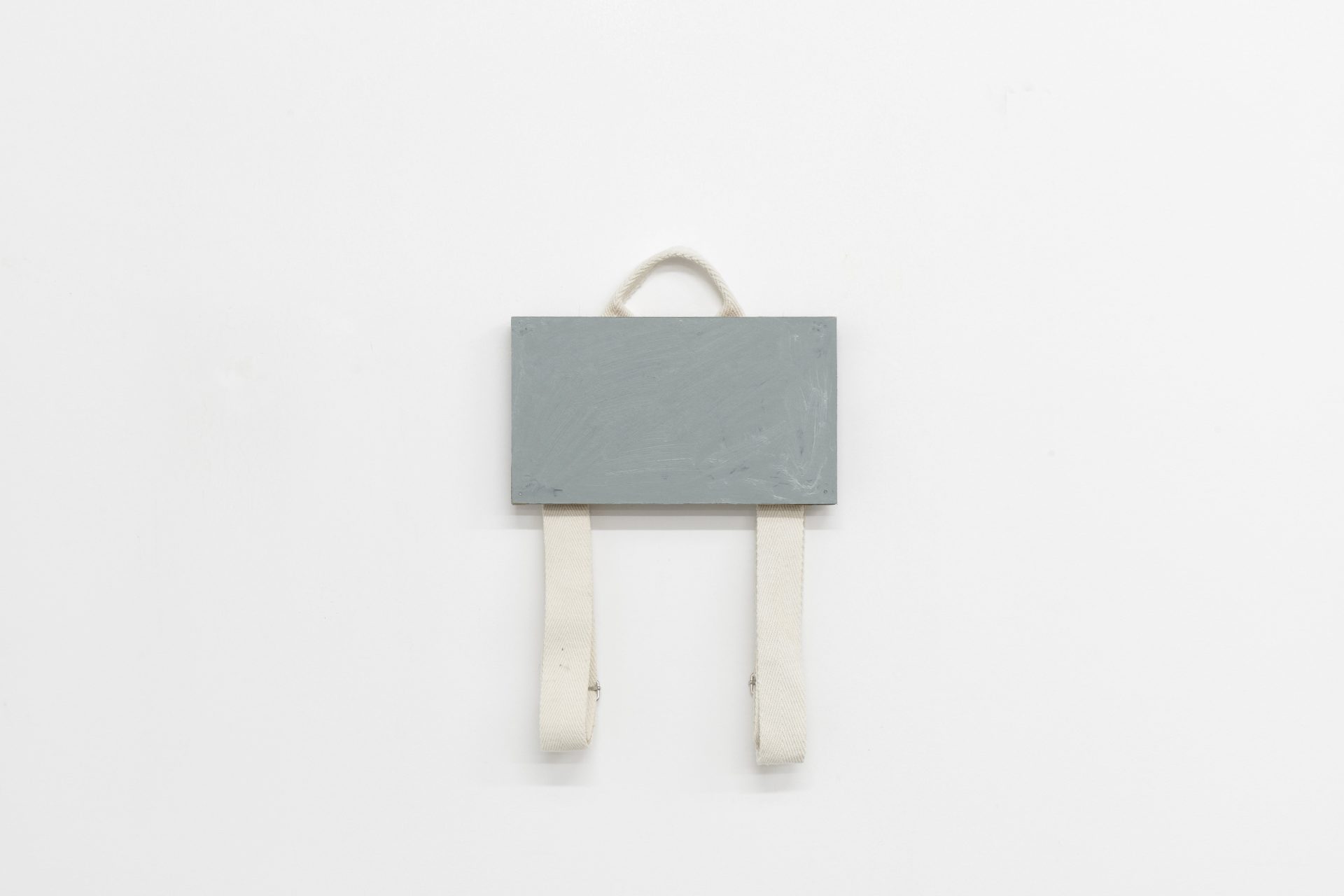
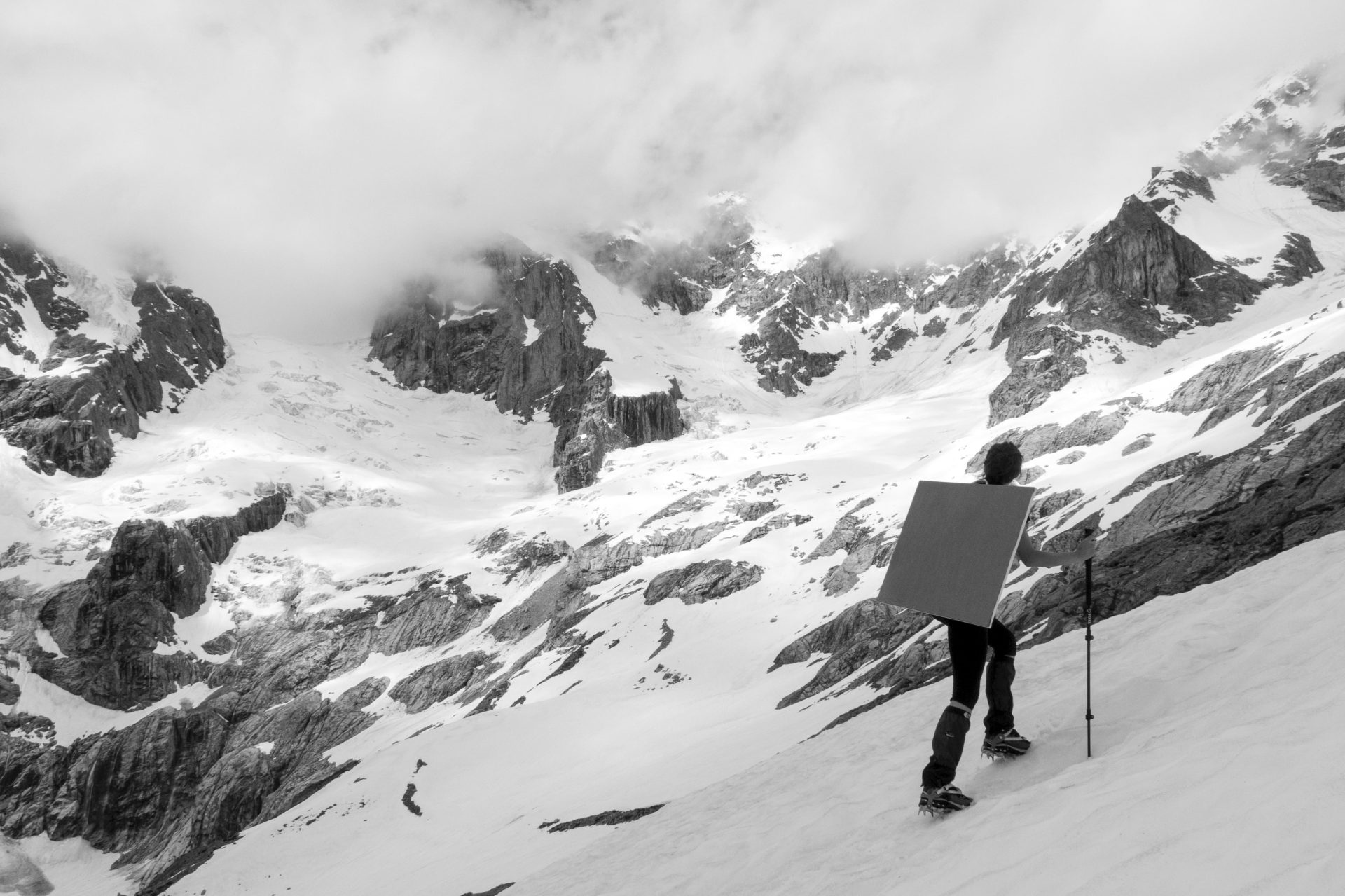
“I find that pleinairism, that is, painting outdoors, has a lot in common with my way of thinking about landscape from the point of view of displacement. Landscape is never static; it is always evolving, and even its perception is much more interesting from a dynamic standpoint, from the action of walking. So with the exhibition ‘The Carrier’ I deliberately emphasise the action of physical displacement and of carrying among the plein-air painters, in order also to bring out their fascination with the constant change in a landscape.”
A single-colour surface helps you focus on the main idea.
— Irene Grau
In your artistic practice you often use the possibilities of monochrome painting, photography and intervention to explore the possibilities of landscape painting. Are you concerned with reinterpreting this genre, or with an even more comprehensive redefinition of how we see and perceive landscape?
“Not only is the landscape constantly changing; the way we perceive it is different every time, too. Landscape, like painting, is one of those things that cannot be precisely defined, because they are traditions and the way we understand them is constantly changing. It is possible to rethink landscape again and again. That’s why looking into the past and engaging with earlier ideas is always a valuable tool.”
Monochrome painting plays a central role for you in this process. Is this primarily an indication of your conceptual approach, or does it rather reflect the basis of that approach?
“I arrive at monochrome painting because I’m never concerned with a style or a formal decision, but above all with visualising a process. This idea usually leads to a single-colour surface, because it is less distracting and helps you focus on the main idea. The artistic concept of action and monochrome painting have been linked from the very beginning. Just as monochrome painting itself emerged from landscape painting.”
More stories








GET IN TOUCH