
Business
THE NETWORKER
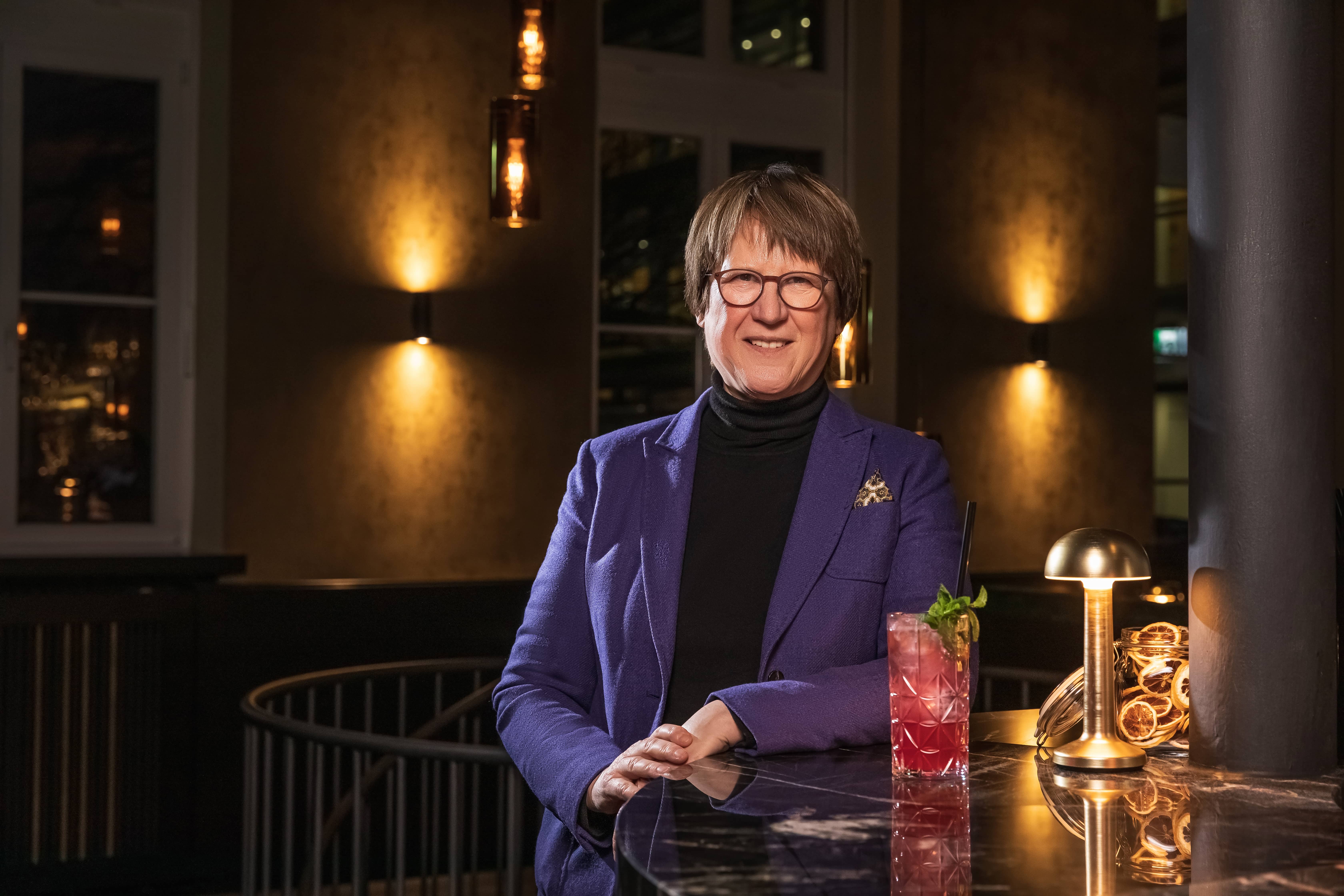
The Kulturfonds Frankfurt RheinMain supports cultural projects in the region with national and international appeal. The non-profit company also pools cultural resources and forces. THE FRANKFURTER met its managing director Karin Wolff for an interview in Darmstadt, where the networker, once deputy minister-president of Hesse, has her roots.
Text Anna Quandt Photos Nikita Kulikov
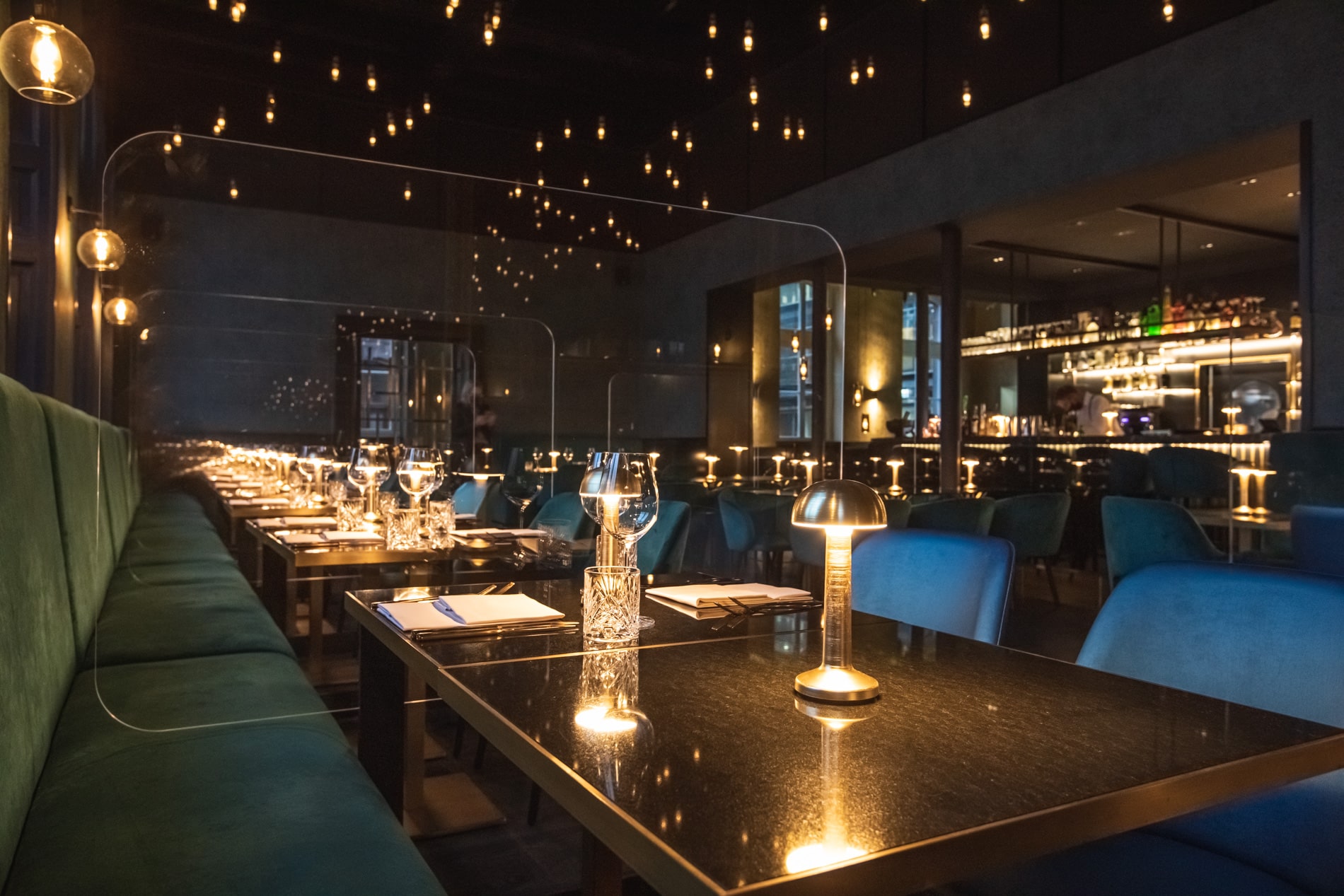
In Darmstadt, between the Mathildenhöhe and the Art Nouveau main station, the locals are called “Heiner”. Nobody can really explain why. At any rate, “Heuner” with a “u” used to be rough fellows from Darmstadt’s old town with an equally rough, blunt dialect. Today a Heiner is proud to be a Heiner. I steer my car through Darmstadt’s wide, car-friendly boulevards of the economic-miracle years towards the Schlachthof. The historic slaughterhouse of 1893 no longer exists, but a few brick buildings still bear witness to the once huge industrial site on Frankfurter Straße. I stop in front of the “Olbrick”, where I meet Darmstadt native Karin Wolff for the interview. In 2020, the historic slaughterhouse inn became a stylish casual fine dining restaurant. It is now a highly praised culinary gem of the city. Naturally, the finest meat dishes are served here too; that has a long tradition here.
DISCOVERY DARMSTADT
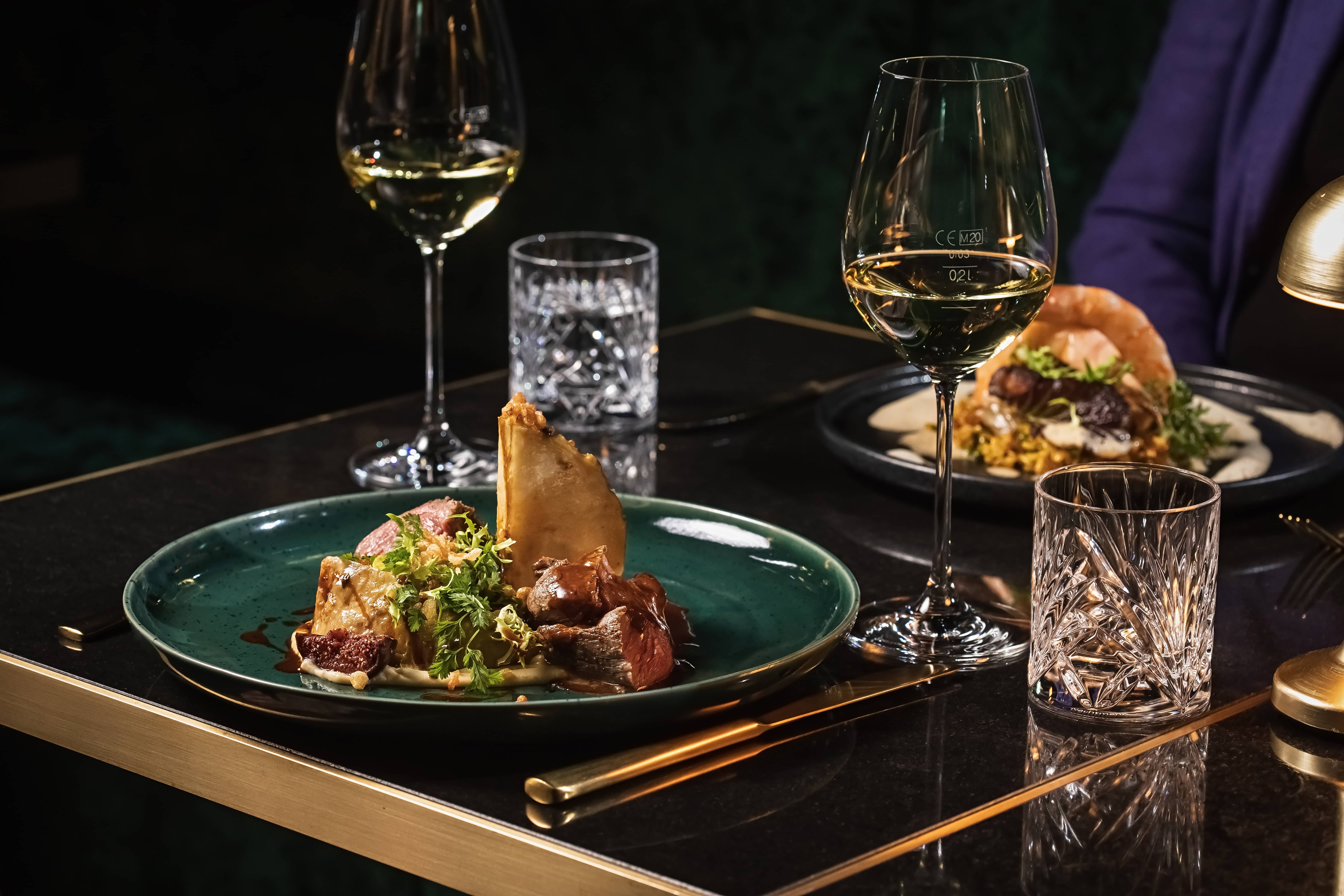
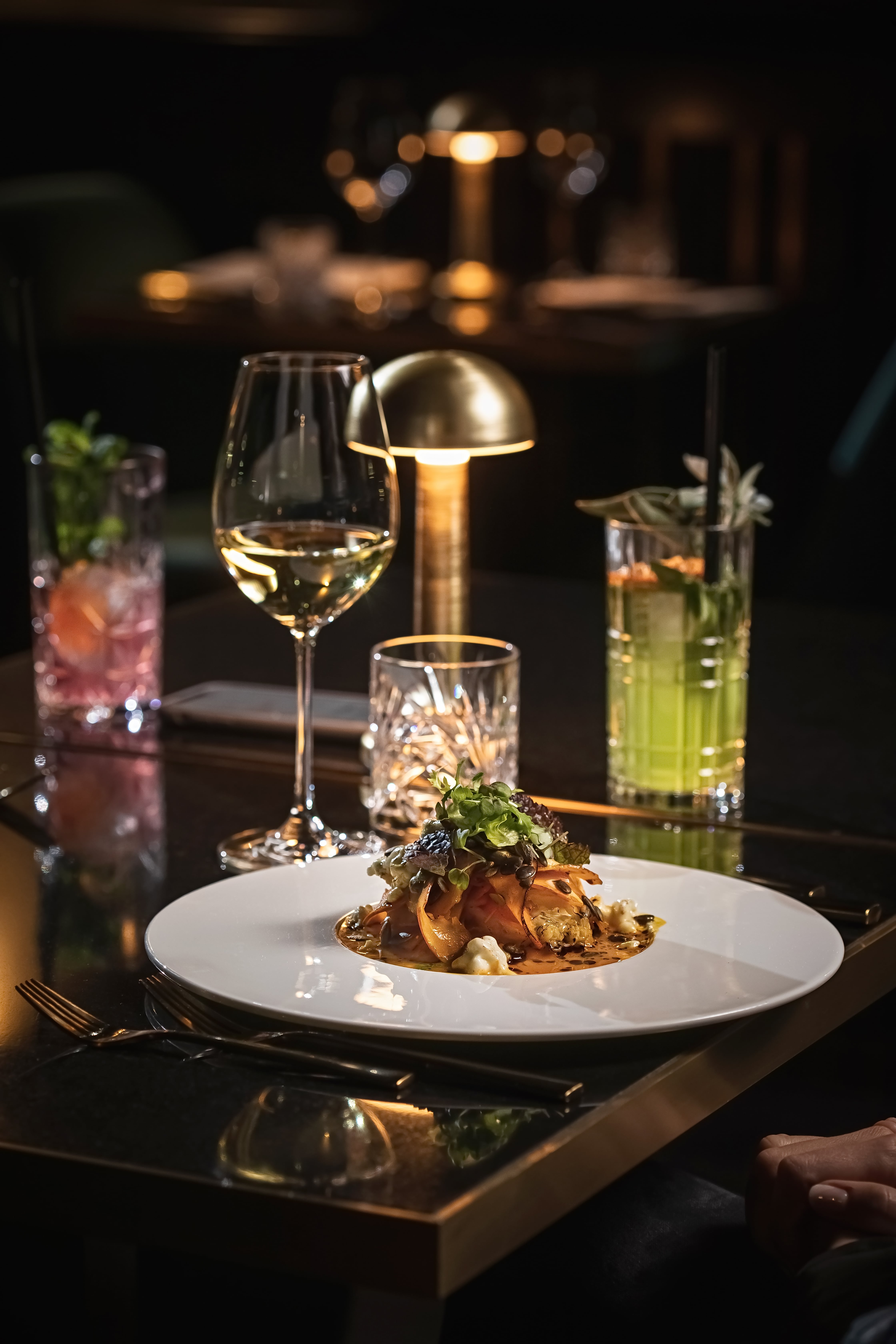
“It’s a Sauvignon Blanc,” Karin Wolff rightly recognises. “A Kaitui from the Palatinate by Markus Schneider,” the waiter adds. The fine wine smoothly accompanies us through the tender sous-vide veal fillet and a surf & turf paella.
I want to learn more about the person behind the many offices. Her friendly but reserved manner marks her out as a professional on the political stage. Karin Wolff’s office is in Bad Homburg; she lives with her wife a few kilometres beyond Darmstadt on the Bergstraße. That means the motorway every day, appointments every day, and before the pandemic an even tighter schedule. Our meeting is not about planned funding for artists or committee work, which otherwise shape her working day. It is meant to be more personal. I am interested in her attachment to Darmstadt. Karin Wolff has quite a few favourite places in the Heiner city, as she tells me. Besides well-known sights such as the Landesmuseum, the Rosenhöhe and the Baroque Orangerie, there are places that visitors from outside tend to have less on their radar: “Old Bessungen, practically the oldest part of Darmstadt, and the ‘Waldspirale’, a building designed by Friedensreich Hundertwasser. Every window of this building with 105 apartments, crowned by golden onion domes, is unique; no two are alike.” Bessungen is also home to the gallery of the important Schader-Stiftung, on whose board of trustees she sits.
She went to school in Darmstadt and later taught as a secondary school teacher at the Edith-Stein-Schule. “When I meet former pupils today, it is often those who were least able to behave in the classroom who have become teachers themselves,” she says with a smile. She looks back on her own schooldays with mixed feelings. “After the middle school years I remained dutiful, but not very enthusiastic,” she recalls. At primary school, PE consisted of dodgeball; “our teacher didn’t do anything else with us”. Parents, grandparents and even lawyers interfering in grading and other matters was not common back then. Later, during her time as minister, it was. Times had changed.
BIG COMMUNITY
The past two years have also been a challenge for the Kulturfonds Frankfurt RheinMain. Not only did planned exhibitions have to be postponed; there was a great deal of uncertainty. Karin Wolff took up her post as managing director shortly before the pandemic and was immediately faced with an unprecedented situation. Since, thanks to her past political offices, she already knew all The past two years have also been a challenge for the Kulturfonds Frankfurt RheinMain. Not only did planned exhibitions have to be postponed; there was a great deal of uncertainty. Karin Wolff took up her post as managing director shortly before the pandemic and was immediately faced with an unprecedented situation. Since, thanks to her past political offices, she already knew all the municipal partners, there was no need for a time-consuming, contact-intensive warm-up. “Today I can say that we managed to keep culture going. I also see it as a huge achievement that all the sponsors have stayed on board.” By sponsors she also means the cities and districts that have joined the Kulturfonds Frankfurt RheinMain as shareholders. Winning new sponsors is part of her job. The district of Darmstadt-Dieburg, for instance, is still holding back. It takes hard persuasion, since funds are drawn from the sponsors.
Necessary persuasion, since the future belongs to close networking and joint action by museums and other cultural institutions. “In film, dance and photography this is already working very well,” Wolff says. She also wants to strengthen the region’s visibility in design. “This year we are supporting Frankfurt RheinMain’s bid in the ‘World Design Capital 2026’ competition. It honours cities and regions for their effective use of design to promote economic, social, cultural and ecological development. We are well placed in the race, because we have a long tradition in this respect, from Gutenberg to today’s players in Frankfurt, Offenbach and Darmstadt.”
CARPE DIEM
“Carpe Diem” is the motto under which a circle of friends has come together. “We discuss a lot, enjoy good food and sometimes go on an outing,” says the 62-year-old. “For me, lifestyle is a combination of things that put a smile on your face. And preferably not alone.” She likes cooking home-style food, especially pasta, reads a lot, loves Italy, the Baltic Sea and Fuerteventura and plays now “Carpe Diem” is the motto under which a circle of friends has come together. “We discuss a lot, enjoy good food and sometimes go on an outing,” says the 63-year-old. “For me, lifestyle is a combination of things that put a smile on your face. And preferably not alone.” She likes cooking, especially pasta, reads a lot, loves Italy, the Baltic Sea and Fuerteventura and plays the piano now and then. Karin Wolff values her home as a haven and a place of calm. Her sister is a pharmacist and takes photographs “professionally”, as she enthuses. At home she also finds time to delve into topics that interest her. “At the moment I’m reading a book by the Mannheim professor of medieval history Annette Kehnel, entitled ‘Wir konnten auch anders – eine kurze Geschichte der Nachhaltigkeit’ (We could do it differently – a short history of sustainability). In it, the author describes examples from the past of sustainable economic practice and solidarity. The term sustainability comes from forestry, after all. For example, she describes the history of sharing and cooperation. Monasteries, for instance, as communities with centuries of experience in the sharing economy. Urban gardening isn’t new either. I find that very exciting. Perhaps historical experience in dealing with crises and challenges can be used as a resource for shaping the future.”
Sustainability is actually a term from forestry science.
— Karin Wolff, managing director of Kulturfonds Frankfurt RheinMain
BRIDGE OVER TROUBLED WATER
We talk about Simon & Garfunkel while quiet, very recent beats set the acoustic mood in the “Olbrick”. “In my youth I was a big fan of the duo. Then, when I was teaching in Darmstadt, my pupils listened to these songs. Can that really be, I asked myself in surprise, that different generations like the same songs? That was new.”
Finally, I ask her about her faith. Her involvement in the church is well known. Last year she received the Martin Niemöller Medal, the highest honour of the Protestant Church in Hesse and Nassau. “I’m not the big churchgoer I used to be. In faith, it does you good not to have to play ‘God’, that is, to judge others or indulge in fantasies of omnipotence about how brilliantly you have managed everything. But that doesn’t mean you should rest. You have to do something when you are called upon.”
More stories








GET IN TOUCH