

Style
SUSTAINABILITY & FASHION
Sustainability – a few years ago still a nice-to-have buzzword – is today an urgent call to everyone, not least to the fashion industry, which in producing all those beautiful clothes creates more dirt than almost any other industry in the world. Fashion expert Alessandra Frank speaks plainly.
Text Alessandra Frank Photos Levi's, Mylo Swatches, People Tree, Wellthread, HM
The fashion industry has a dramatic sustainability problem: 100 billion tonnes of clothing (or 150 trillion individual items) are produced every year; the industry is responsible for over a billion tonnes of CO2, or 10 per cent of global carbon emissions (far more than all air traffic!), and for 20 per cent of industrial water pollution. Synthetic fibres, from which many garments are made, pollute the environment because they enter the water cycle as microplastics. And even producing a cotton T-shirt uses 15,000 litres of water per kilogram. Today people buy five times more clothing than in 1980 – which is then worn on average only seven times before quickly ending up in the rubbish.
The environmental impact is catastrophic. There is no doubt that the beautiful fashion industry must change radically if it does not want to remain one of the dirtiest industries on this planet.
The problem has now reached public awareness – but despite assurances from many CEOs of the largest fashion labels that they will produce more sustainably and fairly in future, most brands have not yet taken significant steps to reduce their carbon footprint and the enormous volume of items produced. For the most part, it has gone no further than strategic lip service to improve the brand’s image.


THE RISE OF FAST FASHION
So-called “fast fashion” bears a significant share of the blame. The unparalleled rise of this new business model began in the late 1980s. A look at the USA illustrates the problem that came with it: until the late 1970s, more than 70 per cent of the clothing bought in the USA was also produced there. Thanks to relatively strict laws, working conditions and wages were reasonably fair.
But at the end of the 1980s, trendy, cheap clothing began to be produced in ever greater quantities at an ever faster pace. To keep prices as incredibly low as they still are today at Zara, H&M and Primark, companies looked for radical ways to cut production costs. And nowhere could this be done more effectively than in the factories of the world’s poorest countries. Offshoring spread throughout the industry – today everyone from the budget retailer C&A to sportswear makers such as Nike and Adidas to luxury labels such as Chanel produces part or all of their range in low-wage countries such as China or Bangladesh.
UNCHECKED GROWTH
Over the past 30 years, the fashion industry’s global turnover has grown from 500 billion to a gigantic 2.4 trillion. The almost limitless demand has led to the exploitation of workers in developing countries – poor pay and inadequate occupational safety are the absolute norm. The collapse of a garment factory building in Savar, Bangladesh, in 2013, in which 1,135 people were killed and 3,438 injured, remains a terrible memory.
And finally, as already mentioned, the fashion industry is one of the dirtiest industries in the world, which not only pollutes the environment at every conceivable level but also creates a mountain of waste made up of almost six million tonnes of discarded goods a year in Europe alone and an incredible two billion tonnes worldwide.
PINEAPPLE & MUSHROOMS: RETHINKING THE INDUSTRY
And yet – slowly but noticeably – a rethink is taking place. Pioneers, visionaries, retailers, creatives, investors and business people are working to make the industry kinder to people and the environment. And all of us, too, seem gradually to be rethinking our consumer behaviour – and, especially since the pandemic, are increasingly interested in consuming less and placing more value on environmentally and socially responsible labels.
So what can fashion brands actually do? There are several approaches to making the fashion industry more sustainable and thus more environmentally friendly: a first solution is the introduction of so-called regenerative farming methods. Here the regeneration of ecosystems has the highest priority. The quality of soils, water cycles and vegetation, as well as productivity, is preserved, instead of steadily deteriorating through exploitation as in conventional agriculture. Brands such as Patagonia and Eileen Fisher have already begun to produce their raw materials using this method.
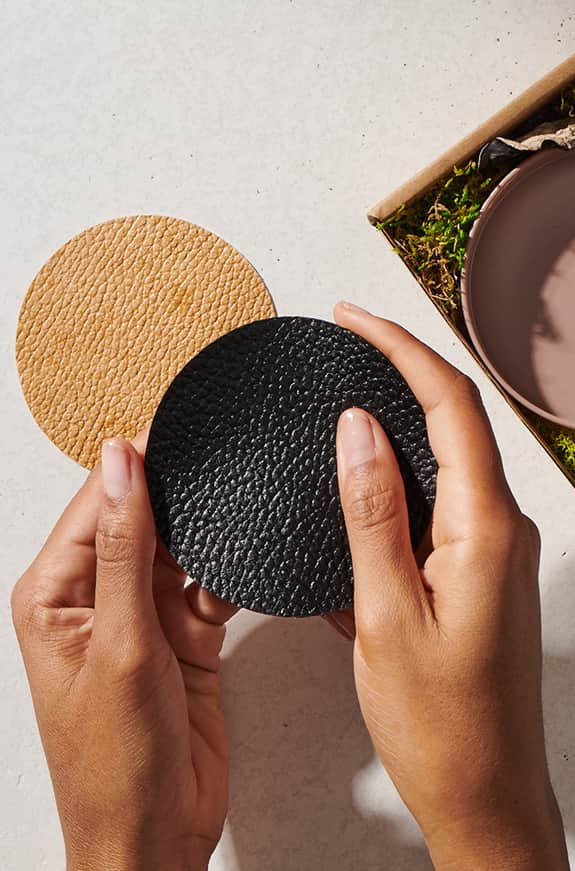
There is now lab-grown silk, and leather made from pineapple and mushrooms.
Innovative researchers are also developing climate-neutral materials: the American company AirCarbon, for example, produces a thermoplastic material that combines greenhouse gases with air and can thus replace petroleum-based plastic. This plastic is used in the form of polyester and other fabrics to make clothing and is very hard to break down. The research studio Post Carbon Lab is working on coating fabrics with algae, which then absorb carbon dioxide from the air and produce oxygen. There are also more and more start-ups driving the commercially viable, mass-market production of bio-based materials. Lab-grown silk and leather made from pineapple, mushrooms or cacti are an alternative already used by brands such as H&M, Hugo Boss and Paul Smith. The company Bolt Threads, for example, has just designed a bag for Stella McCartney’s summer 2022 collection made entirely from Mylo, a “mushroom leather”. A bio-based, 100 per cent biodegradable alternative to polyester is also in prospect.

CLOSING THE CIRCLE
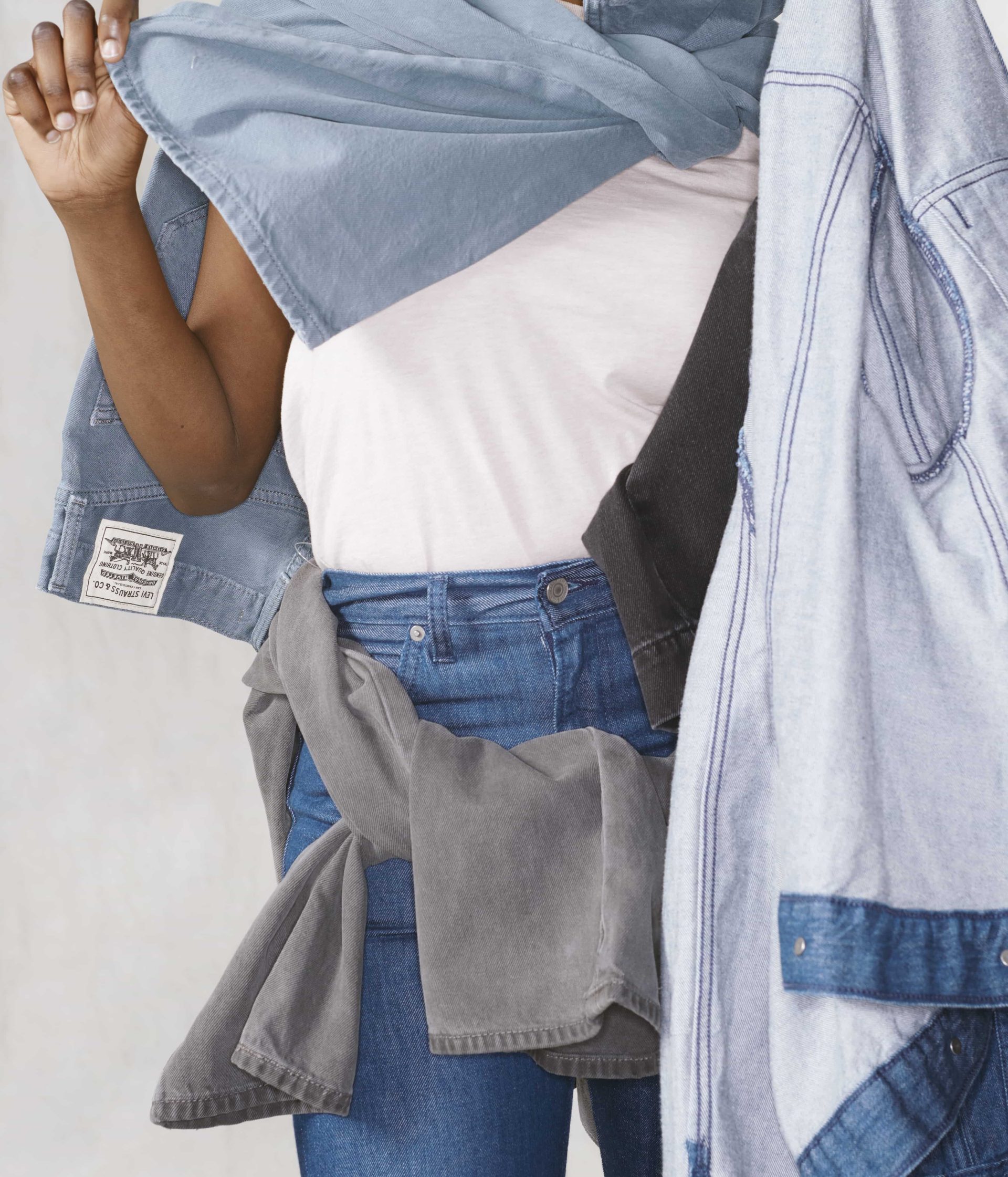
Circular fashion is another measure that can help increase the sustainability of garments. Today’s economy generally still follows the linear model – that is, resources are extracted and mined, turned into products and then disposed of when they are no longer needed. The circular model, by contrast, ensures that resources and raw materials are turned into products that can be kept and used for as long as possible and easily recycled. H&M, for example, is promoting technologies with which polyester and cotton blends can be separated and recycled on a large scale (a process that until now has hardly been commercially feasible). And the jeans giant Levi’s uses innovative technologies to consume fewer resources and produce less waste.
Reselling used clothing is also part of the circular business model: websites such as The RealReal, Vestiaire Collective or Vinted, a platform that is very successful in Germany, where you can sell and buy second-hand designer clothes, bags, shoes and accessories, have been booming for some time. And even the mass retailer Zalando has a “pre-owned” offering.
STOP BUYING!
As you can see, there are certainly several approaches to making the fashion industry a more environmentally friendly and sustainable business. But all these measures will achieve little if we do not massively reduce our consumption. As long as we buy as if there were literally no tomorrow, the fashion industry will keep producing. And there is no such thing as sustainable fast fashion – it will only become sustainable when we genuinely consume, and therefore produce, less. It is up to us to show the fashion industry this. If nothing is bought, nothing is produced. And if nothing – or less – is produced, the massive problems the fashion industry causes will also shrink to a level that no longer endangers the future of the planet. So how about saving up a little longer next time for that one very special piece that you can still enjoy for years to come? More conscious consumption – that is something each of us can and must pay attention to in future.
More stories








GET IN TOUCH