
Art
CONGO’S SAPEURS, A SUBCULTURE OF JOY
Their looks are idiosyncratic and flamboyant, the message behind them an expression of joie de vivre and self-confidence: the Sapeurs from Congo. Photographer Tariq Zaidi has dedicated his first book to them and spoke to us about this labour of love and his passion for capturing and telling the stories of people around the globe.
Text Anna Quandt Photos Tariq Zaidi
How did you discover the Sapeurs from Congo?
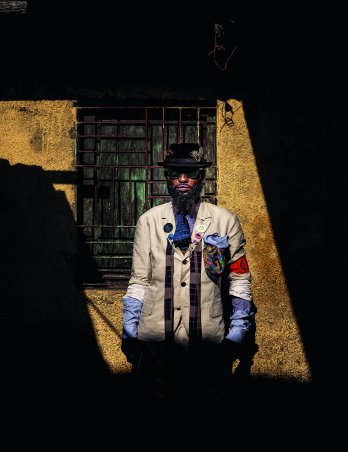
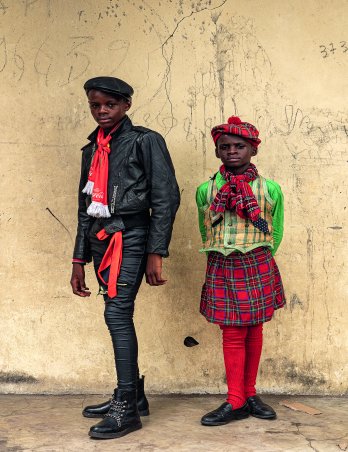
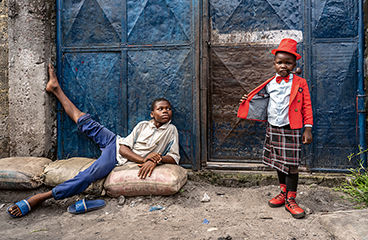
I saw my first Sapeur in 2013 when I was travelling overland from Morocco to South Africa. His appearance fascinated me given the surroundings he was in. I decided to come back and find out more about him and other Sapeurs. I returned in 2017 to start my work on the Sapeurs and have been working on it ever since. At first I only knew of the existence of male Sapeurs in Brazzaville, but later I learned that around 15% of Sapeurs are female, so-called “Sapeuses”. There are also child Sapeurs, who are likewise very hard to find. In addition, Kinshasa has a different Sapeur culture that is more experimental and even more unique. What fascinated me about the Sapeurs was the contrast between their appearance and their surroundings, but also the joy they bring to their communities. By photographing them, I wanted to help spread this joy. Every time I showed my photos to my family or friends, they were overwhelmed and full of wonder at the aesthetic. I hope I can spread this further as more people look at my pictures and learn about the Sapeurs.
Tell us about your new book. What is it about?
The book is about Sapeurs, followers of a fashion subculture in Brazzaville and Kinshasa who belong to La Sape, the “Société des Ambianceurs et des Personnes Élégantes” (Society of Ambiance-Makers and Elegant People). Most are day labourers, taxi drivers or gardeners, but as Sapeurs they wear smart designer suits and take great pride in their appearance. Traditionally, most Sapeurs were men, but recently women and children have also adopted this lifestyle. These extravagant characters are treated like rock stars in their communities because of the joy and colour they spread. What is unique about this project on Sapeurs is that the photos were taken in the Sapeurs’ own low-income communities, which once again highlights the contrast between the Sapeurs’ surroundings and their ambitions.

Why did you write this book?
Whenever I showed my photographs to friends, colleagues or my family, they marvelled at the Sapeurs’ riot of colour and fashion sense and were overwhelmed and full of wonder – just like the residents of the communities in which the Sapeurs live. On the one hand, Sapeurs want to bring joy to other people and amaze them; on the other, they want to show off a unique fashion aesthetic. My aim was to help spread this aesthetic and to introduce this unique culture to other people who might never have heard of Sapeurs.
What were the challenges in achieving this aim? What was the reward for your work?
During the shoot, the greatest challenges were physical. The conditions are tough for any photographer. Temperatures of 35° to 40° Celsius, 60% humidity, a lot of walking, heavy traffic, little infrastructure, visa problems, permits... Many Sapeurs don’t own mobile phones, which is why I had to send a messenger to the communities where they live to let them know I was coming. I photographed mainly in the morning and late afternoon to take advantage of the good light and to cope with the heat. The logistical challenges of travelling to the various communities where they live and of the traffic in Kinshasa were not to be underestimated either. Because I was working on site in the low-income communities where the Sapeurs live, I often met with reservations. Many residents were unsure or nervous because of my presence, but as a rule it was the Sapeurs themselves who ensured a safe environment by informing their communities that I was coming. The reward, however, was enormous. I wanted to capture the Sapeurs within the community in which they live. That isn’t usually done. And I can hardly wait to share the resulting photos.
How did you meet and photograph the Sapeurs?
Meeting Sapeurs was often complicated. The best method was to meet a well-known and respected Sapeur who knew other Sapeurs in the city and introduced them to me. I would then meet the Sapeur or Sapeuse, look at their clothes, their community and their house, ask which clothes he or she would wear, spend some time in the community and photograph him or her. Time was limited, so I only had one or two hours per person before I had to move on to the next appointment, especially as it often took time to get from one neighbourhood to another.
You also interviewed some of the Sapeurs. Why was that important for your photographic approach?
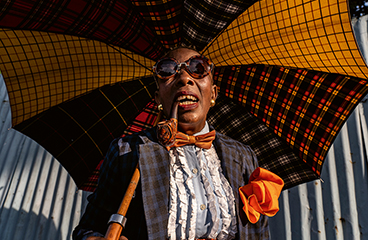
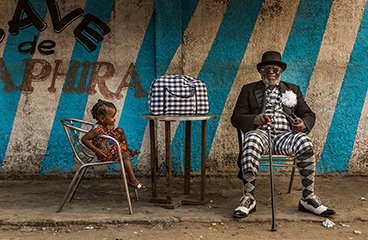
Through the interviews I wanted to find out exactly what the Sapeurs were wearing, whether it was local or international, Italian, French or Japanese clothing. The style in Brazzaville is much more classically French, while the style in Kinshasa is considerably more varied. I also got to know certain brands – J.M. Weston, for example, is one of the most popular shoe brands in both cities. I also wanted to know what the Sapeurs did for work and how they could afford the clothes they wore. So yes, the interviews were a very important part of the photojournalistic approach I chose for this project.
Always keep it personal, always stay honest and always stay true to myself
What was the most important aspect of the subculture you wanted to highlight?
I wanted to show the joy and cheerfulness the Sapeurs bring to their communities. They are treated there like celebrities and rock stars. They are respected, and people literally follow them down the street in their neighbourhoods. My broader work on the Sapeurs focuses precisely on these moments.
Are you planning more books?
Yes, definitely. I have just signed a contract with a publisher and my next book will be about my work of the last three years in El Salvador. The book will be designed by Stuart Smith and published by Gost Books. It is due to be released in spring 2021.
Tariq Zaidi
https://www.instagram.com/tariqzaidiphoto
More stories








GET IN TOUCH