
Style
STARS IN STRIPES
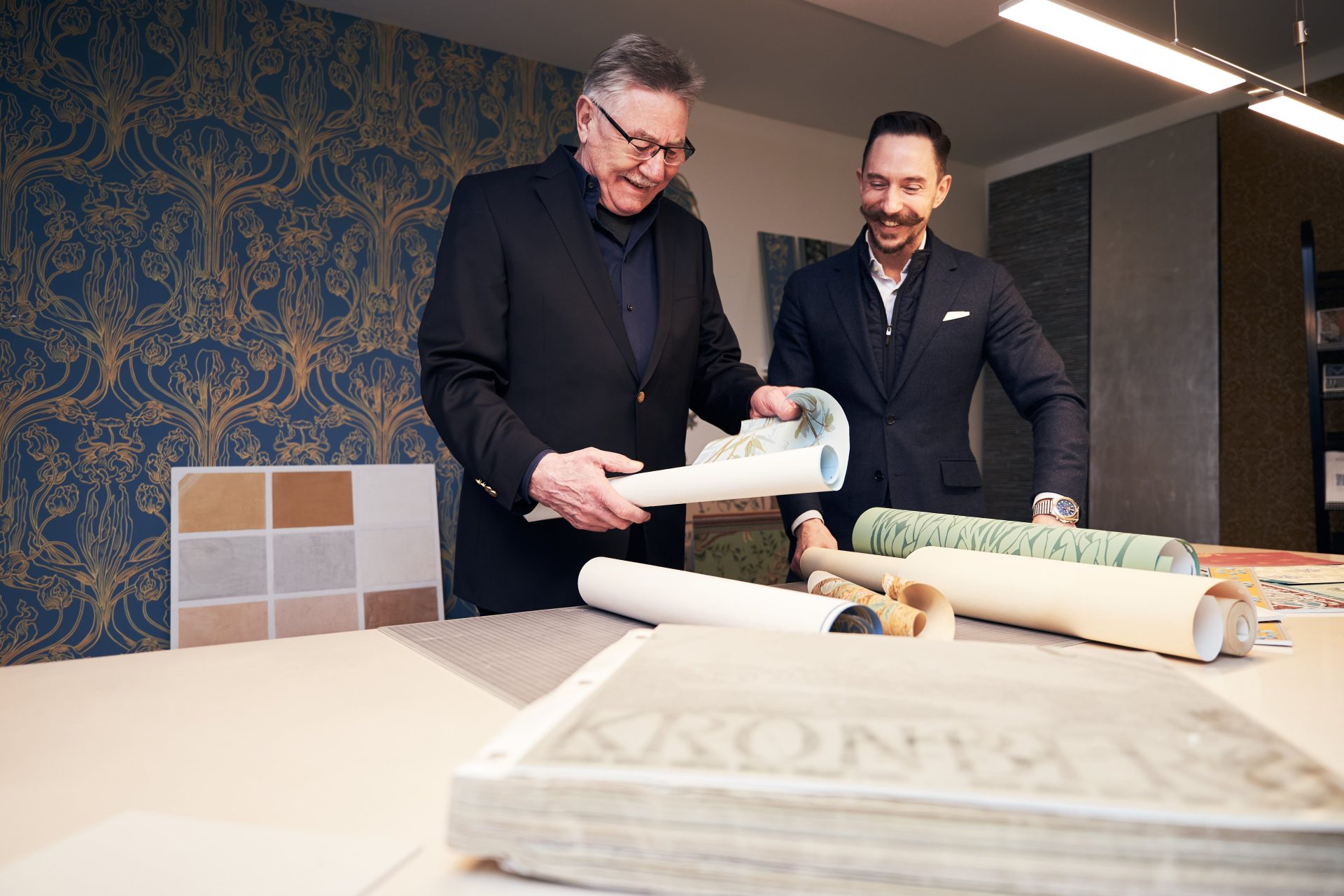
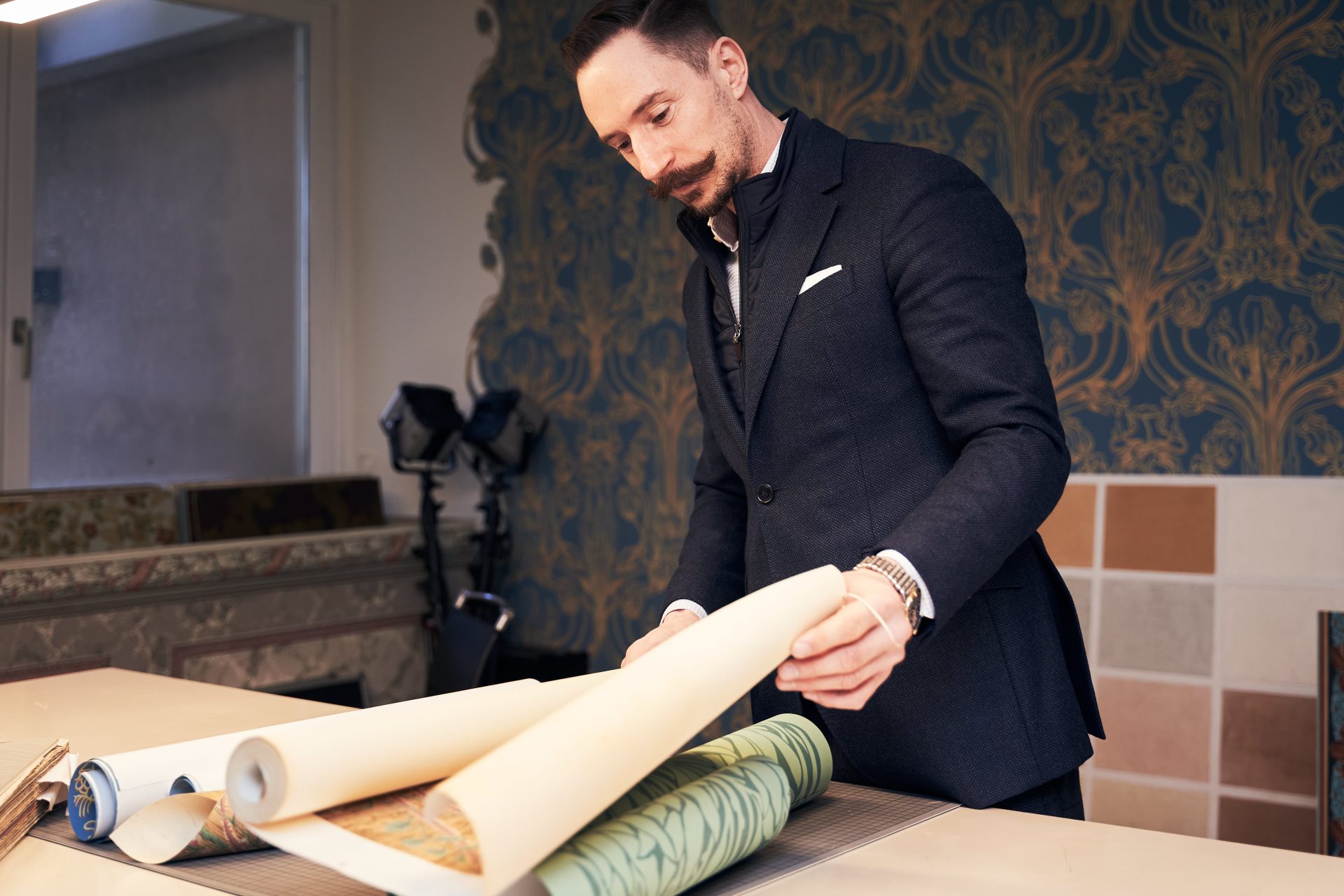
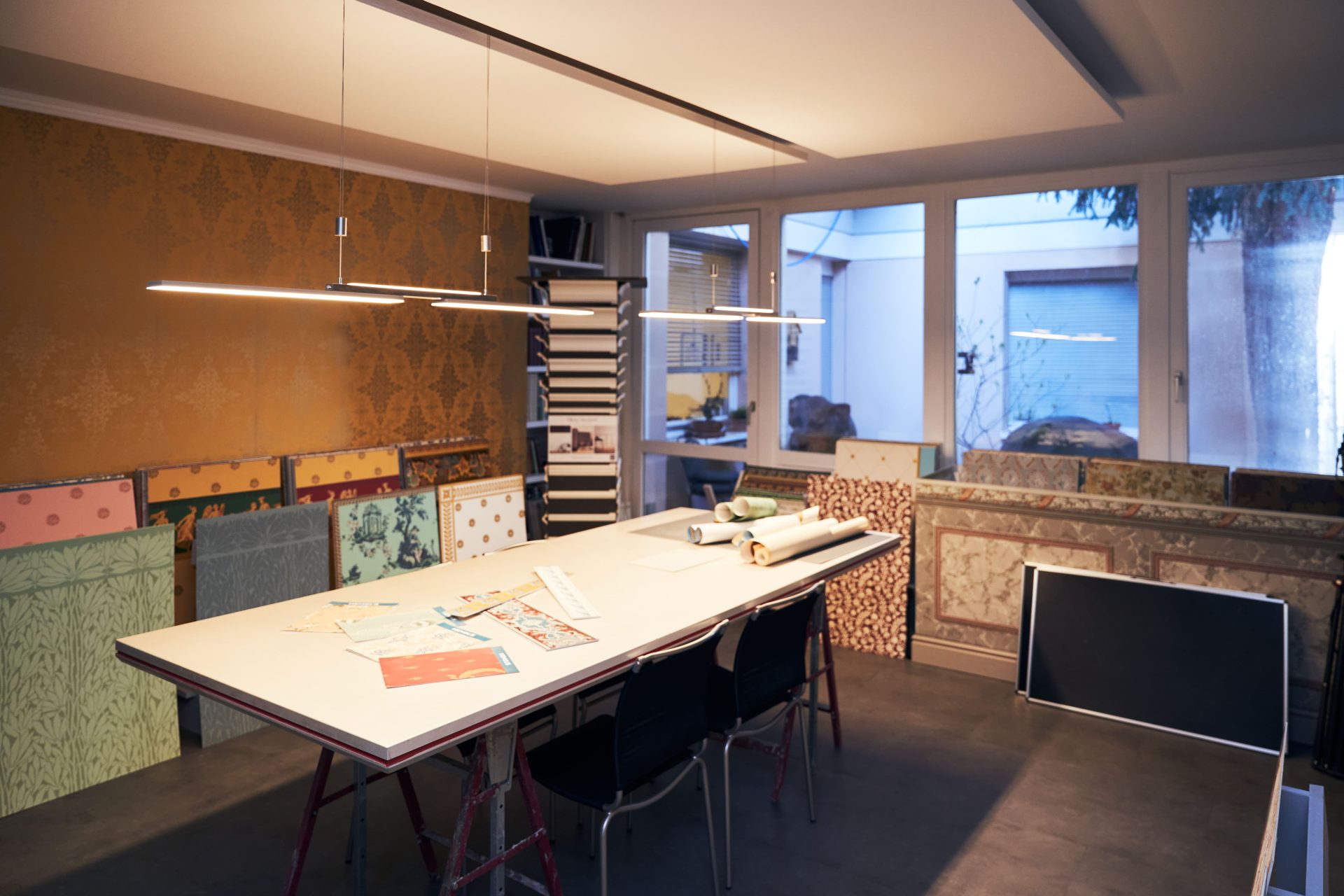
At the long-established company Julius Hembus, wallpapers are still made by hand from historical patterns. These beauties are in demand not only for restorations and in museums; more and more younger fans are also seeking out wallpapers and borders as eye-catching features. Our style expert Chris met an old-school master painter, managing director Hans Moosbrugger.
Text Chris Lehr Photos Betti Klee, Hembus
“There are customers who find a piece of an original wallpaper behind skirting boards or door frames and then have us reconstruct it,” says Hans Moosbrugger of some very special requests. The Hembus managing director has reason to be satisfied. Wallpaper is very much on trend, and there is plenty to do on the building sites of the company, which, alongside handmade wallpapers, specialises in high-quality façade design and the conservation of historic buildings. The only thing that has been impossible to find for years is capable apprentices, as everywhere in the skilled trades. “Sadly, the image of the painting and decorating trade has become poor. The pay is good, and anyone who wants to learn something is in exactly the right place here,” says Moosbrugger, who over the past decades has guided 140 apprentices through to their journeyman’s examination. He himself started working on his father’s building sites after school at the age of 13. “Those were different times,” he says.
GOOD REPUTATION
At 21, Moosbrugger had his master craftsman’s certificate in his pocket, and he then added a diploma in colour, form and design from the Höhere Fachschule (Akademie) in Stuttgart. Before setting up on his own, he worked on prominent major building sites in Germany, something he is proud of today. In 2000 his painting and decorating business took over the struggling Julius Hembus Maler- und Stuckwerkstätten, then a market leader. Eventually he had to concentrate on one business, which forced him to lay off staff, but: “They all found good jobs; our excellent reputation preceded us. Anyone who has worked at Hembus is qualified.”
SINCE 1894
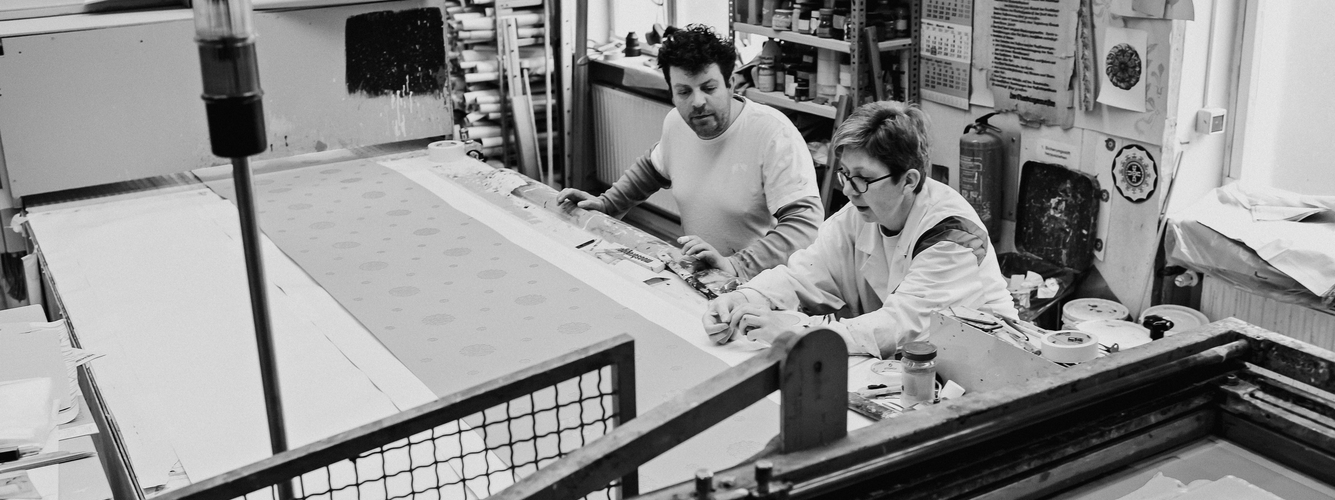
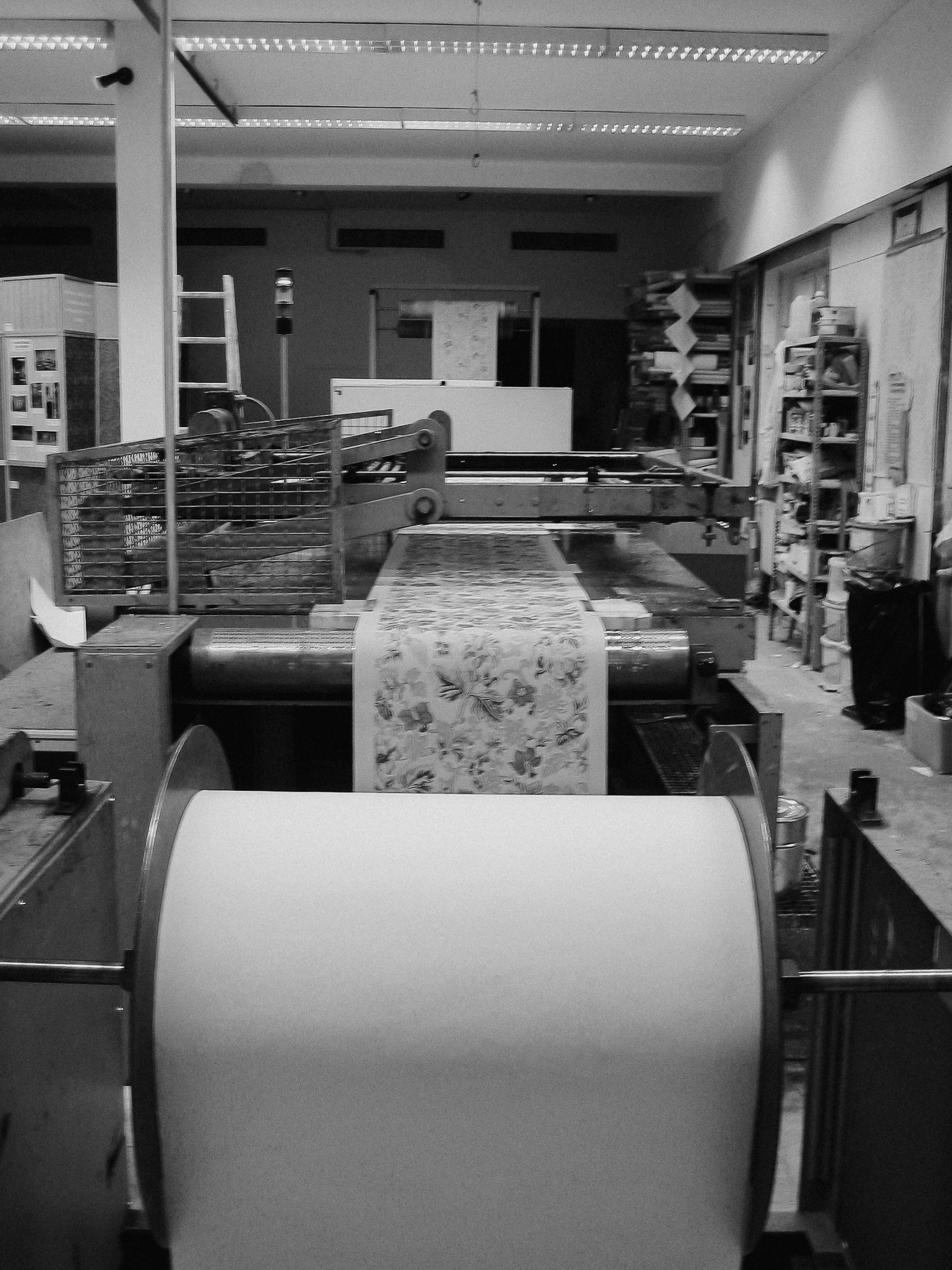
The boss shows me a very rare “belt screen printing” machine, built by Wilhelm Messerschmitt, who mainly built aircraft during the Second World War. Company founder Julius Hembus was a good acquaintance of Messerschmitt’s, I learn. The ageing machine motors are still in full operation today. The list of outstanding commissions since the company was founded by the restorer Julius Hembus in 1894 is long. The company worked on Schloss Friedrichshof in Kronberg (today the Schlosshotel Kronberg) and the Kurhaus Wiesbaden. Private villa owners who valued prestige and style ordered from Hembus. The Goethehaus, the historic Villa Metzler on the Schaumainkai (part of the Museum Angewandte Kunst) and Eberbach Abbey are among the many well-known projects of recent times.
FRUITS OF THE PAPER
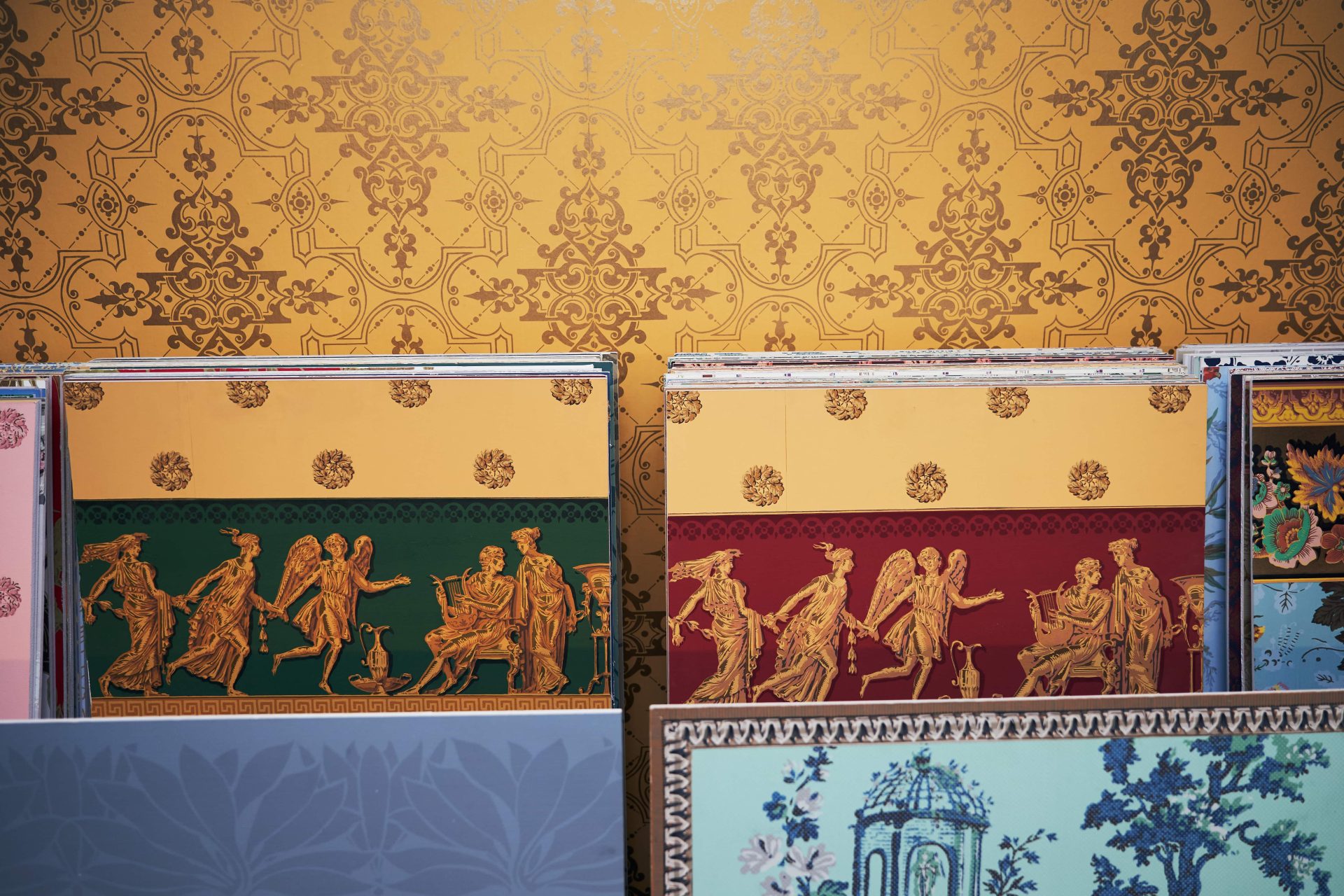
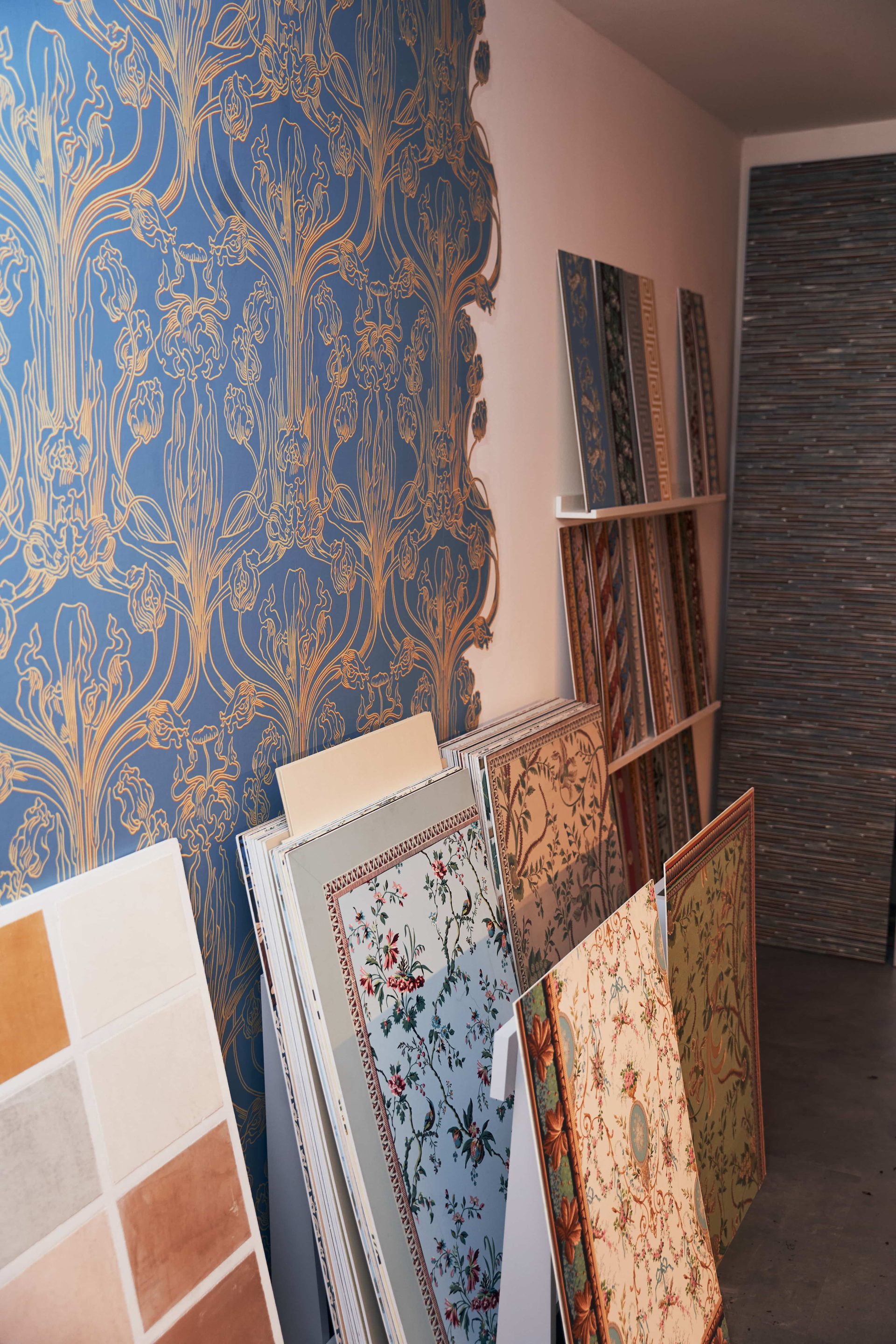
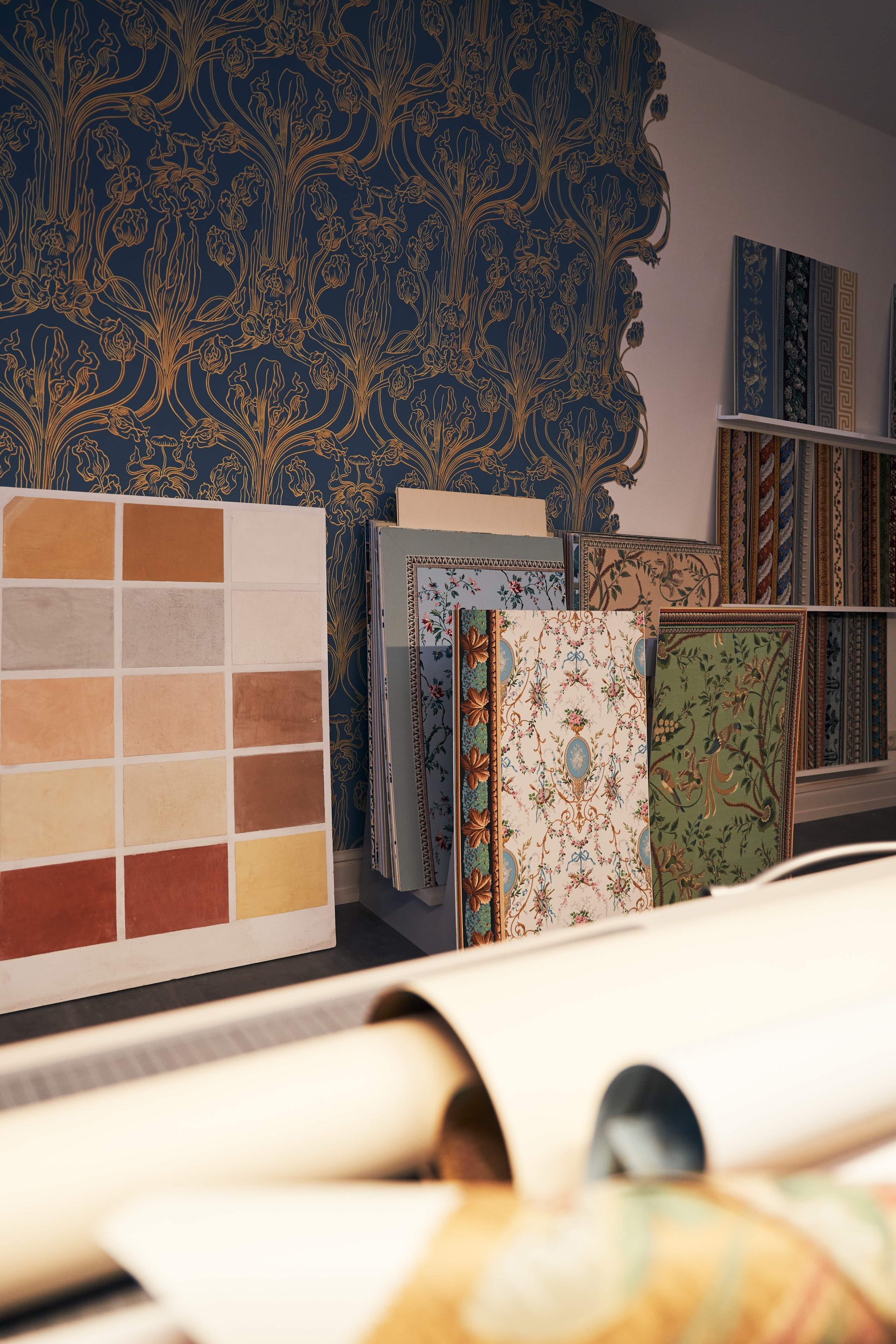
I leaf through the wallpaper books and am delighted by the variety of timeless designs. Whether simple stripes such as Goethe and Clemens Brentano knew them, lavish arabesques from the Gründerzeit, floral Art Nouveau such as the limited edition “Bärenklau”, or faux marble. Because they are handmade, every run of these vintage wallpapers and borders is unique. “Fräulein Klara”, “Weimarer Kränzchen” and “Ananas” are some of the flowery names for these wall charmers. Vine leaves, fruit baskets, exotic birds and much more populate them. I particularly like the elegant “Steppdecke”, which, with its beige and yellow stripes, creates the illusion of a quilted blanket and is based on an original from 1790. Even in a purist interior, this wallpaper would make a fabulous, sophisticated centrepiece.
TWO PRINTS
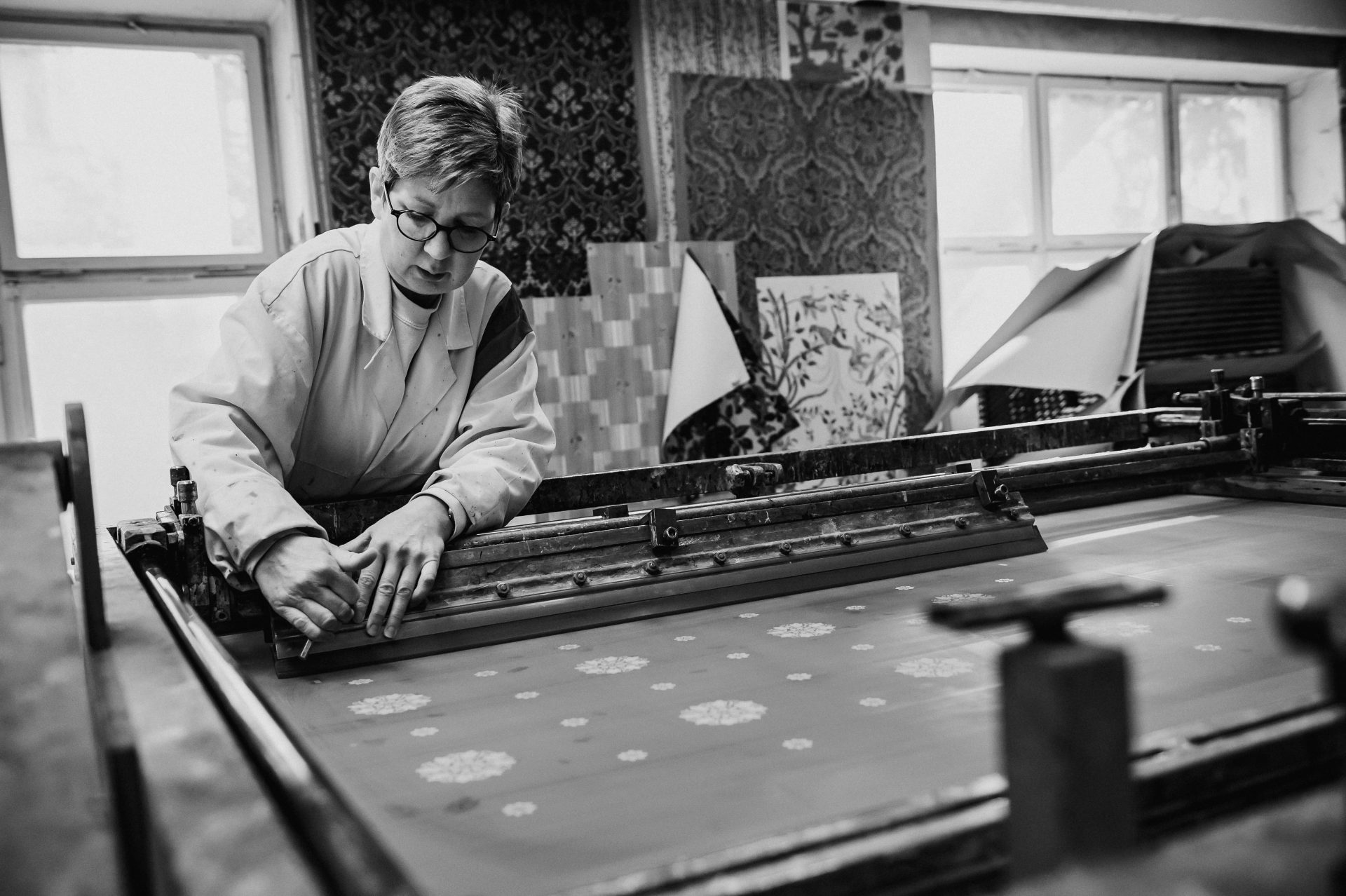
“Making the wallpapers begins long before printing,” explains Hans Moosbrugger. “First, the patterns are painstakingly drawn by hand from the original. Up to 36 artists’ colours are matched down to the last detail. We avoid using plastics and work sustainably and ecologically; that is our philosophy. In total, some 750 different wallpapers and borders leave our workshop.” I have the process of printing metre after metre explained to me: “The first colour is applied by hand with a brush. Then, using a special process, a screen is made for each colour. After that, the wallpaper is gently dried. Then comes the second print, which is what gives the wallpaper its expressiveness.”
DECENT QUALITY
Eintracht fan Moosbrugger is approaching 75 and was long ago honoured by the guild with the Golden Master Craftsman’s Certificate for his work. He still runs the business together with his wife Sigrun, an architect. She advises customers on design and conversions. Their four children have taken paths away from the wallpaper workshop; one daughter lives in Alsace. Retirement is not on the cards for Moosbrugger; he and his wife still hold all the threads. His hands are fascinating and speak volumes. Hands-on, experienced. “Quality is what is decent, said the first President of the Federal Republic, Theodor Heuss, in 1951,” he tells me as I leave.
Impressions
More stories








GET IN TOUCH