
Home
STAR ARCHITECT HADI TEHERANI
Star architect Hadi Teherani recently designed the Frankfurt high-rise “The Spin” and large parts of the “Hafenpark Quartier”. THE FRANKFURTER spoke to the Hamburg-based architect about luxury in times of sustainability, the beauty of Iran and why he would move to the Main today.
Text Martina Metzner Photos Spin Tower, Martina Mai, Axo, NH Collection, Scandic, Panoptikum, Parham Tagh, Christian Fischbacher, Till Westermay
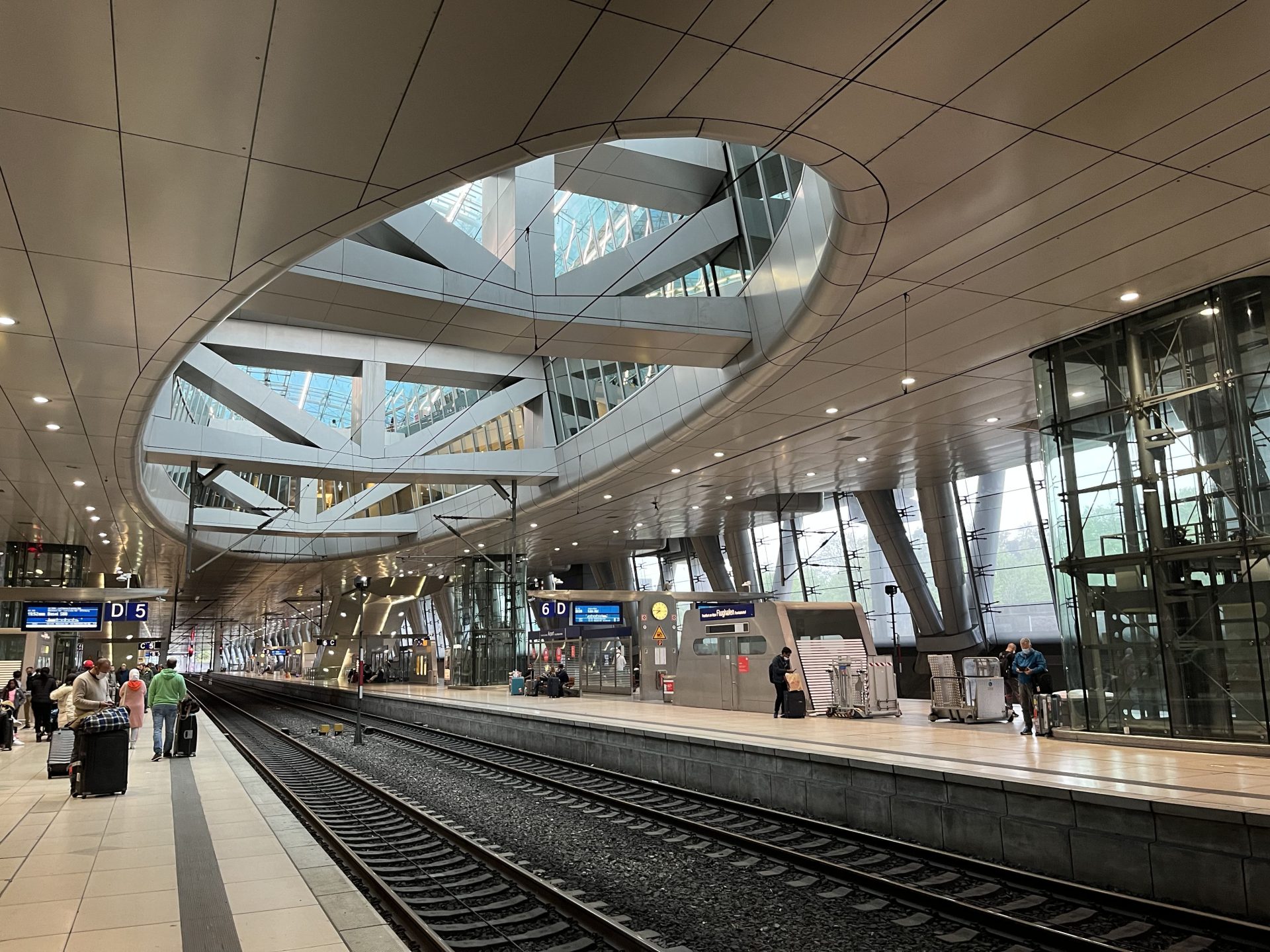
Architect and product designer Hadi Teherani (born 1954) works internationally – in 2020 he was awarded the Federal Cross of Merit on Ribbon for his work. His designs also shape Frankfurt’s cityscape – for example the long-distance railway station at the airport or the “Flare” in the city centre, where the Rundschau building once stood. He often goes beyond pure architecture, also designing matching furniture, lights and fittings.
What fascinates you as an architect about our city?
Hadi Teherani: “Frankfurt is different from all other German cities. It lies in the centre, it is an international hub. A city that is open to change. More and more high-rises are being added, changing the skyline. There is an appealing transition from the historic to the newly built city. The Main, the riverbank and the old town have a special charm. So do the views of the surrounding hills.”
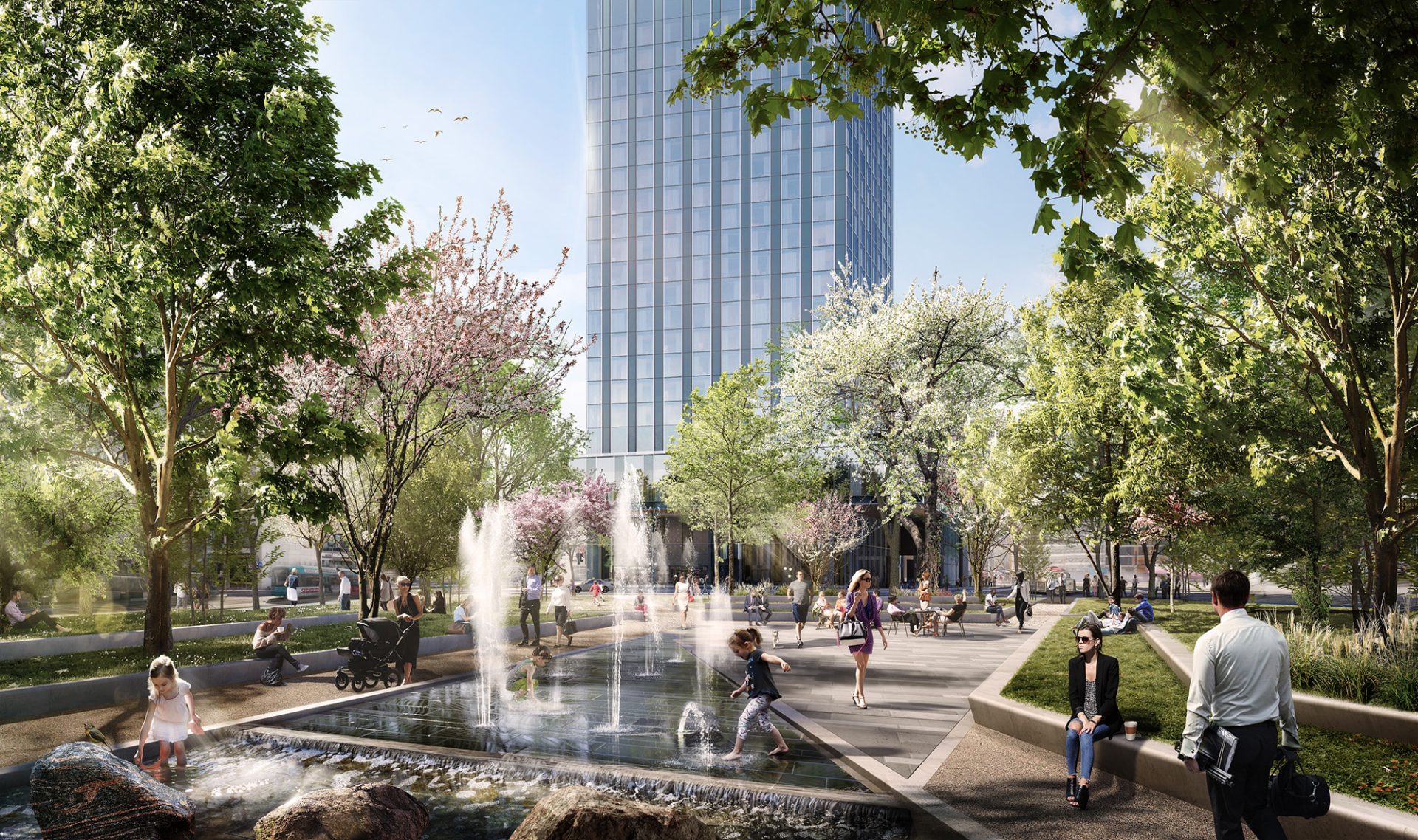
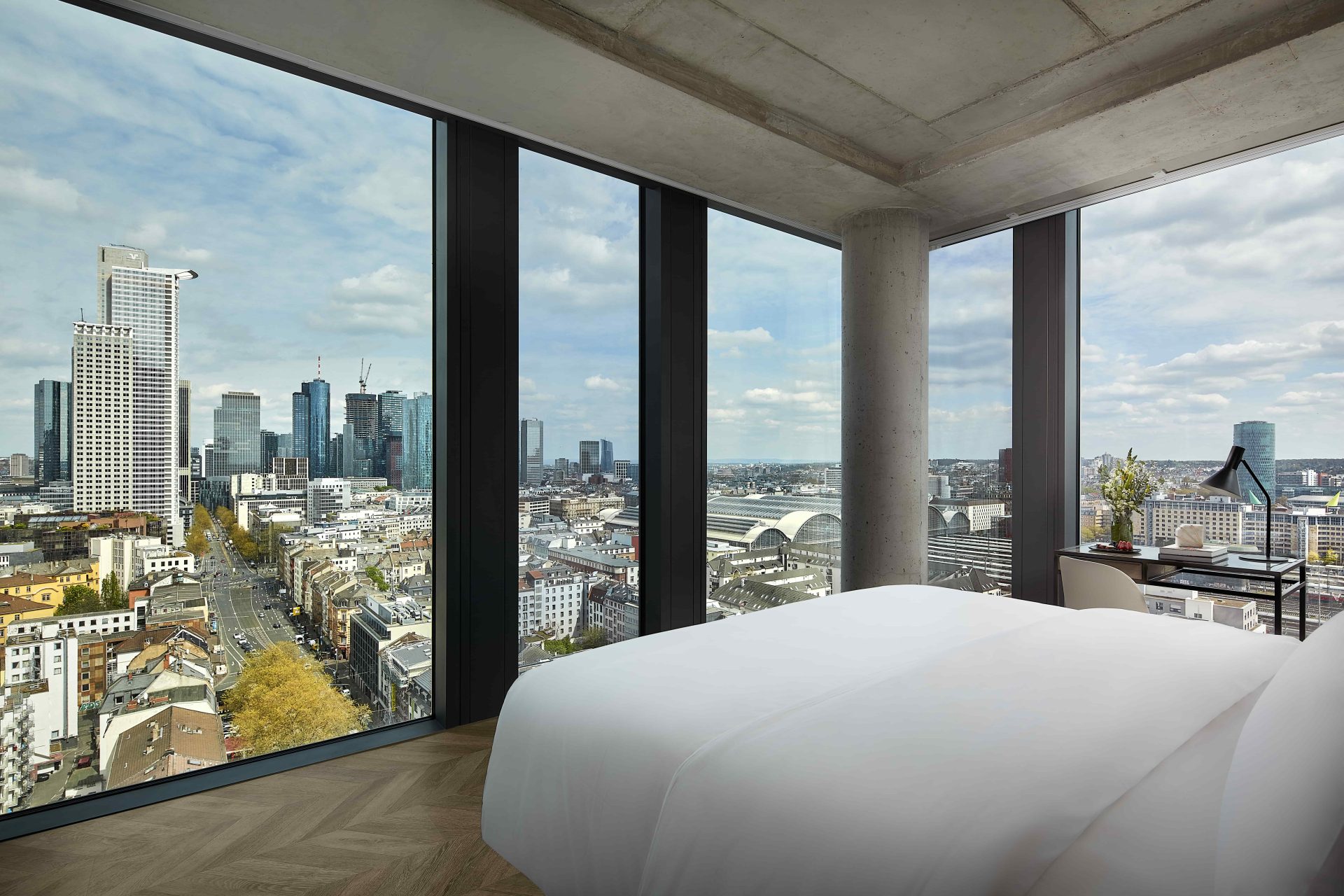
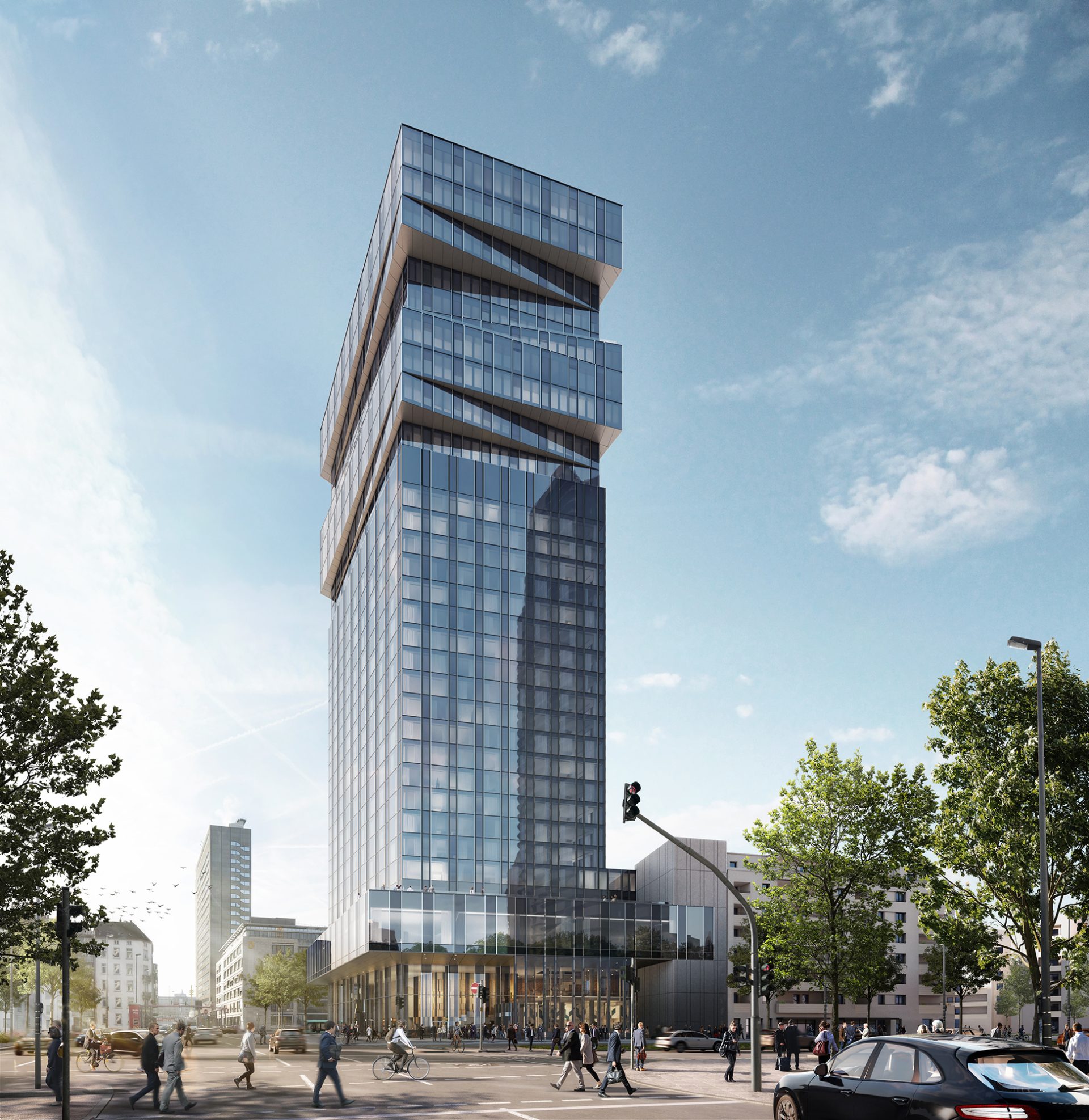
“The Spin” is rising on the edge of the Europaviertel. What was your approach to the design?
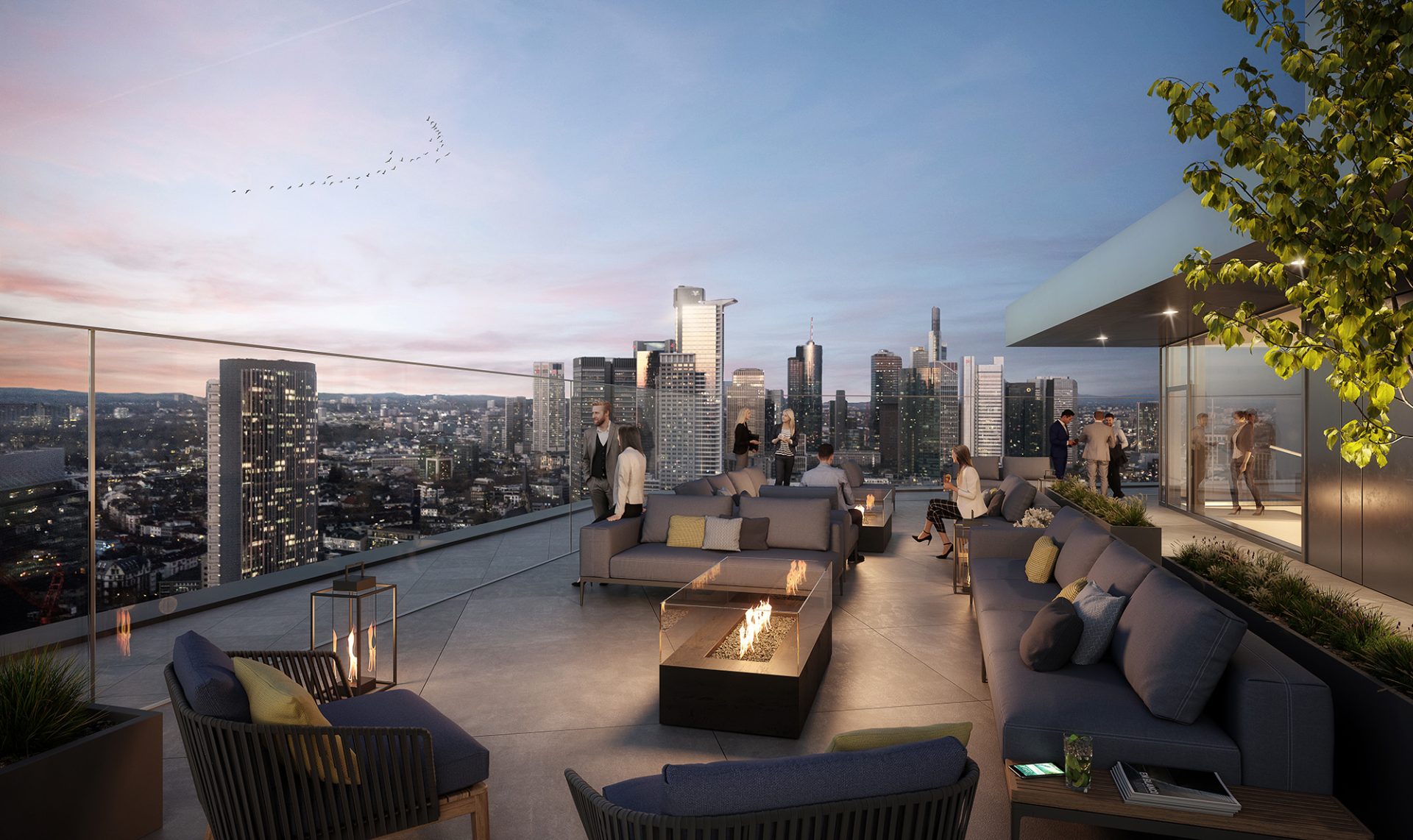
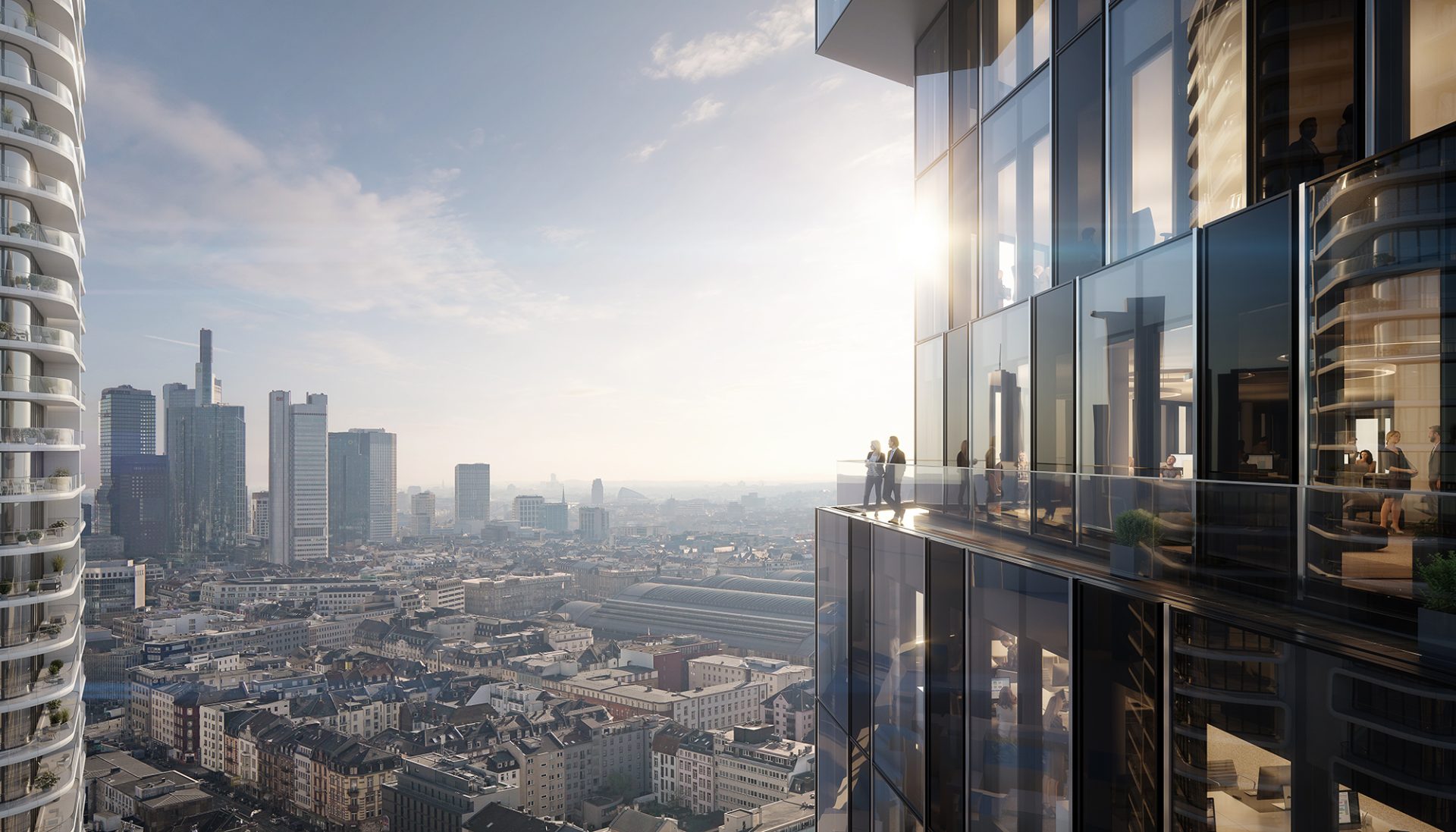
“We didn’t just want to develop a vertical, but to offer something exciting. We also wanted the silhouette to explain the use. Where the hotel ends and the offices begin, the vertical is broken and the crown is twisted.”
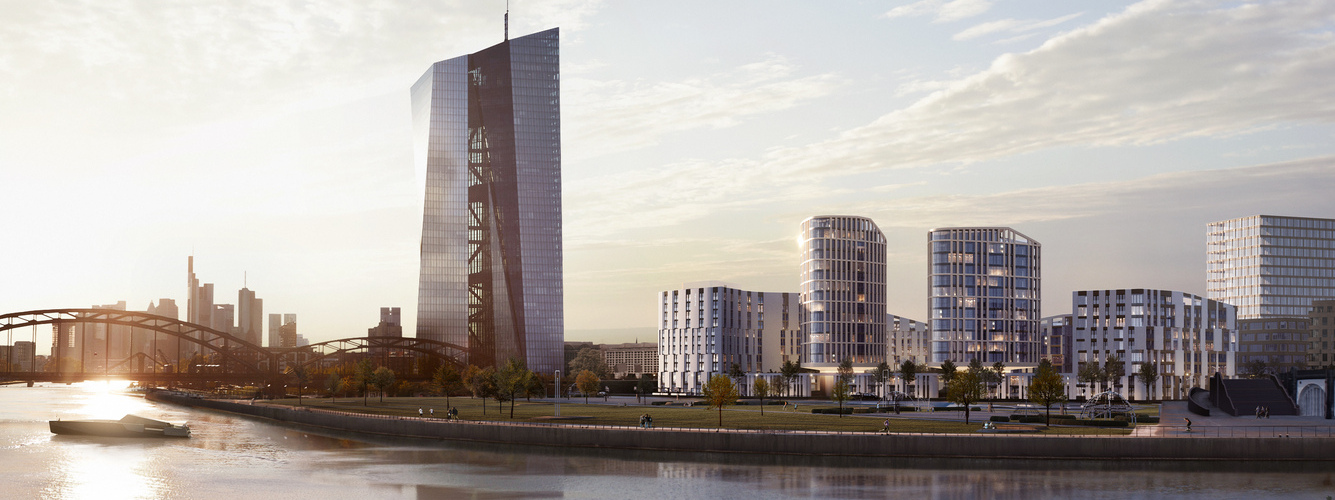
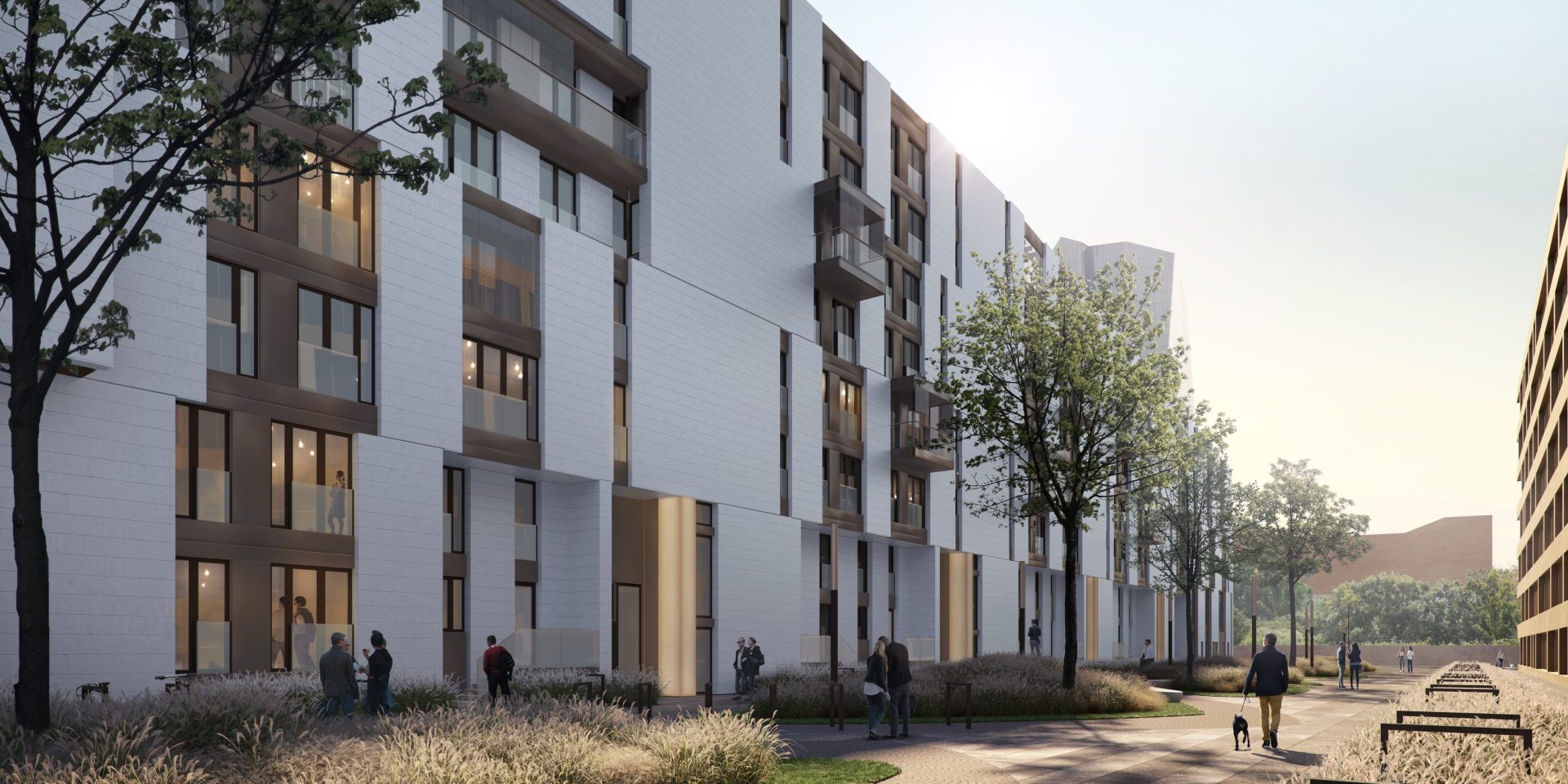
You also worked on the “Hafenpark Quartier” – with a hotel, the pebble-shaped twin towers and the townhouses. What was your idea there?
“The client wanted to offer a variety of things – a hotel, apartments, luxury apartments and townhouses. The views of the Main and the skyline are important. How do I organise that for 70,000 square metres of usable space? A block of buildings all the same height would obstruct the panoramas. So we cut the hotel off on one side. Thanks to their oval shape, the two towers have fantastic views.”
Your roots are in Iran. How strongly does Iranian culture influence your designs?
“I came to Hamburg when I was six. I learned German, studied in Braunschweig and increasingly distanced myself from Persian culture. I almost forgot the language. Then, almost ten years ago, I accepted an invitation to Tehran. There I discovered the country, its potential and its beauty. The sense of togetherness, the hospitality – that impressed me. Iran was, after all, a world power and influenced a great deal globally. Many things we practise here in northern Europe come from Iran. Building with brick, for example – or sustainable construction. However, the country is now in a period in which it cannot shine so brightly.”
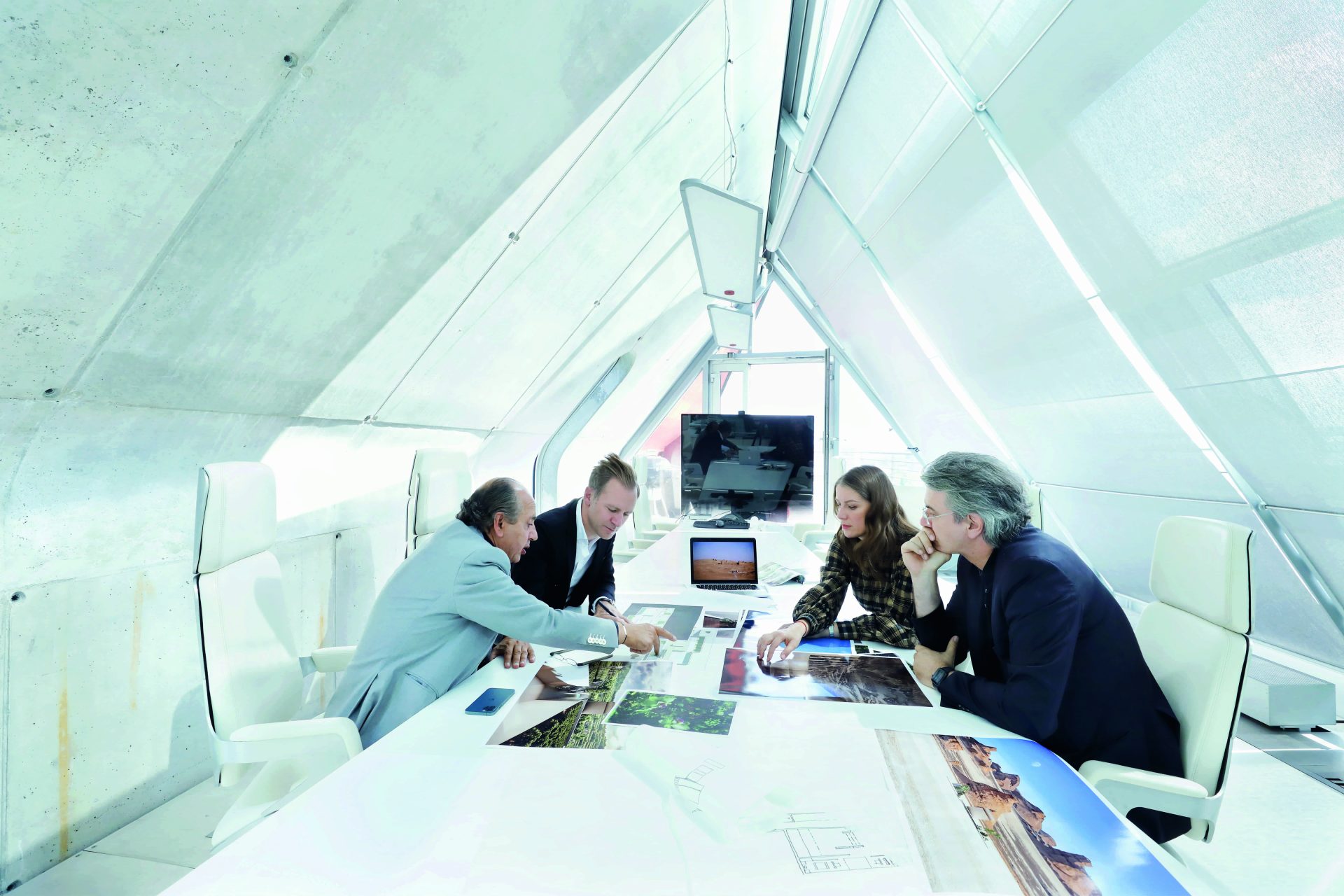
You also have an office in Tehran. How difficult is it to build there in the current political situation?
“Tehran is a hotspot of art, literature and architecture. Thirty-five very talented people work for our office there. Even if the conditions are difficult, people do live there. The standards for luxury building are much higher in Iran. The smallest apartments there measure 500 square metres, the larger ones up to 2,000. Of course, that only concerns a minority – and it is also a way of escaping the currency.”
What would you wish for Iran?
“A future.”
You work internationally and design different building typologies. How strongly do your designs respond to the local culture – and how strongly do you assert your own signature?
“When I look at a plot, I say the design is already there; you just have to recognise it. Every site raises particular questions. Is it a site with a great view of the mountains, is there a lot of noise, is it warm or cold, what kind of people live here? We try to think holistically. In India, for example, we have to engage with Vastu, the metaphysical theory of architecture. We designed a villa there with an underground garage. Then the Vastu guru said nothing may be underground. And we had to remove the garage. That’s simply a different culture.”
Sustainability is an important issue – in architecture too, of course. Some voices argue for repairing and converting more rather than building new. Is luxury compatible with sustainability at all?
“Only when we have luxury can we afford sustainability. For 200 years Europe has polluted the world and became rich as a result. And now we have money for sustainability and have to make repairs. Other countries don’t have this luxury. They are glad when they get something to eat. I can’t tell them that the building has to be sustainable. Of course it is a necessary development. For me, sustainability is a matter of course. I have been building sustainably for 30 years. First I had to convince the investors. Then legislation followed suit. And now industry supplies its sustainable products to go with it. But I can also design sustainably. A building with flexible floor plans is still relevant after 50 years.”
You are also known for your interiors. Which do you prefer to design: architecture or interiors?
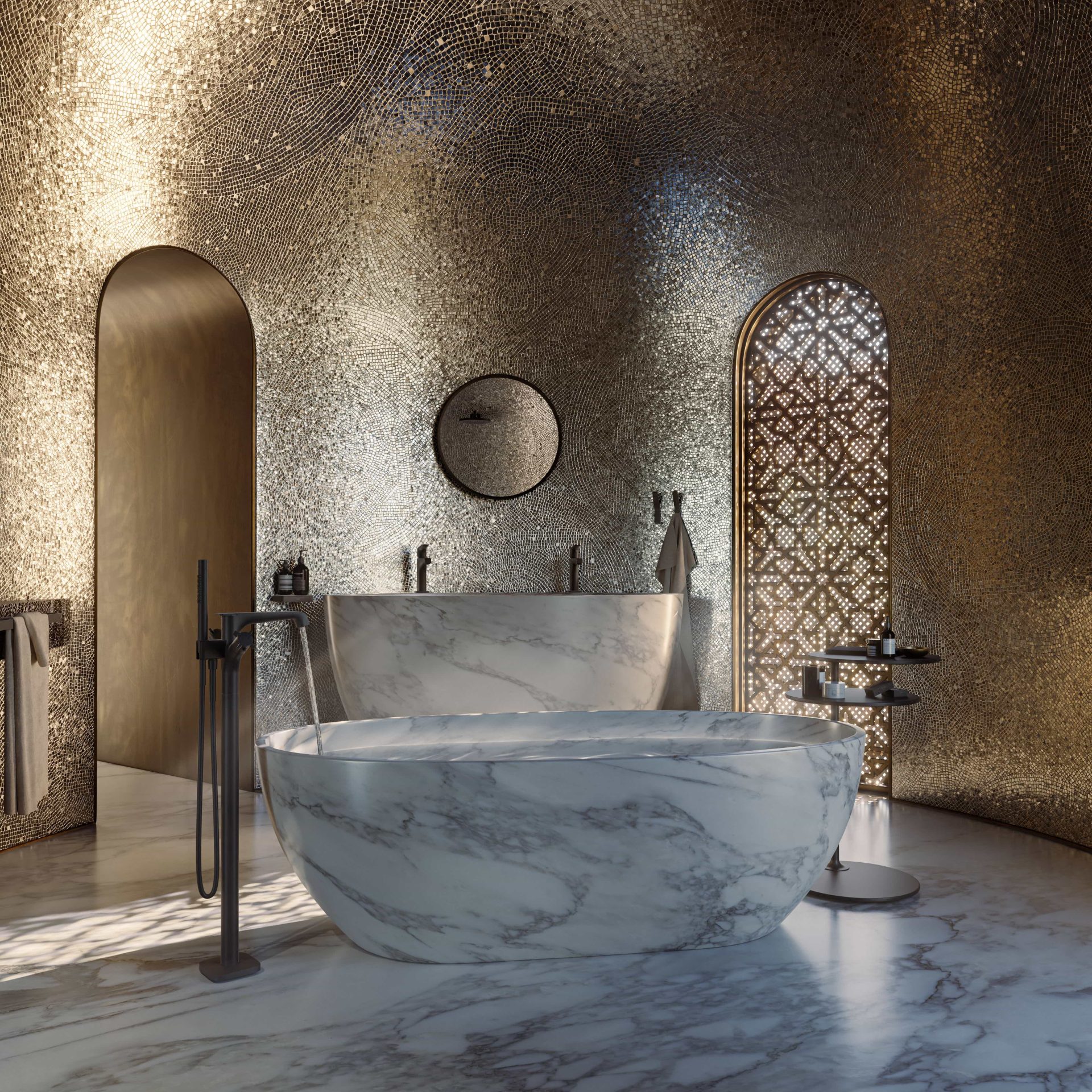
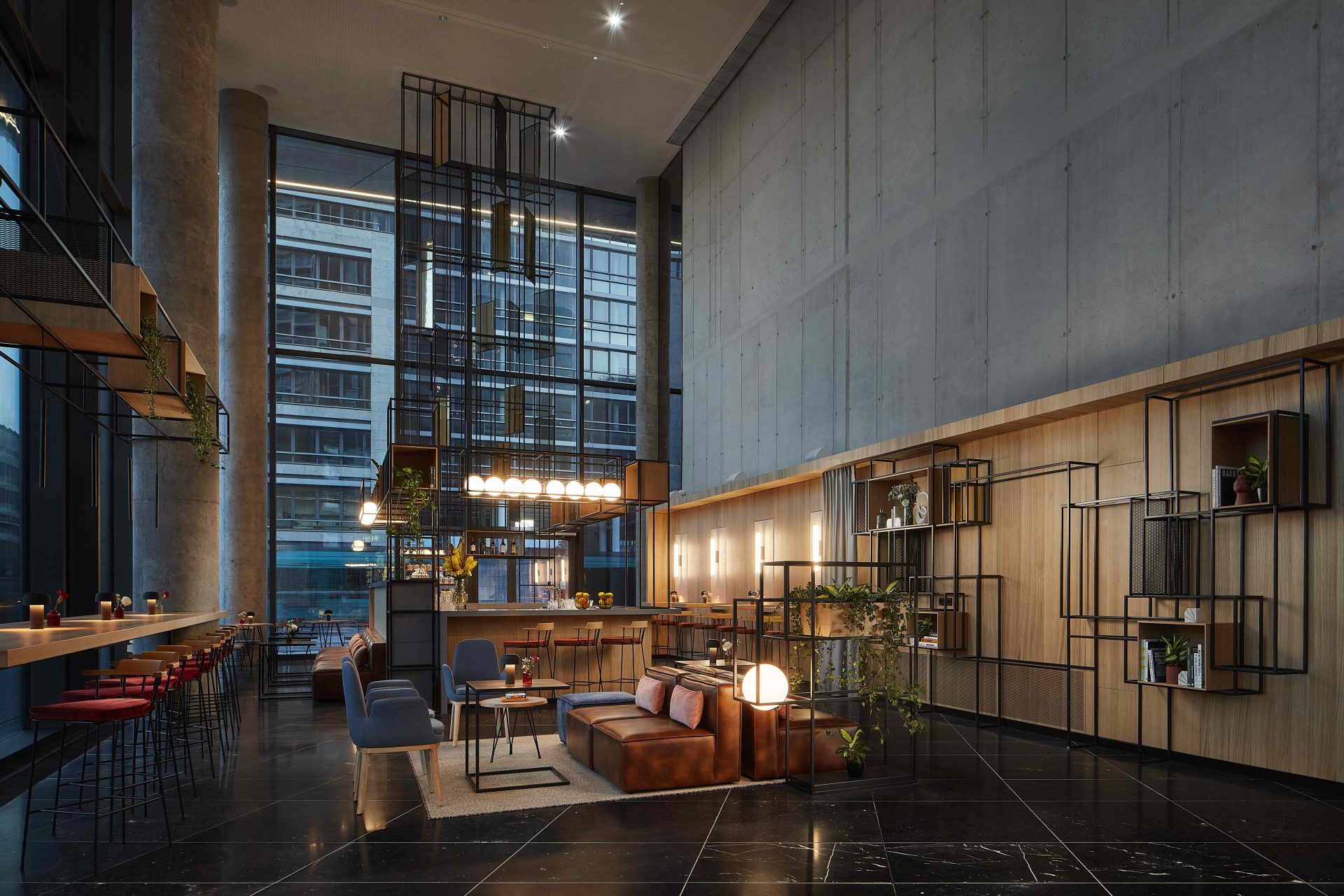
“Interior design follows on from architecture – and, one step further, product design. I mostly design from the inside out. Every building has to have a story. Then it becomes a building with heart. When we also handle the interior design, we think through every detail, right down to the skirting board.”
You say architecture should behave like a tailor-made suit. To ask the question the other way round: you are known for your suits – and have also designed showrooms for the Italian menswear house Kiton. May we ask whether you have your suits made to measure?
“Architects and designers like to appear in a black polo neck. On the one hand, it’s safe; on the other, it shows that you are a priest of design. For me, that’s out of the question. When I set up on my own, I also designed fashion. My fashion label in Cologne was called ‘Herrenhaus – made by architects’. And that’s how I got my first architecture commission. I must have owned 150 suits in my life. The most extravagant are certainly my pink and orange suits, which I have made to measure. But I also have many suits from Kiton.”
Now for Hadi Teherani the person: what are your favourite places on the Main?
“I am inspired again and again by the long-distance railway station at the airport, which I designed in 1995. Technically very demanding. It also has something poetic about it – the architecture tells you that you are at the airport. And whenever I’m on the Main, I keep discovering new things. I like the lifestyle, the cultural offerings, the museums, the restaurants. I have the feeling I could move there now – I couldn’t have said that 20 years ago.”
More stories








GET IN TOUCH