
Art
STAGING NATURE
Mathias Kessler grew up next to a ski resort in the Kleinwalsertal. In his work he questions the tension between tourism and idyllic nature. Does nature still live up to what advertising promises? The artist now also has a studio in Frankfurt.
Text Heike Strelow Photos Matthias Kessler
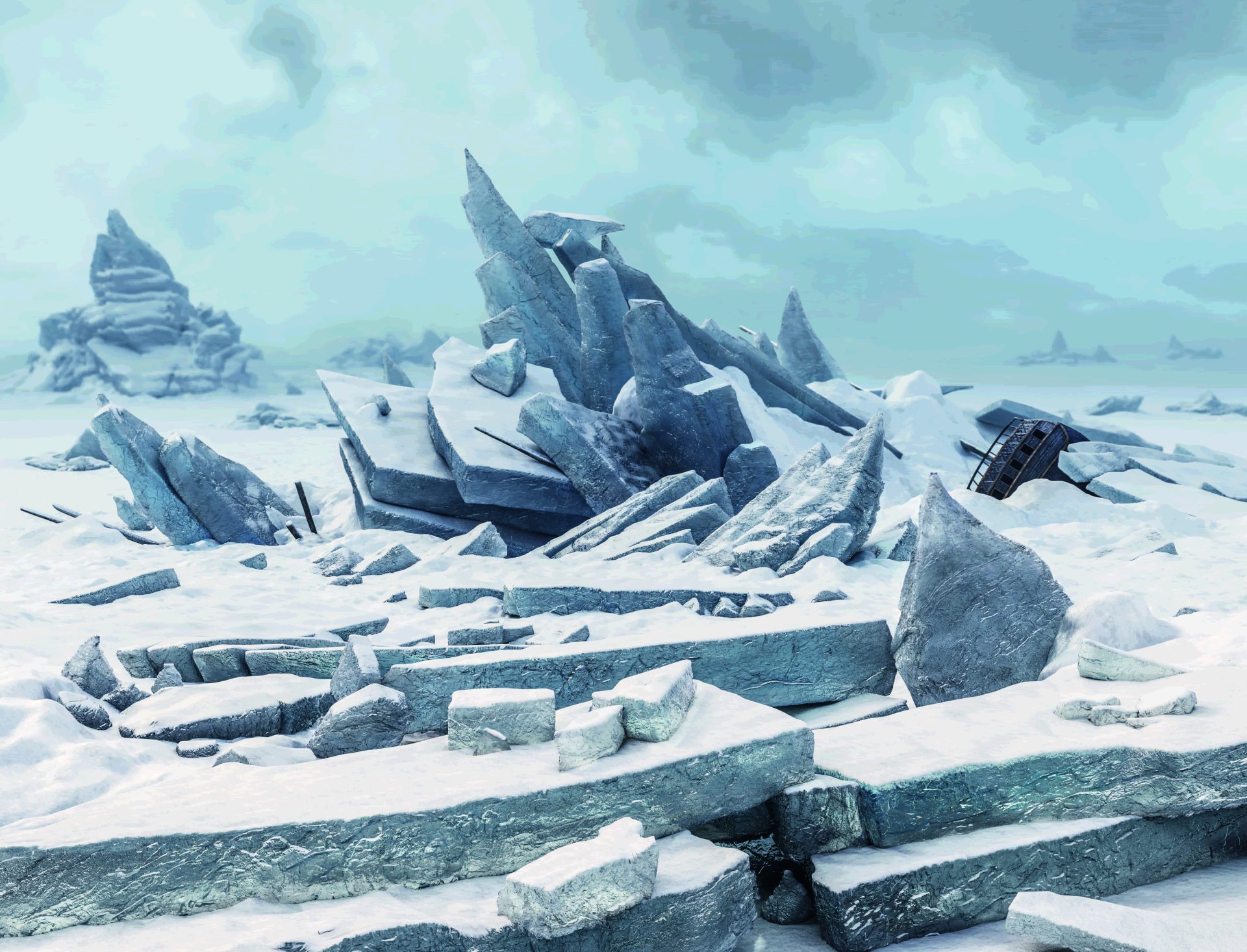
Icebergs in the fridge, a skull overgrown with coral, surreal illusions constructed on the computer. With both seriousness and humour, Mathias Kessler restages typical ways of depicting natural processes. His media are photography, installation and performance. While the Austrian has been based in Brooklyn, New York, for more than two decades, he is now increasingly to be found back in his home region of Vorarlberg – and since this year he has also had a studio in Frankfurt. Gallerist Heike Strelow spoke to him about his work and his critique of the concept of nature.
Mathias, you have long been exploring the complex relationship between nature and humankind, focusing on the pictorial appropriation and representation of nature. Is that a way for you to understand the ecological crisis?
Mathias Kessler: “My interest in this web of relationships between humans and nature comes from my own biography. I grew up next to a ski resort in the Kleinwalsertal. As I watched tourism grow steadily, I also witnessed the disappearance of the Walser language and culture. I try to question this tension between tourism and idyllic nature in my works. In doing so, I address the ideas of capitalism. I take up the longings and dreams we have about nature and present in advertising, and set them against the corrosive reality of constant growth and economic failure.”
In 2007, during an Arctic expedition, you were able to stage your night-time photographs of icebergs. Isn’t this work more socially relevant than ever?
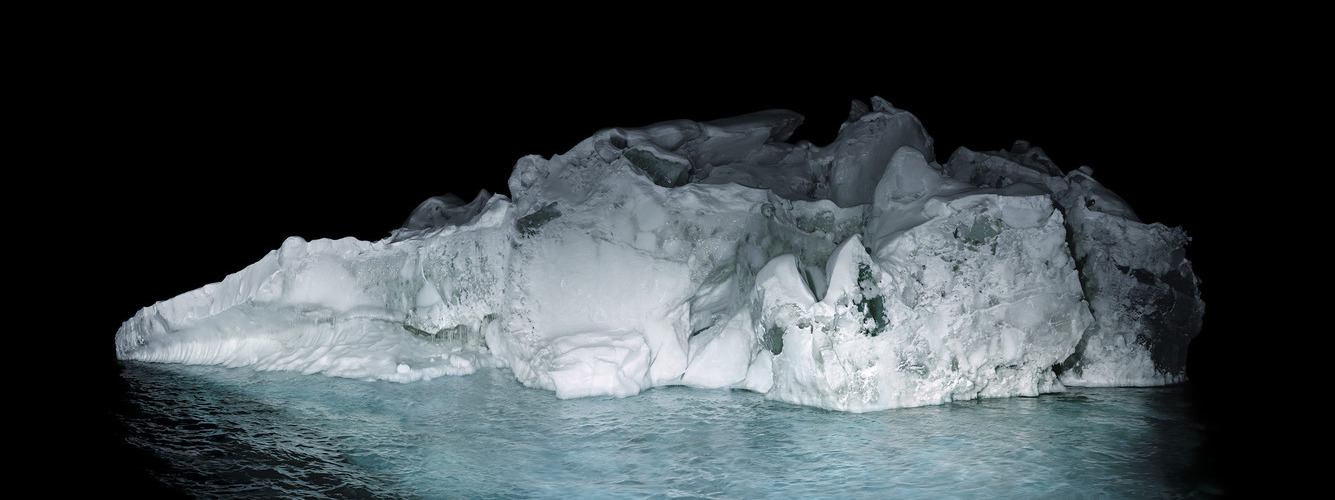
“‘Staging Nature’ is a very central project for me that combines two areas that are important to me. On the one hand, it plays with the romantic image we have of nature – an 18th-century fantasy that advertising has burned into our subconscious. On the other hand, it is a performative act in which mountains far from urban centres are illuminated. Lighting icebergs at night creates a stage on which nature is the actor. The resulting photographs, installations and films document this intervention in the sublime landscape. In their uniqueness, in their zeitgeist, they are a turning point that can no longer be undone.”
You also repeatedly address the appropriation of nature by the European modernist painters. Is it the ambivalence underlying this appropriation that interests you?
“The answers for our century lie in the 19th and 20th centuries, when the institutions of our modern society were created. Industrialisation and scientific progress created new parameters: Gauguin’s paintings lured viewers with idyllic nature and people who seemed untouched by progress. Modernism opened our eyes to the beauty of nature. As transport became easier, faraway places suddenly moved within reach. The foreign suddenly became desirable. In truth, it is once again about new sales strategies that approach us with fear and with the promise of a better future.”
The foreign suddenly became desirable.
— Mathias Kessler, artist
Your most recent work is the short film “Das Resort”, which is currently being shown successfully at renowned international festivals in Europe and the USA. From the end of March it will be shown in your solo exhibition in Frankfurt. What can we expect?
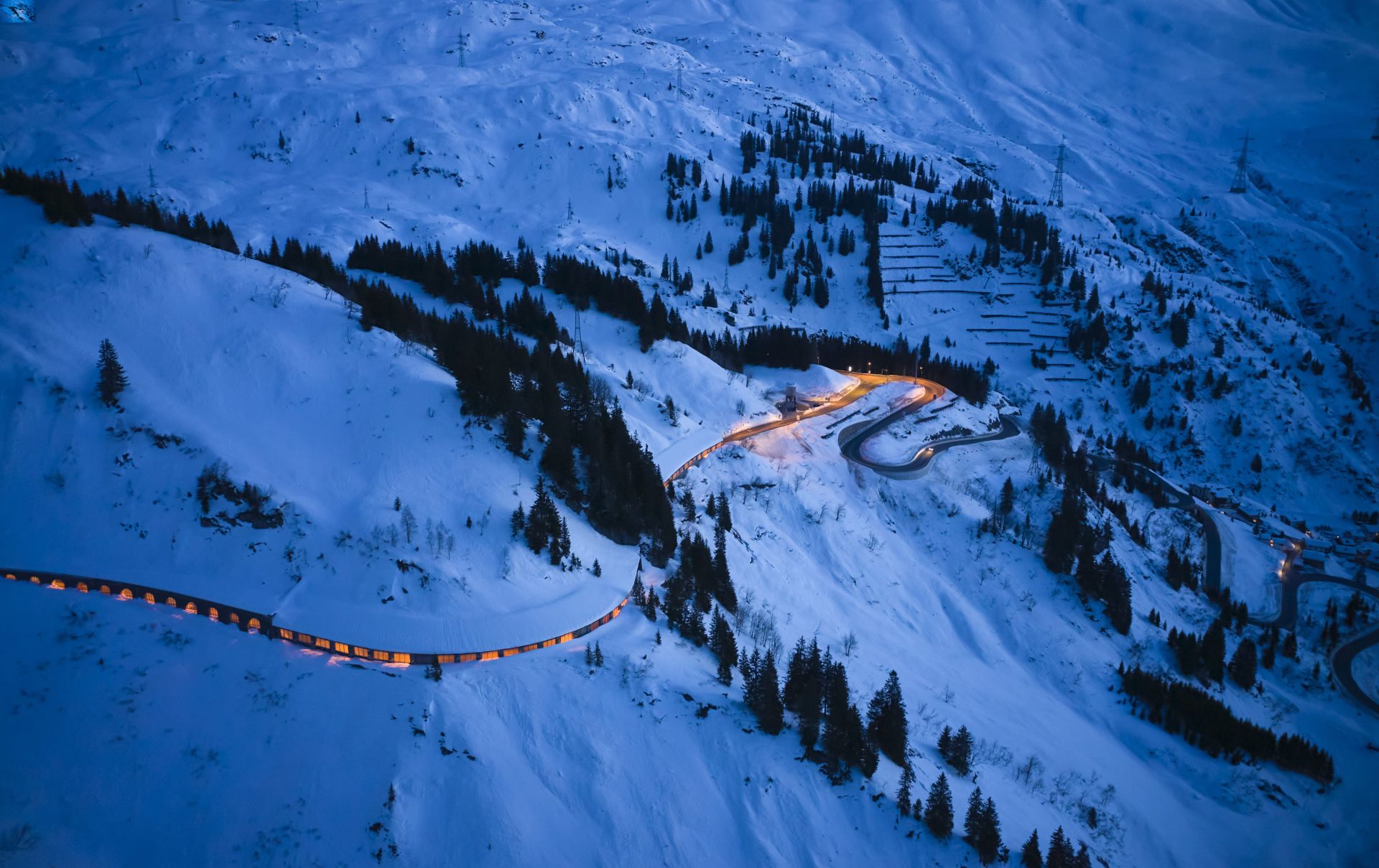
“The film was made during the Covid lockdowns, when for the first time in my life I experienced our ski resort being closed. There was silence, and a certain inner paralysis set in too. You could hear the animals that you otherwise couldn’t hear over the noise of the ski business and the snow cannons. It was a very profound experience. I then wrote a screenplay with Ron Kanecke and Chiara Juriatti in which a little boy wakes up in an abandoned ski resort. The protagonist is looking for his father. The powerful images of empty ski resorts in the Kleinwalsertal and Lech are narrated by three voices, non-linearly. The voices seem to express their worries and memories again and again without any visible chronological order. Here, as in most of my projects, the disused infrastructure of lifts and cable cars is the main character. You see fragments of people, a kind of collage in which the actors briefly come into the picture and disappear again.”
Impressions
More stories








GET IN TOUCH