
Art
MAGNIFICENT GLASS HEART - SAINT-LOUIS CRISTALLERIE
Founded in 1586, the Saint-Louis crystal manufactory is regarded as “Europe’s glass heart”. At the famous French manufactory, one of the oldest of its kind, crystal of the highest quality and elegance is made by hand. THE FRANKFURTER took a look behind the scenes of the place where classics and contemporary designs see the light of day.
Text Robin Zabler Photos Patrick Schmetzer, Saint-Louis, Nikita Kulikov
 Play video
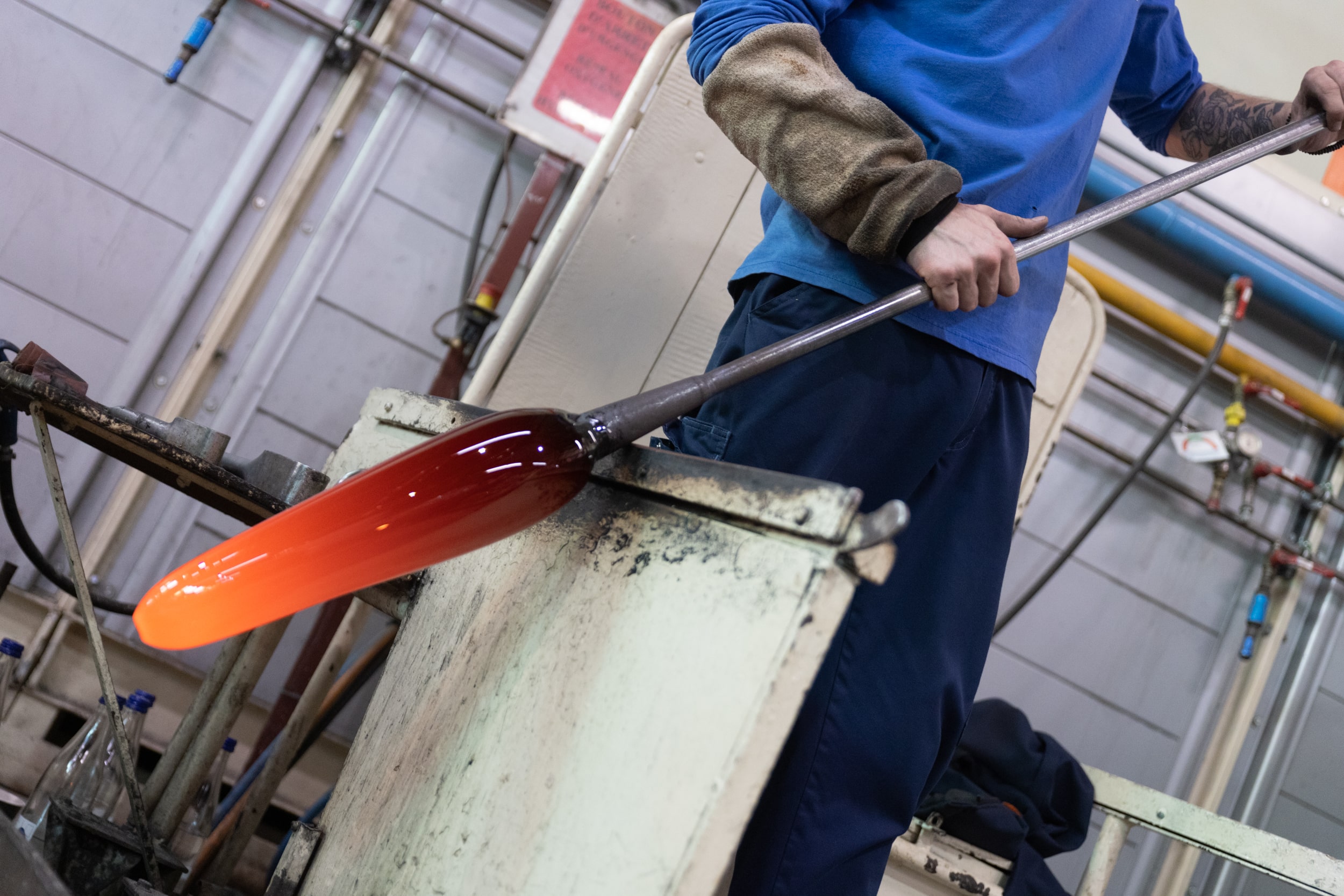
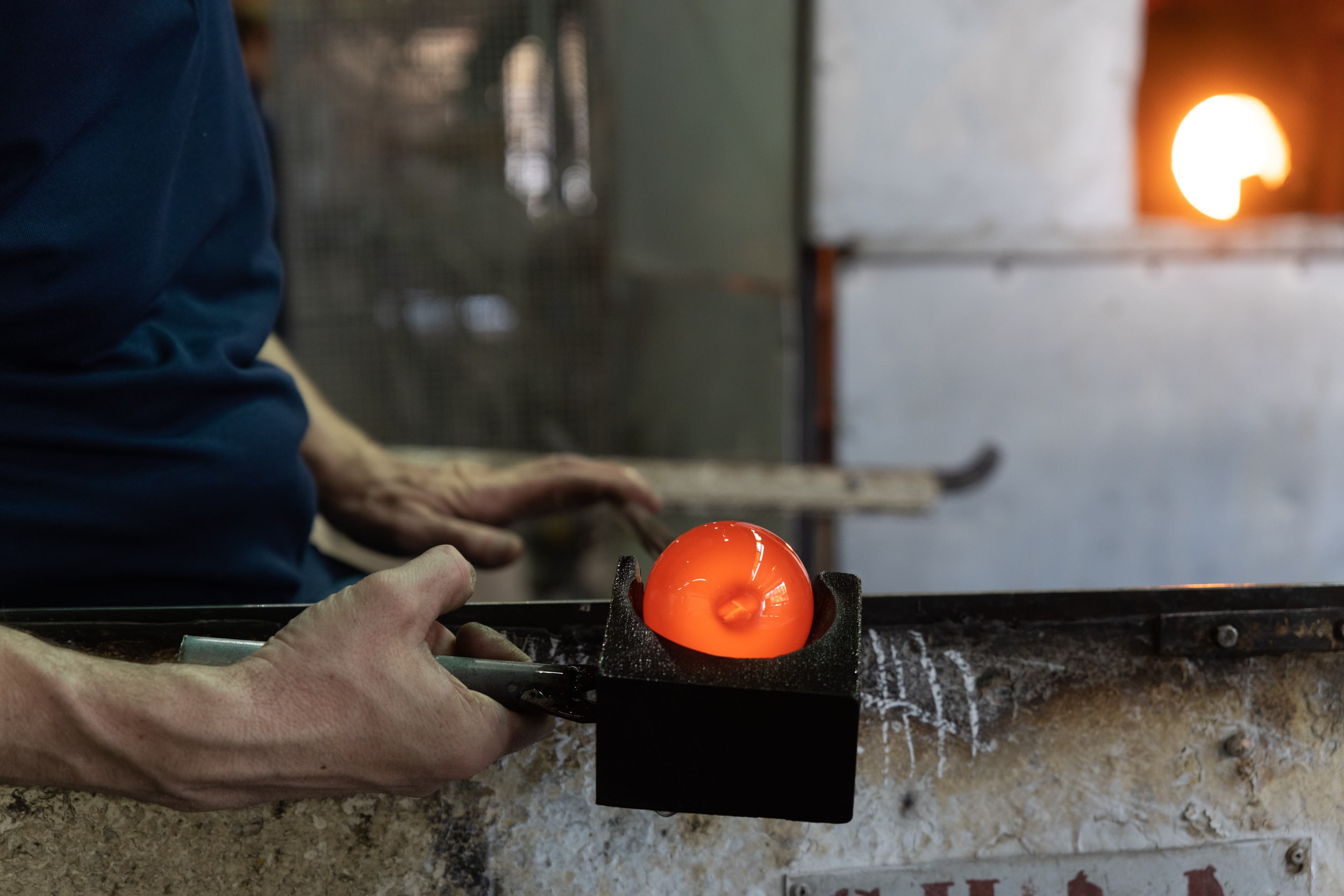
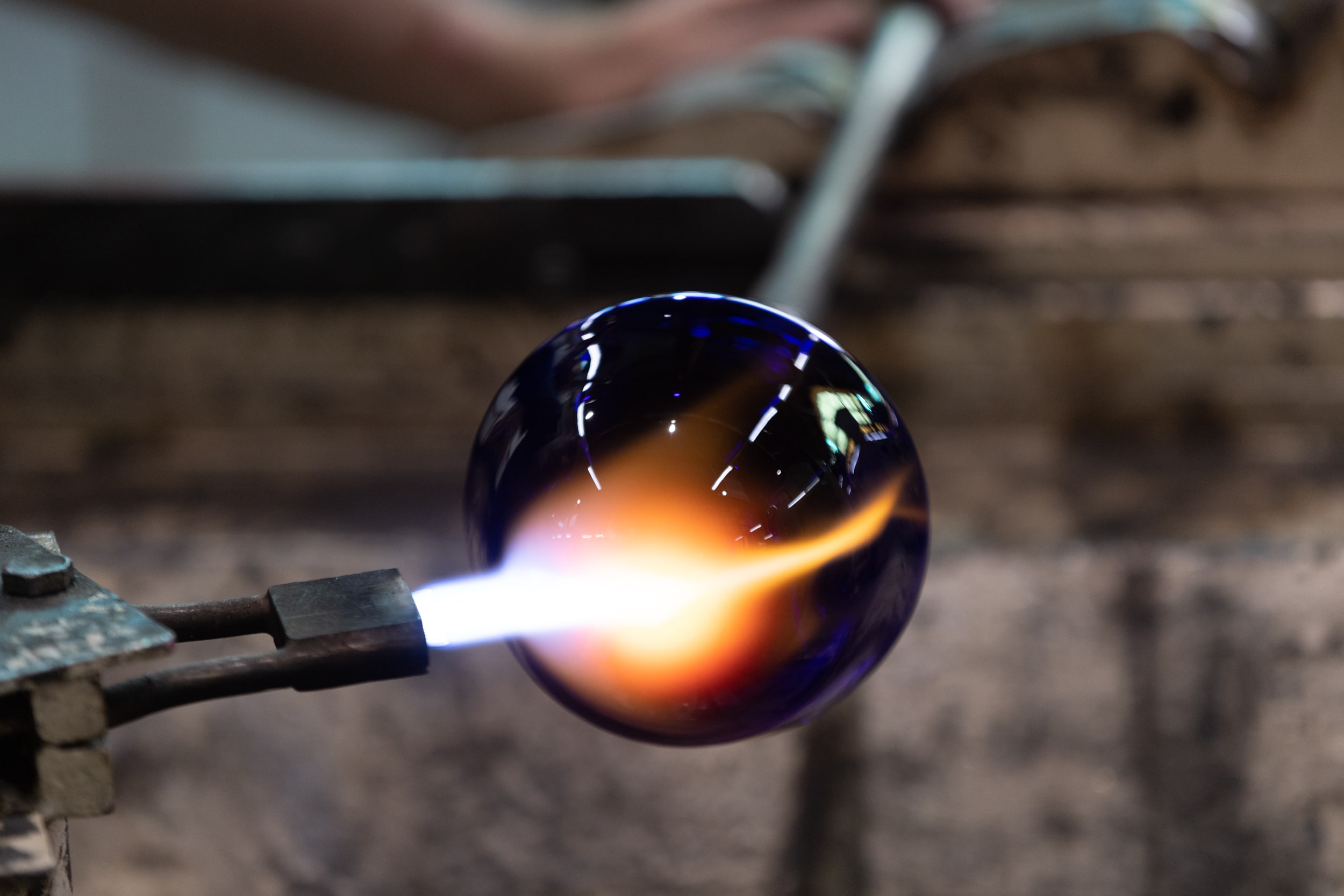
The furnaces glow orange-red and mysterious, as in a Grimm fairy tale. Taken from the fire on a rod, the glassmaker’s blowpipe, the gather gives itself up to the centuries-old choreography of this craft. Through the glassblower’s breath, the glowing magic sphere very slowly comes to life, expands, stretches and takes shape. The romance between the elements of fire and sand – indispensable in glassmaking – reaches its climax. When the form is complete and has cooled, the cutters and engravers begin their work. Crystal demands humility, say the masters of their trade. One tiny mistake and everything would be ruined.
CHARISMATIC CRYSTAL GLASS
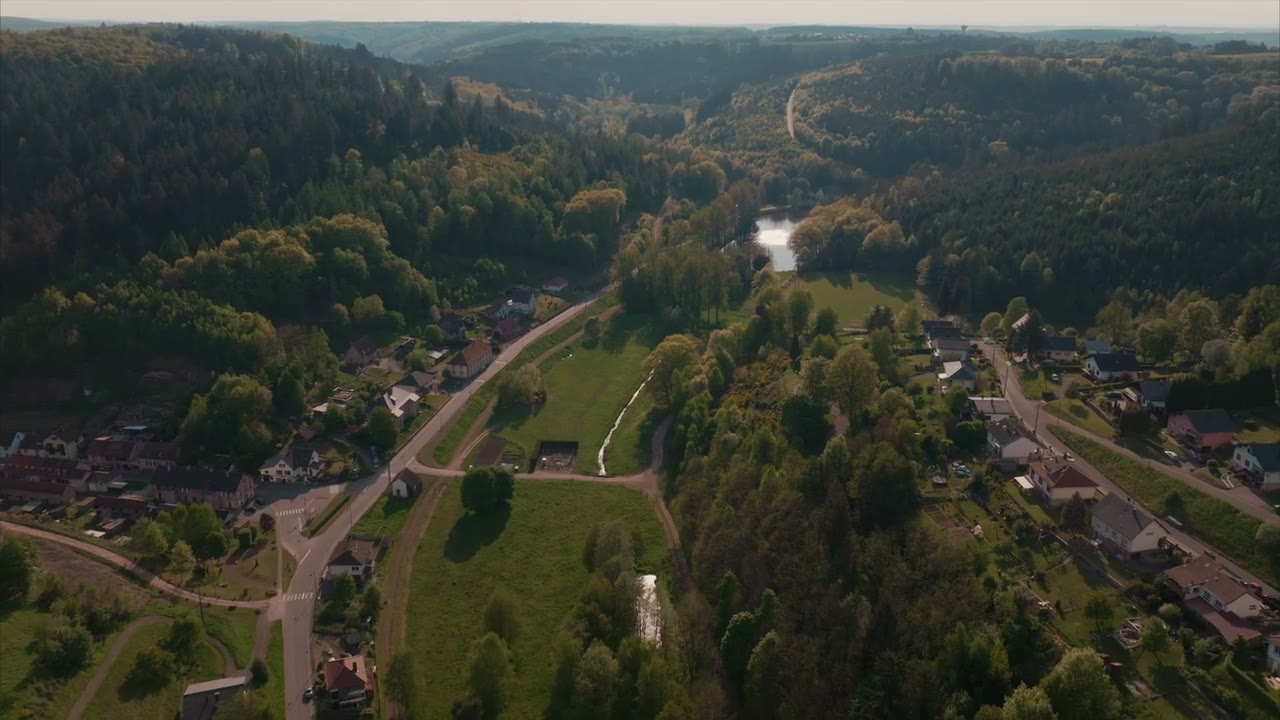
We travelled to the historic mining region of Lorraine to see first-hand, in the workshops of the luxury brand Saint-Louis, how crystal is imbued with its much-vaunted charisma. Saint-Louis-lès-Bitche is our destination, a small place with a big presence. In the valley, surrounded by deciduous forests, work some of the best craftspeople in France (“Meilleurs Ouvriers de France”). Today there is hardly anyone in the region who is not employed by the Saint-Louis crystal manufactory.
For centuries, the reputation of the glassblowers and crystal manufactories located between Alsace and Lorraine has been nothing short of glowing. Ruling houses and elites knew that the most magnificent glassware and most beautiful chandeliers came from there. The undisputed star among the manufacturers is still the Saint-Louis crystal manufactory, where delicate crystal is decorated in a particularly elaborate and artistic way. Rich geometric decorations and diamond cutting are the house’s hallmarks.
Immortalised in the company name is the privilege granted by King Louis XV in 1767 to run the glassworks under the title “Royal Glassworks”. In 1781, the manufactory became the first on the European mainland to succeed in producing lead crystal. Previously, England had held the monopoly on it, and the Saint-Louis manufactory had made only particularly clear glass. But after years of fruitless attempts, they cracked the secret of crystal. The styles of the 18th and 19th centuries, French Art Nouveau and Art Deco – Saint-Louis contributed the finest table and decorative objects through every era. The company’s current 200 or so artisans, together with designers, rejuvenate the signature series and invent new ones. The paperweight tradition is carefully preserved. Small works of art in crystal and glass, filled with colourful twisted glass threads and millefiori flowers, which are traded as highly coveted collector’s items. Beauties from the 19th century are in demand at auctions. Saint-Louis is the last crystal manufactory to master the original production process.
LA GRANDE PLACE
Our visit begins in the 19th-century Maison, the elaborately renovated former director’s residence of the crystal manufactory and the old heart of the crystal village. Each room is dedicated to one of Saint-Louis’s collections. In the stylish foyer with its black-and-white chequered stone floor, Saint-Louis CEO Jérôme de Lavergnolle welcomes us and, entirely in his element, guides us through the exhibition. In the demonstration workshop we witness the individual stages – from the melt to the final cutting, engraving and gilding. In the company’s own crystal museum, “La Grande Place”, crowned by the manufactory’s famous crystal chandeliers – including the largest ever made – the famous classics are given plenty of space. Impressive, for instance, is the “Thistle Gold” glass series of 1913, which, with its thistle motif on a gold ground, is one of the high points of French Art Nouveau and remains a sought-after cristallerie object to this day. Its decoration of the finest gold is applied with a delicate brush, then fired and polished with agate. In another room we are shown Joseph Bleichner’s “Tommy” cocktail glasses of 1928, which, connoisseurs say, anticipate the tingle on the tongue with their beaded engraving, even before the olive drops into the martini.
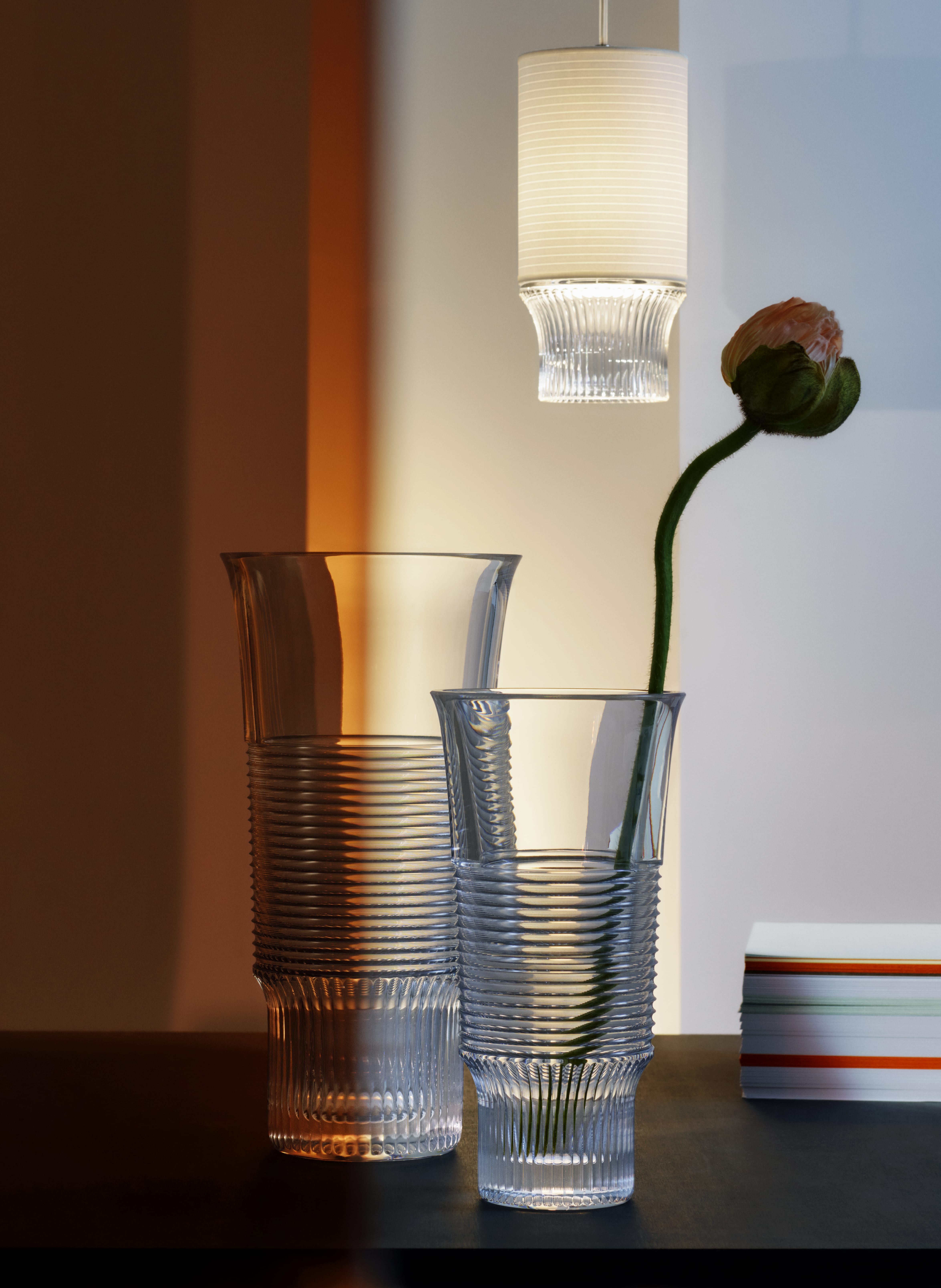
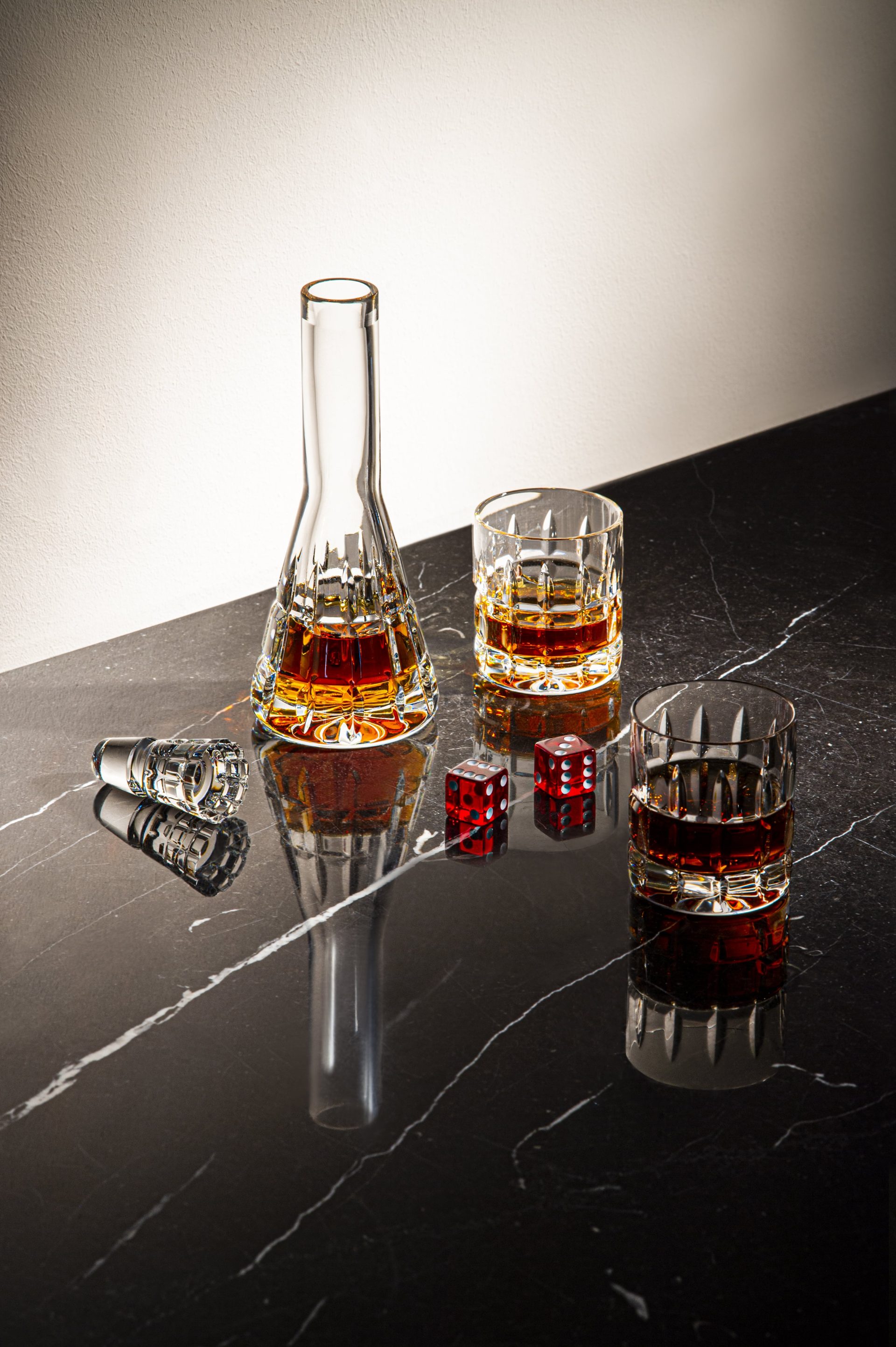
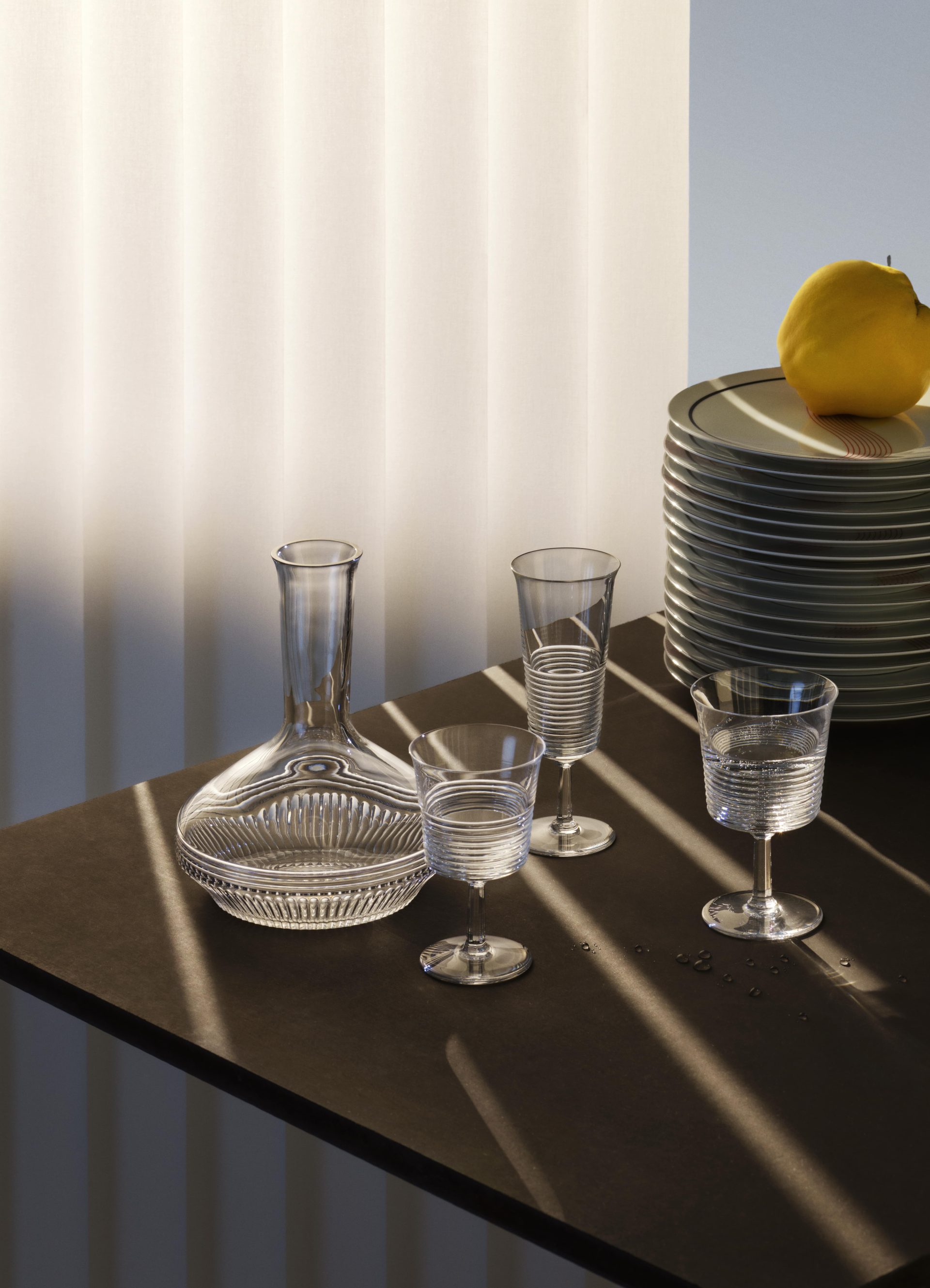
Jérôme de Lavergnolle shows us the contemporary editions for the table and the home realised with renowned designers in recent years. Among them are the modern series “Twist” and “Folia”. If you dream of a classic chandelier, you should take a closer look at the “Arlequin” and “Royal” series. Here the grand splendour of bygone times comes to life again. Aren’t these treasures more art object than everyday item, we ask. Not at all. “Beautiful and unique, but always made to be used,” is how Monsieur de Lavergnolle sums up his house’s credo.

SAINT-LOUIS IN FRANKFURT
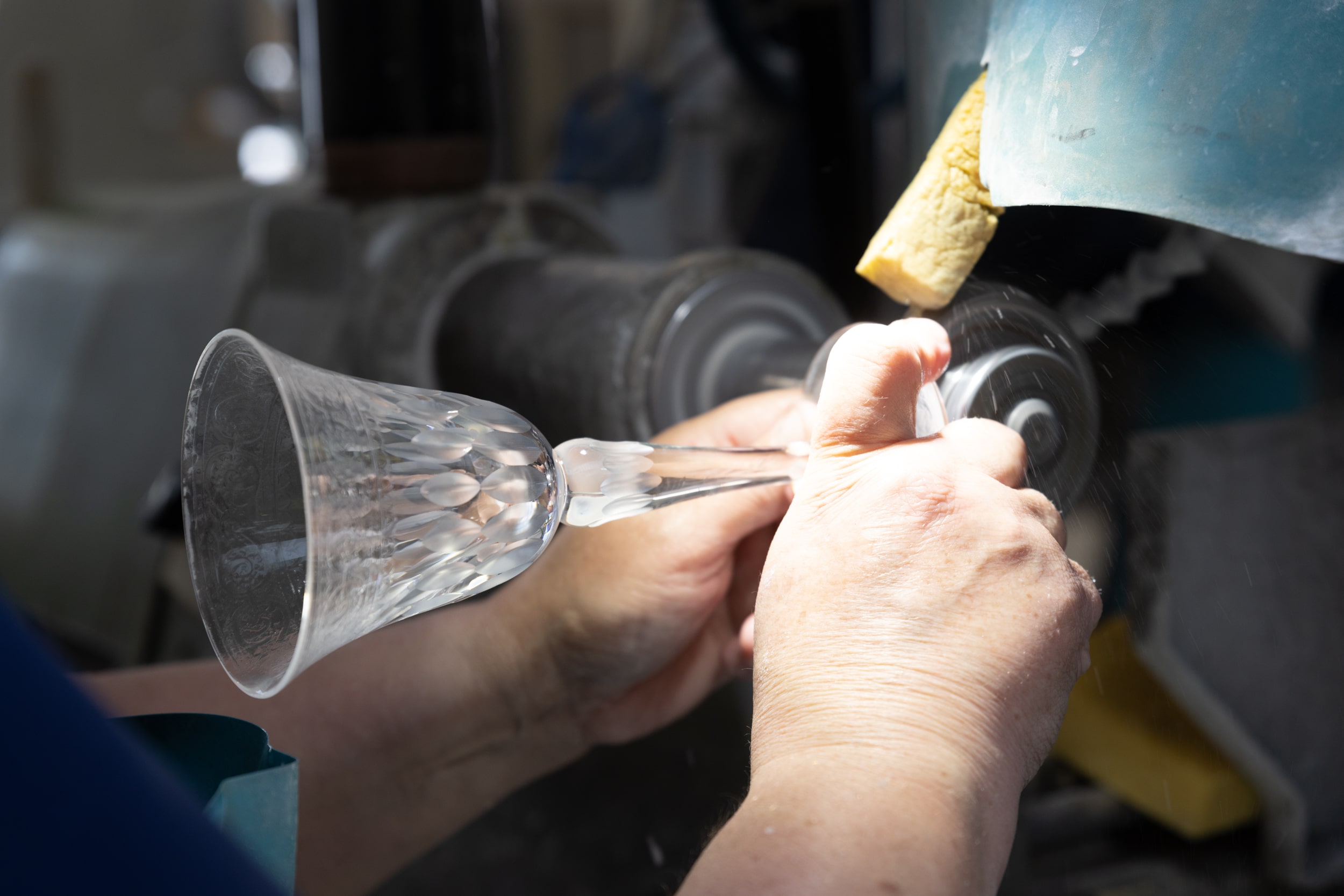
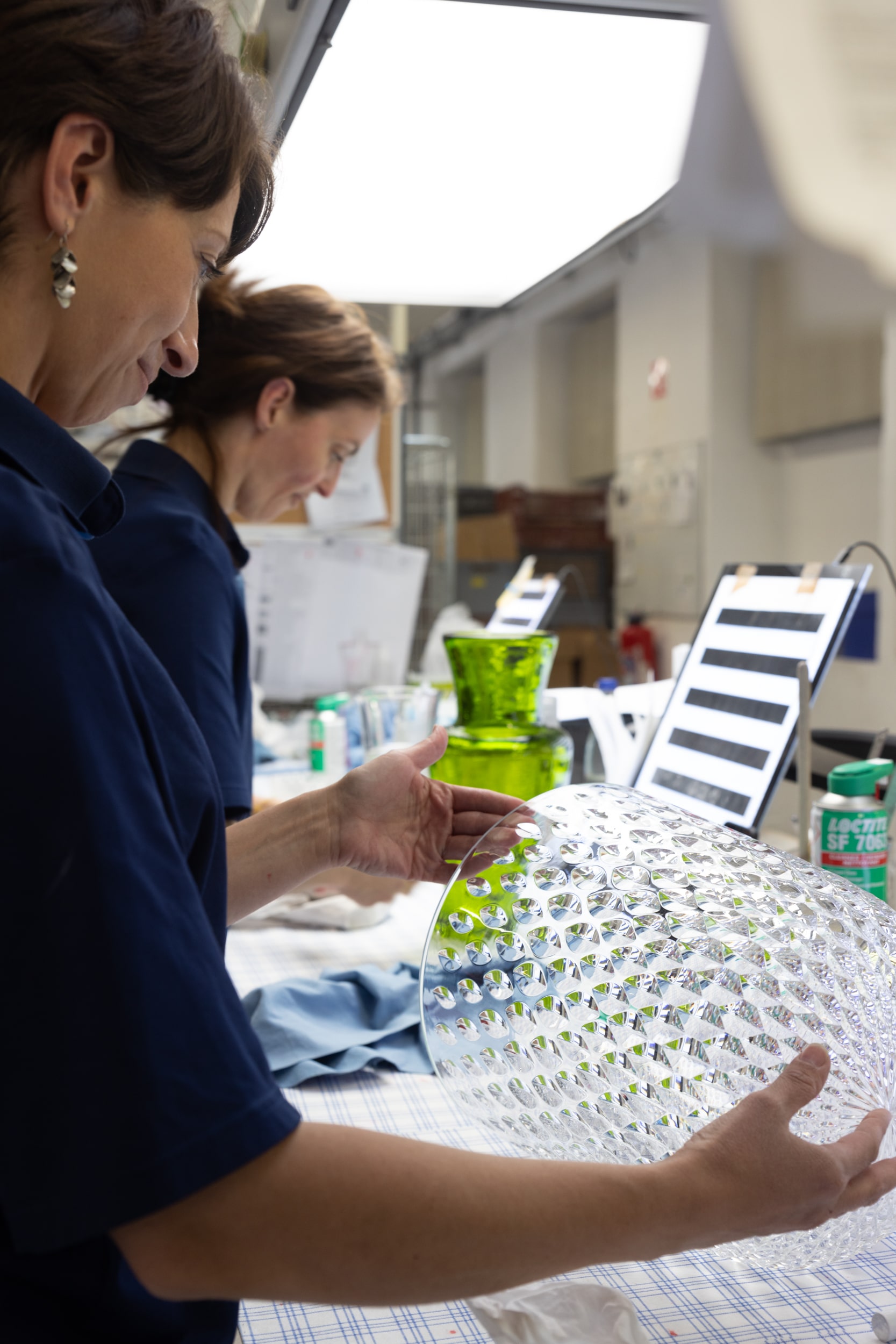
In every handcrafted piece, its maker lives on. This holds all the more true for mouth-blown glass. For unlike wood or metal, hand-cut crystal has an ethereal aura. Born of fire, through its form and highly complex cutting it multiplies natural and artificial light many times over. In the workshops, right next to the furnaces, we witness the transformation of the material and are amazed at how many time-consuming steps are needed, even for the simpler drinking glasses, to achieve the desired quality. Some glasses take ten days, keeping ten glassblowers busy with the shaping and five glass cutters with the cutting.
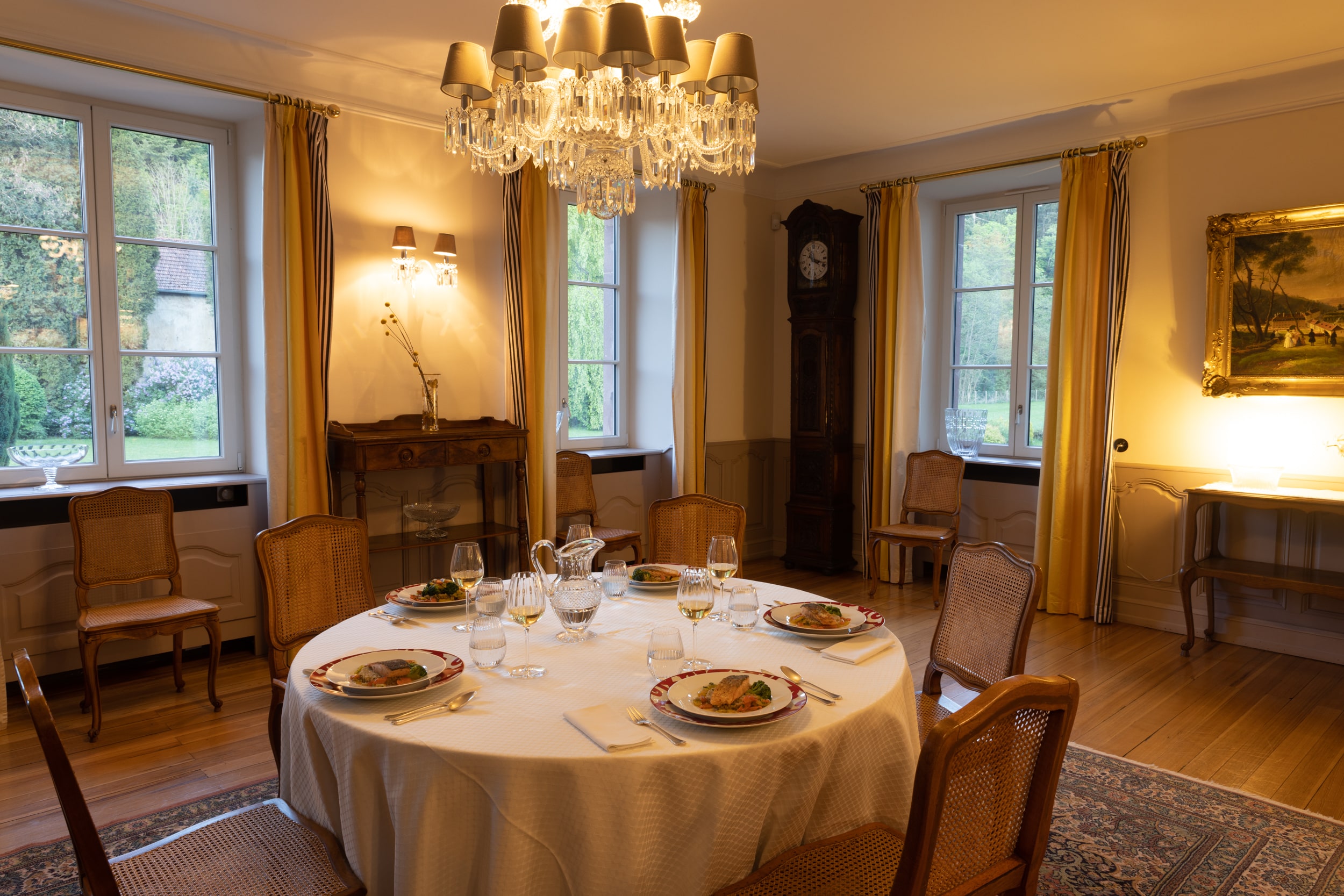
“Watching the artisans on site is impressive every single time,” says Peter Schamberger at dinner at the festively laid table in the Maison. It is the finale of our visit to the manufactory. We are delighted to experience what a warm, family atmosphere this company has, after Peter Schamberger had enthused about it so much beforehand. “I’ve visited the manufactory several times already and have felt very comfortable and well looked after every time,” says the Frankfurt luxury brand expert, whose store and showroom “À Table – Manufakturen für Genießer” on Kaiserhofstraße carries all of Saint-Louis’s collections. He is, incidentally, the only dealer in Frankfurt authorised by the crystal manufactory. He has long been passionate about the shining beauties from France, especially the impressive crystal glasses for the table. The bar collections and magnificent chandeliers have won him over with their timeless aesthetics and unique craftsmanship.
Saint-Louis crystal is unrivalled, dense, clear, resonant and luminous, born of fire and human breath.
— Peter Schamberger, À Table – Manufakturen für Genießer, Frankfurt
INTERVIEW: THE CRYSTAL GLASS ENTHUSIAST
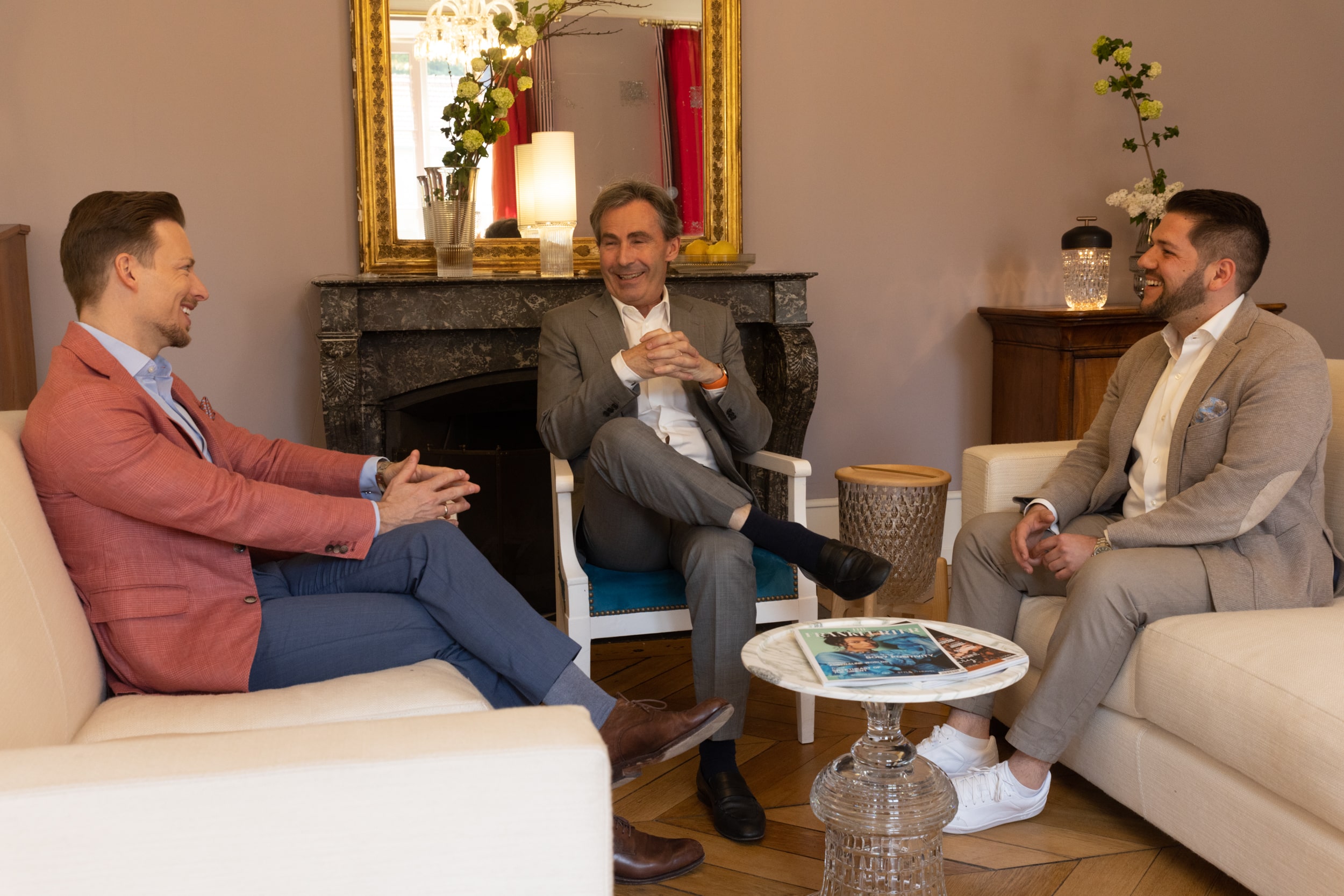
Saint-Louis CEO Jérôme de Lavergnolle is something of a guardian of crystal. The company’s modern DNA is partly thanks to his “final polish”.
Monsieur de Lavergnolle, what is the secret of Saint-Louis’s success?
“It would be wrong to limit Saint-Louis to crystal that is only used on special occasions. In the nineties, most of the business came from wedding lists and the like. Since then the world has changed, and consumer habits have changed too. Not to mention that the pandemic has further increased interest in interior design. Saint-Louis continues to focus on developing ‘light’, drawing on its two strengths – personalisation and bespoke production – and diversifying its types of lighting: a modular and customisable system, chandeliers in various sizes and a portable lamp.
Because it is complicated to install a classic chandelier in modern interiors with lower ceilings, we have also developed horizontal chandeliers that complement our vertical range. The ‘MySaintLouis’ app makes it possible to personalise lighting yourself and project it virtually into your home. After Paris, Hong Kong and New York, Saint-Louis opened a showroom in Milan at the beginning of 2022. This new address is aimed primarily at professionals and their private clients seeking a tailor-made lighting experience.”

How many employees do you have?
Saint-Louis currently employs 300 people (200 of them in production, with an average age of 38). It takes ten years to become a good glassmaker. We are proud to count ten MOF (‘Meilleurs Ouvriers de France’) among our glass artisans, some of whom are already the seventh generation of their family to work with us. It is a profession that can’t be learned from books, but by watching the elders at work and imitating their gestures.”
The list of designers who have worked for Saint-Louis over the past hundred years is long and illustrious.
“We strongly recommend that creatives we invite to collaborate spend some time with us, breathing in the atmosphere and getting to know the historical collections before they design anything. You have to understand our DNA. You also have to learn not to repeat the past. It is rare for us to reproduce something directly from the archive. Contemporary design is important to us. If you only repeat the past, you come across as a little old-fashioned.”
INSPIRED BY THE FOREST OF SAINT-LOUIS
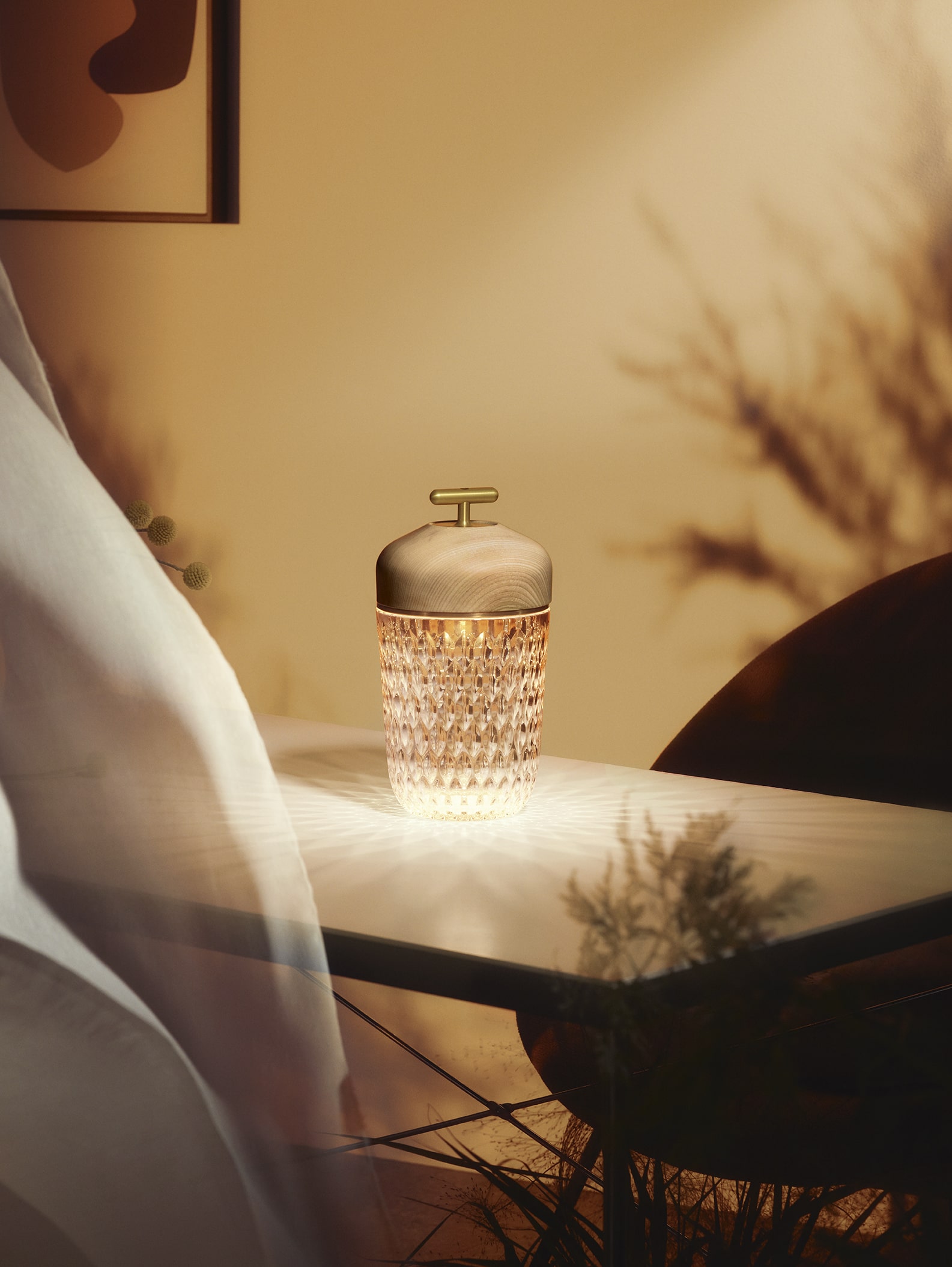
“Saint-Louis is a blend of tradition and innovation that is constantly inspired by contemporary artistic trends in order to renew and shape its identity. The collections perfectly round off our luxury range for the table. With the Meissen porcelain manufactory and the Flensburg silver manufactory Robbe & Berking, we have three traditional names that complement each other wonderfully. They reflect par excellence a love of craftsmanship and an awareness of sustainable luxury.” One of Peter Schamberger’s favourite pieces from the manufactory is the baladeuse from the “Folia” collection. For this series, designer Noé Duchaufour-Lawrance took inspiration from the leaves of the forest surrounding the manufactory. “Apart from the fascinating cut of the LED table lamp, in which the light is refracted particularly strikingly, one of its advantages is that it is portable, so it can be a real eye-catcher both on a set table and on the terrace in the evening. An exciting piece and a great, fresh design. Hand-cut crystal and ash wood make a stylish combination,” says Schamberger.
More stories








GET IN TOUCH