
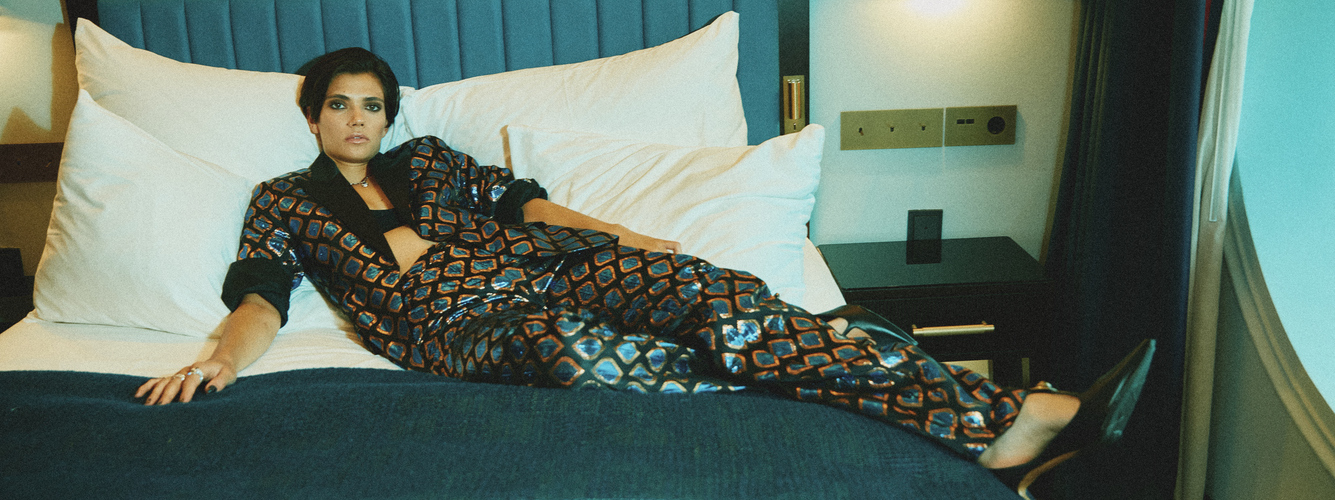
Style
SHARE & HAVE
Sharing is a deeply human trait. Food, clothing, cars, knowledge – the culture of sharing is experiencing a renaissance in the digital age. Once often a bitter necessity for survival, sharing – collaborative consumption – is today less a question of scarcity than of attitude.
Text Dr. Jutta Failing Photos Knut Wörner
 Play video
SHARING IS CARING
The fonder we are of each other, the more we share? Quickly taking the other’s fork, fine, or – oops – sharing the nail clippers in the bathroom. According to a British study of around 4,300 couples, commissioned by a cleaning company, lovers share quite a lot under one roof: towels (79 per cent), deodorant (57 per cent) and toothbrushes (39 per cent – wow, that really is surprising!). So couples show hardly any inhibitions when it comes to sharing and demonstrating closeness. Sharing strengthens the bond, psychology says. And sharing promotes – there are exceptions, and good reasons for them – trust and intimacy. Sharing is caring, they say, and – British, at least – couples evidently like to take this quite literally. Is a relationship over when there is no more sharing? It could be a first indication.
USE INSTEAD OF OWN
Sharing things and resources not only connects us with other people but is also economically valuable. A recent online survey commissioned by the Wiesbaden textile service provider Mewa (since 1908, a pioneer of workwear sharing), in which just over 1,000 people aged between 16 and 60 and more than 500 managers took part, came to the – not entirely surprising – conclusion: “65 per cent of respondents said that borrowing, sharing and reselling reflects a way of life”. Lockdown and financial constraints during the coronavirus pandemic had prompted many consumers to think about alternative consumption, was the trend researchers’ comment on the result. According to the study, Generation Z (those born after 2000) uses sharing services most often. And even without further scientific research, it is safe to say that against the backdrop of climate change and advancing digitalisation – countless sharing portals and networks are already online – sharing and joint ownership will become even more important in the coming years. Will sole ownership – as a status symbol – one day even have had its day? Some predict a great future for collaborative and cooperative models. Clothes that suit our taste, washed, ironed and delivered to our homes on loan, without having to buy them – the infinite wardrobe, for all of us? The first providers already exist.


LEARNING FROM THE DORMOUSE
“Only he is happy who likes to give.” The admonishing finger of Goethe, the prince of poets born in Frankfurt, is often quoted when asking for generous donations. The grand master of words himself is said to have been something of a “skinflint”, who turned his worn-out clothes inside out and kept wearing them the wrong way round. A skinflint? Not at all. Rather, it seems, a pioneer of upcycling and fashion sustainability. For reasons too lengthy to go into here (it involves Goethe in a huff), in 1844 the bronze Goethe statue on Frankfurt’s Goetheplatz was given a jacket with the button placket on the wrong side – that is, on the left, contrary to the menswear of the day. Did Privy Councillor Goethe ever press a coin into the hand of a beggar in the street? We don’t know. Charity, sharing for the common good, was in his era primarily a matter for official poor relief.
But it is timeless: to really understand and feel the meaning of sharing, you need the ability to empathise with other people and their needs. Is that innate? Not entirely. How it works is explained in exemplary fashion by the children’s picture book “Die Geschichte vom kleinen Siebenschläfer, der seine Schnuffeldecke nicht hergeben wollte” (The story of the little dormouse who didn’t want to give up his snuggle blanket). After initial hesitation, the dormouse does share his beloved blanket with other forest dwellers. From the perspective of developmental psychology, children under three watch older children and adults put the concept of sharing into action – in the picture story as in real life. When toddlers sense that sharing goes hand in hand with a positive atmosphere, “that is incentive enough for their brain to strive for this behaviour at a pace appropriate to their development”. To cut a long story short: people who saw generosity early on are the most willing to share. For us adults, that means setting an example.


HELP, SHARE, GET ALONG
In practically all cultures, sharing is viewed very positively and is often considered a special virtue of compassion. Rich is the one who can share. If a gift isn’t to your liking, accept it with a smile – and pass it on to someone who can make better use of it, Buddhism advises for when sharing goes wrong. Sharing, using rarely used things together and repeatedly, swapping, lending and cooperating – none of this is new. Ski hire shops in winter resorts and launderettes have long been doing exactly that. What is new, however, are more everyday, even more convenient, ultra-flexible sharing platforms, from public book exchanges to online marketplaces and hitherto unimagined rental services. But seriously: at some point – and this is a vision – no more possessions, and renting most things for money? Does that help save the world? There is simply a lot to suggest that material possessions will still play an important role in the future. Our desire for control and independence (from sharing providers too) is too strong. But an even more balanced mix would be desirable: having, and sharing much more.
More stories








GET IN TOUCH