
Art
ROMANTIC ACCUMULATOR
The Deutsches Romantik-Museum next to Goethe’s birthplace on the Großer Hirschgraben was a long time coming. Now the world’s first museum devoted to the Romantic era is finally opening. THE FRANKFURTER was allowed a look inside shortly before completion.
Text Dr. Jutta Failing Photos Nikita Kulikov, Alexander Paul Englert, Udo zur Megede, Thorsten Jansen
“A SONG SLEEPS IN ALL THINGS...”
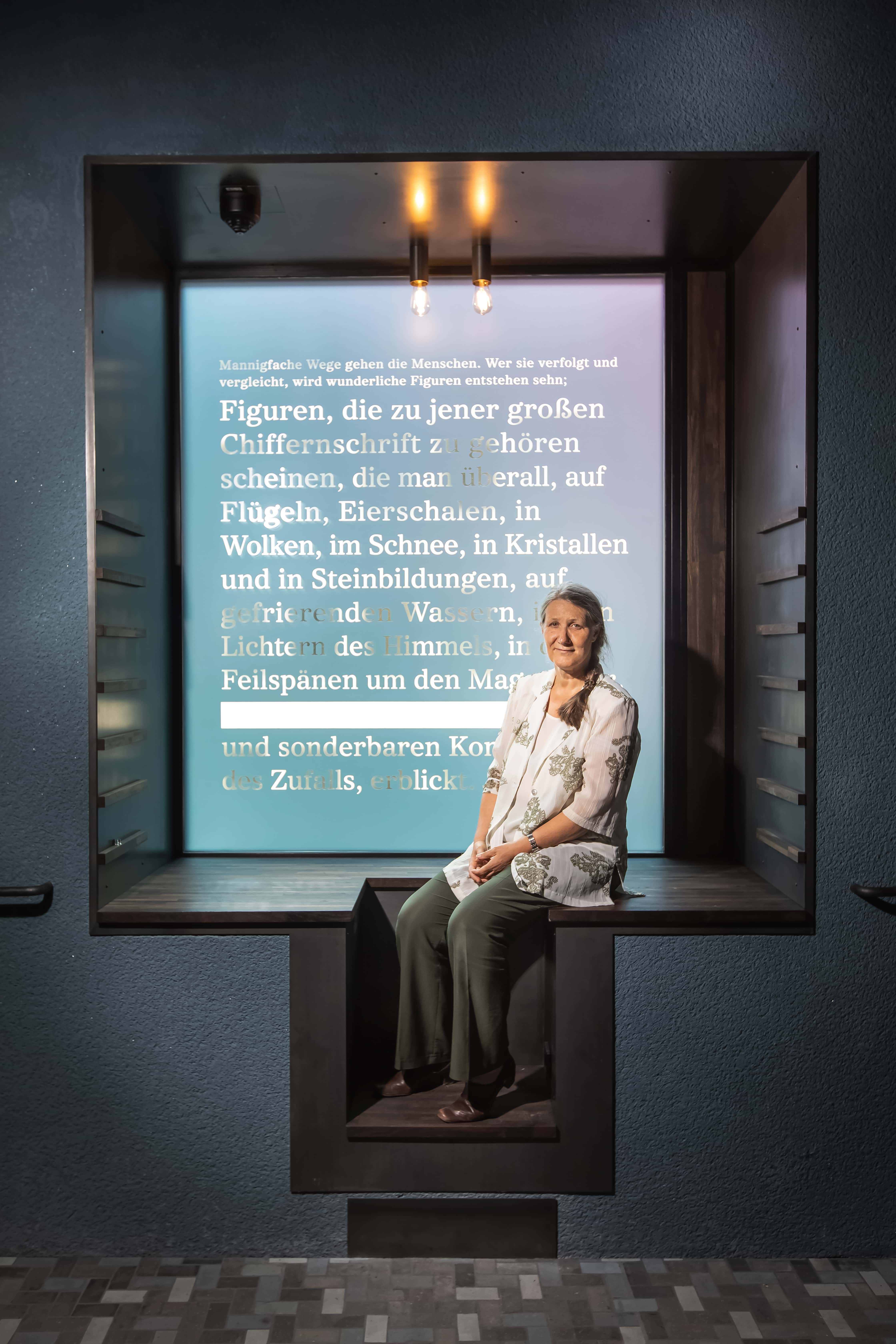
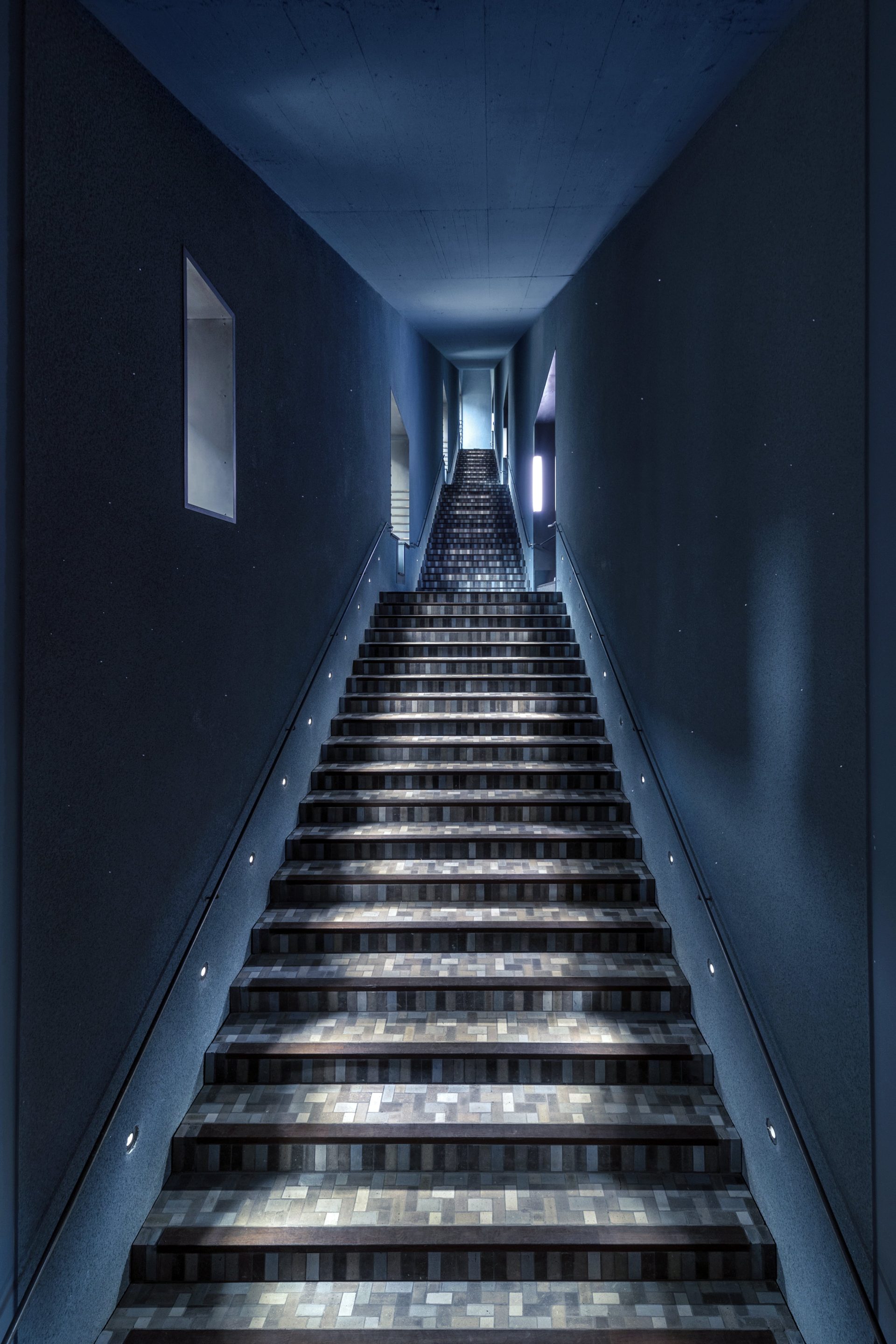
Afterwards we feel as if we have been recharged. Our souls are moved by the poets’ words, images and experiences in this vast store of feeling and memory. Three façades, three entrances. Inside, the complex new building can be explored via the “Himmelstreppe” (stairway to heaven) – a staircase that narrows in height and width along its entire length, thereby suggesting a distant goal at a great height. A striking optical deception. “That is typically Romantic: creating illusion and breaking it,” explains the new museum’s chief curator, Prof. Dr Anne Bohnenkamp-Renken. She fought for the museum for a long time. Ten years.
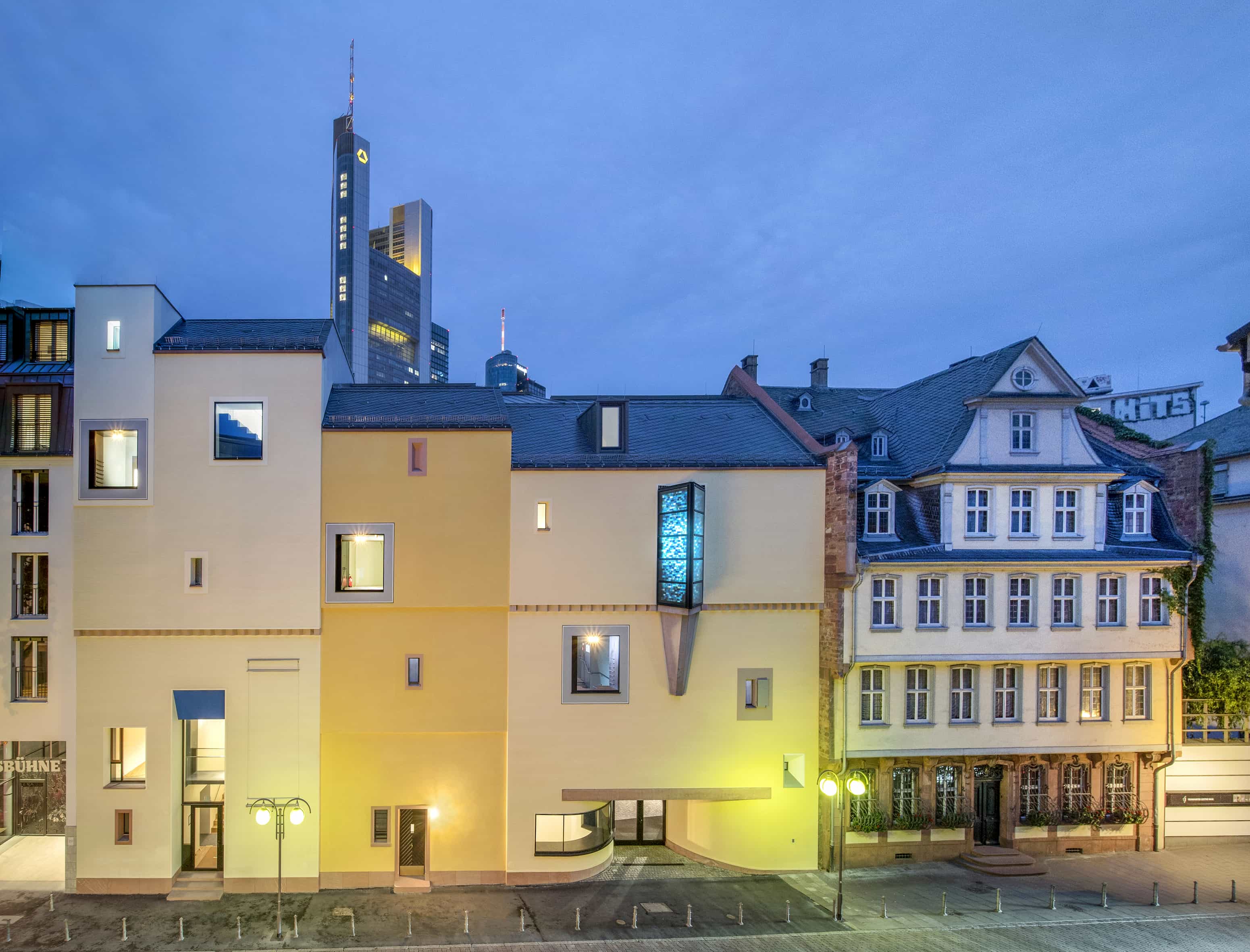
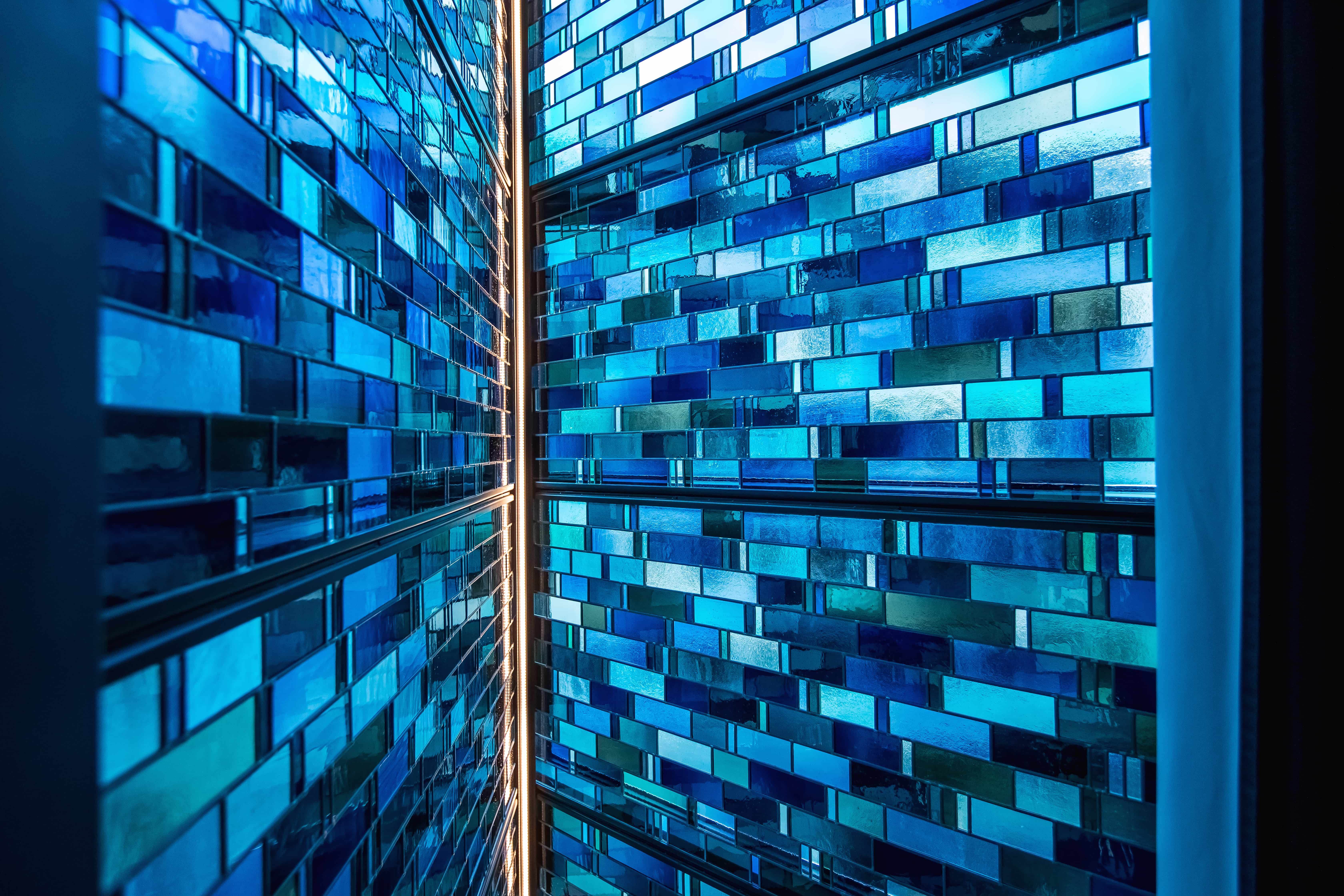
Outside and inside, the museum is full of clever, sometimes provocative peculiarities. For instance, large bay windows facing the Hirschgraben that you can sit in, one of them made entirely of blue glass. There are also blind, fake windows. One quotes the window from which Goethe’s father waited for his son to come home from the old-town taverns. A medieval window was discovered during construction in a forgotten firewall, bricked up long before the Goethe family moved here. The floor is laid with cut stones from the “Trümmerverwertungsanstalt” (rubble recycling plant), salvaged when the previous building was demolished. After the war, rubble from the old town was ground up, formed with cement into new stones and used for reconstruction. Red and yellow Main sandstone, black basalt and bricks are enclosed in them like tree rings – upcycling in the best tradition of remembrance.
“...IF ONLY YOU FIND THE MAGIC WORD.”
Where to begin? The exhibition rooms cannot simply be marched through. Everywhere, sensory impressions and beautiful, clever words are waiting to be picked. Just as in the enchanting garden with espaliered fruit trees and an old fig tree, around which the noise of the city hums like a beehive. The new museum has many magic keys that open the door to the essence of Romanticism for visitors. There is, for instance, the quotation-rich “mirror forest” – forest and mirror, two important motifs of this intellectual movement. Or the room devoted to the Romantic fairy tale, lovingly painted over several weeks by illustrator Henrik Schrat. Or – and here Romanticism reveals its delicate, dangerous sting – the antisemitic writings of an Achim von Arnim. It all began after the French Revolution. “The early Romantics were decidedly cool thinkers. The closeness to kitsch that we often associate with the idea of Romanticism today did not exist at all back then,” the director makes clear. The Enlightenment had left many questions about the meaning of life unanswered, and the Romantics tried to unravel them through feeling. “Retreating into an idyllic world was not their thing.” And so the museum also sets the popular image of Romanticism straight.
DIVINING ROD & FOREST HOME
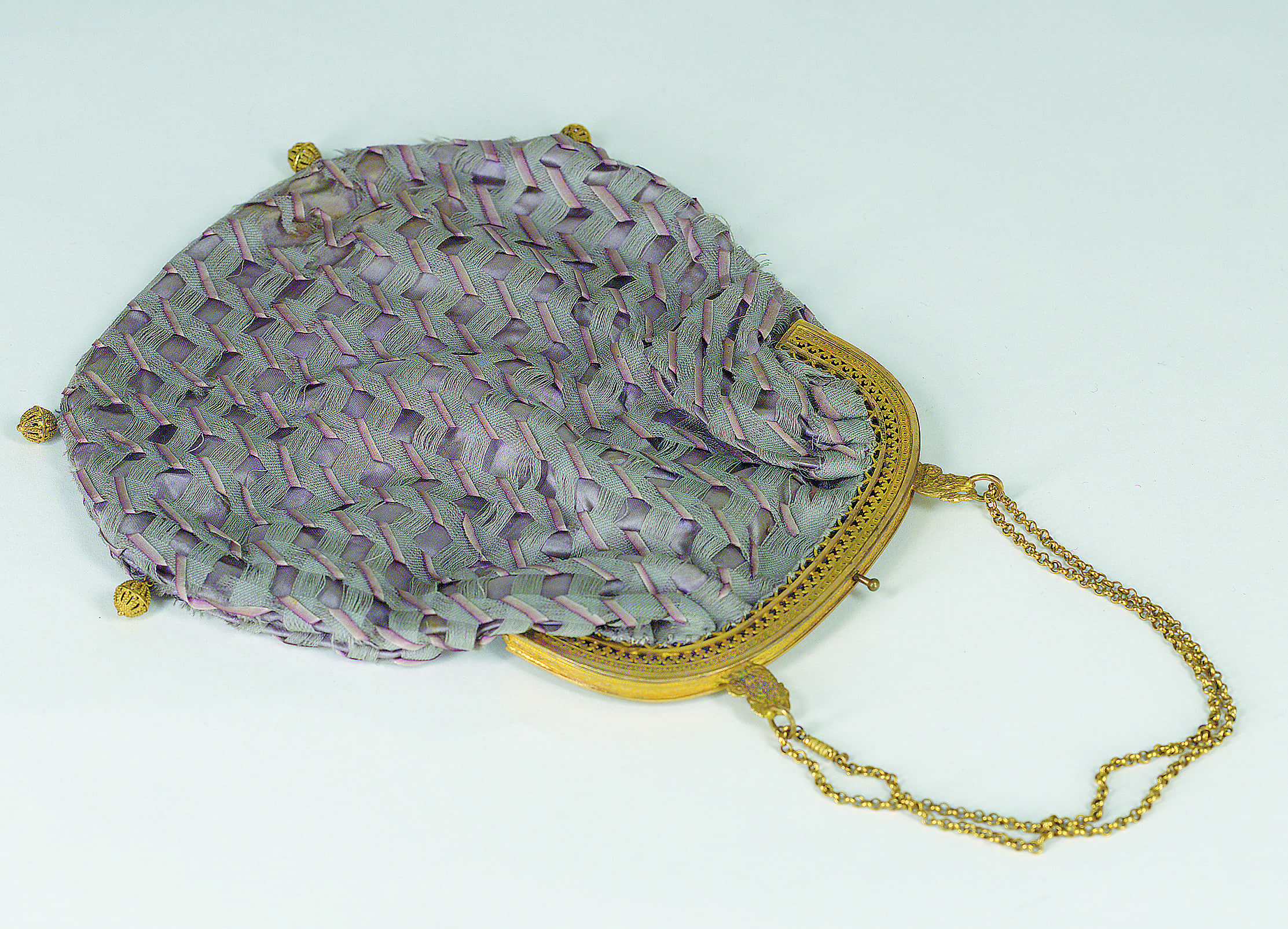
Manuscripts, letters, love tokens. The world’s largest collection on the literature of German Romanticism, assembled over some 100 years by the Freies Deutsches Hochstift in Frankfurt and until now slumbering in the archive, can now visibly spread its wings. Among the treasures on show are the most quoted poem of German Romanticism – Eichendorff’s “Wünschelrute” of 1835 – and our favourite, the surprisingly modern handbag from the personal estate of Charlotte Kestner, née Buff, from Wetzlar – the model for Lotte in Goethe’s bestseller “The Sorrows of Young Werther” – or the leather travel handbag of the self-assured Romantic icon Bettine von Arnim. To illustrate the travel and hiking routes of the Romantics – it was they who made hiking respectable; forest, mountains and lonely landscapes were perceived as a mirror of one’s inner self – an interactive media installation lays out these routes. Some are woven like spider’s webs across the map of Germany.
“OPEN ALL THE VEINS OF YOUR WHITE BODY.”
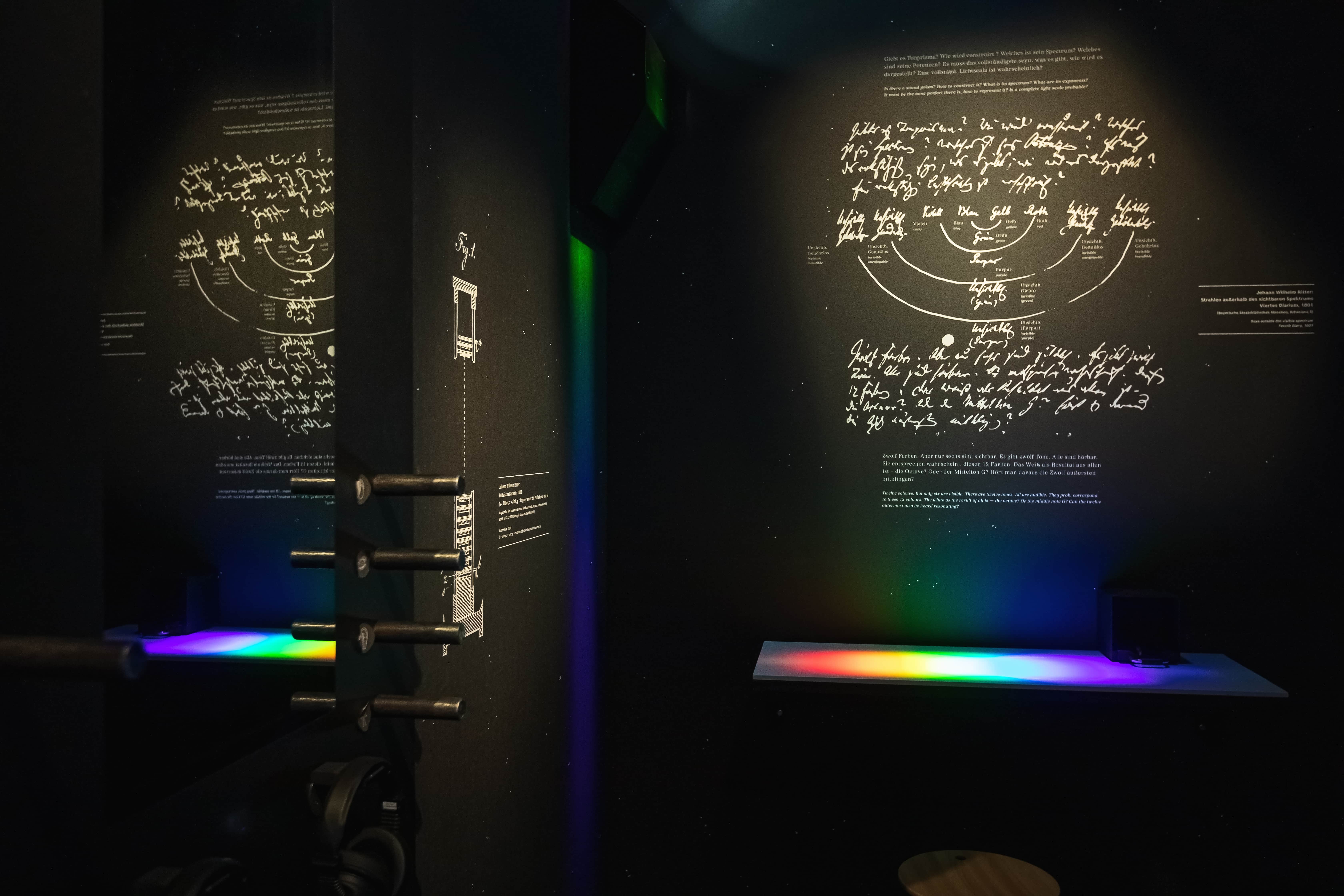
“Many Romantics were interested in electricity,” explains Anne Bohnenkamp-Renken, pointing to a unique loan: components of the first accumulator experiments. The small room is devoted to the physicist Johann Wilhelm Ritter, known for inventions relating to galvanic processes. He also discovered ultraviolet radiation in 1802. The researcher died young, aged just 34, probably as a result of his many experiments on himself. Observations of charge exchange and sparking, a hobbyhorse of many early Romantics, were the basis for a new view of humanity oriented towards electricity – the human being is not merely a container for a routine mechanism but carries within it an electric “spark of life”. And when two find each other: love charges and discharges, the kiss is a circuit and the eternal current flows through the veins.
“I LONG TO BEHOLD THE BLUE FLOWER.”
“The Deutsches Romantik-Museum offers a multimedia – in the Romantic sense synaesthetic – presentation of ideas, works and constellations of people. Goethe himself is cast in a new light. Although he is traditionally regarded as an adversary of Romanticism, since he wrote: ‘I call the Romantic the sick’, from a European perspective he is in fact the most important German Romantic. We want to show that too,” the director makes clear. In the museum shop in the two-storey entrance hall, you can buy seed balls of blue-flowering plants. “We have had them at the Goethe-Haus for some time, and visitors from all over the world often send us photos of the flowers grown from the seeds.” The blue flower and the search for it – probably the greatest symbol of this key era: of love, longing and the metaphysical striving for the infinite. This house, which time and again builds a bridge to modernity, strikes a chord even in the most sober of visitors. You leave it inspired, unsettled, wonderfully amazed. A battery from which you are happy to recharge.
For us, Romanticism is also the beginning of modernity.
— Director Dr Anne Bohnenkamp-Renken
STAIRWAY TO ROMANCE
Following the competition “Goethehöfe – Deutsches Romantik-Museum”, the practice Christoph Mäckler Architekten was commissioned to design the museum building.
Professor Mäckler, the façade as a whole strikes us as almost like a medieval fortress. Why is that?
“The museum is not allowed to have windows, as the exhibits must not be exposed to daylight. That is why the main staircase was placed behind the street façade, so that the Romantik-Museum could have windows. The Goethe-Haus, rebuilt after the war, looked like a foreign body among the 1950s buildings. To strengthen the building’s urban role as part of the overall complex, three individual façades were built. The result is an ensemble of buildings that embodies the Romantik-Museum. A further requirement was that the Romantic idea should be reflected in the design of the building. And that too can be found in the façade and in many other parts of the building.”
One of the surprises is the “Himmelstreppe” mentioned above, a successful optical illusion.
“That is a characteristic of Romanticism: always the semblance of something. The blue staircase makes the genius loci, the spirit of the place, subtly and very tangibly perceptible.”
The architecture encourages personal discovery. Which ones do you particularly like?
“Anyone looking out of the dormer at the top of the main building can – this is exactly how it was placed – see the towers of the cathedral, the Paulskirche and the European Central Bank through a gap between the buildings on the opposite side of the street. Two of the towers are described in Goethe’s ‘Dichtung und Wahrheit’.”
More stories








GET IN TOUCH