
Art
REINHARDT ERNST MUSEUM
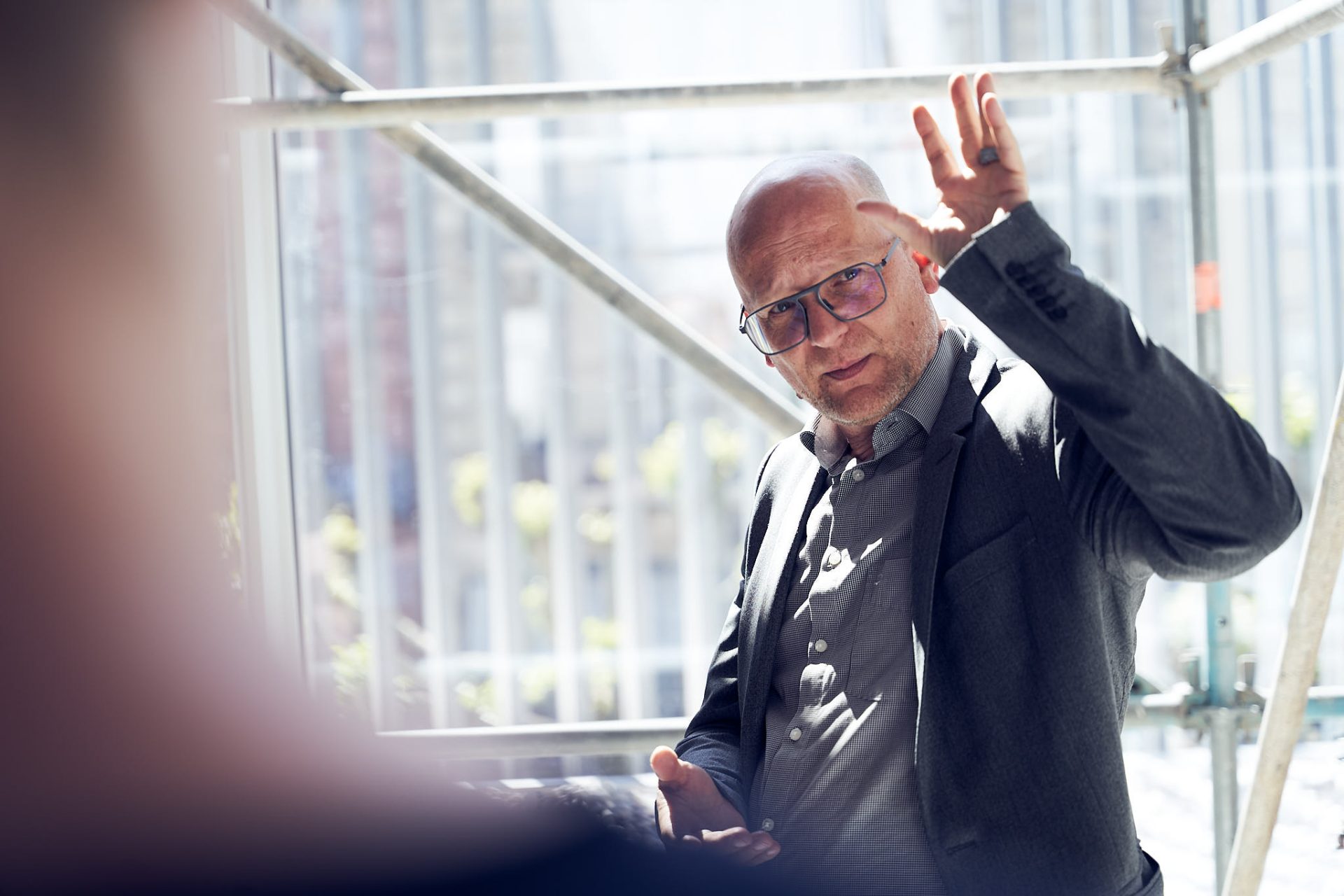
When the Museum Reinhard Ernst (mre) opens in Wiesbaden in autumn 2023, the Rhine-Main region will gain another attraction. On show will be one of the most extensive private collections of abstract art in Germany, in a new €80 million building. THE FRANKFURTER spoke to founding director Dr Oliver Kornhoff on the building site.
Text Dr. Jutta Failing Photos Betti Klee
PRIVATELY COLLECTED – PUBLICLY PRESENTED
It is said that he comes to the building site every day. Wiesbaden entrepreneur Reinhard Ernst collects abstract art and has given the state capital a museum. With all the trimmings: the artworks collected over four decades – many hundreds of them, all valuable gems – the huge new building on Wilhelmstraße by Japanese star architect Fumihiko Maki, and future operations with art education, a museum shop, catering, rentable event spaces and everything else that makes a modern museum. Everything is financed entirely from private funds through the non-profit Reinhard & Sonja Ernst-Stiftung. For the building plot at Wilhelmstraße 1, most recently a car park on the prestigious boulevard, a 99-year leasehold agreement was concluded with the City of Wiesbaden. “Not a single euro of taxpayers’ money has gone into building the museum,” stresses director Oliver Kornhoff.
SUGAR CUBE
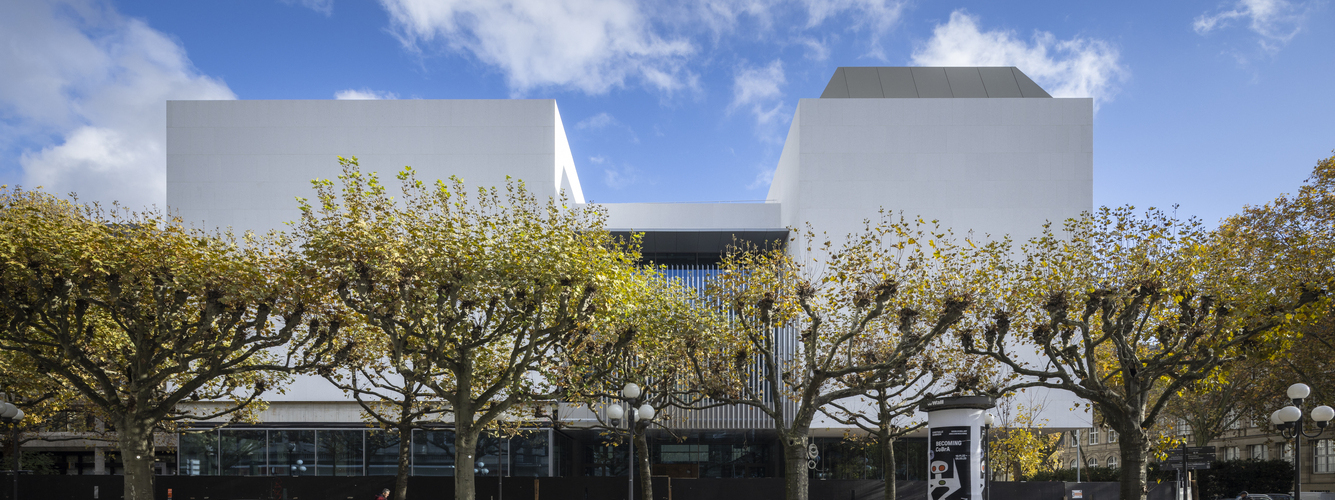
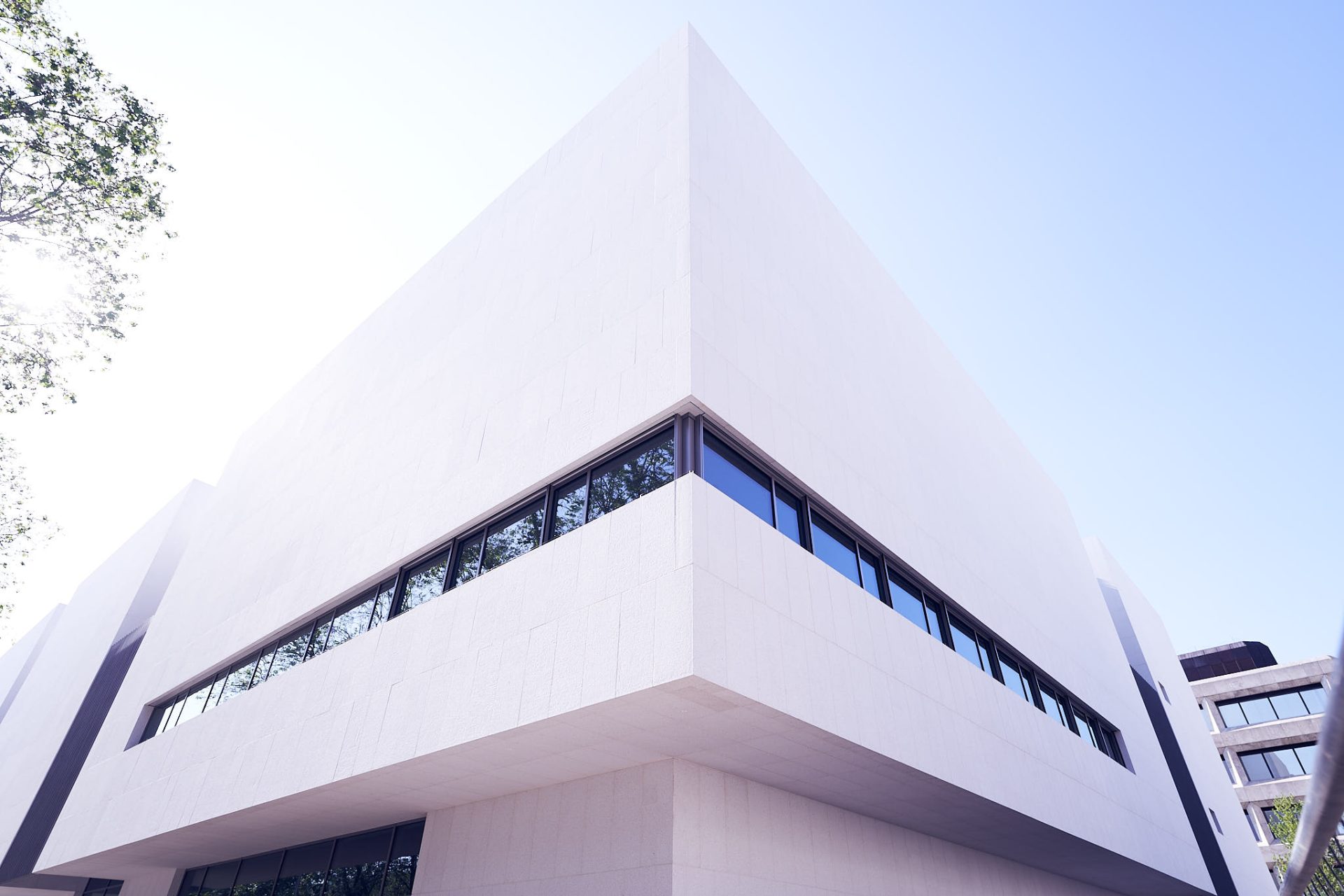
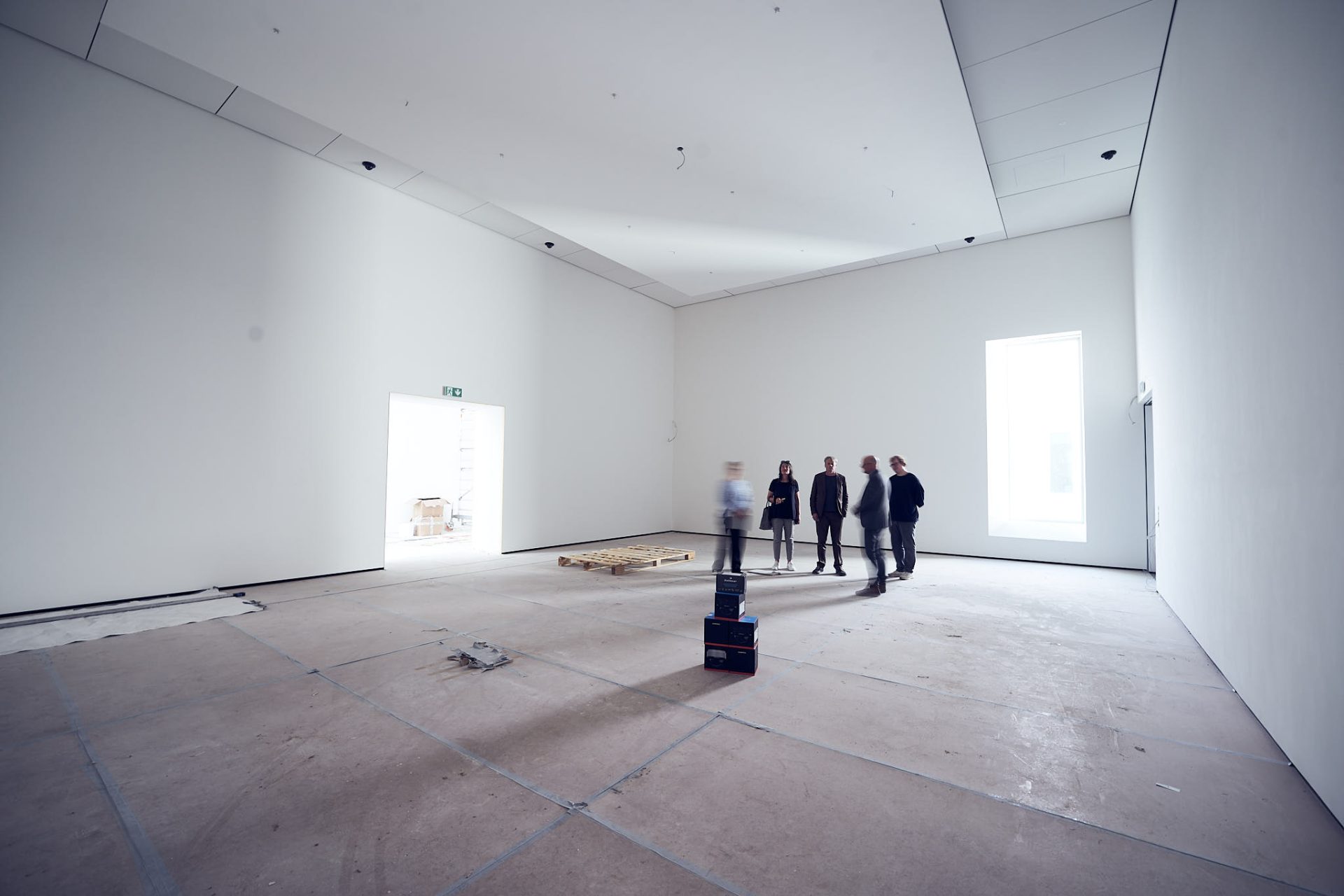
The people of Wiesbaden are already calling the new building the “sugar cube”. And indeed, with its almost otherworldly, crystalline, shimmering façade of American “Bethel White” granite (6,000 square metres of it in total), the cubic building comes across like a gigantic sugar cube or monolith. Its eaves height matches that of the pretty Gründerzeit houses on the opposite side of Wilhelmstraße – which, like so much about this architecture and its place in the cityscape, is no coincidence. Then the second surprise. Across its floors, the interior reveals itself as a kind of walk-in sculpture that could hardly be more full of light. It is a labyrinth, but one in which you cannot get lost. The tallest room is a gigantic 14 metres high and draws one word from us: “cathedral”. “I like the name sugar cube. It means people are engaging with the building,” says a pleased Kornhoff.
OLD MAPLE IN THE ATRIUM
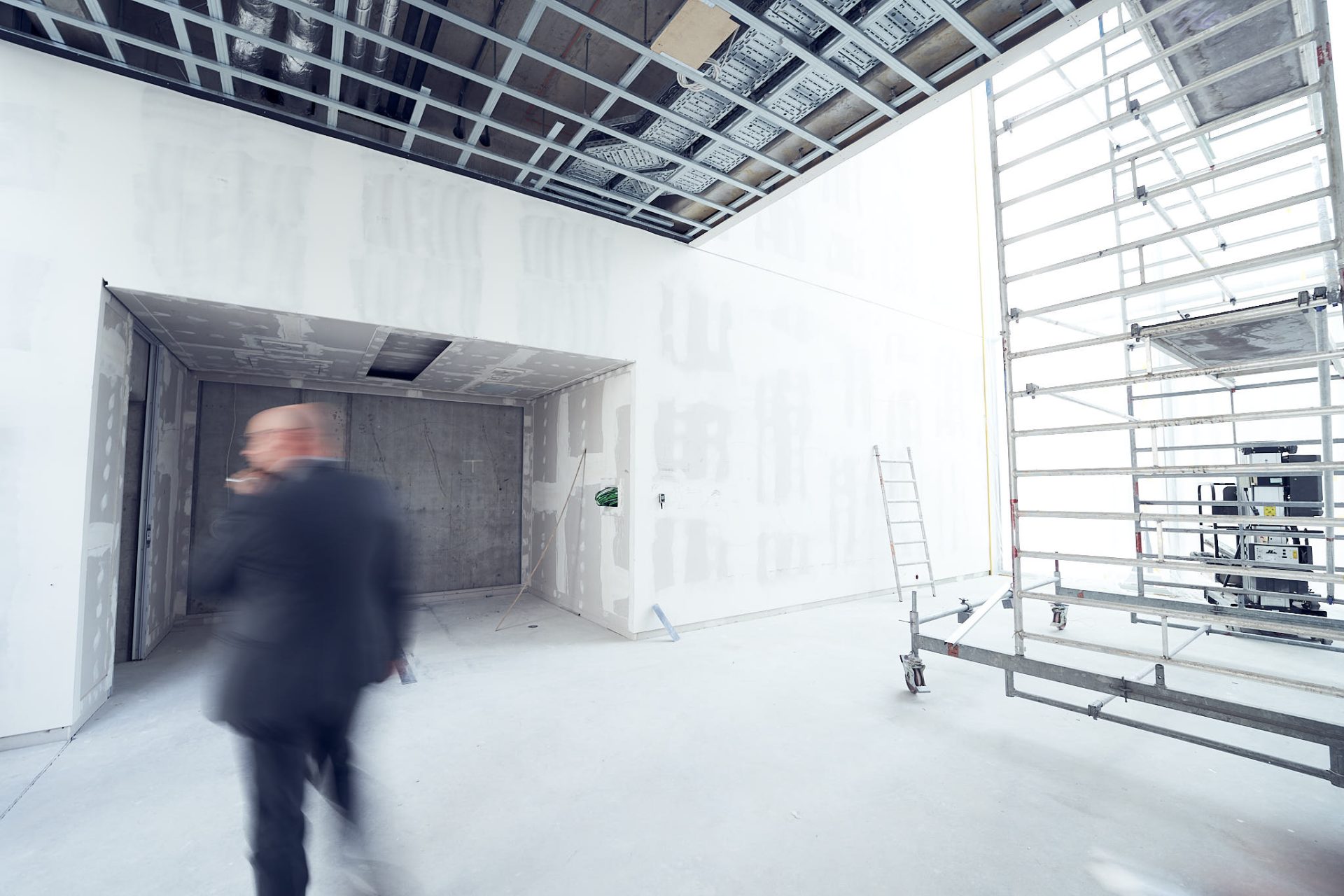
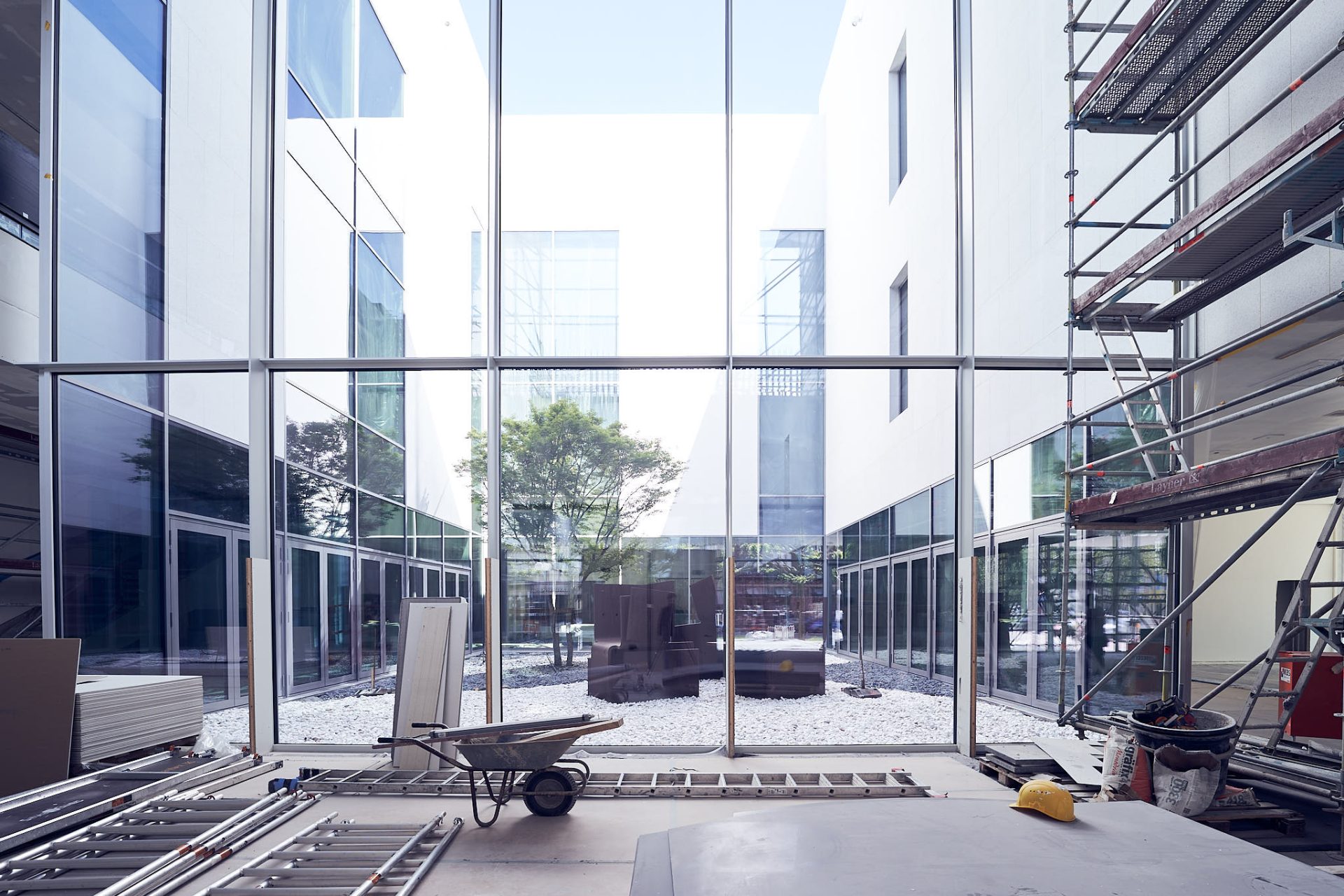
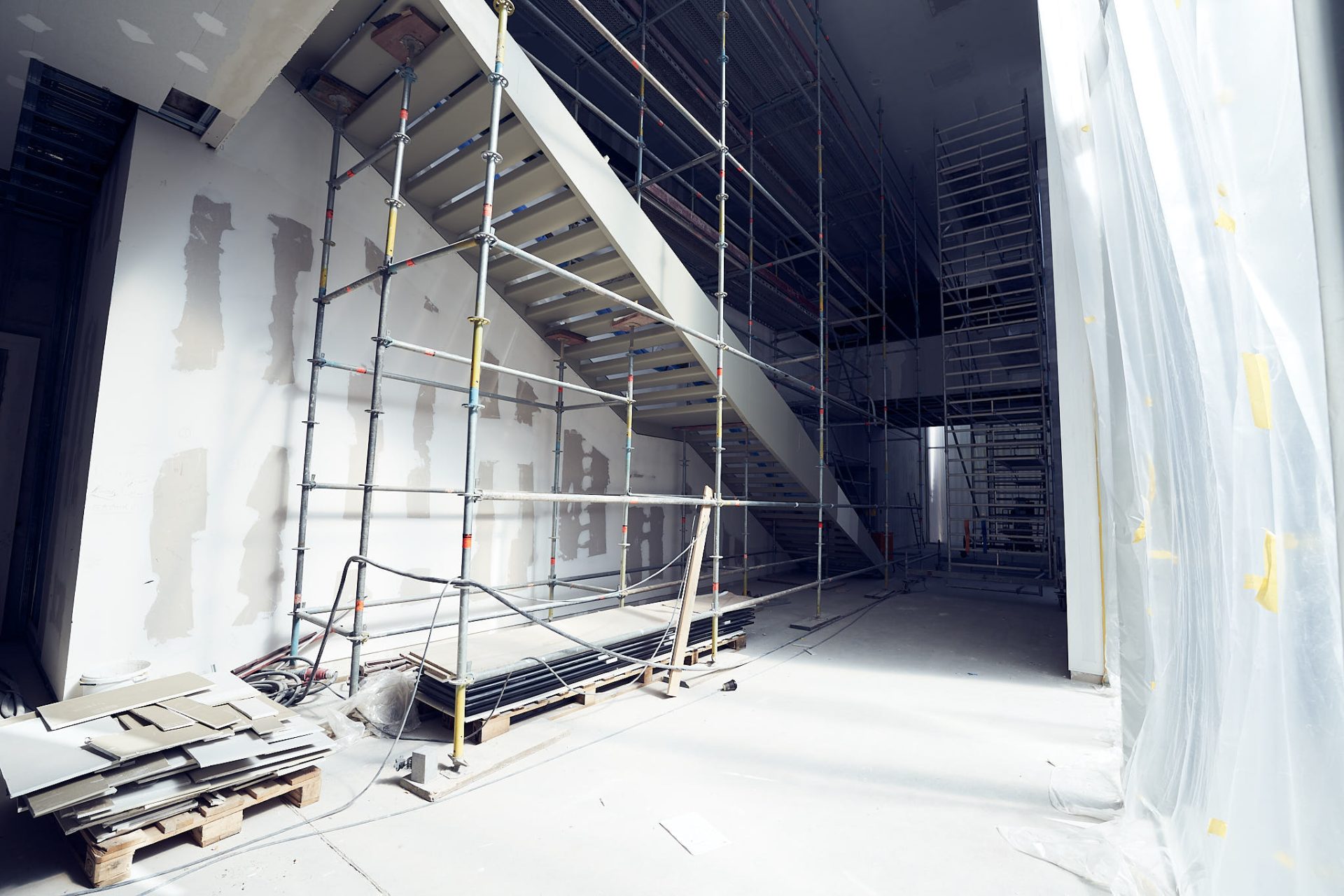
A forklift crosses our path; tradespeople are busy everywhere. We go up raw, unfinished stairs. The oak floorboards in one exhibition room have just been oiled; you can smell it from afar. The fine boards are up to five metres long. Whichever floor you are on, the anchor and point of orientation is the glazed “atrium”, the inner courtyard that guides us, draws us in and stirs our emotions. Another surprise: down in the courtyard a maple tree is growing. A 60-year-old colossus that was transplanted to this spot, which was only possible with the help of a crane. Next to the maple stands a steel sculpture by Eduardo Chillida, one of the most important exponents of abstract sculpture and, until his death, a friend of the architect Fumihiko Maki.
THE CATHEDRAL
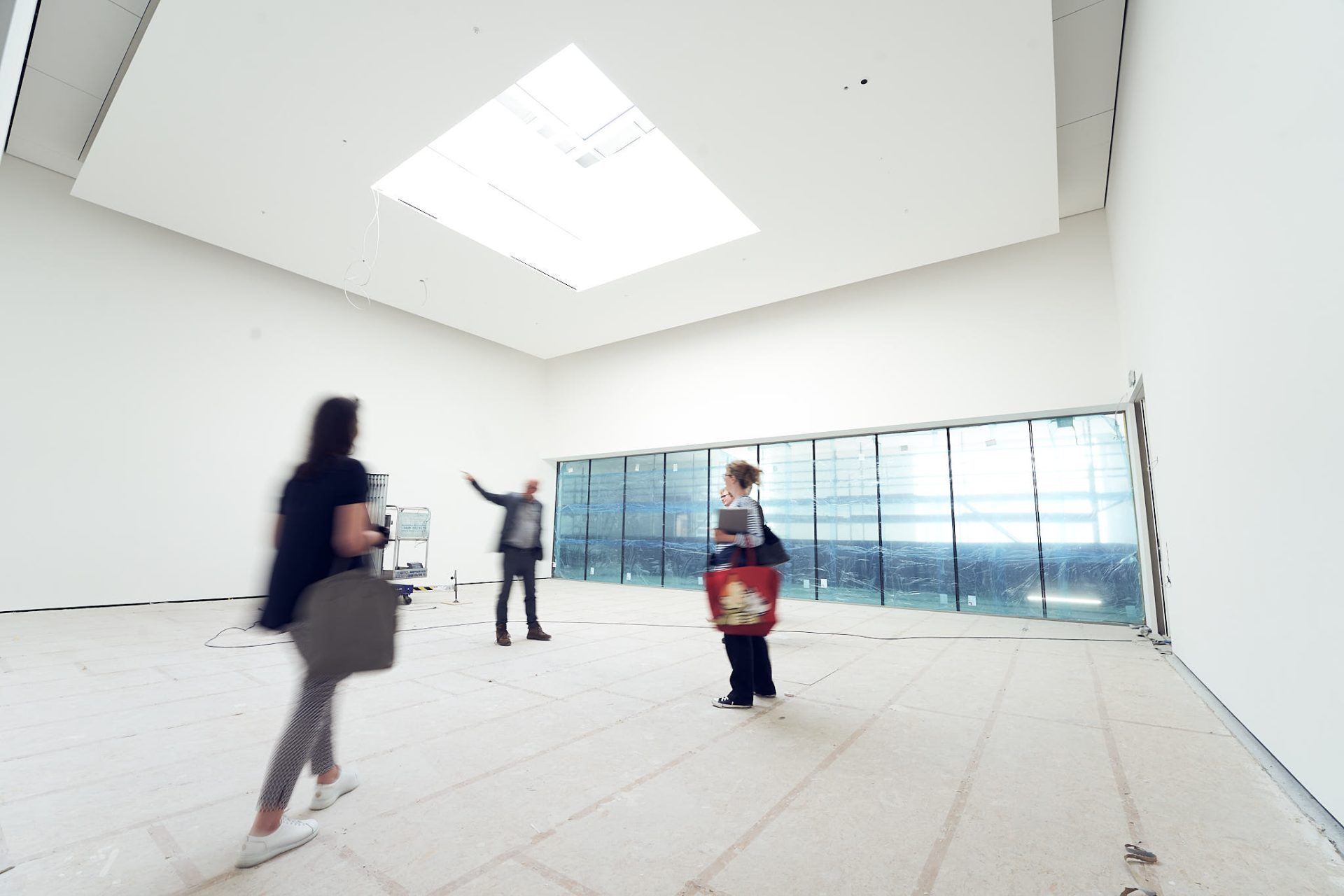
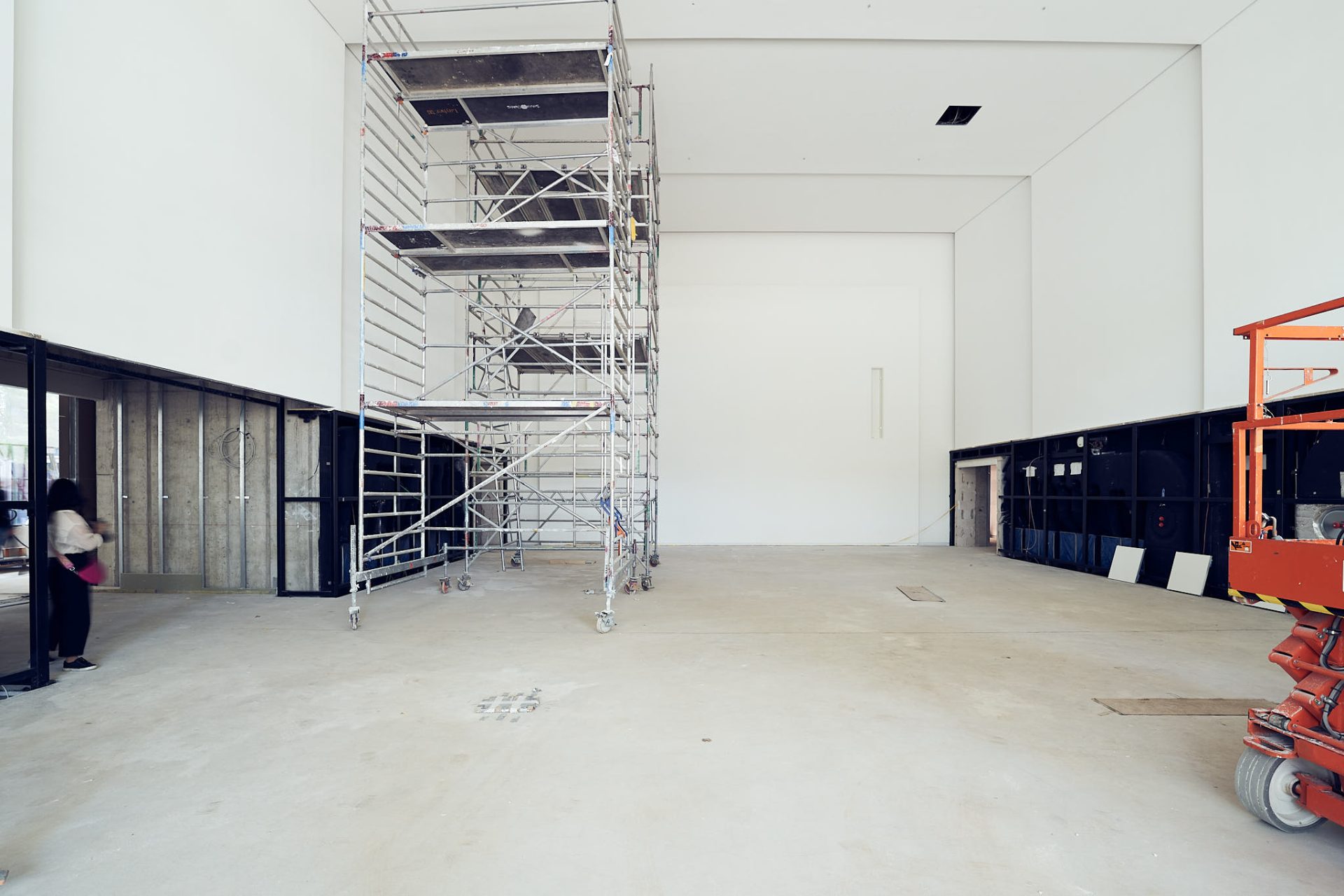
A fascinating phenomenon, director Kornhoff explains: “All the rooms are elaborately finished with acoustic plaster. This material, otherwise used in open-plan offices, significantly improves the room acoustics through its high sound absorption. You can talk normally everywhere without echoes or disturbing others. Here you don’t have to whisper reverently or tiptoe around.” This phenomenon helps to heighten the experience of both the space and the art. There is the “cathedral”, then a lower, very wide room that in turn reminds us of a crypt. The building never becomes boring; it leads its visitors through and towards emotional experiences.
IMPORTANT ABSTRACT ART
The finished museum will present three closely interlinked art-historical movements: American Abstract Expressionism, European Art Informel and the Japanese Gutai group. The latter emerged in the 1950s, when Japan was undergoing great socio-political change and artists were searching for new, radical forms of expression by combining performance, painting, installation and theatre. Kazuo Shiraga, for example, painted with his feet, and Akira Kanayama with a remote-controlled car. Alongside loans from museums and private individuals around the world, the Reinhard Ernst collection, with more than 900 paintings and sculptures, forms the core of the future exhibitions. Prominent names such as Frank Stella, Damien Hirst, Helen Frankenthaler (Reinhard Ernst owns 40 paintings by her alone), Ernst Wilhelm Nay, Jackson Pollock and many others will be represented.
TONS OF GLITTER
On the day of our site visit, dazzling sunlight falls on the spa town. The “sugar cube” – the overall form composed of four quadrants – glitters in the light. But it is not only the specially roughened granite that causes this. The joints were subsequently dusted with quartz sand so that the building looks as if it were cast in one piece. This makes it appear monolithic, but by no means forbidding. It is an appealing glitter. Through art, the mre wants to offer plenty of “sweetness” and stimulation for the senses. “The architecture sees itself as serving the art and its viewers. It is meant to be a house for everyone,” says Oliver Kornhoff. On the entrance level there is, among other things, an area for children and young people interested in art, who have free admission up to the age of 18. A novelty: the mre is only open to adult visitors from noon; before then, the museum belongs entirely to the young.

LONG FRIENDSHIP
For the architect Fumihiko Maki, now 95, who lives and works in Tokyo with his practice Maki and Associates, it is his tenth exhibition building. A long friendship links the Japanese architect with the Wiesbaden art collector. Broad white façades combined with an almost calligraphic lightness and balance are typical of Maki. Among his most prominent references is Four World Trade Center, the new building at Ground Zero in New York.
FRENZY OF COLOUR
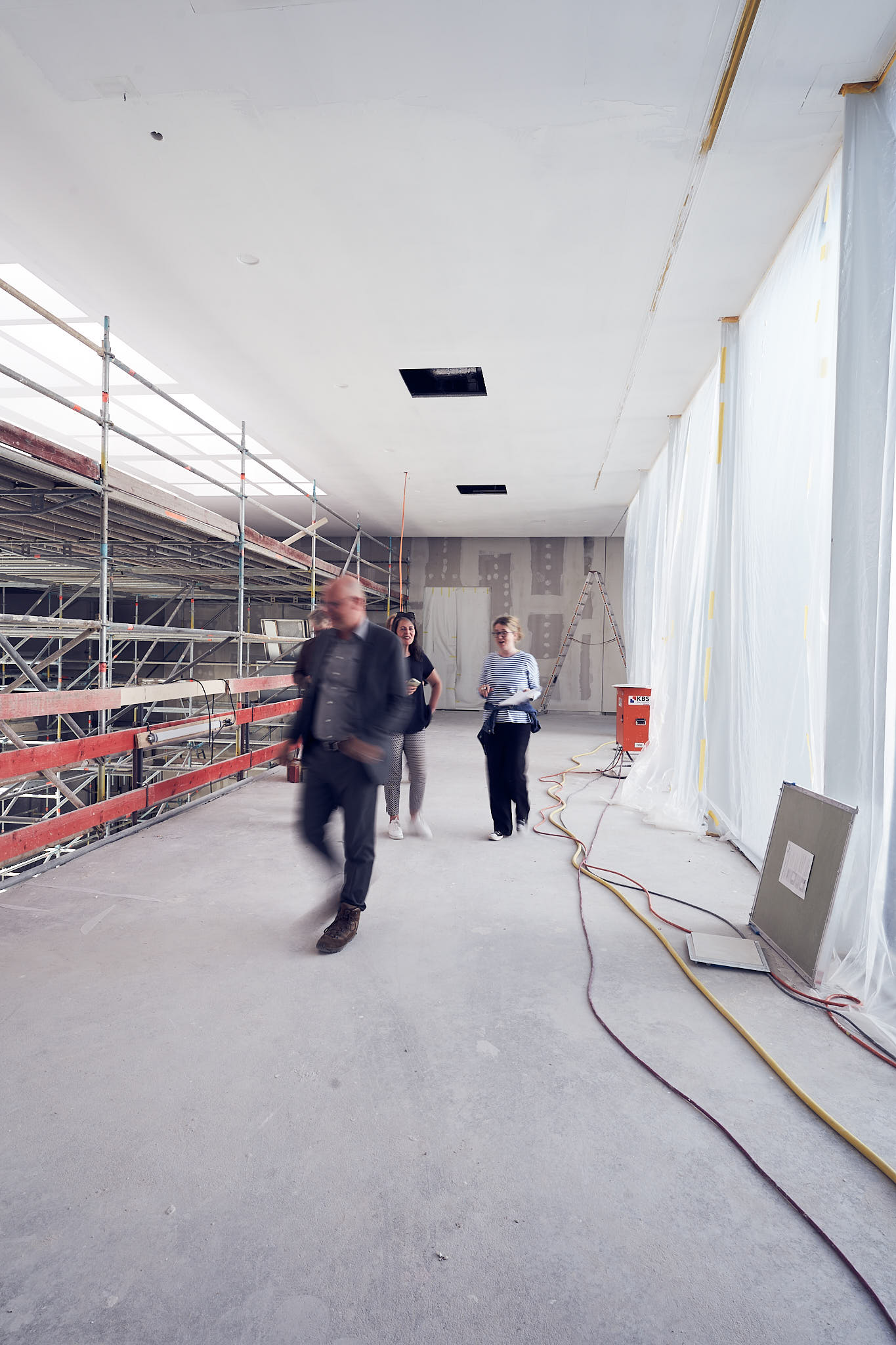
Now it is the home stretch. The opening has been postponed several times, owing to worldwide shortages of building materials and disrupted supply chains. In addition, an underground watercourse had to be diverted. General planning was carried out by the Frankfurt practice Schneider + Schumacher. After the building is handed over, it will be weeks before the artworks are in their places in the exhibition, as a constant humidity and temperature must first be maintained in the rooms. Tony Cragg’s sculpture, more than six metres high and weighing two tonnes, is already here, still well wrapped like a mummy. It would have been impossible to transport it into the finished museum. Also weighing tonnes are the glass artworks by Katharina Grosse and other artists that will be permanently installed in the mre. Grosse’s design, realised by the glass manufacturer Derix in Taunusstein, is titled “Ein Glas Wasser, bitte” (A glass of water, please) and will be on view in the heart of the art education programme – the colour lab on the ground floor. Across eight glass panels unfolds a true frenzy of colour, as if dipping a brush with ever new colours into a glass of water.
YOU ARE MY SUGAR
Wiesbaden will be proud of this architecturally extravagant newcomer next to the Museum Wiesbaden. The cube, meant to be there for everyone and opening itself to the city and the world with what feels like wide-open arms, catapults the city into the modern age. Astonishingly – and sceptics should take note here – it in no way disturbs or disrupts the historic confectioner’s-style architecture otherwise so admired in Wiesbaden. On the contrary. Such a clear architectural statement for abstract art and art education makes the sweetness of the spa town complete.
More stories








GET IN TOUCH