
Food
PRECIOUS PEARLS - FULDA CAVIAR
Once reserved for the nobility and rulers, caviar long had an elitist image. That has long since changed, and the precious grains are more popular than ever among connoisseurs of all classes. For caviar of all kinds now comes from aquaculture, a large proportion of it from the caviar manufactory Desietra in eastern Hesse.
Text Barbara Goerlich Photos Desietra, Hotel Schloss Hohenhaus, Le Petit Royal Frankfurt
FULDA CAVIAR
While the Hessian baroque town is known primarily as a bishop’s seat and the pearl of the Rhön, it is now also the precious caviar pearls of “Desietra” that have made Fulda famous among gourmets far and wide. Just outside the town, the caviar producer has established itself as one of the leading producers in sturgeon farming and aquaculture caviar production.
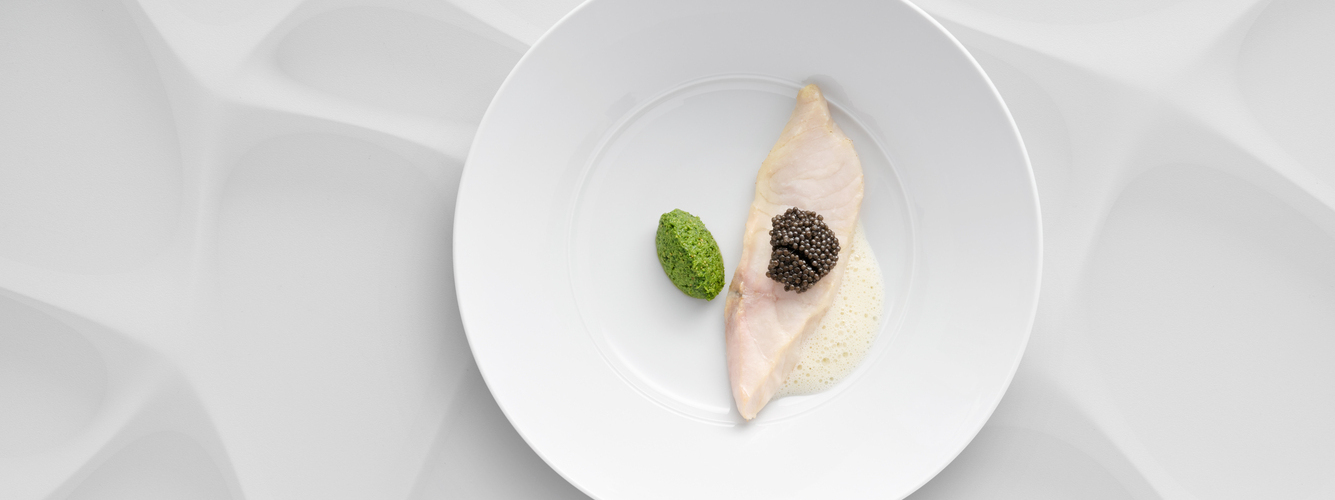
Located in the centre of Germany, Desietra – a combination of Deutschland and the most popular type of caviar, Osietra – has been breeding sturgeon for almost 20 years. The team there is doing pioneering work in rearing sturgeon in aquaculture and operates according to ecologically sustainable principles. On an area of 7,500 square metres in Fulda, a sturgeon stock of several tonnes – predominantly Siberian and Russian sturgeon – is growing to maturity in freshwater tanks fed by the company’s own springs. The caviar from eastern Hesse is in demand worldwide and goes to restaurants, retailers, airlines and cruise lines, as well as directly to gourmets. So if you could ask a sturgeon where its home is, most of the fish in Germany would give a clear answer: Fulda. Consequently, Fulda caviar is also served at the town’s finest address. Head chef Matthias Klein-Arndt of the Romantik Hotel Goldener Karpfen likes to crown his creations – above all the legendary beef tartare – with Fulda caviar. So does chef de cuisine Udo Grigas at the Frankfurt restaurant Le Petit Royal. He gives dishes such as beef tartare or seared scallops the finishing touch with caviar. As accompaniments to the “Caviar Selection” he arranges grilled white bread, diced shallots, crème fraîche, chives and chopped egg.
RARE EGGS
Caviar is the roe of sturgeon, i.e. the ripe eggs of the females, which colloquially, though not quite correctly, are called caviar. For only after cleaning and the addition of salt is it called caviar. Freshly harvested, untreated sturgeon roe is pale and glassy and only turns dark when treated with salt. Salting – a process also known as “malossol” or “light salting” – makes caviar keep longer. High-quality caviar is salted only as much as is necessary for a limited shelf life. It is therefore rarely jet-black. Another misconception – or prejudice – that needs clearing up is that caviar tastes fishy. It doesn’t.
GOLDEN TSAR CAVIAR
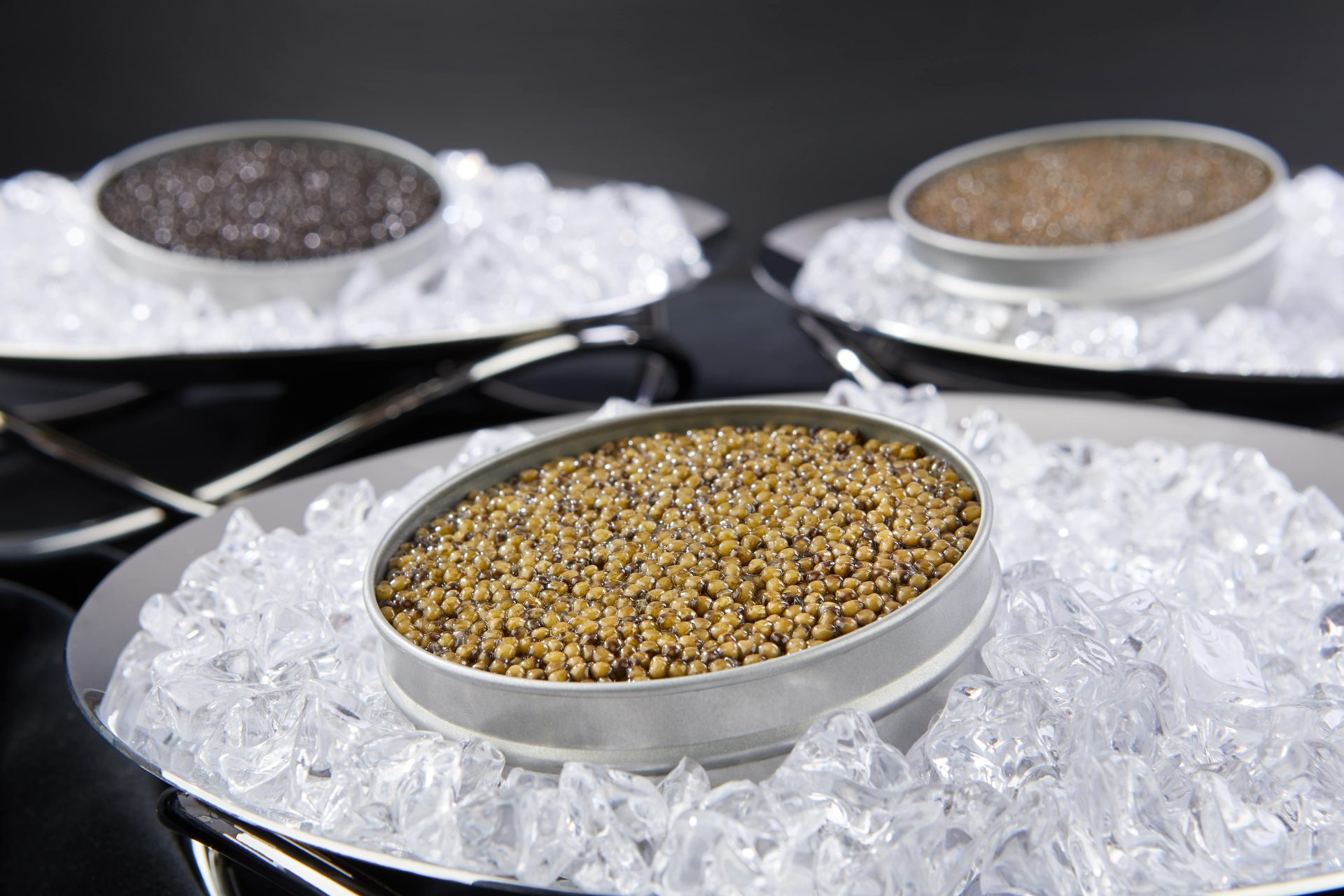
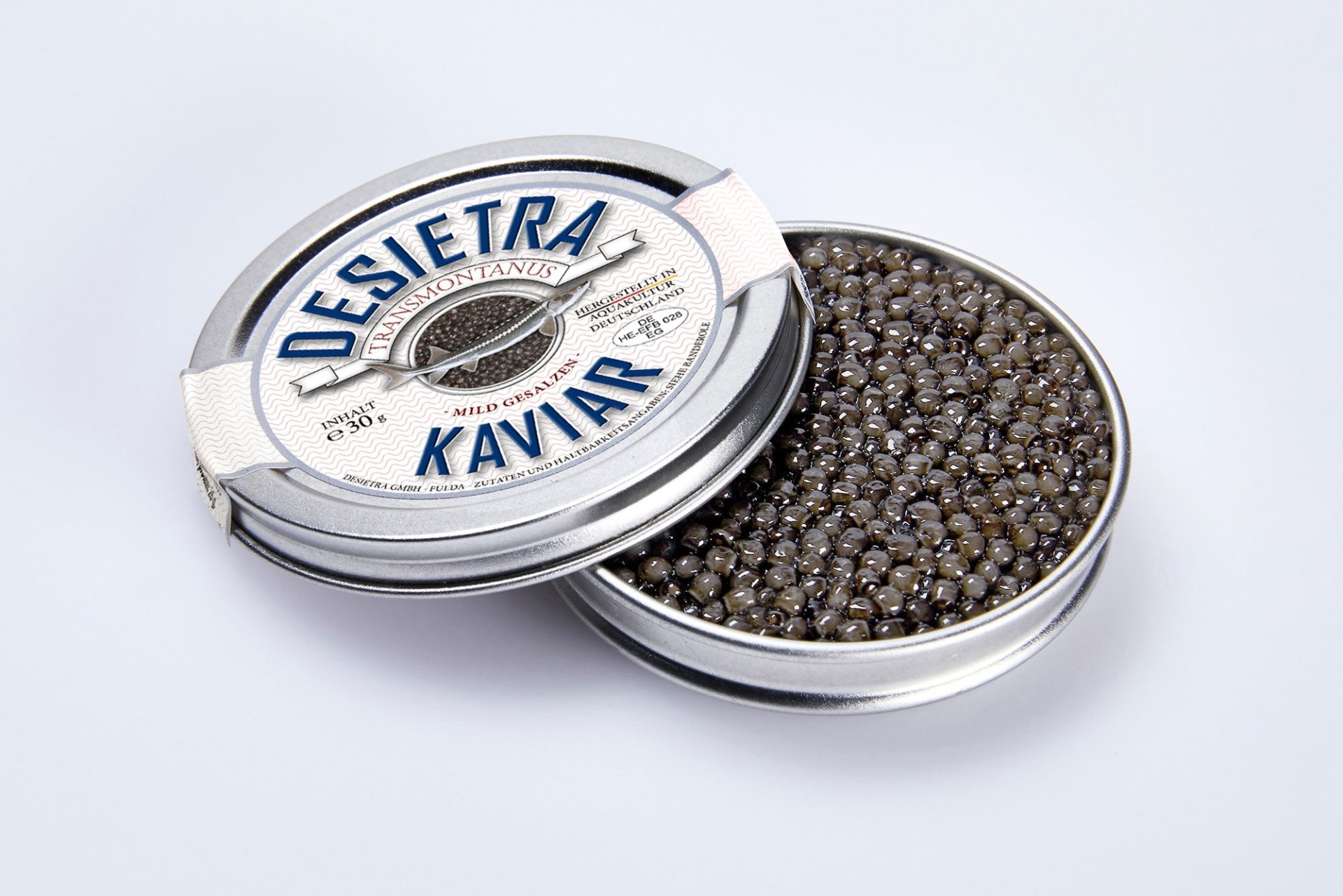
In terms of volume, the three most important types of caviar at Desietra are Osietra, Baerii and Transmontanus. The crisp Osietra from the Russian sturgeon is distinguished by a grain size of over 2.8 millimetres. The full-flavoured Sevruga comes from the starry sturgeon; its grains measure two to 2.5 millimetres. The most expensive caviar comes from the largest sturgeon, the beluga. Its pale grey, soft grains, 3.5 millimetres in diameter, are thin-skinned. They too melt on the tongue. Depending on the type, retail prices range from 2,000 to as much as 5,000 euros per kilo. The Fulda company’s most exclusive product, the golden “Tsar caviar”, comes from albino sturgeon. It is extremely rare and was once reserved for the ruling houses of Russia and Persia.
CAVIAR HARMONISES WITH COFFEE
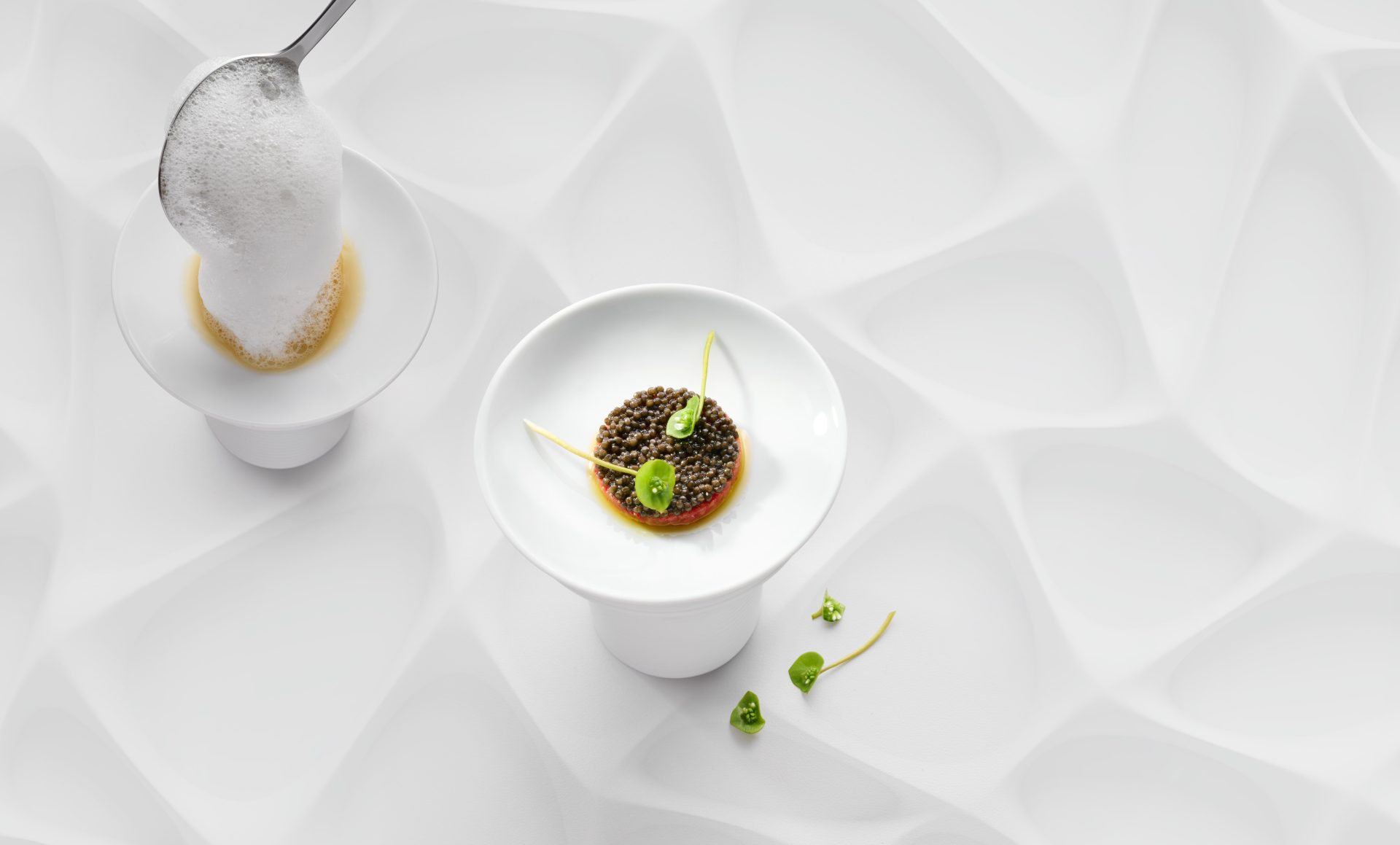
Despite sophisticated farming, caviar is still a scarce commodity. “We can’t mass-produce; we are a manufactory,” stresses Olga Kunst. The managing director of Desietra is committed to the aim “to produce a unique caviar in a species-appropriate, sustainable and environmentally friendly way”. Peter Niemann is happy to confirm that they succeed. “The quality is absolutely top class,” says the host of the Hotel Schloss Hohenhaus in northern Hesse with conviction. Honoured with a green Michelin star for his hotel’s sustainable farm-to-table concept, culinary director Niemann invites guests twice a year to caviar weekends at the boutique hotel set amid woods, fields and meadows. From the welcome dinner to the gala to the caviar breakfast, everything revolves around “black gold” and its versatility. Guests get to taste how well the roasted notes of coffee combine with the subtle saltiness of caviar in a delicious dessert. And that’s not all. Peter Niemann is also enthusiastic about the succulent white sturgeon meat, which reminds him of cod in texture: “A wonderful product that lends itself to marinating, smoking, steaming, frying and grilling over charcoal.” As the sturgeon has only a backbone, annoying bones are not an issue.
BORN AND CULTIVATED IN HESSE
The era of wild-caught caviar ended 25 years ago, when the endangered sturgeon came under the protection of the Washington Convention on endangered species, and in 2006 the trade in wild-caught caviar was banned worldwide. Since then, sturgeon and caviar have come exclusively from highly professional aquaculture operations such as Desietra, which are committed to the highest quality. As one of the few suppliers worldwide, the Fulda manufactory breeds its own stock and oversees the sturgeon throughout its entire life. “From hatching and rearing to the finished caviar, everything is in our hands,” the experts at Desietra emphasise. This, they say, has made it possible to raise sturgeon farming and caviar production to an unprecedented level. The results speak for themselves.
THE OLDER, THE MORE VALUABLE
Sturgeon farming requires patience. While other species of fish spawn annually, the sturgeon is not to be hurried. The older a sturgeon gets, the more valuable, larger and more flavourful its caviar grain. The growth of the animals, and thus their maturity, varies according to species. Sturgeon take about 15 to 25 years to reach sexual maturity. The sturgeon’s life cycle cannot be accelerated in farming. Correspondingly large amounts of capital are tied up in caviar production.
But not all caviar is the same: depending on the species of sturgeon, how it is kept and reared, the colour, grain and creaminess of the roe can differ considerably. Each type has its own unmistakable flavour. They differ in grain size, texture, firmness of the skin, colour and taste. “Our caviar has a wonderfully grainy texture, not too soft and not too hard. You can taste every single grain on your tongue,” enthuses Olga Kunst. Thanks to the high-quality combination of protein and omega-3 fatty acids, the precious pearls melt in the mouth.
“MERCEDES AMONG THE CAVIARS”
At Desietra, they recommend enjoying caviar pure and unadulterated, perhaps with a little sour cream. More full-flavoured varieties such as “Desietra BAERII” combine superbly with neutral accompaniments. Traditionally, dry white wines such as Chablis, champagne or easy-drinking Spanish cava have proved their worth as accompaniments. And one recommendation always holds: “Ten grams are good, 50 grams and more are better!” A call to Fulda is all it takes to set the “Mercedes among caviars” on its way.
More stories








GET IN TOUCH