
Food
OYSTER LODGE
With the Oyster Lodge in Bad Vilbel, which opened in December 2019, South Korean-born Jay Lee has boldly realised his dream of a traditional, authentic sushi restaurant that could just as easily be right by the station in Ginza, in a high-rise in Roppongi or in any of the other places where Michelin-starred sushi bars in Tokyo are usually found. We pay a visit to a hidden gem!
Text Volkan Brandl & Dirk Eisel Photos Betti Klee GmbH
OUTSIDE IS GERMANY, INSIDE IS JAPAN
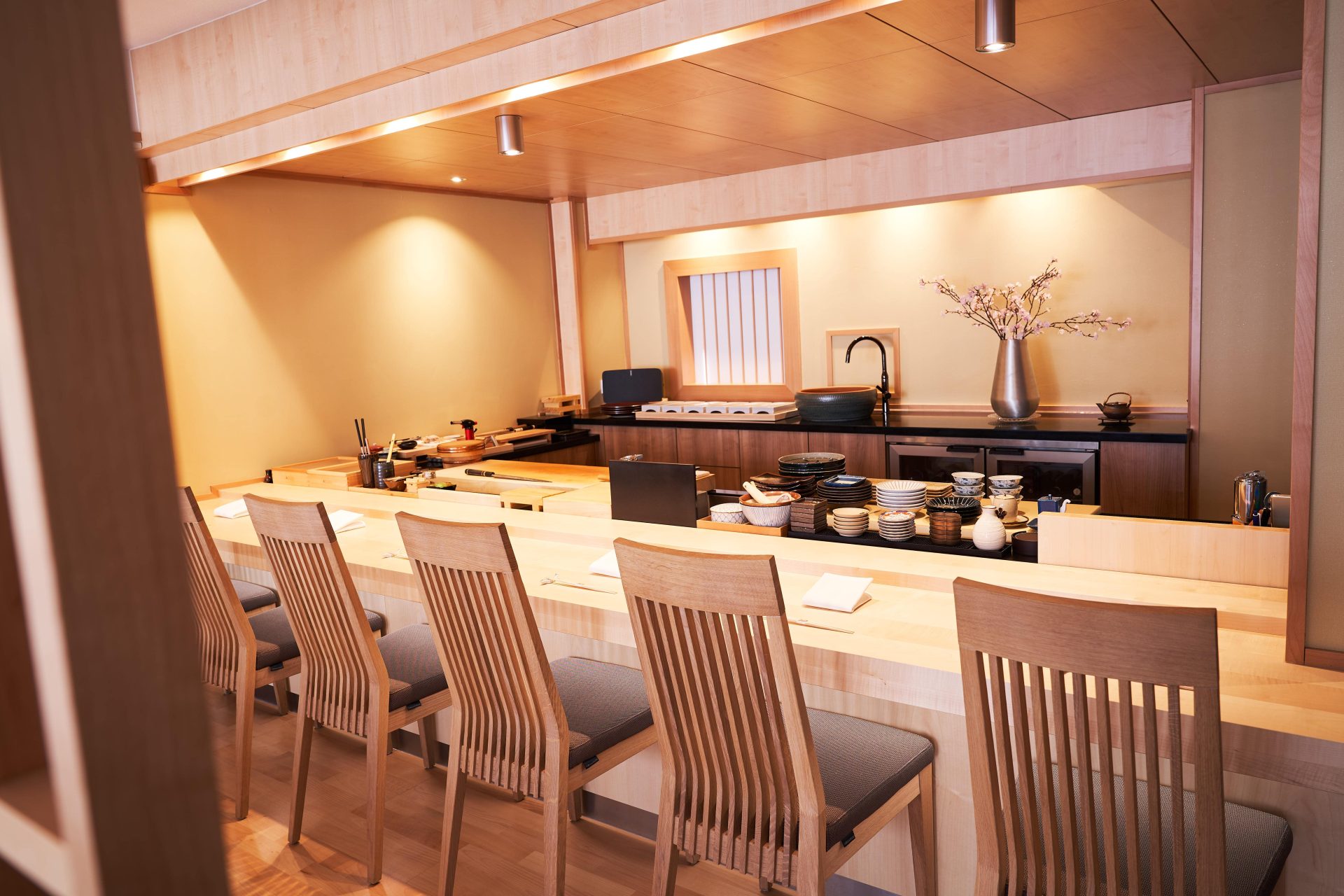
Simply entering the restaurant transports you into another world: an open kitchen in which sushi chef and owner Jay Lee goes about his intensive, meticulous work. In front of it, a counter with six seats made of pale hinoki wood, so that you can watch him prepare the food. The clear, minimalist, almost intimate ambience radiates calm with the subtle beauty of the hinoki wood and is intended to take guests away from the hectic pace of everyday life. Jay Lee planned all of this himself, down to the last detail, for it is about nothing less than the fulfilment of his dream.
GOING ALL-IN FOR THE DREAM
For this dream, the South Korean has come a long way in more ways than one: “I actually had a different profession. I worked as an aircraft engineer in South Korea. But I wasn’t happy at all,” he says, adding, surprisingly: “Cooking is actually similar to building an aircraft. You have to make parts and then assemble them.” He finds his enthusiasm for Japanese cuisine of all things not surprising in the least: “Korea was a Japanese colony. That’s why there is a long Japanese culinary tradition there.”
The decision to give up his profession to train as a sushi chef caused conflict in his family: “I first had to talk to my parents about it and got into big trouble with them when I said I was quitting as an engineer. In Korea we are expected to follow our parents’ instructions.” But Jay Lee was not deterred; he bought a plane ticket, flew to Tokyo and knocked on the doors of – by his estimate – more than 200, 300 restaurants until he was offered a job.
WORLD TRIP
After completing his basic training, he moved on to Australia, where he worked for a small sushi company for a while. But in the long run he could not identify with the modern version of sushi served there, with rolls and similar fusion dishes and the use of fish that sushi traditionalists do not regard as high-quality, such as salmon. For the same reason, he later ended his attempt to run a sushi restaurant with his uncle in a suburb of Washington: “The kitchen and the fit-out were perfect. But I couldn’t agree on a concept with my uncle,” says Jay Lee a little wistfully. And so he eventually returned to Seoul, first working for a producer of soju spirits and later opening a restaurant in the exclusive Gangnam district. The idea of leaving this project too and going to Germany, of all places, came from a female regular: “I had a customer from Berlin who came to my restaurant two or three days a week and said there was no restaurant like mine in Germany and that I should come to Germany, where I would be the first and would surely be very successful.” A series of personal blows ultimately tipped the balance in favour of putting this plan into action.
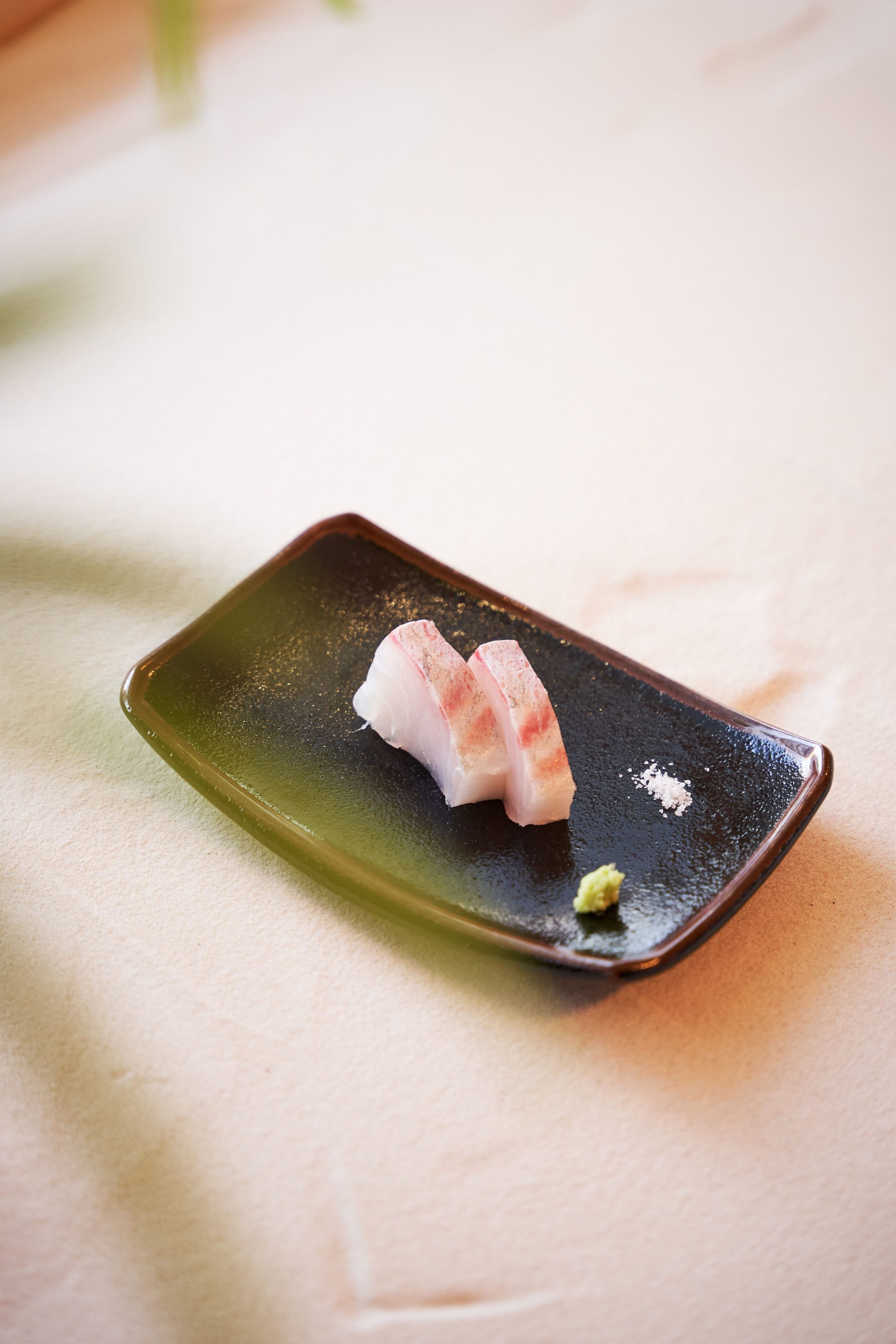
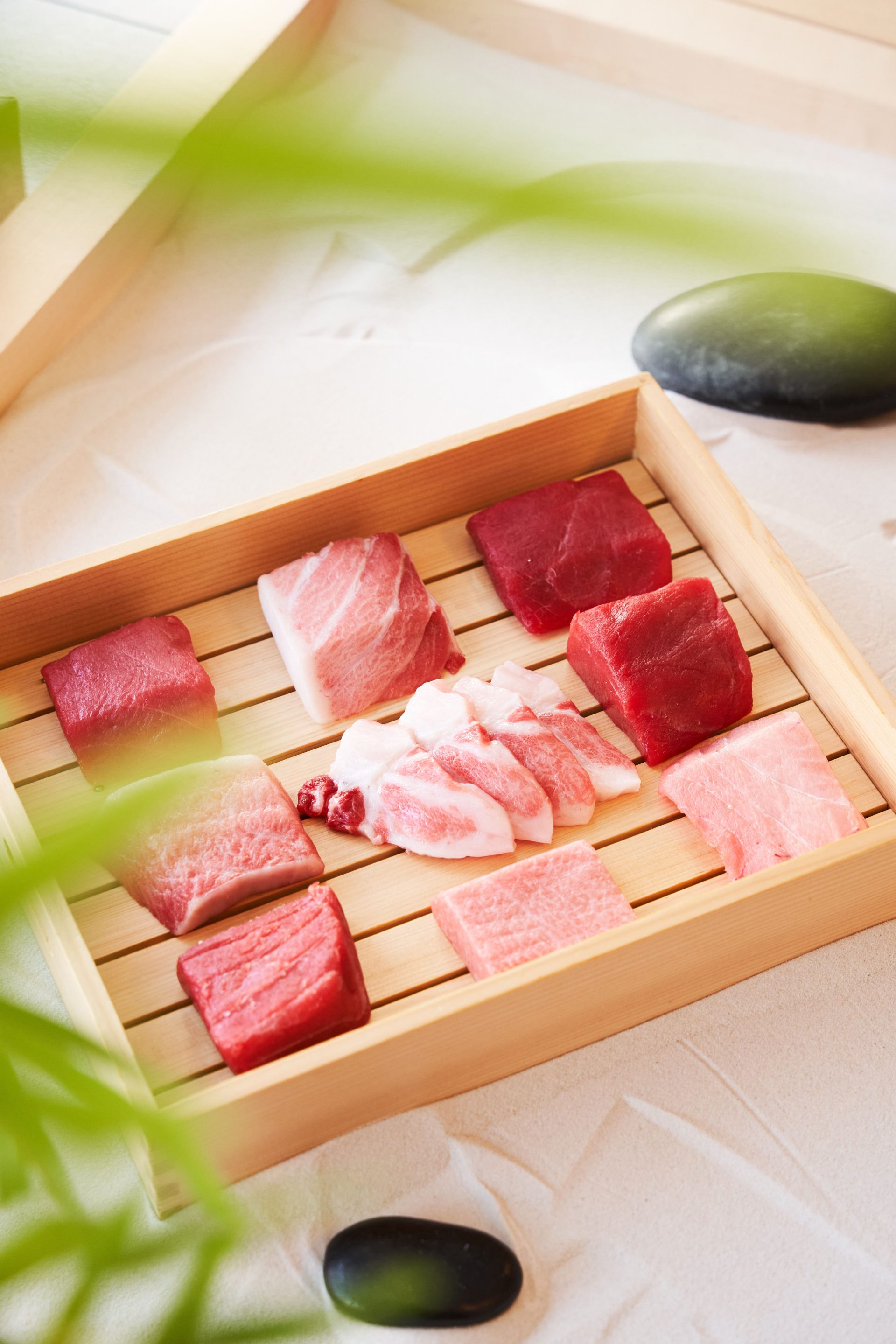
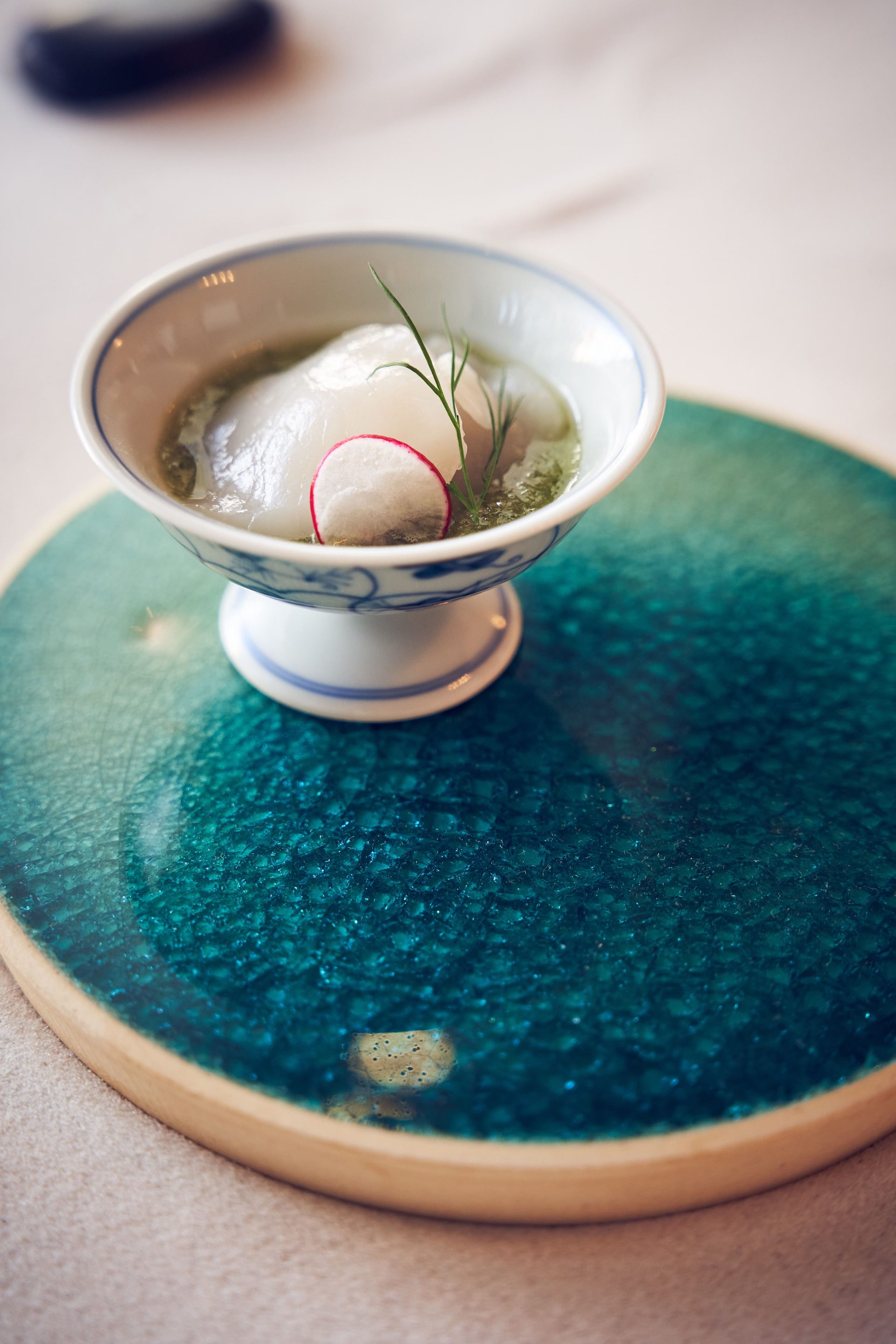
After travelling through Germany, Jay Lee was convinced that the ideal location for his traditional sushi restaurant had to be in the Rhine-Main area: “The reason is Frankfurt Airport. All the fresh fish comes to Frankfurt first and is then transported on to the other German cities.” The impossibility of finding suitable and, above all, affordable premises in Frankfurt’s city centre eventually led him to Bad Vilbel.
THE ART OF OMAKASE
Jay Lee offers his guests a multi-course omakase menu. For sushi obsessives, few words spark such anticipation. The expression “omakase shimasu” means placing your fate in someone else’s hands and refers to the Japanese tradition of letting the head chef decide what you will eat. With an omakase menu, you therefore don’t have to pore over a menu and discuss which dish to order; you simply sit there and enjoy. Liberating and exciting at the same time.
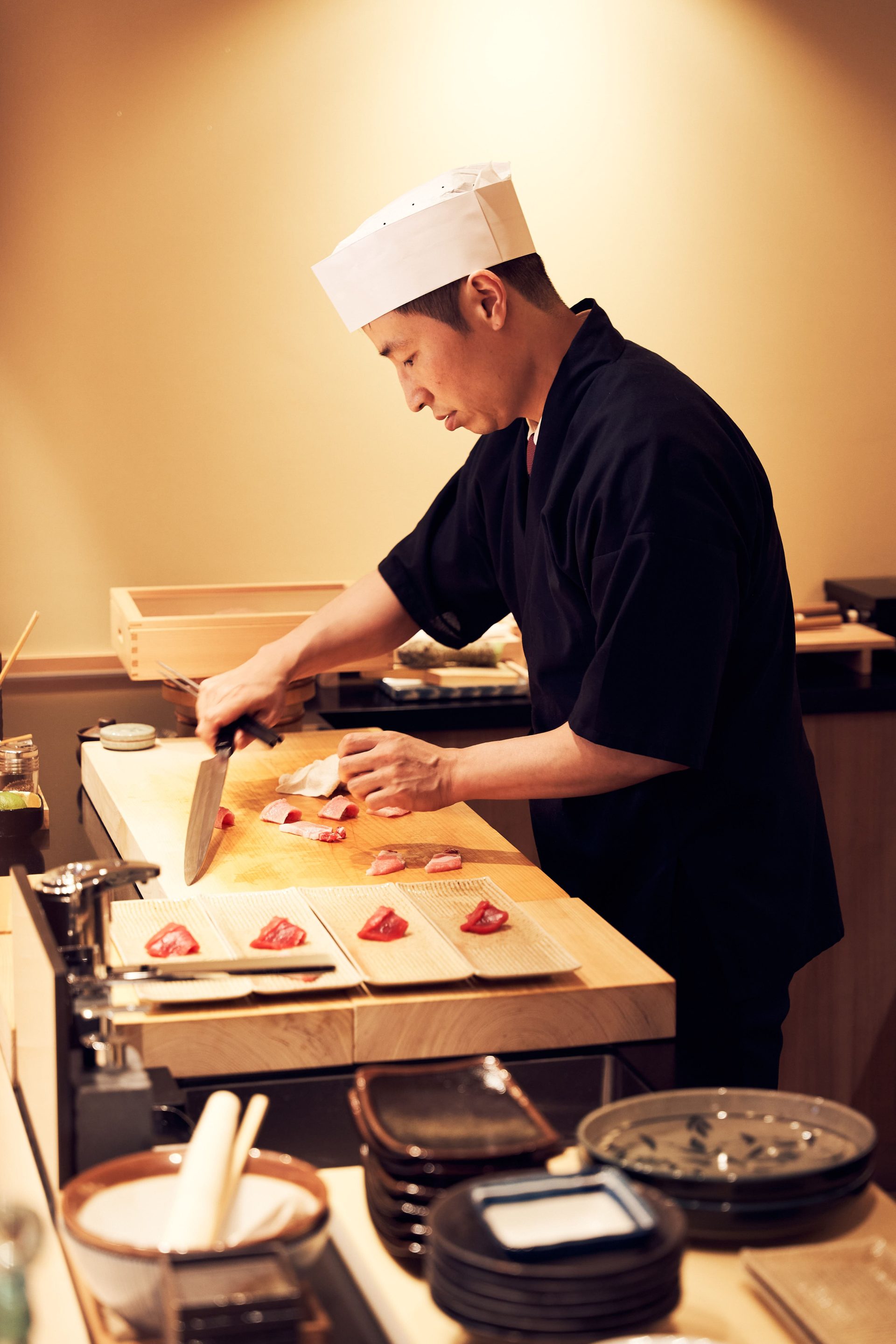
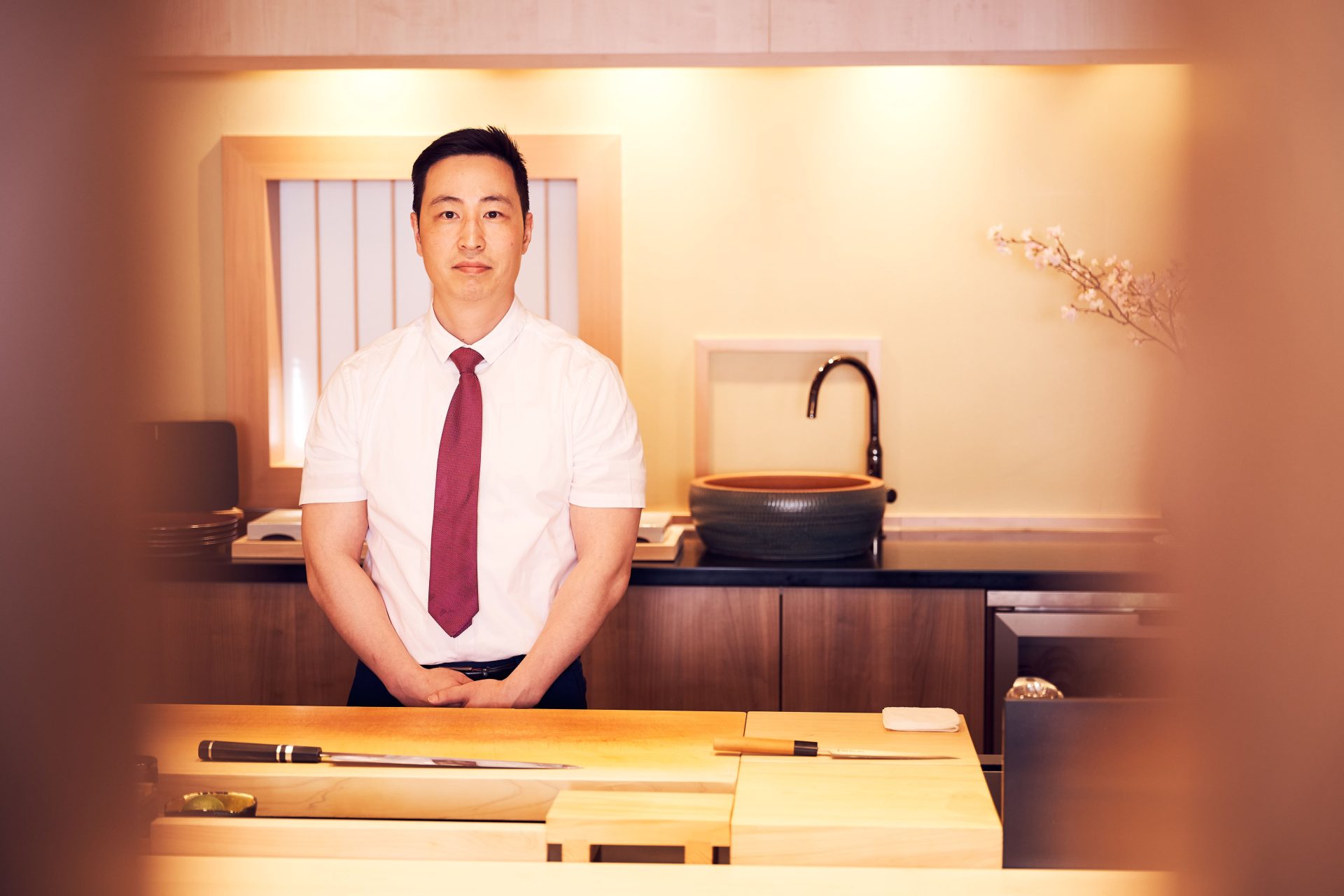
I think the most important thing is passion and dedication. There is no shortcut to becoming a sushi chef. But if you have passion, you can make it.
— Jay Lee
Which dishes are served is determined anew each day by the produce available. And here too Jay Lee makes no compromises: only the freshest, highest-quality and best ingredients are allowed on his plates. To ensure this, he drives to the airport himself three times a week at four in the morning to inspect the fish that has been delivered. He makes soy sauce and pickled ginger himself, fresh and without additives, and naturally uses only real wasabi from Japan, at a price of 400 euros per kilogram, which, unlike the coloured horseradish otherwise used, tastes more subtle and has a slight sweetness in addition to its heat.
DINNER AND THEATRE
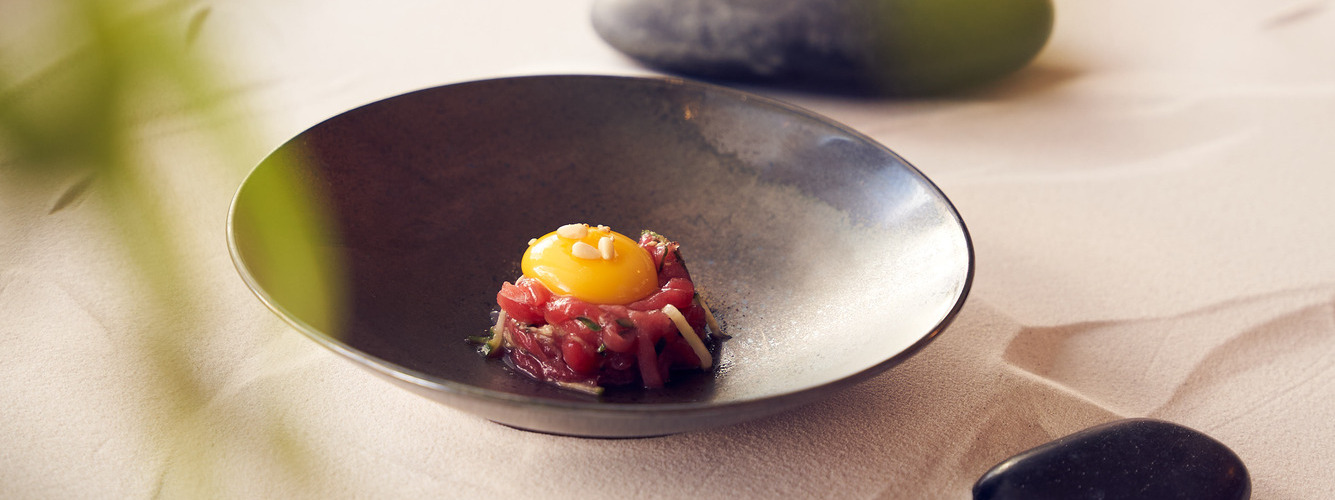
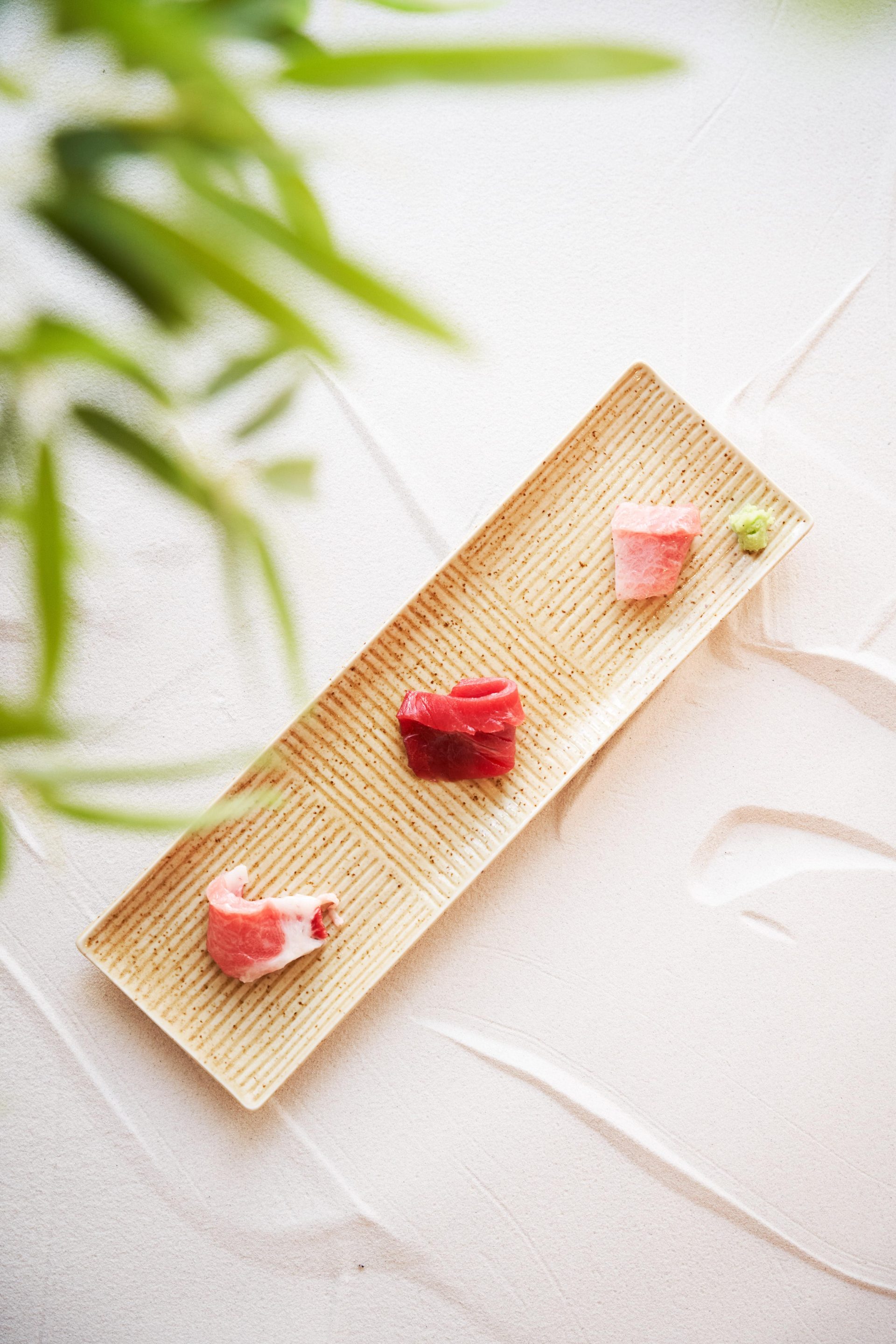
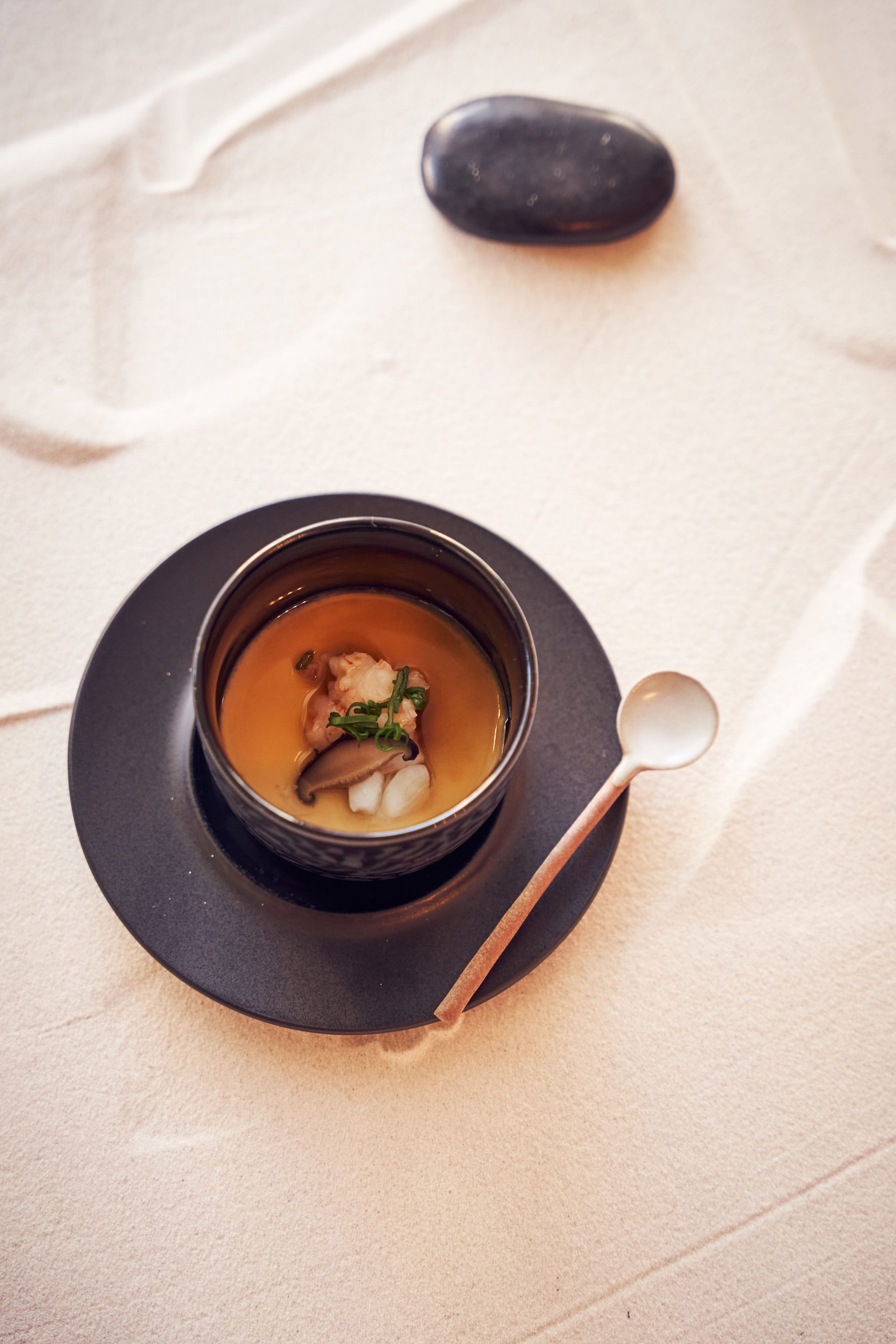
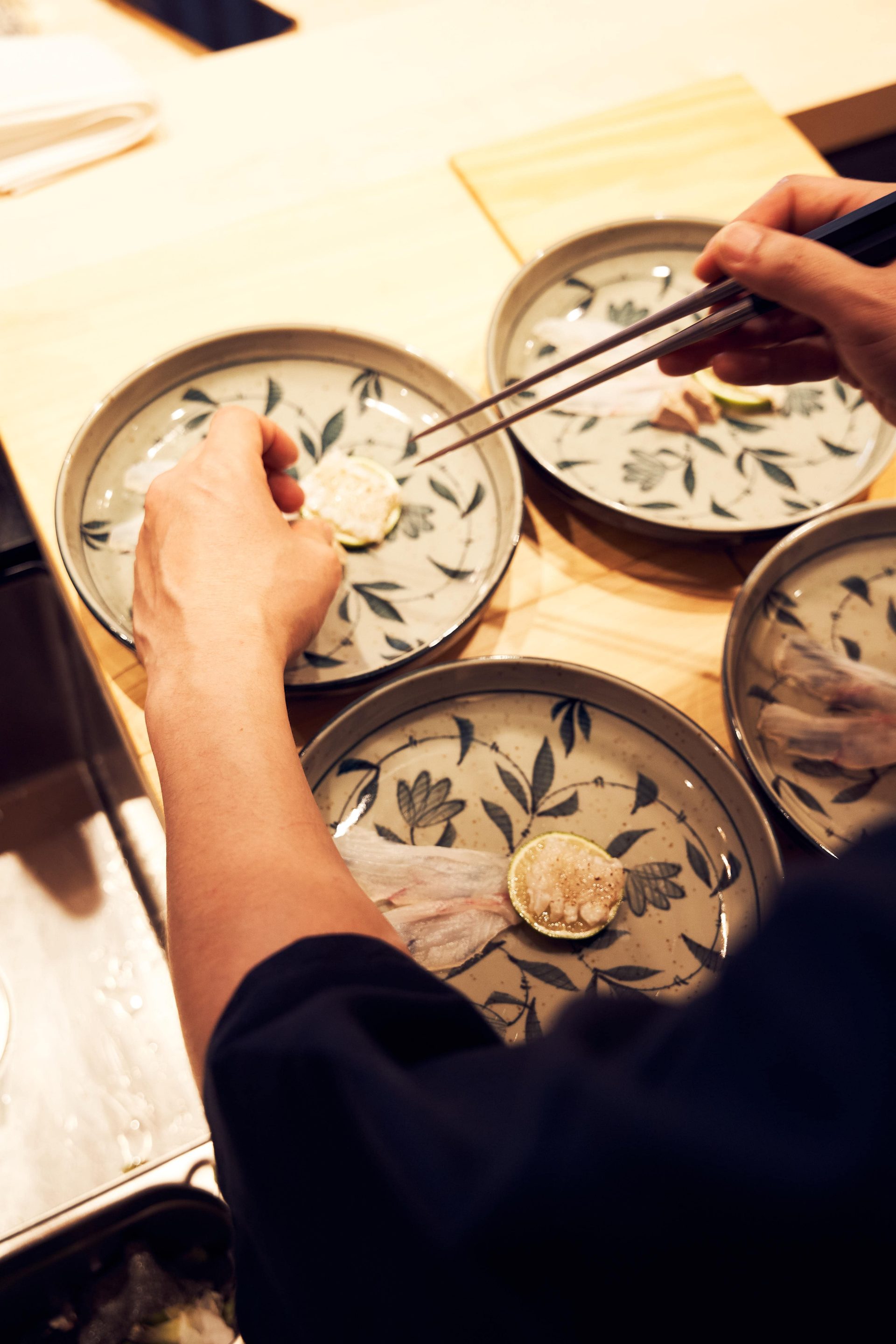
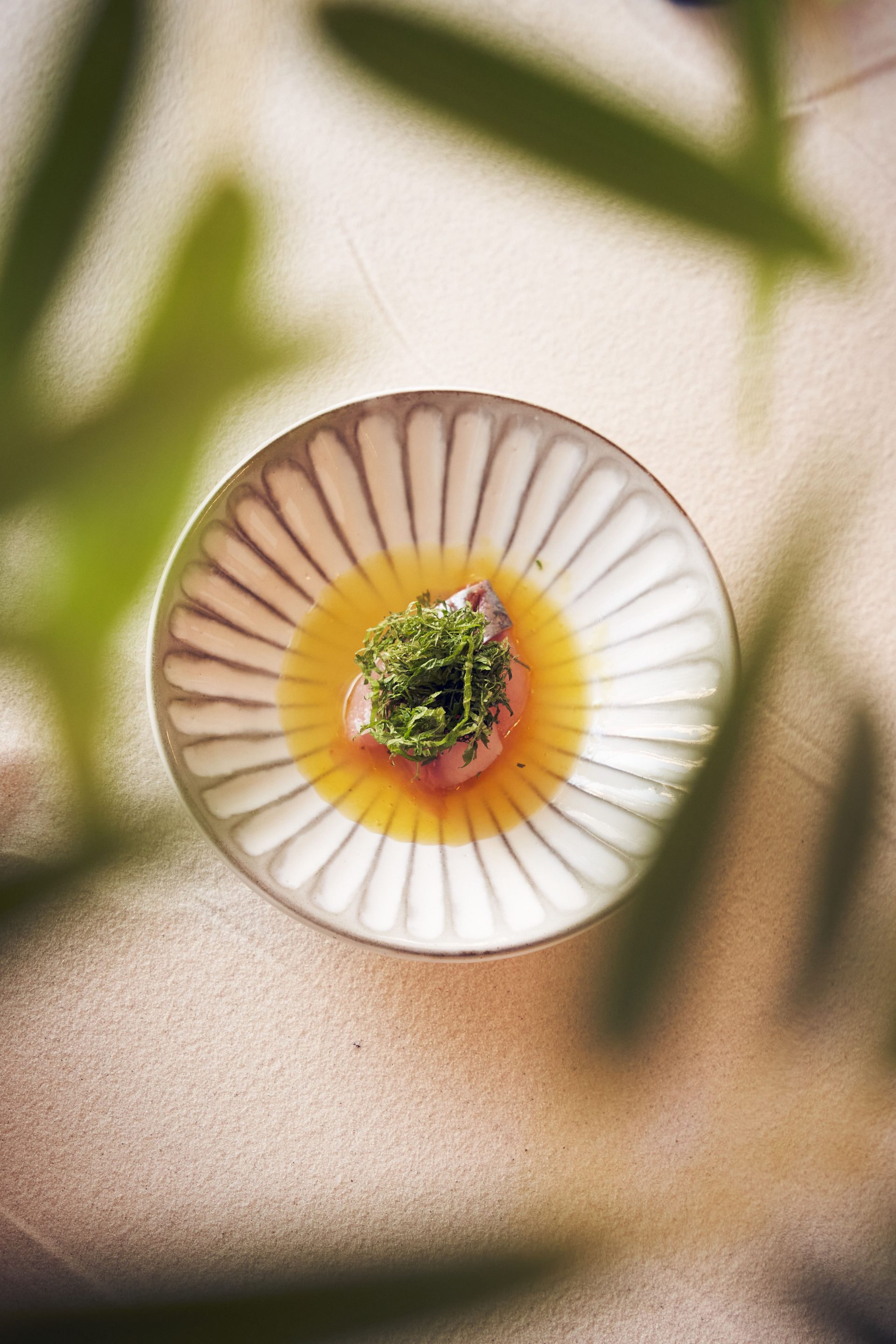
Lee’s dishes are consistently excellent and show a high degree of creativity and craftsmanship. Whether steamed Gillardeau oysters in oyster dashi, tuna tartare with nashi pear, egg yolk and sesame, chawanmushi (a kind of savoury egg custard) with brown crab, turbot sashimi, turbot liver with sea urchin, lobster, sea bream, hamachi, toro (the fatty part of the tuna from the belly area of the fish, which has a rich, buttery flavour) or a miso soup served to finish before dessert: all the creations are of high quality, spot on and made with great attention to detail. Lee works with concentration behind the counter, precisely cutting fish with a huge knife, flaming some items with a Bunsen burner, grilling others over binchōtan charcoal.
Like the old Edomae masters, he ages some types of fish using traditional techniques to accentuate their flavour more strongly, for example in the kombujime style by wrapping them in kelp. During the nigiri sushi part of the menu, we watch the sushi master’s delicate hand movements; the rice shaped by warm fingers and palms; the fresh wasabi grated on a sharkskin grater and dabbed on with great precision; the perfectly cut fish on top. Jay Lee places the nigiri directly in front of us. The rice is still just at room temperature, airy and subtly seasoned with vinegar. Some of the fish is brushed with soy sauce. The sushi is always served with the ideal amount of sauce and seasoning, so guests don’t have to decide how much is right. In the background you can hear the hiss and crackle of the Bunsen burner. It is dinner and theatre at the same time.
PASSION AND DEDICATION
Jay Lee is not a man of many words. Asked what guests should take away from a visit to him, he answers briefly and modestly: “The chef’s passion and dedication.” We can only endorse this and add that the omakase experience at the Oyster Lodge is not to be missed.
More stories








GET IN TOUCH