
Art
ONE, TWO, THREE KINDS OF ART
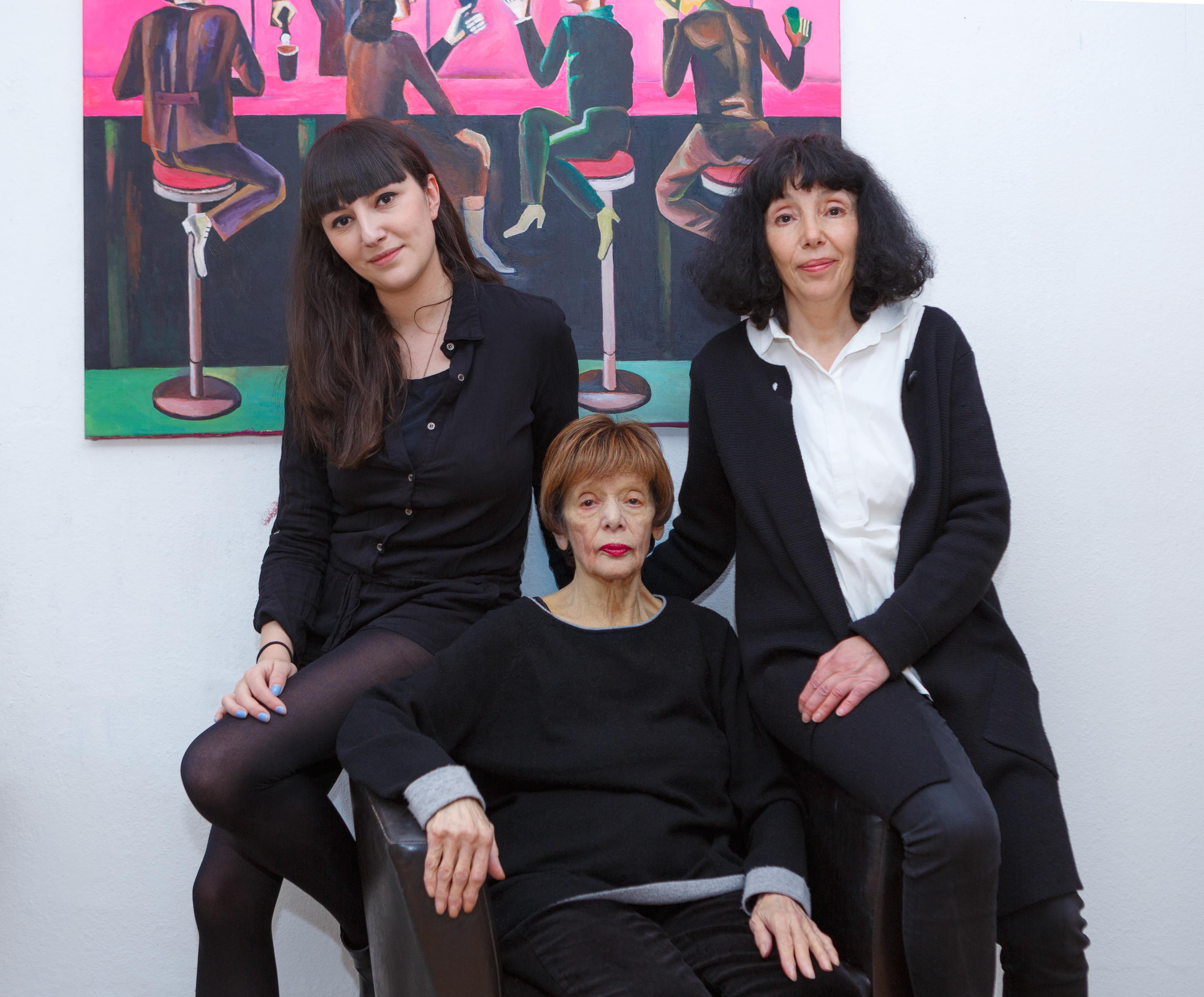
“Mischpoke” is the name of their joint art project. Frankfurt-based Anna Nero (born 1988 in Moscow) is an artist like her mother and grandmother. Together, the three of them triple the reflection and the Jewish humour.
Text Heike Strelow Photos Privat
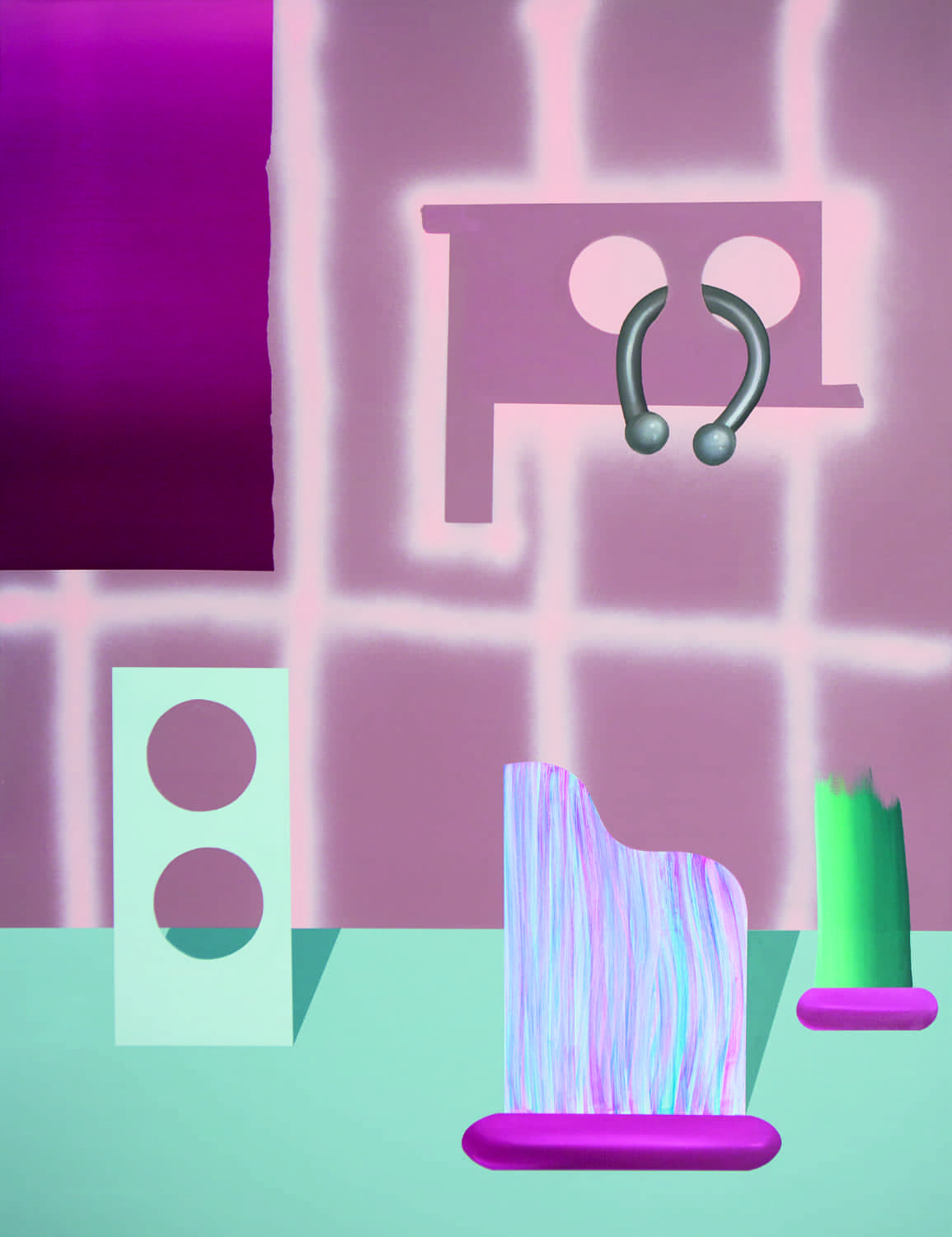
Grandmother, mother and granddaughter: three generations of Jewish women who have devoted their lives to art. Not a novel, but the life story of the artist Anna Nero, who came to Germany from Russia in 1995 as a quota refugee together with her grandmother Tatiana Ovrutschski and her mother Julia Ovrutschski. She later studied at the art academy in Mainz and at the Academy of Fine Arts (HGB) in Leipzig. All three women are artists and today live in their adopted home of Frankfurt. Gallery owner Heike Strelow spoke to Anna Nero about this special constellation and her identity as a woman, a Jew and an artist. Anna Nero’s painting style: geometric, controlled, witty and full of sexual allusions.
Heike Strelow: Anna, even after our first conversation you stayed in my mind as a self-confident artist with a feminist outlook. Do you owe this self-image to your mother and grandmother?
Anna Nero: “Yes, definitely. I owe my choice of profession and also my self-image as an artist to my mother and grandmother. Many of my colleagues have to justify their profession to their families. I, on the other hand, had the privilege of being understood and supported. On top of that, my family comes from the Soviet Union, where it was always taken for granted that women work.”
You are currently planning a joint exhibition and catalogue as part of the festival year “1,700 Years of Jewish Life in Germany”. You are all painters, but your artistic approaches differ. Where do you see your common ground, what connects you?
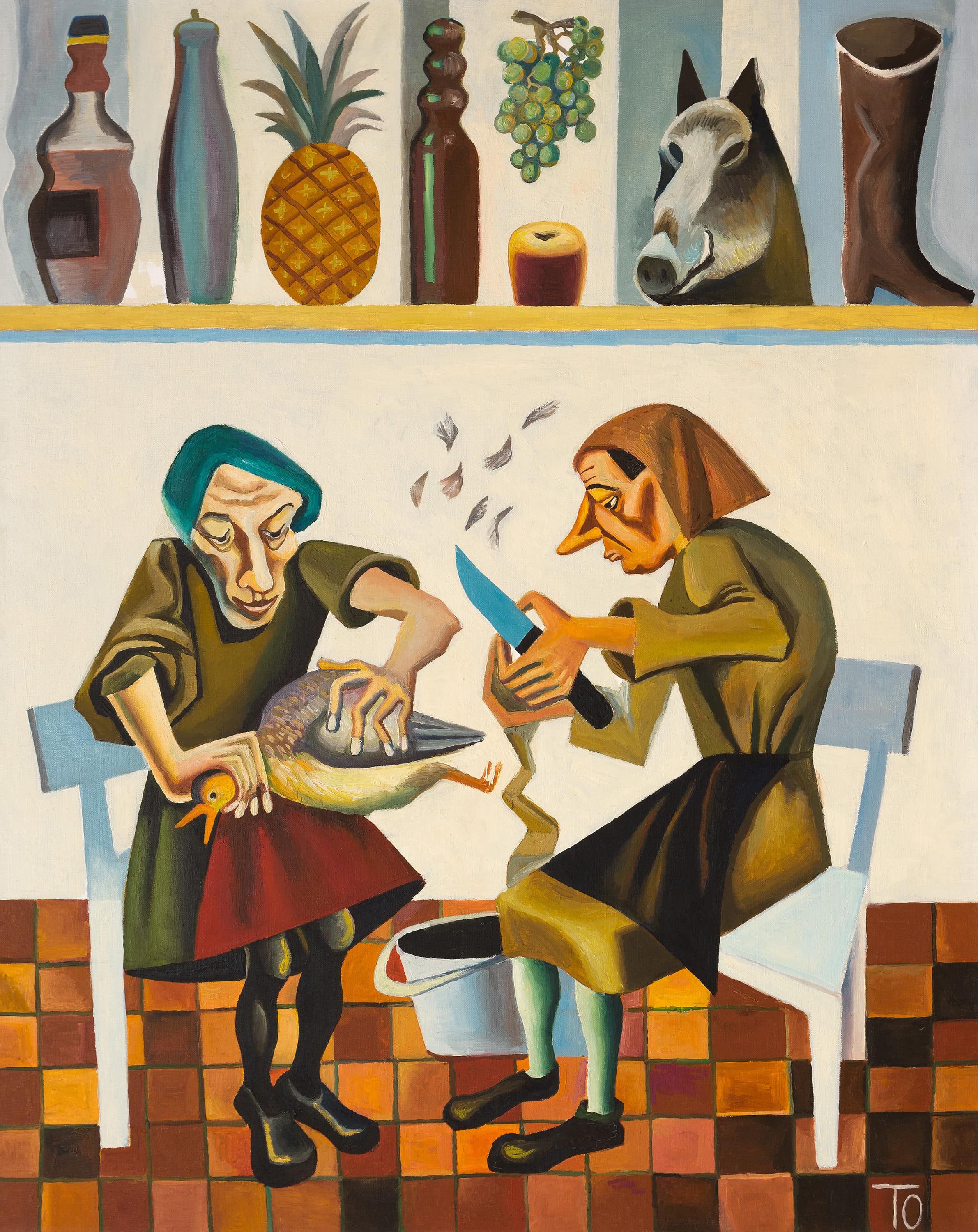
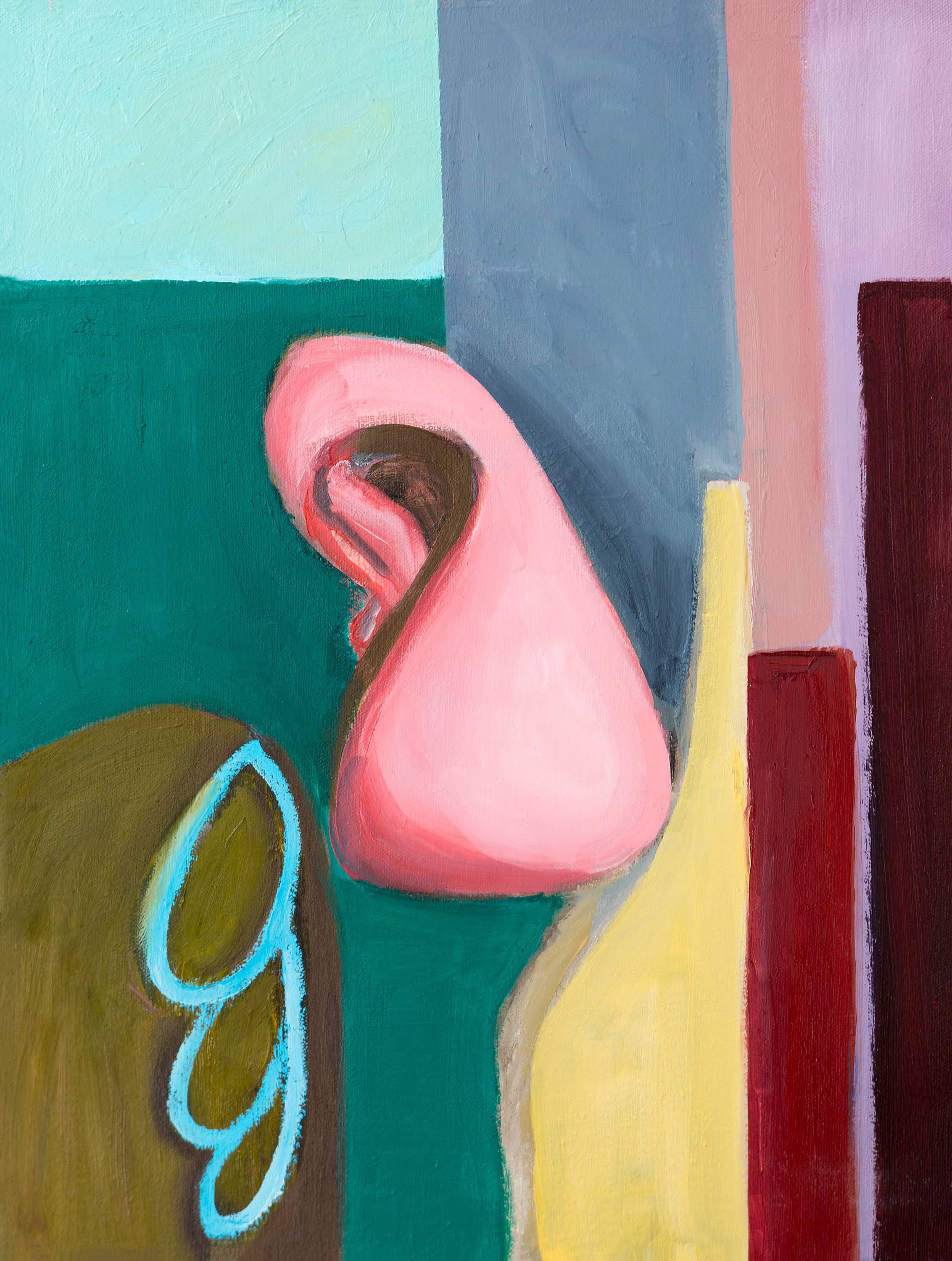
“You could simplify it and say: my grandmother paints figuratively, I paint abstractly, my mother is somewhere in between. But for me, terms like figurative or abstract aren’t really relevant. What connects us is that we perceive and reflect on the world around us through the lens of painting. And this perception is shaped by shared experiences: being a woman, migration, belonging to a minority.”
You grew up in a Russian-Jewish family, and thus between two such different concepts as the veneration of images and the prohibition of images. Is that reflected in your work?
“In my work I explore the line between representation and abstraction. Even my diploma thesis was devoted to the subject of fetishism and the veneration of objects. While in Orthodox Christianity icons are kissed and venerated, other religions (and parts of Christianity) reject this as idolatry. For me that is a central question of painting – whether it is more than fabric and paint, whether it can be anything more at all.”
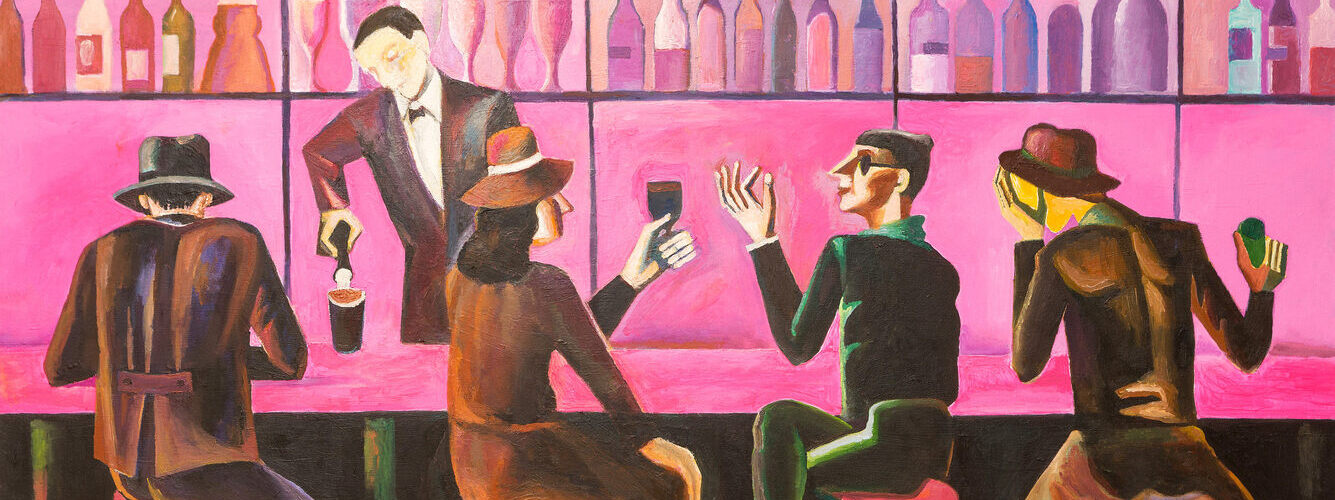
“Mischpoke” is the title of your joint project, but for me it’s also a term associated with a tongue-in-cheek irony. How important is humour in art for you?
“Humour plays a big role both in Jewish culture and in my family. I always wanted to carry that over into my work. A wink, irony, parody and visual jokes. You see, I have no desire to make such strict, formal, self-important art. That’s more of a man thing.”
I have no desire to make self-important art.
— Anna Nero
All three of you live in Frankfurt; you came back here after your studies and various stays abroad. What made you do that?
“That’s a good question. For a long time, Frankfurt was like a complicated love affair – you can’t live with it, but you can’t live without it either. I really appreciate the city for its multiculturalism. But sometimes it feels like a village to me. In the end I opted for the love affair with my little Bockenheim.”
More stories








GET IN TOUCH