
Home
JÜDISCHES MUSEUM FRANKFURT - EXCLUSIVE PREVIEW
A vision takes shape: the new building and renovation of the Jüdisches Museum Frankfurt will be completed in October. Museum director Mirjam Wenzel and Michel Friedman accompanied THE FRANKFURTER on an exclusive preview of the building site and spoke about the hopes they place in the new cultural venue as a place of remembrance, encounter and debate.
Text Dr. Jutta Failing Photos Nikita Kulikov, Staab Architekten
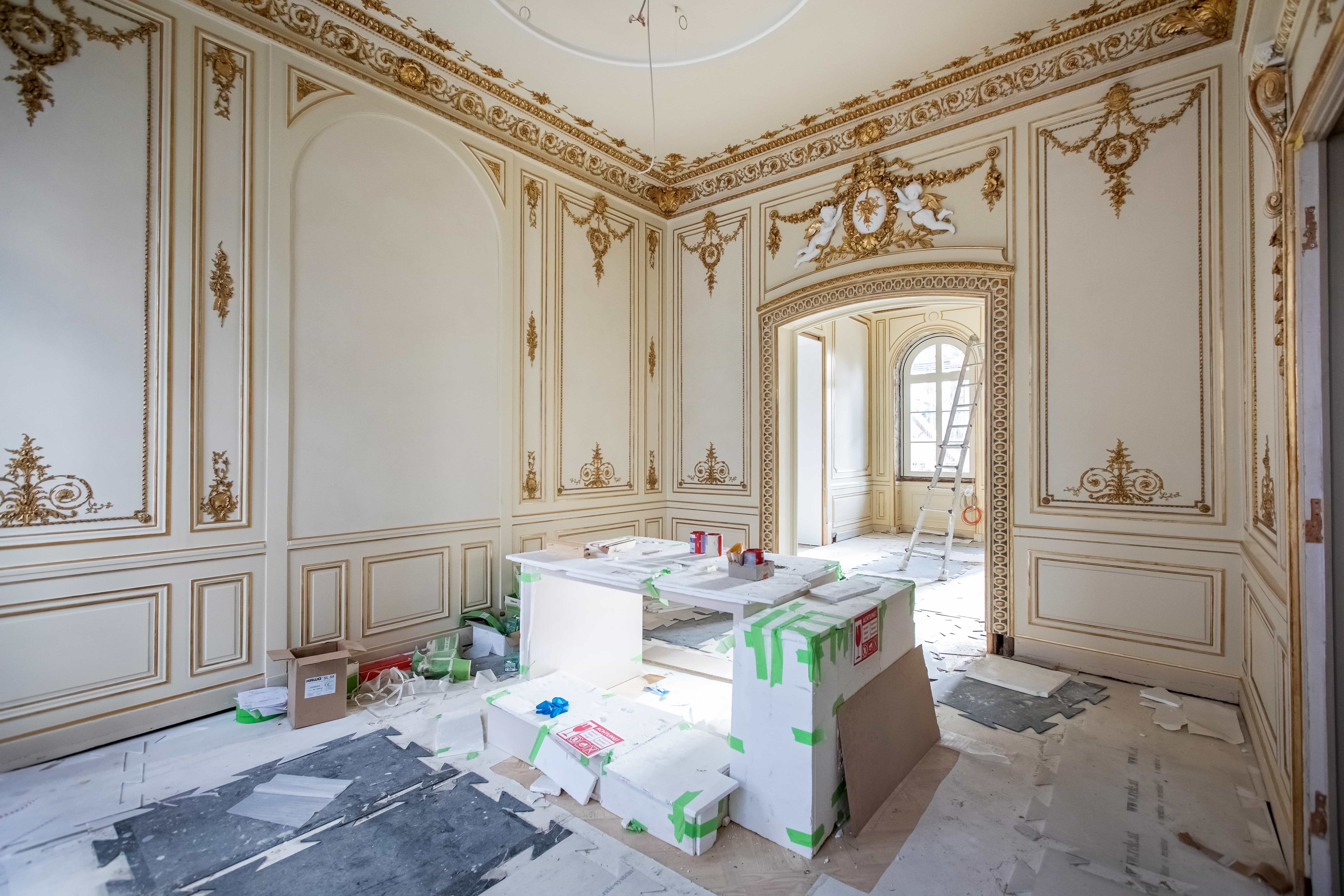
“Menu of the restaurant ‘Maxie Eisen’ with ‘Pastrami Sandwich’ and ‘Matzo Ball Soup’, Frankfurt am Main, 2018, donated by James and David Ardinast.” So reads the label on a display case in the Rothschild-Palais on the banks of the Main, where the new permanent exhibition of the Jüdisches Museum Frankfurt will move in. The display case is still empty, like all those already on the building site that should actually have been filled a year ago. Completion of the 50-million-euro renewal process was delayed several times, partly because the structural condition of the Palais turned out to be much worse than initially expected. In the autumn, the new cultural venue is finally to be presented to the world. From 20 October, the first special exhibition is devoted to the “female side of God”.
The Palais, consisting of two buildings in the typical style of Frankfurt Classicism, which has housed the Jüdisches Museum since 1988, is the ageing heart in the broad chest of this ensemble – precious, and knocked out of rhythm by well-meant but heavy-handed interventions after the Second World War. With the renovation, fresh oxygen is now being pumped into the walls, as it were; an important artery is the above- and below-ground link to the new building.
UNDER CONSTRUCTION
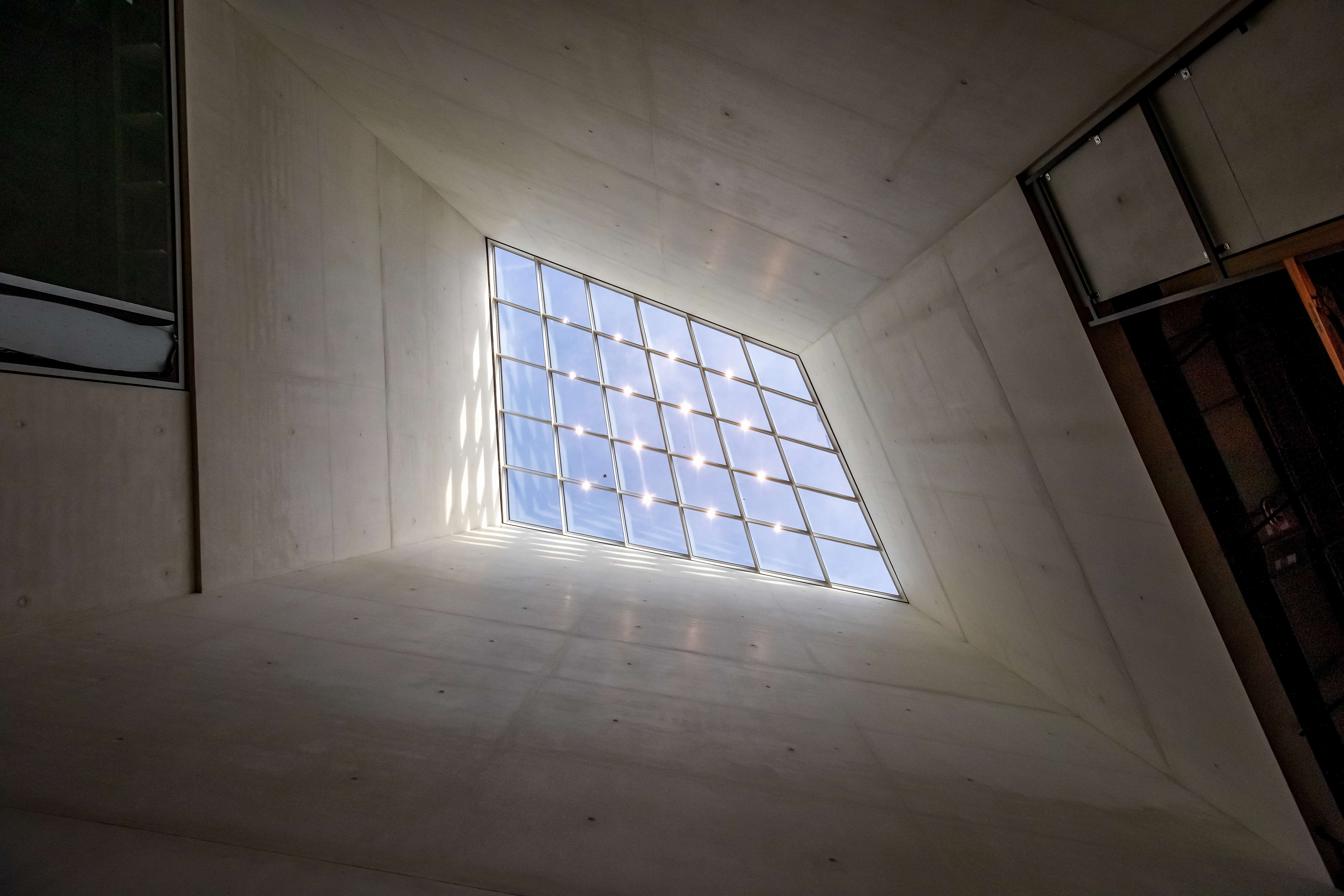
Above us, in the atrium of the new building, a large piece of Frankfurt sky; the surrounding walls – of fine grey exposed concrete, velvety like polished marble – concentrate on the essentials. Concrete can be beautiful too! Mirjam Wenzel and Michel Friedman suggest sitting on a pile of insulating wool for our camera; the pale dust on their clothes will document this spontaneity…
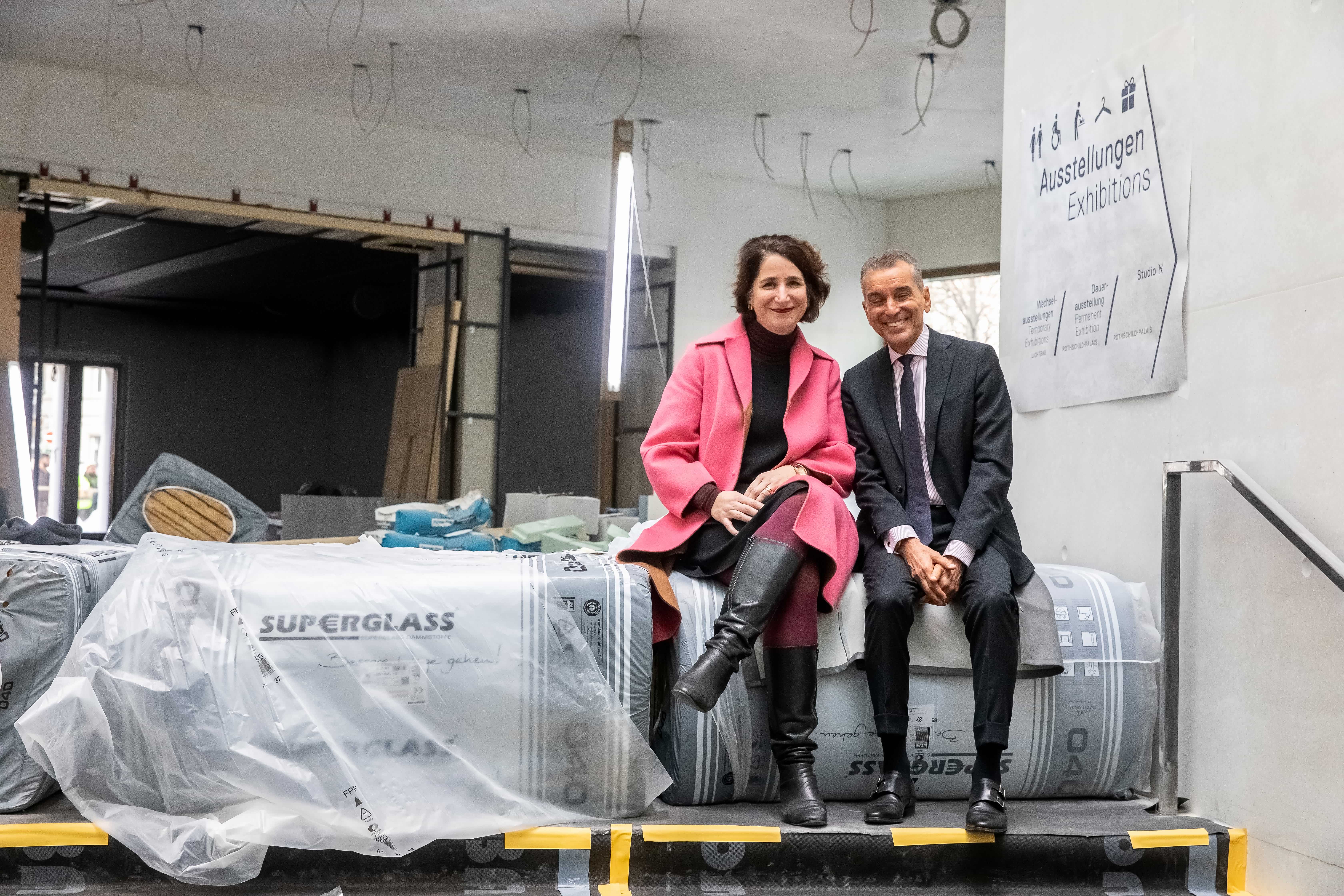
We want to be welcoming and open to the city and its people and, beyond that, to everyone.
— Mirjam Wenzel
There is no overlooking the fact that the final sprint is approaching. Everywhere cables hang from the ceilings like Western lassos, workers scurry back and forth like ants, hammer blows boom. Underground, important chambers of the heart are preparing for action; temporary exhibitions will be shown there. There will also be a publicly accessible library and an events hall, as well as a café with an outdoor terrace. “There we can convey kashrut, the Jewish dietary laws. It will be a dairy kosher deli, something Frankfurt doesn’t yet have,” says the director with delight. “Protected openness” is the museum’s guiding principle: “We want to be a ‘museum without walls’, that is, welcoming and open to the city and its people and, beyond that, to everyone. It is important to me to present the museum as a social place.”
JEWISH HEARTBEATS
“We used to live in Frankfurt …,” Anne Frank began her diary, the most widely read book about the Nazi era. The new permanent exhibition will show her family’s estate, including furniture, toys and photographs. “That will also appeal to a great many visitors from Asia, where Anne Frank is received in a very particular way,” explains Mirjam Wenzel. In Japan, indeed, Anne Frank is revered almost like a saint.
Everyday objects, letters or memorabilia belonging to Frankfurters – the narrative element is central. In them, individual and collective experiences, self-interpretations and relationships are condensed. Lawyer and journalist Michel Friedman, who called early on for the expansion of the Jüdisches Museum, tells of a small piece of wood that he guards like a treasure in his law office. “When the factory of Oskar Schindler, who lived in Frankfurt for a long time and whom I knew personally, was restored, the old flooring had to be removed. I now own a piece of it – for me a powerful symbol. My parents, who were saved, walked across it back then.”
The piece of wood always reminds me to encourage others to do something. Oskar Schindler did something! A survivor once said that the eleventh commandment was written in Auschwitz: ‘Thou shalt not be indifferent!’
— Michel Friedman
MEMORY, MESSAGE, MISSION
I wish the museum passionate, constructive debates.
— Michel Friedman
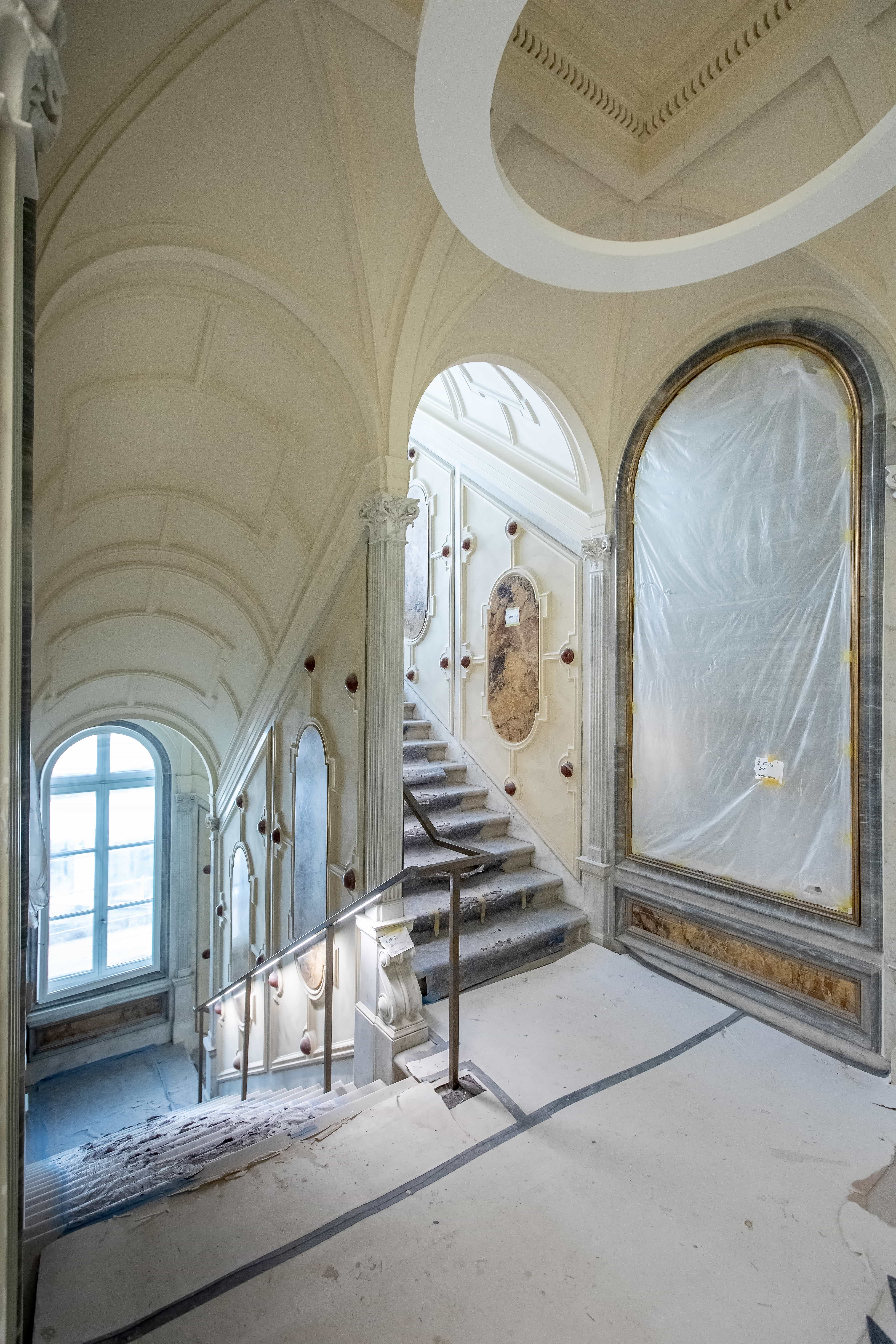
In future, the top floor of the Palais will be devoted to the Jewish present. On the floor below, reached via the historic stucco-decorated staircase, the focus is on “tradition and ritual”, and on the lowest floor visitors are welcomed by an exhibit documenting important Jewish families, including the Rothschilds and the Sengers. “Jewish identity is thousands of years old and cannot be reduced to the Nazi era. The contribution of Jewish citizens in Frankfurt goes back centuries and continues to play a role after 1945 and into the present. The Jüdisches Museum must make that clear. That is also why it is not a Holocaust museum,” explains Friedman, who wishes the expanded and renewed museum, among other things, “passionate, constructive debates”.
The timing, he says, is significant: “A party of hatred is represented in the German Bundestag – that is an extremely critical situation. And hatred of Jews in Germany has become uninhibited in a way we have hardly known before. Where we will stand in ten years’ time is more uncertain than ever.” All the more reason for young people to be a target group. Mirjam Wenzel: “We also try to present Jewish history and memory in an engaging way to pupils at vocational schools who have never been to a museum. We also want to reach people who have prejudices against Jewish museums. That is our political mission at the moment.”
TO BE DISCUSSED…
I hope the museum will become a lively place of exchange, discussion and self-reflection. And that everyone leaves with more questions than they came in with
— Mirjam Wenzel
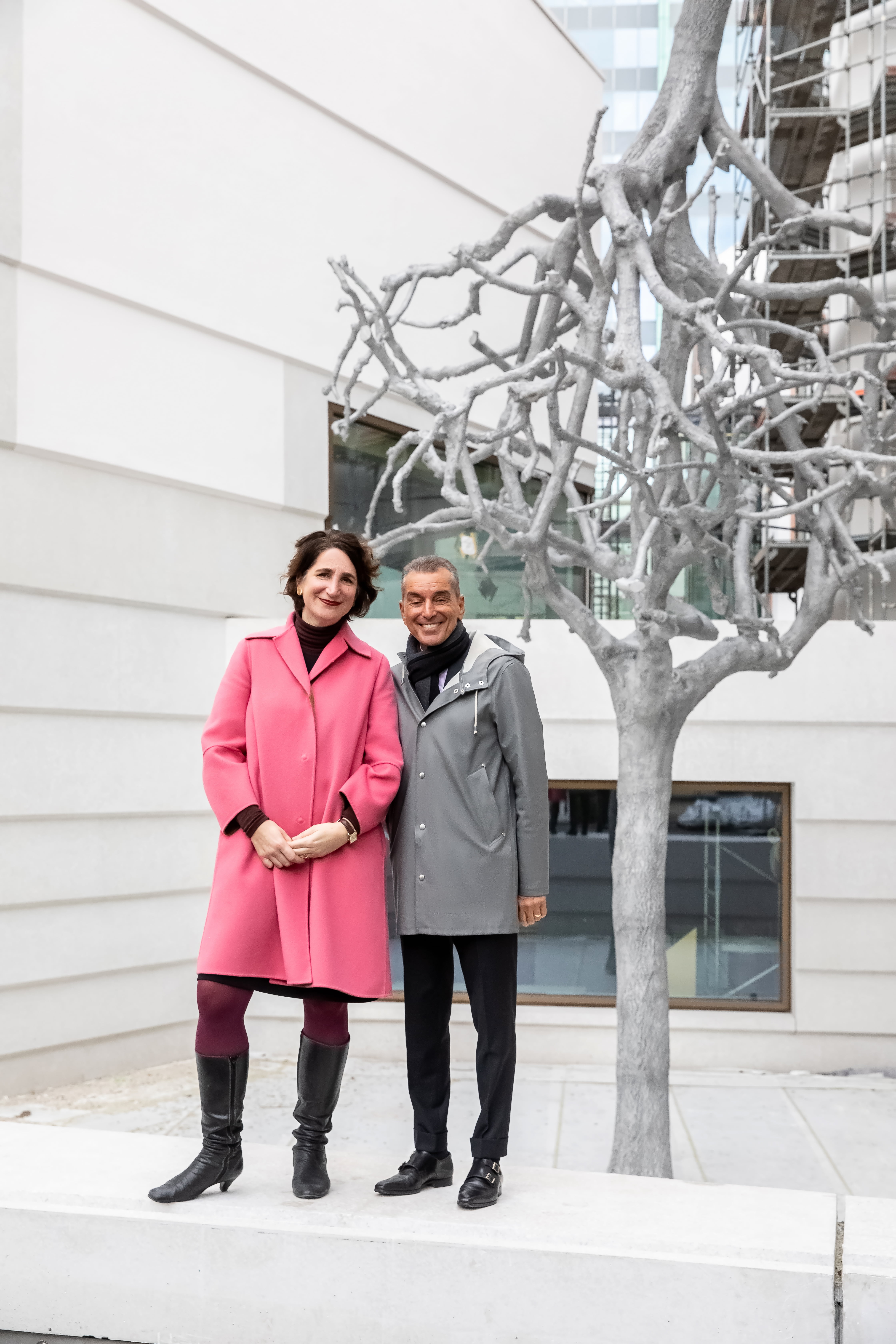
At the topping-out ceremony a good two years ago, the carpenter drank three symbolic glasses of apple wine to everyone involved in the construction before smashing the glass against the outer wall of the new building (designed by the Berlin practice Staab Architekten). Mirjam Wenzel and Michel Friedman remember it well. Now they stand in the best of spirits on the newly laid-out forecourt in front of the eleven-metre-high, ice-grey tree sculpture by artist Ariel Schlesinger, who created the symbolic work especially for the museum: a tree stretches its roots towards the sky while its crown is interwoven with the tree beneath it. The tree twice over, like a reflection of itself. Uprooting and connectedness. We ask what they value about each other, the director and the journalist. Mutual appreciation comes bubbling out. They share a special sense of humour. Michel Friedman: “I love laughing with her. Sometimes we laugh about very serious, bitter things, where the laughter really ought to stick in your throat. She is a great gift to this museum.”
More stories








GET IN TOUCH