
Business
NATURHOTEL FORSTHOFGUT - NATURE SELLS
Green hospitality means giving people inner space. With this simple formula, many luxury hotels are preparing to secure their future. Our THE FRANKFURTER hospitality expert Isabella Owen travelled to Leogang in Austria, where a leader among nature hotels shows how to turn guests into fans.
Text Isabella Owen Photos Loewenzahm, Patrick Langwallner
Luxury used to mean maximum stars and chandeliers. Even before the months-long standstill, a fundamental shift in values was making itself felt in the hotel industry: true luxury does not shout, it does not whisper – true luxury tells an unmistakable story and is as sustainable as possible, because guests want to travel with a clear conscience in their luggage. Anyone looking for the secret of extreme value creation will find it here. The “neo luxury” generation does not want to forgo high-quality things and experiences, but the consumption of luxury should not conflict with nature and community. So far, so commendable. Standstill within the standstill? Not at five-star hotels that are seasoned rebels or have learned from their history that they can only survive by shedding their skin, and therefore act according to the motto: now more than ever!
Smoked salmon is bad for the environment; it doesn’t fit with who we are.
— Bianka Bitter
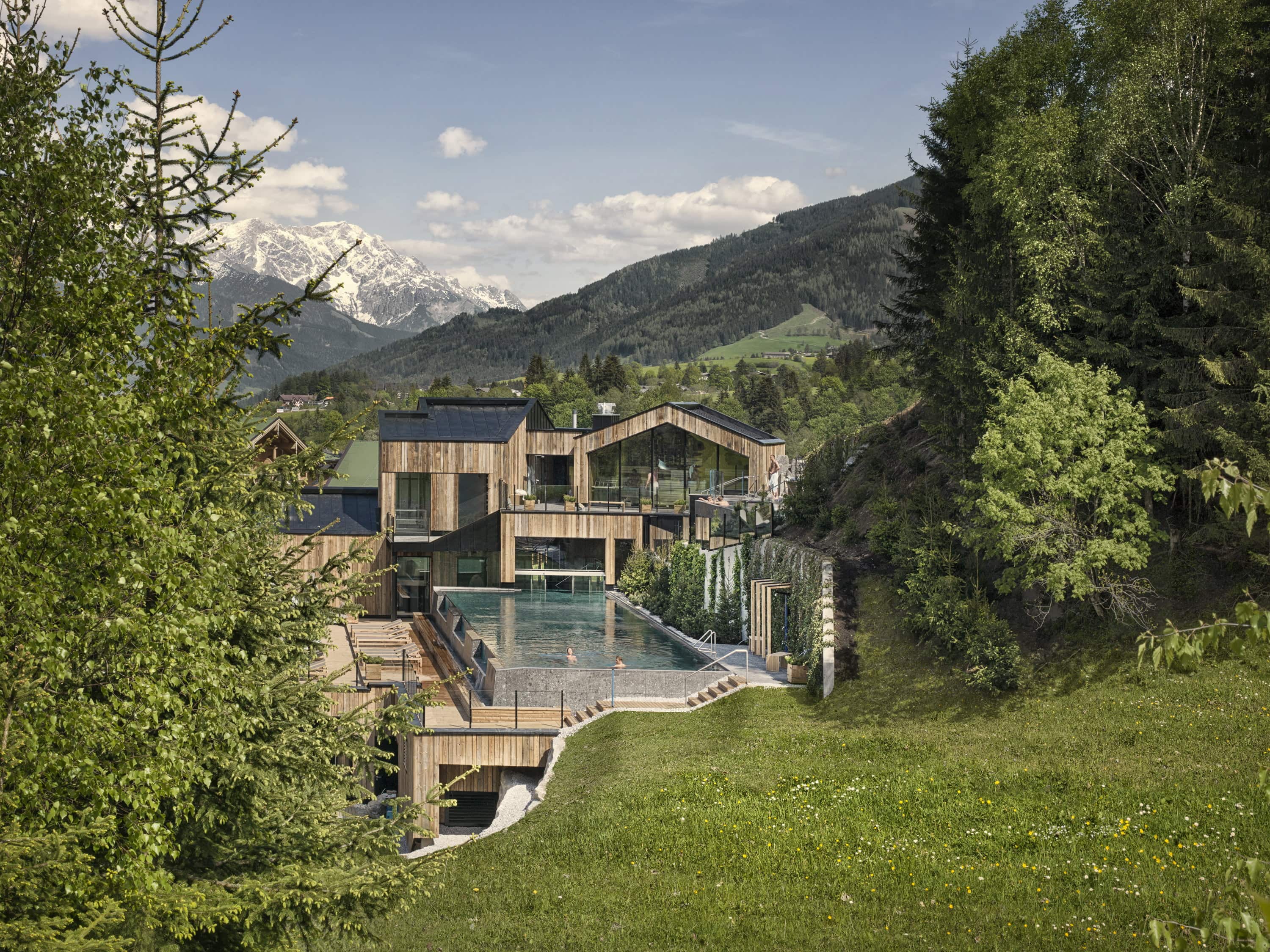
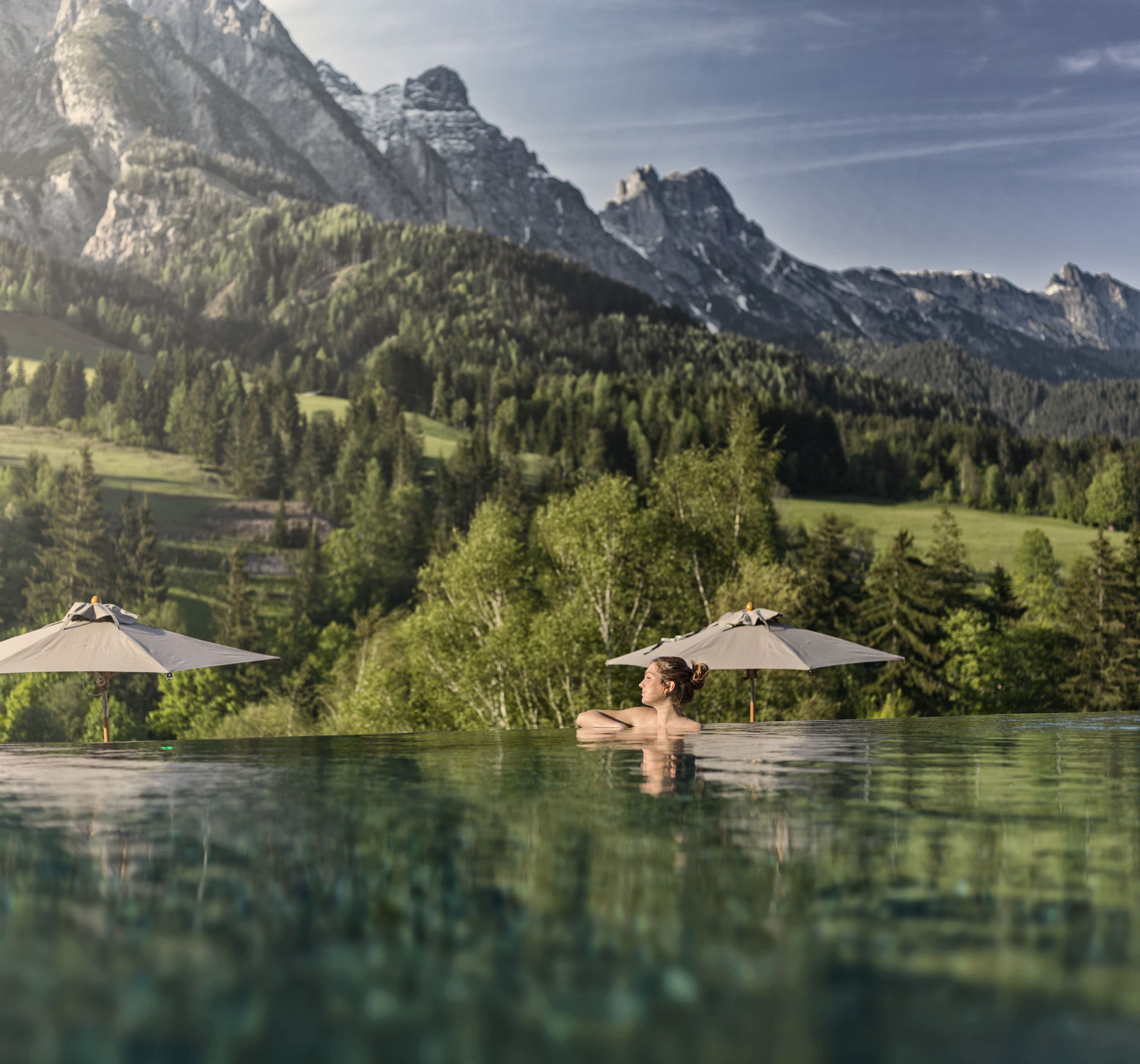
The Naturhotel Forsthofgut in the Salzburger Land is one such agile top-class establishment; the core of the ensemble has stood at the foot of the Leogang Steinberge for over 400 years. Instead of freezing in shock, something new was created once again. Visionary: the primeval forest was never merely decorative, but – long before the forest bathing trend – the breathing heart of the house. Europe’s first forest spa is located here, and environmental and resource protection are taken to the extreme in the running of the hotel, knowing full well that guests would see through any greenwashing by the time they reached the breakfast buffet, if not before. In an exclusive interview, THE FRANKFURTER spoke to the owning family about rigorous sustainability and why their own path is the right one for the future.
QUANTUM LEAPS
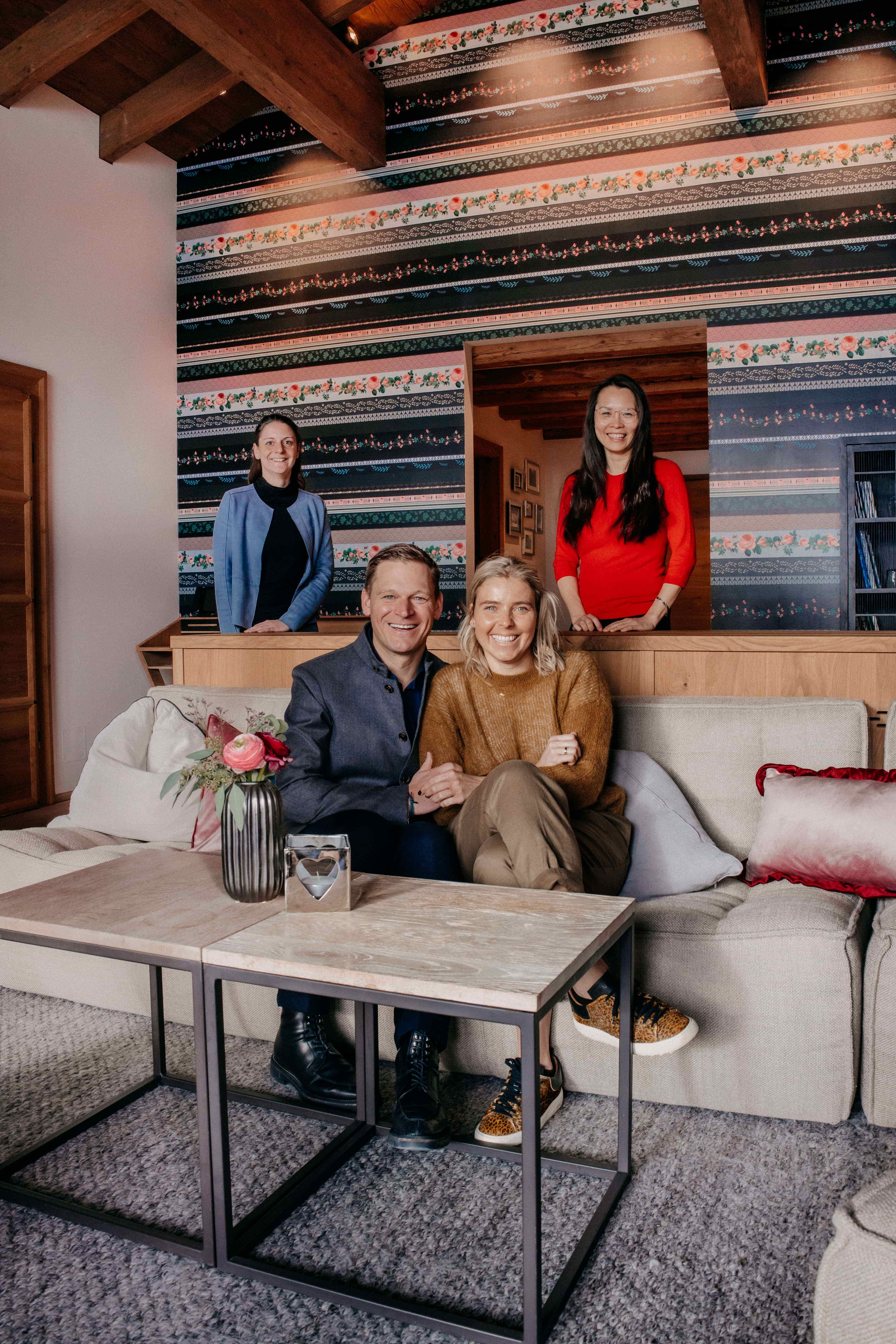
In 2006, at just 22, Christoph Schmuck took over his parents’ hotel business as the fifth generation – an age at which many are not yet sure where life should lead, let alone dare to take on such great responsibility. Precisely this courage, paired with a feel for trends of the kind earlier Forsthofgut generations also showed, is the key to why the Austrian, together with his wife Christina Maria, is not only a hotelier but also a passionate pioneer.
Dear Schmuck family, despite a difficult year you are taking a bold step forward: the “Aufbruch” campaign. What makes you so confident?
Christoph Schmuck: “I’m a very optimistic person, and you have to be as an entrepreneur. If you only ever think about what might happen, you don’t have the right mindset as an entrepreneur. We are currently expanding our forest spa area. Everything will be finished in May 2021, and we have listened very closely to our guests’ wishes.”
What can guests look forward to?
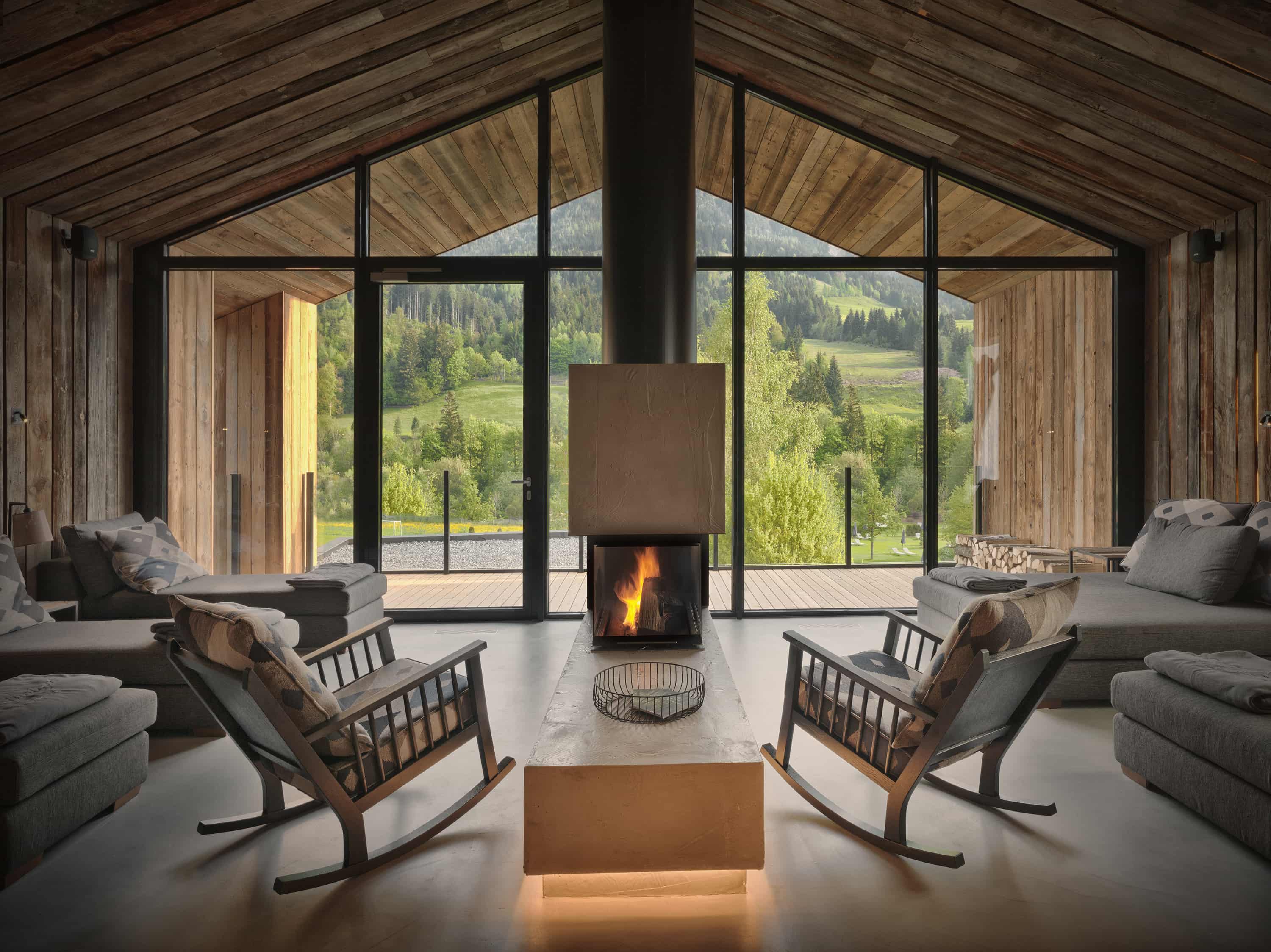
Christina Maria Schmuck: “There will be a children’s water world. In the childcare area there will be a parent-and-child room for families with small children. Our swimming lake will be four times as large as before; two additional pools, another sauna and a new restaurant by the lake round it all off. There we are trying something new and implementing an Asian concept with regional influence.”
What is the story behind your organic seal?
Christina Maria Schmuck: “We were once an organically certified hotel, but came to the conclusion that organic is not always organic, and we couldn’t take responsibility for that. So we set up our own certification. With the ‘R50’ seal we offer our own product lines. These are products from the region within a radius of 50 kilometres, hence the name. That is more sustainable, more understandable and more tangible for guests – much more so than all the certifications in the supermarket.”
Bringing nature to life for guests has always been the key to your success. Authentic experiences rather than once-in-a-lifetime ones are essential here. What does that mean in concrete terms?
Christina Maria Schmuck: “Sometimes it’s the most basic things that are perceived as luxury. We have guests who love staying overnight in our alpine hut, for example. For others, our exclusive suites – and surely soon the new duplex lofts with views of the beautiful mountains – are the places that give them strength.”
You are one of very few hotels in the German-speaking world to operate successfully without external booking portals and tour operators. What are the advantages?
Christoph Schmuck: “A few years ago we had various partnerships, but at some point it bothered me to be dependent. We now pay no commission, but in return we have costs for our own sales and communication. Ultimately it was the ambition and motivation to create such a desirable product that guests who want to come to us contact us directly and not through third parties – we are very happy with that.”
Leogang is one of the world’s leading mountain bike destinations. How does that square with sustainability?
Christoph Schmuck: “In 2001 the bike park was one of the first of its kind anywhere. It was only possible because all the hoteliers joined forces with the mountain railway and invested private money. In future, too, we will plan trails with minimal impact and build them with care.”
Ms Bitter, for a year now you have been supporting the Schmuck family business in operations as hotel director. How sustainably does the Forsthofgut work behind the scenes?
Bianka Bitter: “Sustainability comes from our roots as the Forsthofgut. Waste is a topic we keep coming back to, because nature is very close to our hearts and sustainability grows out of that. It’s not just waste separation that is instilled in every employee; we also make sure to buy regionally in every area. Our vegetables are delivered in boxes that the farmers reuse. The lettuce isn’t packaged separately, and the same goes for the fish. Polystyrene boxes are taken back by the producers and reused. We buy the wooden toys for the kids’ club from regional partners, the laundry is based here, and for construction we choose only regional partners wherever possible.”
Is there anything you do without in the hotel service because it isn’t sustainable?
Bianka Bitter: “Smoked salmon is a classic example, because guests always ask for it and know it from other hotels. If we can get good quality, there is another smoked fish, but definitely no smoked salmon, because it doesn’t fit with who we are – salmon is generally not a sustainable food.”
More stories








GET IN TOUCH