
Home
MY HOME IS MY ART COLLECTION
In 1890, a Frankfurt sausage manufacturer had a stately townhouse built in the Neo-Renaissance style. The current owners, who woke the house from a long slumber, gave THE FRANKFURTER a private glimpse inside. A house visit between imperial times and an art frenzy.
Text Dr. Jutta Failing Photos Betti Klee
The house blinked. After a century in the wake of sleepy habit, a family with a child in their arms stood at the door. The owners, who had grown up in the house themselves, expressly wanted young life for the ageing colossus that was up for sale. The old building was lucky: rather than being crudely carved up into investor gold, thanks to the young buyers’ foresight it became a warm-hearted home, an art space and a contemporary salon.
OLD STATUS SYMBOLS
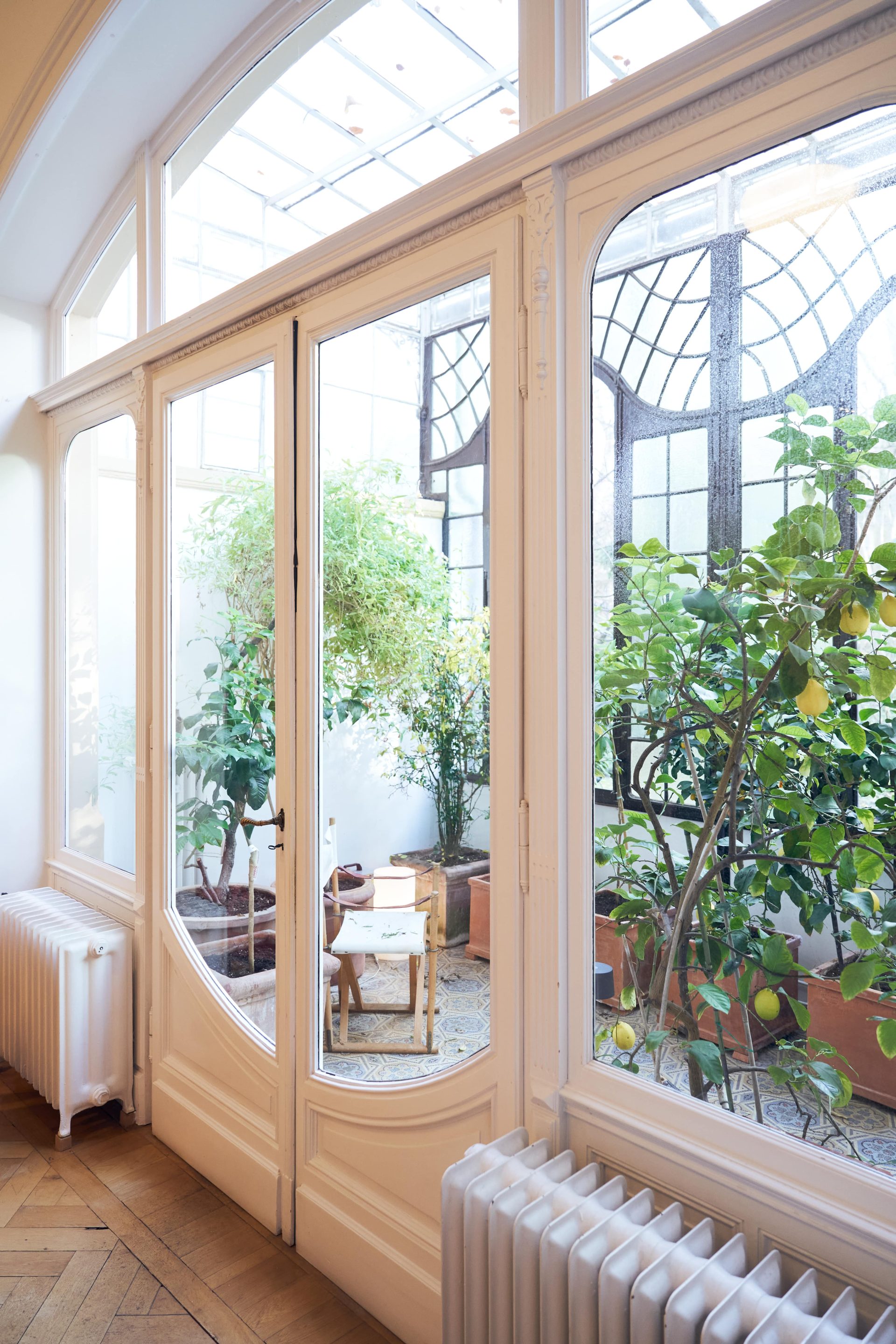
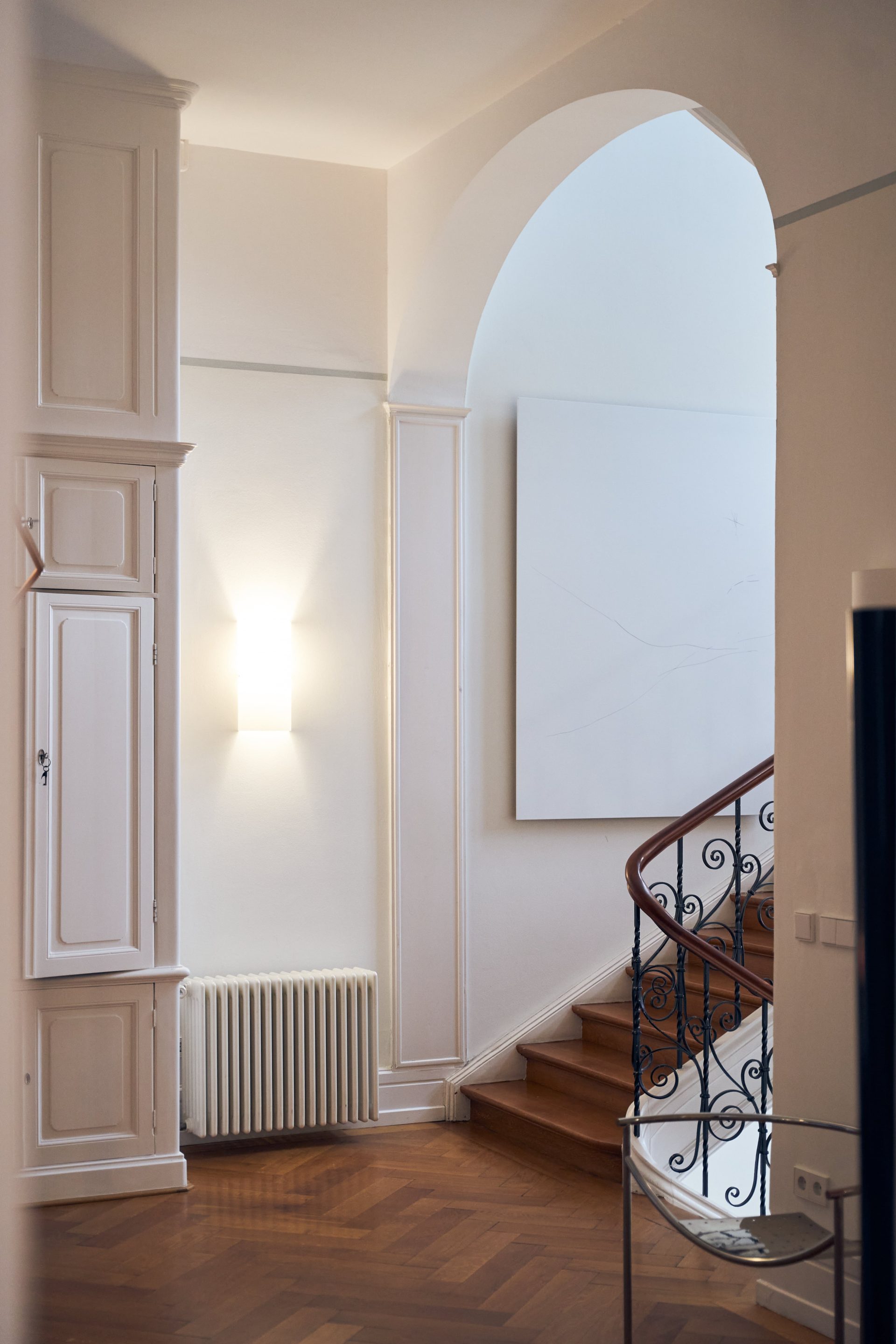
“Everyone thinks the house is smaller from the outside,” the family says, confirming our first impression. The south façade is late-Gründerzeit understatement, comparatively inconspicuous. Tall arched windows emphasise the piano nobile. Inside, on the generous floors, a manufacturer’s new money let rip in glamorous style. The house was designed by Fritz Kaysser, the architect of the Zoo-Gesellschaftshaus. Preserved from that period is a tiled stove decorated in the old German style, a status symbol that no upper-middle-class living room could once be without. At the same time, the house already had modern hot-air heating, and gas lighting as well. Charming features are the 1890 conservatory with its original glazing and the view into the park-like garden at the back, where we see a gang of squirrels playing tag.
IMPRESSIVE ART COLLECTION
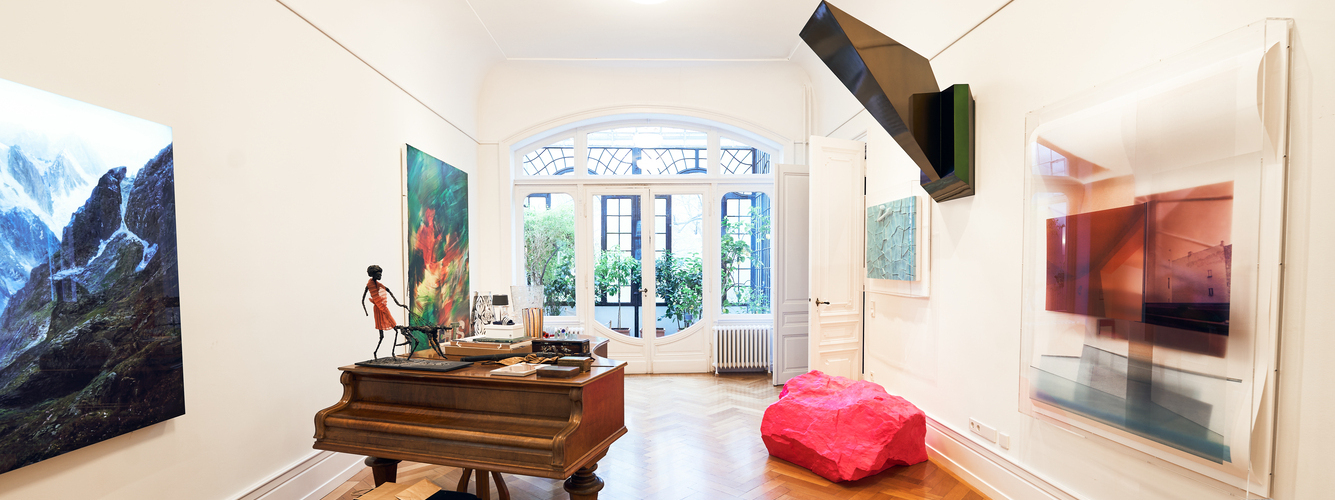
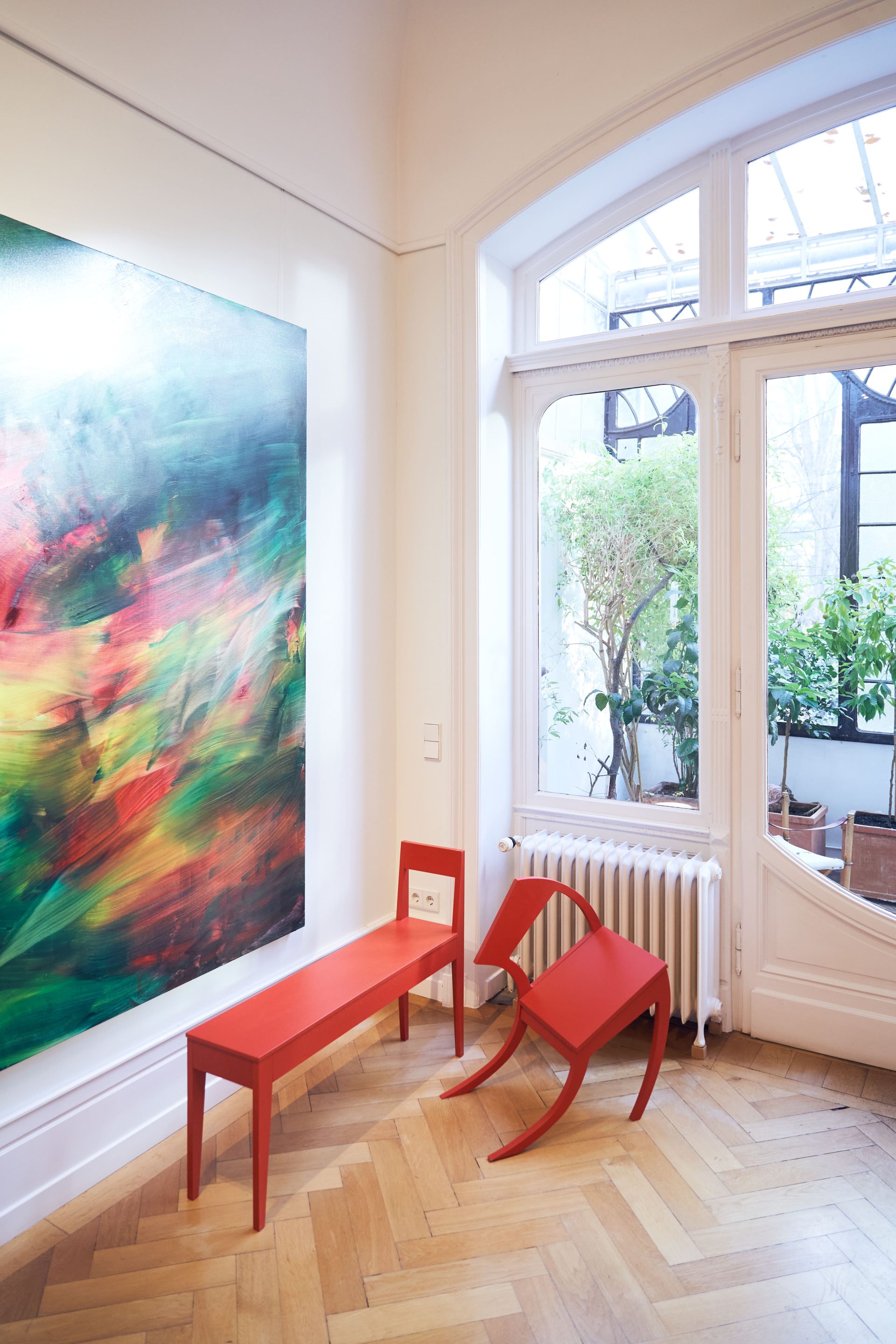
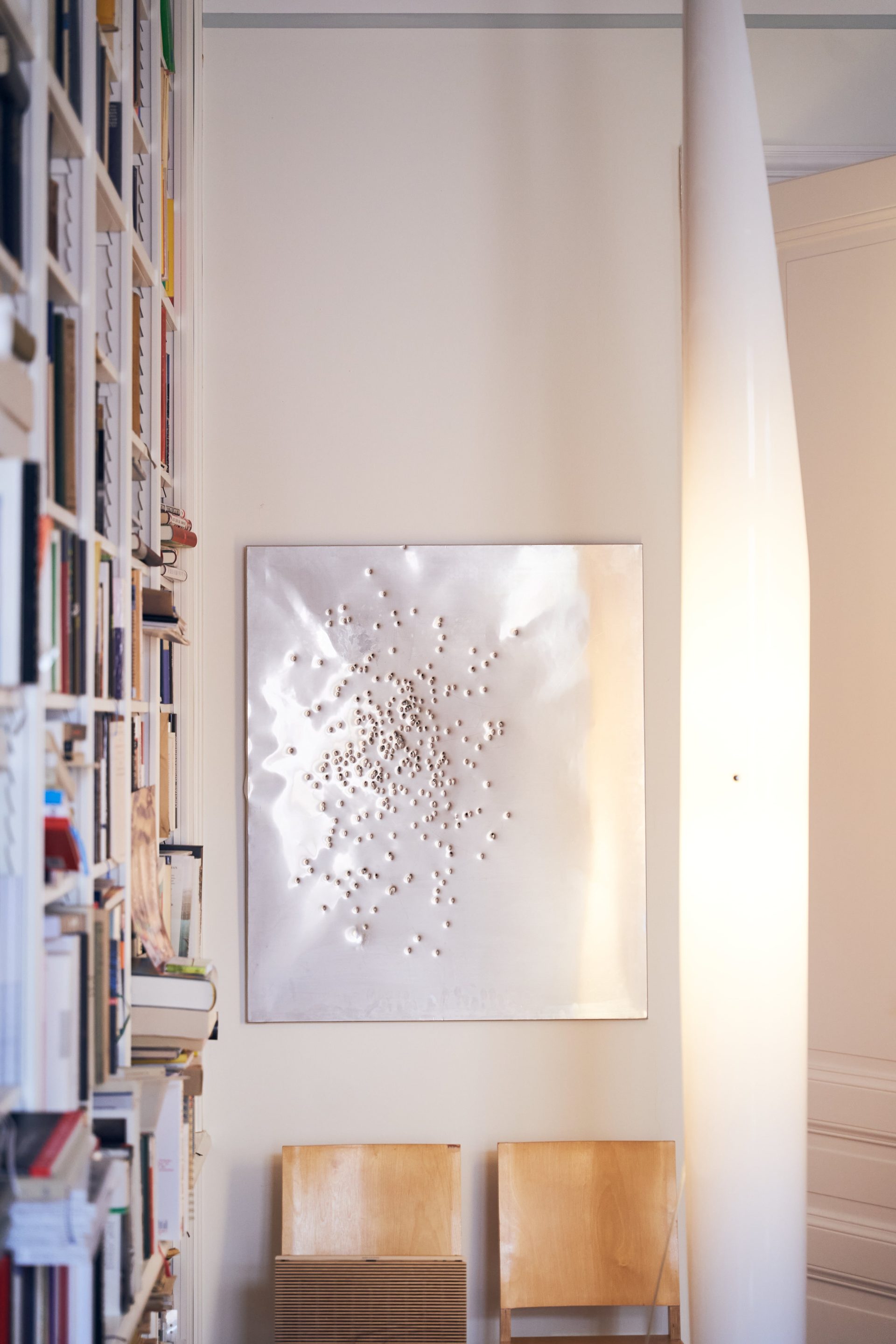
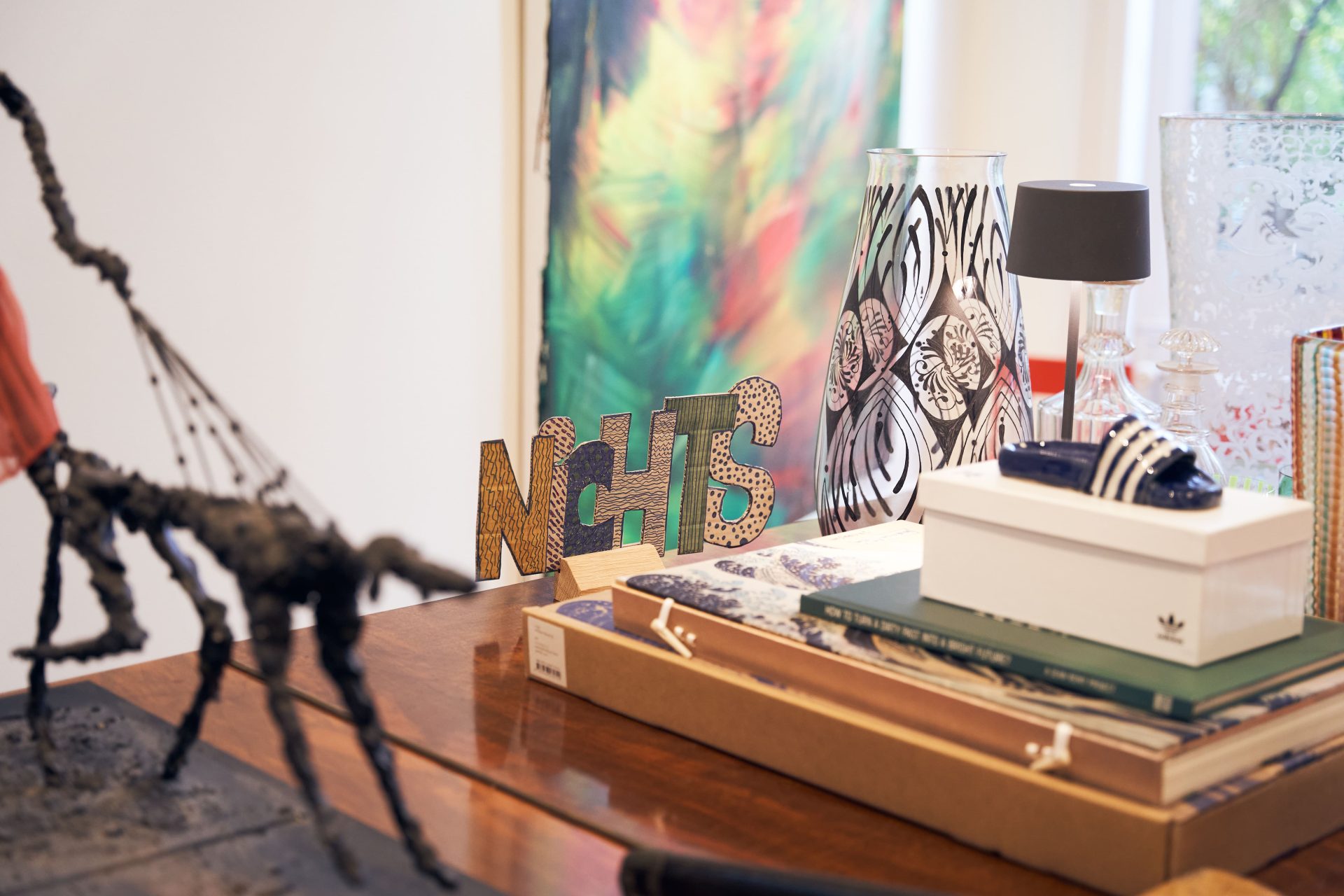
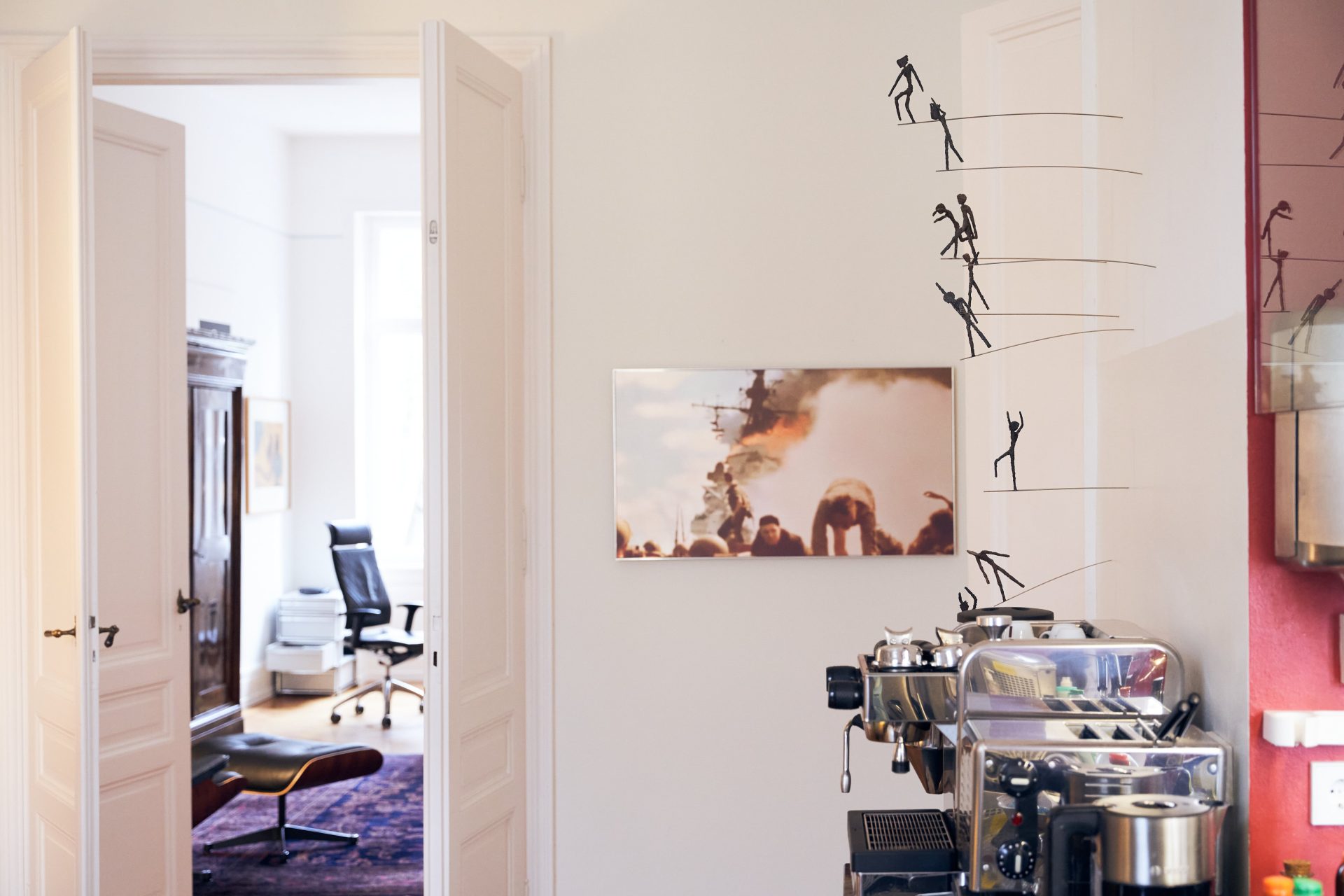
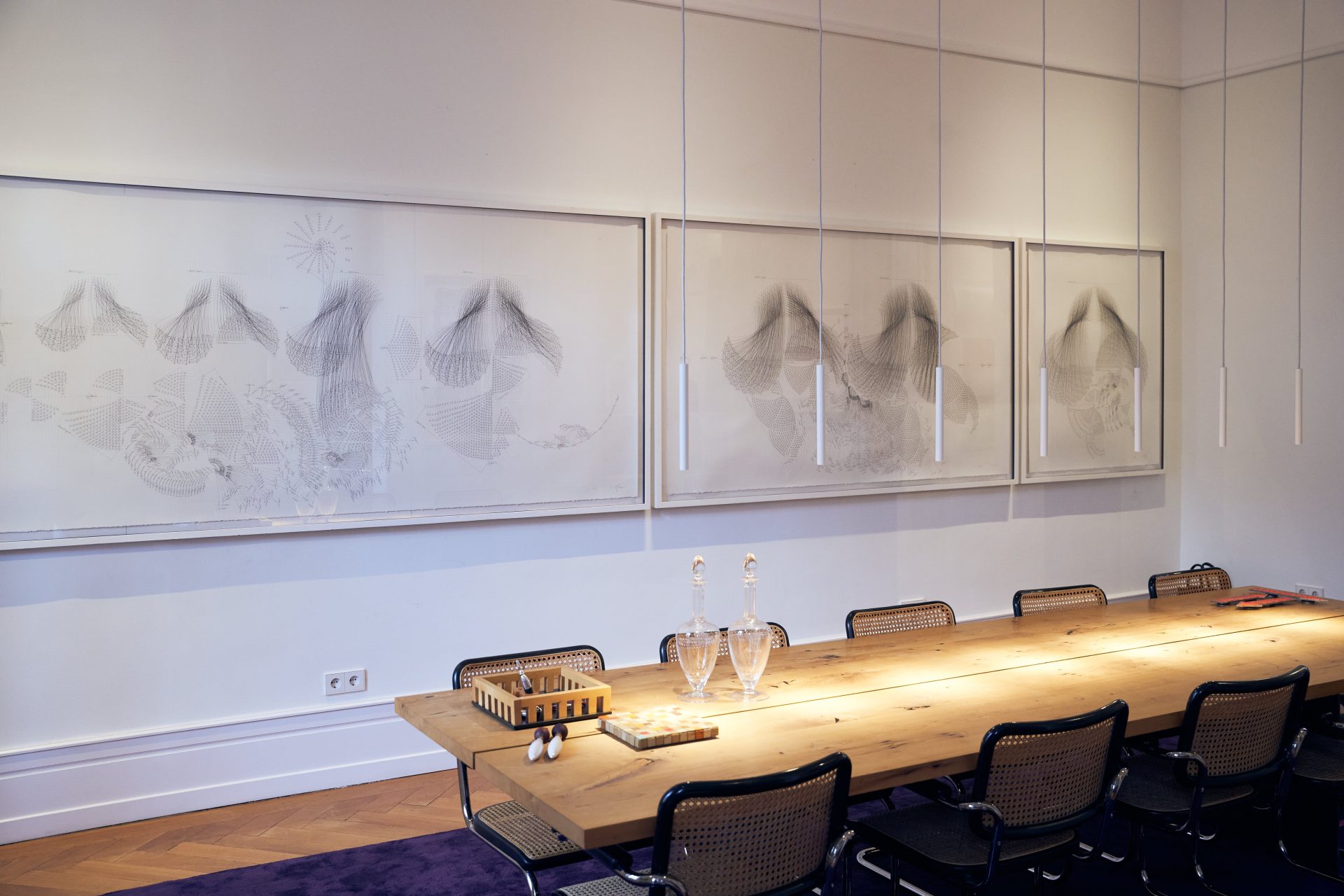
It is a house for living in, but equally – how could it be otherwise with a family that collects art with such verve – a house for art. And has been for more than twenty years. Sightlines and axes of light stretch the already large rooms considerably into gallery format – they feel as wide as the contemporary art world. The collecting is done without any noticeable art-market calculation. The works have to correspond with one another appealingly and underline the interplay of the distinctive axes and niches. “The works converse with each other, so to speak; it’s a palpable dialogue,” says the man of the house. The family has gathered numerous well-known names under its roof, from Tobias Rehberger (a pink “boulder” with an integrated ashtray; a fabulously eye-catching piece next to the historic grand piano) and Stefan Rohrer (one of his unmistakable stretched-and-compressed model-car wall works) to Stefan Wewerka’s bright red “Classroom” chair, which does away with right-angled certainties. The collection also gains considerable weight from important works by Andreas Slominski, Anne Imhof, Alicja Kwade, Jorinde Voigt and Herbert Brandl. The family is on good personal terms with them.
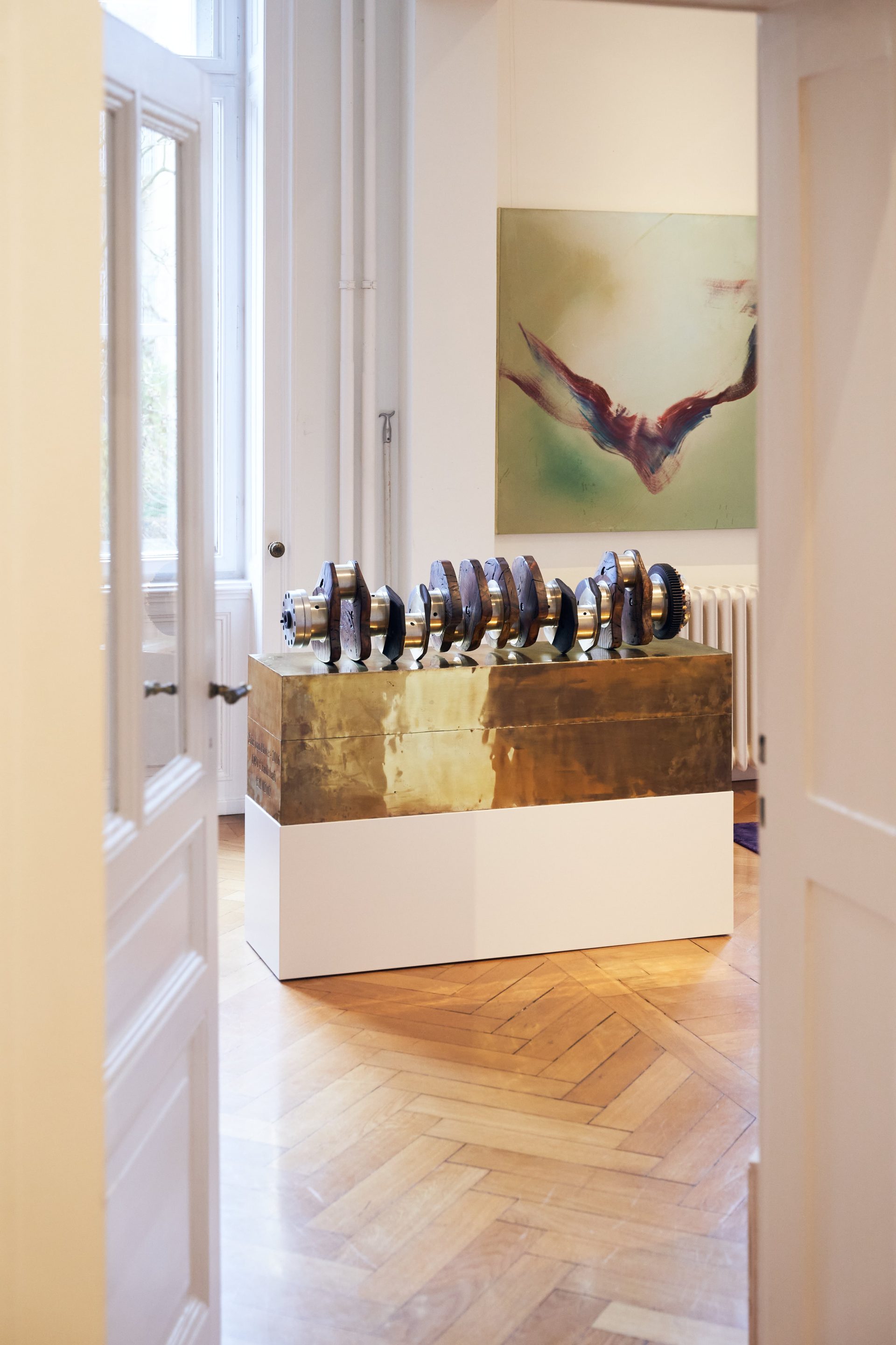
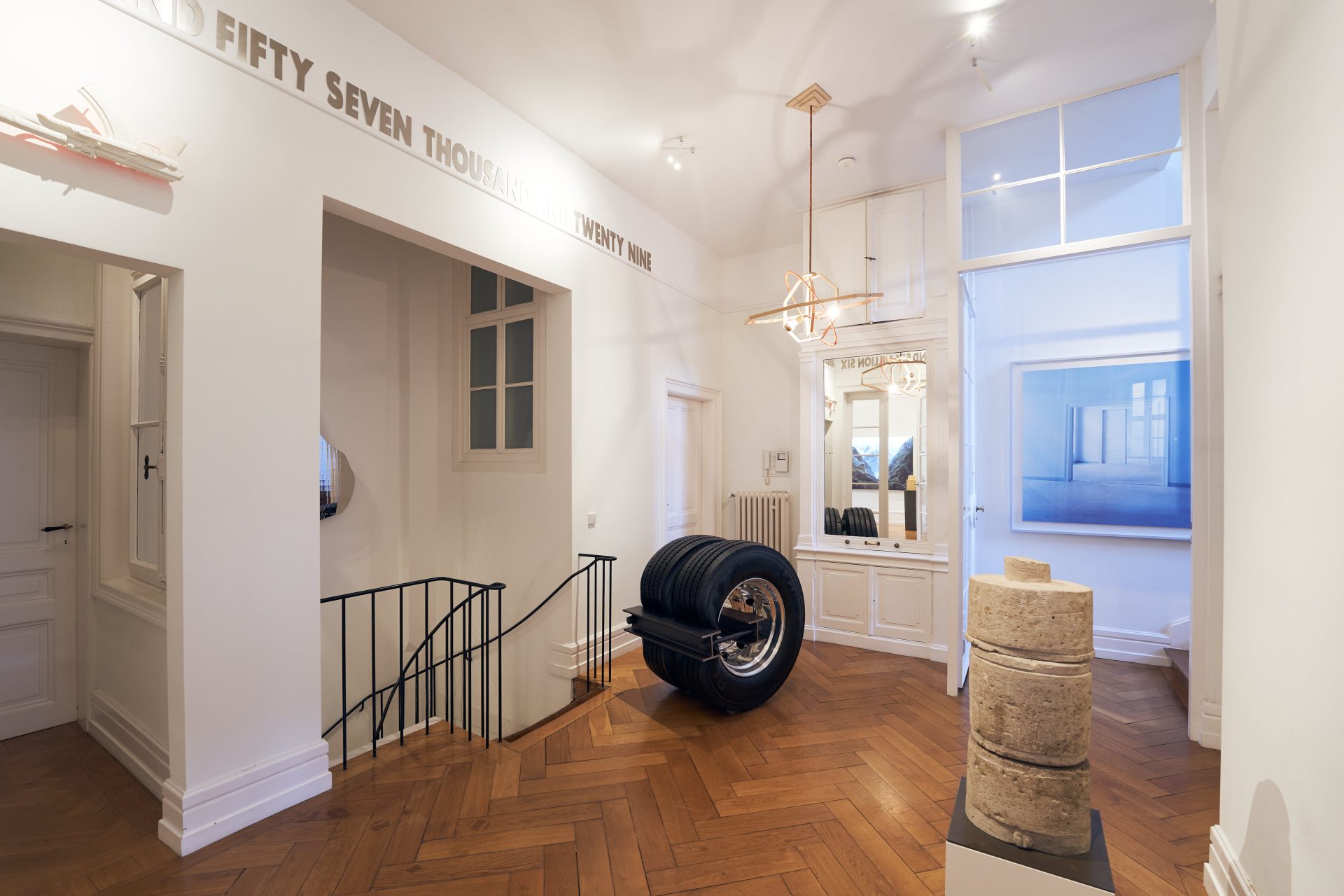
The atmosphere in the house is accentuated differently again and again by sculptures, murals and installations, but this art is not purely decorative. On walls, in corners and along enfilades it wants to tease, to provoke cleverly and above all to surprise again and again. No, nobody is storing their winter tyres in the entrance hall. Rather, it is a sculpture by the sculptor Arcangelo Sassolino, who, with reference to Italian Futurism, illustrates physical phenomena such as speed and gravity.
UPSTAIRS, DOWNSTAIRS
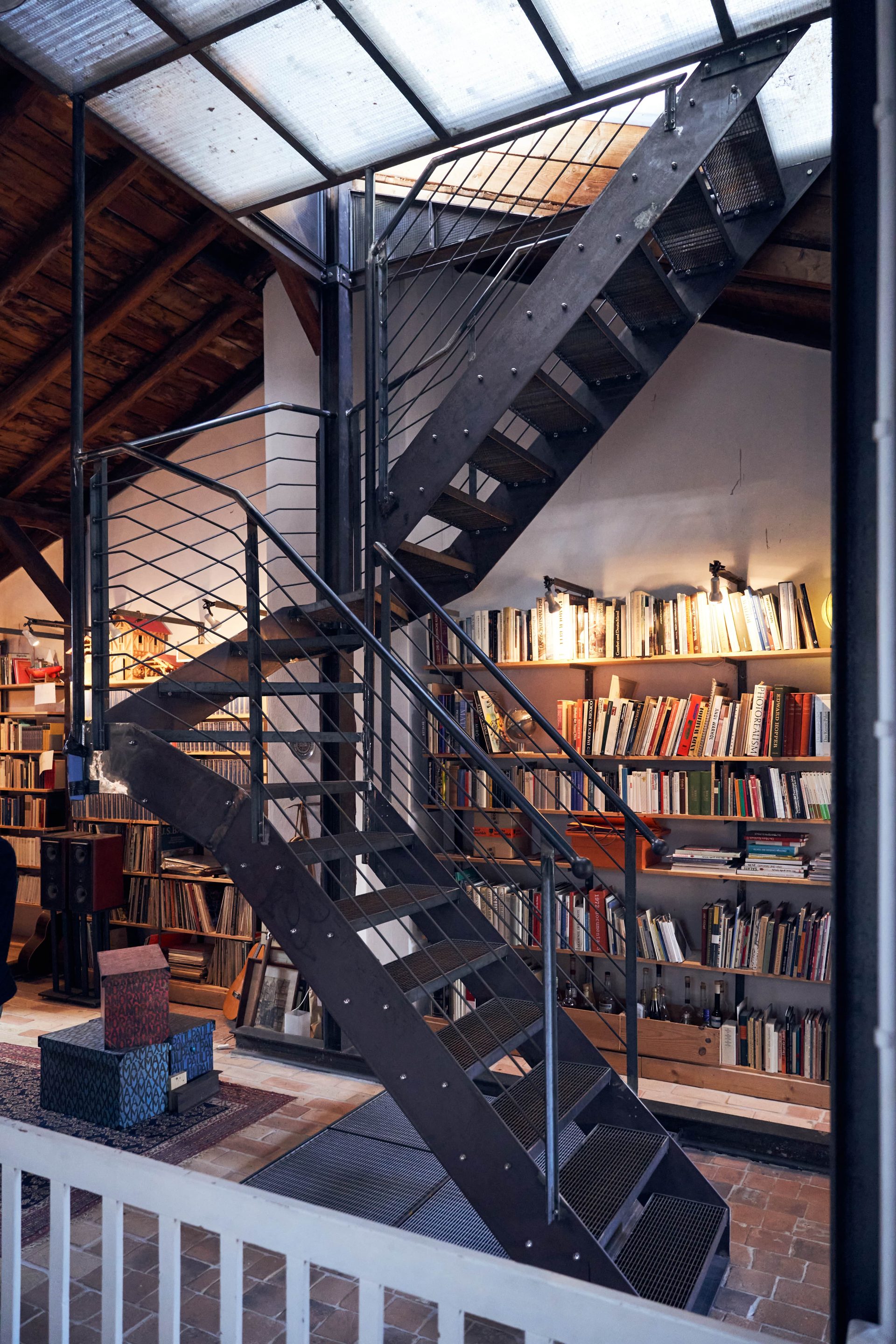
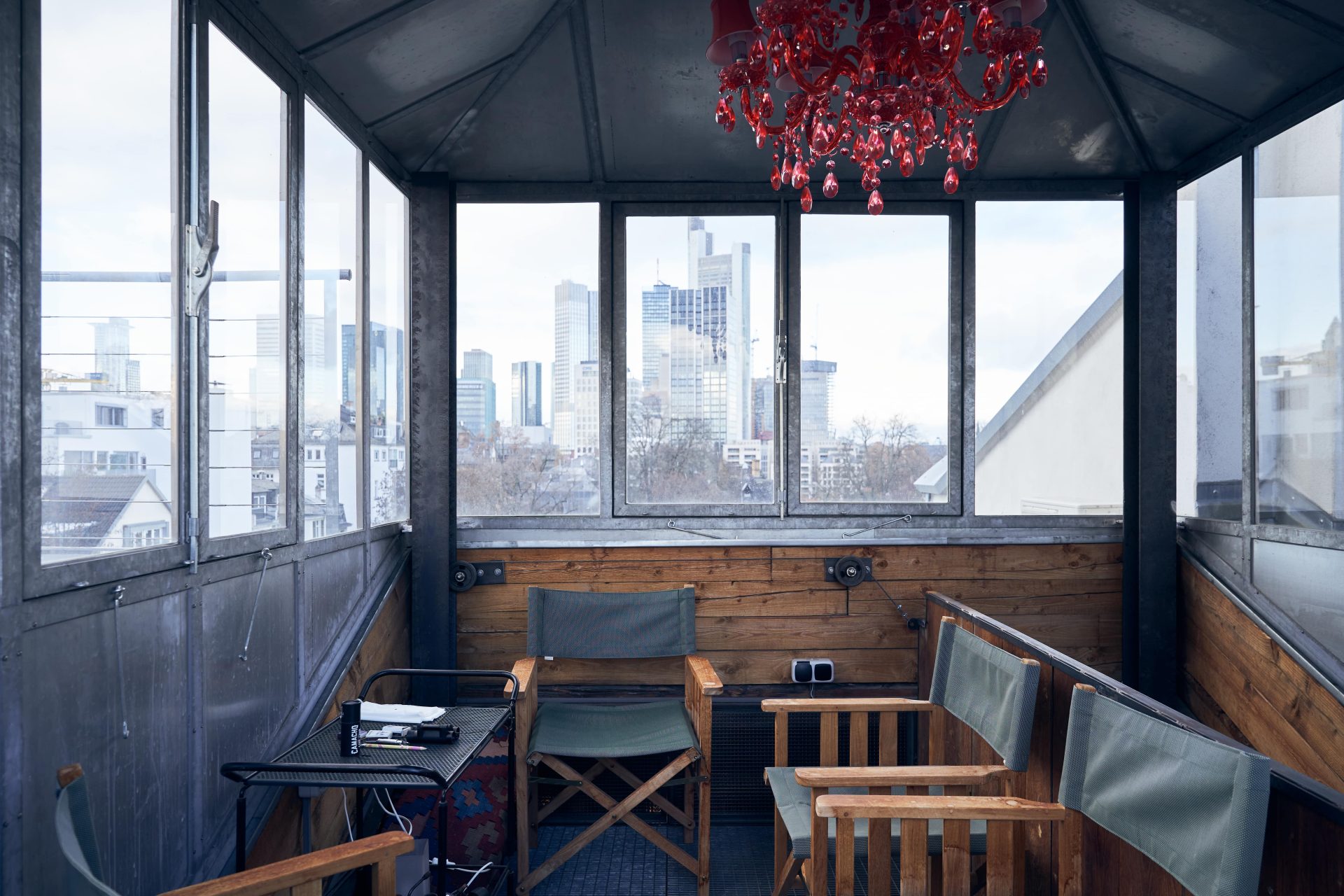
“The old building had considerable surprises in store,” the family recalls of damage and peculiarities. The attic, for example. Today a library, a cosy cigar retreat with a wood-burning stove and a time capsule for personal memories. There were only two small windows, “and when it rained, it dripped through the roof”. With sensitivity and conservational respect for the existing fabric, the family had the attic upgraded and converted in loft style to suit their needs. Its highlight is a “Belvederchen” typical of old Frankfurt, a mixture of roof garden and walk-on lookout, reached here via an ingenious step construction. Throughout the house there are still details and fittings typical of villas of the imperial era, which were the “smart homes” of their day. Running through the entire building is not only a light and air shaft (onto which the windows of the tiny toilets on each floor used to open), but also the dumbwaiter installed in a wall shaft, which the family uncovered again and put back into operation. The latter bears witness to the social obligations that even a wealthy sausage manufacturer had to bear in mind. “The servants didn’t live in the house,” we learn as we explore their former working and living quarters, located on a surprisingly high semi-basement floor and in a deep storage cellar beneath it (today a well-stocked wine cellar!). Upstairs, downstairs. A house this large could not be run in a manner befitting one’s station without a host of “domestics”. In a city like Frankfurt there were thousands of them during the Belle Époque.
SALON CULTURE
Of class snobbery or anything of the kind there is absolutely no trace in the current owners. They keep an open house and are passionate hosts. The old salon culture is their model; they regularly invite illustrious guests from Frankfurt’s art and cultural scene to small gatherings. “Well thought out,” the man of the house often says during the tour. Perhaps he has that in common with the architect of the time. For the grand house was designed in a thoroughly modern way. “Look, the blind can be slid sideways into the double-skin façade wall; today that would be far too elaborate and, above all, expensive an installation,” the man of the house says, demonstrating the finesse, still intact.
THOUGHTFUL MAKEOVER
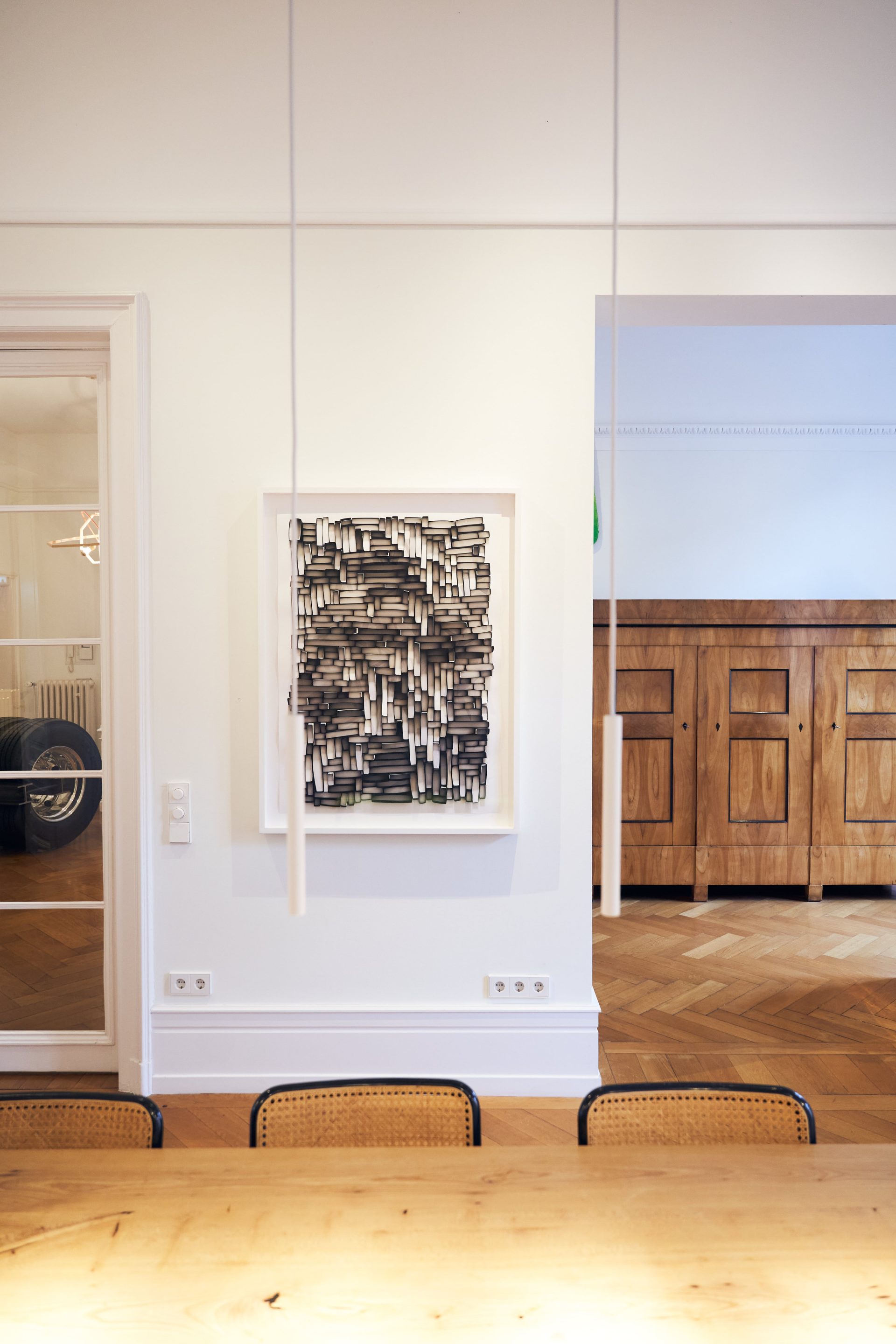
The interiors have shed the overloaded and often gloomy décor of the Gründerzeit. Today the house makes a tremendous impression through its uniform white alone. Integrated into it are new detail solutions with a highly distinctive character, both functional and aesthetic, right down to suitable lighting design which, above the large dining table for instance, radically reduces the idea of the chandelier and creates pinpoint cones of light. Bauhaus chairs and other iconic 20th-century furniture blend neutrally into the relaxed private living atmosphere.
A STAGE FOR LIGHT
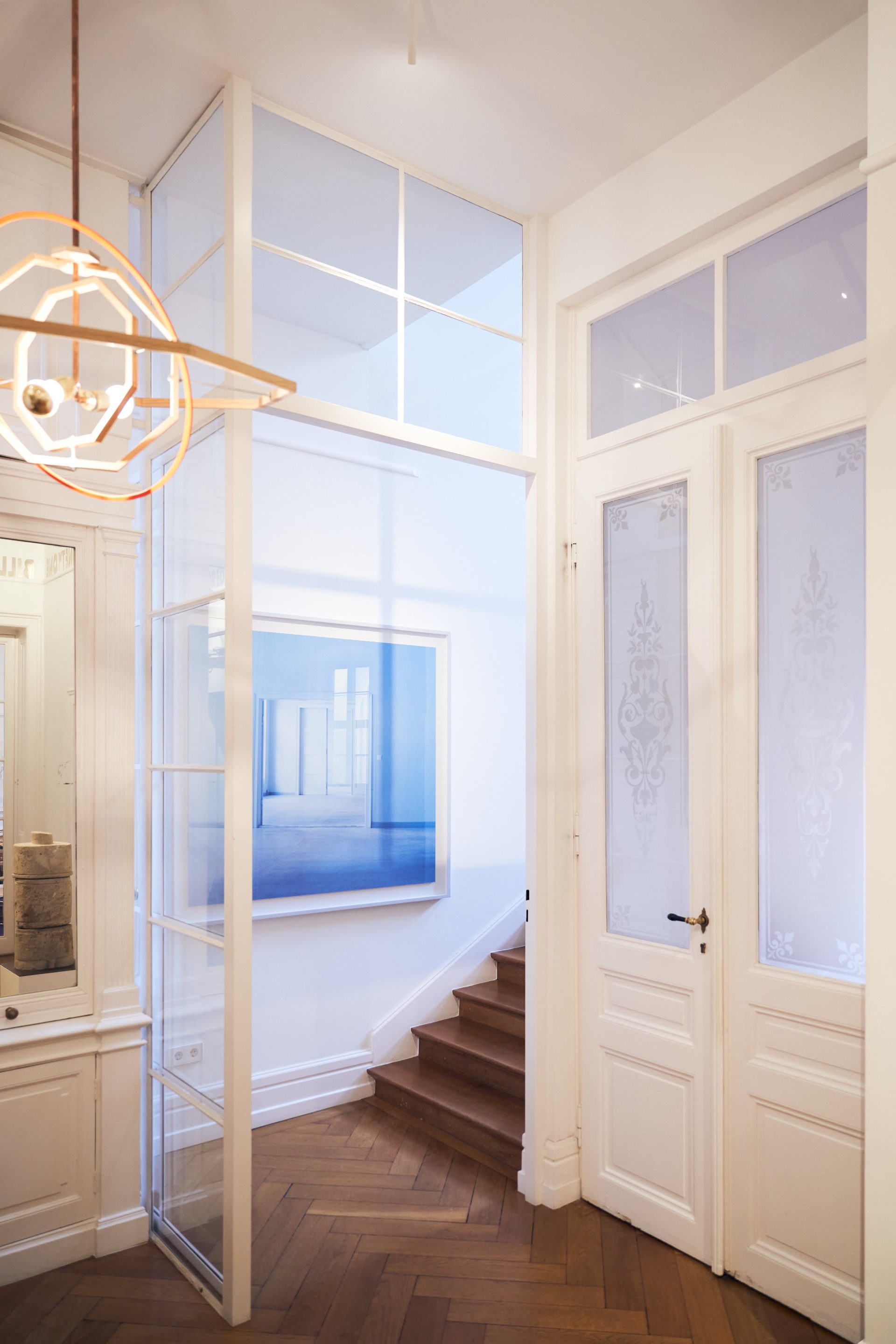
The staircase is a sight to behold. With every step it opens a little more to the light. The architect Kaysser understood the high art of staging in residential buildings too. And today’s owners understand the staging of art. So one thing fits with the other. Everything is light years away from the gloomy upper-middle-class furnishings with which the manufacturer, who exported Frankfurter sausages in tins all over the world, surrounded himself, just like his contemporaries. Now the house is filled with light through and through.
Impressions
More stories








GET IN TOUCH