
Travel
MONTANA - BACK TO THE ROOTS
Filmmaker Dagmar Titsch calls the Rocky Mountains the landscape of her soul. On horseback, she and like-minded companions set out on a modern travel adventure in the magnificent landscape of the Bob Marshall Wilderness in Montana. For THE FRANKFURTER, she tells of her tour with mustangs, wranglers and rivers you can drink from.
Text Dagmar Titsch Photos Dagmar Titsch
AUGUSTA, MONTANA – THE GATEWAY TO WILDERNESS
Frankfurt – Chicago – Great Falls, Montana. I fly with boundless anticipation to the Missouri River, which usually draws travellers who want to hike, mountain-bike or fish in the overwhelming landscape of mountains and rivers. In the arrivals hall at Great Falls, a stuffed grizzly welcomes guests and shows me the way too: I will be riding through true “bear country”. Amy Mills, head of “Mills Wilderness Adventures”, picks me up and takes me to Augusta, a cosy historic little town in old prairie country. “The Gateway to Wilderness”, as Amy calls it.
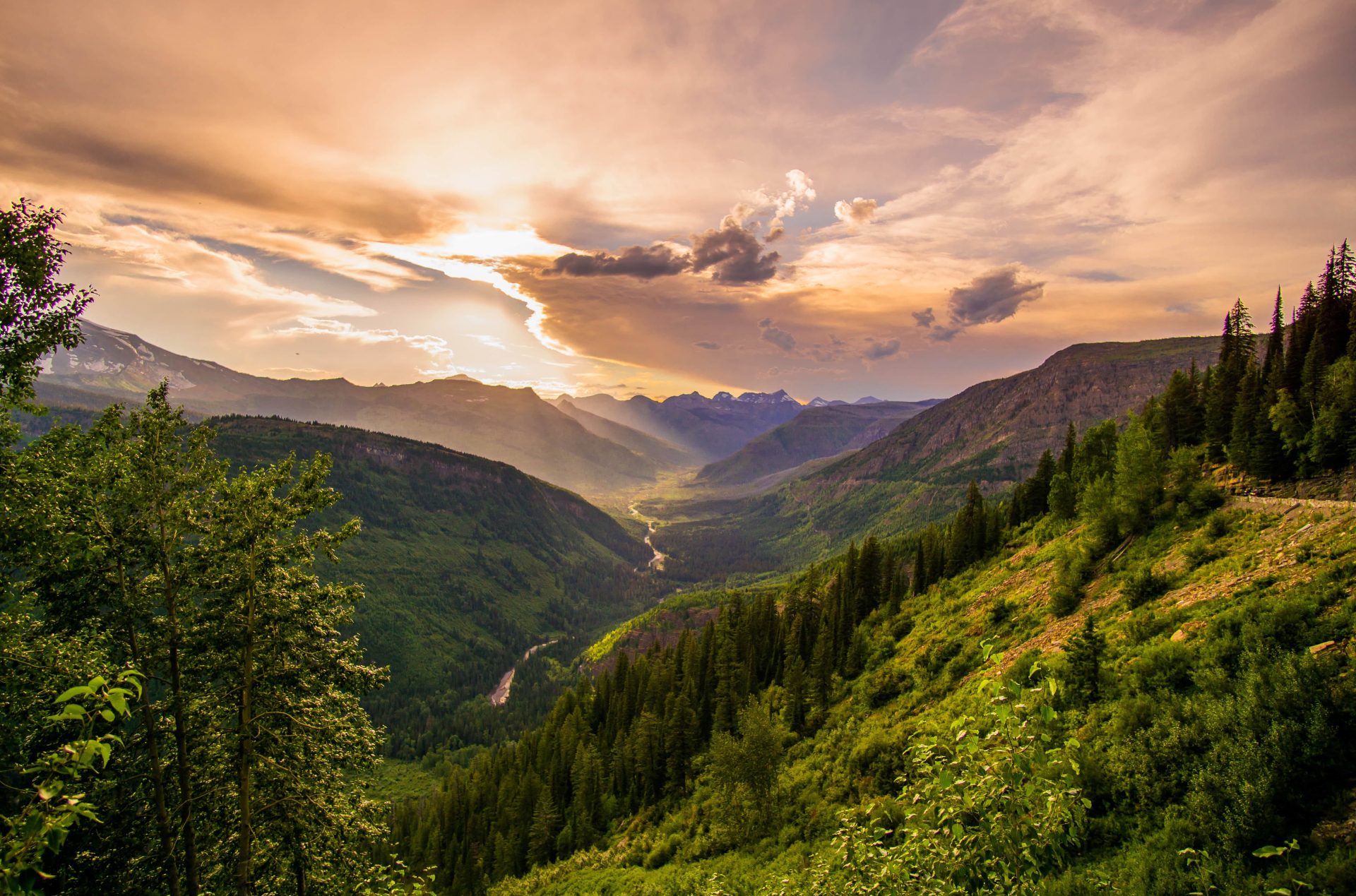
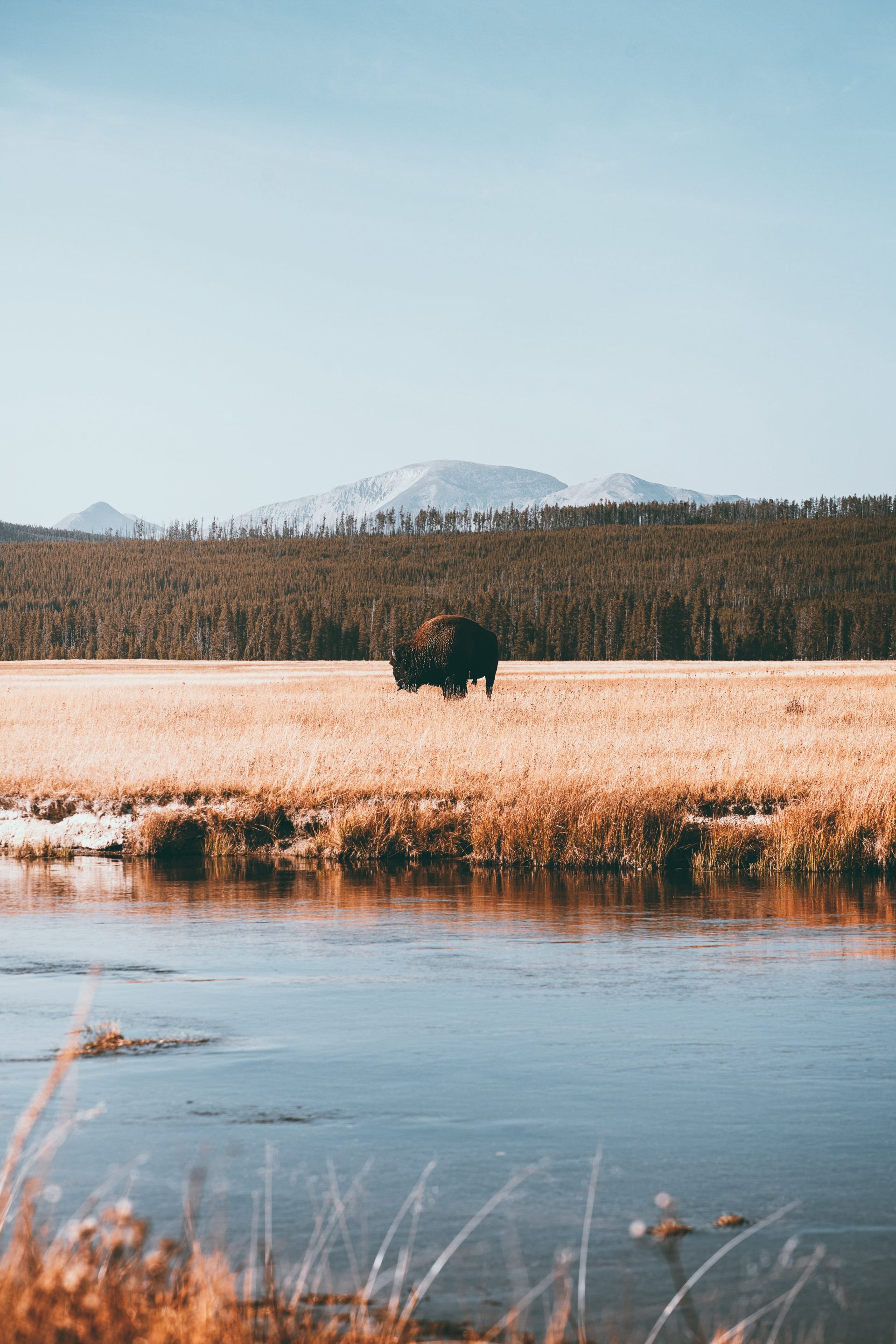
My adventure begins shortly after sunrise at Benchmark Camp. This is the point at which you enter an area that is completely roadless. The only way to cross this landscape is on foot or on horseback. Both work. Nothing else does. The land of the “Bob Marshall Wilderness”, together with the adjoining Scapegoat and Great Bear wildernesses, covers an area of just over 6,000 square kilometres. “The Bob”, as the locals affectionately call it, is home to grizzly bears, black bears, moose, deer, wolves and lynx. That I might meet some of them was at first unimaginable.
OVER THE INDIAN CREEK
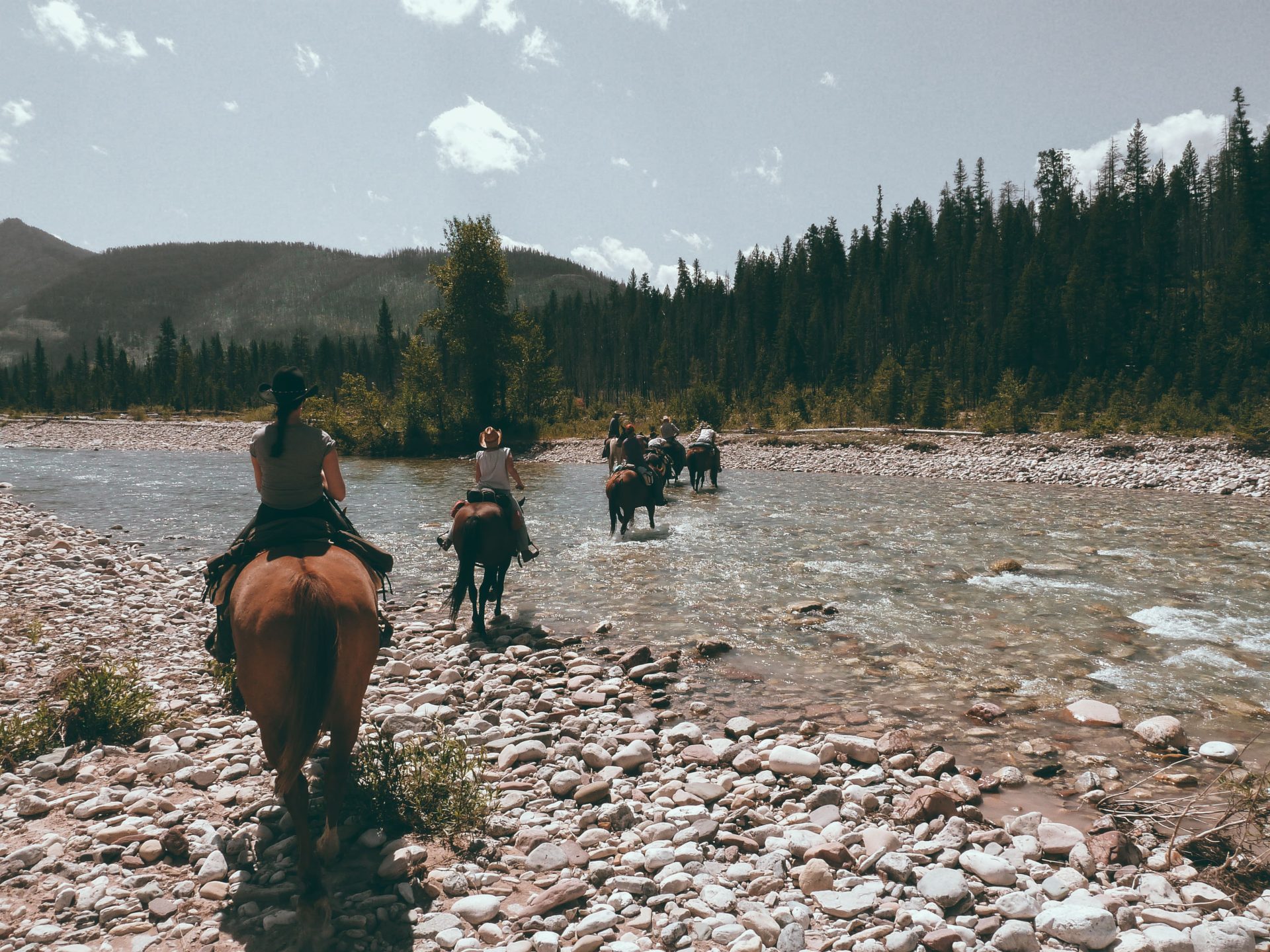
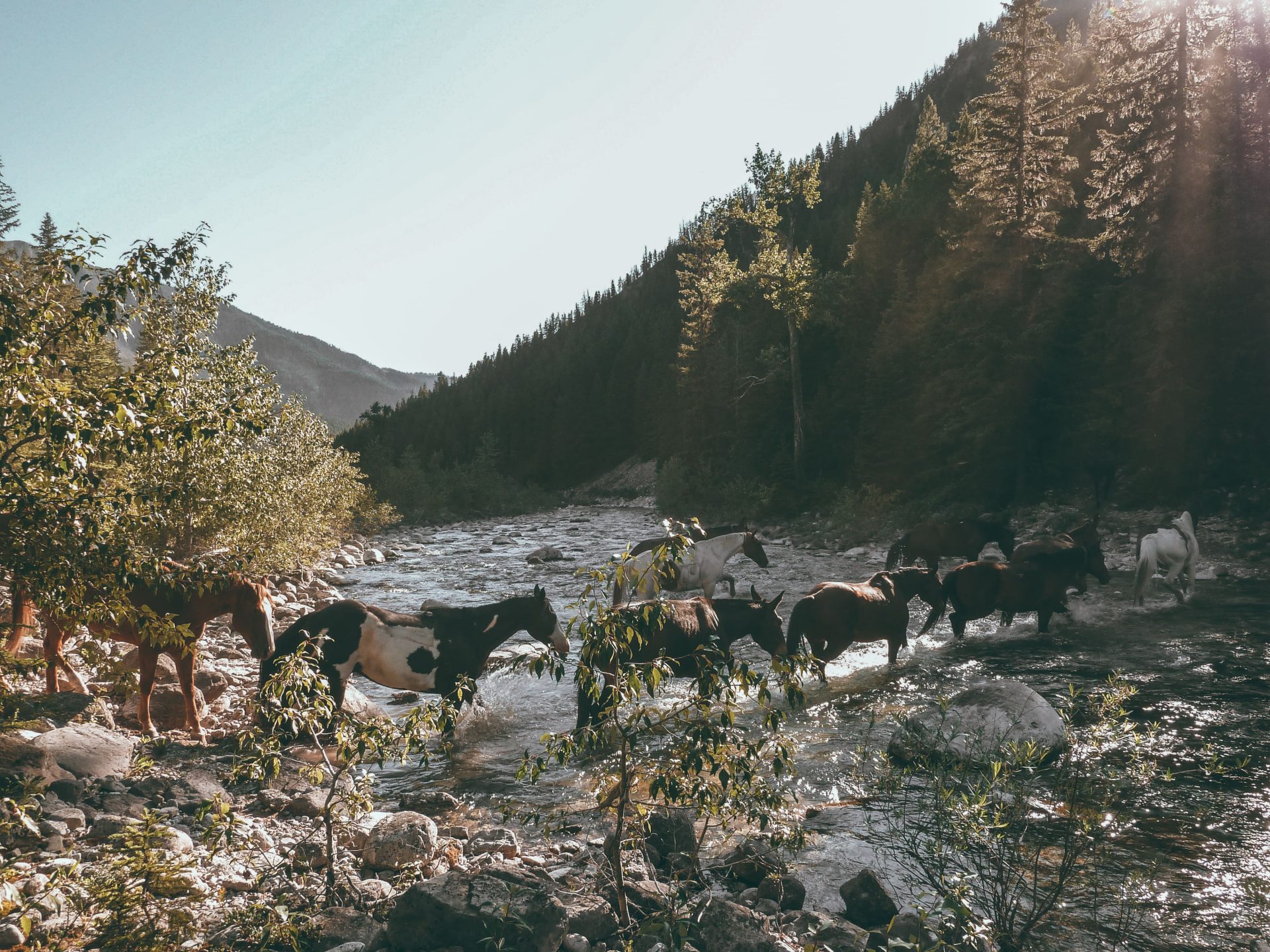
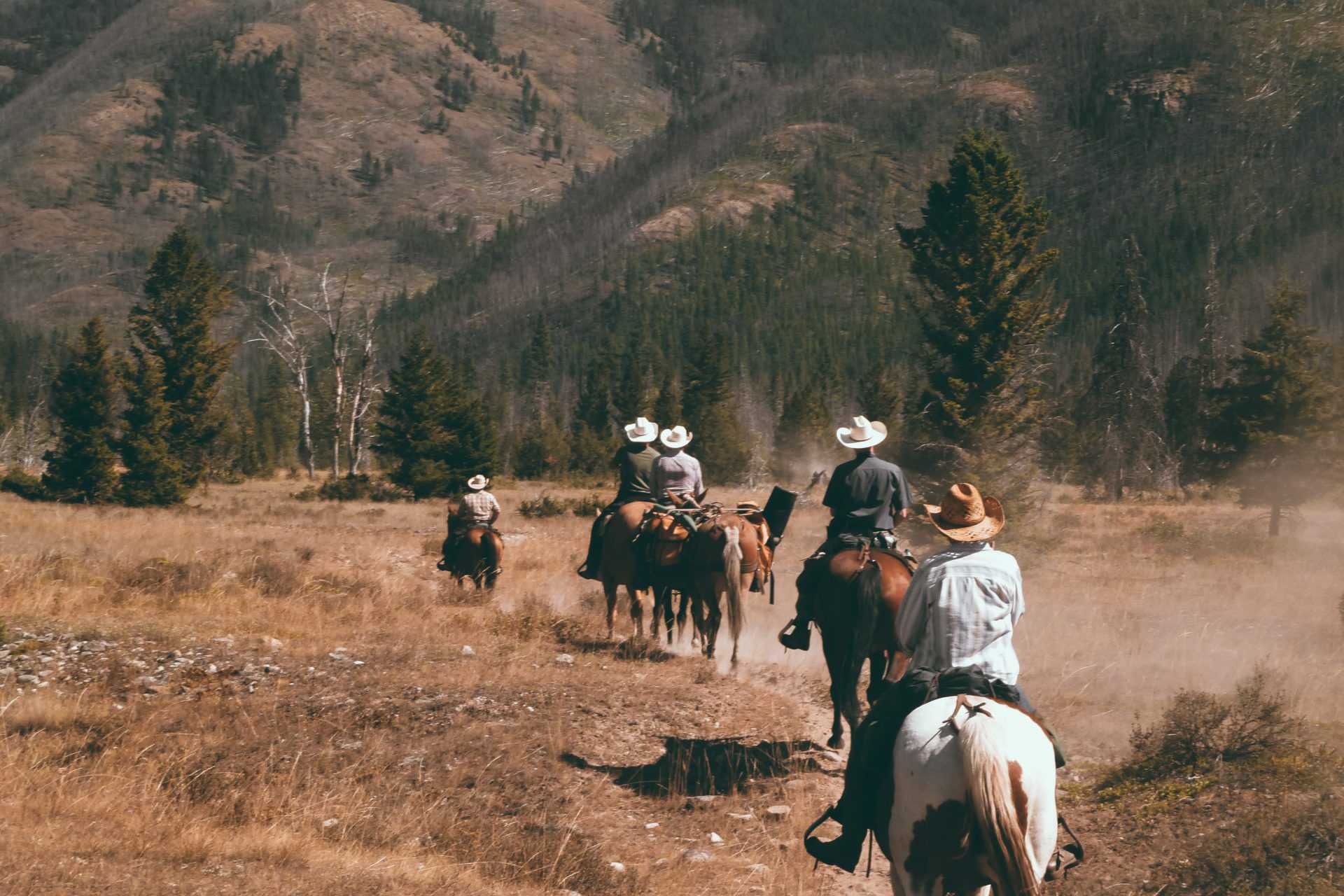
Everything our group needs for a week in the wilderness is carefully stowed on 35 horses and mules: sleeping bags, clothes such as rain jackets and long trousers, canned beer, eggs, pasta and much more. The ponies and mustangs assigned to the nine of us travellers answer to names such as Tombstone, Greenlake, Whisky, Strawberry, Pin Ball and Brandon. My pretty mustang is called Janson.
Our motley crew is led by Amy Mills, head of the family business “Mills Wilderness Adventures”, which has run a horse-based outfitting business for many years: guided outdoor expeditions with equipment, provisions and transport provided. You should never contradict boss Amy while she is on her horse – we quickly realise that. Our route leads along the Sun River (known from the Robert Redford film “A River Runs Through It”) and Indian Creek, across wooden bridges to Indian Point. Narrow trails wind through spruce forests. Between the trees, seas of purple flowers adorn the dense woodland scene. At its highest point, the route crosses the impressive mountain range of the Continental Divide at White River Pass. When I glance into the abyss, the blood rushes to my head at the sight of the looming dangers. But after ten hours in the saddle the feeling of fear fades, and I let Janson skilfully rock me down the steep, stony slopes into the heart of “the Bob”, the Mills family’s base camp on the bank of the White River.
BLUE JEANS AND WRANGLERS
The camp lies in the middle of the forests, set to the whisper of wild-flowing waters so pure and clear that you can drink from them. What more could I want? I can’t imagine less, either, because we sleep on camp beds in tents that are closed at night to protect us from wild animals. And it’s cold, very cold. While our American friends slumber in thick down sleeping bags, my teeth chatter to the rhythm of inexperienced Europeans in thin pyjamas. In the morning Amy is waiting for us in the large kitchen tent, the social centre of the camp, with hot coffee, French toast and fried eggs. That drives the cold from our bones. While Amy’s husband, Tucker, gives final, valuable instructions for the trip ahead at the kitchen table, the wrangler duo Ron and Ray Mills saddle the horses with the help of Tucker’s sons.
Seventy-year-old Ron Mills is the founder of the family business. Together with his brother Ray, his son Tucker, Tucker’s wife Amy and their two sons, Bryan and Turk, they form a solid and reliable team. They are united by a long-standing passion spanning generations, which brings with it a great deal of experience with animals and nature. It soon turns out that Ray, also over 70, is one of the most interesting storytellers of his generation. And as befits a true wrangler in blue jeans and boots, he is always seen with a cowboy hat and a straw between his teeth. On our daily rides and in the evenings in front of the kitchen tent, he tells us about the native plants and about trails that Native American tribes used long ago.
SHOWER IN THE FOREST
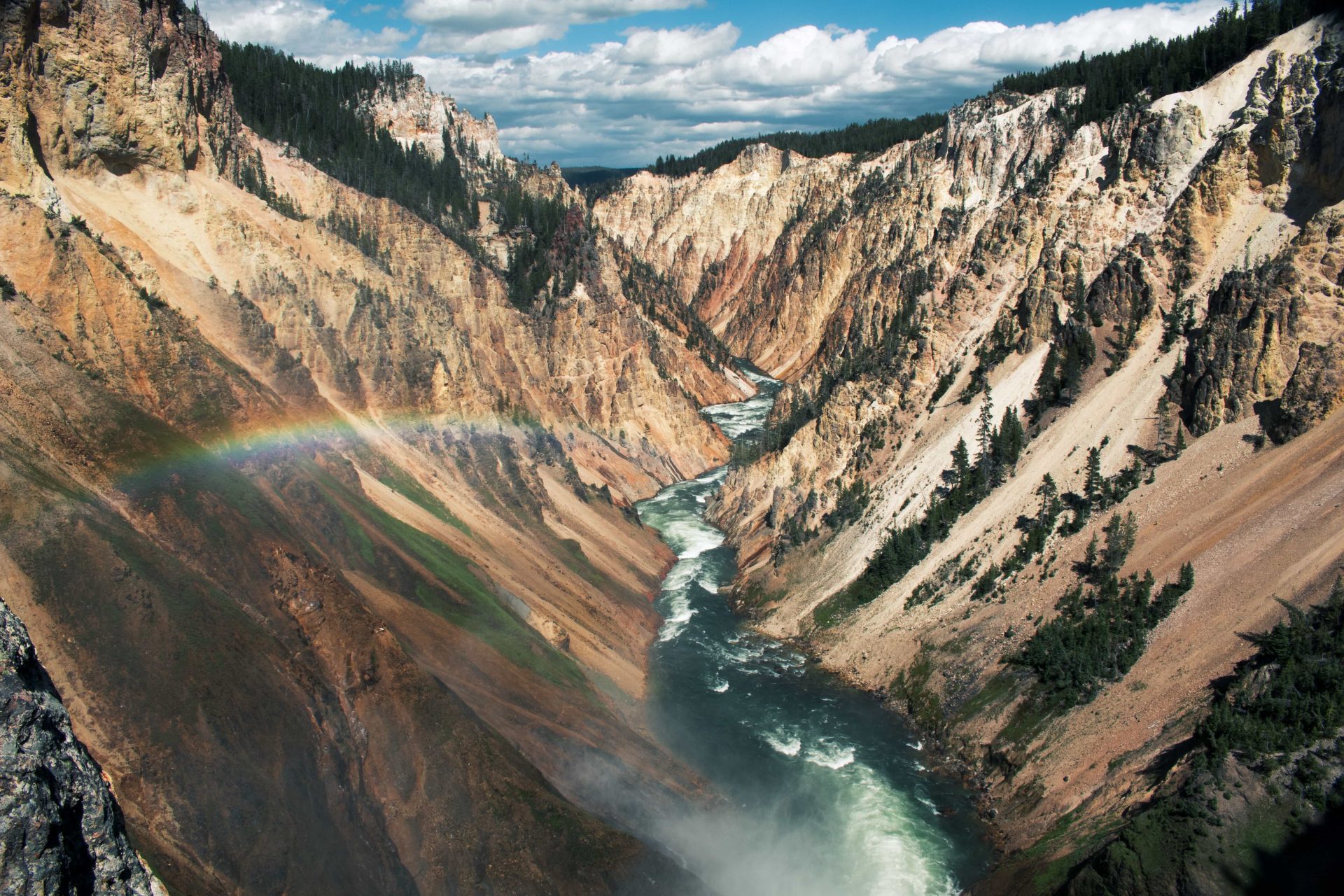
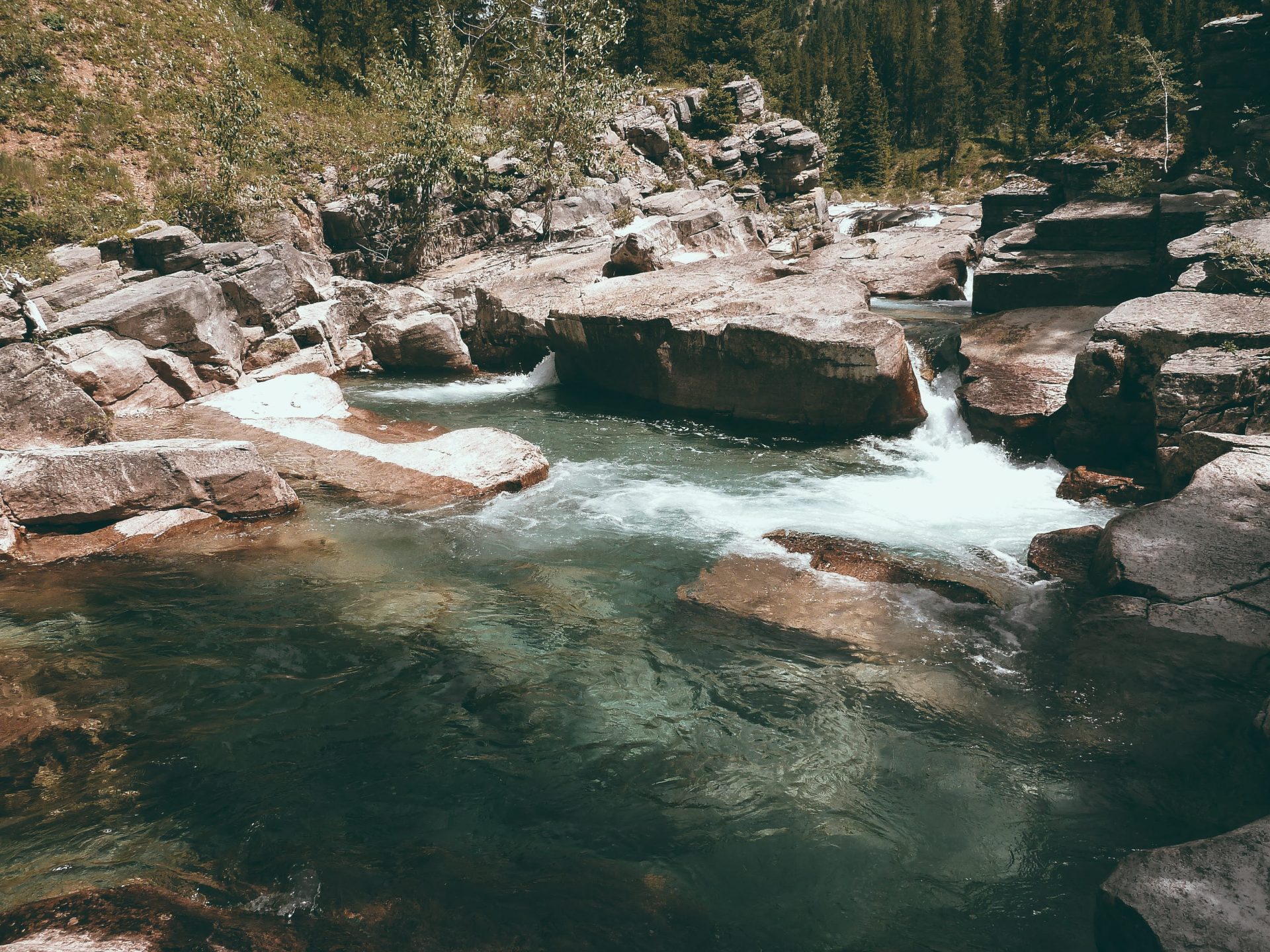
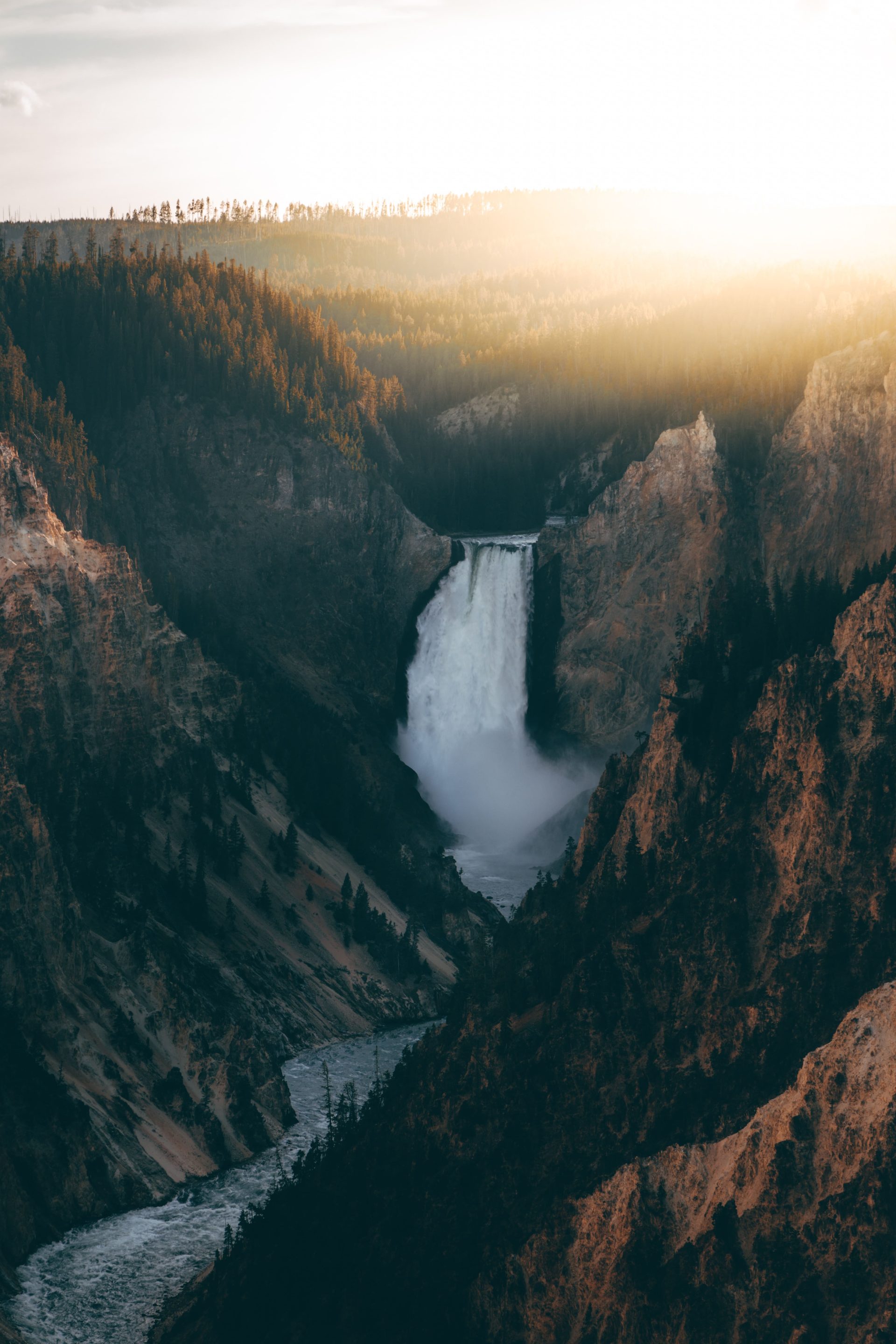
Over the following days we cross the stony beds of clear mountain rivers and climb the steep trails up to the Chinese Wall, the Gladiator Mountains or the Haystack Mountains. The Needle Falls, a waterfall an hour’s walk from camp that pours its blue-green water into the White River, is a magnificent sight.
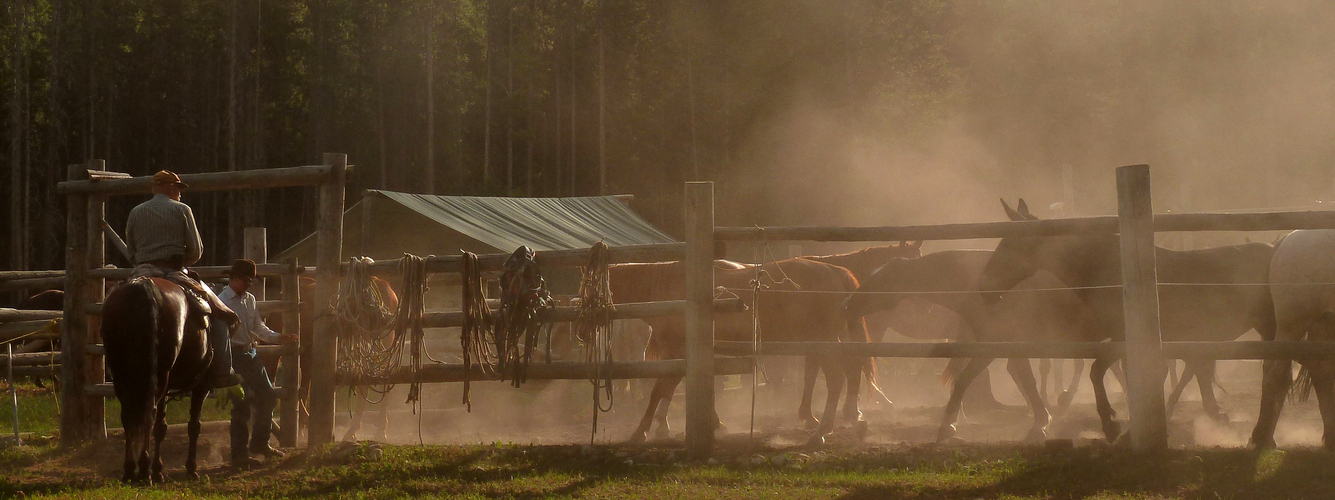
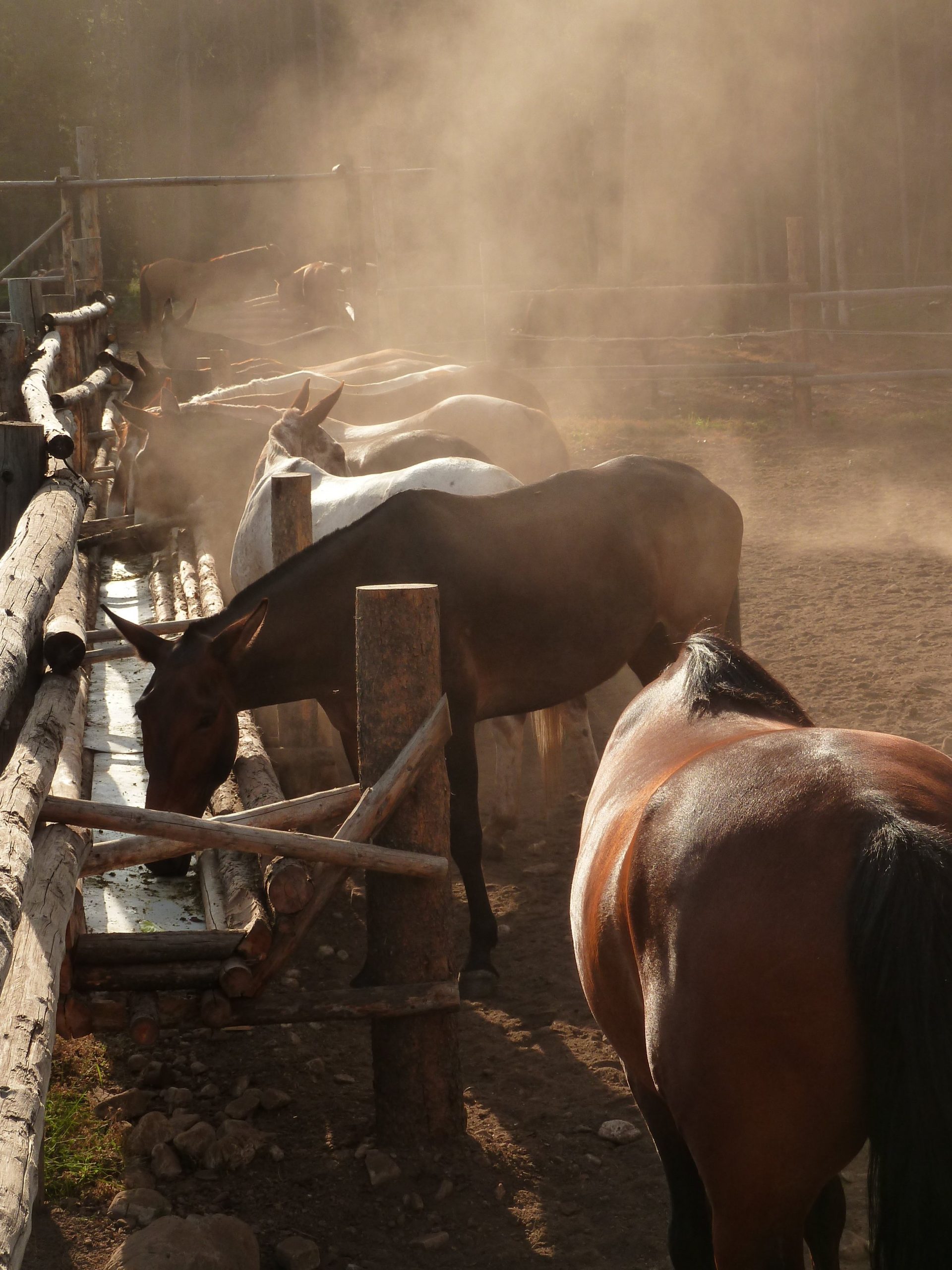
In the evening, a home-made shower in the middle of the forest awaits to refresh us. The water is heated in plastic bags that lie on the grass in the sun during the day. Every evening it is an impressive spectacle when the horses gallop off into the forest through a cloud of shimmering dust. They spend the night out in the open, just like the wild horses that still live in the Rocky Mountains today. The next morning, before sunrise, Ron and Ray set off again to bring the horses back. The tracks the horses have left serve the wranglers as valuable clues for finding the individual herds in the mountains.
BEWARE OF THE BEARS!
“Hey, my dear, don’t forget your bear spray!” the Americans call out to me whenever I go down to the White River. You spray the pepper spray into a bear’s face at a distance of eight metres. One afternoon, a fully grown bear really does come ambling along the river with its head lowered. A grizzly! Contrary to my hope that the bear will keep moving along the river, it changes direction and comes towards me. When it sees me, it flinches in fright. A thousand thoughts race through my head: behind me is the river, in front of me the camp, and in between the bear. Up in the camp the others are sitting drinking canned beer. I sprint off determinedly. When I get to the top, I feel my heart pounding in my throat and my knees trembling uncontrollably. But there it is again, less than twenty metres away from me. I now try to walk backwards slowly without taking my eyes off the bear. The animal follows me curiously. As my fear mounts, I stop, both legs firmly anchored in the needle-covered forest floor. In a flare of anger, I silently order the bear to go away. As it raises its nose and sniffs, I suddenly recognise its wild beauty, its tin-red coat and its fluffy ears. My fear disappears. Then the bear turns round and lopes away. I will never forget this encounter.
As the grizzly in front of me raises its nose, I recognise its wild beauty.
— Dagmar Titsch
Back in Germany, I often remember many images from this journey, which has burned itself into my mind like an imprint on the soul. What has stayed with me most is the “view” from high on horseback, between Janson’s two ears, steeply down onto the stony, wobbly path ahead of me. With every beat of the horse’s stride I rocked gently through this wonderful, silent world, and every sway inevitably brought me a little closer to myself.
More stories








GET IN TOUCH