

Business
MATTHIAS THOMA - THE TREASURE KEEPER
He is keeper of the grail, walking encyclopaedia and fan: Matthias Thoma heads the Eintracht Frankfurt Museum and archives the highs and lows of the club’s history. THE FRANKFURTER met him for lunch at Alfio’s on Opernplatz, very close to where Eintracht’s history once began.
Text Dr. Jutta Failing Photos Betti Klee
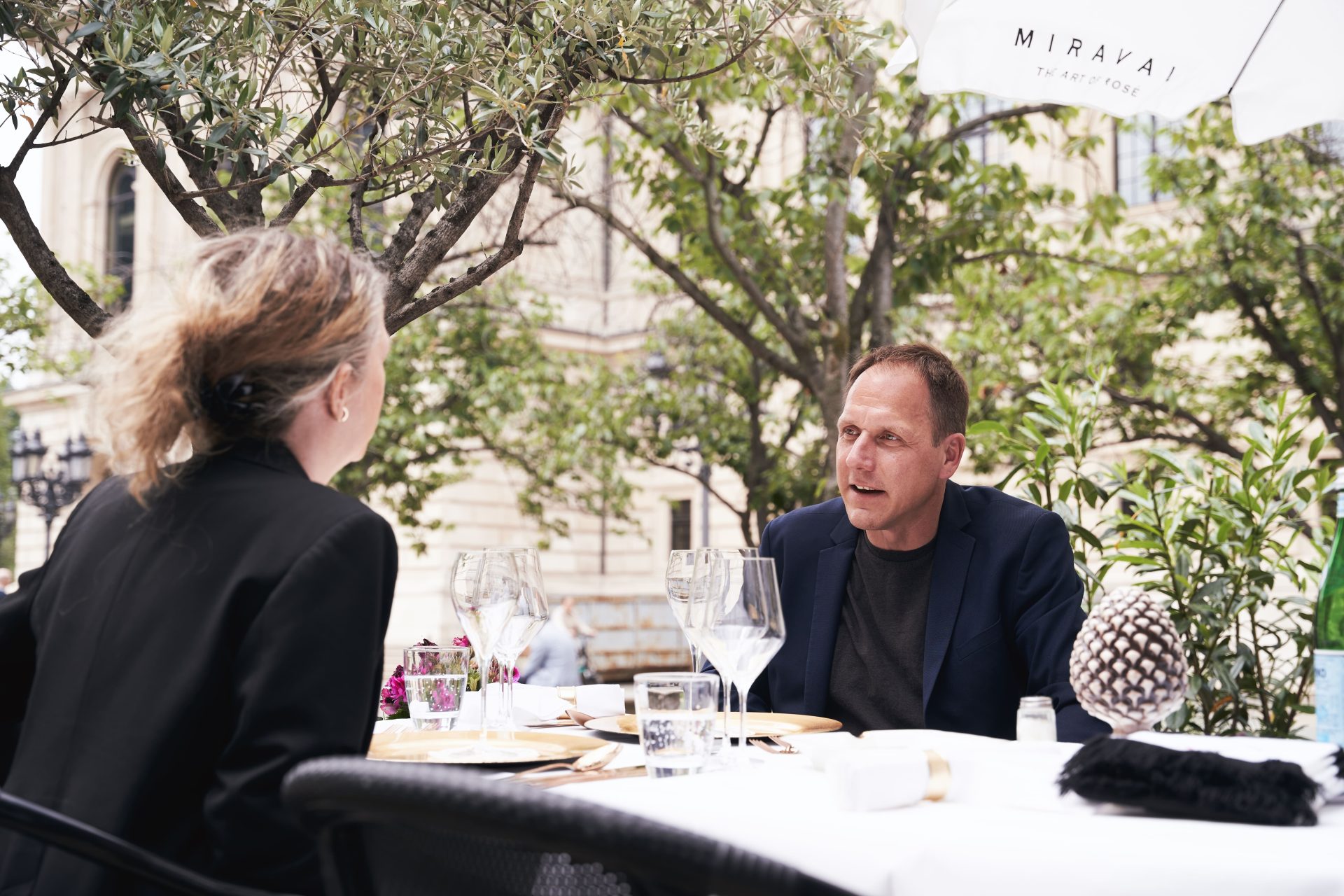
No sooner have we taken our seats on the lovely outdoor terrace of Alfio’s, opposite the Alte Oper, than we learn about the fascinating history that played out here. For Matthias Thoma, Eintracht is everywhere in Frankfurt. He points to a building with blue awnings and says: “That was the clubhouse of FFC Germania 1894. When some of the Germania members fell out, they founded their own football club at the ‘Friedrichshof’ in the Bahnhofsviertel – Victoria, the oldest predecessor club of Eintracht. And the landlord there promptly donated a ball. In the early days, football was a decidedly upper-class affair, at home in the finest neighbourhoods.” And yes: “Where the Mövenpick restaurant used to be on Opernplatz, there stood the Café Hanselmann in the 1920s, then a meeting place for Eintracht. In 1932 they set off from there to the final in Nuremberg – in a convoy of 102 cars!”
ONCE A FAN, ALWAYS A FAN
Matthias Thoma is in his element. He has dates and facts at his fingertips down to the last detail. And you are happy to be carried along by his many stories of Eintracht and its prolific goalscorers. It is thanks to him that the Eintracht Frankfurt Museum has grown from a hotchpotch that many people smiled at into an institution of standing. There are not many club-run football museums in Germany, and the few there are are now well networked, not least thanks to Matthias Thoma. The Eintracht Frankfurt Museum in the main stand of the Deutsche Bank Park is often the first encounter with a museum for children and young people, says Thoma. There are many workshops for school classes and young fans. Adults, on the other hand, want to get close to collectors’ items and trophies, which often takes on an almost religious quality: “Kissing the DFB Cup is allowed, but you’re not allowed to lift it up in our museum. Some people bring photos of deceased family members who were fans and have themselves photographed with them in front of the cup,” says Thoma. Once a fan, always a fan.
BLOOD, SWEAT & TEARS
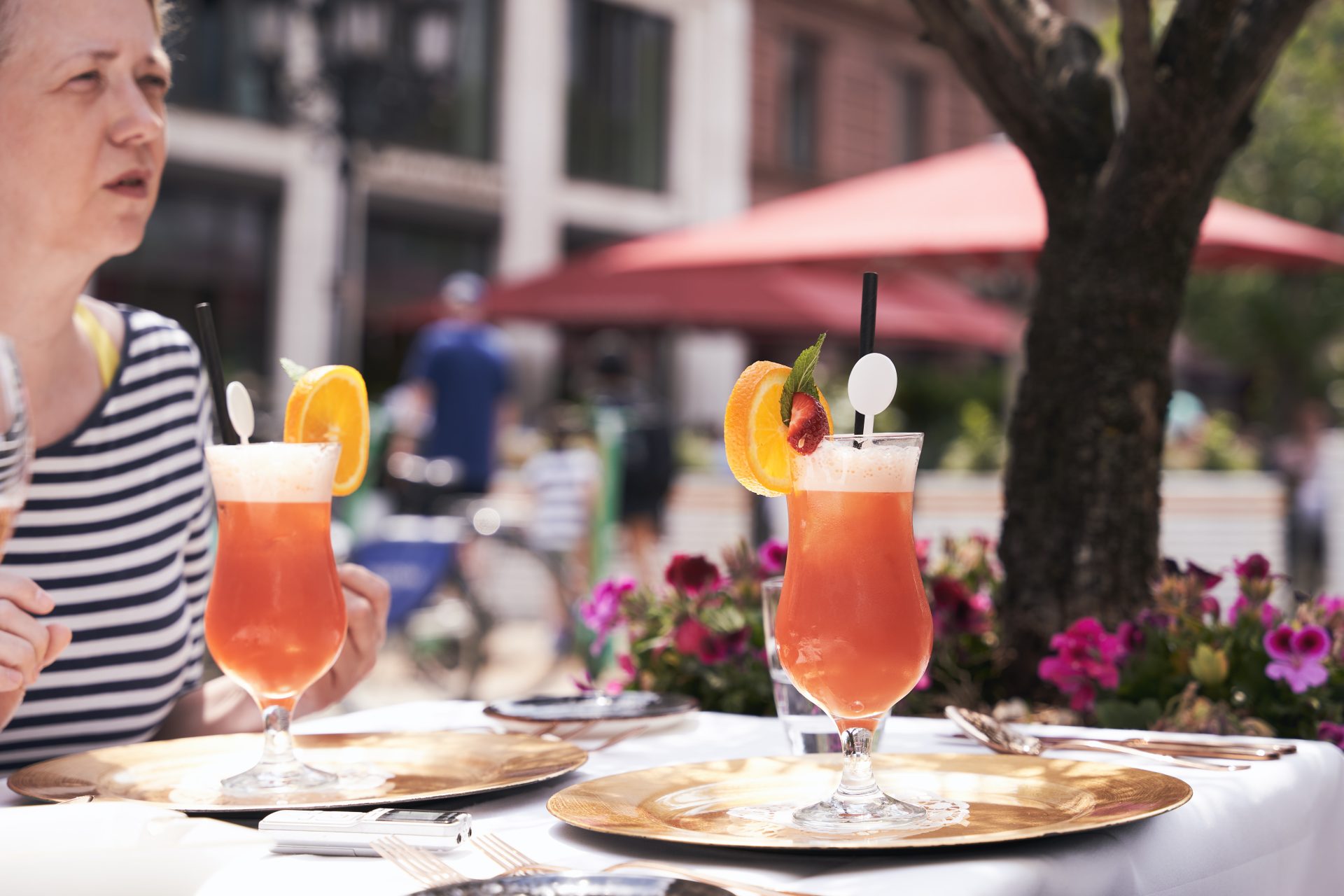
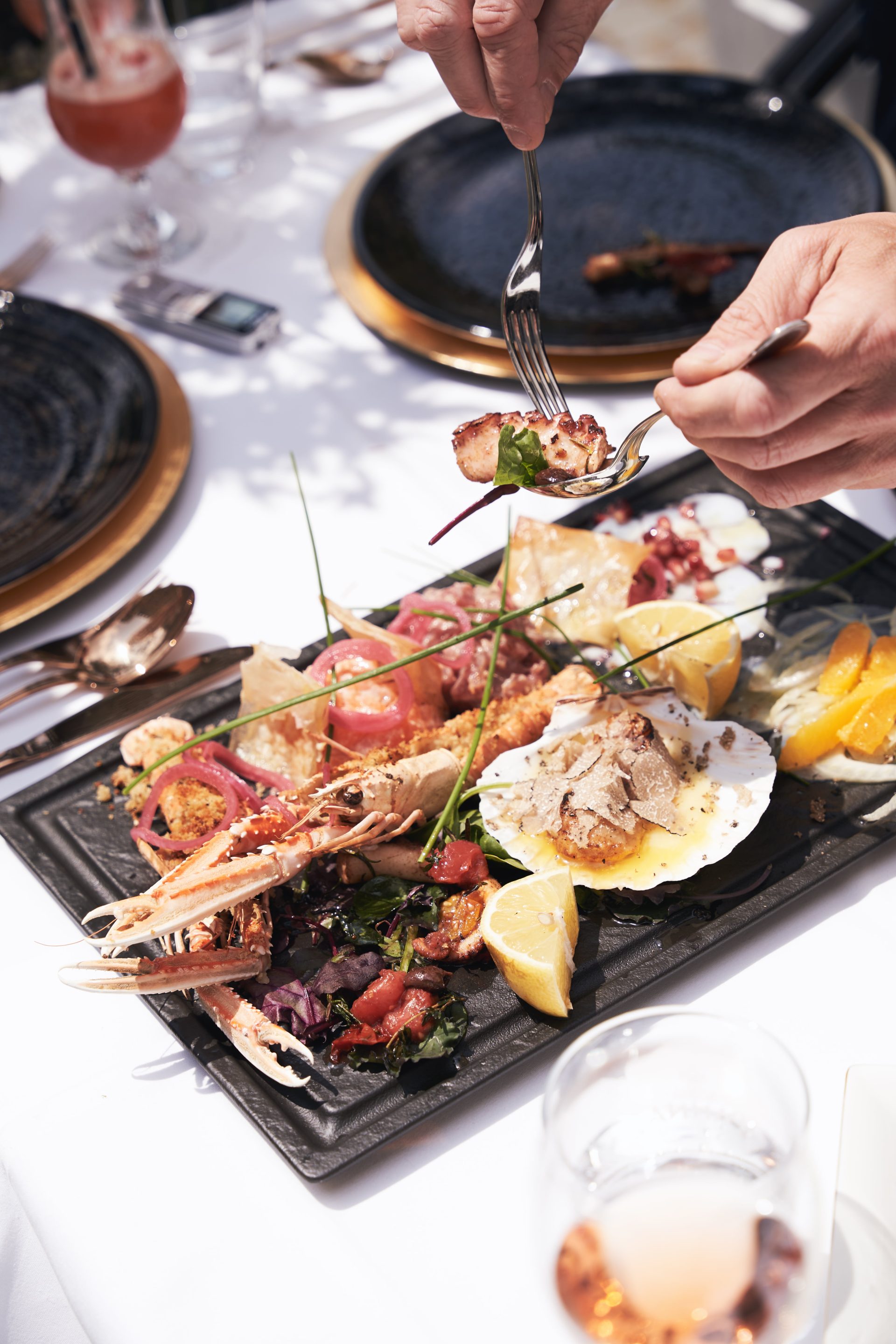
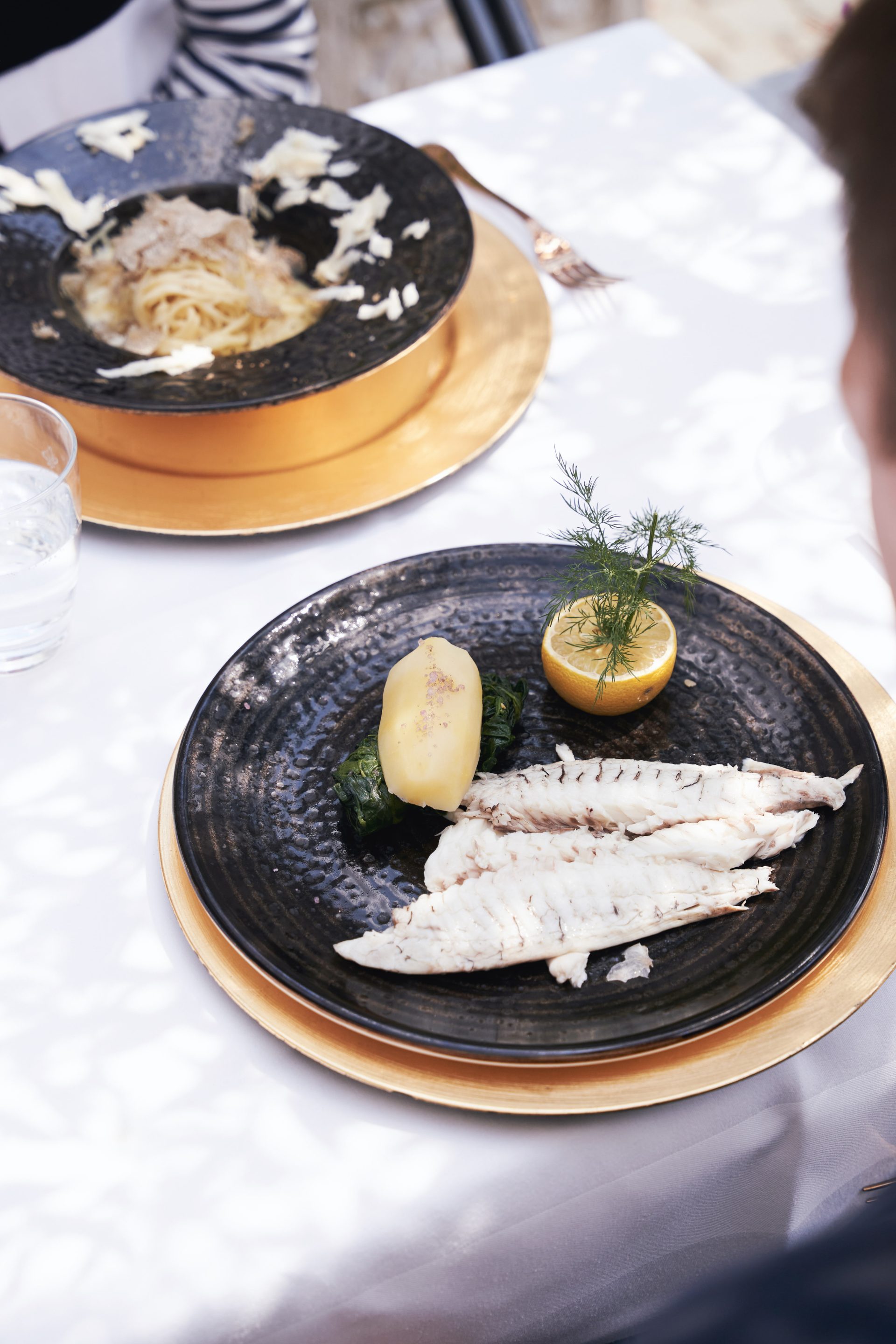
Stadium bratwurst rather than gourmet? Cola rather than sparkling wine? Fortunately, we easily persuade the museum director to trust the patron’s delicious recommendations – Ferrari Spumante and, yummy, seafood! The Sicilian fine-dining restaurant Alfio’s is, after all, known for its exclusive seafood selection.
We ask about the museum’s new acquisitions, the ones fans are licking their lips over. For some they are sacred relics, for others dirty clothes: the trousers of now ex-coach Oliver Glasner, or the shirt Sebastian Rode wore in the Europa League final in Seville. Matthias Thoma explains: “After the win at Camp Nou, Glasner did a dive in those trousers. Afterwards he handed them over to us, and you can see the grass slide marks on the knee. In Seville, Rode was hit on the head by a stud and his shirt got bloody. We are now showing it in the exhibition. Filip Kostić personally brought us his boots from the match in which Eintracht won 3–2 at Barça. Unfortunately freshly cleaned!”
FAITHFUL UNTO DEATH
That football memorabilia and church relics are closely related is obvious, says Thoma: “There really are a number of parallels. The proximity to religion and cult begins with the call-and-response chants and the songs repeated over and over in the stadium like litanies, or with the stealing of flags, which already existed in the Roman legions. A bloody shirt is, of course, a first-class relic. Not to mention the attitude ‘Eintracht – faithful unto death’. A religious education specialist advises us on this topic, and the parallels he points out are truly astonishing.”
FROM CRADLE TO GRAVE
Speaking of death. True love goes beyond death. Schalke fans have their own cemetery – with a view of the stadium. When will that be possible for Eintracht fans? “It’s not an issue yet, but it will be one day,” Thoma believes, and tells us about the popular guided tours of the Hauptfriedhof and Südfriedhof to the graves of Eintracht celebrities. From cradle to grave? Eintracht weddings and christenings have long taken place in the stadium chapel, and demand is high. Once again this shows that football is far more than a game – for true fans, football is an eternal bond for life. For Thoma too. Just recently he visited his father and gave him a bottle of sparkling wine, because “exactly 40 years ago we went to the stadium together for the first time, when Eintracht lost 0–1 to Bremen.” Standing in the fan end is still an experience for him, “powerful and strong, even if you can’t see much of the game for all the flags, but it’s all about the overall experience,” he enthuses.

NOTHING IS FOREVER?
Every match comes to an end, but so, we are amazed to learn, do goalkeeper gloves. Plastics change over the decades and are a real challenge in terms of conservation. “The decay of goalkeeper gloves can’t be stopped. There is no solution yet for preserving them permanently,” says Thoma. The grip studs are tricky, “they start to crumble at some point”. And the balls: “The ones from the 70s and 80s become bone-dry and rock-hard. The all-leather balls from the 1950s, on the other hand, can be preserved well.” Conservation has therefore become an important topic at the Eintracht Museum. Advice was sought from various Frankfurt museums. The grass stains on Glasner’s trousers and the blood on Rode’s shirt, for example, were preserved for eternity by a restorer from the Rheingau.
INTEREST GROWN
The Eintracht Frankfurt Museum has strong backing. It operates independently as a limited company, a subsidiary of the Fußball AG: “You can tell that the history is getting more and more attention, including from sponsors, especially since the cup win in 2018.” In addition, there is a friends’ association with currently around 900 members (who enjoy, among other things, free admission to the museum and guided tours on match days). The museum now has five permanent staff, around 20 working students, freelancers and other external collaborators. Considering the beginnings, when Thoma began the first research single-handedly around 2005, this is a huge step that is now recognised throughout Germany, and not only in football circles. Thoma, who lives in Hofheim, also writes books on the club’s history.
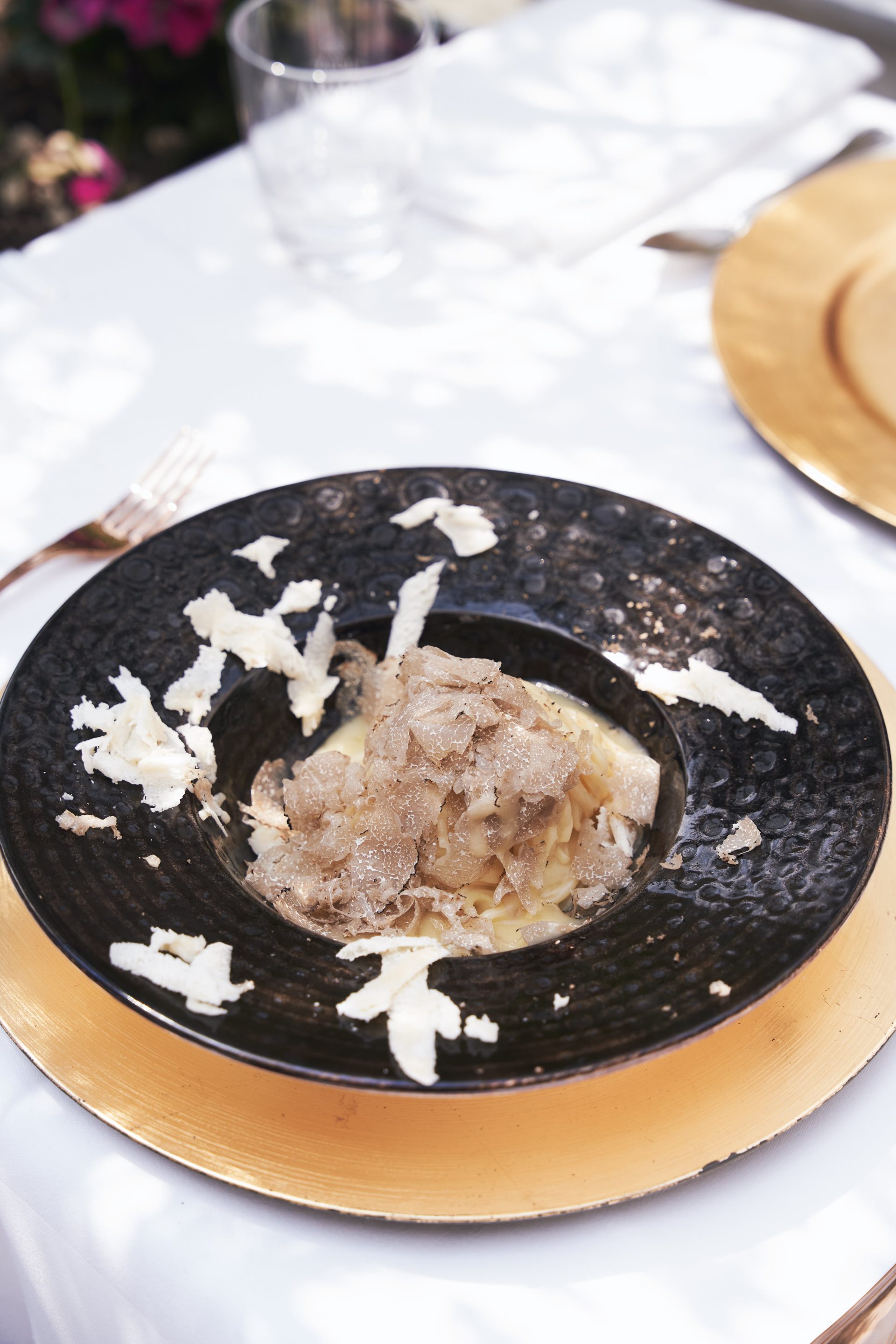
Having now reached dessert – a land of plenty of Sicilian-style sweets – he tells us about his latest project. “Helmut ‘Sonny’ Sonneberg, a Holocaust survivor and long-standing fan, was an outstanding contemporary witness. He regularly guided groups of visitors through the museum. Even before his death, we talked about the plan to write a book about him. Now he is looking down from football heaven, watching me do it.”
More stories








GET IN TOUCH