
Food
ROSÉ, THE PERFECT SUMMER WINE
Text Michael Wanhoff Photos Nikita Kulikov
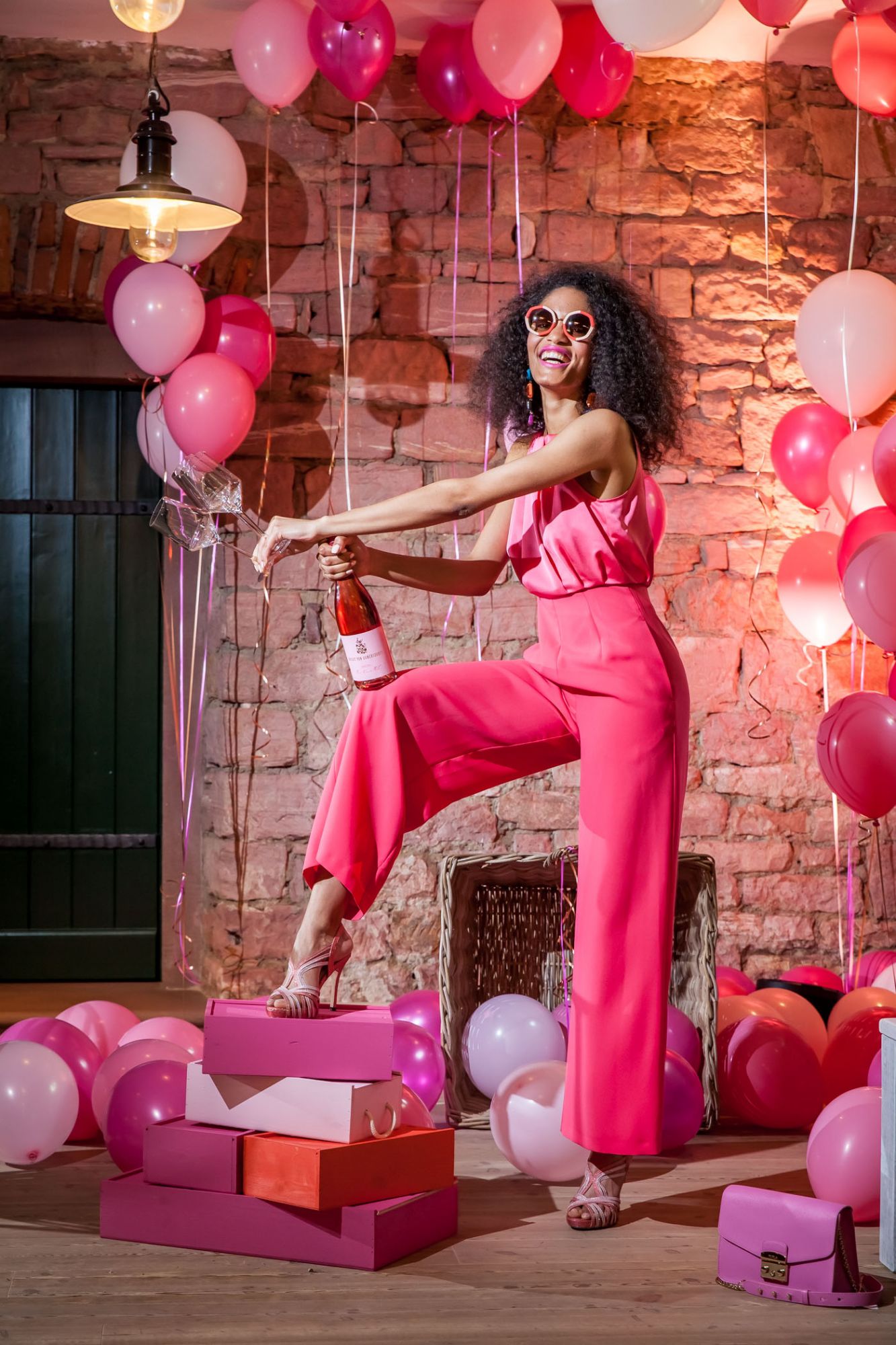
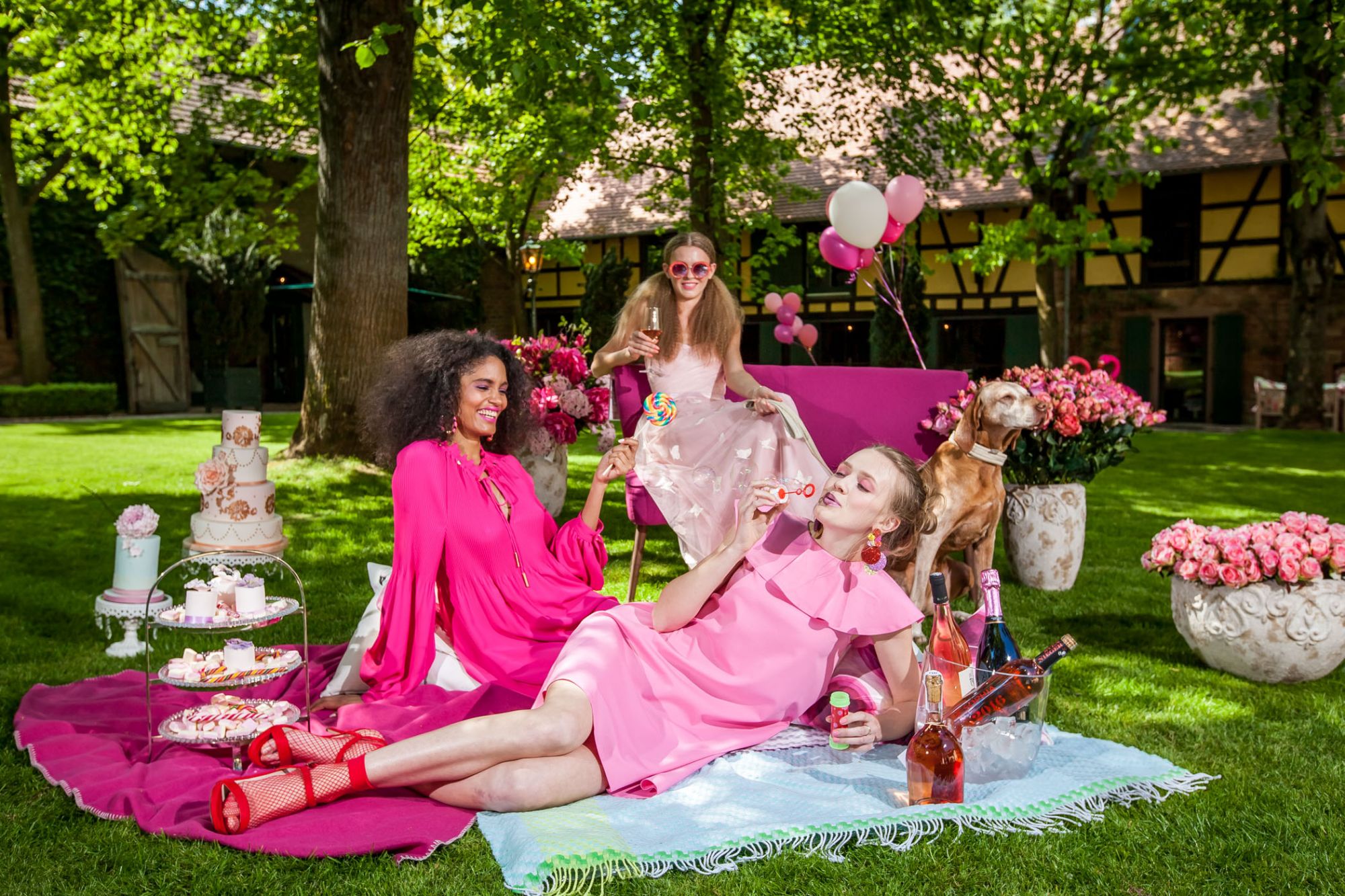
Rosé wines and pink sparklers are all the rage. Our author Michael Wanhoff finds this extremely gratifying, as exploring this trend in the glass has let him discover many a pink jewel. And because his “Drink Pink” motto has infected the rest of our editorial team too, we promptly turned it into a homage to life and the love of good things. Join us on our small but delightful trip to the country to the wonderful Hofgut von Hünersdorff and enjoy La Vie en Rosé with us!
It is considered light, tastes refreshingly light – despite an alcohol content that is often 13 per cent – and, ideally, has a delicate scent of red berries. That makes it the perfect summer wine. Nevertheless, they still exist: wine connoisseurs who roll their eyes at the mere sight of a rosé. Don’t let that put you off – stay cool and pour yourself another drop of your rosé, chilled to between 7 and 12 degrees Celsius!
Pink (r)evolution
Not that you need to counter with expert knowledge! Composure is what this wine is all about. But if you are interested: the cradle of rosé wine is France. And to make rosé, you need red grapes. The French, however, much prefer to turn those into red wine. Often only the rotten grapes were left over for rosé. Not exactly a pleasant thought that wine was made from what was more or less waste. But that’s how it was for a long time, and to top it all, the rosé was then made in a sweet style.
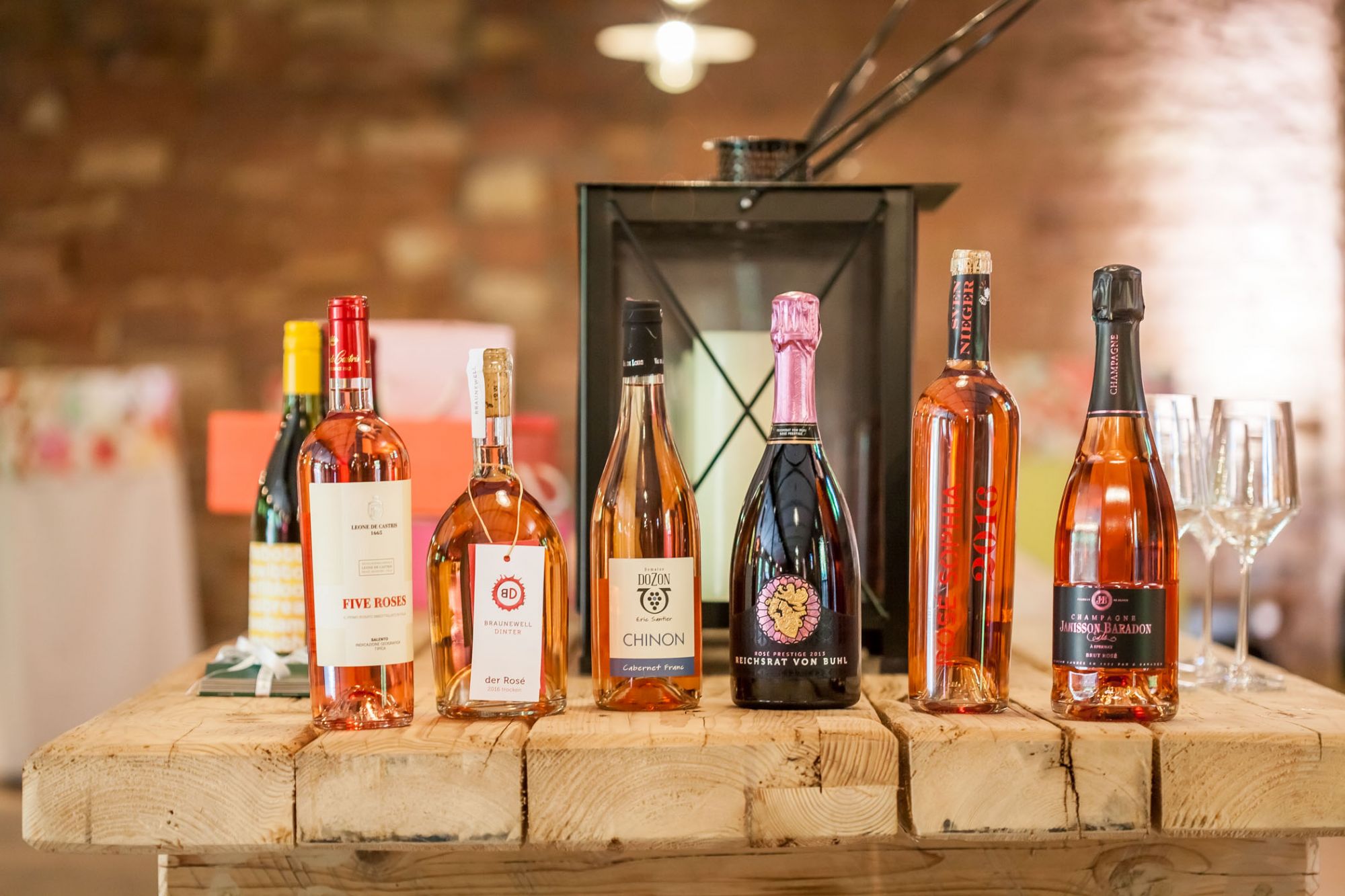
But times have changed. And not just since Angelina Jolie and Brad Pitt caused a stir with their “Miraval Côtes de Provence”. Rosé wines have long ceased to be a French bastion, although some of the best still come from there. Such as the 2017 “Dozon Rosé Chinon” from Domaine Dozon (Loire). “A rosé just the way we love it! Crisp, dry, natural berry fruit, redcurrant, refreshing, invigorating,” is how wine expert and merchant Armin Busch describes the wine. “Other countries are catching up, Italy for instance. With his ‘Five Roses Salice Salentino Rosato’, Leone Castris once bottled Italy’s first rosé. That’s pure dolce vita: juicy fruit, red berries and sour cherry, very drinkable, a perfect picnic wine,” Busch enthuses. Incidentally, a rosé with Frankfurt roots also comes from Italy: Marco Giovanni Zanetti, alias “Winepunk”, is an old acquaintance of Frankfurt’s restaurant scene. The qualified sommelier and master restaurateur, with his unmistakably Italian roots, now makes his own wine in central Italy. He describes his Hammelpunk 2016 as “summer in its most aromatic form”.
A bottle of holiday
It has never been easier to bring a Mediterranean way of life home, because besides France and Italy, Spain and Portugal also offer exciting rosé wines. While the Spanish ones tend to be powerful, Portugal also has light, lively summer wines. Which brings us to the wine’s range, which is ultimately what makes rosé so exciting. For the terrace or a picnic in the countryside, a light one; for a barbecue, a powerful rosé, which is a welcome alternative to red wine in warm weather.
Made in Germany
OK, admittedly, that Mediterranean feel, la dolce vita, la vie en rose – there’s something to it. But when it comes to rosé wine, we can more than hold our own. Germany is definitely in the top league! Markus Schneider from Ellerstadt in the Palatinate is naturally one of them, presenting a rosé from four grape varieties with lush fruit aromas of blackberries, raspberries and cassis that can hold its own internationally. Or Sven Nieger, the newcomer from Baden, who only founded his winery in 2012 and caused a great stir with his Riesling. His rosé from Pinot Noir (Spätburgunder) is powerful, spicy and perfect for the next barbecue party. The wine of Martin and Christoph Hammel is quite different. Alongside “Sissi & Franz”, a sweet, harmonious cuvée of Portugieser and Dornfelder, they present liquid joie de vivre with their 2017 “Für mich soll’s rote Rosé(n) regnen”: plenty of fruit, an invigorating aroma of red fruits and elegant spice from fine oak, paired with juicy freshness.
We love pink bubbles!
While rosé wine (partly because it is comparatively cheaper to produce) has not yet made it into the high-price segment, rosé champagne now belongs in the Champions League of sparkling wines. Just a few years ago it too was considered a niche product; today, by contrast, rosé champagnes are often more expensive than comparable white sparklers. This is particularly clear at Ruinart, whose rosé has almost cult status, but the prestige line Dom Pérignon also shows the standing of rosé in champagne. While the regular vintage Dom costs around 170 euros, you have to put almost 300 euros on the table for a bottle of the brand’s rosé.
And Germany can hold its own in the sparkling segment too, says wine expert Armin Busch. “A few years ago, the long-established Reichsrat von Buhl estate in Deidesheim poached the cellar master of the champagne house Bollinger and gave him the task of making Sekt on a par with the best champagne producers. The result is impressive; the estate’s sparkling wines are highly praised by experts.” For rosé lovers there are two alternatives: the basic rosé costs just under twenty euros, while the 2013 Rosé Prestige costs around 50 euros. A sparkling rosé also comes from the Rheingau which, at just under 20 euros, costs less than many a champagne but plays in at least the same league: the Rosé Brut from Weingut Künstler in Hochheim.
Pink facts
Under wine law, rosé counts as red wine, so it must be made from red grapes. The only exceptions are Sekt and champagne, where rosé may be made from white wine with a small dash of red wine.
In red wine, most of the red colour comes from the grape skins. Unlike red wine, the juice – the must – of a rosé stays on the skins, the mash, for a shorter time, which is why the colour is lighter. The longer the winemaker leaves grape juice and grape skins together, the darker the rosé. The colour says nothing about quality; it is more a question of style.
From pale, salmon-coloured rosé, as known from the south of France, to bright pink rosé, more likely to be found in Spain, for example, every shade is possible.
In recent years, individual producers have also been experimenting with wines aged in small oak barrels, barriques, which can be quite powerful, with the oak also shaping their flavour, and are better suited to a meal than to the terrace.
THE FRANKFURTER’s choice
- 2017 Dozon Rosé Chinon - Domaine Dozon/Loire/France
found at K&M Gutsweine in Frankfurt - 2017 Rosé Provence
found at Weinteufel in Frankfurt - 2017 Five Roses Salice Salentino Rosato - Leone Castris/Apulia/Italy
found at Giovo in Mühlheim - 2017 Rosé Sophia - Sven Nieger/Baden/Germany
found at K&M Gutsweine in Frankfurt - 2015 Rosé Brut - Reichsrat von Buhl/Palatinate/Germany
found at K&M Gutsweine in Frankfurt
More stories








GET IN TOUCH