
Food
IT’S CERAMIC, BABY!
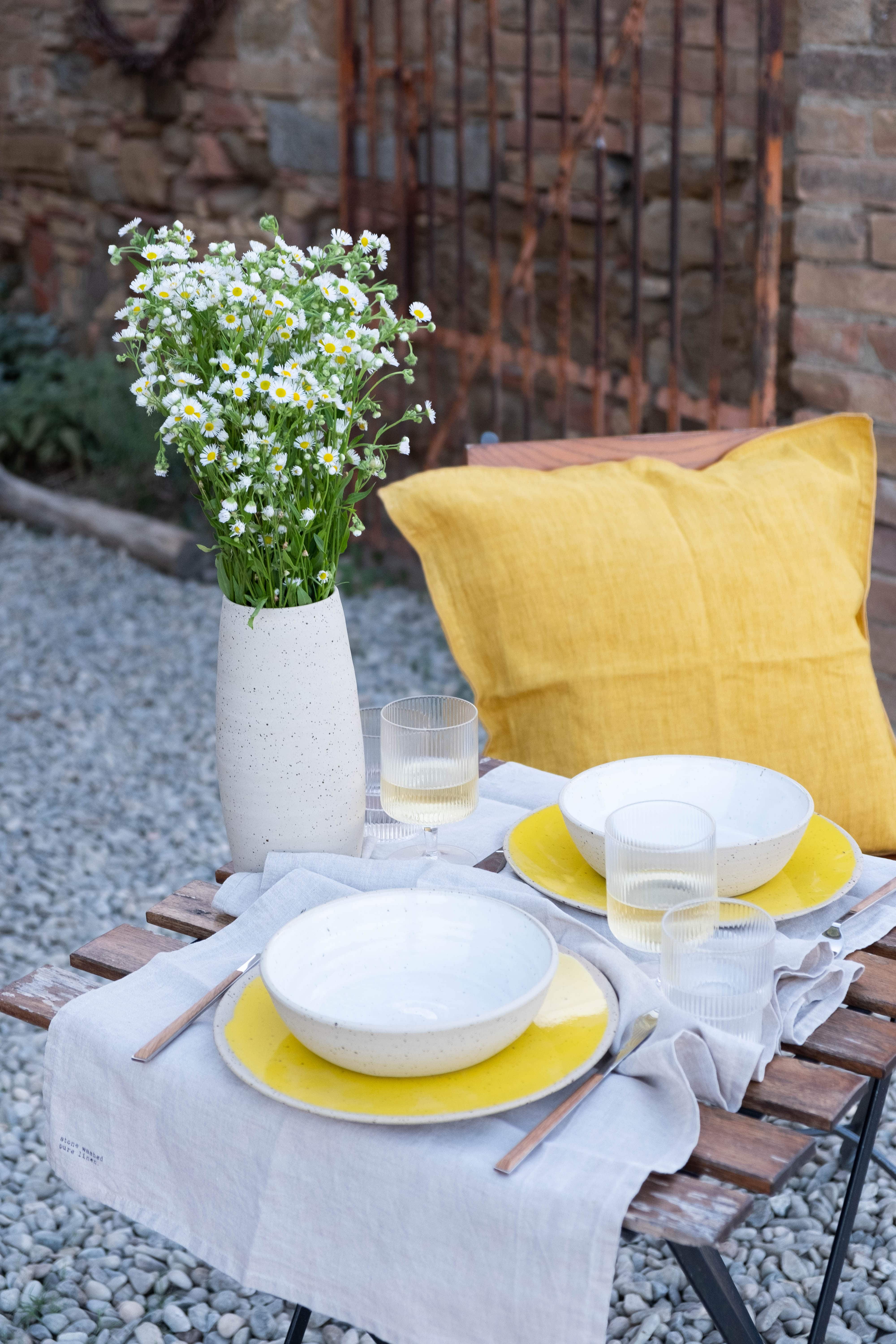
Ceramics are the tableware trend! Upscale restaurants, cosy cafés – they all go for the more casual chic of bowls, cups and plates made from one of the oldest materials in the world. And these hygge-friendly works of applied art are increasingly seen at home too. Some of them are designed in Frankfurt.
Text Heike Katharina Klauer Photos Hartmud Howluisalives, Hartmud Wahre Bohne, OX Darmstadt, KimCeramics Studio, Motel a Miio
CONNECTED TO NATURE
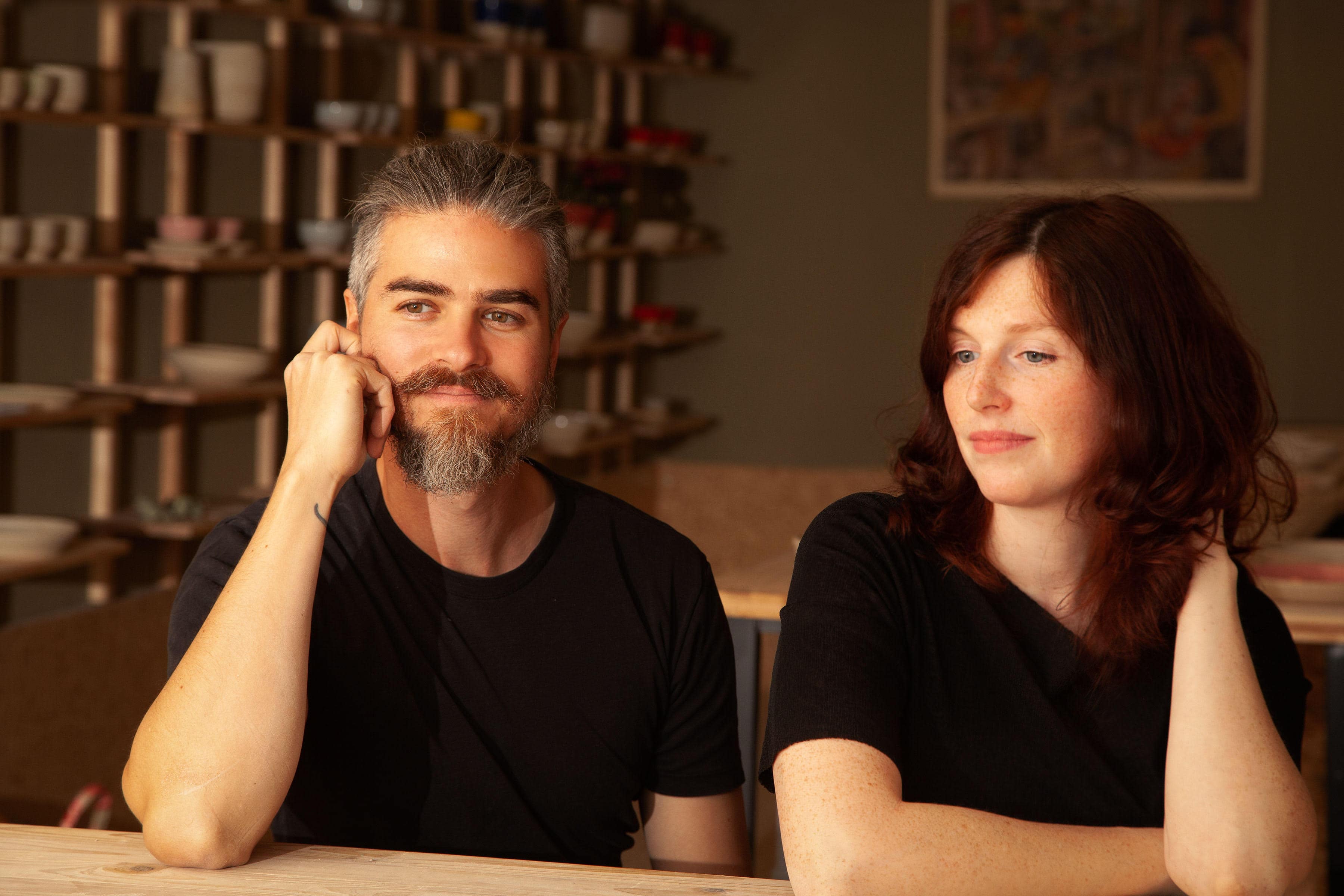
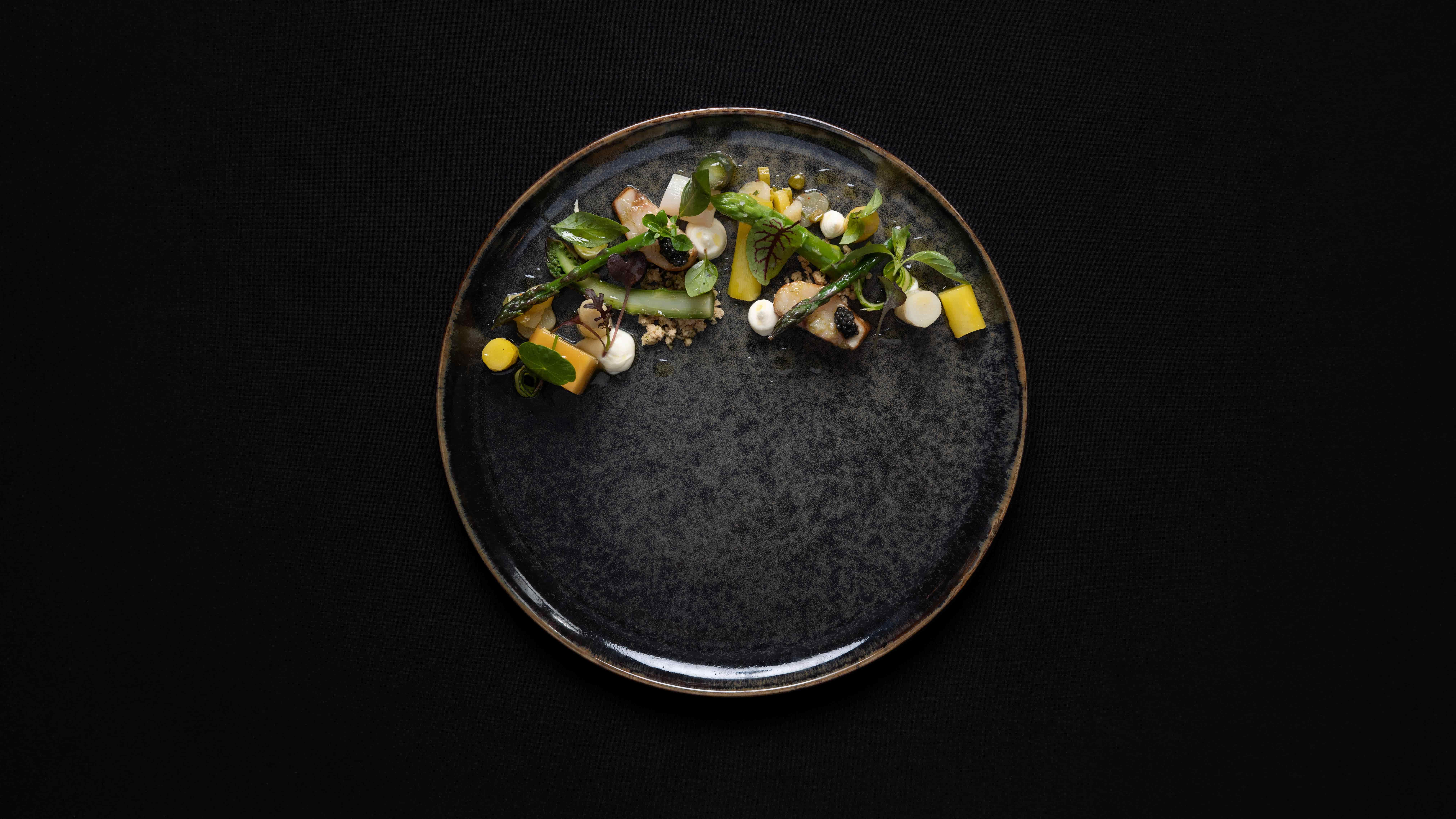
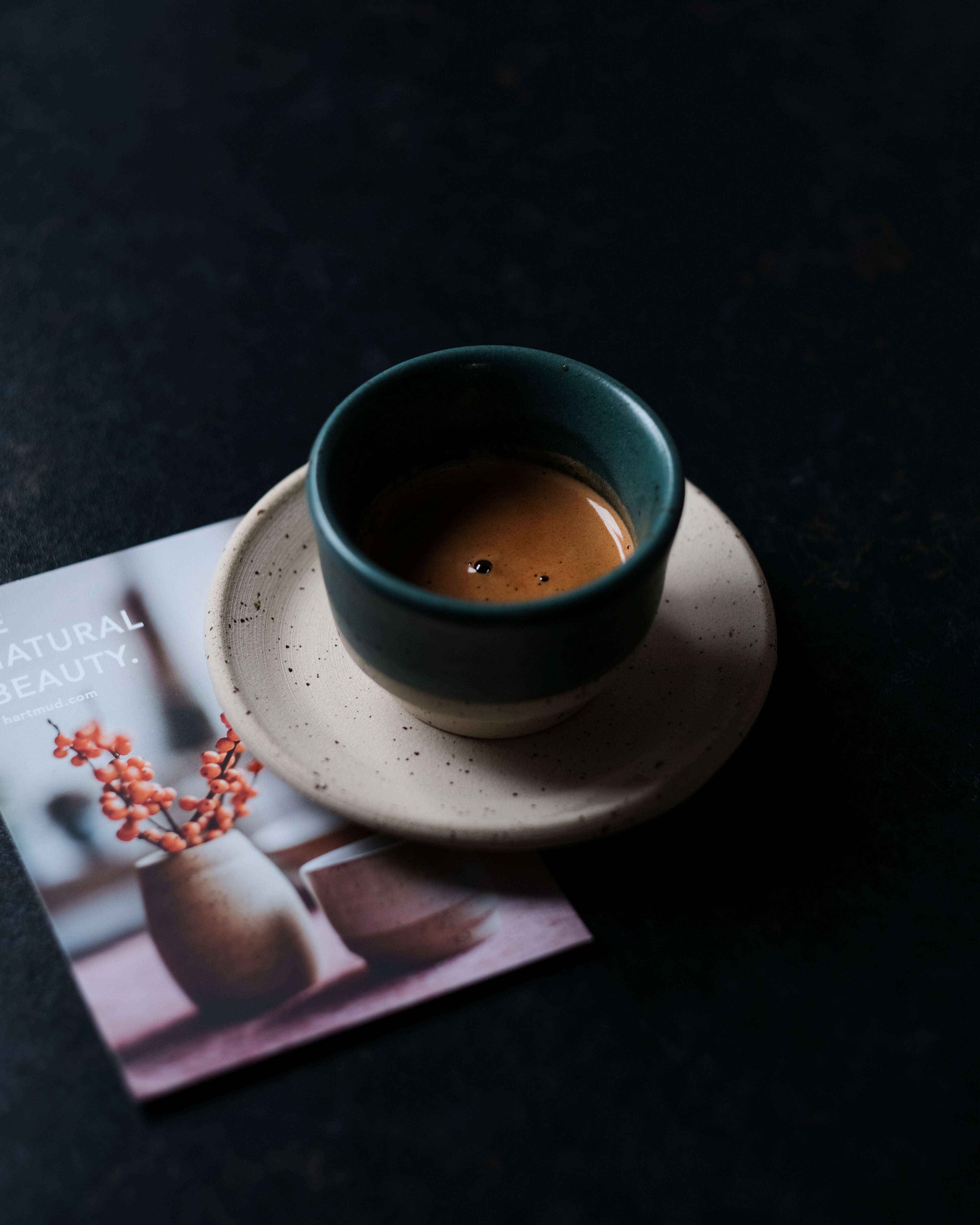
“We call it the culinary revolution: the people and restaurants who use our tableware have changed their habits in producing and preparing food, focused more on local ingredients and spread culinary awareness,” says Jérôme Alsoufi, who founded Hartmud Studio together with Isabella Zeiß. In this way, local tradition is being preserved again, old techniques rediscovered and forgotten varieties grown. He continues: “As part of a generation that grew up with the myth that academic work is more valuable than craft, we had to go through a profound shift in our beliefs to find our calling. We swapped clean office desks for stoneware clay. It is the volcanic heat in the kiln that hardens our work, not an algorithm that smooths out our lives. Relentless hours at the potter’s wheel and sore hands have taught us humility; and the smell of damp clay is our reward for being independent. We are potters and grateful to be part of a thirteen-thousand-year-old line of craftspeople.” Impressive words, full of passion.
The German art collective was founded in Frankfurt in 2016. Since then, Jérôme Alsoufi and Isabella Zeiß have been creating rare and beautiful high-end ceramic tableware. Production takes place in the Vogelsberg – exclusively small batches and limited editions, and high-fired stoneware. The showroom is in the east of Frankfurt. Hartmud’s clientele includes craft coffee houses, boutique restaurants and concept stores. In Frankfurt, Hartmud tableware can be found at Hoppenworth & Ploch, at Trinitii, at Kaffeemacherei and at the Hudson Yardsbar in the Hilton Hotel Frankfurt.
FROM BELGIUM TO DARMSTADT
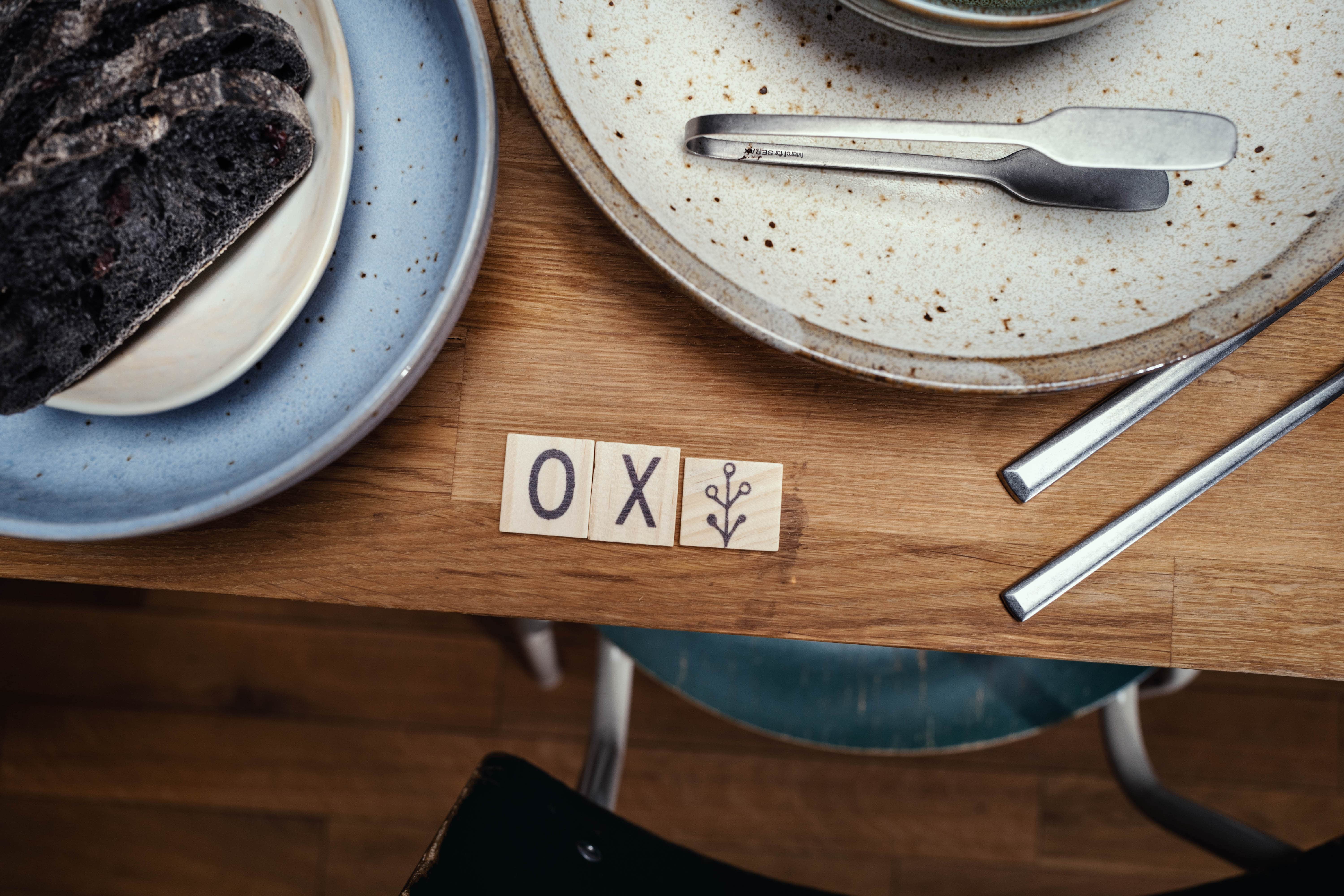
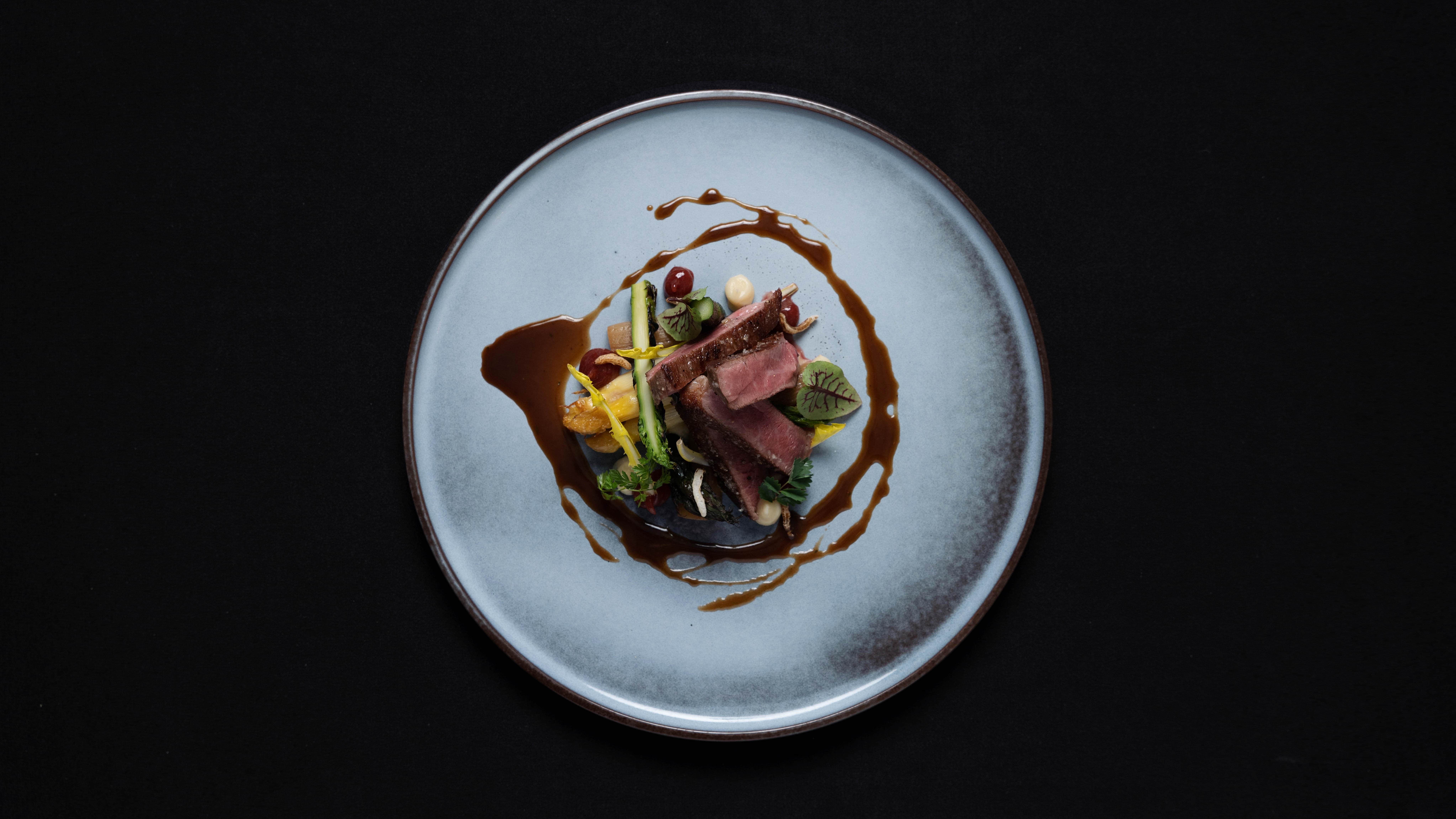
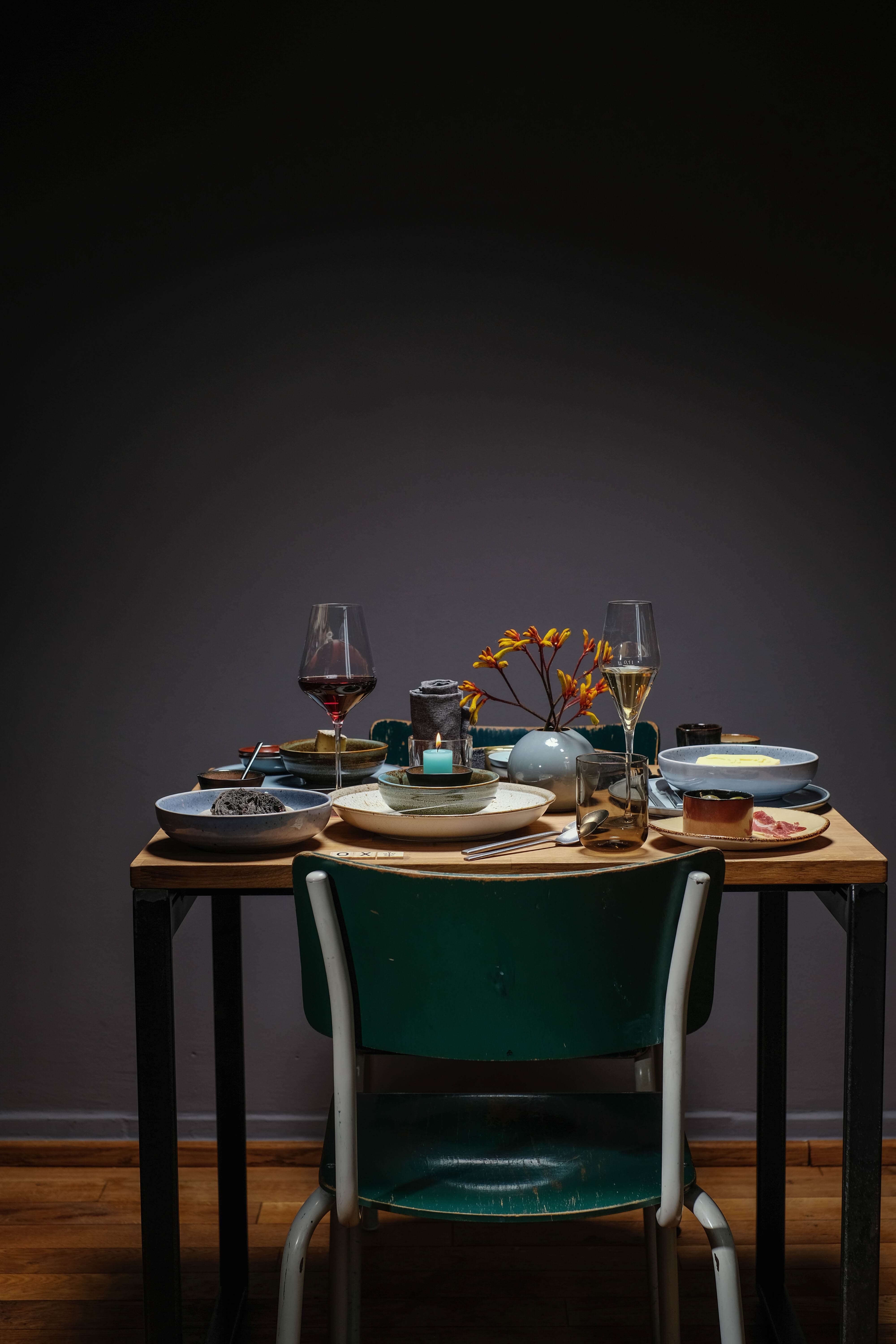
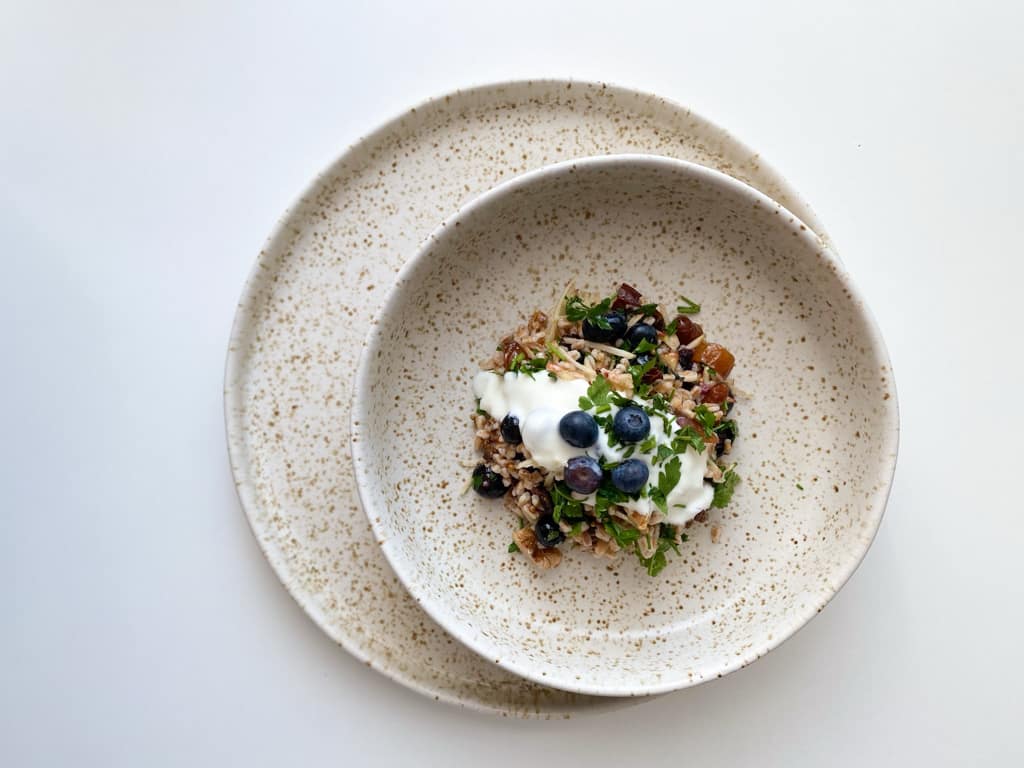
At the restaurant OX in Darmstadt, too, great importance is attached to the symbiosis of food and tableware. “Ceramics have something natural about them, and that fits our philosophy,” says David Rink, managing director and chef of the fine dining restaurant. “Many dishes have their colour and texture underscored, and you can deliberately showcase the produce.” Porcelain is still used as well, preferably for rather classic dishes. Rink opened the restaurant together with his brother Norman in November 2019. Guests quickly became regulars, and a fan base developed across the Rhine-Main region. The restaurant currently offers five- to seven-course menus, interpreting Franco-Iberian as well as upscale international cuisine. There are also vegetarian and pescatarian versions of the menu. Everything, of course, made exclusively from high-quality produce.
The ceramics used by the Rinks come from Serax. The company, originally from Belgium, is known for its international collaborations with a changing roster of artists, including the chef Yotam Ottolenghi and the fashion designer Ann Demeulemeester. Serax is the joint project of the brothers Serge and Axel Van Den Bossche. Over the past thirty years, the small business that started in a garage in 1986 has grown into a multinational company with over 65 employees and its headquarters in Antwerp. Today the company is run by Axel Van Den Bossche. The focus is on home accessories and ceramics. But David and Norman Rink of OX Restaurant are also aiming to work with small potteries. They are currently planning a collaboration with Ingrid Zinkgraf.
MADE IN THE RHINELAND PALATINATE
The passionate artist lives and works in Leinsweiler on the southern Weinstraße. Here Ingrid Zinkgraf expresses her pure love of experimentation and joy in making just as much in her abstract objects and modern painting as in the production of functional ceramics. Her œuvre ranges from such traditional functional ware to unusual firing techniques such as raku and smoke firing. An important credo for Zinkgraf is “never to lose sight of functionality”. With her minimalist, unadorned work she has her finger on the pulse of the times. Among those convinced are the restaurant Intense in Kallstadt and the restaurant Oben in Heidelberg. Ingrid Zinkgraf has been working as a ceramicist for 40 years.
GIRLPOWER
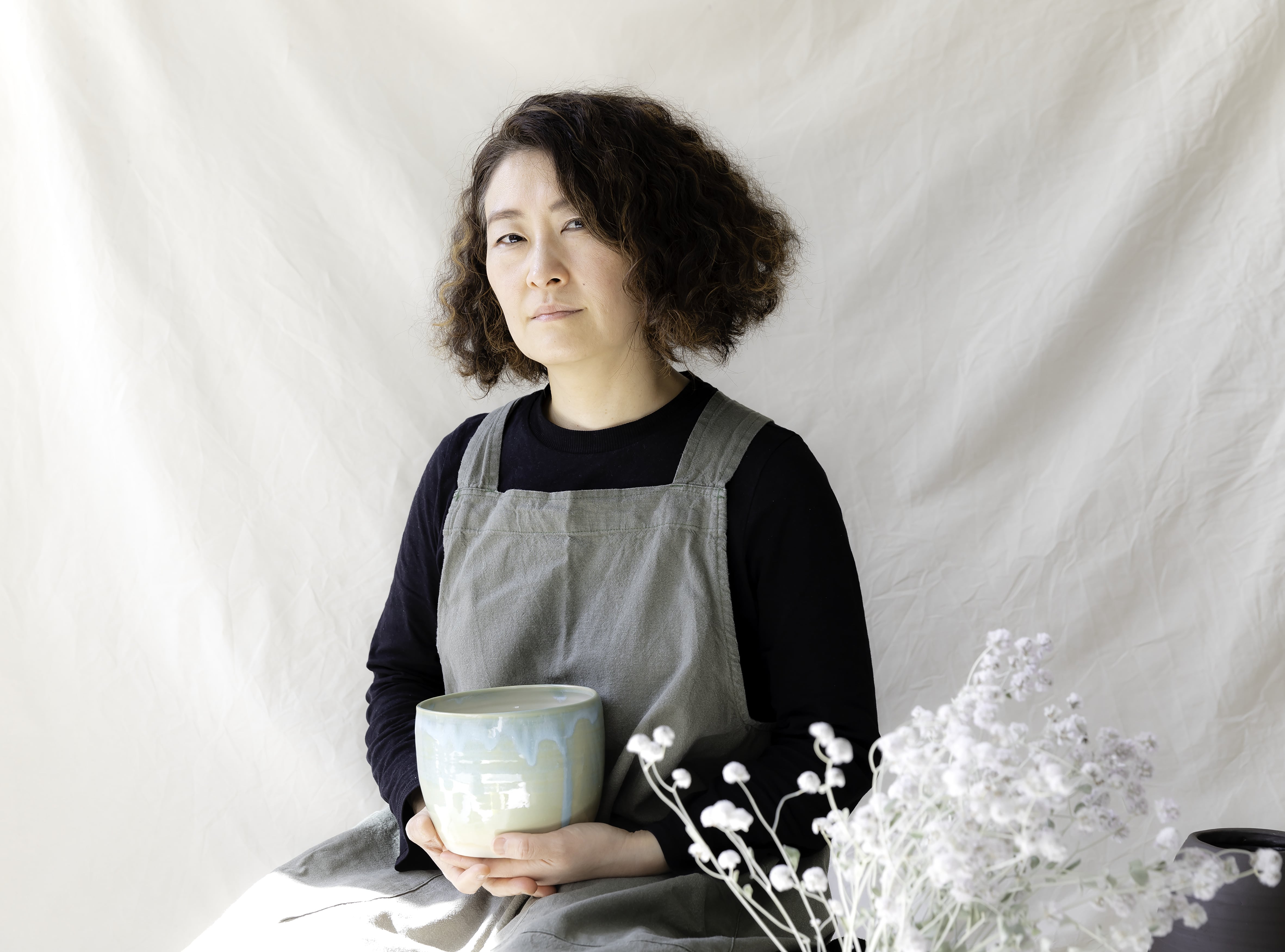
400Eva Kim has only been making pottery for three and a half years. Then last summer she opened her studio. In her studio at Danzig am Platz in Frankfurt, she throws her pieces on the potter’s wheel or models them freehand. “Every piece is unique,” says Kim. She continues: “because, unlike industrially produced tableware, handmade ceramics always have a slight variation in shape and colour.” It is precisely this imperfection that makes each piece so alive and gives it the value of uniqueness. Kim’s hand-modelled plates take on organic shapes, their contours flowing. Her glazes run into one another, and the resulting patterns and play of colours are reminiscent of a picturesque horizon in a landscape or the surface of another planet. So far Eva Kim has made teacups for the Emma Metzler restaurant and plates for the Greisslerei in Oberursel.
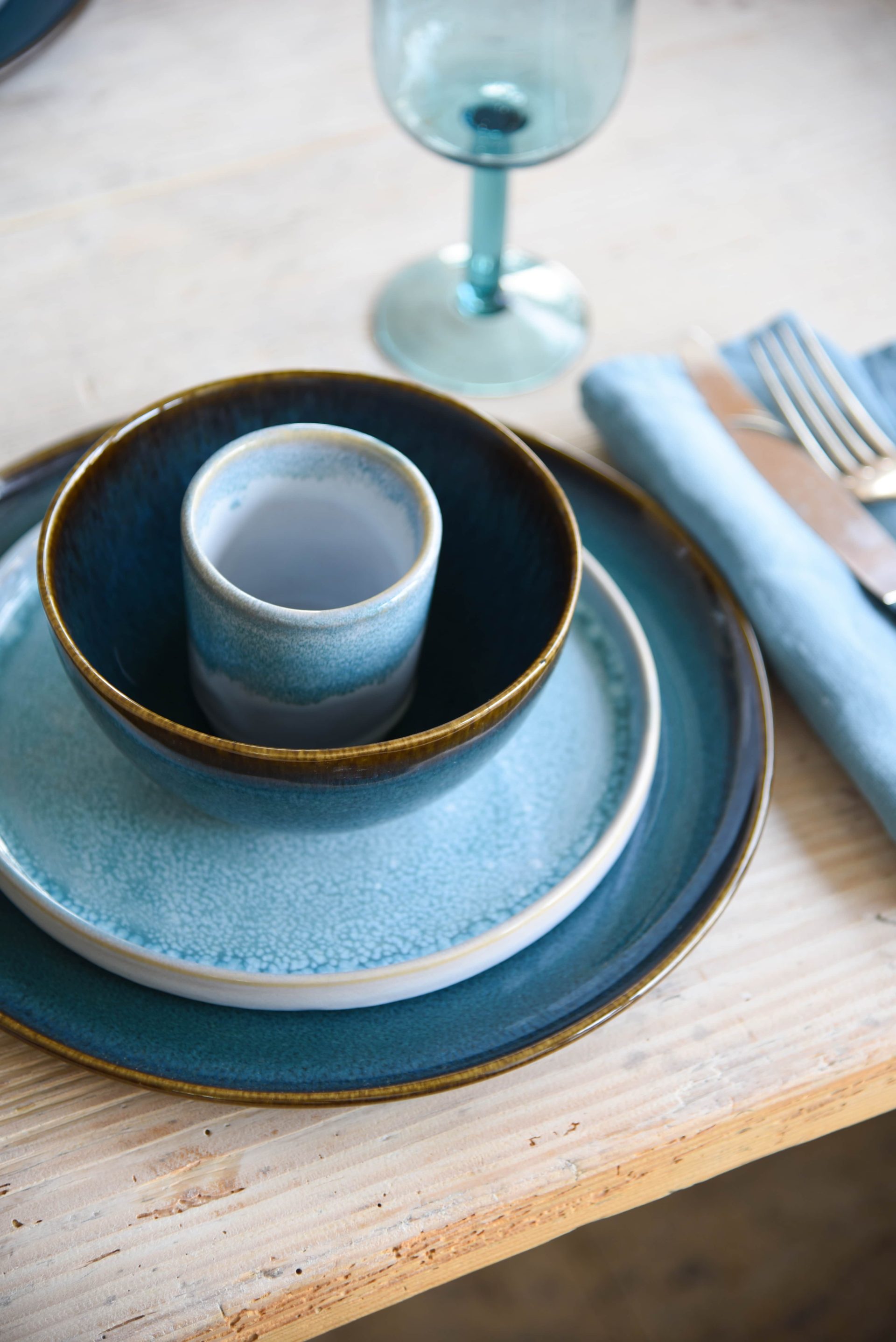
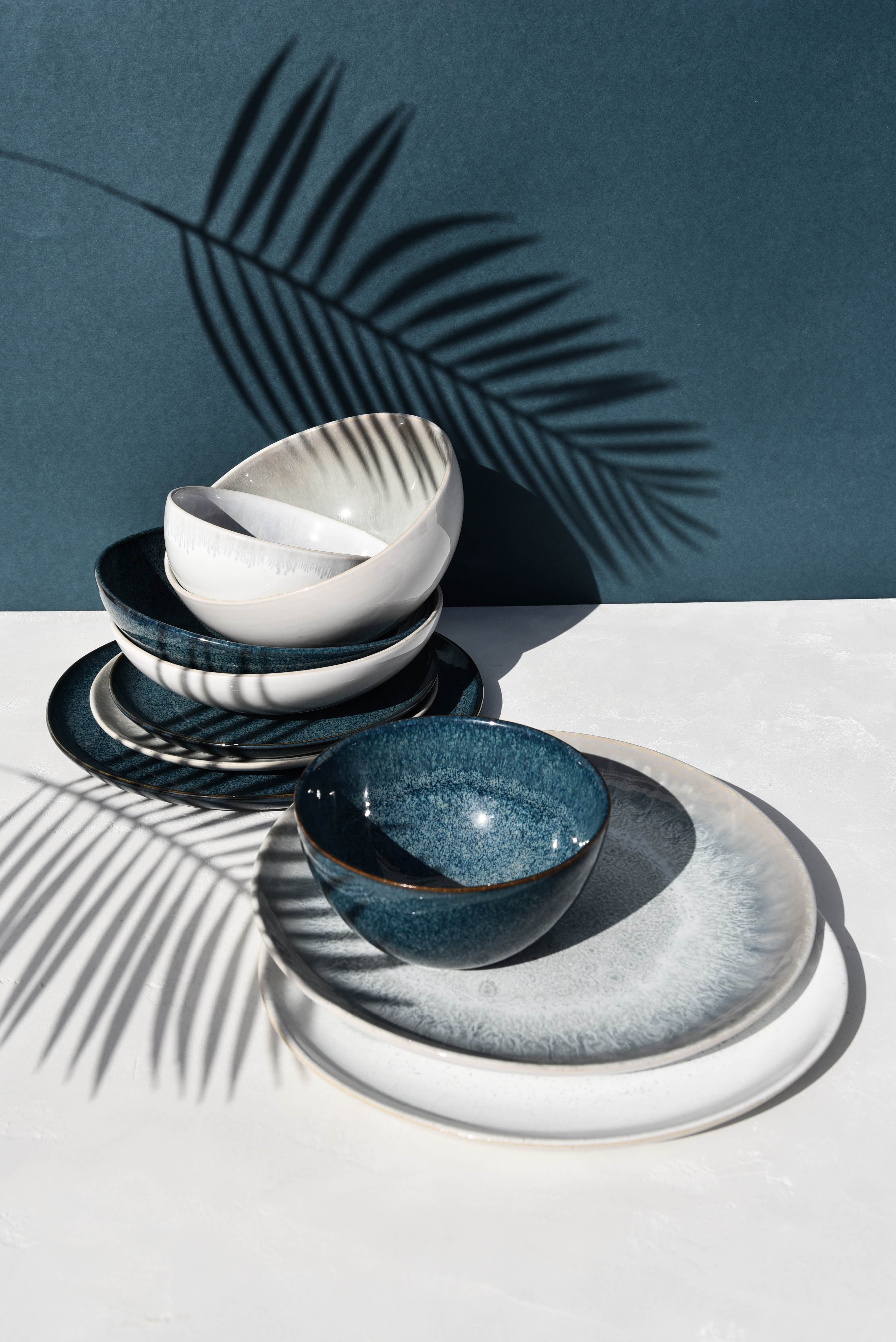
Not made by them, but lovingly selected and now also co-designed, are the ceramics that Anna von Hellberg and Laura Castien sell under the label Motel a Miio. During a family meal on holiday in Portugal, the two graphic designers fell in love with small, pastel-coloured tapas bowls that underline that wonderfully relaxed Portuguese way of life. The manufacturer was quickly tracked down, and the family holiday became the start of a business idea. Shortly afterwards, selected pieces made their way to Germany, and the Motel a Miio team then sold them at pop-up sales in various cities. The creative women from Munich have since created and launched their own designs, and there is also an online shop and 15 stores in Germany, Austria and Switzerland.
Motel a Miio wants to make its ceramics, which are somehow more colourful and “girlier” than others, accessible to anyone who loves the beautiful things in life. It is important to the family business to remain true to certain principles: the goods are produced exclusively in Portugal, and the designs are hand-picked and hand-painted.
More stories








GET IN TOUCH