
Business
I’M A HESSIAN!
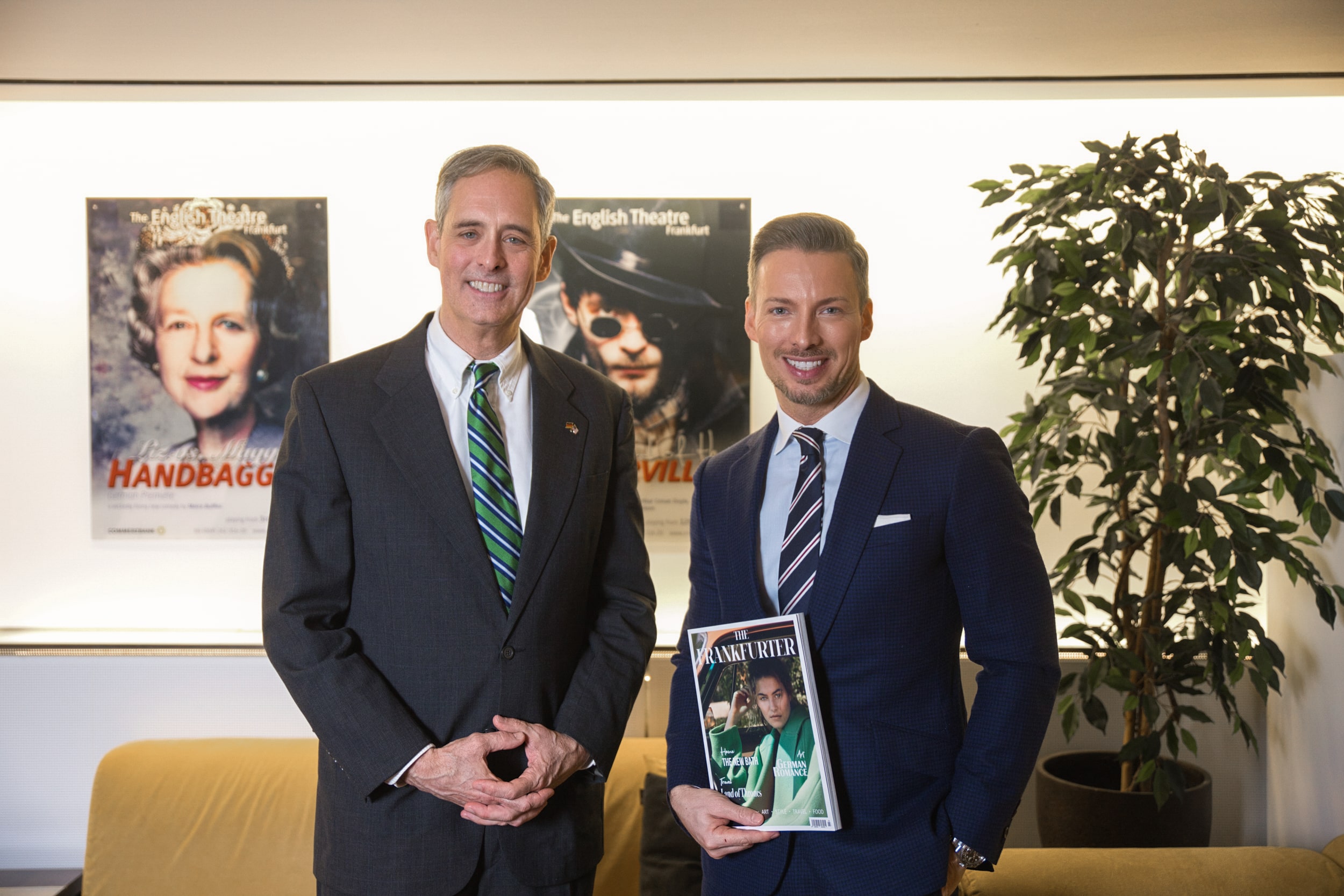
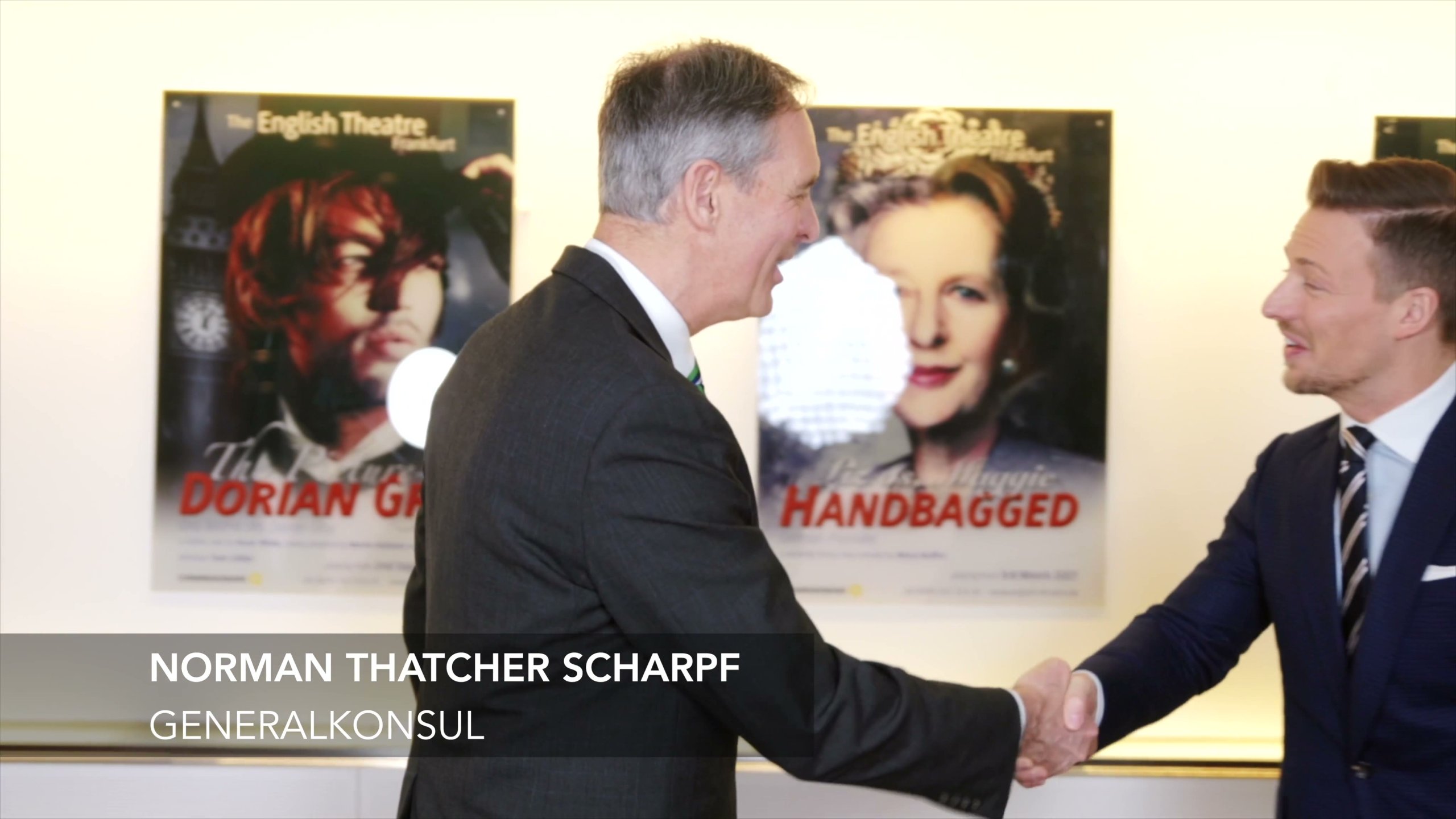
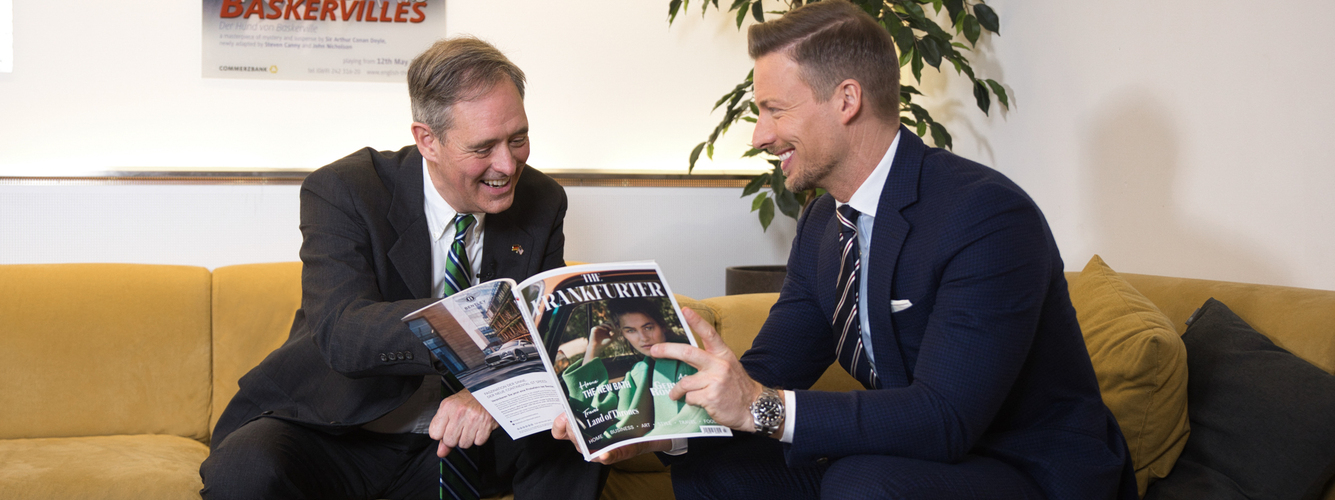
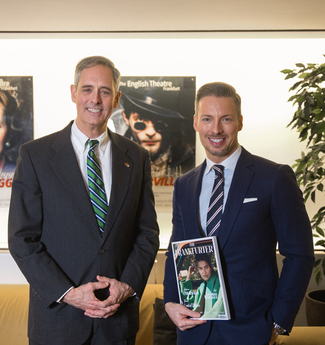
Since Norman Thatcher Scharpf took up his post as US Consul General in Frankfurt last year, a piece of Hessian emigrant history has also come to light. The diplomat, who heads more than 1,000 staff, looks back on his German roots with pride. At the end of last year he spoke with THE FRANKFURTER publisher Robin Zabler, who calls the USA his second home, about castles, business and the challenge of China.
Text Dr. Jutta Failing Photos Patrick Schmetzer, Brandy Willetts on Unsplash.com, Caleb Fisher on Unsplash.com
 Play video
Welcome to Hesse, Mr Thatcher Scharpf! A long time ago your ancestors said: bye-bye, Hesse!
“My maternal grandfather’s ancestors came from a village called Magdlos in what is now the district of Fulda. Recently my wife and I visited the church there where my great-great-grandparents were baptised. They were poor and wanted a better life for themselves, so they emigrated to America in the 1860s. Other ancestors came from Baden-Württemberg. Like so many Germans, they settled in Pennsylvania. My roots are 75 per cent German.”
Have you warmed to your ancestors’ language?
“I have learned seven languages. But honestly: German is the hardest. Before I came to Germany, I spent six months learning German intensively in Washington, D.C., where I also grew up. I already knew Germany itself from earlier visits.”
How do you like to spend your free time?
“My wife and I make use of the wide range of culture in Frankfurt and the region. We have the family Museumsufercard, which lets you visit numerous museums as often as you like. We really enjoyed the Rembrandt exhibition at the Städel Museum. The English Theatre, the largest English-language theatre in continental Europe, is of course a highlight. We have also been to the Oper Frankfurt and to the ballet at the Staatstheater Wiesbaden. And we love the beauty of nature; we very much enjoy hiking in the Taunus or driving to the Rheingau. I am also a fan of palaces, castles and cathedrals – and I have resolved to visit as many as possible.”
Your CV is as impressive as it is extensive. Most recently you were deputy head of the Office of the US Secretary of State. You have received numerous high honours and have already served as a diplomat in several countries.
“Before joining the Foreign Service, I served as a surface warfare officer in the US Navy, including on the destroyer USS Robinson. I studied economics at the University of Pennsylvania and hold a master’s degree in national security resource strategy from the National Defense University in Washington, D.C. I can always count on the support of my wife and three children.”
As Consul General, you head one of the largest diplomatic missions in the world. You are the manager of this important hub. That requires experience and vision. In your view, what defines German-American relations?
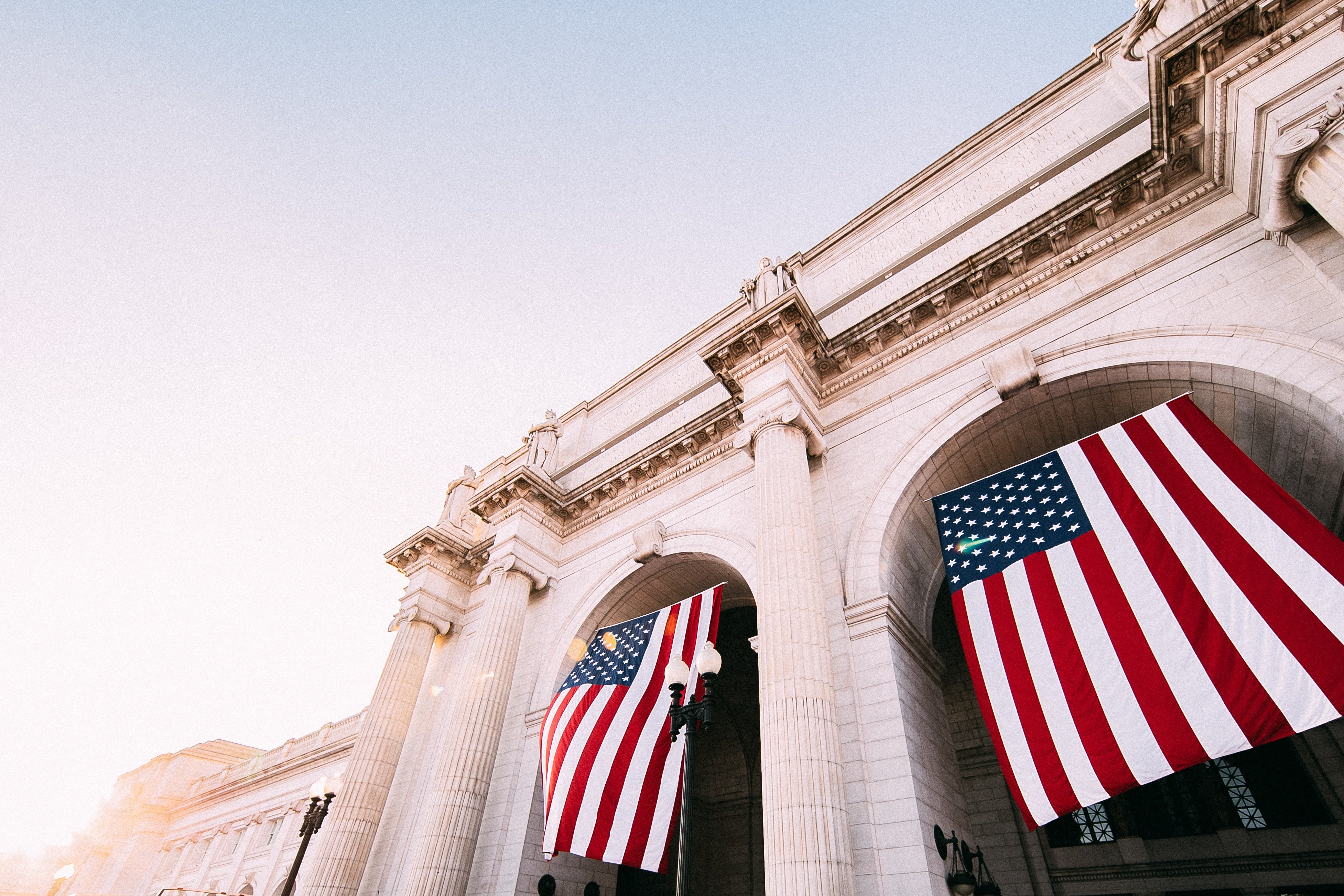
“We are culturally very close; the affinity here is enormous. One in eight Americans has German roots. And US military personnel stationed in Germany always take a piece of Germany back home with them. The USA and Germany have been great partners for 75 years, and this is based on shared democratic values and respect for freedom and human rights. One of the tasks of the US Consulate General in Frankfurt, whose consular district covers Rhineland-Palatinate, Baden-Württemberg and Saarland as well as Hesse, is to continue deepening this partnership in many ways, for example through study exchange programmes, think tanks and business promotion. On his inaugural visit to Berlin in summer 2021, US Secretary of State Antony Blinken stressed that the USA has ‘no better partner and no better friend than Germany’.”
In Berlin, Antony Blinken underlined the importance of international cooperation in tackling the world’s crises and conflicts. From an American perspective, what are the greatest political tasks here?
“US President Joe Biden and Secretary of State Antony Blinken have set out a top three. First: the fight against the Covid pandemic, and with it the development of vaccines and global vaccine distribution, also with the help of a partner such as Germany. The world must be prepared for future pandemics. The second challenge is clearly climate change. On his first day in office, President Biden signed the USA’s return to the Paris climate agreement. By 2030 the United States intends to at least halve its emissions of climate-damaging greenhouse gases compared with 2005. Together with Germany and other partners, we must encourage more countries to reduce emissions in order to achieve the climate targets.”
And the third challenge?
“The West’s relationship with China. After 1945, the USA and the leaders of the European countries together created the rules-based world order founded on democratic principles and values, which brought prosperity and peace. China is striving for a more authoritarian model. When the country violates international norms, for example on human rights, we have to hold it to account. At the same time, the USA needs and wants to work with China where possible. This applies in particular to the climate targets, since climate change is a global challenge. At the UN Climate Change Conference in Glasgow last November, the USA and China announced climate cooperation.”
What goals have you set yourself for the next three years in office?
“In principle, I would like to see deeper cooperation between the USA and Germany in security policy within NATO, in preserving the rules-based world order for the benefit of the economy, and in climate protection. Strategically, the Consulate General in Frankfurt not only performs an important service and support function for more than 100 other US missions around the world. It also provides supra-regional consular services and – something particularly important to me – we promote economic cooperation between the USA and Germany in many ways. Here we want to work even more closely with local German companies and organisations in future. We help them understand transatlantic trade better. Investing in the USA is highly attractive. Likewise, we help US firms when they want to create a European market, especially if they have Frankfurt in their sights. We also want to encourage more of our compatriots to study in Germany. There is no better way to maintain close relations than by bringing young people together.”
Investing in the USA is highly attractive. We help with that.
— Consul General Norman Thatcher Scharpf
Your advice to German companies wanting to invest in the USA – and to American firms wishing to gain a foothold in Hesse?
“For German companies, it is crucial to be informed about local laws, as these can vary from state to state. They should also contact ‘SelectUSA’, a US government programme led by the Department of Commerce that facilitates business investment in the USA. American firms receive important market information through the U.S. Foreign Commercial Service at the Frankfurt Consulate General. We offer services and programmes here that help companies export goods and services to Germany. Trade specialists help with finding local business partners, setting up companies, promoting products and services, obtaining valuable market research reports and protecting intellectual property rights.”
When Americans think of Germany ...
“ ... they think of a centre of innovation and excellent engineering. Of high precision, productivity and punctuality. Germany’s reputation in the USA is excellent. Its high-tech training is exemplary and, through German companies that become active in the USA and bring these standards with them, could be of great benefit to my country. And: for us Americans, good beer always comes from Germany!”
More stories








GET IN TOUCH