
Food
HANS & VALENTIN REBHOLZ
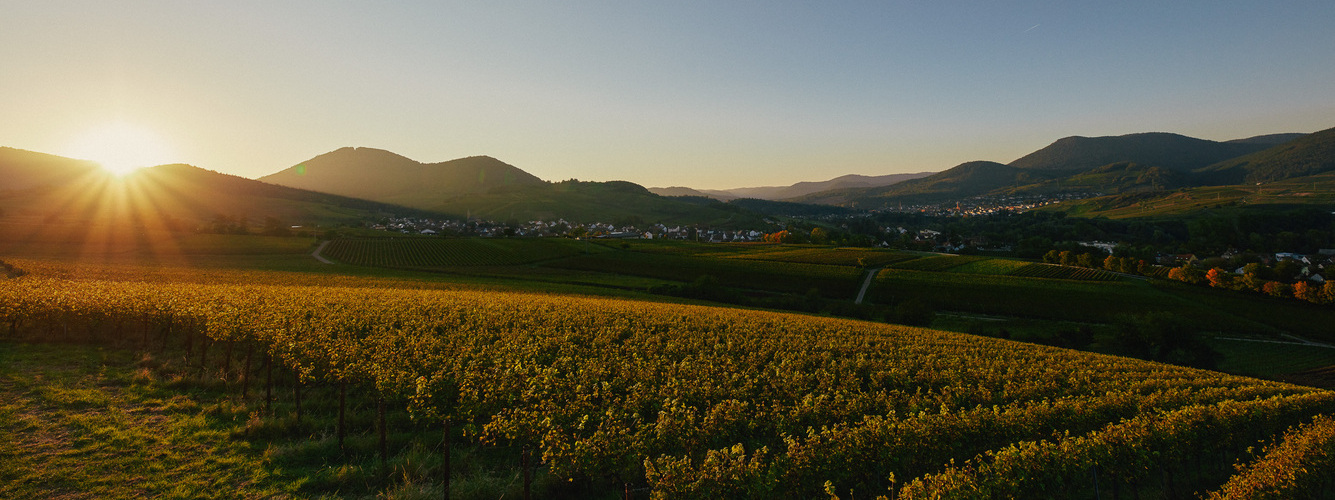
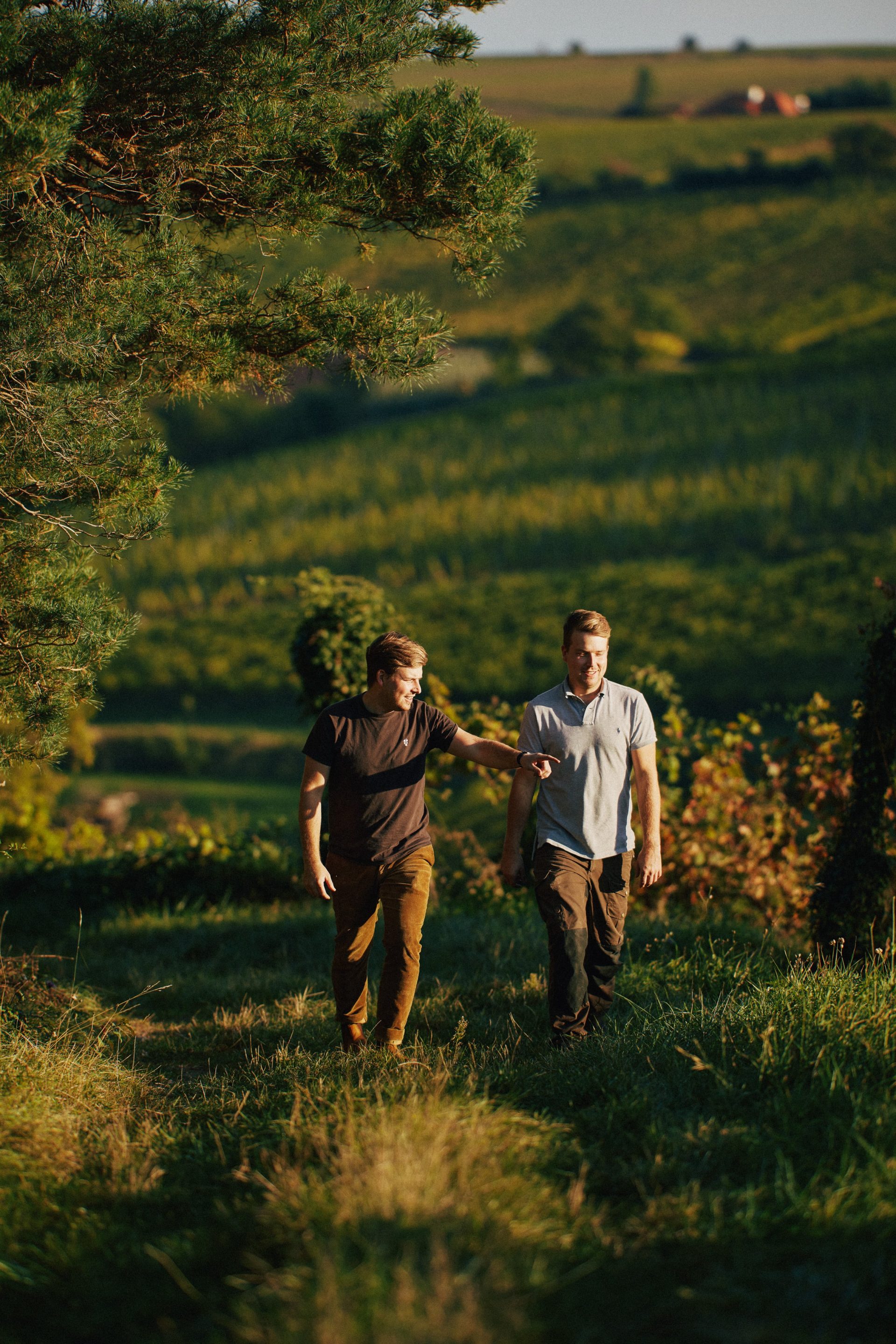
The Weingut Ökonomierat Rebholz in Siebeldingen in the southern Palatinate is one of Germany’s very top addresses. With the twins Hans and Valentin Rebholz, a generation of winemakers is now at the helm – one that has to face climate change more than ever before. THE FRANKFURTER visited the siblings, who love to experiment.
Text Dirk Eisel Photos Peter Bender
Only recently awarded the highest rating of five red grapes by the Gault&Millau wine guide as one of just ten estates, and also given the top rating of “world class” by all the other wine guides, the Weingut Ökonomierat Rebholz has been firmly established at the top by Hansjörg Rebholz and his wife Birgit – and not only of German winemaking. Now, with their sons, the twins Hans and Valentin Rebholz (born 1995), the next generation is already in the middle of taking over the business. A major task, which the two young winemakers are tackling with courage, humility, a love of experimentation and a constant awareness of family tradition.
NOT JUST A TRADITION, BUT A STYLE
It is certainly not a given that the handover of a family business, especially a top one, to the next generation goes smoothly. In the case of the Weingut Ökonomierat Rebholz, this is probably due not least to the fact that everyone involved stands one hundred per cent behind the estate’s philosophy.
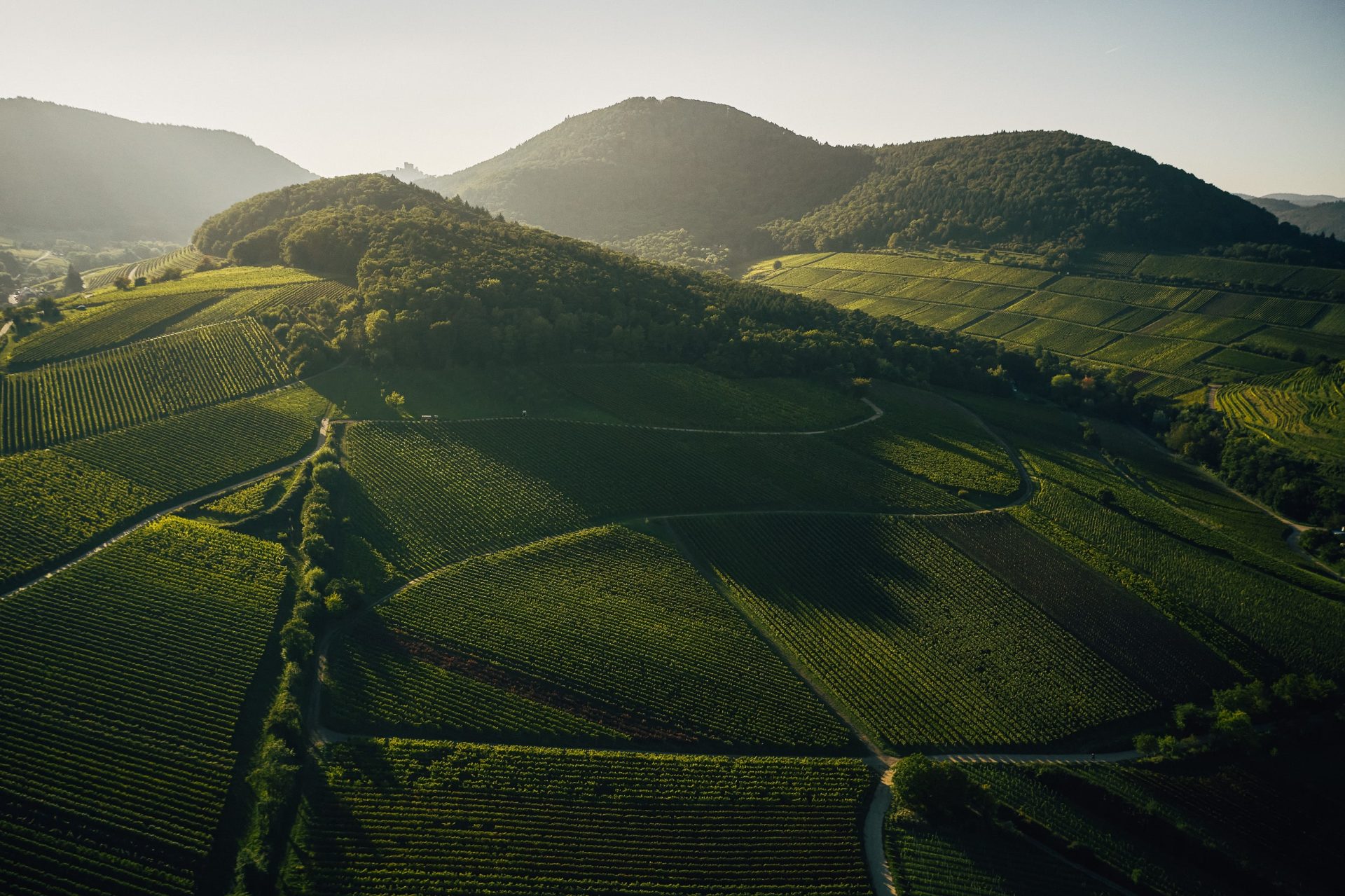
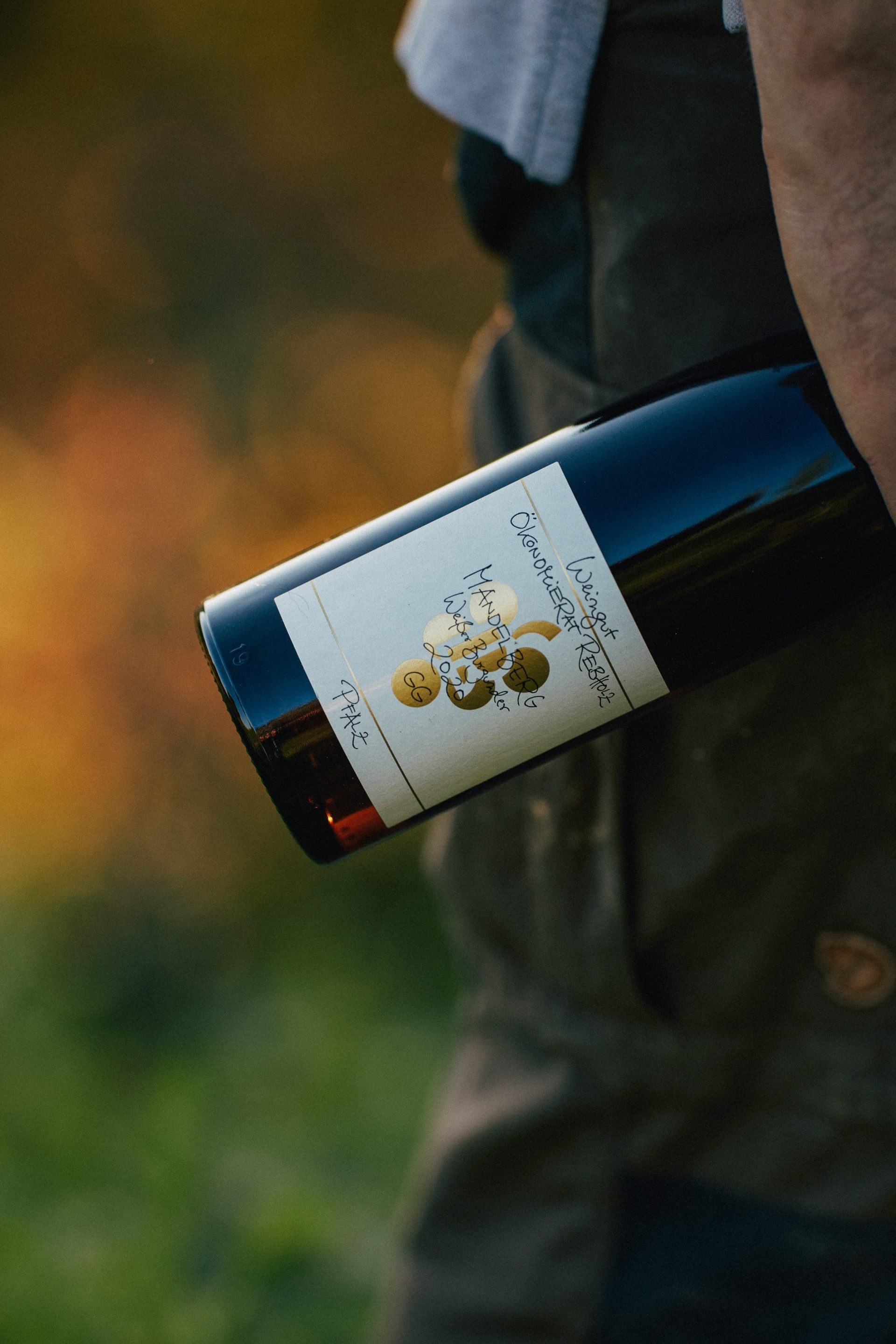
“In our family we don’t just have the tradition of being a wine estate; our estate also has a style that we identify with,” explains Valentin Rebholz. “We live and work in a special place, perhaps even unique in the Palatinate, where a great many different soil types meet in a very small area. We want to preserve the diversity of the vineyard – that is, what the soil imparts to the wine – and intervene as little as possible in the cellar.”
This idea of a wine that shows its origins in a purist way – that reflects the vintage and the soil on which it grew – goes back to Hans and Valentin Rebholz’s great-grandfather.
ON GOOD GROUND: THE FORESTER
Eduard Rebholz (1889–1966), a trained forester, took over his parents’ vineyards after the Second World War and set his idea of “natural” wines, which have to make do with what nature gives them, against the artificially sweetened wines fashionable at the time. Together with his son Hans Rebholz (1920–1978), he meticulously researched and analysed every aspect of winemaking, from climate, soils and planting material to the ideal harvest period and work in the cellar, and adapted his approach accordingly. In addition, Eduard Rebholz experimented with irrigation systems, acquired vineyard plots that were difficult to cultivate and had low yields, going against the spirit of the times, and built one of the few pergola systems outside South Tyrol (still in use today), in which the vines climb up wooden frames and form a roof. With this he not only earned the honorary title of “Ökonomierat”, awarded to him for his life’s work and his services to agriculture and which still graces the estate today, but also laid the foundation for its present success.
People often say twins can communicate without words. Valentin and I can confirm that. We can work together very intuitively, without many words.
— Hans Rebholz
That success is largely down to the twins’ father, Hansjörg Rebholz, who, after the early death of his father Hans in 1978, had to take over responsibility for the estate together with his mother at just 19, and from the mid-1990s, together with his wife Birgit, catapulted it into the national and international spotlight. All this as a rigorous continuation and development of the principles of the two previous generations, which among other things led to the switch first to organic and then to biodynamic farming.
NOT A BURDEN, BUT AN INCENTIVE
“The fact that we are so interested in the estate has a lot to do with having seen that our father’s work is appreciated,” stresses Valentin Rebholz. “I still remember the day our parents came back from Mainz after our father had been named ‘Winemaker of the Year’ by Gault&Millau. That was a huge thing. We were six or seven years old. And suddenly there were twelve Spanish sommeliers sitting in our kitchen at lunch.”

MAKING THEIR MARK
Since 2012 the twins have grown into the business, taking on more and more responsibility and already making their own mark. Inspired among other things by the experience and ideas they gained during their training at top wine estates in Germany and abroad, such as Wittmann, Fürst, Dönnhoff, Foradori and Trimbach, they constantly scrutinise and question every aspect of winemaking.
“We’ve loved experimenting since we were children,” says Valentin. “Constantly questioning what you do. At the moment we’re both focusing intensely on the vineyard and trying out an incredible amount, in vine training, soil management and so on.” One of these experiments, a Riesling aged in a clay amphora from the legendary Italian winemaker Elisabetta Foradori, was so convincing that one of the best restaurants in the world, El Celler de Can Roca in Girona, Catalonia, bought up every bottle exclusively.
ADAPTING TO CLIMATE CHANGE
However, the twins see their biggest challenge not in questions of wine style or product range, but in adapting to climate change.
“Vineyards in Germany are still geared, as they were 40 years ago, to bad, changeable weather and lots of moisture. During land consolidation, the vineyards were all laid out so that rainwater that doesn’t seep away is carried off as quickly as possible – with a channel, preferably concreted, through pipes into our river, the Queich, and from the river into the Rhine and from the Rhine into the sea. We think a lot about how we can set up the estate so that it still works sustainably and very well economically in 40–50 years’ time. That’s a big challenge, a huge issue. We want to convert the estate so that, overall, it has no negative impact on our climate and on nature,” the great-grandsons of Ökonomierat Eduard Rebholz agree.
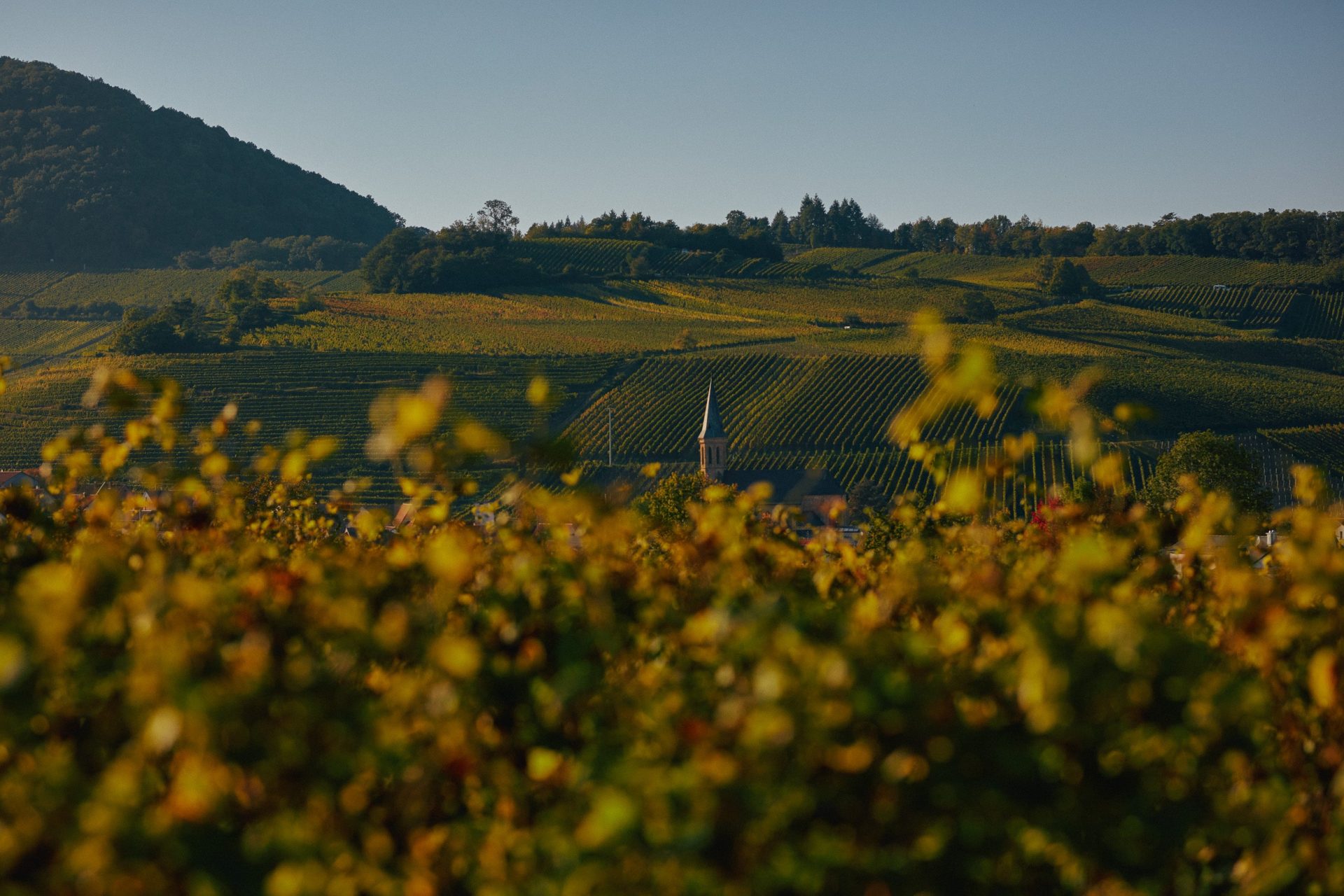
Particularly affected by the drought is what is probably the estate’s most important vineyard, the “Birkweiler Kastanienbusch”, one of the most famous single sites in the Palatinate and, at 320 metres above sea level, the highest. “In the Kastanienbusch, together with our colleagues, with whom we are forming an irrigation cooperative, we are in the process of setting up this site so that we can capture winter rainfall and compensate for extreme weather,” Valentin Rebholz hopes.
More stories








GET IN TOUCH