
Art
HAND MADE IN GERMANY - MEISSEN
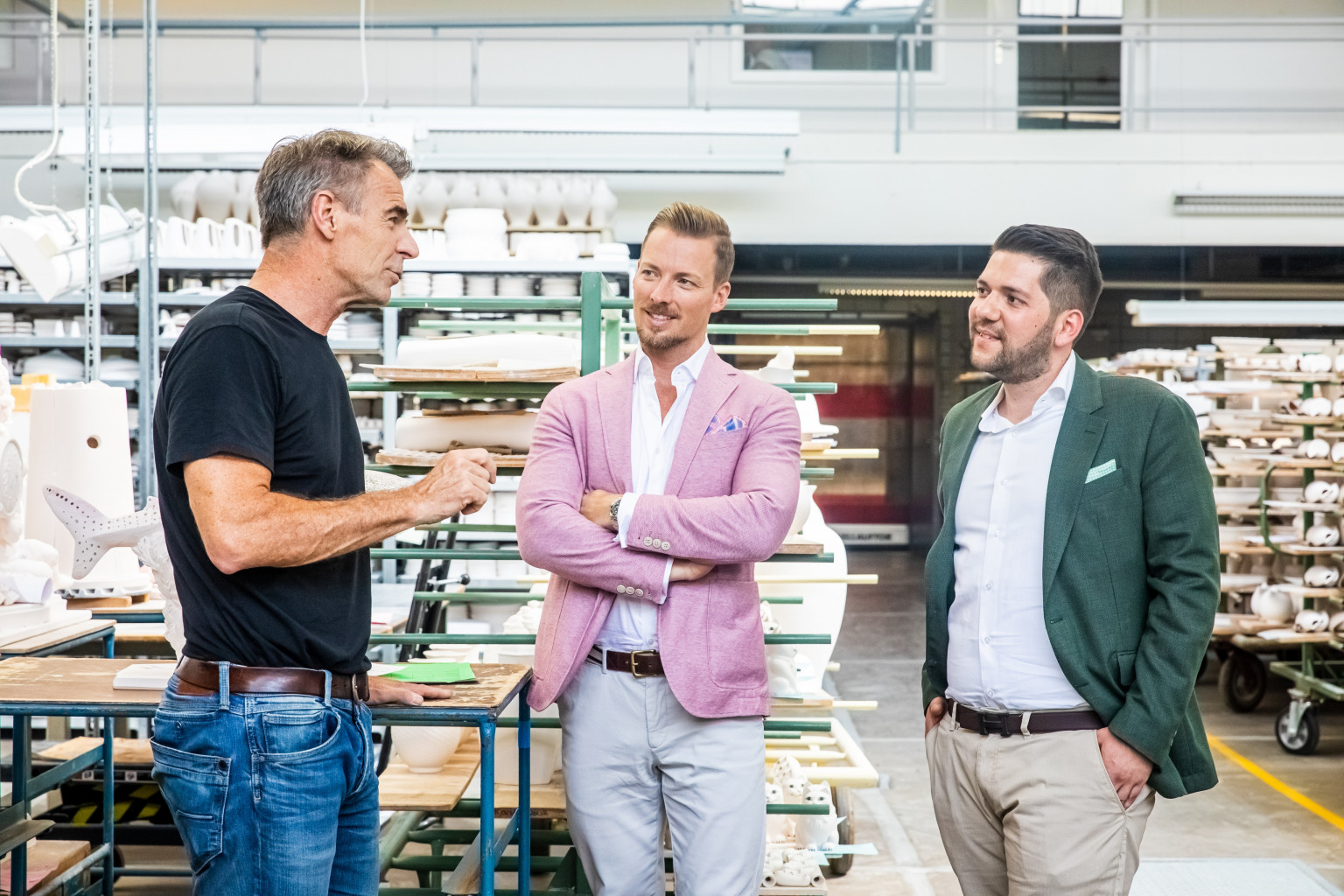
The blue crossed swords identify the oldest luxury brand in the world. For THE FRANKFURTER, the famous porcelain manufactory in Meissen, Saxony, where Europe’s porcelain production began in 1710, opened the doors to its workshops. Meissen managing director Tillmann Blaschke gave us an exclusive tour of the realm of “white gold”.
Text Dr. Jutta Failing Photos Nikita Kulikov
 Play video
The romantic picture-book town of Meissen, not far from Dresden, is the perfect introduction to the living history that awaits us in the production areas of the Meissen porcelain manufactory. Within walking distance of the beautiful old centre lies the legendary world of this long-established company, where true treasures are guarded behind a venerable façade. The mould archive, for example: with its 700,000 plaster moulds, it is the largest and oldest collection of model and working moulds in the world. As if on a walk through the stylistic epochs, the company’s capital is lined up closely on long wooden shelves, a spectrum that has grown from Rococo through Classicism and Art Nouveau to the avant-garde of the 21st century – an enormous treasure. Then, in one of the workshops, the “Schwerterei”, where you can see for yourself that the swords are still painted by hand on every piece of Meissen porcelain, as they always have been.
Anyone who buys Meissen porcelain acquires a piece of the art of living. If it’s only about functionality, any plate will do. The question is: what is your personal style?
— Tillmann Blaschke
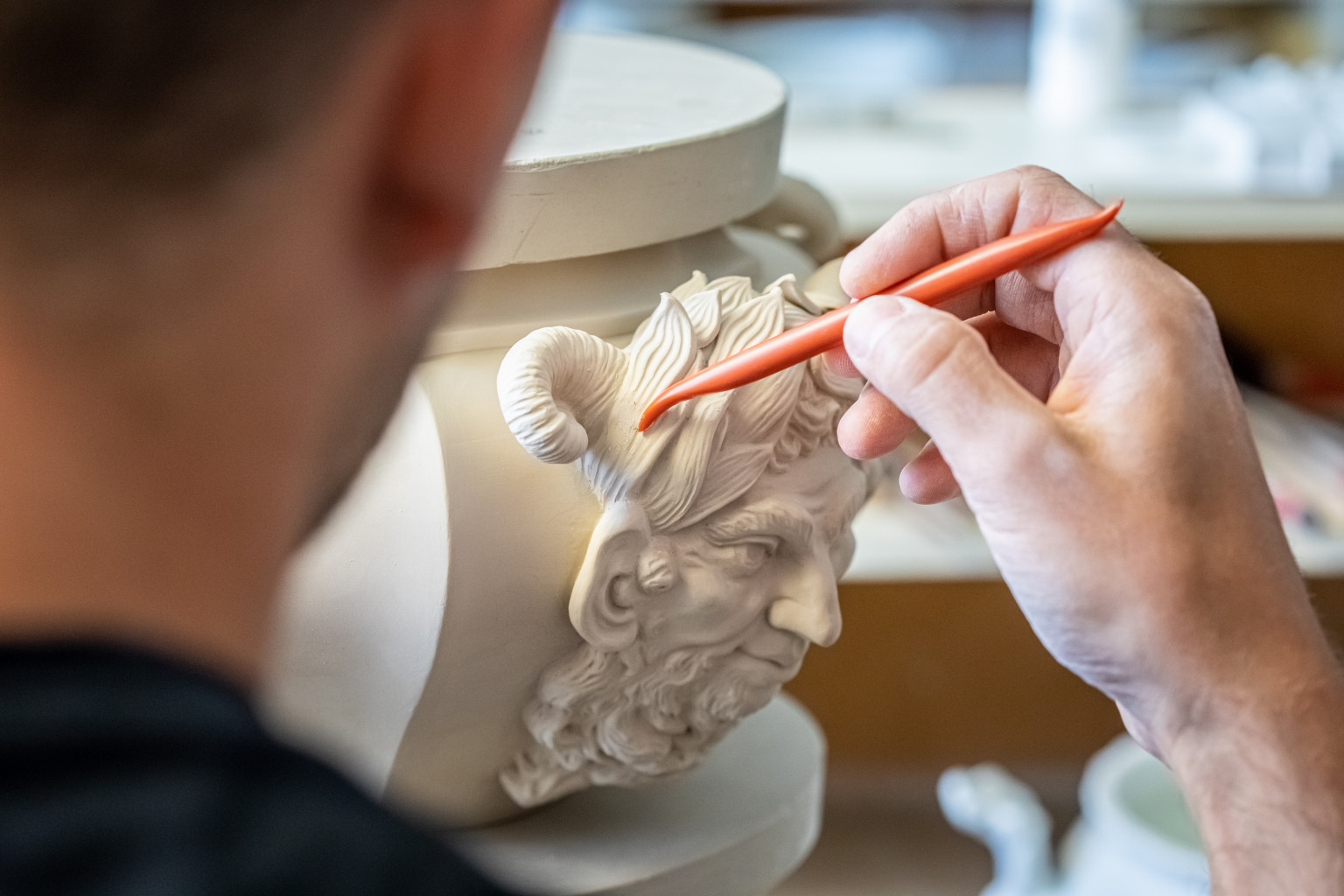
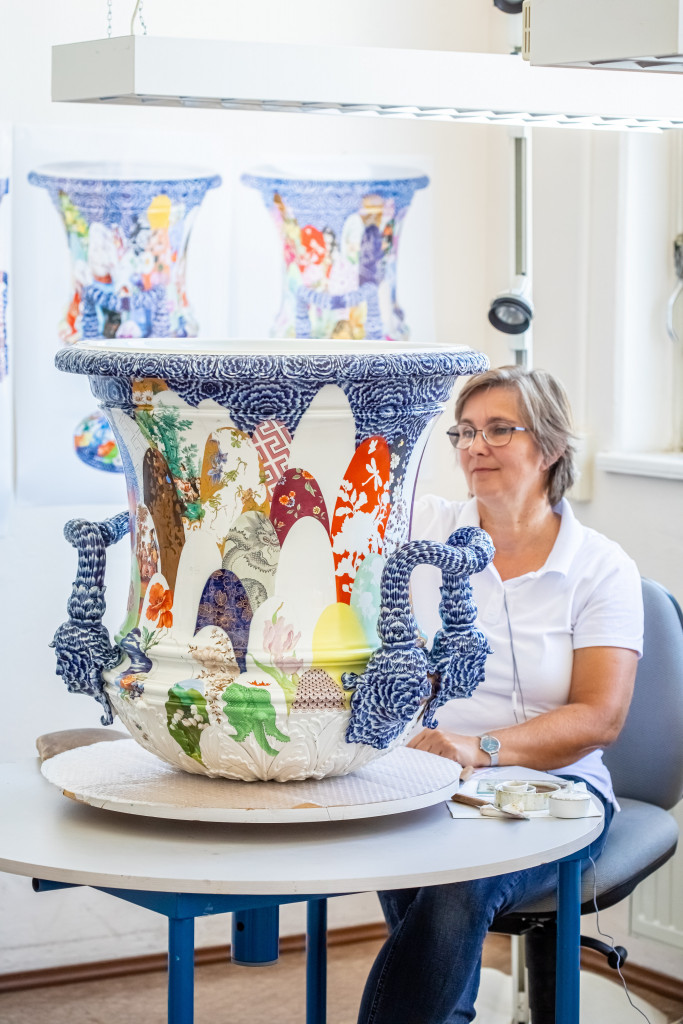
Capturing the soul of porcelain is a high art – mastered to perfection by the porcelain painters, some of whom, we learn, come from families that have been doing the very finest brushwork at the manufactory for three and four generations. As with the modellers, the young talent is trained over years by the company’s own specialists; traditional know-how and the 10,000 in-house colour recipes, mixed with powder and oil, are kept secret. An almost sacred silence reigns in the studios – you could hear a brush hair drop, so intently are people working on plates, vases and limited-edition masterpieces.
WHITE BEAUTY
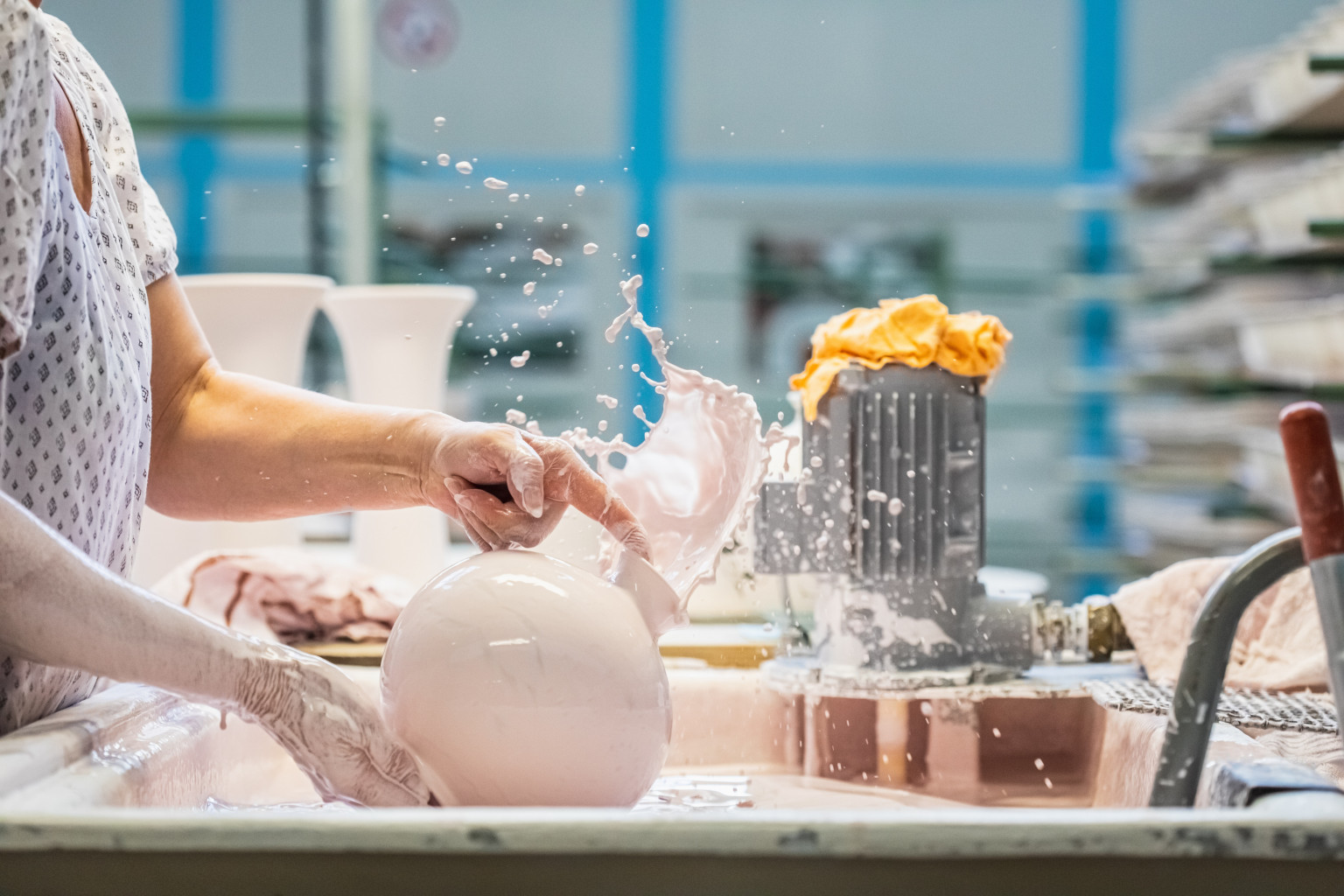
It all starts with kaolin, feldspar and quartz – just as it did 300 years ago. “We mine the mineral kaolin, which we need for the porcelain paste, ourselves in Seilitz, the smallest active mine in Europe, near Meissen. Of course we could buy in kaolin, but it wouldn’t have this outstanding quality,” explains managing director Tillmann Blaschke. He shows us the typical Meissen white that comes from this exceptionally pure clay from its own mine: “It makes our white so clear, glossy and brilliant – that’s unique.” Two employees mine the natural raw material underground and can extract up to 150 tonnes of kaolin a year.
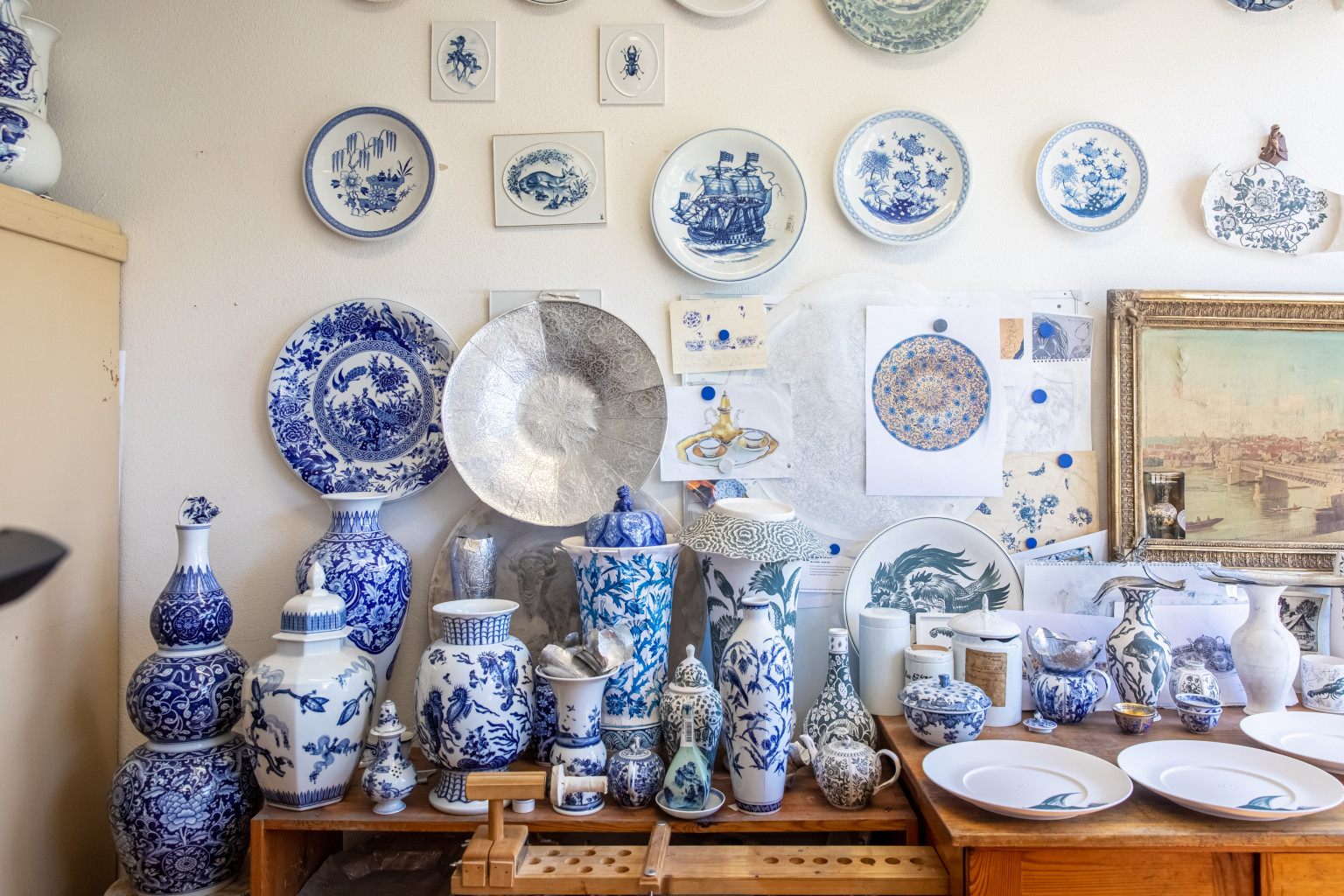
The famous white is not least the basis for the Meissen onion pattern, the cobalt-blue underglaze decoration regarded as one of the most successful blue decorations in the history of porcelain. And production continues in the same vein – with the highest standards of quality, each piece is made by hand and fired at above-average temperatures. Designers and painters often work for months on very elaborate creations, into which goldsmithing may be incorporated, and on large sculptures, and only when these works of art meet the strict criteria of refinement do they go on sale. Decades of experience are needed for such decorations.
HISTORY TOUR
It is absolutely astonishing to see how the modellers and repairers manage to bring out even the smallest human emotions in the figures. Or to create the greatest liveliness in animals and flowers. This is more than masterly talent; it is a gift that is immortalised here. In their work, these artists live the philosophy of Meissen, just as the generations before them did. The manufactory’s cooperation with internationally renowned designers and artists from various disciplines is a fountain of youth. Their designs, hand in hand with the creations of the chief modellers, enrich the house’s own formal language in a very particular way, as we can admire in many examples in the impressive “Erlebniswelt” of the museum of the Meissen Porzellan-Stiftung. From the “philosopher’s stone”, which the alchemists once sought, only to discover porcelain instead, to contemporary sculptures – the museum unfolds the mysterious origins of Meissen porcelain and takes visitors on a journey through time, with impressive exhibits, right up to today’s exclusive table culture, including a premium shop and outlet.
CULTURE OF UNIQUENESS
Tillmann Blaschke describes what makes up the essence and value of this brand as precisely as his painters cross the swords. “In these times we are seeing the growing importance of one’s own home and an appreciation of lasting values. During the coronavirus period, our unique craftsmanship and our cultural heritage have noticeably revived the regional market for Meissen in particular. We have reinterpreted iconic decorations from our archives; the result includes the ‘Meissen Collage’ collection, made for a broader and also younger audience.”
You can be sure that whatever leaves this porcelain manufactory carries many messages. When you walk through the halls and see the incomparable meticulousness with which work is done there, these messages become clear at once. A plate here is not just a plate but a story you can feel. Every plate is unique, each an individual one-off. Using it every day means partaking in a piece of cultural heritage.
More stories








GET IN TOUCH