
Home
GREEN RISES
How do we want to live? Especially now during the coronavirus pandemic, but also through global warming, we are learning how important parks, trees and green spaces are for the quality of life in the city. How Frankfurt is promoting urban greenery with exciting projects – and has been doing so for 150 years, by the way – is the subject of our THE FRANKFURTER cover story, for which we also climb “onto the roofs” of international showcase projects.
Text Martina Metzner Photos Stefan Cop, Eckhard Krumpholz, Tom Wolf, Moritz Bernoully, Horst Ziegenfusz, Coleen Rivas, Sergio Sala, Qingyan Zhu, Georg Doerr, Lara Mohr, Urban Media Project, HGEsch ingenhoven architects, Daniel Sessler, Gruenflaechenamt Frankfurt
VIDEO PROMOTION
 Play video
GREEN BOULEVARD IN PARIS
When Paris mayor Anne Hidalgo announced in January 2021 that work on the “extraordinary garden” on the Champs-Élysées would begin this year, an image went around the world showing the grand avenue from the Place de la Concorde up to the Arc de Triomphe as a green promenade. Paris is just one example of metropolises worldwide that are countering the consequences of climate change with more greenery, above all to reduce warming. This is because cities heat up much faster than places in the countryside. This is due to the heat-storing effect of asphalt and concrete. More and more heat islands are forming that no longer cool down even at night. The recent heatwave summers have already shown us this. Forecasts indicate that some metropolises could be up to eight degrees Celsius warmer than today by 2100.
FRANKFURT - THE CITY AS A “SPONGE”
And Frankfurt is likely to be right at the top here. In 2018 the city received the distinction of “Germany’s warmest city” – a “bittersweet title”, as Frankfurt’s environment agency sums it up. But urban green is also meant to help combat other consequences of climate change such as heavy rain and winds – and increasingly against noise pollution and particulate pollution. Under the guiding principle of the “sponge city”, the greenery is meant to soak up water and release it when needed. And since last year, another crucial aspect has been added: because of the coronavirus pandemic and restricted mobility, residents are increasingly seeking relaxation right on their doorstep, in parks, in public green spaces and in community gardens. People now therefore speak of “stressed green”.
RISE OF COMMUNITY GARDENS
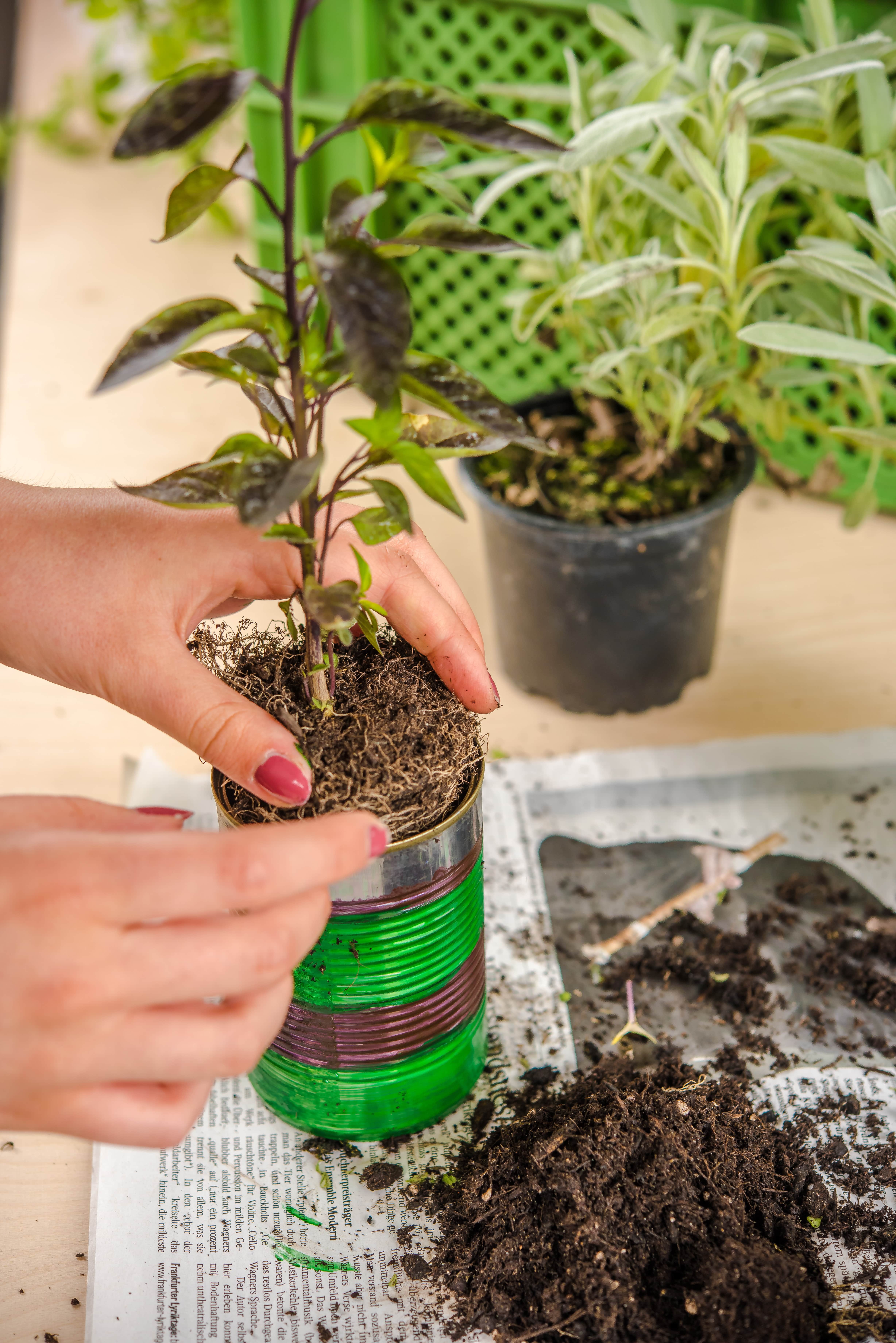
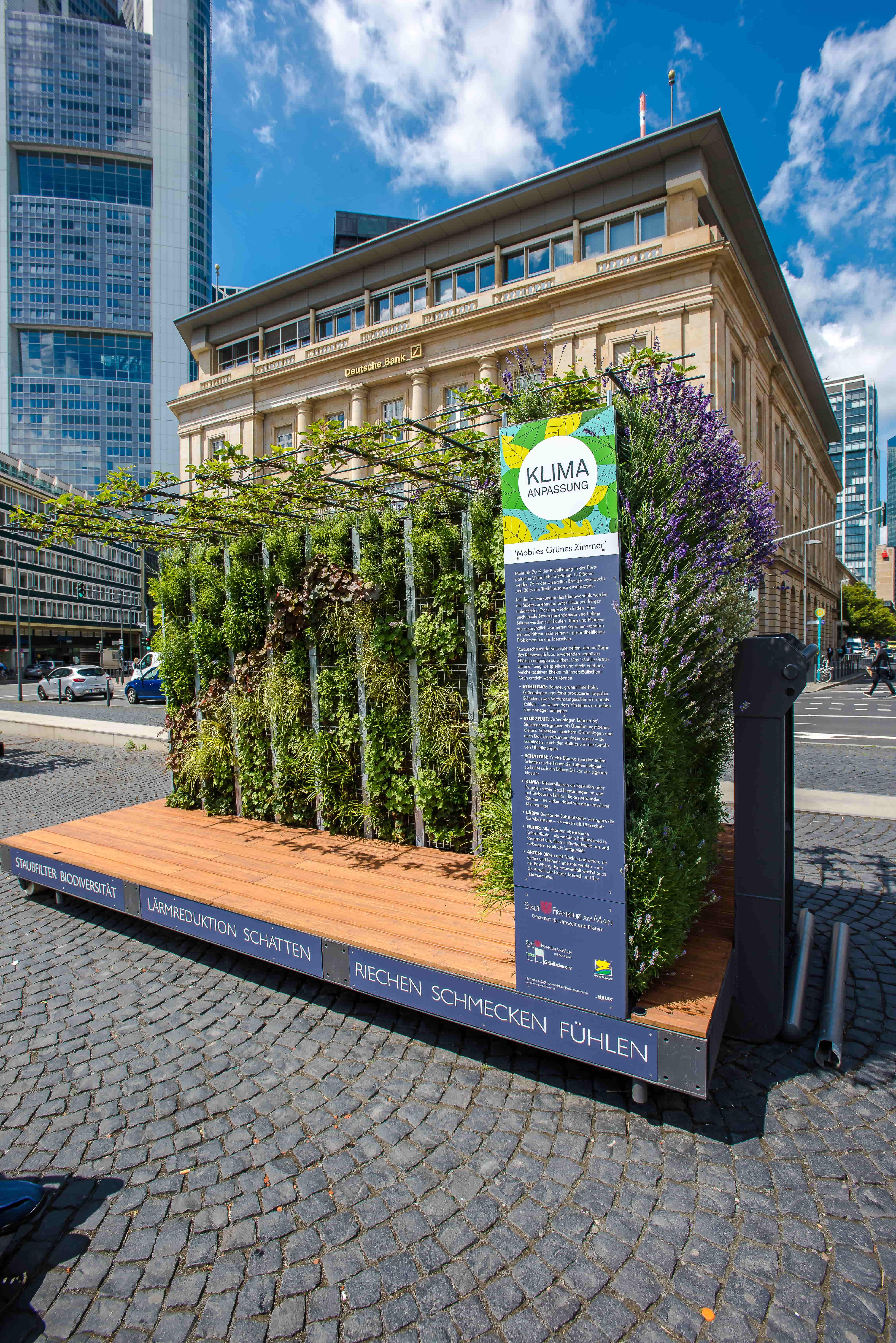
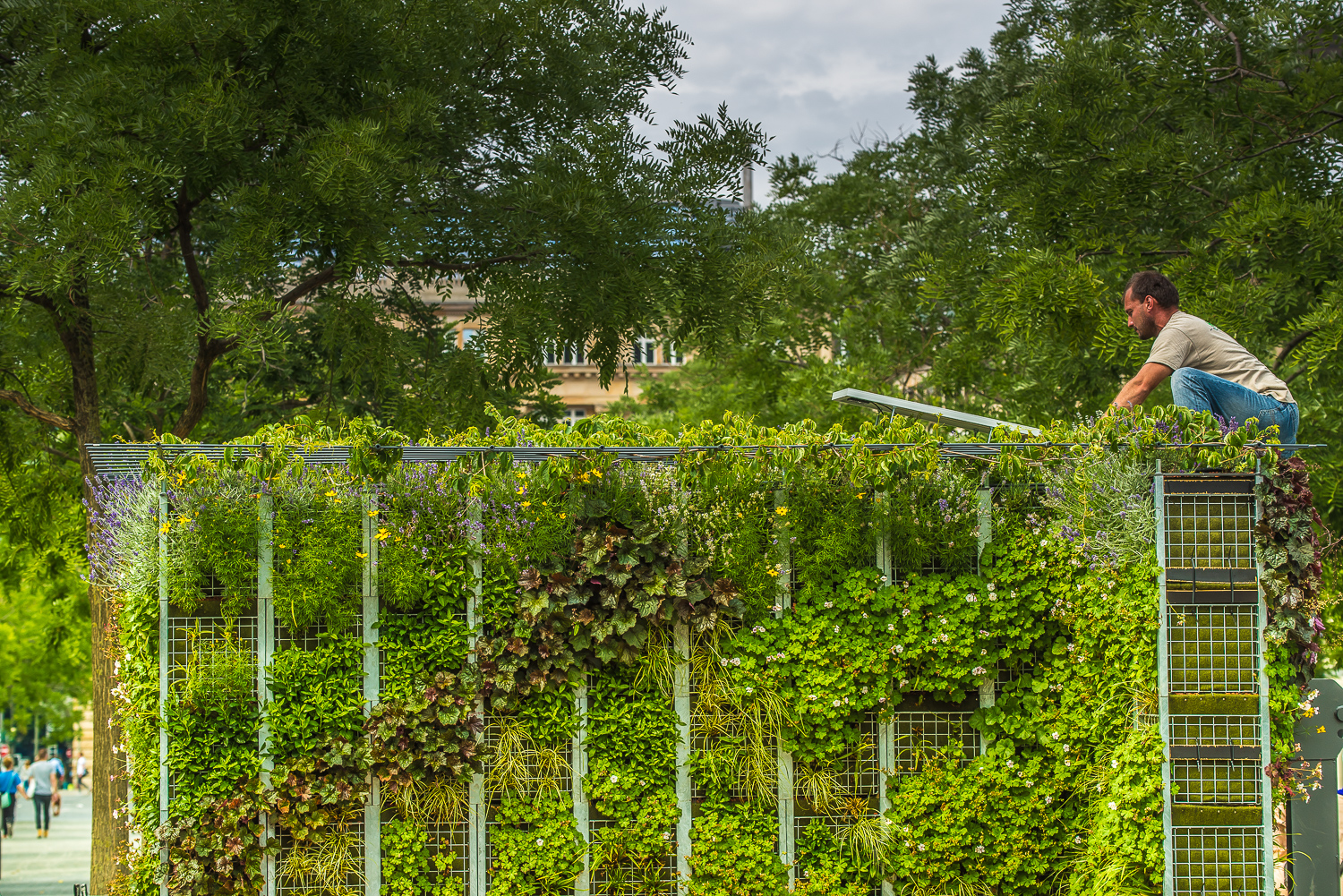
Climate adaptation in cities can only be achieved as a task for society as a whole – on that, participants at the conference “Klima prägt Stadt” in Frankfurt at the end of 2020 agreed. Community gardens are a good example of how city dwellers themselves help to tend public green spaces. The movement came from the USA and Great Britain to the world’s metropolises in the 2000s. City dwellers made fallow land usable for small community and neighbourhood gardens on their own initiative and at the same time saw this as a social project, because urban gardening thrives on taking part and learning from one another.
After the first wave, which in Germany produced, for instance, the Prinzessinnengärten in Berlin and the Frankfurter Garten (now: Neuer Frankfurter Garten) in Frankfurt, these initiatives are now firmly established in the urban landscape. In Frankfurt there are over 20 of these urban gardening projects, including Tortuga Eschersheim, Essbares Fechenheim and the Ginnheimer Kirchenplatzgärtchen. All of them share the aim of bringing a piece of land and nature back into the city and of testing and advancing sustainability themselves.
HAPPY BIRTHDAY, PALMENGARTEN!
The relationship between city and nature has changed greatly over time. Industrialisation in the 18th and 19th centuries turned cities into today’s centres of density, from which nature – fallow land, kitchen gardens and fields – was largely pushed out. But as cities became increasingly inhospitable and stuffy, not least because of the fumes from nearby industries, parks and green spaces were created. They were built according to the ideas of well-known landscape designers such as Peter Joseph Lenné and were strongly oriented towards the romantic image of a thoroughly orchestrated, beautiful and harmonious landscape.
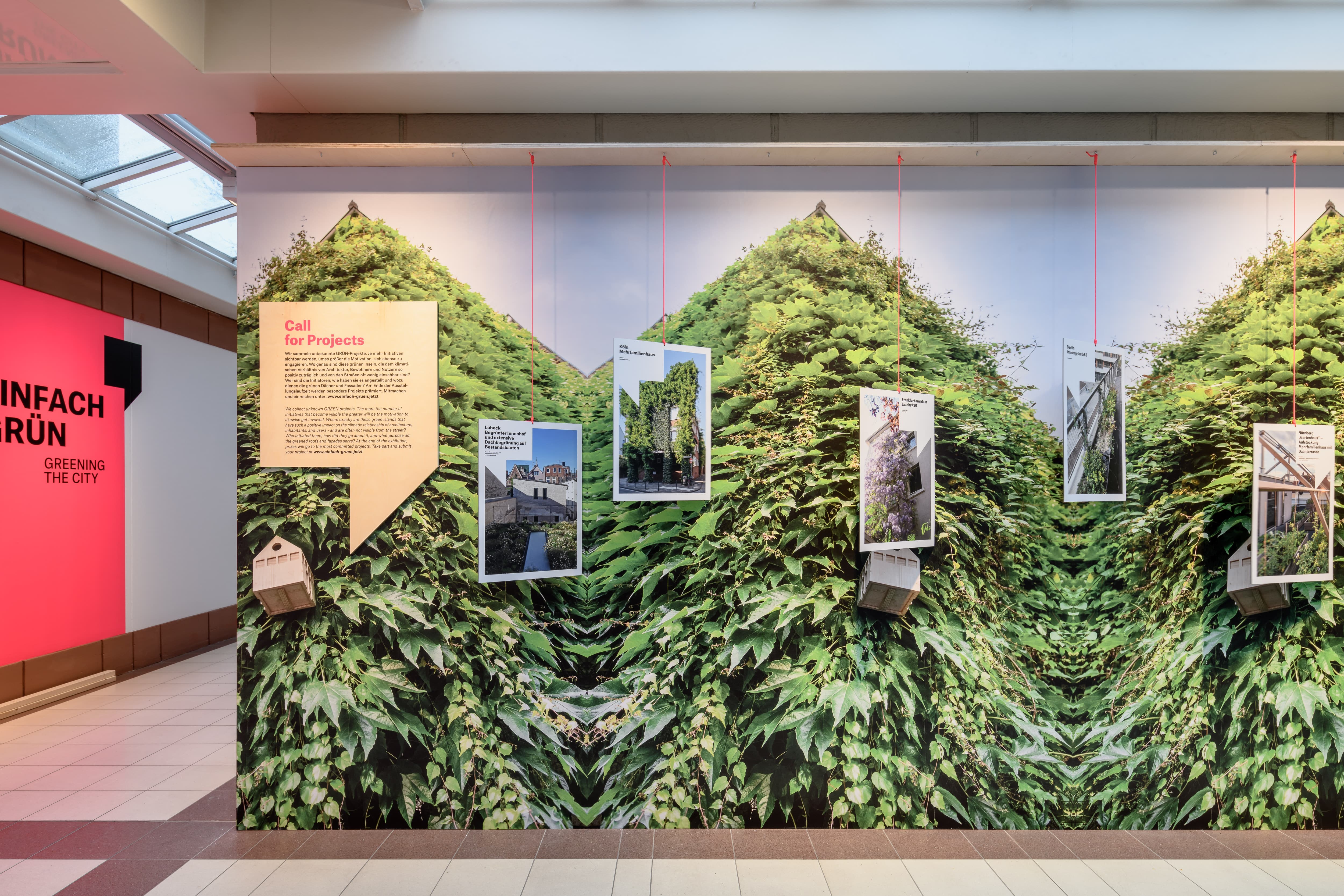
In Frankfurt, the Grüneburgpark and the Günthersburgpark bear witness to these ideas. Through colonisation, exotic plants were brought from distant countries to home shores, and palms and cacti were raised in greenhouses to the amazement of city dwellers. The Palmengarten in Frankfurt is one of the most prominent examples of this in Germany. In 2021 the garden, designed by Heinrich Siesmayer on English and French models, celebrates its 150th anniversary. To mark this and the thirtieth anniversary of the GrünGürtel, the Historisches Museum Frankfurt is showing no fewer than three exhibitions on the theme “Die Stadt und das Grün – Frankfurter Parks und Grünanlagen im Wandel der Zeit”.
Today we are at the beginning of a new phase: our relationship with nature has fallen out of balance when we look at climate change, dwindling biodiversity, the overexploitation of resources and the pollution of the oceans. The Covid-19 pandemic adds to this. We should – if we take philosophers like Bruno Latour seriously – quickly bring our lifestyle back into harmony with nature. In the microcosm of the city, development is already being measured today by repair and reconnection with nature.
LOOKS TO SINGAPORE!
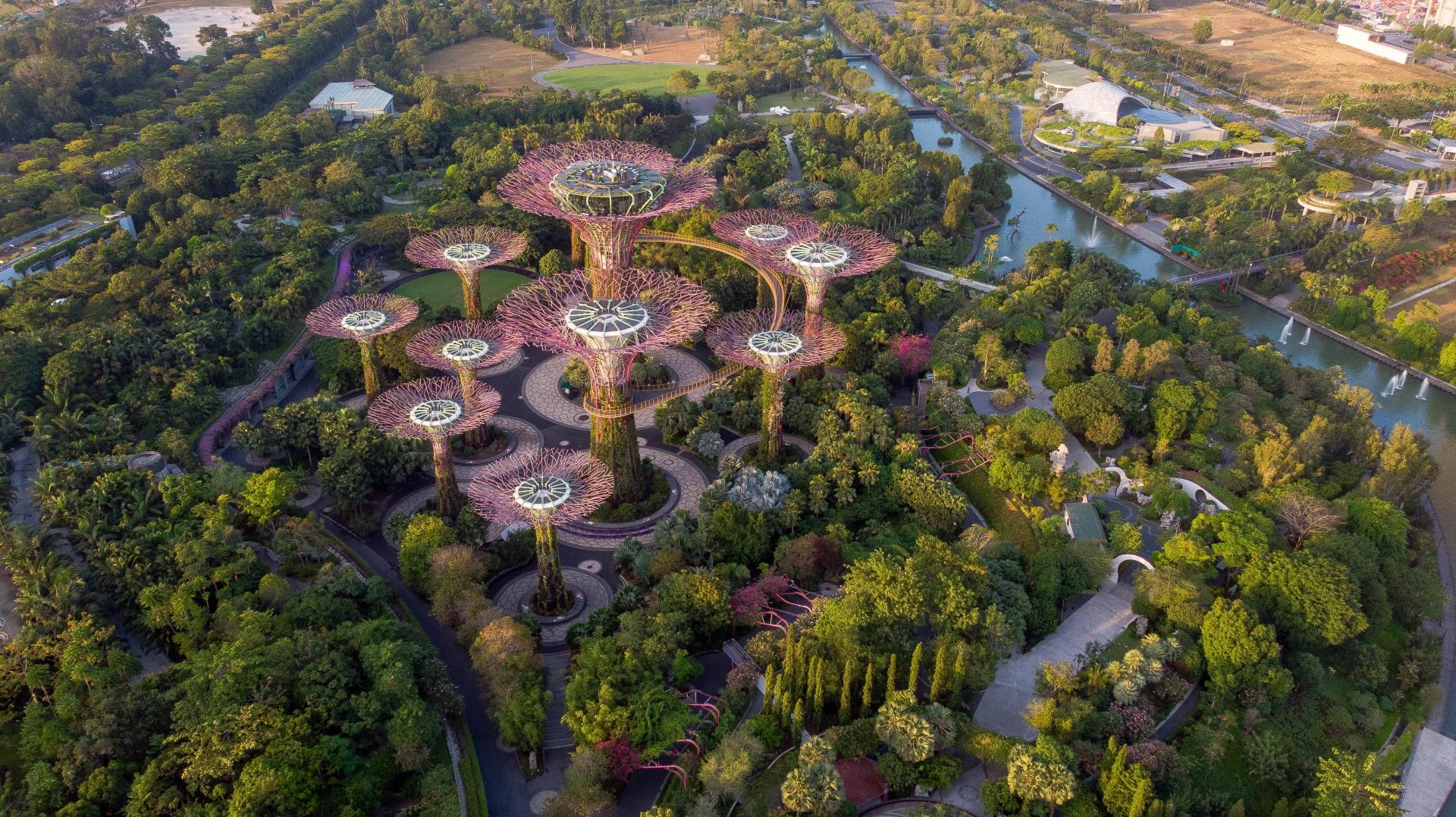
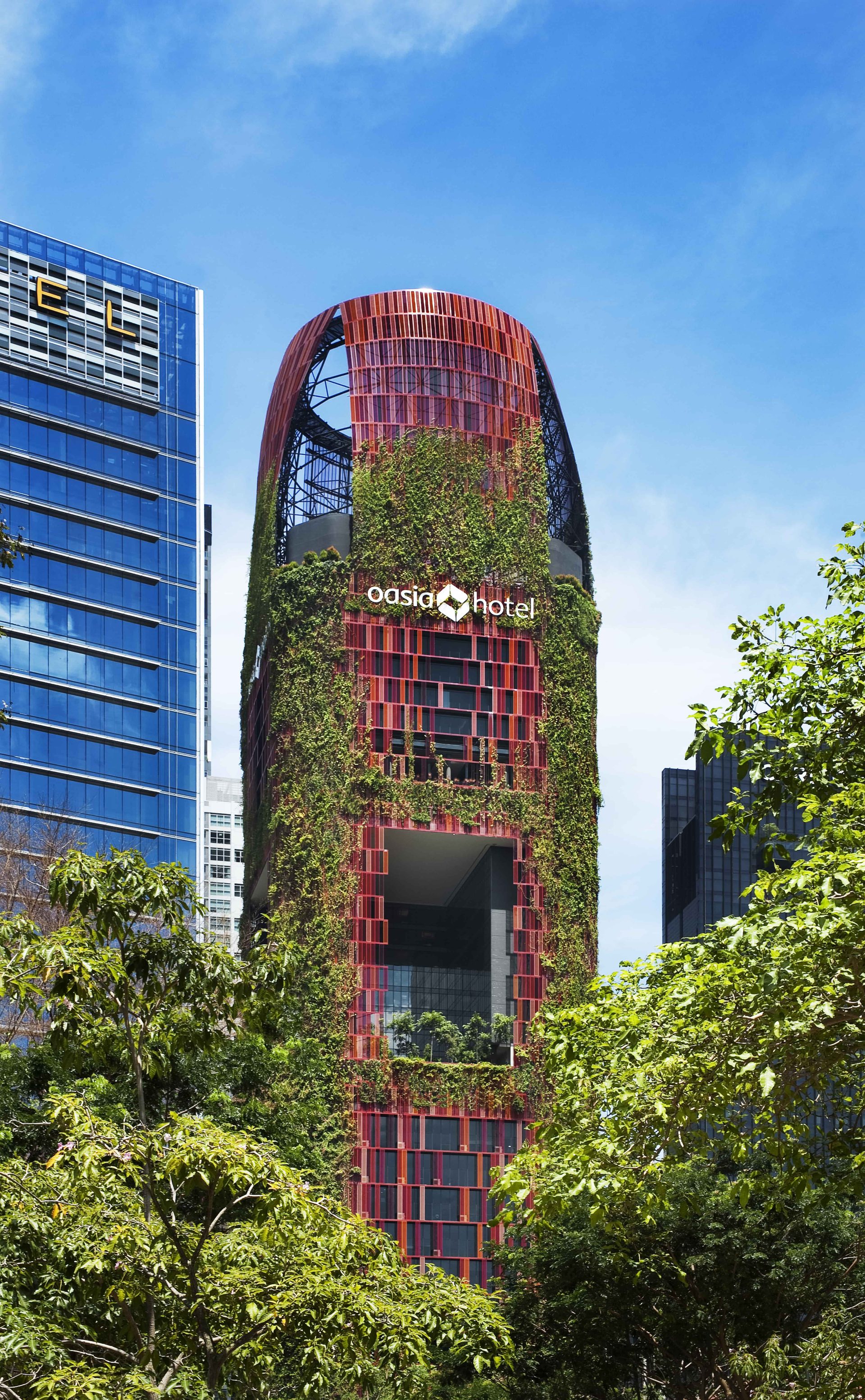
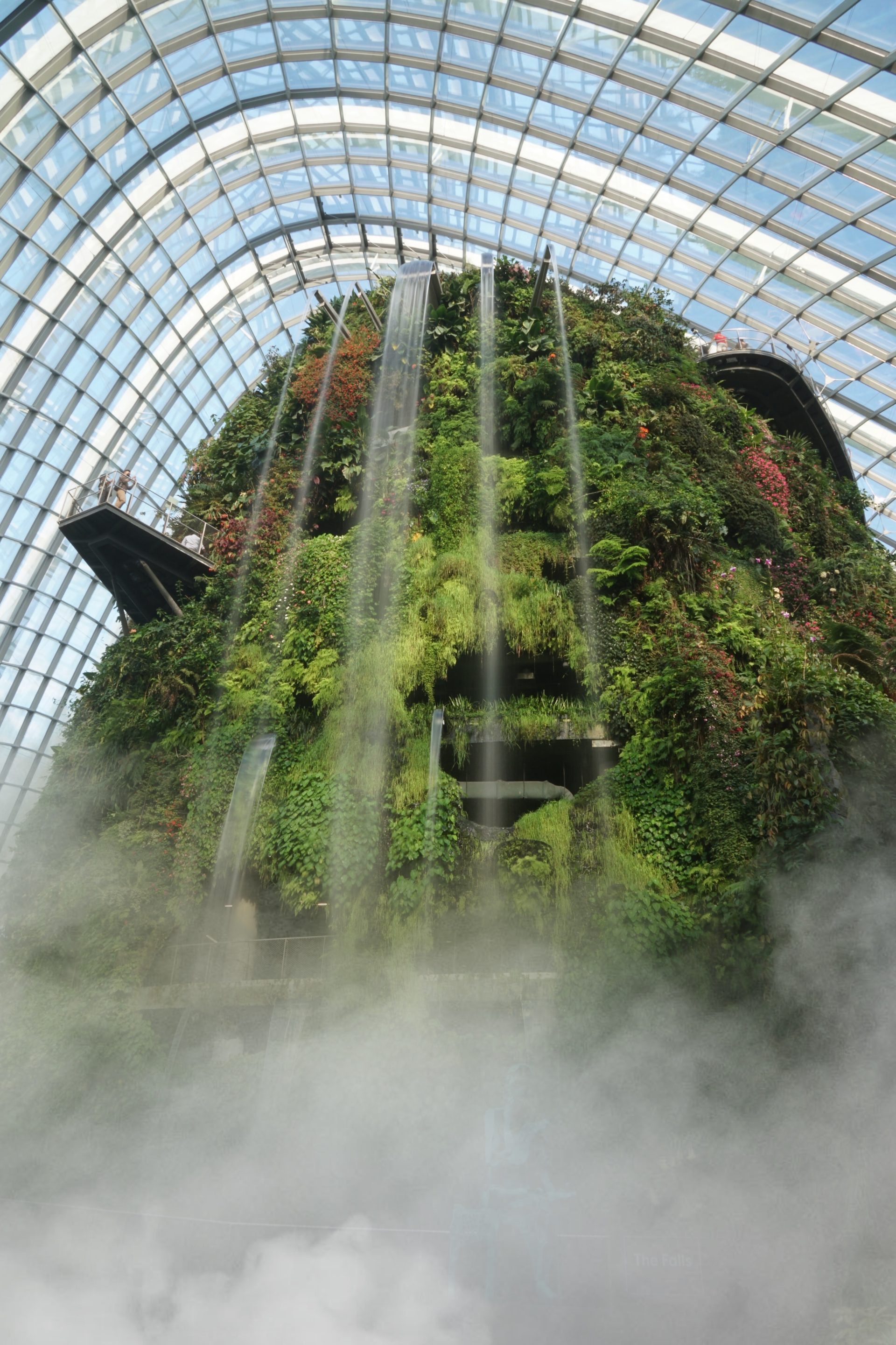
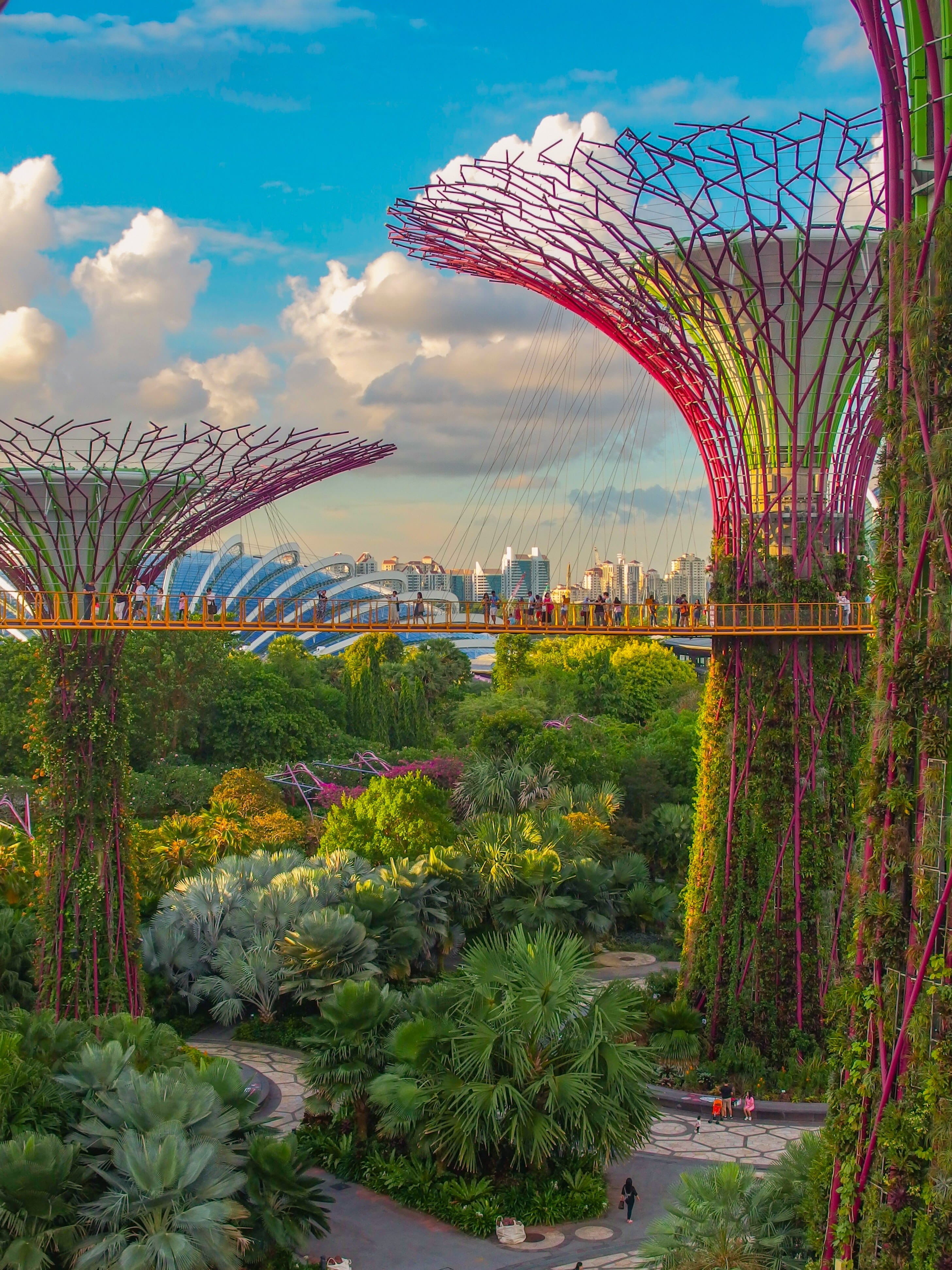
Examples such as Singapore, Paris or the Vauban settlement project in Freiburg show what happens when cities rigorously commit to more urban greenery. Singapore is on its way to becoming the greenest city in the world and has created requirements and subsidies to this end. Paris has set itself the goal of redesigning the city sustainably, relying on more greenery, cycle paths and footpaths. And in the south of Freiburg, more than 20 years ago, Vauban was developed as a holistic, ecological district characterised by dense development, short distances, a mixed community, lots of greenery and innovative architectural solutions, and regarded worldwide as a pioneer for sustainable neighbourhoods.
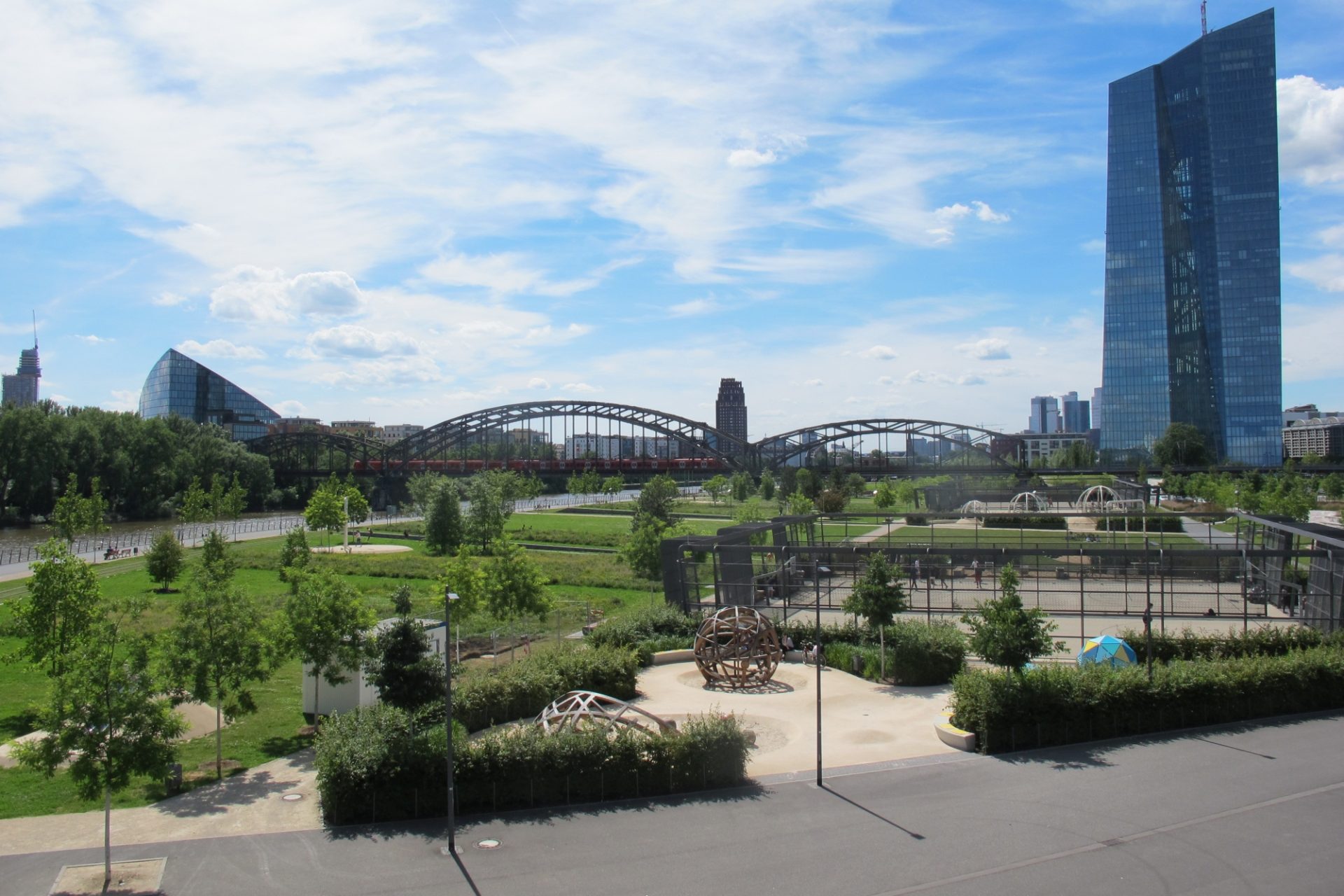
And Frankfurt? Since 2014 our city has borne the additional title “Green City”. We have over 300 parks and green spaces, the community gardens already mentioned, many environmental initiatives and, not to forget, the beautiful Main. But the list of challenges includes the following: Frankfurt is on average the hottest city in Germany, with a high population density and a high influx of almost 15,000 people a year. 97 per cent of the trees in the city forest have been weakened since the recent heatwave summers. More and more green spaces have to make way for new housing.
The city is under pressure to act. While new quarters are being eagerly planned, such as the so-called Josefstadt in the north-west towards the A5, which focuses on connecting landscape and city, community, experiencing nature and communal gardening under the banner of the circular economy, existing infrastructure also has to be addressed. In 2017 Frankfurt therefore launched the programme “Frankfurt frischt auf”, which subsidises façade, courtyard and roof greening and, more recently, rainwater collection systems and public drinking fountains with up to 50,000 euros. The city of Frankfurt spends two million euros a year on the programme, which ends in 2021 but is to continue in another form.
EVERYONE IS A GARDENER
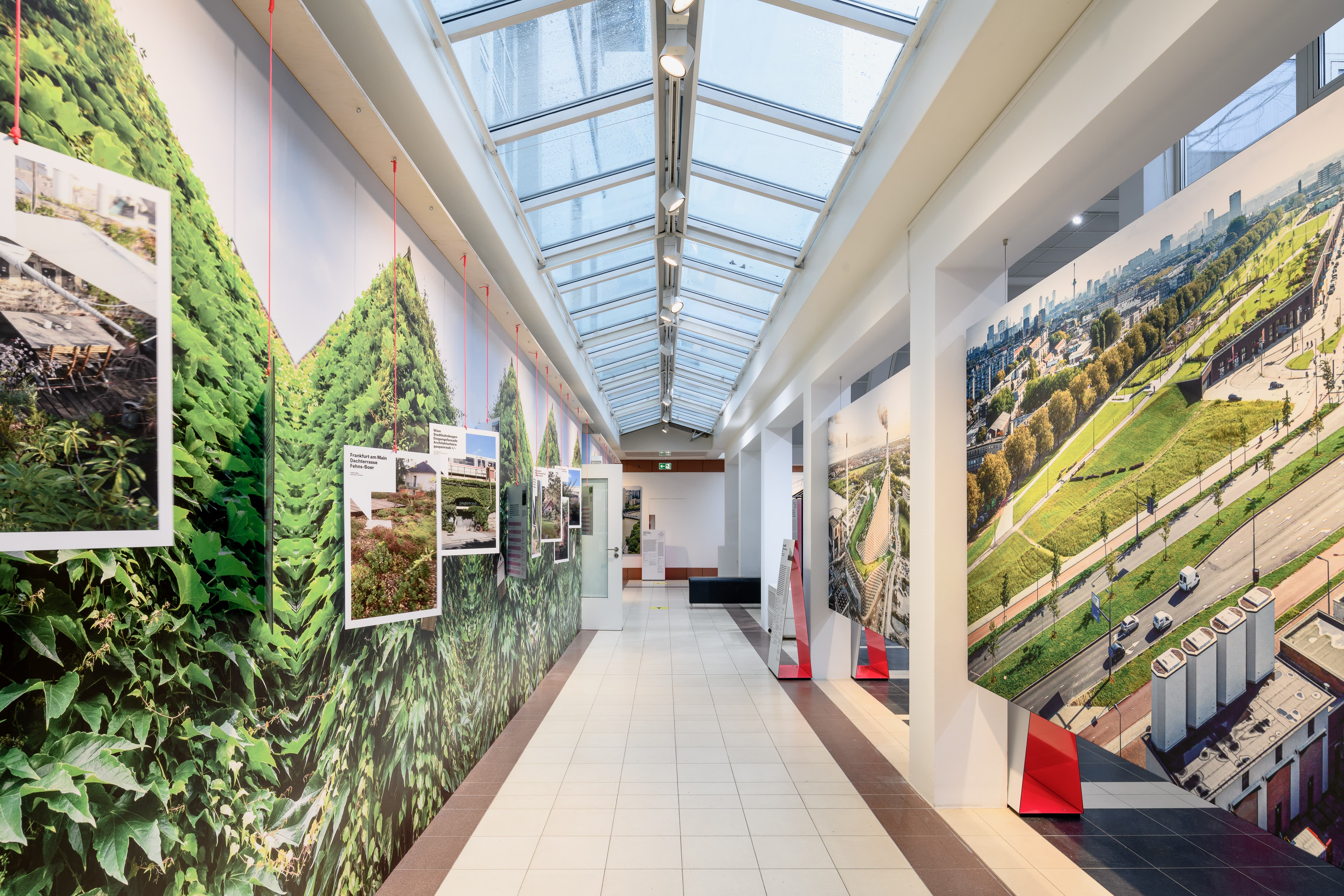
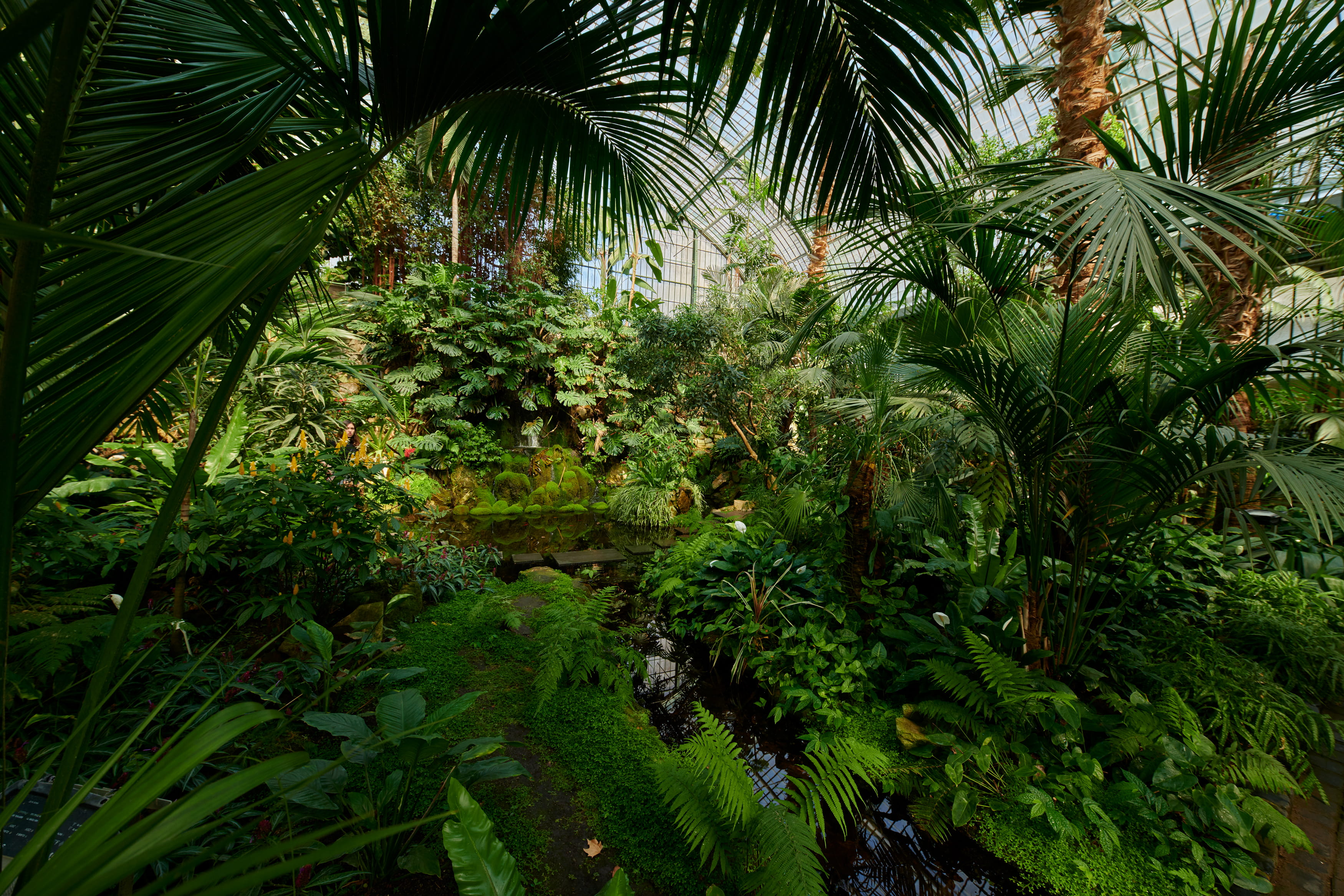
The exhibition “Einfach Grün” at the Deutsches Architekturmuseum (DAM) shows a selection of these projects, plus many more from all parts of Germany. It also explains in very practical terms the advantages of individual façade and roof greening and dispels prejudices and obstacles such as “too expensive to maintain”, “damages the building fabric” and “complicated approval procedures”. It not only shows successful projects but also presents façade greening systems right in the museum’s atriums, which are now planted. You can even buy plant bags at the DAM for 19 euros which – filled with soil and seeds – you can lay on a flat roof or a courtyard surface. Nature takes care of the rest by itself – and without any permit at all.
You only have to look to nearby Darmstadt to see how building greening can work in the long term. In the 1970s, against the background of Darmstadt’s long tradition of experimental building culture, the architect Ot Hoffmann realised his tree house not far from the Landesmuseum in the city centre, whose plants still sway magnificently over the railings today. Hoffmann’s tree house was just one example of the design expression of the then new environmental movement, which led to terraced houses full of shrubs or to artistic interventions such as Friedensreich Hundertwasser’s transplanting of 15 “tree tenants” into flats for the Milan Triennale in 1973.
GREEN IS NO LUXURY
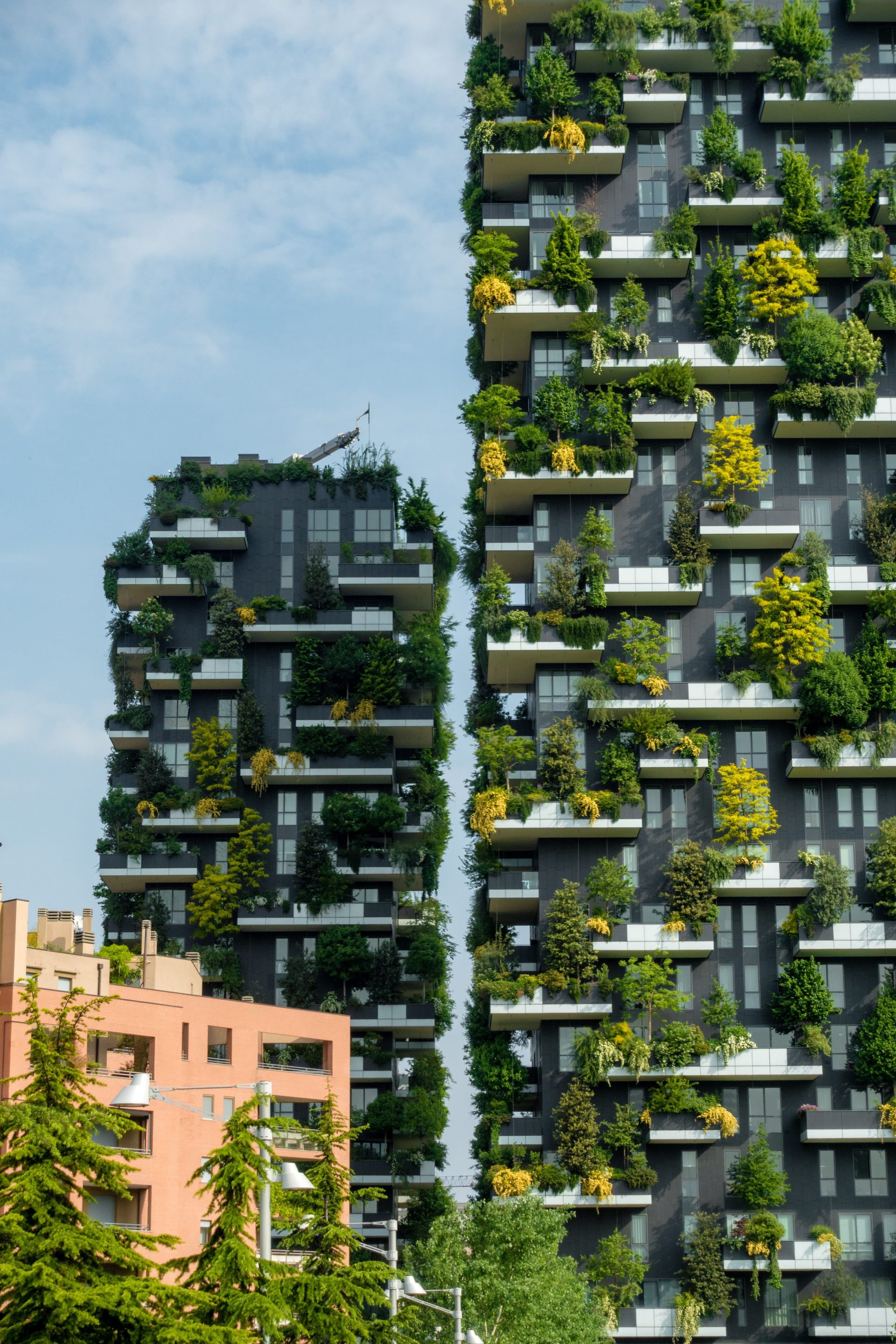
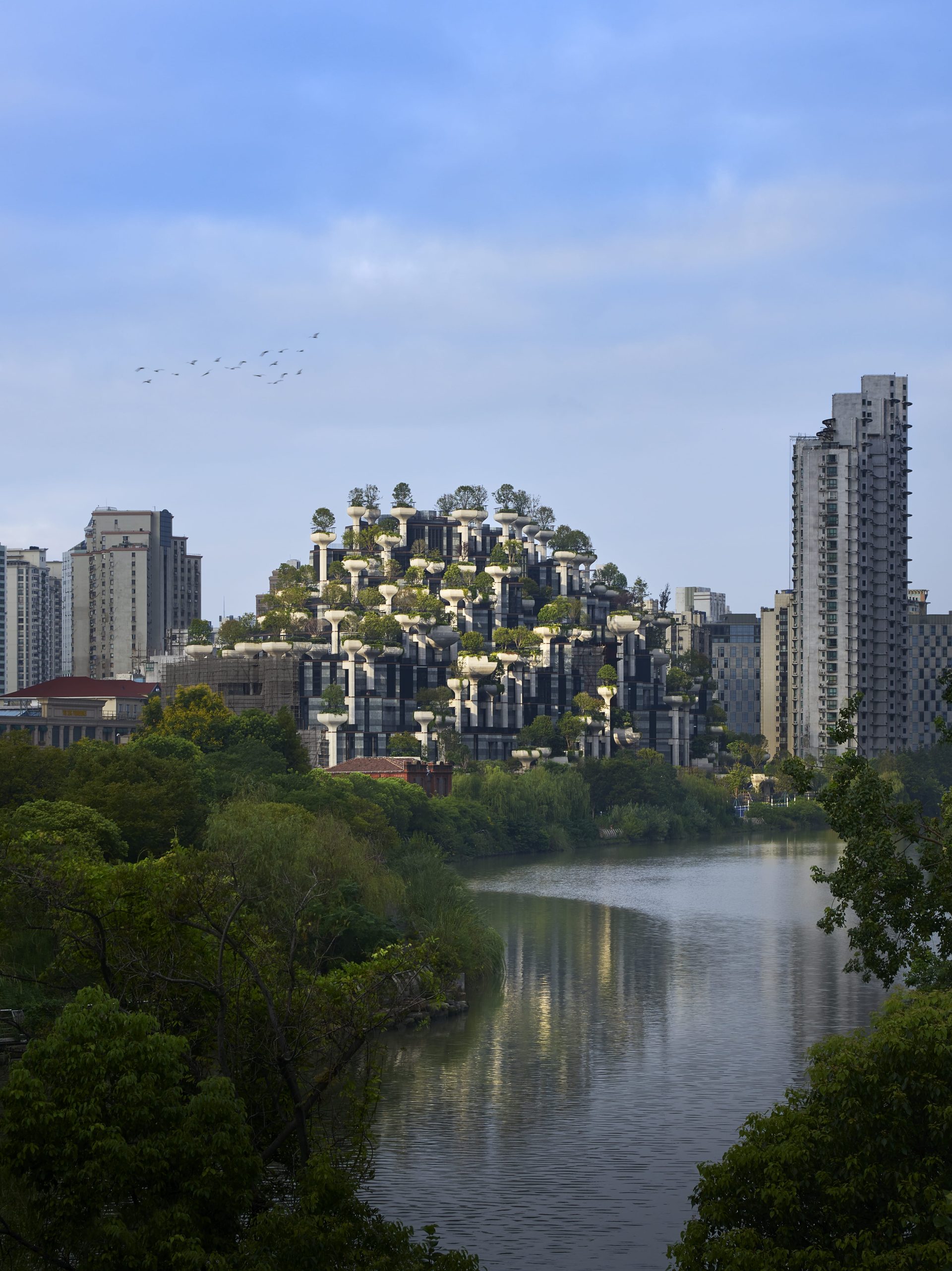
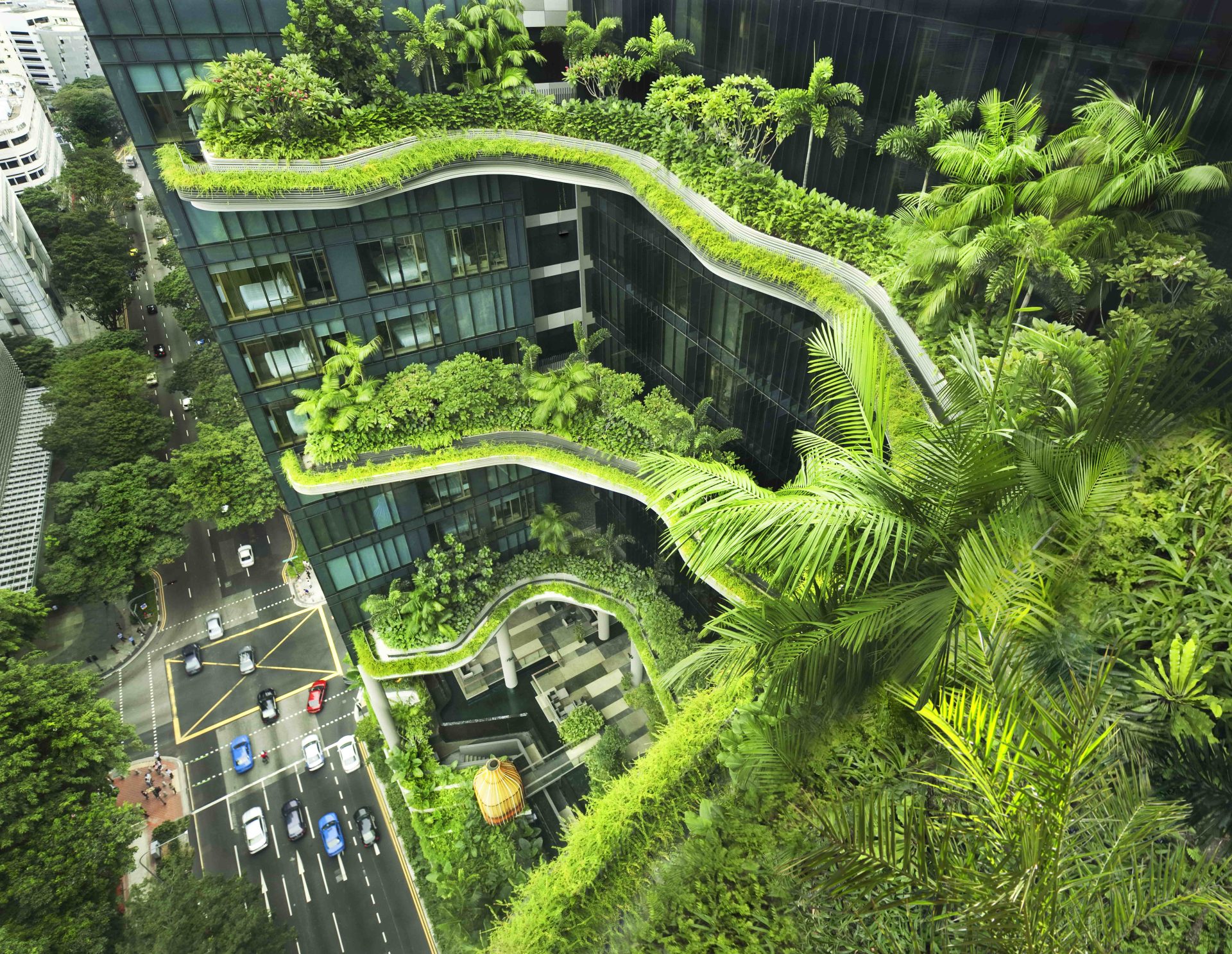
Today, green architecture and urban development are far less idealistic and philosophical-spiritual. They are shaped by aspects such as climate adaptation, participation and wellbeing. In the “Bosco Verticale” in Milan, completed in 2014, the strong desire for a green and sustainable city crystallises in a completely new dimension. Milan architect Stefano Boeri and landscape designer Laura Gatti lined two high-rise towers of 80 and 110 metres with fully grown trees and shrubs, which first had to pass tests in the wind tunnel. Today this project is a pioneer and landmark of a new green architecture.
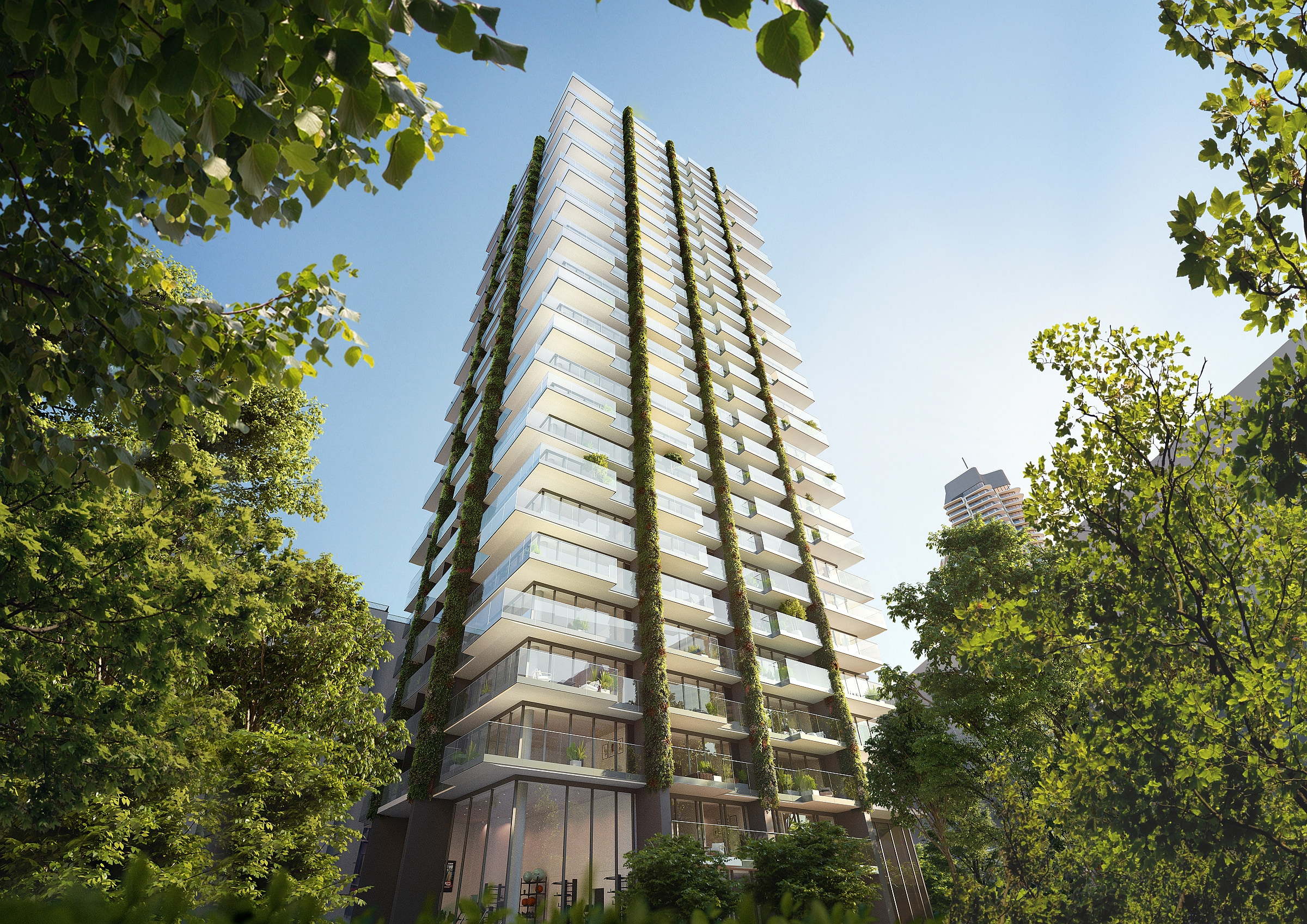
More than 20 new “Boschi Verticali” are currently being planned around the globe – the tallest, in China, at 250 metres, while in Eindhoven a tree house with social housing is being built. For this new architecture also has something to defend itself against: it has a reputation for being a luxury hobby when you look at the prices per square metre of the flats in the Milan tower. In Frankfurt, the 98-metre high-rise “Eden”, with a less elaborate green façade, is currently being built at the entrance to the Europaviertel.
SIMPLY GREEN
A green roof, as the exhibition “Einfach Grün” at the DAM calculates, stays significantly cooler. In the example of City Hall in Chicago, this reduces the heat from 70 to 24 degrees Celsius. This benefits not only the immediate microclimate in the neighbourhood but also the air conditioning systems, which as a result draw in much cooler air and consume less energy.
An example of extensive roof greening is the retail building Kö-Bogen II in Düsseldorf by ingenhoven architects, completed in 2020. The roof is laid out in steps, planted with a hornbeam hedge and open to the public. The added value is particularly striking right now: while the shops are closed during lockdown, people at least spend time on the building’s green roof. Many are already thinking about what city centres will look like after the pandemic, when there are likely to be far fewer shops. Given all this, one can only wish for more greenery – open to all, varied, identity-forming and a necessity for keeping the city liveable.
GREEN FACTS FRANKFURT
220,000 trees are recorded in the tree register of Frankfurt’s parks department (the data is accessible online, including the plant data of the trees).
40.2 degrees Celsius is Hesse’s heat record, set in Frankfurt in July 2019.
12.96 square metres of green space are available to every Frankfurt resident.
More than 20 urban gardening projects are currently based in Frankfurt.
120 building greening projects were realised from 2017 to 2020 as part of “Frankfurt frischt auf”.
EXHIBITIONS
Einfach Grün – Greening The City The Deutsches Architekturmuseum highlights the advantages and challenges of greening existing and new buildings and roofs (until 11 July 2021). The submitted projects can already be explored at www.einfach-gruen.jetzt.
Die Stadt und das Grün The Historisches Museum Frankfurt devotes three exhibitions to the topic: “Frankfurt Gartenlust” (25 March – 29 August 2021), “Umwelt, Klima & Du” (28 March – 24 October 2021) and “Stadtlabor – Gärtnern jetzt!” (28 April – 10 October 2021).
Impressions
More stories








GET IN TOUCH