
Food
GOURMET RESTAURANT- THE IRORI
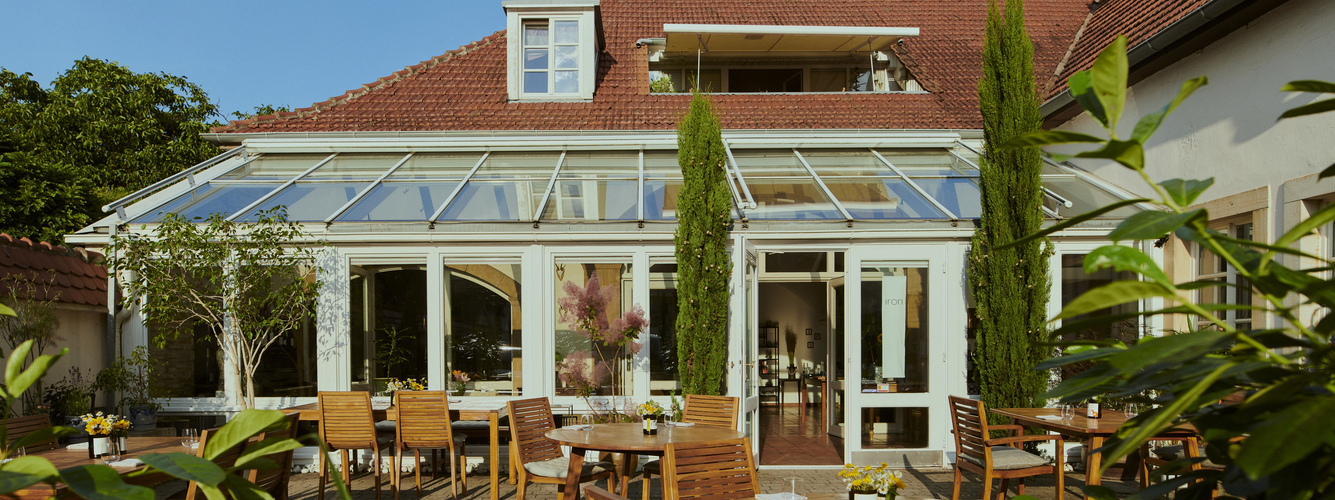
What began as a brief guest appearance is now a permanent gourmet spot worth remembering in the Palatinate wine village of Neustadt-Diedesfeld: the restaurant Irori by Kerstin Bauer and Max Goldberg. An insider tip where Japanese flavours meet everything that grows between the Weinstraße and the High Black Forest.
Text Volkan Brandl & Dirk Eisel Photos Anna Ziegler, Enrico Markx
The past few years have been a real rollercoaster for Kerstin Bauer and Max Goldberg. Their first restaurant, which opened in the Black Forest in December 2019, was awarded a Michelin star after only a few months in business, and head chef Goldberg was also named “Discovery of the Year” by the gourmet guide Gault&Millau. Even before the end of the second lockdown, in spring 2021, however, it was clear that the restaurant would not continue in this form. And so, during the pandemic, the two began to realise their culinary concept under the name “The Irori” in a series of pop-up restaurants, at events and private dinners all over Germany. After a long search, they have now found a permanent home in Neustadt-Diedesfeld in the Palatinate, where they offer their guests an extraordinary culinary experience that combines outstanding regional produce with Japanese flavours and genuine hospitality.
FINALLY FINDING A HOME
The relief at finally having found a home for their restaurant, and no longer having to move from pop-up to pop-up, is plain to see in head chef Max Goldberg and his partner, restaurant manager and sommelière Kerstin Bauer. “It was like opening a completely new restaurant every few weeks,” Bauer recalls. “Not only in terms of the fittings, but also with regard to all the permits you need.”
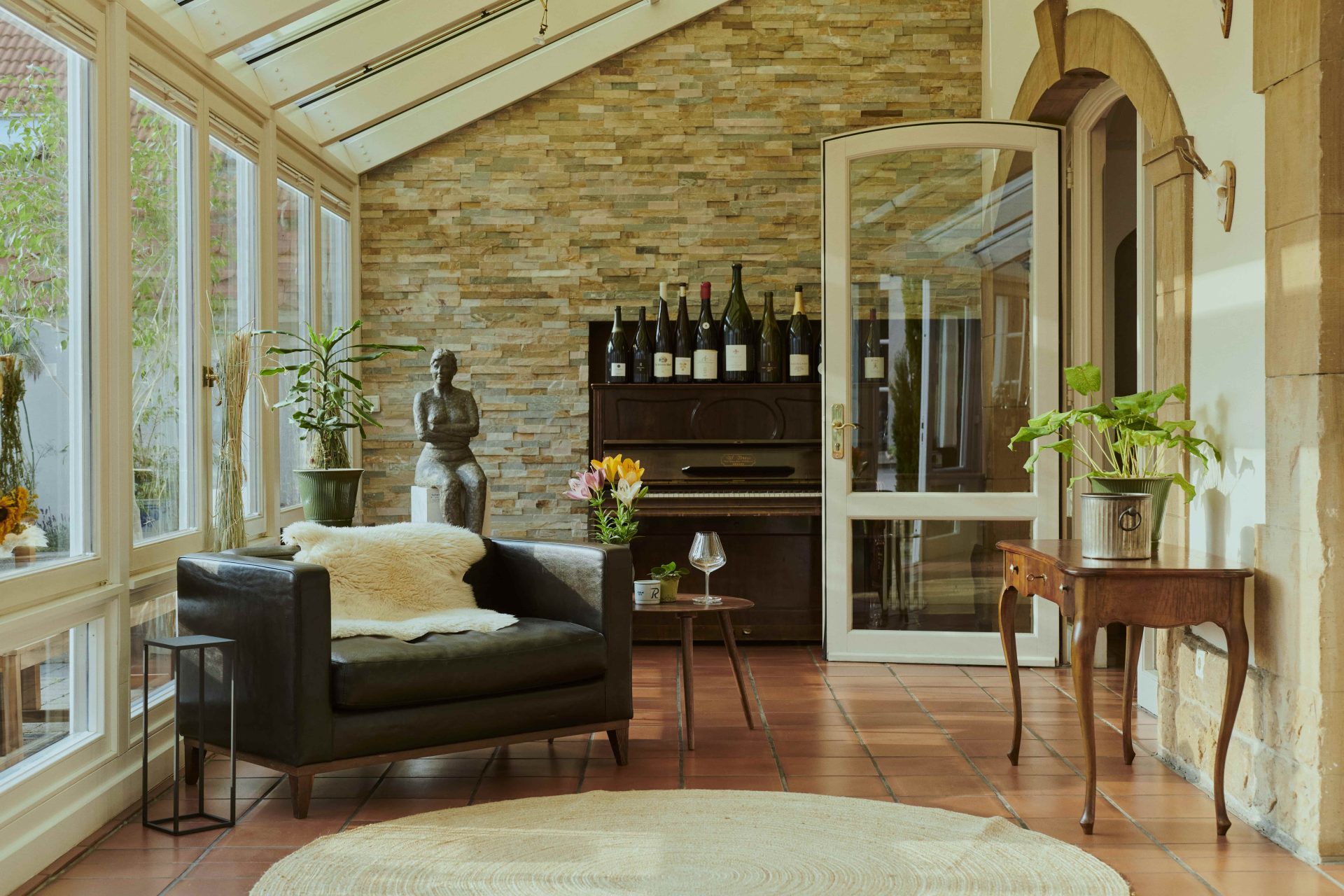
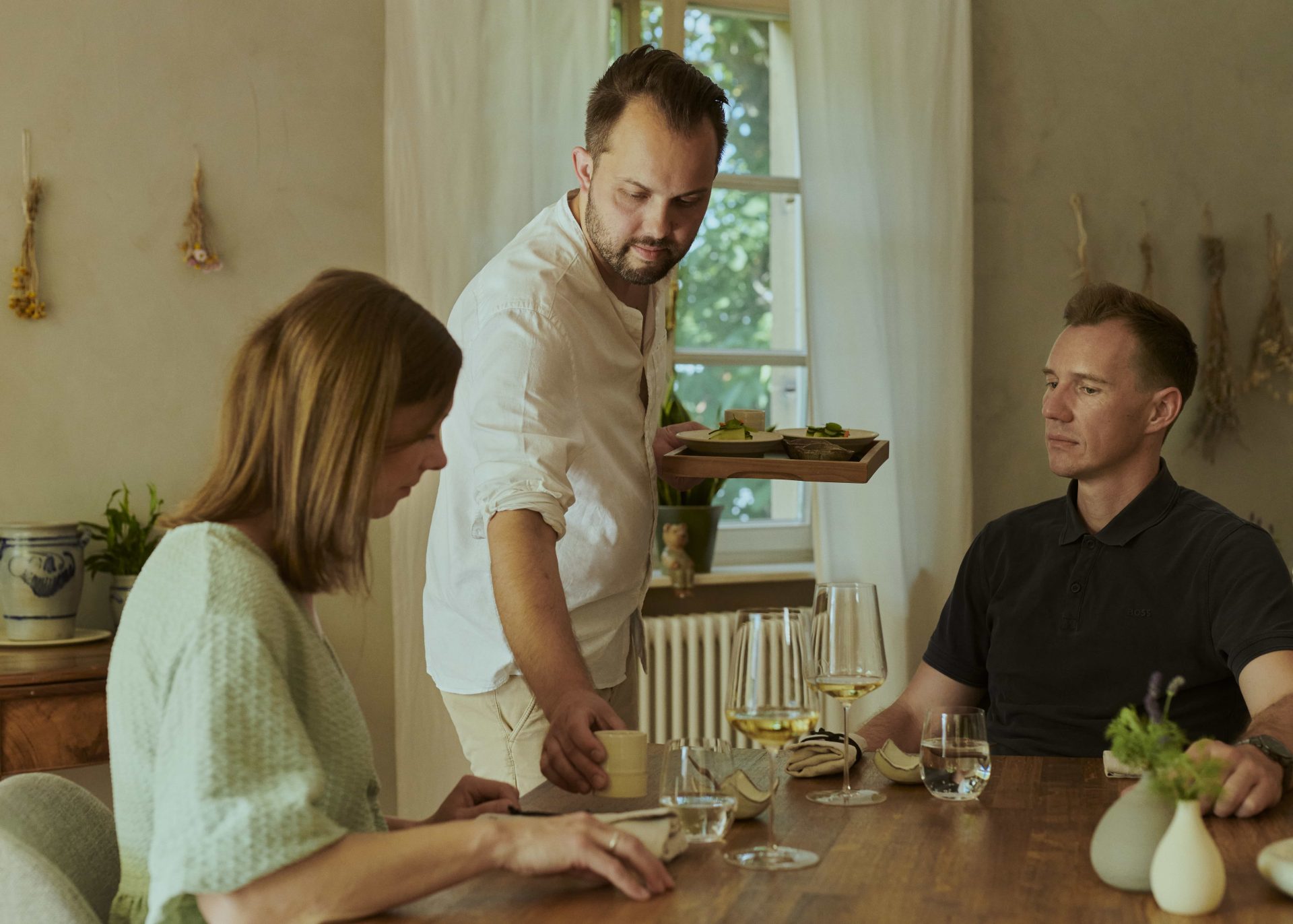
Added to this is the joy of being able to shape a place permanently according to their own ideas. For the two thirty-somethings do not see their restaurant merely as a place to eat. The name says as much: in Japan, the “irori” is a hearth in the house where people gather to warm up, eat and drink. A place of pleasure, but also of community and exchange.
HOSPITALITY WITHOUT BARRIERS
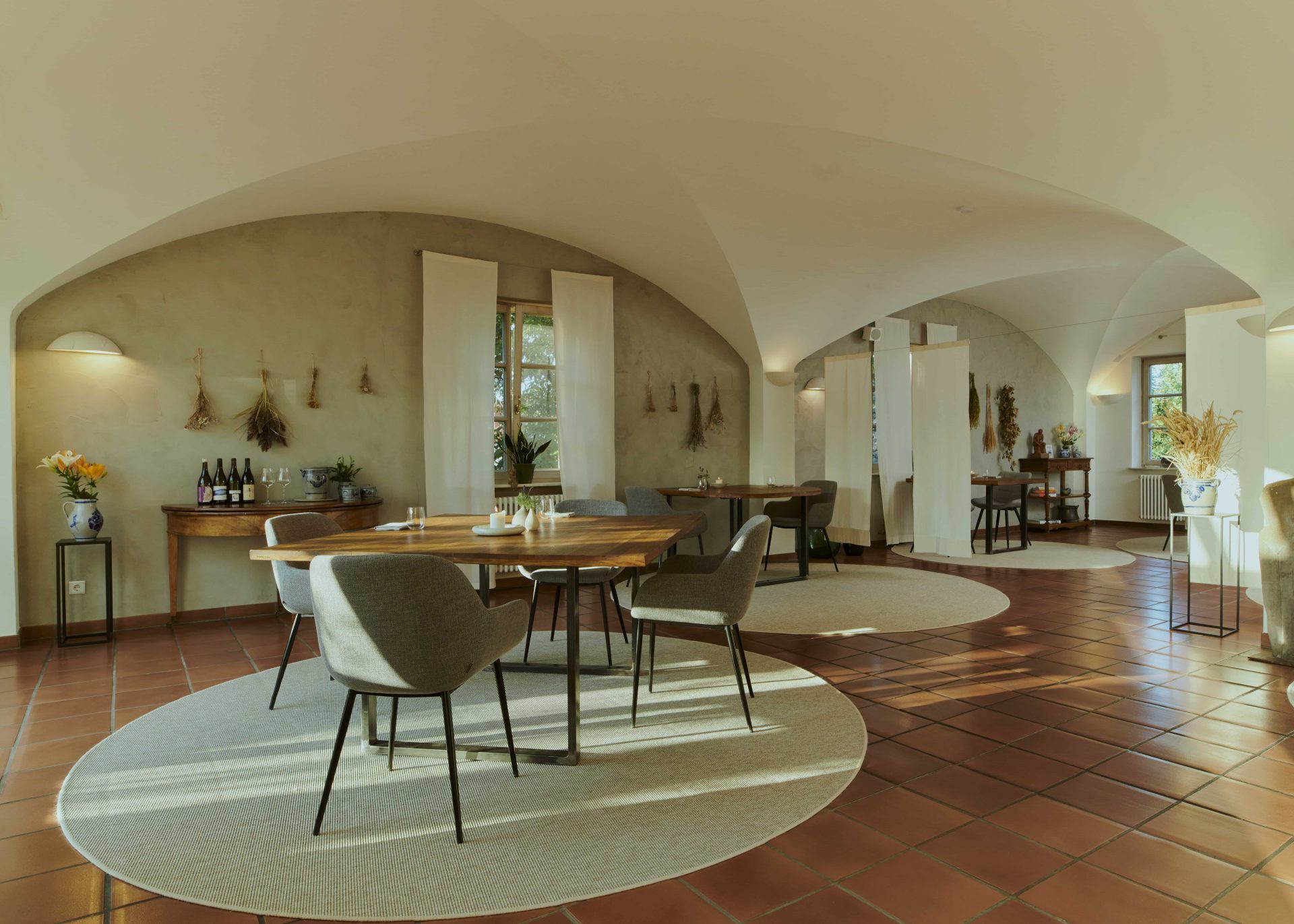
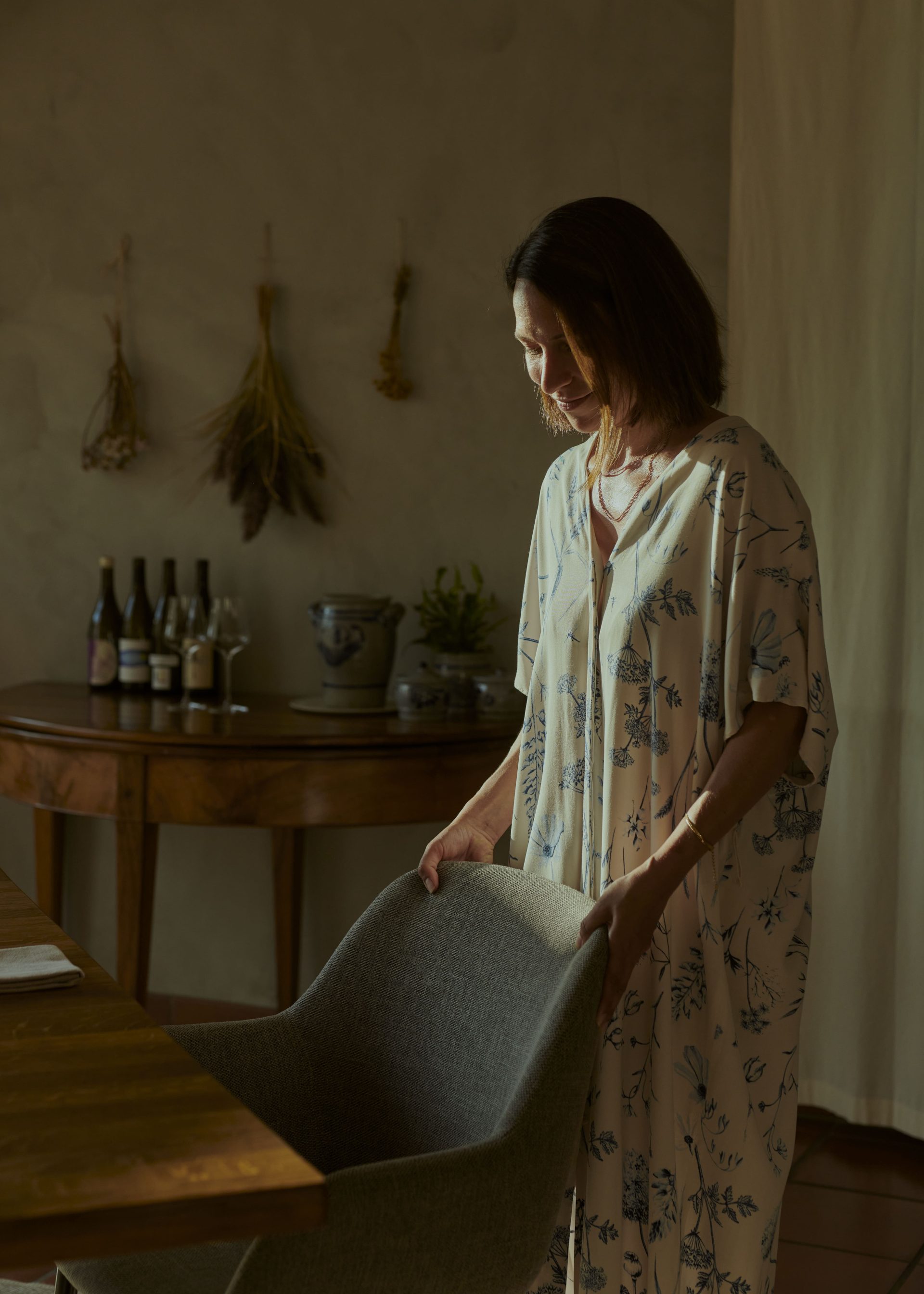
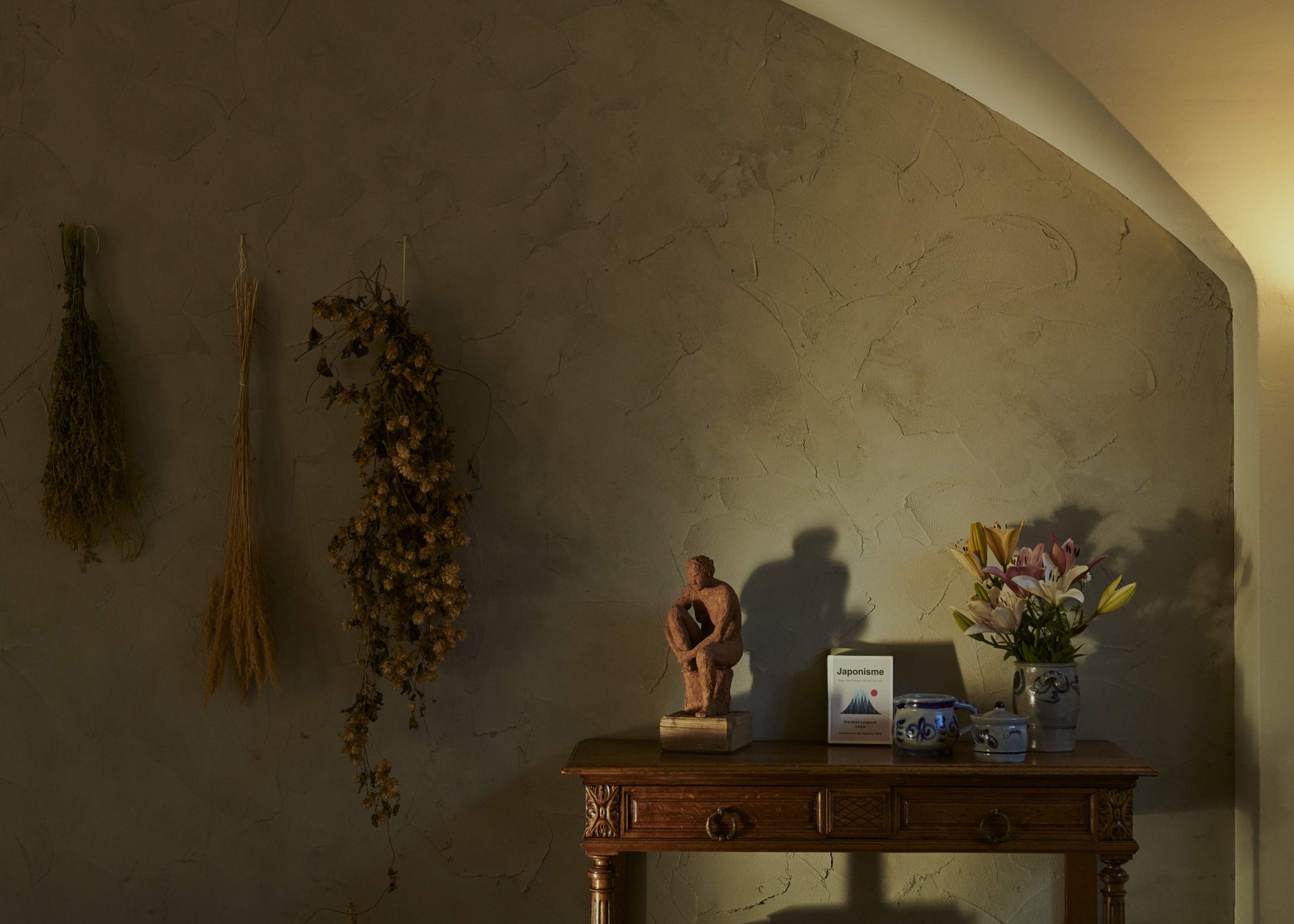
In the few months since taking over the premises in Neustadt-Diedesfeld, the two have already made many changes to the dining room with its characteristic round arches, but they are far from finished. “We are working with artists and have ideas for changing the walls, for integrating and developing themes in the various arches. We want to convert the fireplace into a kind of pizza oven that you can also grill in. In front of it, we’ll install two cooking islands so that guests walk through the kitchen into the restaurant. And at some point we want to open up the wall to the kitchen completely,” says Goldberg, describing the idea of a restaurant where hosts and guests meet as equals in a relaxed atmosphere, without barriers of any kind.
In all the restaurant experiences we have had, it was always best when things stayed down-to-earth and approachable.
— Max Goldberg, head chef, Irori Restaurant
FLAVOURS TO REMEMBER
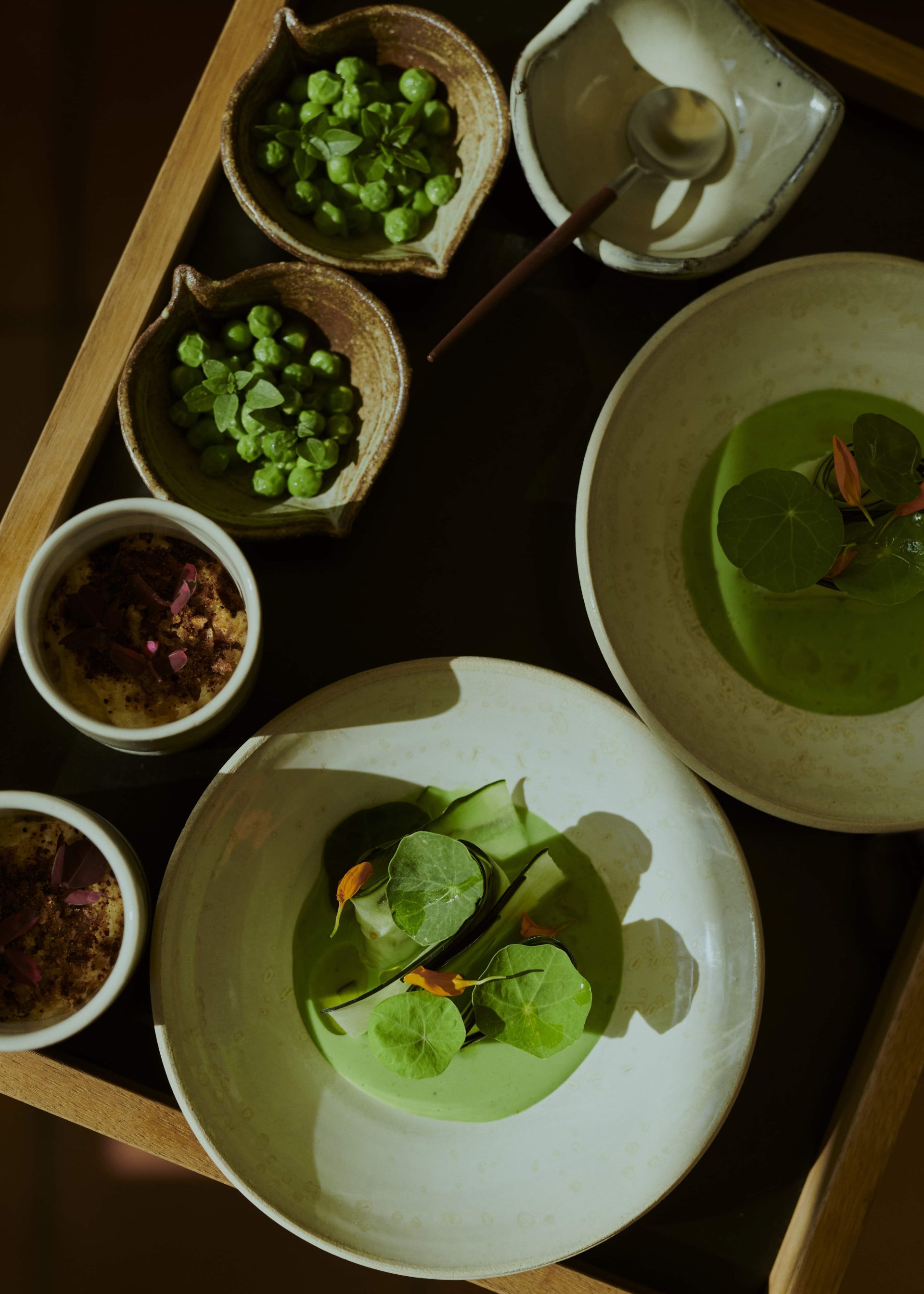
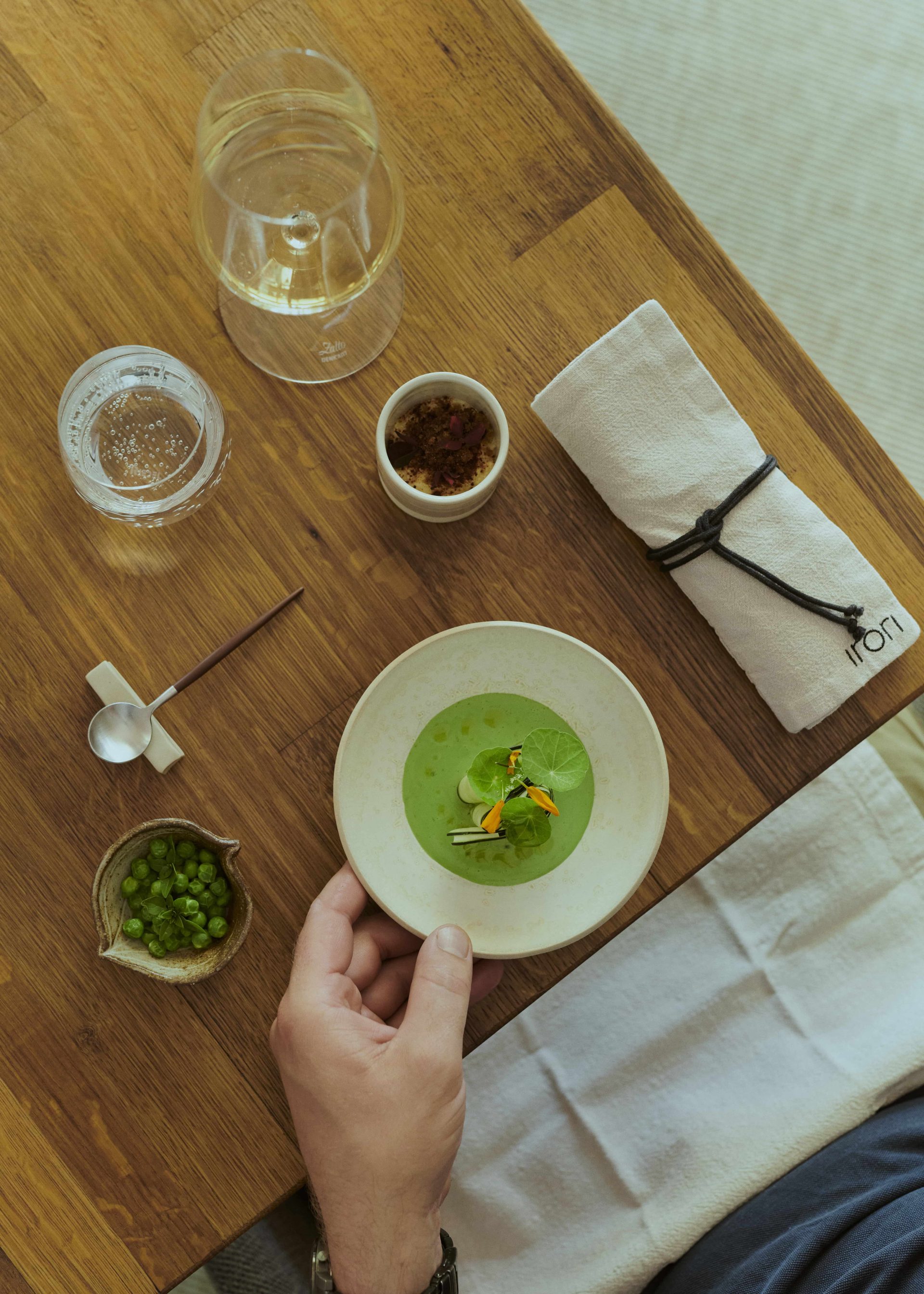
There is no fixed menu at Irori, but rather a constantly changing tasting menu of around ten courses. At the heart of the dishes is outstanding produce that the restaurant sources directly from a network of dedicated producers stretching from the Palatinate to the High Black Forest. Close contact with them, together with nature and its rhythms, determines the choice of ingredients and also how they are prepared.
In preparing the regional produce, Goldberg, who comes from a family of restaurateurs, also draws on influences he acquired on his extensive travels in Japan. He works with techniques such as fermentation, preserving, dehydrating and rehydrating, and grills over an open fire. A single dish often involves more than 40 steps. All of this serves to develop and intensify the flavours, with just one aim: “I want to put things on the plate that I have once tasted in perfection. Something that represents you and gives you your own identity, so that guests can remember your taste.” The result is extraordinary and delicious dishes such as “Kabayaki & duck liver”: Bavarian freshwater eel, marinated, grilled and steamed in a teriyaki sauce, accompanied by a terrine of wild duck liver, figs marinated in fig-leaf oil, a tartare of grilled aubergine and an elderflower vinaigrette. Or beef from the Queichtal, both seared and as a tartare, served with a whey broth, fennel seeds and an oil of lovage, coriander, chives and dill, plus a sweet potato crisp.
EXQUISITE WINES AND SAKES
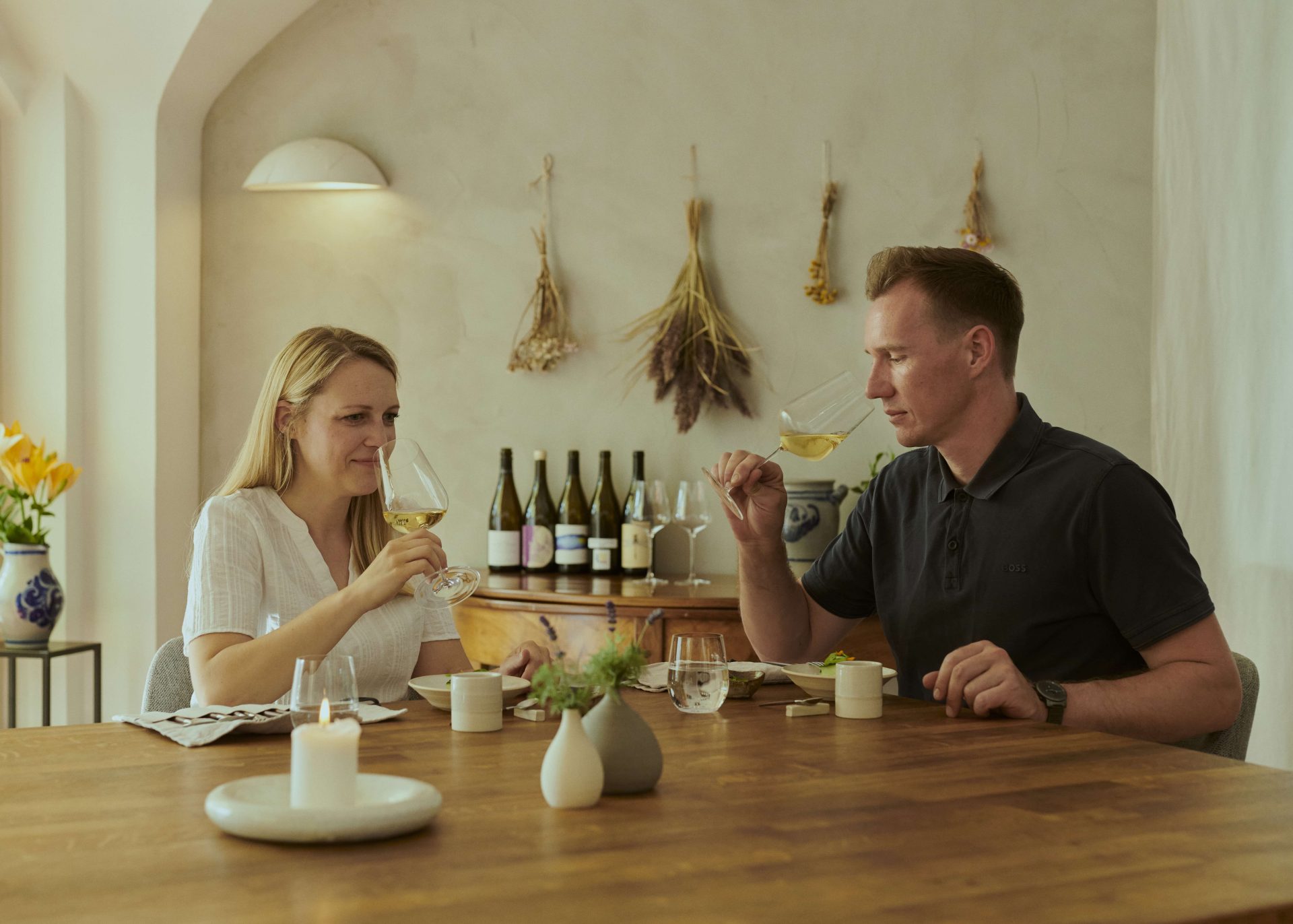
Sommelière Kerstin Bauer, who, like Goldberg, can look back on several positions in top-class restaurants and deepened her expertise at renowned wineries such as Ökonomierat Rebholz and Odinstal in the Palatinate and Terroir al Limit in the Priorat, complements the complex creations impressively with selected grower champagnes, wines, sake, spirits and teas. Her wine list offers an incredible range and holds rare bottles that will surprise even connoisseurs. Her expertise also influences the composition of the dishes: “Kerstin and I are in constant dialogue. For example, when she has a wine for a dish and I use a little more of this fruit or less of that vegetable because of it,” says Goldberg.
A CONSTANT WITH MANY VARIABLES
A visit to Irori is a kaleidoscope of the senses. Many small details combine into a greater whole, always distinctive and yet constantly different. If Max Goldberg has his way, it will stay that way: “Irori is a constant with many variables. The constant is Kerstin and me. But we are constantly evolving. It’s interesting, isn’t it, to come to a place that keeps developing. Where you know that the next time you come here, something will have changed.”
More stories








GET IN TOUCH