
Home
MODERN TASTE AT WEINGUT ROBERT WEIL
A breath of fresh air on the Kiedricher Berg: with the arrival of the new generation in the business, the historic manor house of the Weingut Robert Weil has been given a new look. Marie-Charlotte Weil has achieved a careful modernisation, as our author Katharina de Silva saw on a tour of this home steeped in history.
Text Katharina de Silva Photos Nikita Kulikov
The grape harvest on the Kiedricher Berg is in full swing. Tractors keep pulling up, their trailers brimming with golden-yellow grapes. The scent of mash hangs in the air. The professionals can already smell it: the 2023 Riesling promises to be a good vintage. “Don’t count your chickens before they’re hatched,” says Wilhelm Weil with a smile. The man knows what he is talking about: the winemaker, the fourth generation of his family, has run the renowned estate since 1987. Among wine connoisseurs worldwide, it is regarded as a symbol of Germany’s outstanding Riesling culture. Now the next generation is waiting in the wings: Marie-Charlotte Weil and her brother Robert joined the business a few months ago. “Every generation should leave its mark here,” explains Wilhelm Weil. “It was important to me that my children could start doing so right at the beginning of their careers.”
LOVELY 19TH CENTURY ARCHITECTURE
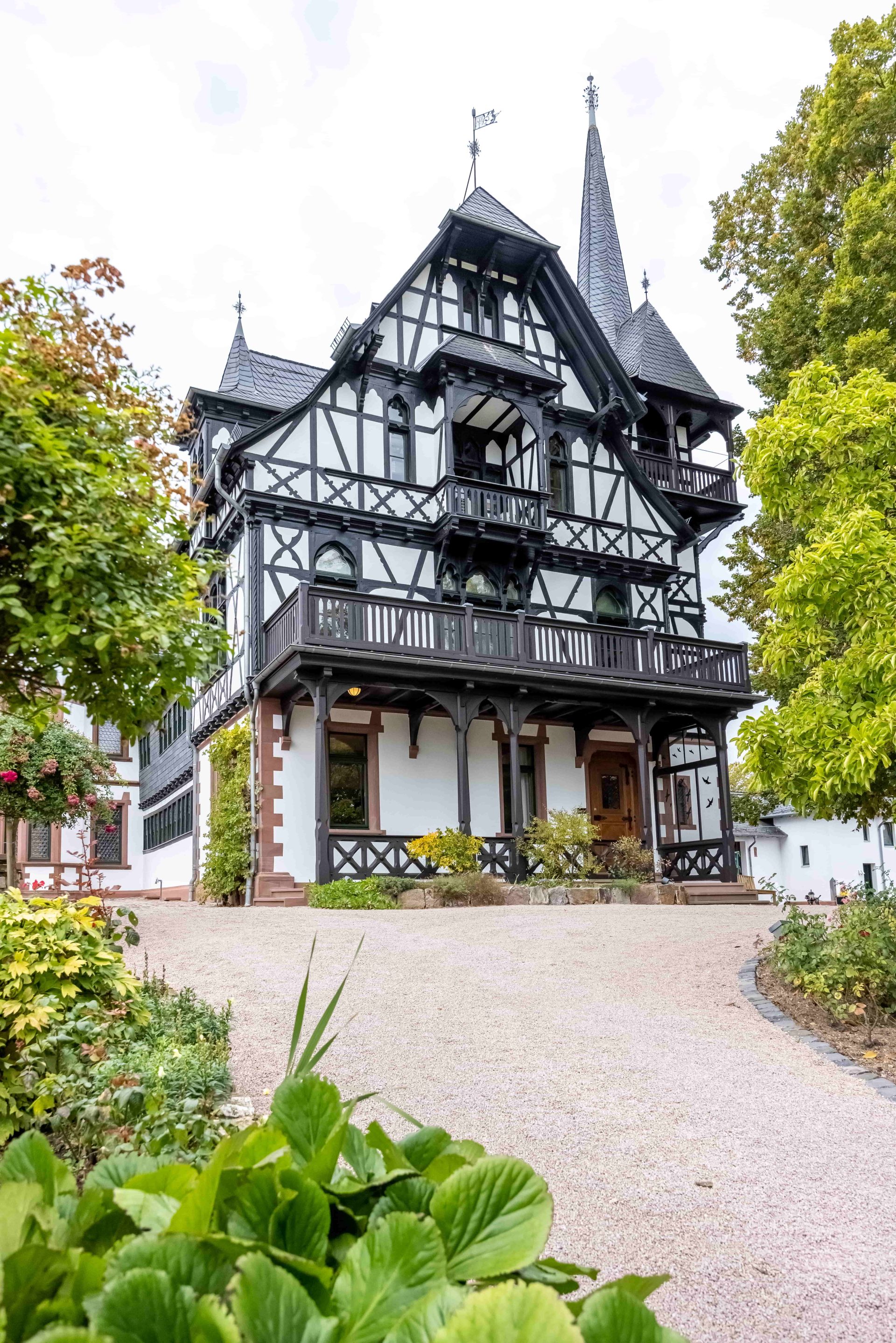
The first major project Marie-Charlotte Weil devoted herself to in the business was redesigning the stately manor house. “The central section was built in 1857 by Baronet John Sutton in the English Tudor style,” she says. Sutton was a British aristocrat and patron of the arts whose love of the Gothic brought him to Kiedrich in the mid-19th century. “After his death, my great-great-grandfather acquired the estate and built up his winery here.” In the following years, Dr Robert Weil extended the building, first in 1878 with the imposing half-timbered section on the south side and in 1906 with a neo-Gothic stone building. The winemaking family itself lived in the manor house for three generations. Today the ground-floor rooms are also open to a select circle of guests and customers. “Once a year, importers and wine journalists from all over the world come to us to taste the new vintage,” explains Wilhelm Weil. “It is important to us to receive and host these people in a very individual and personal way. Many have become friends over the years.”
MODERN MANOR KITCHEN
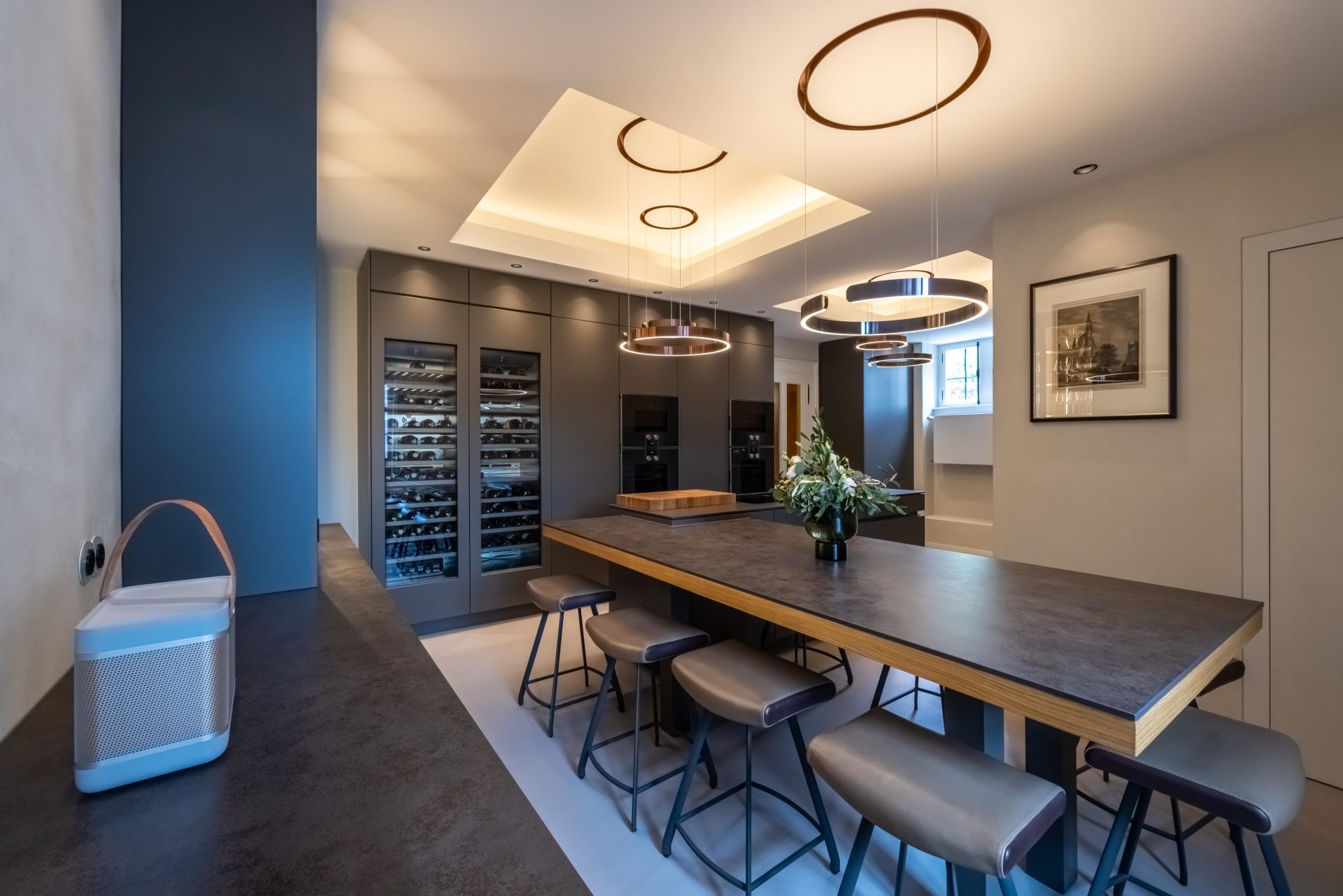
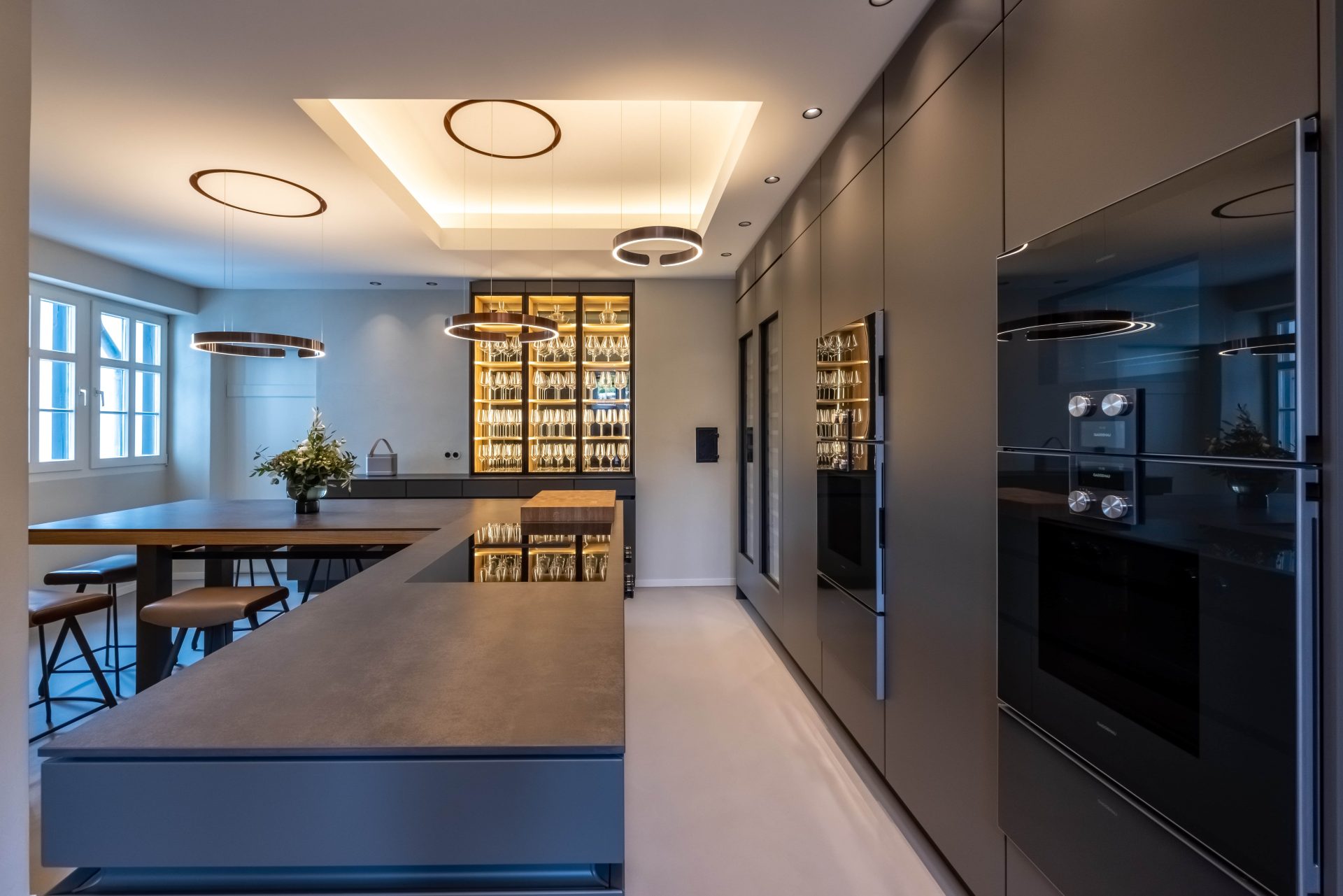
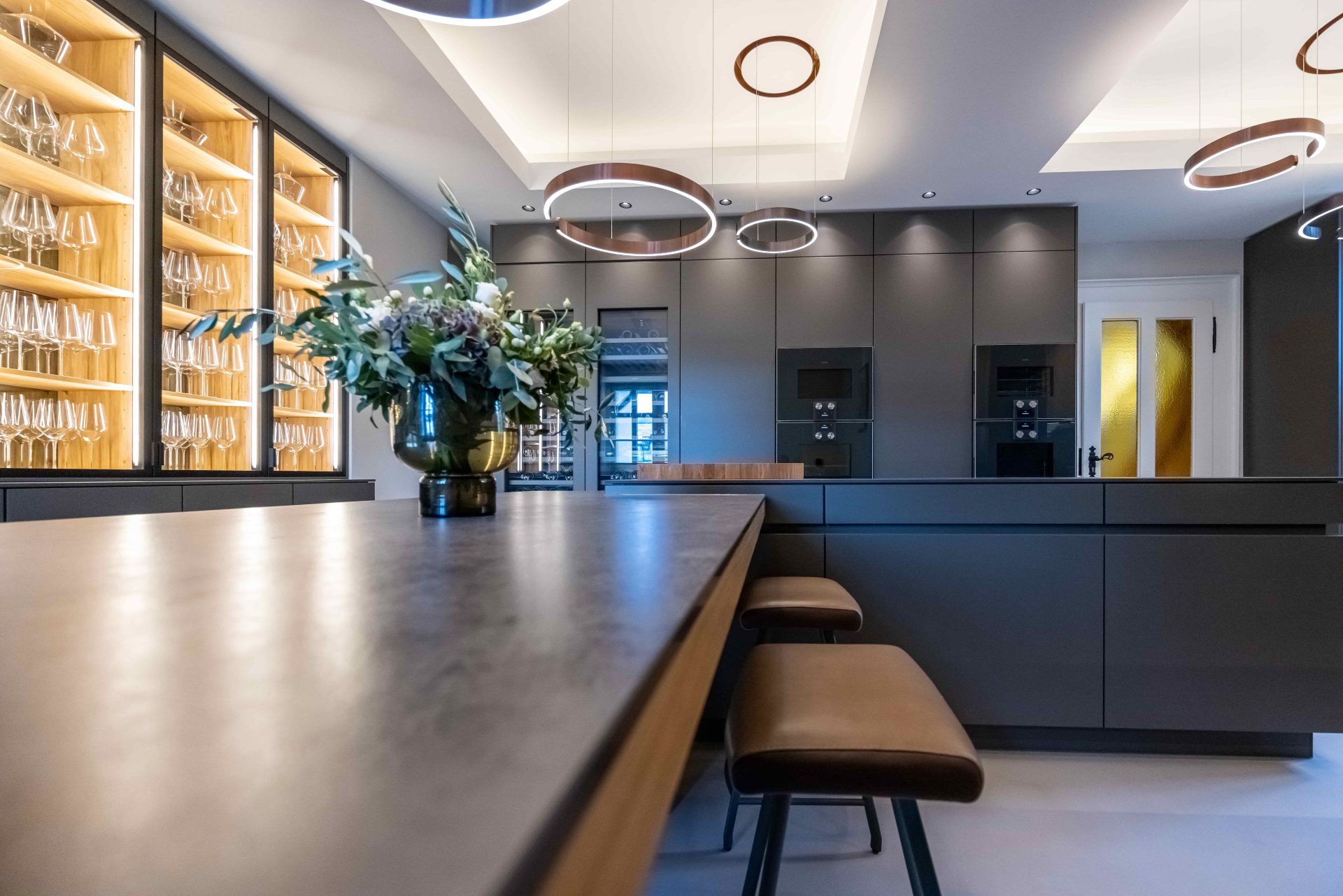
We begin our tour of the “Manor House” on the south side. A long corridor leads us past menus from a time when Dr Robert Weil was purveyor to the German imperial court. The Russian tsars and the English royal family also once appreciated the estate’s fine wines. Attuned to royal cuisine and table culture, we enter the kitchen – the heart of the old manor house and the real reason for the conversion. “The old kitchen was purely functional and designed only for preparing food,” says Wilhelm Weil. “We wanted to turn it into a homely lifestyle kitchen where you enjoy cooking and eating with friends.” Nevertheless, the estate director did not want to do without the efficiency and workflows of a high-performance professional kitchen – after all, Michelin-starred chefs regularly cook here. This is where Peter Bruns came in: the former managing director of Gaggenau knows high-tech kitchen appliances inside out. Together with his partner Tina Müller, founder and managing director of Küchenhaus Süd in Frankfurt Sachsenhausen, he created a perfect harmony of design, function and emotion in the former manor kitchen.
LIGHTING MOOD
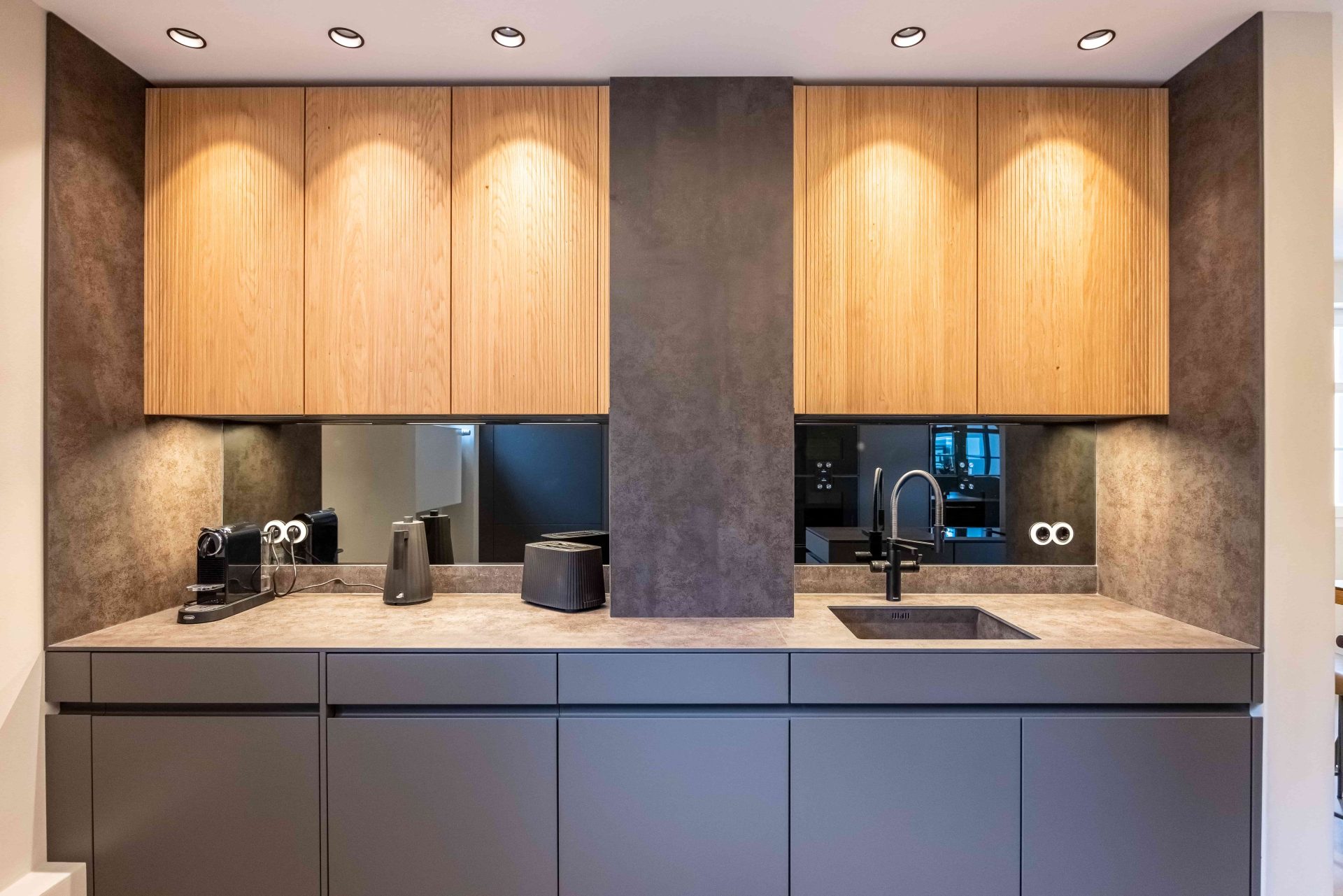
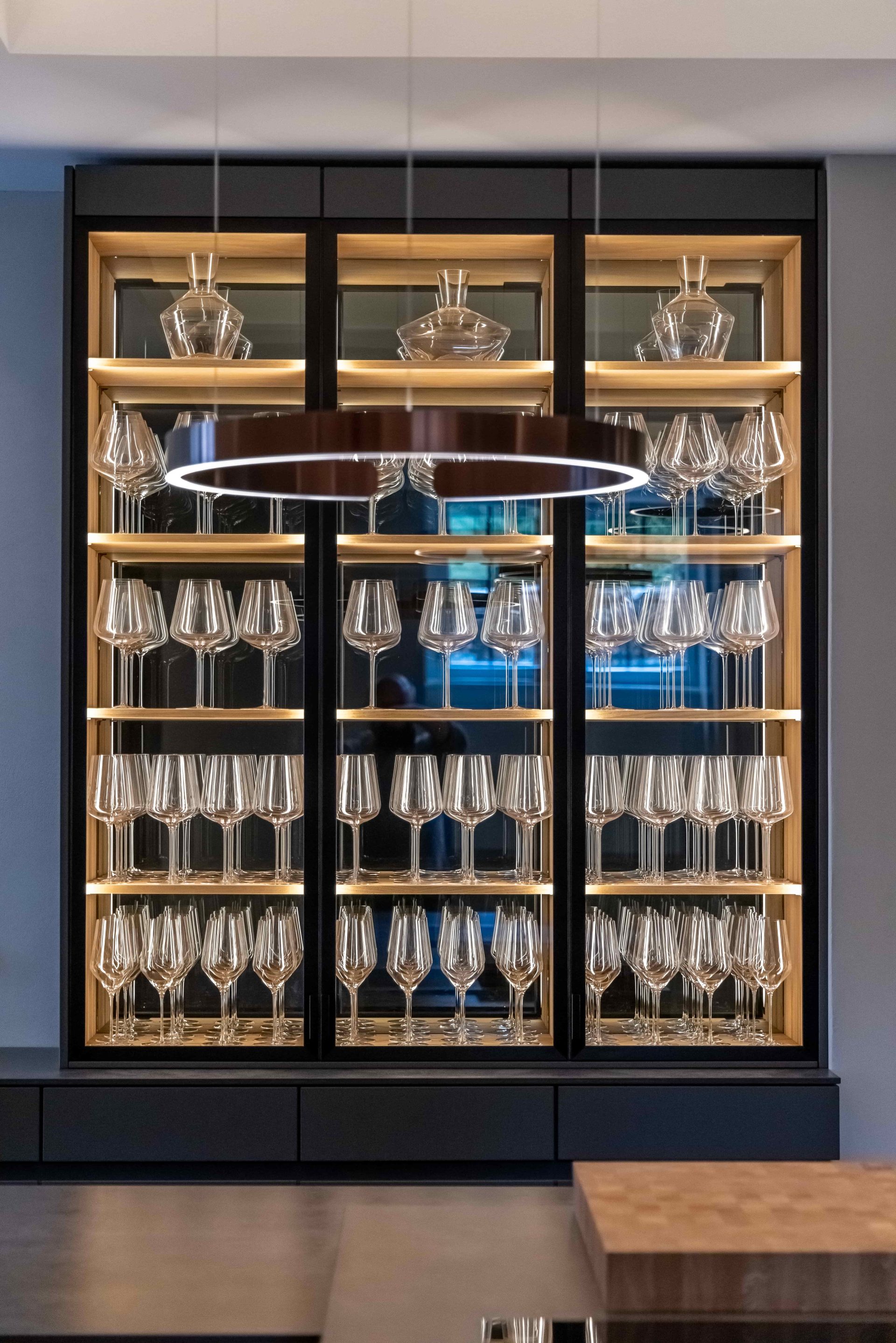
In the course of the conversion, two smaller rooms were combined into an L-shaped room of 45 square metres. For even greater spaciousness, the former suspended ceiling was opened up by half a metre. Today a kitchen island with a ceramic surface turns the corner into a table that comfortably seats eight guests. “When we cook together, we like to enjoy the odd glass here,” says a delighted Marie Weil. The sophisticated lighting concept with five circular lights by Occhio creates just the right mood for this. Particular attention was paid to the built-in high-tech appliances: two wine climate cabinets hold all vintages of the Weil Rieslings and protect them at a precise temperature. Combi steamers, combination microwave ovens and multifunction drawers make it possible to prepare even multi-course menus to perfection. In many places, the materials in the room allude to the world of winemakers: the oak fronts of the tall cupboards recall wine barrels, the stainless steel of the appliances the tanks in the wine cellar.
In its quality, this kitchen matches my grandparents’ model from 1924. It was planned with timelessness and permanence in mind and is to remain in this form for the next 50 years.
— Wilhelm Weil
GOBELIN ROOM IN GREEN
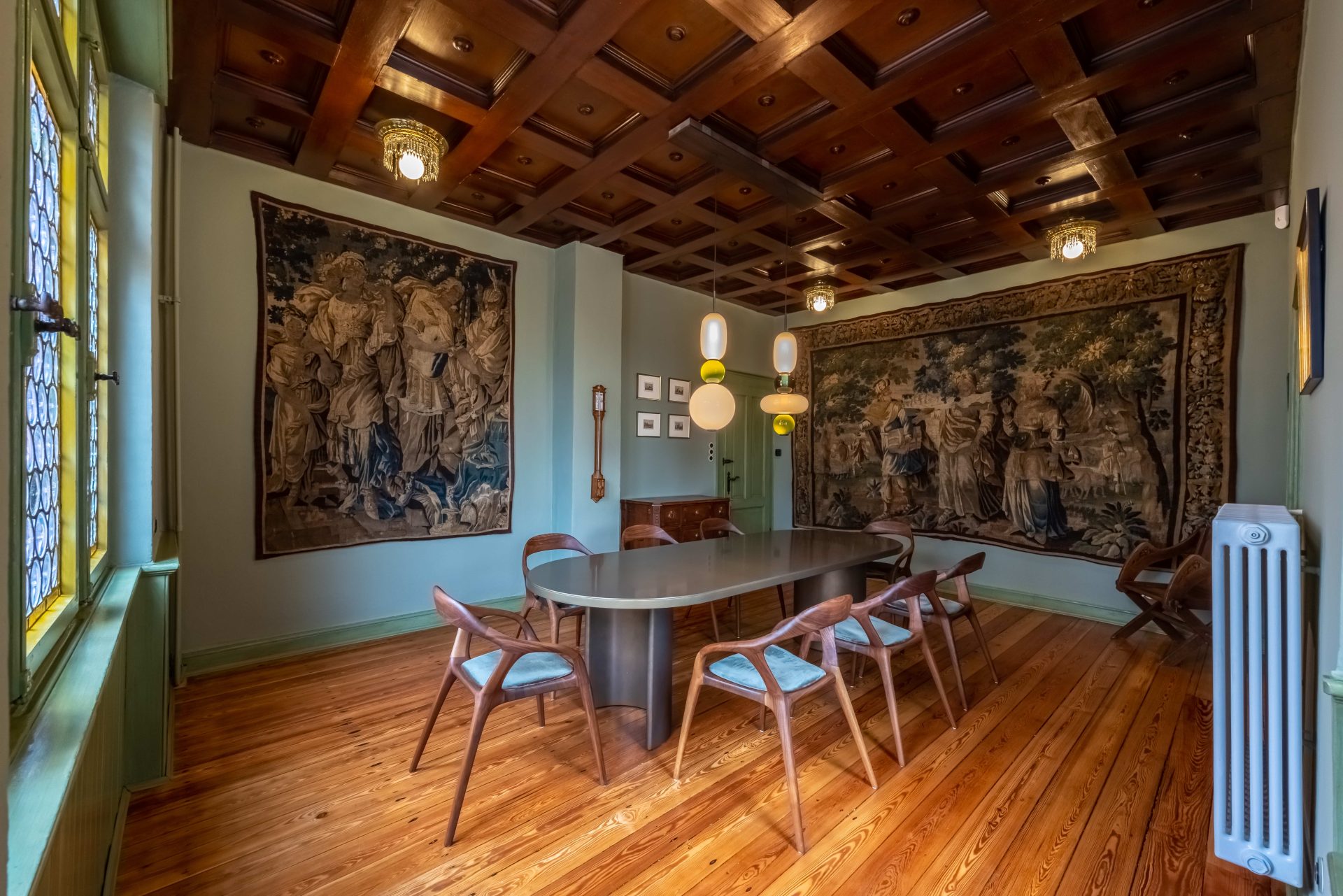
From the kitchen we enter a grand, patrician room used as a breakfast and meeting room. You will look in vain for the characteristic Tiffany blue of the Weil labels here. The walls are painted a delicate lime green, and 17th-century Flemish tapestries hang on two sides. “We deliberately decided against branding our private rooms,” says Marie-Charlotte Weil. “Instead, we wanted to restore the historic colour scheme.” Around an oval table stand eight organic-looking chairs by the brand Spalli, whose delicate walnut armrests are reminiscent of vines. Above them, like plump grapes, hang two pendant lights of mouth-blown glass. The finely orchestrated allusions to life in the vineyard show the care with which the young winemaker and business graduate chose the contemporary lights and furniture. Whenever it came to combining them with antique pieces, Marie Weil consulted her father. “He has more of a connection to the old furniture because he grew up with it,” she says. It was also Wilhelm Weil who gave his great-grandfather’s barometer a prominent place next to the dining table.
SUTTON SALON WITH AN “EGG”
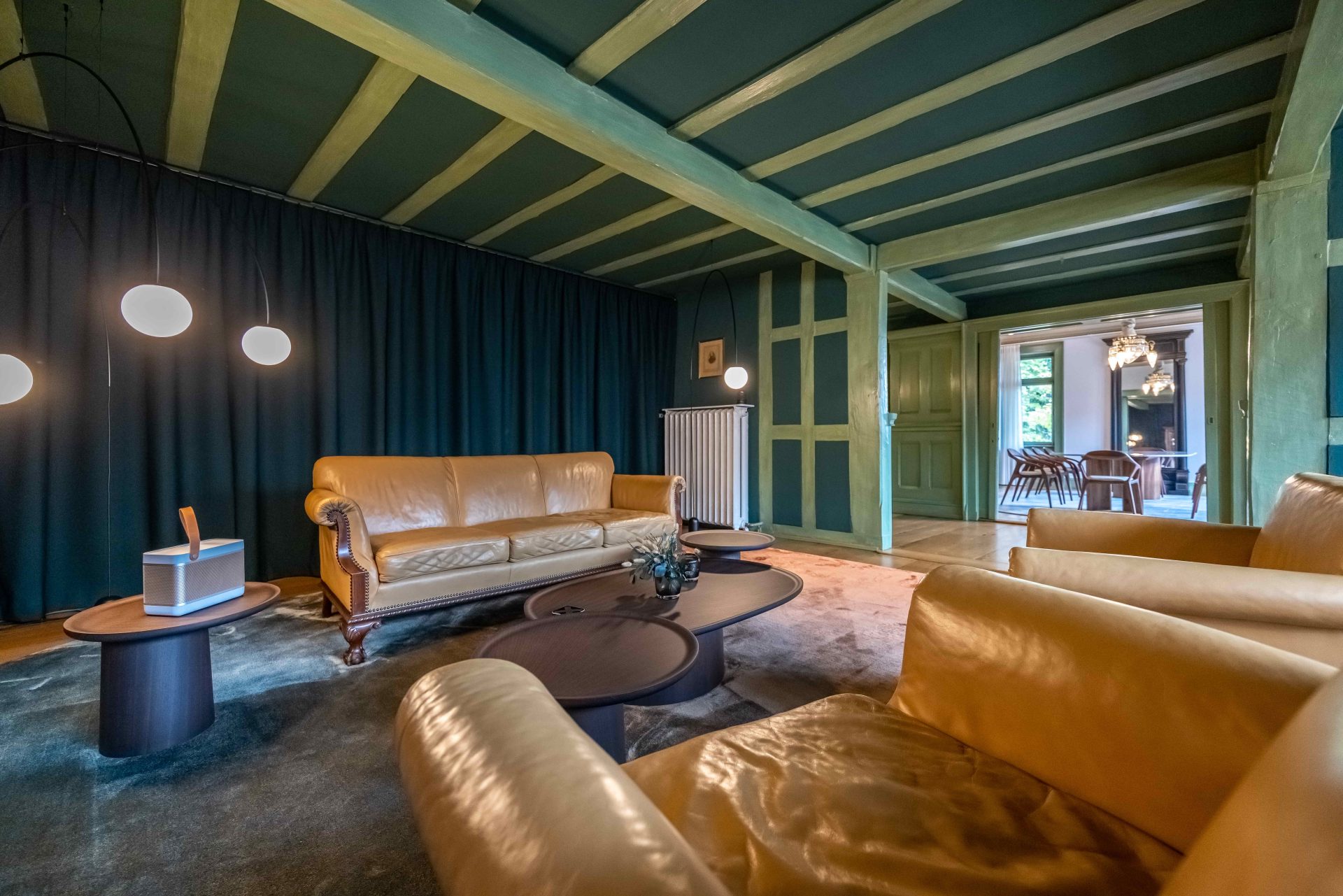
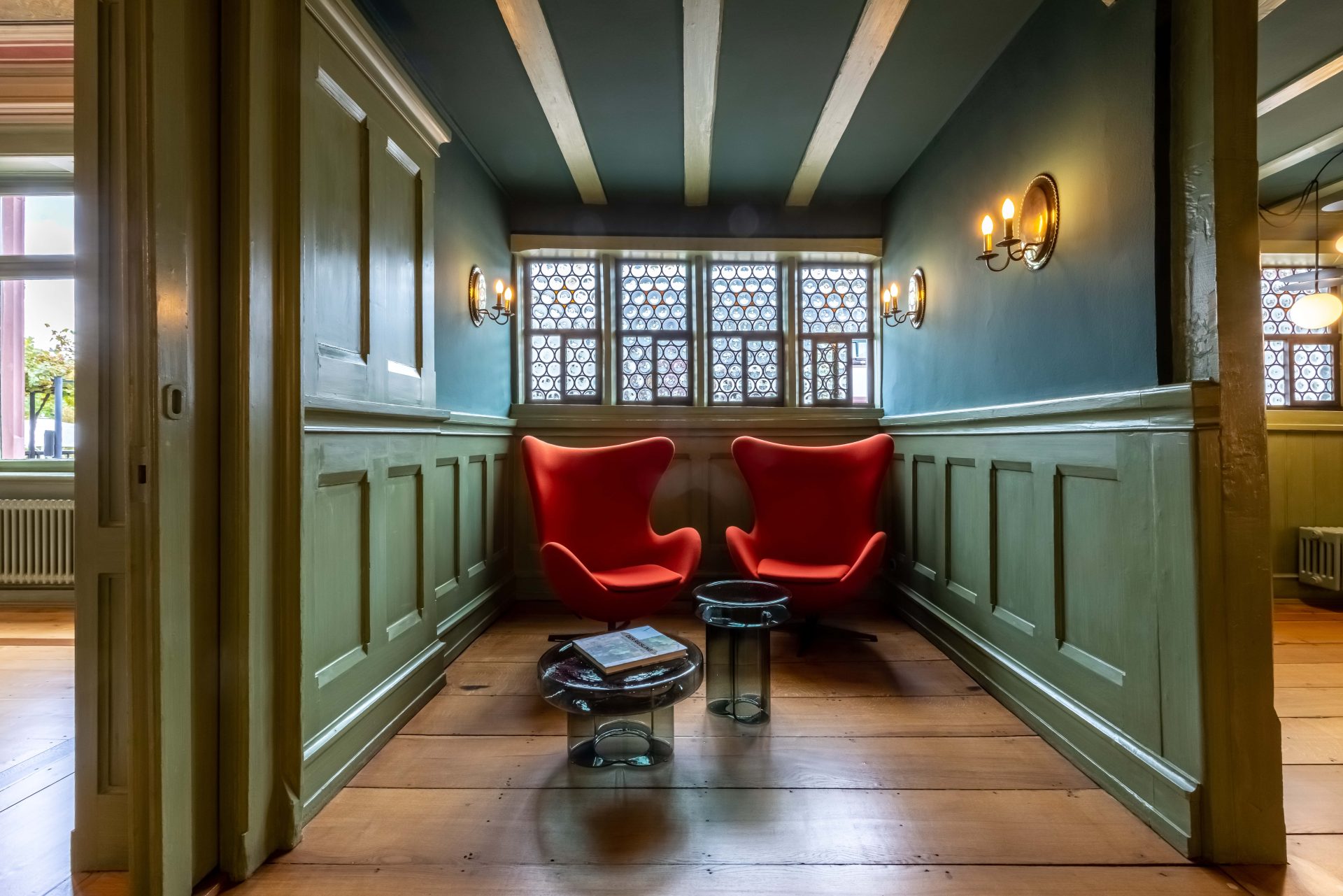
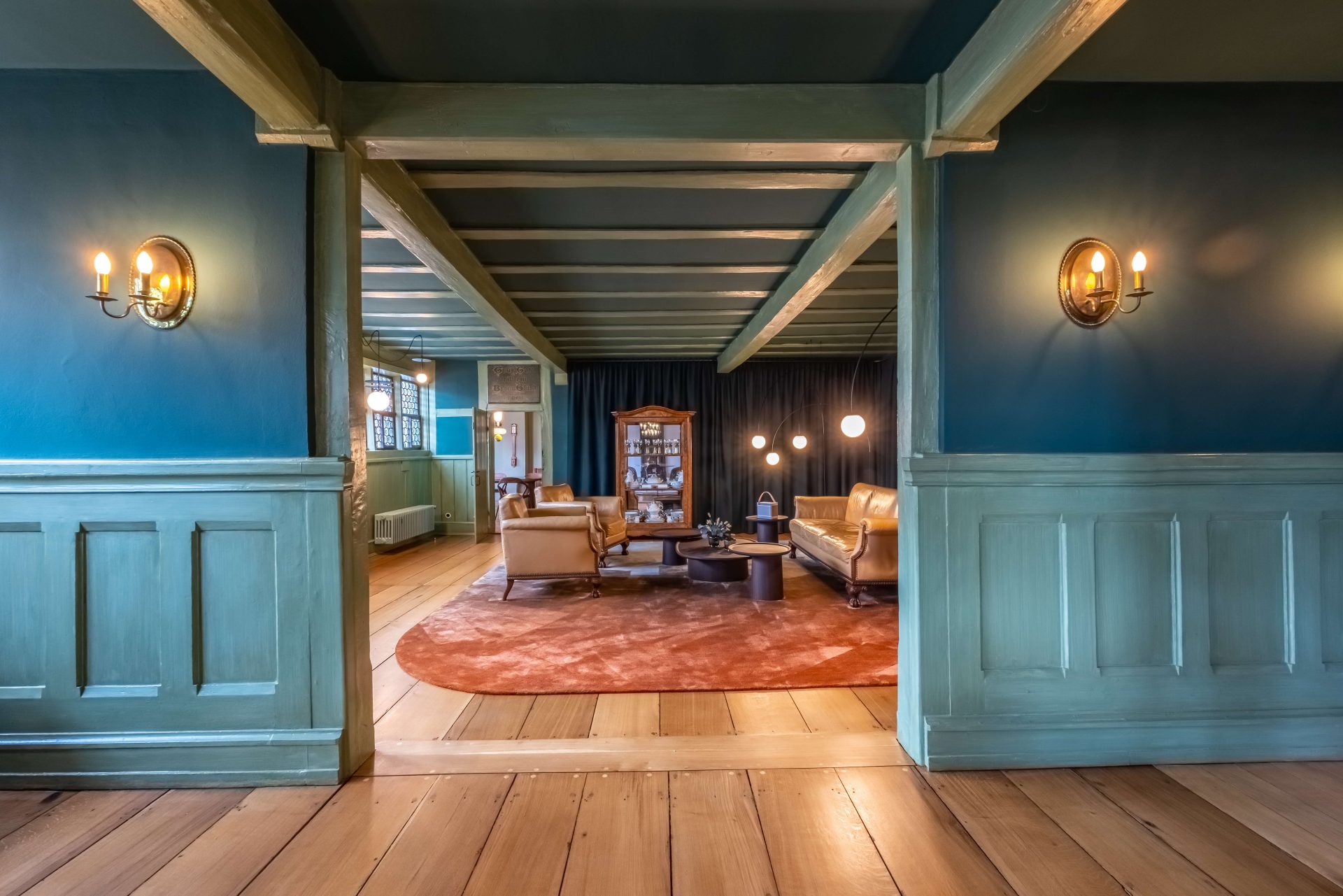
Next we come to a room with a historic beamed ceiling and magnificently panelled walls. It was named after Baronet John Sutton, who once built this part of the house. Lime-green walls and heavy fir-green curtains give it a natural, warm and noble atmosphere. “It was a real challenge to design this room, because the antique furniture already dictated so much,” says Marie Weil. In the end, she designed it around the sofa on which her great-great-grandfather used to relax after a day in the vineyards. In front of this historic piece of furniture there is now an ensemble of round and oval side tables by Molteni & C. Contemporary Italian design can be found in many places in the manor house. “The Italian influence goes back to my great-great-grandmother, who was an Edle von Vacano,” says Marie-Charlotte Weil, adding with a smile: “But apart from that, the Italians also make wonderful design.” The narrow adjoining room with its characteristic bullseye panes was once the baronet’s servants’ room. Where once there was only a bed and perhaps a bedside table, two elegant side tables of bottle-green Murano glass now form a wonderful contrast to the iconic Egg chairs in orange-red tweed by the Danish manufacturer Fritz Hansen. “My father loves these chairs,” says the winemaker. “They were the only piece of furniture he explicitly asked for in the redesign.” The estate has a long-standing brand partnership with Fritz Hansen.
GARDEN ROOM
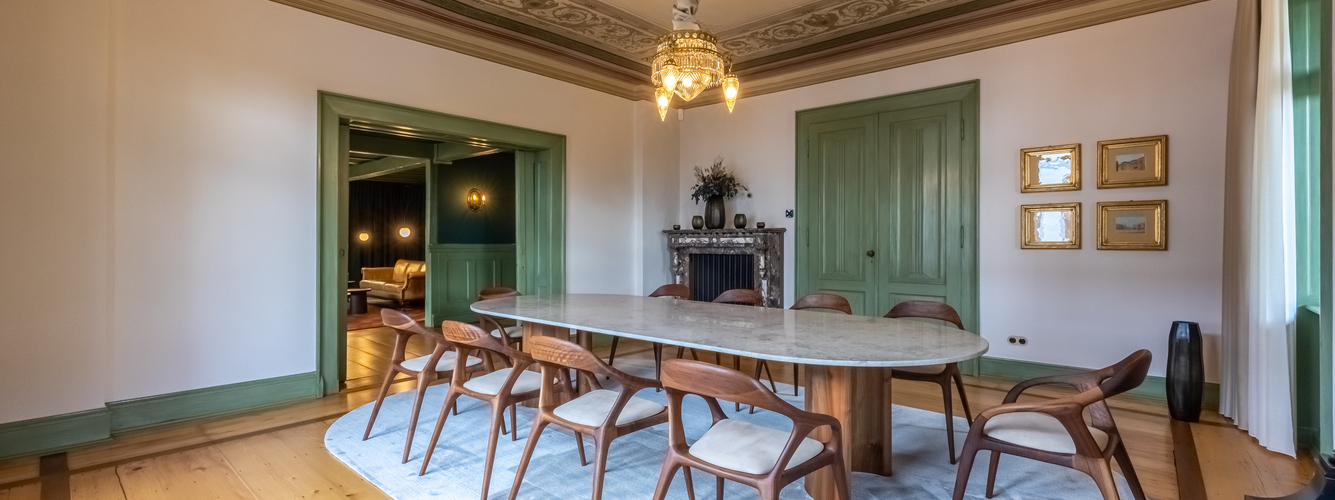
Our tour ends in a stately dining room with a picturesque view of the garden. Floral ceiling paintings, typical of the Art Nouveau era, lend the room an almost sublime energy. The cut crystal chandelier also dates from the year the house was built and has always hung here. Only the fabric wall covering, still crimson in great-grandfather’s day, had to make way for a beige one a few years ago. To match, the Danish designer chairs were upholstered in cream leather.
Preserving the old and yet, like every generation before, adding fresh touches – Marie-Charlotte Weil has pulled off this feat superbly in redesigning her manor house. And so her home is, as it were, the sum of everything that has defined the world-famous wine estate since its founding years.
More stories








GET IN TOUCH