
Food
UBOWL & L’AROME
Hai Hoang Minh and his wife Giao Nguyen are writing a fairy-tale success story. With their upmarket eatery UBowl and the restaurant L’Arôme, they are delighting Frankfurt’s gourmets. The couple told our food expert Barbara Goerlich about their start in Germany, their thirst for knowledge and the innovative refinements of European-Asian cuisine.
Text Barbara Goerlich Photos UBowl, L'Arôme
Having come to Germany from Vietnam as teenagers, Hai Hoang Minh and his wife Giao Nguyen are today the proud owners of two successful restaurants in Frankfurt’s city centre: UBowl and L’Arôme. Foodies first took notice of the now 39-year-old when exciting Euro-Asian creations suddenly began arriving at the tables of the Frankfurter Botschaft at the Westhafen. Head chef Hoang masterfully combined the produce, flavours and cooking methods of his old and new homelands.
BOWL ADVENTURES
The restaurateur couple’s culinary success story began with an innovative concept. They planned to serve the fashionable – and very healthy – poké bowls with the finest ingredients and Asian accents in an upmarket eatery. UBowl has now been thriving on Töngesgasse for almost three years and was an immediate success. Here you can taste, at gourmet level, how sophisticated a bowl experience can be. What Hoang layers into bowls has class, not least because he makes no compromises on freshness and quality. The signature bowls combine sweetness, acidity, heat and creaminess, while refined sauces hold together the boldly named ingredients. The “U-Special-Bowl”, for example, brings together fried beef, tobiko caviar, kimchi, vegetables, pineapple and coconut, topped with quinoa pops and a fruity passion fruit and peanut sauce. Sounds daring, tastes delicious – and looks good too. The verdict: these bowls are addictive.
TRUE TO ITS NAME
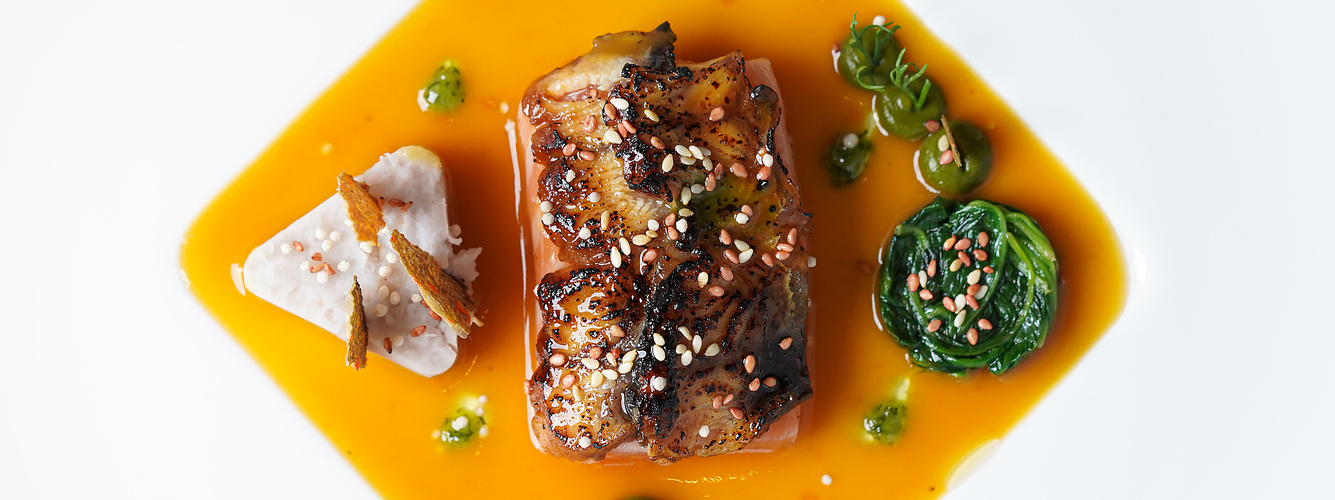
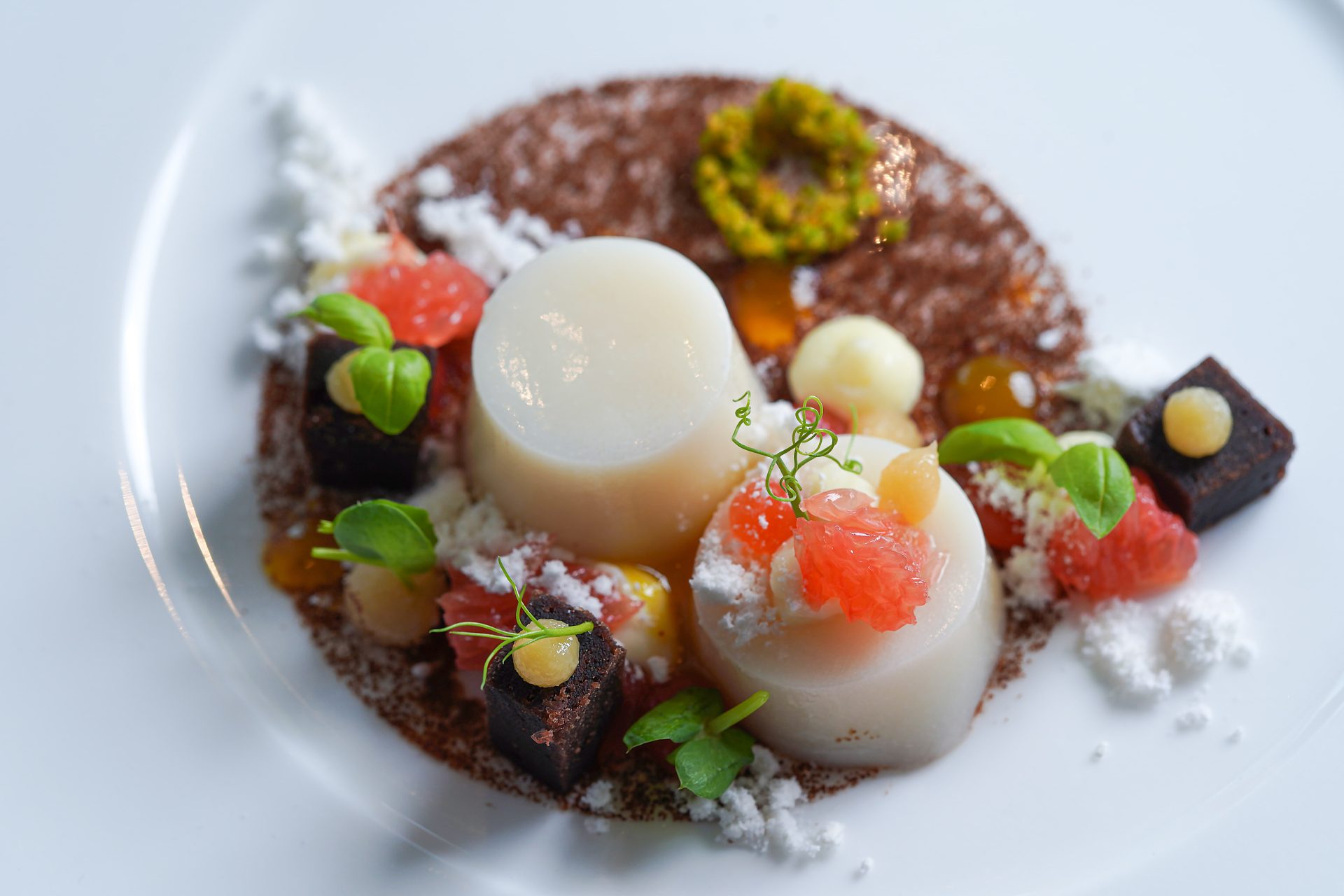
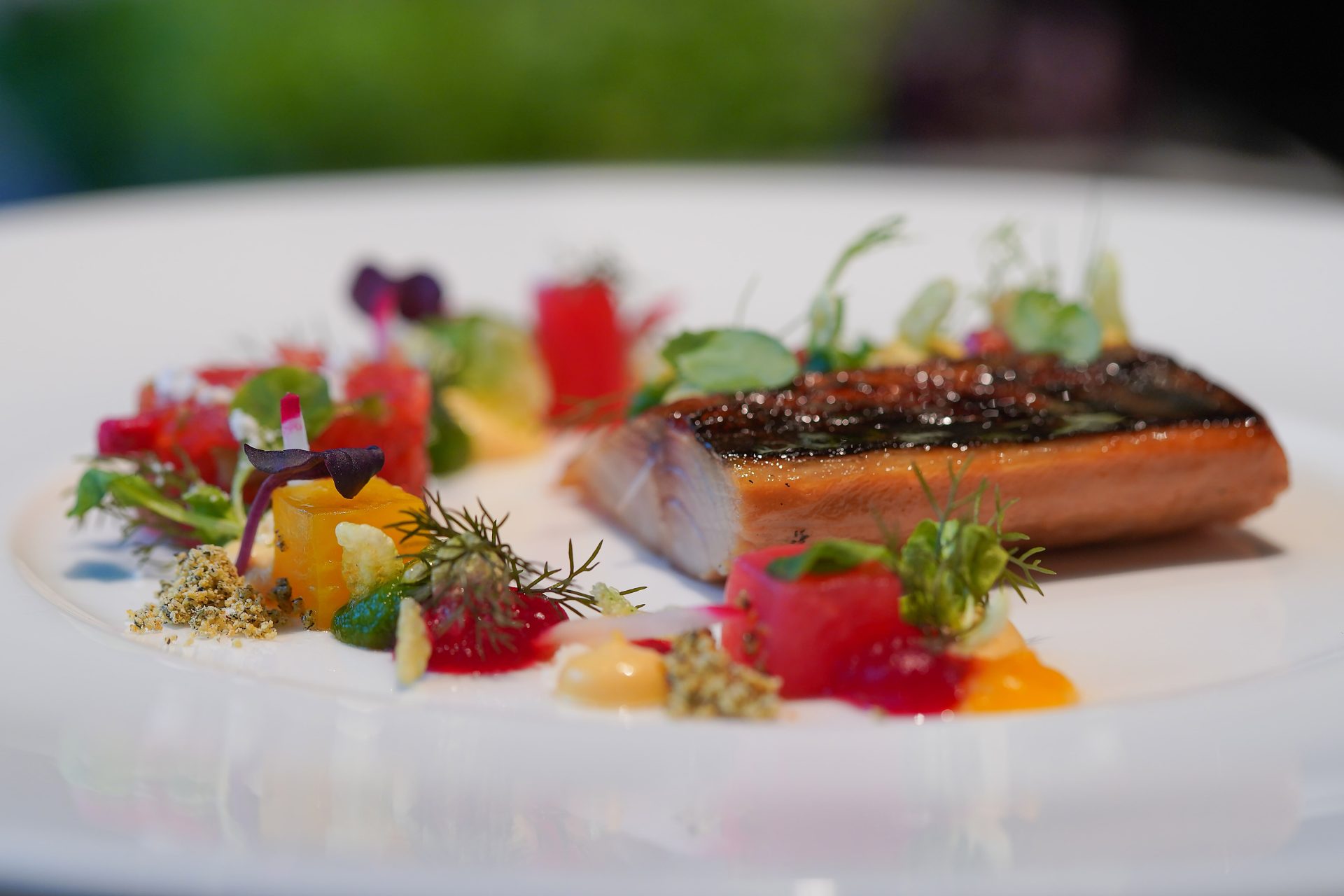
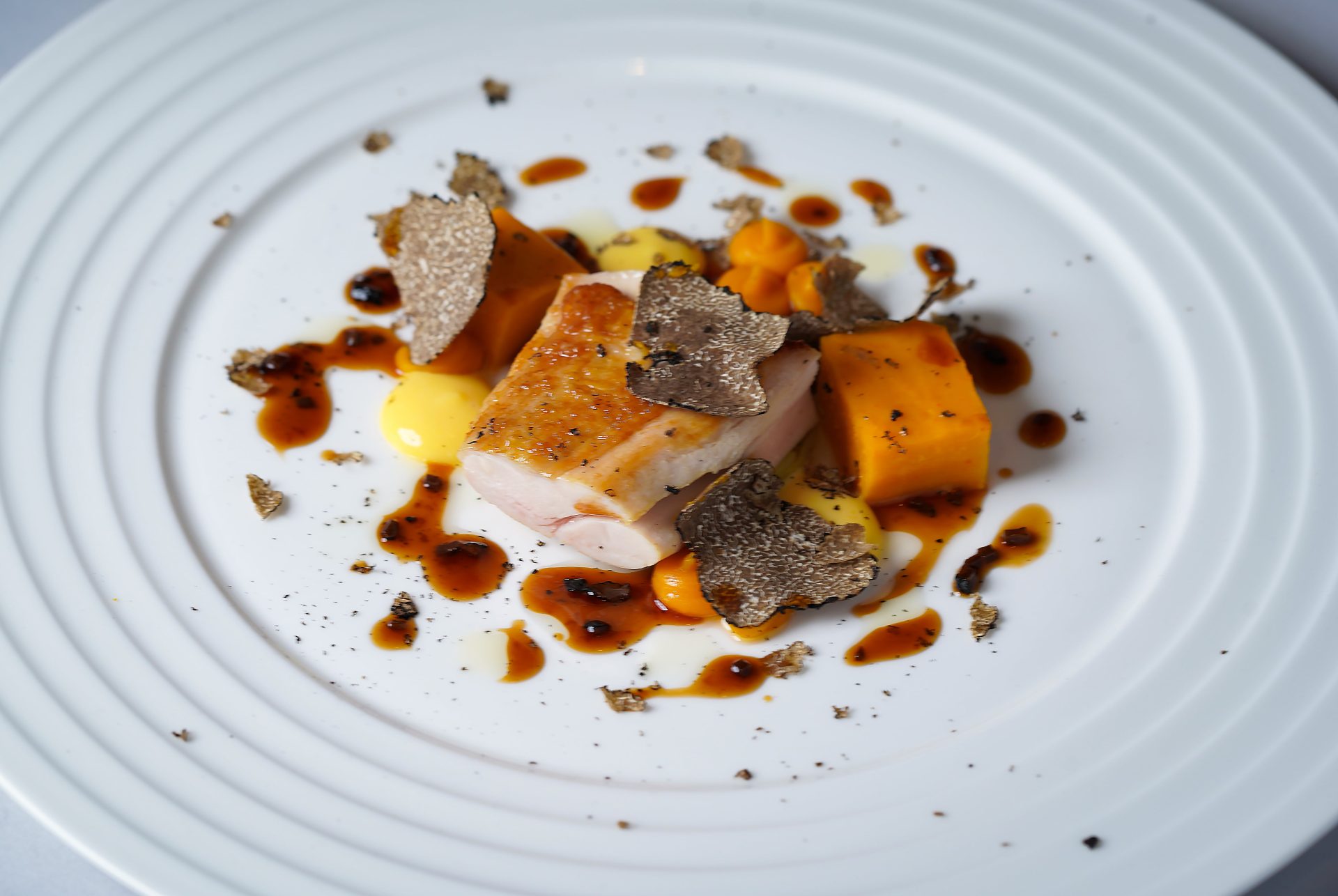
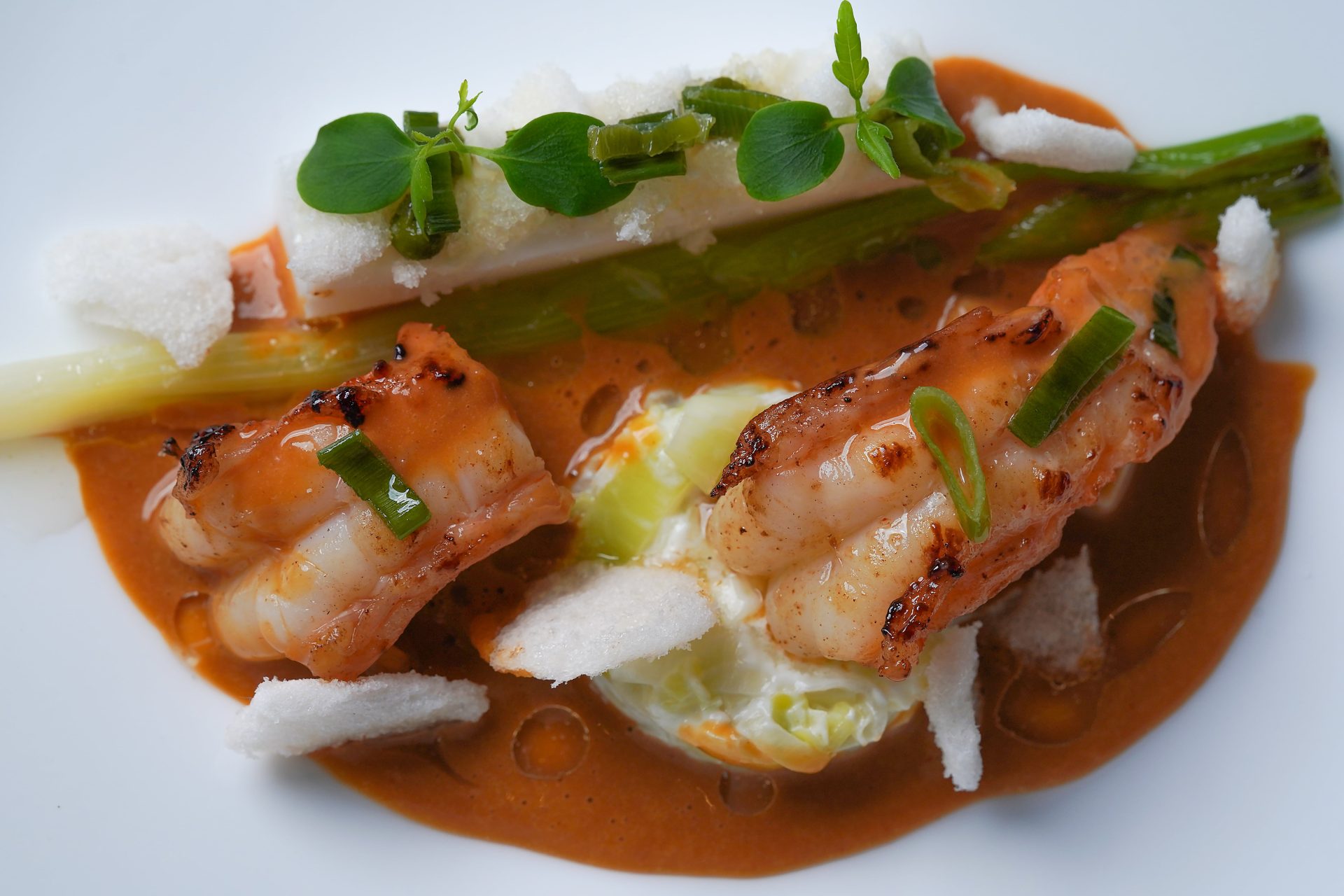
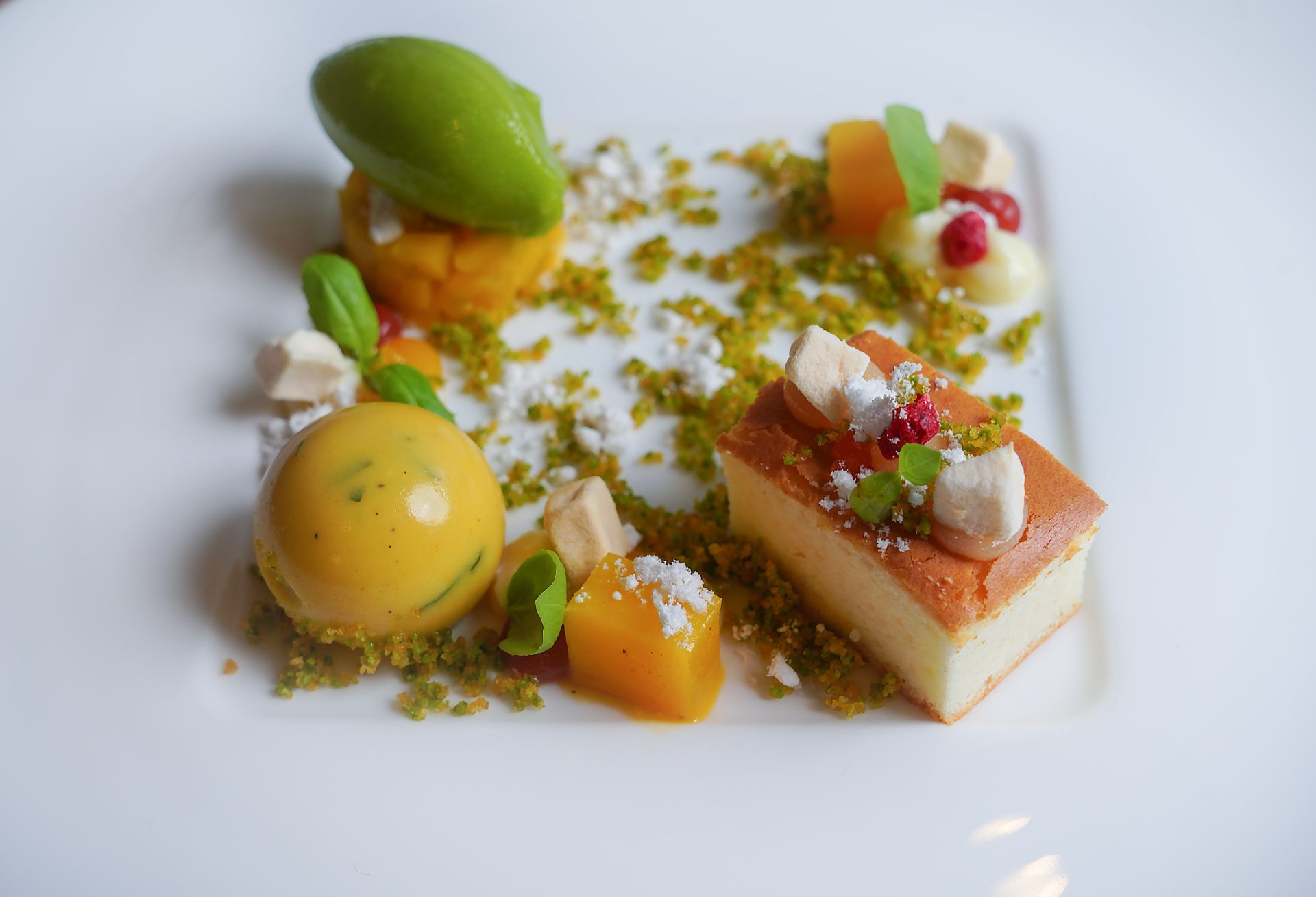
An upmarket eatery is all very well, but the Hoangs’ dream of a fine-dining restaurant lived on. With their long-planned restaurant L’Arôme, the two have gone one better. The stylish restaurant on Willy-Brandt-Platz, opposite the Städtische Bühnen, offers two menus – one of them vegetarian. In them, Hai Hoang masterfully combines, on a classical foundation, the produce, flavours and cooking methods of his old and new homelands. With the briefly cooked salmon belly and pearl couscous, a basil foam works superbly in both colour and flavour. Perfectly cooked, with distinct roasting marks, succulent monkfish sits on a curry sauce with mussels, mung beans, “elephant ear” and okra purée. The desserts also meet high expectations: a vegetarian one with grapefruit sorbet and coconut on set soy milk, or strawberries with water chestnut and dried crème fraîche.
SOMMELIÈRE VALERIE POULTER
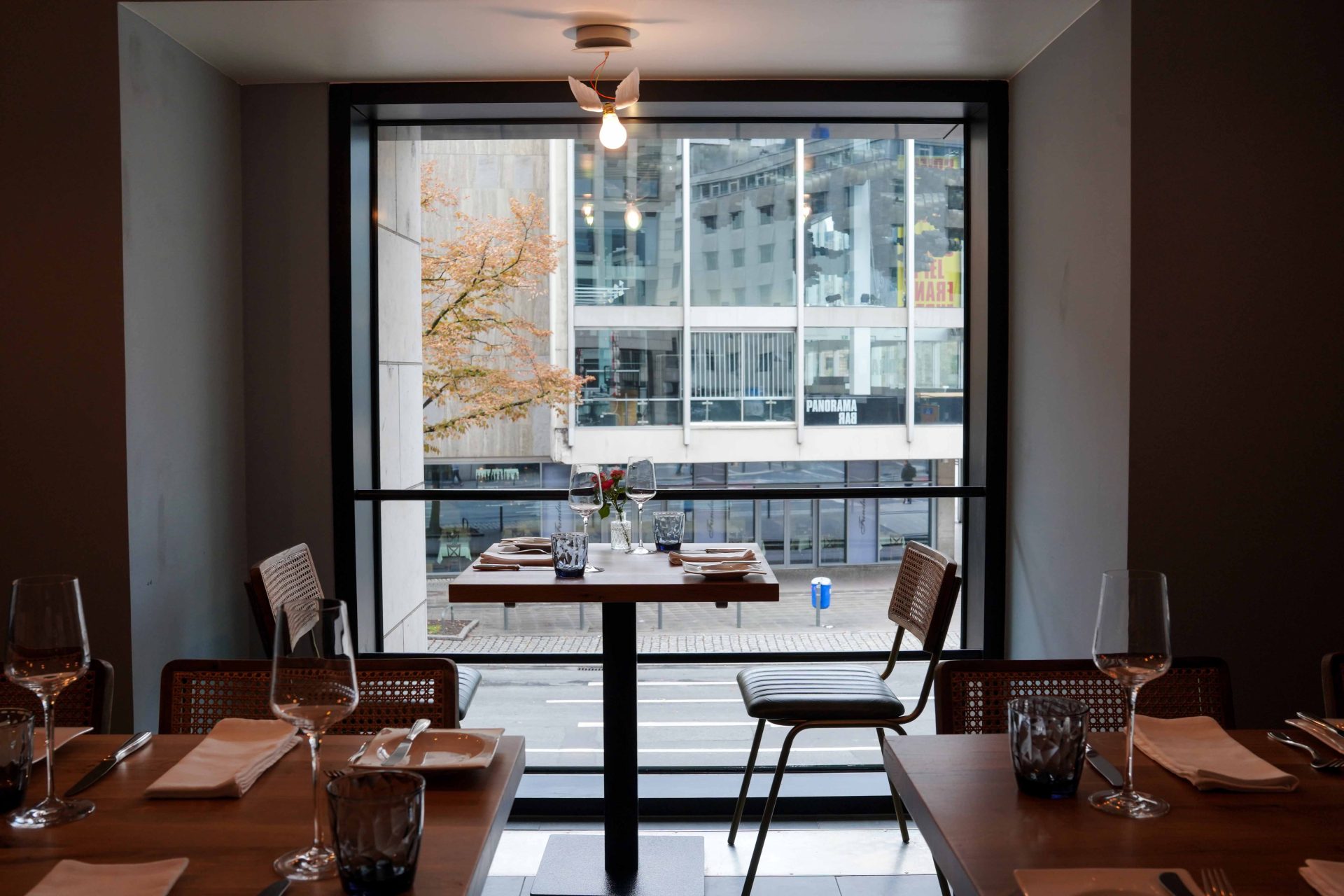
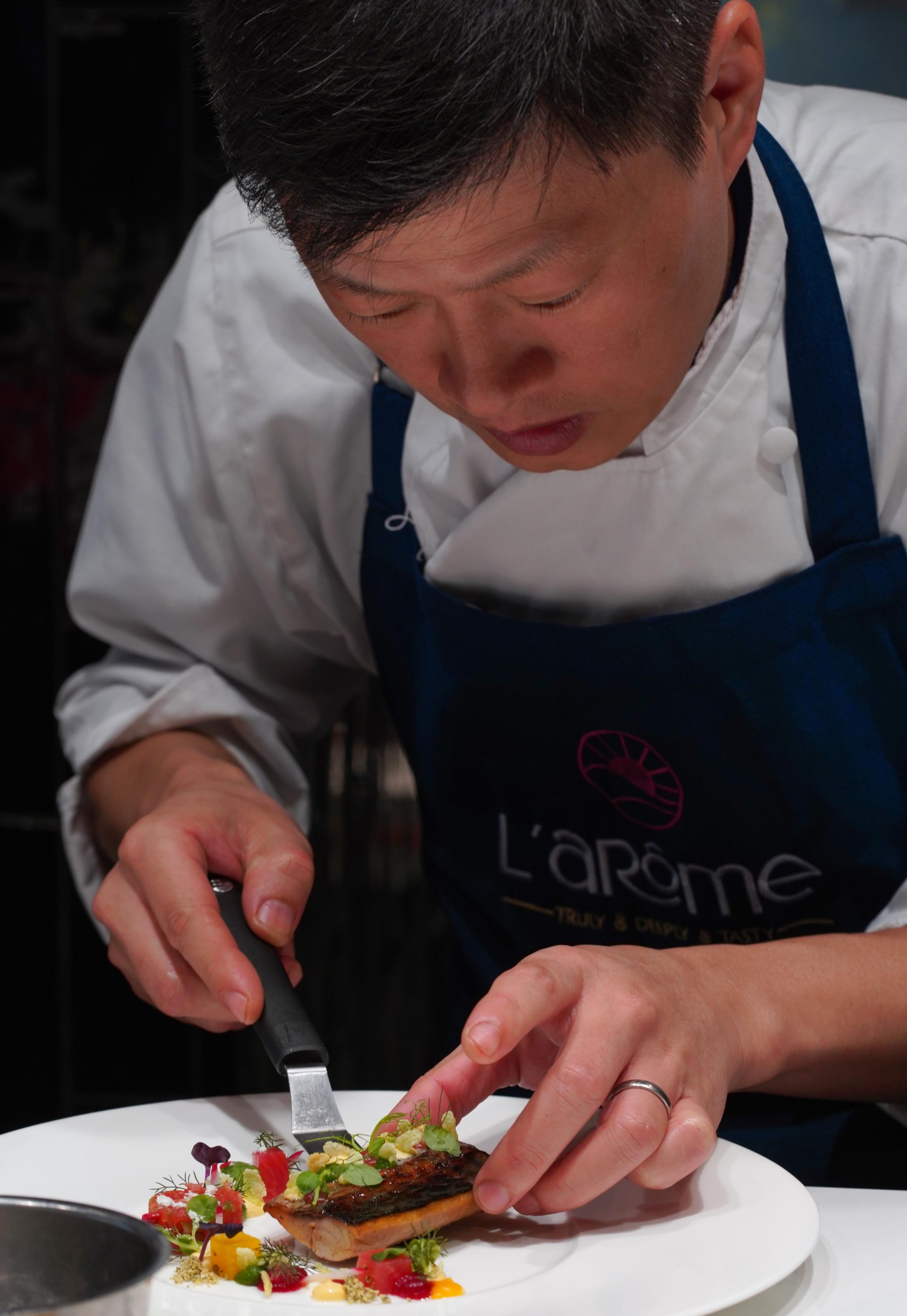
Plenty of wood, elegant petrol blue and wallpaper with exotic motifs underpin the interior concept, based on the Japanese aesthetic of harmony, wabi-sabi, which extends over two levels. On the ground floor, guests can watch Hoang and his team at work at the kitchen counter. One spiral staircase up, you sit on Viennese cane chairs at polished wooden tables with a view of the theatre and skyline, looked after by attentive service under the direction of Valerie Poulter. She is known in the scene from Chalet 18 and the Français in the Steigenberger Frankfurter Hof and, as sommelière, is also expanding the list of predominantly German wines. “A terrace has already been approved,” says a delighted Hoang. At present the restaurant is only open in the evenings; special theatre menus and lunch options are being considered.
HIS FATHER RECOGNISED THE TALENT
The fall of the Berlin Wall had direct and indirect consequences not only for people in Germany and Europe. The world changed, which turned out to be a stroke of luck for the 17-year-old Hai Hoang Minh. Although his father had worked for many years as a civil engineer in what was then the GDR, it was only after the fall of the Wall that he was able to bring his family from North Vietnam to Thuringia. For the young Vietnamese, the first months were hard, in surroundings that were not exactly welcoming to foreigners. “New country, new language, no friends,” he recalls. He persevered, soon had friends, learned the language, passed his secondary school exams after just a year and a half and wanted to become an engineer like his father. But Hoang senior, who by then was running an Asian restaurant in Gotha, recognised a born cook in his son. “My father had a good eye and recognised my talent,” Hai says with a smile. Through a friend’s connections, he spent three years at the Nikko Hotel Düsseldorf in a strictly hierarchical kitchen. “There, you did what the chef said,” is how Hoang sums up the period in which he decided to learn the profession from scratch.
LEARNING FROM THE BEST
His choice of training establishment, Landhaus Waitz in Lämmerspiel, proved a blessing for local foodies, because it was there that Hai Hoang put down roots in the Rhine-Main region. A journeyman year then took the young cook to the legendary Albert Bouley at the Waldhorn in Ravensburg. Bouley was one of the first chefs in Germany to integrate Asian elements into his Michelin-starred cooking, and he passed on his knowledge of “grande cuisine” to Hoang. There followed eight formative years alongside Michelin-starred chef Alfred Friedrich (today at Wirtshaus Zur Golden Kron): first at the Restaurant Zarges on the Fressgass, which is long gone, and then at the Lafleur at the Palmengarten in the responsible position of sous-chef. The ever-curious Hoang learned to use whole animals, not just the prime cuts, and became acquainted with unknown or forgotten ingredients. After qualifying as a master chef, Hoang took up his first post as head chef at the upmarket inn Linde in Albstadt. He liked it there enormously – if only it hadn’t been so confoundedly cold on the Swabian Jura. So after the birth of their first daughter, the Hoangs moved back to the Main. The fairy tale could begin. At the Frankfurter Botschaft, Hai Hoang sent his guests on delicious culinary journeys from Europe to Asia and back. Three years, yet only one stage on the way to Hoang’s real goal: running his own restaurant.
In his wife Giao Nguyen he also has a committed business partner at his side, who came to Germany from Vietnam at the age of nine. She, too, is “from the trade”: she trained at the Grandhotel Hessischer Hof and worked for several years at the Restaurant Lafleur. Giao has since stepped back somewhat from running the business, devotes herself to their two young daughters and is responsible for accounting and administration at the two establishments, which now employ almost a dozen staff.
More stories








GET IN TOUCH