
Home
BAUHAUS AT 100 AND NEUES FRANKFURT
100 years of the Bauhaus and what was, in effect, its lived form: the Neues Frankfurt. The subject, which this year dominates debate in art, design and architecture worldwide, led to some controversy in our editorial office: our author and design expert Martina Metzner wanted it presented with due seriousness and a focus on the Frankfurt housing programme of the 1920s implemented by Ernst May.
Text Martina Metzner Photos Nikita Kulikov
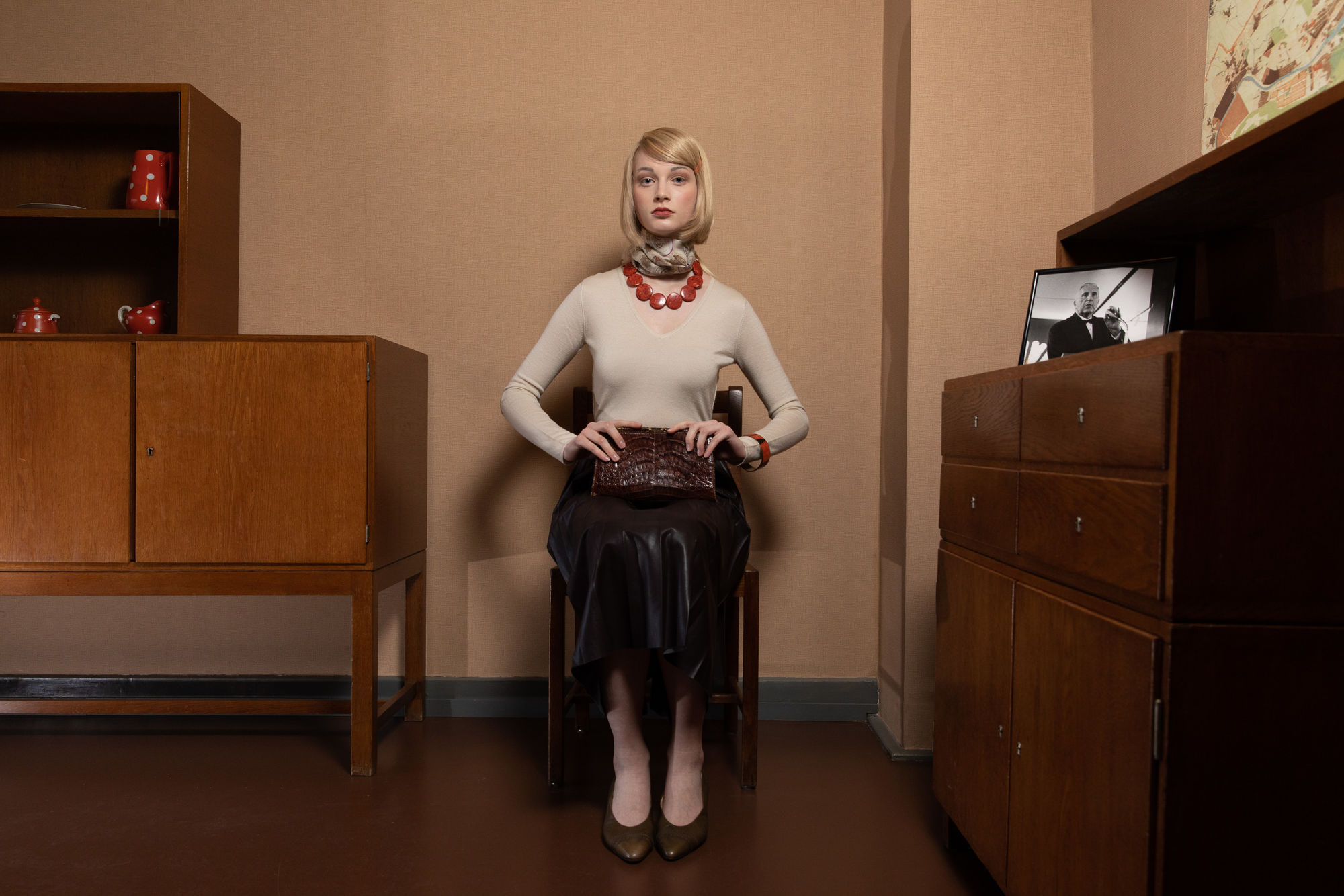
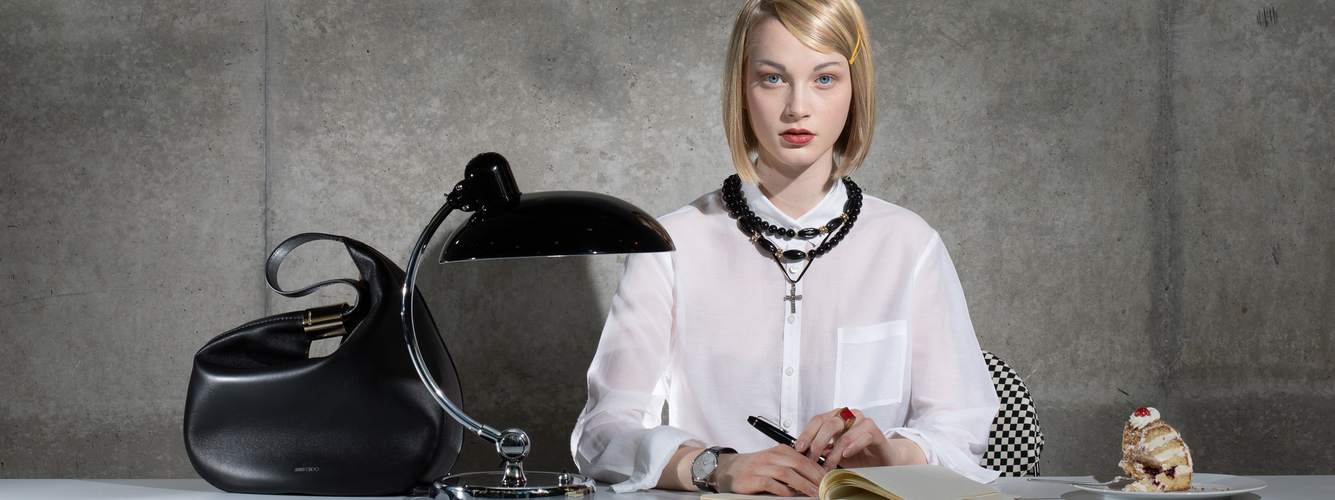
Our creative team, by contrast, wanted to push things to the limit, cross boundaries and be provocative and anything but orthodox in staging the pictures. The result: a well-founded, exciting and entertaining article about the Neues Frankfurt as a cultural-historical legacy of modernism, accompanied by a photo series that leaves room for the authentic interacting with design classics from later eras, fashion and a good measure of modern lightness.
If the Bauhaus was the academy of modernism, the Neues Frankfurt was its workshop.
As built cultural heritage of modernism, however, the Neues Frankfurt is less well known than the Bauhaus, which celebrates its centenary this year. Yet the guiding principles were almost identical, and there was lively exchange. Bauhaus founder Walter Gropius, for instance, helped build the Neues Frankfurt. Mart Stam, who designed the tubular steel cantilever chair and taught at the Bauhaus, built the Hellerhof estate and the Henry and Emma Budge Home in Frankfurt. And in 1929 Frankfurt hosted one of the “International Congresses of Modern Architecture” (CIAM) initiated by Le Corbusier, which Bauhaus members also attended.
The Bauhaus and the Neues Frankfurt shared the same idea: to create houses and furnishings quickly and cheaply, but still of high quality, for as many people as possible. Their common foundation was the spirit of life reform that blossomed all over Europe in the 1920s. With a universal design ambition, they wanted to shape nothing less than a “new human being”. Residents were to be granted “light, air, sun” – through terraces, balconies, roof and house gardens and even parks. Inside, “new living” was defined by industrially and serially produced furniture made from new materials such as tubular steel. They established modern design and would inspire many designers of subsequent generations.
The Bauhaus was founded in Weimar in 1919. Six years later the academy moved to Weimar. In the same year, Frankfurt’s then mayor Ludwig Landmann brought the architect Ernst May to the Main. With a whole brigade of talented architects, May developed one of the largest housing programmes of the modern era between 1925 and 1930.

As in Dessau-Törten, buildings in Frankfurt were made to a formula: replicable house types and prefabricated, industrially produced components made it possible to build them in just a few weeks. The forerunner of the prefab house was born. In total, 20 estates with around 12,000 flats were built, and not only were new roads laid for them. For the Römerstadt, Westhausen and Praunheim estates, the Nidda also had to be regulated. In addition there were six schools, a hospital and a care home, pavilions, three churches, a power station and the I.G. Farben building. The Großmarkthalle designed by Martin Elsaesser is also part of this legacy – known back then as the “Gemieskersch” (“vegetable church”), because what was then the largest column-free interior in Europe had a sacred feel.
The Frankfurt Kitchen
If I had known that everyone would only ever talk about it, I would never have built that damned kitchen!
— Architect Margarete Schütte-Lihotzky
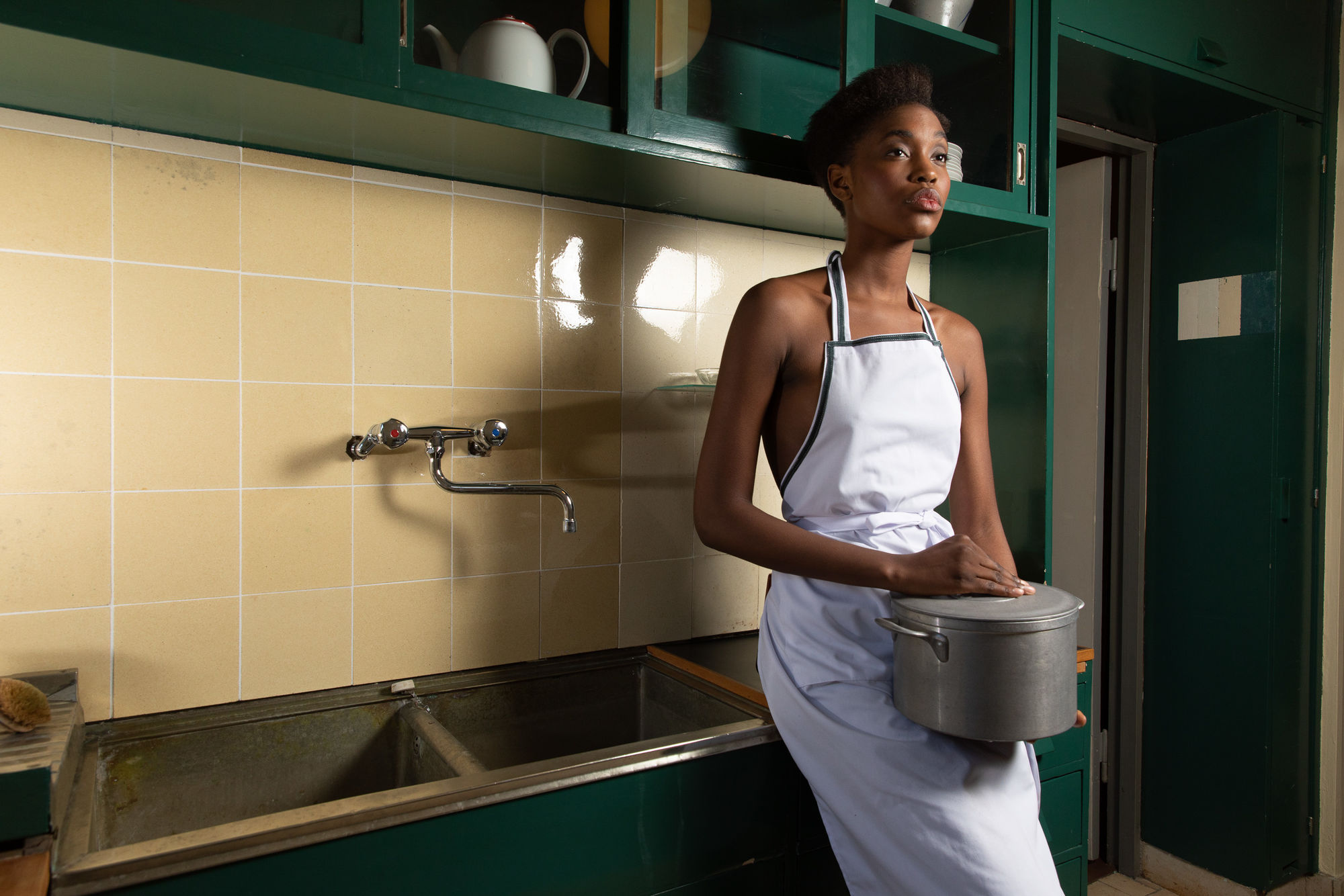
The prototype of the modern fitted kitchen was invented in 1926 by the Viennese architect Margarete Schütte-Lihotzky. Incidentally, she was not at the Bauhaus. Perhaps just as well. For the Bauhaus was above all a men’s club. Female students were deliberately kept down. Bauhaus teacher Paul Klee was not the only one convinced that genius is male. What the “Frankfurt Kitchen” had in common with the Bauhaus was the desire for efficiency. The experiment was called: “New Human. New Home. New Life”. The kitchen became a declaration of war on the stuffiness of generations. “Die Schütte”, Austria’s first female architect and a resistance fighter against the Nazis who narrowly escaped a death sentence, viewed the later cult surrounding it with a shake of the head.
The flats of the Neues Frankfurt were equipped with the latest electrical developments: hot-water boilers, electric light, electric cookers, in some cases central heating and a radio connection. Each unit also had its own bathroom with a hip bath. What took some getting used to by the standards of the day, however, was the functional character of the architecture with its radical flat roofs – an absolute dictum of modernism. Inside, too, “form follows function” applied, with unadorned built-in furniture and the rationally designed Frankfurt Kitchen. The Frankfurt Chair and the Kaiser Idell lamps are classics from this period that endure to this day.
“The Neues Frankfurt is on a par with the Bauhaus in Dessau, Weimar and Berlin and the Weissenhof Estate in Stuttgart,” says Konrad Elsaesser, great-nephew of Martin Elsaesser. So it’s time to rediscover the modernism on our own doorstep! A good place to start is the newly established Forum Neues Frankfurt. In addition, no fewer than three museums are devoting themselves to the subject: alongside the Deutsches Architekturmuseum and the Historisches Museum, the Museum Angewandte Kunst shows that “Modernism on the Main” was much more than just architecture and design, also producing film, graphics and music.
More stories








GET IN TOUCH