

Business
BAHNHOFSVIERTEL FFM - HIDDEN CHAMPIONS
Microcosm and the big wide world, contrasts and a sense of community, high finance, entrepreneurial spirit and the red-light milieu – the DNA of Frankfurt’s Bahnhofsviertel has always been multi-layered. The district is home to numerous hidden champions as well as big players, who are doing everything they can to enrich its unique cultural, culinary and entrepreneurial mosaic. THE FRANKFURTER met some of them.
Text Dr. Jutta Failing Photos Nikita Kulikov, Menashion, Wolfgang Stahr, Luise Fuchs,
BIG SMALL NEIGHBOURHOOD
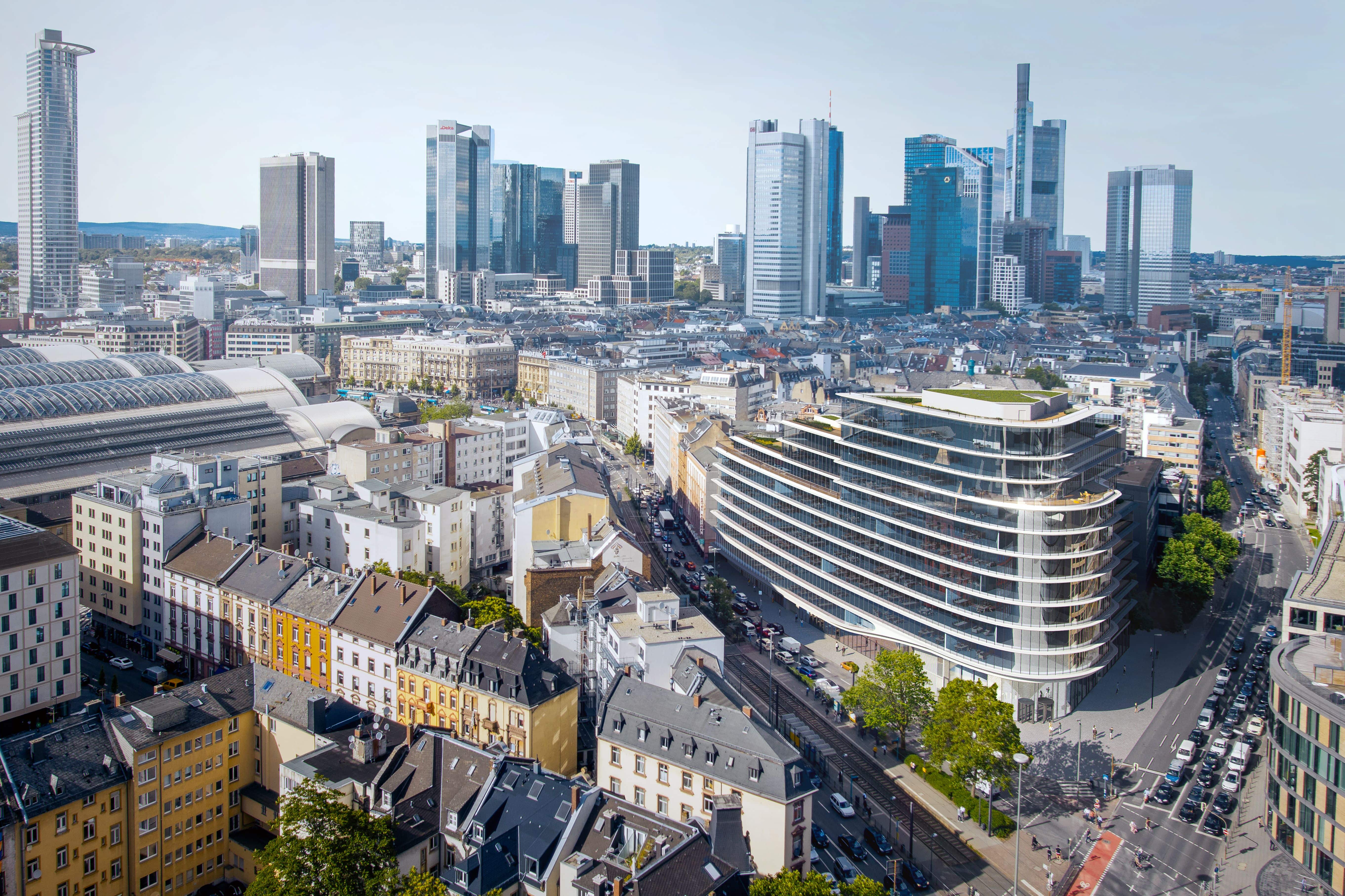
Reporting on the Bahnhofsviertel often focuses one-sidedly on drug use and crime. Yet the cosmopolitan district with its around 200 listed buildings is much more: a strong business location with a distinct identity of its own, multiculturalism and diversity, an attractive and welcoming home for 3,500 people from more than 180 nations and a culinary hotspot without equal. 23,000 people work here, and 2,000 companies are based in the district. Networked and collaborative, various stakeholders, including the Gewerbeverein and the Eigentümerinitiative Bahnhofsviertel as well as the initiative “Auf ins Viertel!”, are committed to the holistic, careful development of the neighbourhood.
The shared goal is to preserve the district’s identity while creating new impetus for growth and cohesion. Targeted campaigns and events regularly draw large numbers of visitors to the district (coming up: “Open Viertel 2024” on 31 August). At the Kaisertor, temporary activities have recently been enlivening the public space. The popular Kaisermarkt on lower Kaiserstraße, where mainly local products are sold fresh from farmers and producers, celebrates its 25th anniversary this year and has become an integral part of the cityscape. The joint commitment from within the Bahnhofsviertel, hand in hand with the measures initiated by the City of Frankfurt, is having an effect. In the long run, this will improve the district’s image.
NEW ARRIVAL
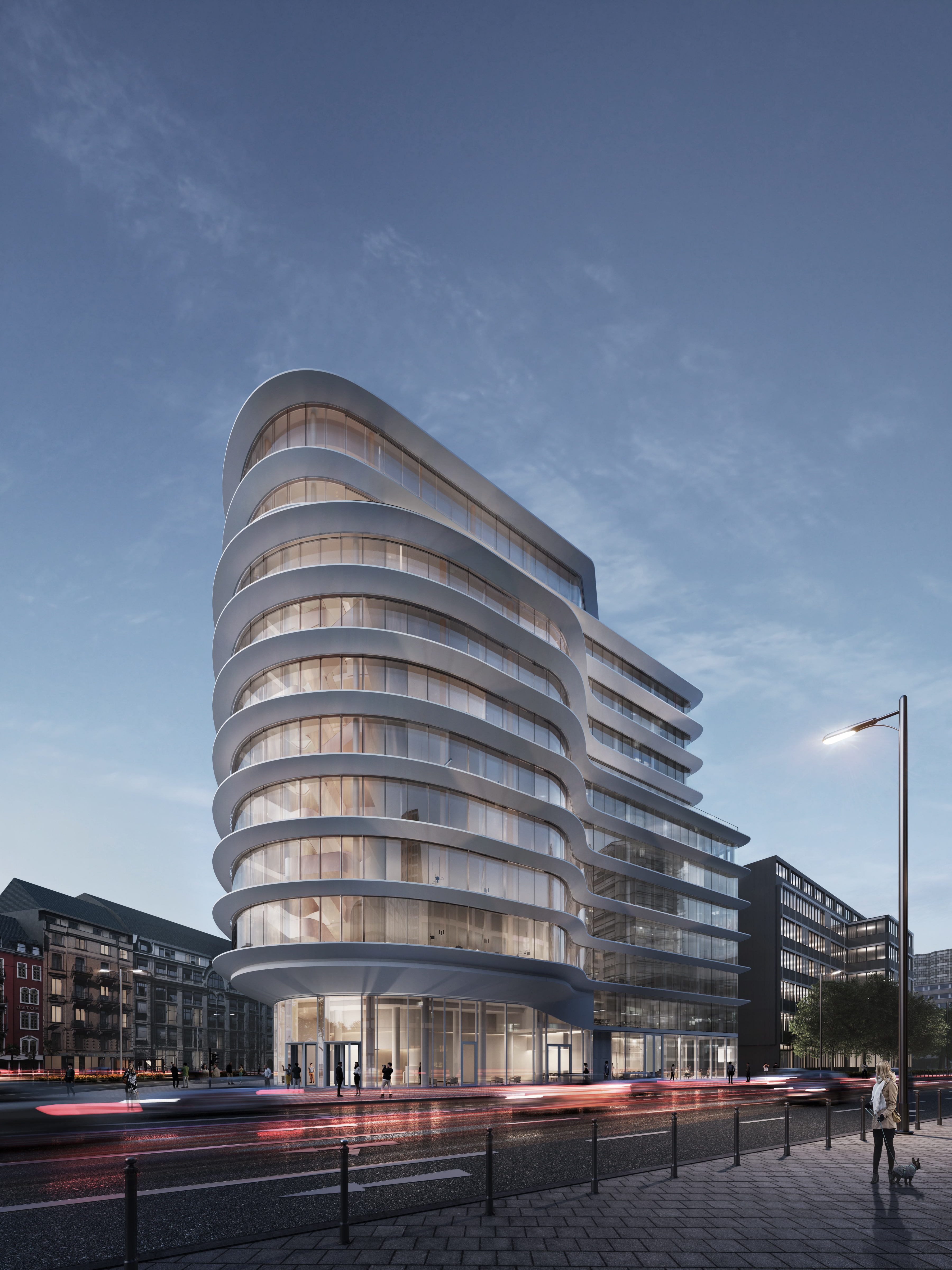
Several flagship businesses are active in the district. In September, a prominent global corporation joins them with Nestlé Deutschland’s new headquarters on Baseler Platz. Up to 1,500 people will work in the twelve-storey building with its green roof terraces. Anita Wälz, Director Sustainability & Corporate Communications at Nestlé Deutschland: “We deliberately chose an easily accessible location in the lively centre of the birthplace of our founding father Heinrich Nestlé. Above all, we look forward to new perspectives and inspiration and to becoming part of this exciting neighbourhood in the middle of Frankfurt. Openness and transparency are also very important to us. In the Bahnhofsviertel we are moving closer to the public than we could in Niederrad.”
The food company knows that in the Bahnhofsviertel the most diverse ways of life and fates also collide, more or less harshly. Anita Wälz emphasises: “We know the challenges and want to get actively involved in the neighbourhood and support projects and initiatives. To this end, we are already in close contact with various groups as well as with the city. We look forward to getting to know a new district with its many lunch-break options and after-work venues, and with our new office building we will also make a modern, visible statement. But we are also counting on the issues of safety and cleanliness in the Bahnhofsviertel continuing to develop in a positive direction.”
HOW CHANGE SUCCEEDS
Almost 50 hotels of every category and around 250 restaurants and bars – including top restaurants such as “Weinsinn” and “Kabuki”, known for its teppanyaki cuisine for more than 35 years – are located on a total area of “just” 54.2 hectares. Cohesion is strong, as Rahwa Bumba, Managing Director of the Lume Boutique Hotel, confirms: “It is a special kind of cohesion; the hoteliers and restaurateurs as well as the district’s business association meet regularly, and together we try to make the district ever more attractive.” The stylish luxury hotel with its restaurant “Le Petite Royal” is located in a listed Gründerzeit ensemble on Neckarstraße. The managing director does not want to play down the problems: “But change only works if the people of Frankfurt, too, begin to understand and love ‘their Bahnhofsviertel’ and to understand the dynamism it naturally brings with it.” She sums it up: “For me, it is the district that makes Frankfurt a metropolis in the first place. People of every stripe with the most diverse backgrounds meet here. It is the gateway to the city – perhaps not what everyone would wish for, but what the city needs.”

LIKE A VILLAGE
At Café Hoffnung on Kaiserstraße we are meeting a man who knows the microcosm like the back of his hand: Arno Börtzler, resident and chairman of the Regionalrat Bahnhofsviertel. “We are like a small village here; everyone knows everyone, and the neighbourhood community is strong, which increases safety,” explains the retired teacher. Of course, “here you find the entire spectrum of humanity, right up to the limits of the inhumane. But the district is so much more than what you read in the press.” A newcomer as prominent as Nestlé Deutschland will not change the district, he is convinced. On the contrary, it has a stabilising effect; moreover: “I don’t see gentrification or rising prices in the restaurants. If a place opens in the district and its entry-level prices exceed ten euros, it won’t survive. Gourmet restaurants are the exception.”
All the social strata and scenes of Frankfurt, art, crafts and start-ups, meet here in close proximity. I find that very exciting, even if it holds potential for conflict. But the benefits and the beauty of the district outweigh that.
— Ricarda Haase, fashion designer, “Menashion”
There’s always something going on in the district. It’s lively and varied.
— Michele Heinrich, bartender and co-owner of bar & restaurant “Yaldy” (named “Germany’s most beautiful bar”)
I came because there is affordable living and working space in the Bahnhofsviertel. And I’ll stay here as long as the red lights shine.
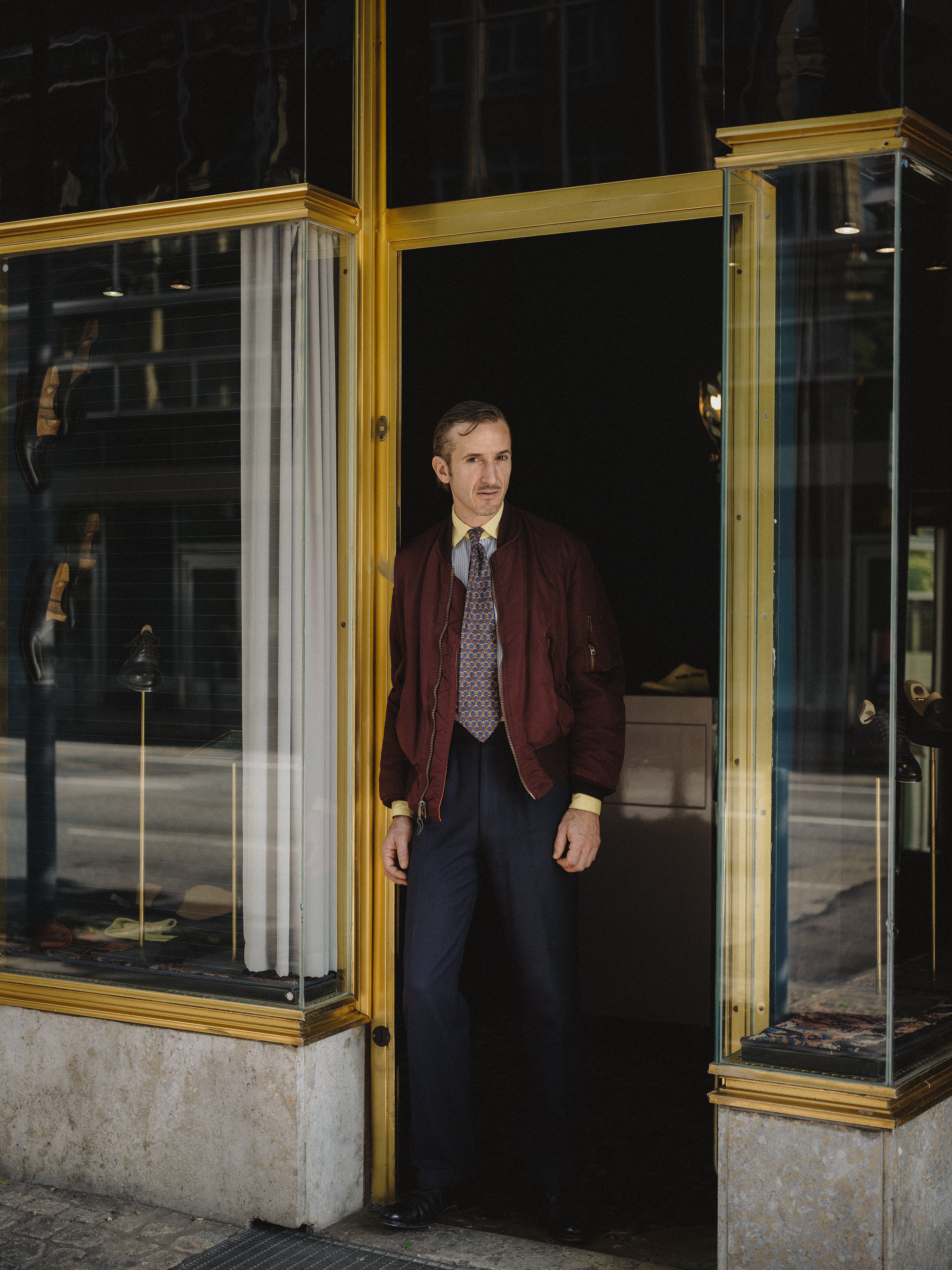
— Shoe designer Leonhard Kahlcke, studio for handmade and bespoke shoes
I want to bring classical music to new listeners. It quickly became clear that I wanted to do this right here, where I also live, inviting people free of charge and keeping the concerts as uncomplicated as possible. For so many people, the district is a place of arrival – for many every day, for some as the start of a new life.
— Laurent Weibel, violinist and founder of “Bahnhofsviertel Classics”
Our five-star hotel, whose history dates back to 1905, is right in the thick of things and yet in a quiet location, just a few minutes’ walk from the main station and the Museumsufer. Our brand stands for art and design, and many art lovers stay with us. We have a partnership with the Schirn Kunsthalle.
— Kevin Nattermann, General Manager, Le Méridien Frankfurt
The Bahnhofsviertel is not a slum. In many fields, the work done here is world-class. I have run a gallery on Niddastraße for 16 years and have never considered moving away. A meeting place for artists and curators is the pizzeria ‘7 Bello’. The district conveys a feeling of freedom and cosmopolitanism. And its round-the-clock liveliness is also a form of safety.
— Kai Middendorff, gallerist
We lived in Paris before. Now we’ve been in the Bahnhofsviertel for almost ten years. The regular ‘flea market’ in front of our shop on Francois-Mitterand-Platz lends a wonderful flair.
— Dimitrios Ntintis and Antonopoulou Anthi, crêperie “Voilâ”
We are brothers from Uganda. For seven years our East African restaurant on Niddastraße has been serving fufu, fish and much more from our homeland.
— Eric and Ston Gottaa, “Hakuna Matata”
Hair salon and rehearsal room for the Bahnhofsviertel choir in the “NiKa” building. The former office building on the corner of Niddastraße and Karlstraße has been converted into a self-managed residential building with permanently affordable rents. The residents are committed to new forms of living and working in the city.
More stories








GET IN TOUCH